Wilting on Aloe Vera: Causes, Checks & Fixes
Quick answer
Wilting on Aloe Vera almost always comes down to soil moisture and root health-not a single mystery disease. Before you water, press an outer leaf and check whether the mix is wet or bone dry. Wet soil with limp leaves means stop watering and inspect roots; dry soil with thin firm leaves means one deep soak.
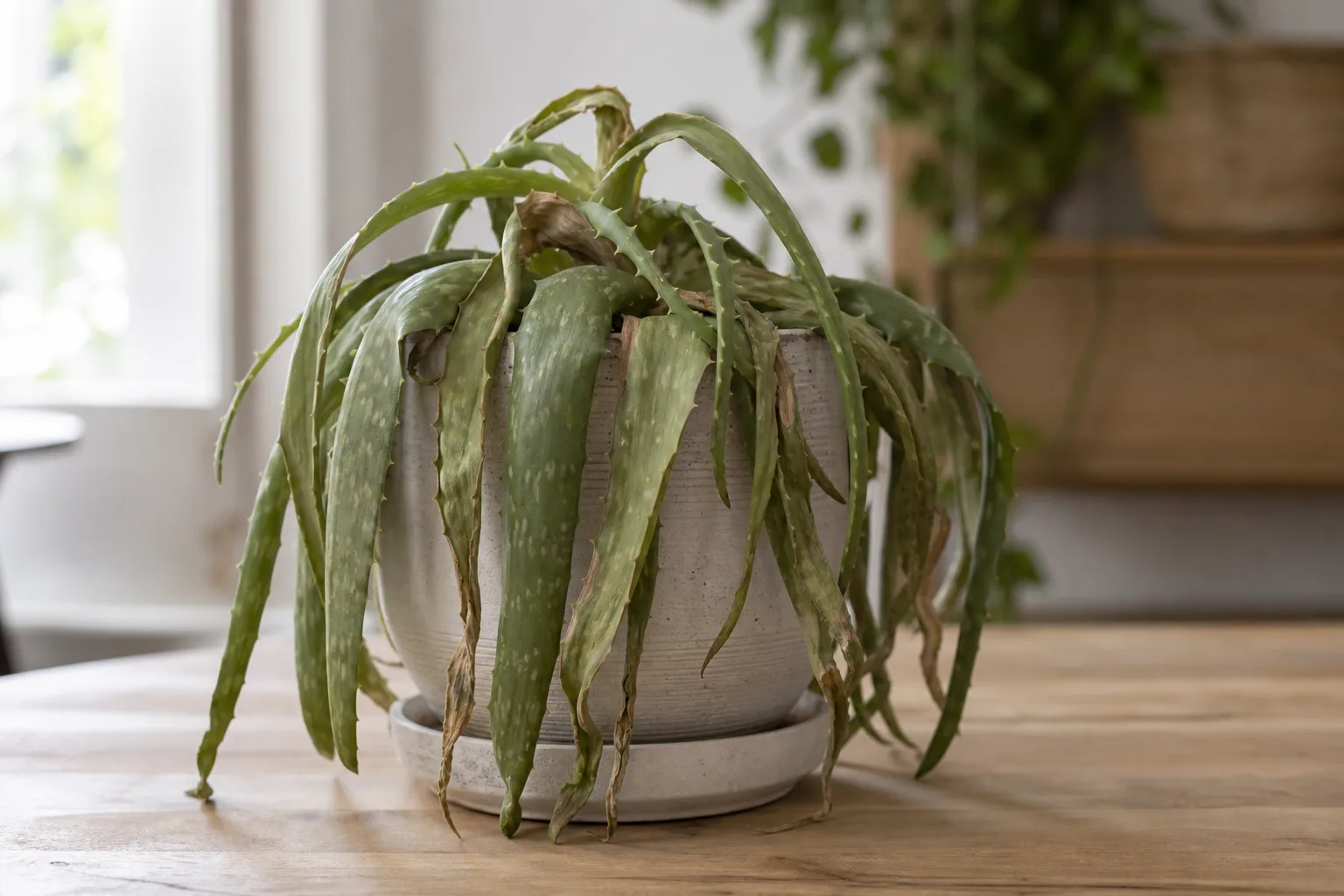
Wilting on Aloe Vera: Causes, Checks & Fixes
This guide covers wilting on Aloe Vera. See also the general Wilting guide, watering, and light pages for this plant.
Wilting on Aloe Vera: Causes, Checks & Fixes
Quick answer
Wilting on Aloe Vera (Aloe vera) is a loss of leaf turgor-the rosette goes limp, outer leaves fold or splay, and the plant looks like it needs water immediately. On this succulent, that visual cue is misleading half the time. Thick leaves store water for weeks, so collapse can look sudden even when the root zone has been wrong for days.
First step: do not water on sight. Press an outer leaf and stick a finger or skewer into the bottom third of the pot. Wet mix + soft limp leaves → pause watering and inspect roots-likely overwatering or root rot. Dry mix + thin firm leaves → one deep soak through the drainage holes, then wait for full dry-down before the next drink.
For baseline culture and seasonal watering rhythm, see the Aloe Vera overview.
Wilting vs. drooping leaves - which page to use
Both symptoms look similar, but they answer different questions:
| What you see | Best fit |
|---|---|
| Sudden collapse, whole rosette limp overnight, panic about water vs rot | This page - wilting |
| Gradual sag or splay over days, leaves still somewhat firm, plant leaning | Drooping leaves |
| Yellow lower leaves, soil wet for a week+, sour smell | Overwatering |
| Mushy roots, soft crown, brown base tissue | Root rot |
| Thin puckered leaves, feather-light pot, dusty dry mix | Underwatering |
Wilting is the acute “something changed fast” symptom. Drooping is often slower posture change. Start here when the plant looked fine yesterday and collapsed today.
What wilting looks on Aloe Vera
Healthy Aloe Vera leaves are thick, rigid, and springy. Wilting removes that stiffness:
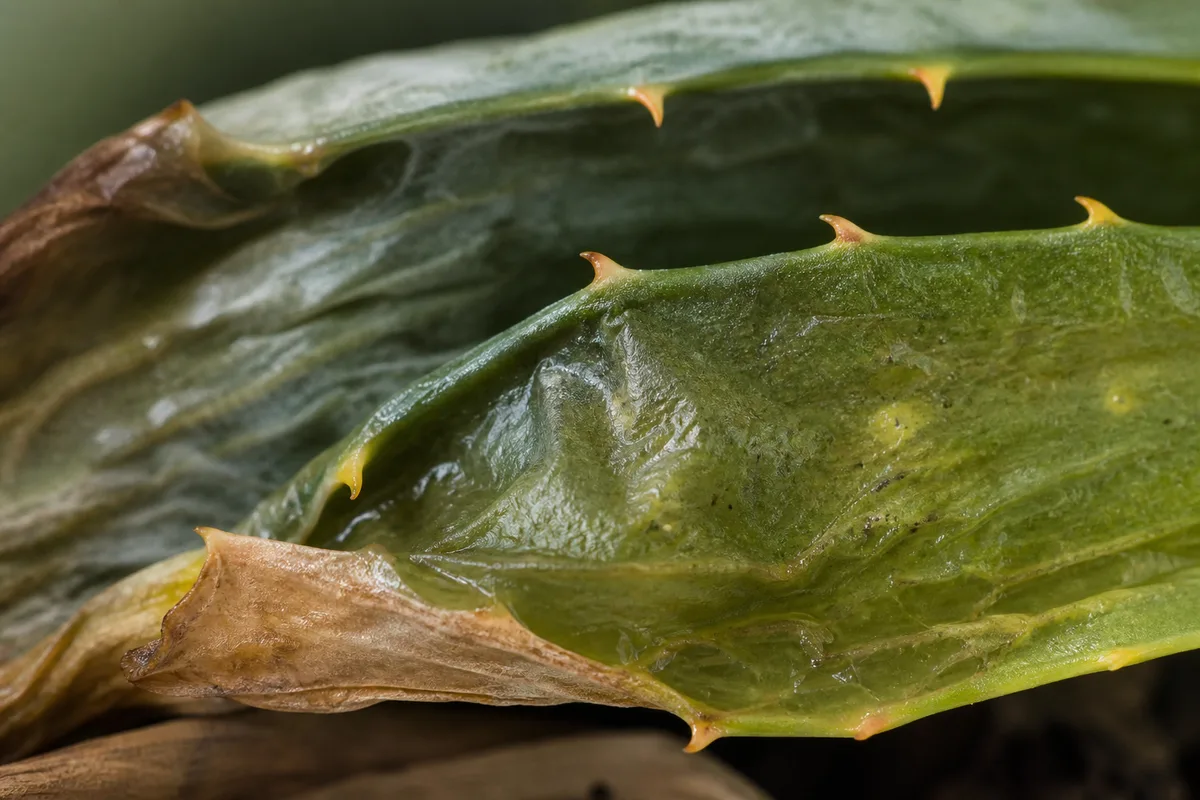
Wilting symptoms on Aloe Vera - compare with healthy tissue on the same plant.
Dry wilt (underwatering)
- Outer leaves limp, thin, or slightly wrinkled while the center may still stand
- Brown dry tips on margins that feel papery
- Pot feels very light; mix is dusty dry several inches down, sometimes shrunk from the pot wall
- Leaves feel firm but deflated when pressed-not mushy
- Wilting may appear suddenly after the plant used up its leaf water reserves during a hot sunny spell
Photo check (dry wilt): Compare an outer leaf to a firm center leaf-dry wilt shows thin, slightly puckered tissue that still feels firm when squeezed, not mushy. The pot should feel noticeably light when lifted. Original dry-wilt photo pending for a future update.
Wet wilt (overwatering / root decline)
- Whole rosette limp even though soil is damp or soggy
- Leaves turn soft, pale, yellow, or translucent at the base first
- Pot feels heavy; surface stays dark and cool for many days after the last watering
- Sour or off smell from the drainage hole or soil line
- Crown or stem base softens when pinched-urgent rot signal
- Lower leaves may brown and collapse while you keep watering because they “look dry”
Photo check (wet wilt): Look for translucent yellow tissue at the leaf base where it meets the crown, with dark damp mix and a heavy pot. Press the base gently-if tissue dents and smells off, treat as same-day unpot, not a soak. Original wet-wilt photo pending for a future update.
The cruel paradox: wet wilt and dry wilt look alike from across the room. Only leaf texture plus soil moisture at depth separates them. Aloe’s thick leaves make the wet-wilt trap more deadly than on thin-leaf houseplants-owners see limp foliage and reach for the watering can while roots are already failing.
Why Aloe Vera wilts
Aloe stores water in its leaves and evolved for long dry gaps between rains on rocky, fast-draining ground. Wilting happens when the root–leaf water balance breaks-either roots cannot deliver water, or the leaves have exhausted stored moisture.
Overwatering and root rot
The most common indoor cause. When soil stays wet, roots lose oxygen and decay. Damaged roots cannot move water upward, so leaves wilt despite wet mix-a common pattern when roots are failing-the classic succulent trap that pushes owners to water more and accelerate rot. Heavy peat mix, blocked drainage holes, oversized pots, and winter calendar watering all keep the root zone saturated.
Underwatering and drought stress
Less common than rot indoors, but real in hot south windows, small terracotta pots, or after months of “aloe doesn’t need much water.” The thick leaves mask early dryness; wilting can seem sudden once reserves run low. See underwatering for the full dry-soil protocol.
Cold drafts and winter slowdown
Aloe goes dormant during winter months and prefers temperatures between 55 and 85°F. Cool rooms plus reduced light mean slower evaporation and lower water demand-but a plant still on summer watering frequency can sit wet too long and wilt from rot. Conversely, a plant near a cold draft window in dry winter heat can lose turgor from rapid leaf water loss without adequate root uptake. Move stressed plants away from icy glass and match winter watering to dormancy per the Aloe Vera light guide and watering guide.
Repot shock
Fresh disturbance breaks fine root hairs. A recently repotted aloe may wilt for several days even with correct moisture-especially if roots were teased aggressively or the plant was watered immediately after repotting into wet mix. Hold steady light and let it settle before changing anything else.
Pests at the root zone
Root mealybugs and fungus gnats often signal chronically wet soil. Mealybugs on roots weaken uptake; severe infestations can accompany collapse. Check for white cottony masses on roots and soil surface when wilt persists after correcting water. If gnats persist on a heavy damp pot, read the fungus gnats guide before adding more water.
Variegated and tree aloe caveats
Cream-striped or dwarf cultivars photosynthesize less per leaf and use stored water more slowly than standard green rosettes-dry wilt can look milder until collapse is sudden. Large Aloe arborescens or outdoor in-ground plants wilt from different stressors (frost, rain saturation) than a windowsill rosette; this page focuses on container indoor aloe.
How to confirm the cause
Run this sequence before any treatment:
- Leaf firmness test - Press an outer leaf. Firm-but-flat and thin = drought; soft and mushy = overwatering. Soft, squishy, or translucent = too much water or rot.
- Soil at depth - Surface dust can lie. Probe the bottom third of the pot. Wet deep with limp leaves = root trouble. Dry throughout with limp firm leaves = drought.
- Pot weight - Lift the container. Heavy + wilted ≠ thirsty. Light + wilted usually = dry.
- Smell and base check - Sour odor or soft tissue at the soil line confirms rot risk, not thirst.
- Watering history - When did you last soak until runoff? Has the plant moved to brighter light, a smaller pot, or a cooler room since then?
- Root inspection (when wet wilt suspected) - Slide the plant out. Firm pale roots with dry surface soil may mean underwatering after all. Brown mushy roots with wet mix mean root rot-do not water.
Make one diagnosis before acting. Stacking soak + repot + prune the same day hides which fix helped.
Dry vs. wet wilt decision table
| Pattern | Leaf texture | Soil at bottom third | Pot weight | Urgency | First action |
|---|---|---|---|---|---|
| Dry wilt | Firm but thin, puckered | Dusty dry throughout | Very light | Routine - soak within 24 hours | One deep soak; drain saucer; wait for full dry-down |
| Wet wilt | Soft, yellow, translucent base | Damp or soggy | Heavy | High - same day if base softens | Stop watering; unpot and inspect roots |
| Crown rot | Whole rosette collapsed; crown dents when pinched | Wet, sour smell | Heavy | Urgent - same day | Unpot; trim rot; salvage firm pups per root rot |
| Repot shock | Mild limp; leaves still partly firm | Correct moisture for schedule | Normal | Low - wait 3–5 days | Hold steady light; no extra water or repot |
| Cold draft wilt | Firm leaves; tips may brown | Dry to normal | Normal | Medium | Move off icy glass; review light and winter watering |
The first fix to try
If soil is wet and leaves are soft: stop watering immediately. Move the plant to bright indirect light with good air movement, empty any saucer water, and do not add more moisture until you have inspected roots. That single pause prevents the most common fatal mistake-watering a wilted plant that is already overwatered.
If soil is dry and leaves are thin but firm: give one thorough soak until water runs from drainage holes, pause ten minutes, water once more, and drain the saucer completely. That is the entire first fix-no fertilizer, no repot, no daily sips afterward.
Step-by-step recovery
Dry soil, firm leaves
- Soak as above. If mix has shrunk from the pot walls and water runs straight through the gap, set the pot in a tray of water for 20–30 minutes so the mix rehydrates from below, then lift and drain fully-bottom-watering can re-wet hydrophobic dry peat without pouring into the rosette crown.
- Place in bright indirect to morning direct sun-avoid harsh afternoon baking on a stressed rosette. See the light guide for winter placement.
- Wait until mix is completely dry before the next drink. Review Aloe Vera watering for soak-and-dry rhythm.
- Expect firmer leaves within 24–48 hours. Brown tips will not green up.
Wet soil, soft roots
- Unpot and rinse old mix from roots.
- Trim brown, mushy, or slimy roots with a clean blade; keep firm pale tissue.
- Let cut surfaces callous one to two days in dry air.
- Repot into fresh gritty cactus mix-see soil guidance-in a pot only slightly larger than the root mass, with open drainage.
- Hold water five to seven days after repotting so damaged roots are not re-soaked immediately.
- Resume soak-and-dry only when new growth looks stable.
If the crown is mushy or most roots are gone, propagation from firm offsets may be the realistic save-see propagation for pup separation and repotting for division timing.
Annotated recovery snapshot (illustrative)
A south-window aloe left dry through a two-week vacation showed outer leaves limp and thin while center leaves stayed upright; the pot felt feather-light and mix had pulled slightly from terracotta sides. One bottom soak for 25 minutes followed by a top soak until runoff firmed outer leaves within 36 hours-old brown tips stayed brown. Original before/after photos pending for a future update; judge drought recovery by leaf firmness and new center growth, not cosmetic outer posture.
Recovery timeline and success signs
Drought wilt: Leaves often regain firmness within one to two days after a proper soak. Full cosmetic recovery of outer leaves may take two to six weeks during active spring and summer growth.
Rot-related wilt: Recovery is measured in weeks to months, not hours. Old collapsed leaves rarely stand up again. Success means firm new center leaves, no spreading base softness, and healthy roots on re-inspection.
Worsening signs: Spreading yellow, translucent tissue; crown softening; sour smell increasing; wilting continuing while soil stays wet after you stopped watering-escalate to full root rot treatment or propagate viable pups.
Mistakes to avoid
Do not water because leaves look limp without checking soil moisture at depth-this kills more aloes than drought.
Do not mist leaves instead of fixing root-zone moisture. Aloe needs water in the mix, not humidity on foliage.
Do not fertilize a wilted plant to “strengthen” it. Rehydrate or dry out roots first.
Do not repot into a larger pot hoping it will dry faster-extra wet mix volume worsens rot.
Do not pour water into the rosette center. Standing water in the crown invites basal rot on rosette succulents.
Do not stack treatments-soak, repot, prune, and spray on the same day make it impossible to read the plant’s response.
How to prevent wilting
Build prevention around dry-down, not the calendar:
- Water only when mix is completely dry-often every two to four weeks in warm bright months, less in winter dormancy
- Use fast-draining cactus mix and a pot with holes in the bottom; terracotta helps dry evenly
- Empty saucers within 30 minutes of every soak
- Check pot weight weekly until you know light versus saturated by feel
- Slow watering in cool dim months when evaporation drops-pair with light adjustments so the plant is not sitting wet in low growth
- Avoid cold drafts below 50°F (10°C) on wet roots
Match rhythm to your home, not a generic schedule. The watering guide and overview cover seasonal adjustment in detail.
When to worry - escalation summary
Use this fork after the leaf-firmness test and soil probe:
| Your finding | Do this first | Escalate if |
|---|---|---|
| Dry mix, firm thin leaves | One deep soak (bottom-water if mix shrunk) | No firmness in 48 hours; soil still won’t hold moisture |
| Wet mix, soft leaves, firm crown | Stop water; bright air; inspect roots within 24 hours | Crown softens, smell worsens, or wilt persists on wet mix |
| Wet mix, soft crown, sour smell | Unpot same day - trim rot, salvage pups | Crown fully black mush-propagate offsets only |
| Repot shock, correct moisture | Wait 3–5 days in steady light | Worsening softness at base on wet fresh mix |
Treat as urgent if the crown feels soft, the base smells sour, or most roots are mushy on inspection-follow the root rot page before the plant declines past saving.
For chronic wet soil without full collapse yet, read overwatering. For thin puckered leaves and bone-dry mix, read underwatering. For slower posture change without acute collapse, see drooping leaves.
Related Aloe Vera guides
- Aloe Vera overview - culture hub and seasonal care baseline
- Light - winter placement and draft avoidance
- Watering · Soil · Repotting · Propagation
- Overwatering · Root rot · Underwatering · Drooping leaves · Fungus gnats
FAQs
Why is my Aloe Vera wilting with wet soil?
Limp leaves with damp or soggy mix usually mean roots cannot absorb water-often from overwatering, poor drainage, or advancing root rot. The leaves look thirsty, but adding more water makes rot worse. Unpot and check whether roots are firm and pale or brown and mushy before you do anything else.
How can I tell if wilting is from underwatering or overwatering?
Press an outer leaf between your fingers. Thin, puckered, and firm-but-flat tissue with a very light pot and dusty dry mix points to drought. Soft, yellow, or translucent tissue with heavy wet soil points to too much water or root decline. The fixes are opposite, so always pair leaf texture with soil moisture at the bottom of the pot.
Will wilted Aloe Vera leaves perk back up?
Leaves that lost turgor from a single dry spell often firm up within 24 to 48 hours after a proper soak. Leaves that collapsed from rot or long-term overwatering rarely re-turgify-the tissue is damaged. Judge recovery by firm new center growth and stable roots, not by old outer leaves standing upright again.
When is wilting urgent on Aloe Vera?
Act the same day if the whole rosette collapses while soil stays wet, the base smells sour, or the crown feels soft when you pinch it. Those signs can mean crown rot. For dry wilt, urgency rises when soil has pulled away from the pot and outer leaves bend easily after weeks without a deep drink.
Is aloe wilting the same as drooping?
No. Wilting is acute turgor loss-often overnight collapse when the rosette goes limp fast. Drooping is usually gradual splay over days while leaves may still feel partly firm. Use the scope table at the top of this page; if collapse was sudden and the whole rosette is floppy, stay here. If posture sagged slowly, see drooping leaves.