Underwatering on Aloe Vera: Causes, Checks & Fixes
Quick answer
Underwatering on Aloe Vera shows as a very light pot, dry mix throughout, and thin or puckered leaves with brown dry tips. First step: soak the root zone thoroughly until water drains, then wait until the mix dries completely before watering again.
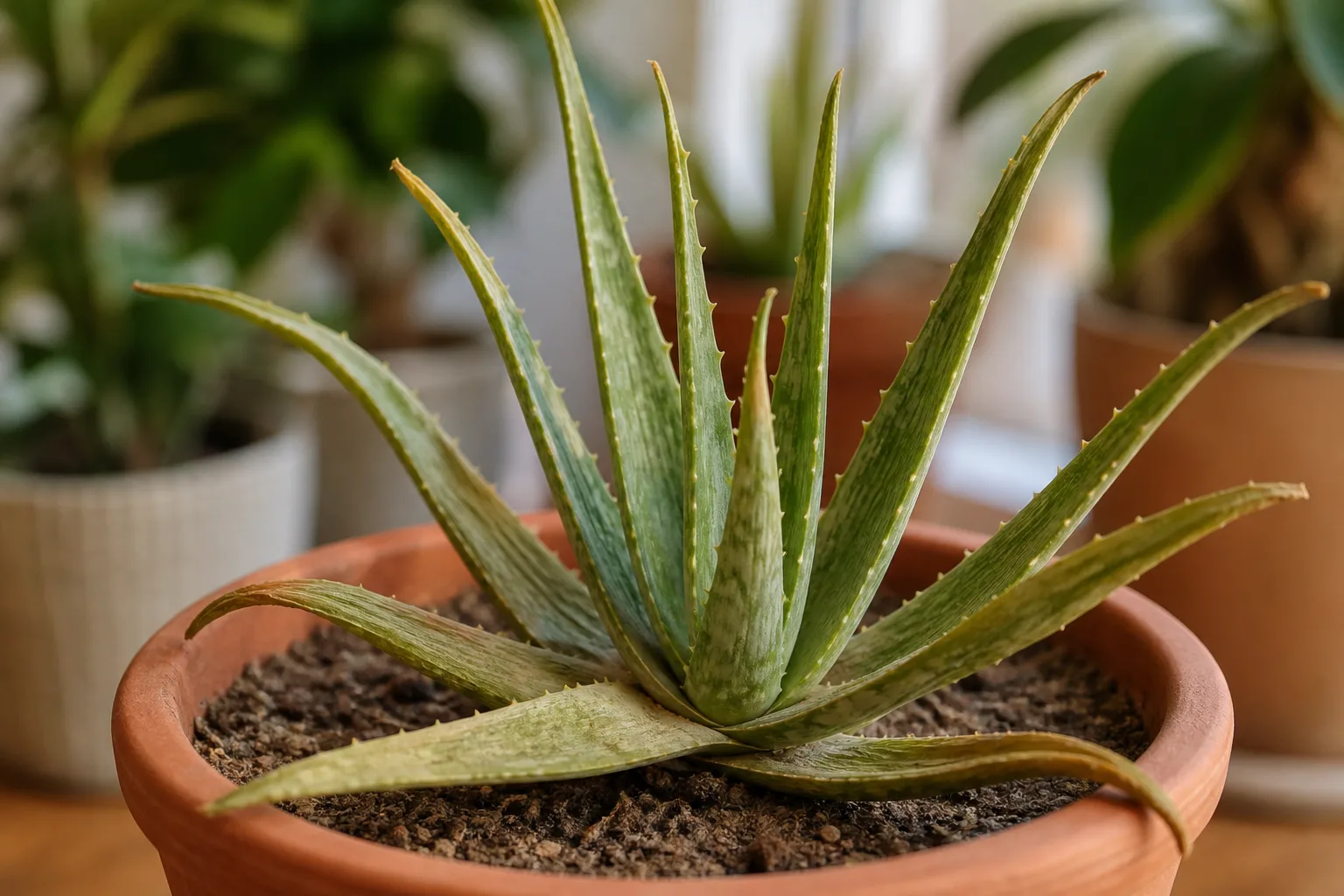
Underwatering on Aloe Vera: Causes, Checks & Fixes
This guide covers underwatering on Aloe Vera. See also the general Underwatering guide, watering, and light pages for this plant.
Underwatering on Aloe Vera: Causes, Checks & Fixes
Quick answer
Underwatering on Aloe Vera (Aloe vera) means the root zone has stayed dry too long for how fast the plant is using water. The thick leaves are a water reservoir, so mild dryness often goes unnoticed-until outer leaves turn thin, puckered, or leathery and brown tips crisp up while the pot feels feather-light.
First step: give one deep soak through the drainage holes (or bottom-water if the mix has shrunk away from the pot wall). Do not mist leaves, do not fertilize, and do not switch to daily watering-that last mistake swings straight into the rot that kills more aloes than drought ever does.
What underwatering looks like on Aloe Vera
Healthy Aloe Vera leaves are plump, firm, and slightly rigid. When underwatered, the change is in texture and weight, not mush:
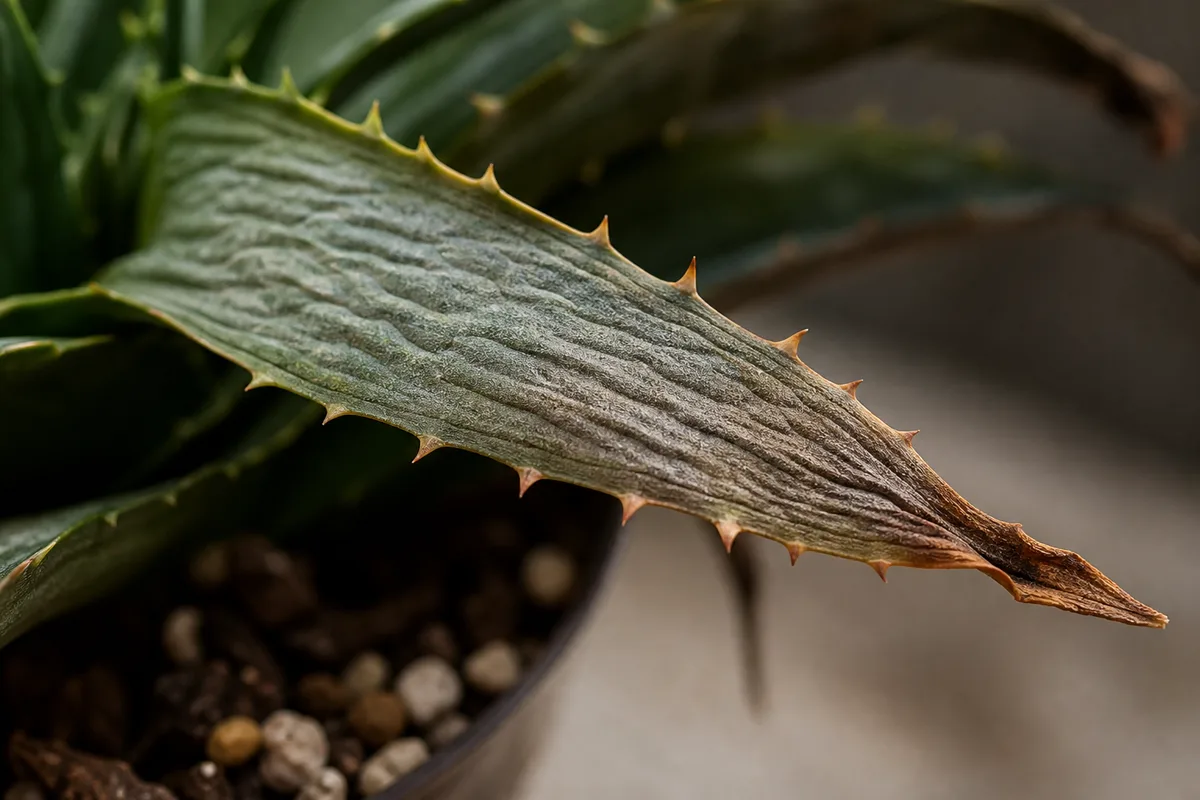
Underwatering symptoms on Aloe Vera - compare with healthy tissue on the same plant.
- Thin, puckered, or slightly wrinkled leaves-especially the outer ring-while the center rosette may still stand upright
- Brown, dry leaf tips or margins that feel papery, not translucent
- Drooping or curling of lower leaves as cells lose turgor
- Soil dusty dry several inches down, sometimes pulling away from the pot edge
- Pot very light when lifted; water may pour straight through without wetting the root ball
- Slowed pup production or stalled new center leaves after repeated dry cycles
- Older leaves yellowing and drying as the plant sheds tissue to conserve moisture
The leaf-feel test separates drought from rot quickly. SDSU Extension notes that too little water produces yellow, shriveled, and puckered leaves, while overwatered aloe turns soft and mushy. Press an outer leaf: underwatered tissue feels firm but deflated; overwatered tissue collapses or feels waterlogged.
Soil and smell tell the rest of the story. Underwatered mix is light colored, dusty, and odorless. Overwatered mix stays damp, may smell sour, and the base can soften even while leaves wilt-a cruel lookalike covered below.
Why Aloe Vera gets underwatered
Aloe evolved for bright light, gritty soil, and long gaps between rains. It stores water in its leaves, so owners often wait too long-especially after hearing that aloe “likes neglect.” Penn State Extension is right that succulents tolerate drought better than soggy roots, but during active growth in a sunny window the plant still drinks steadily. Letting the mix stay dry for many weeks in summer is a common trigger.
Care habits that cause chronic dryness:
- Watering on memory, not soil-skipping checks for a month because “aloe doesn’t need much”
- Fear of overwatering on Aloe Vera after a past rot scare, leading to months without a real soak
- Surface-only watering that wets the top inch while the root ball below stays dry
- Hydrophobic, aged mix-peat-heavy soil that repels water once bone dry; the surface looks briefly damp while roots stay thirsty
- Small terracotta pots in hot windows-excellent for drainage but they can dry fully in a week during bright summer sun
- Winter schedule applied in summer-watering every four to eight weeks makes sense in dormancy but starves a actively growing rosette in June
- Root-bound plants in fast-draining mix-the crowded root mass drinks the small water reservoir in days
Environmental pushes matter too. Aloe Vera placed in direct morning-to-midday sun, near heating vents, or in low-humidity rooms (20–40% is normal for Aloe Vera overview) loses leaf water faster than the same pot in a dim corner. NC State Extension recommends allowing soil to completely dry between waterings-the skill is reading when that dry-down has gone too far for your specific pot and season.
How to confirm the cause
Work through these checks before you soak or repot:
- Leaf texture - Thin, puckered, firm-but-flat leaves = drought. Soft, yellow, translucent leaves = likely overwatering or rot.
- Pot weight - Lift the container. Very light with dry mix throughout confirms dryness; heavy with wilted leaves suggests root trouble, not thirst.
- Moisture at depth - Push a finger, skewer, or moisture probe to the bottom third of the pot. Surface dust on top of dry deep mix is classic underwatering.
- Shrink gap - Soil pulled away from the pot wall means prolonged drought; plan a soak, not a sprinkle.
- Drainage test - Pour a small amount of water on the surface. If it races out the bottom instantly, the root ball may be too dry to absorb water normally.
- Root peek (if still unsure) - Slide the plant out. Healthy drought-stressed roots are dry, firm, and pale. Mushy brown roots with wet mix mean rot-do not treat with more water.
- Recent care - When did you last water deeply until runoff? Has the plant been in a brighter or hotter spot since then?
If the mix is wet deep down and the base is soft, stop-you are not dealing with underwatering. Soaking again will worsen rot.
First fix for Aloe Vera
Give one thorough soak that rewets the entire root zone.
Place the pot in a sink or tray. Water slowly from the top until water runs freely from the drainage holes, pause ten minutes, then water once more. Empty the saucer completely-NC State Extension stresses that pots need drainage holes and that overwatering causes rot, so never leave the plant sitting in runoff.
If water channels straight through or soil has shrunk from the pot sides, bottom-water: set the pot in a tray of room-temperature water for 30–45 minutes until the surface darkens, then lift it out and drain fully. Missouri Botanical Garden advises soaking very dry light mixes for one to two hours when water runs through too fast-the same principle applies to a dehydrated aloe root ball.
That single deep drink is the first fix. Do not add fertilizer, do not repot the same day unless the mix is hydrophobic and cannot rewet after two soaks, and do not switch to daily watering. Resume your normal rhythm only after the mix has dried completely again.
Step-by-step recovery
After the initial soak:
- Move to stable light - Bright indirect to direct morning sun is ideal. Avoid baking a stressed plant in harsh afternoon sun until leaves plump back up.
- Wait for dry-down - Let the mix go fully dry before the next drink. Penn State Extension recommends watering thoroughly when the soil surface is dry during the growing season and reducing so leaves do not shrivel in winter.
- Track pot weight - Learn how heavy the pot feels after a soak versus when it needs water again; Missouri Botanical Garden lists weight as a reliable gauge for succulents that like the mix almost dry throughout.
- Trim only dead tissue - Snip fully brown, crispy tips if you want a cleaner look. Leave firm but slightly wrinkled green tissue alone-it can refill.
- Refresh hydrophobic mix if needed - If the root ball still will not hold moisture after two soaks, repot into fresh cactus mix with perlite and grit. Water once after Aloe Vera repotting guide, then let dry fully.
- Hold fertilizer - Wait until new growth looks normal for two weeks. Salts on drought-stressed roots add stress without fixing thirst.
Recovery timeline
Within 24–48 hours of a proper soak, outer leaves often feel noticeably firmer and droop less. That turgor rebound is your first good sign.
Brown dry tips do not green up-they are dead tissue. Judge success by plump leaves and active center growth, not by old margin damage.
New pups or center leaves may take two to six weeks during spring and summer active growth. Aloe is naturally slow; a plant that was dry for months may need a full season to look full again.
Worsening signs after soaking: leaves turn soft and translucent, the base smells sour, or the rosette collapses while soil stays wet-those mean overcorrection into rot, not slow drought recovery. Unpot and inspect roots if that pattern appears.
Lookalike symptoms
- Overwatering and root rot on Aloe Vera - Leaves wilt despite wet mix; tissue is soft, yellow, or translucent; base may smell off. Missouri Botanical Garden warns that wilted plants are sometimes overwatered, and extra water is the death knell. Check roots before soaking.
- Sun scorch - Brown patches on sun-facing leaf faces with otherwise firm, plump tissue and normal soil moisture; move away from harsh midday sun, do not drench.
- Fluoride or salt burn - Dry brown tips on an otherwise well-watered plant in tap-water regions; flush soil occasionally and use filtered water if tips keep returning despite correct dry-down.
- Low light - Pale, stretched leaves without extreme soil dryness; brighten the window before changing water frequency.
- Normal winter slow-down - Growth pauses and water needs drop sharply; slight leaf thinning in a cool dim room may be seasonal, not emergency drought-still check soil depth before assuming the plant is fine.
What not to do
Do not mist leaves instead of soaking roots-surface humidity does not refill the leaf reservoirs aloe depends on.
Do not water a little every day after one dry spell. Succulents need soak and dry, not constant dampness; daily sips keep the top wet and the bottom unpredictable.
Do not assume drooping always means overwatering without checking soil at depth and leaf texture-both drought and rot wilt leaves, but the fixes are opposite.
Do not fertilize a dry plant to “wake it up.” Rehydrate first.
Do not leave a dehydrated plant in a full saucer for days trying to bottom-water indefinitely-drain after the mix rewets to avoid rot.
How to prevent underwatering next time
Build a habit around dry-down, not the calendar. For most indoor Aloe Vera in gritty mix, that means deep watering when the mix is completely dry-often every two to four weeks in warm bright months and every four to eight weeks in winter dormancy-but your pot, light, and home humidity set the real pace.
- Check the bottom of the pot with a skewer before every major watering
- Weigh the pot until you know light versus saturated by feel
- Use terracotta or unglazed clay with drainage holes and empty saucers within 30 minutes
- Increase checks after moving to a sunnier window, upsizing heat, or when pups fill the pot
- Replace peat-heavy mix that has gone hydrophobic every two to three years
SDSU Extension sums the rhythm well: regular thorough watering with the soil drying completely in between. Aloe forgives a missed week far more willingly than a week sitting in soggy mix.
When to worry
Treat the same day if leaves are limp and easily bent, soil has shrunk from the pot walls, and the plant has had no deep water for many weeks in active summer growth-fine roots may already be dying back.
Escalate to root inspection if the plant does not firm up within 48 hours after a proper soak, or if lower leaves yellow in clusters while the mix alternates between bone dry and accidentally sodden.
A mature aloe with some firm tissue in the center can recover from harsh drought. A rosette that is brittle, breaks cleanly, and shows no turgid center growth after correction may be too far gone-propagate any firm pups if the main plant continues to decline.
Conclusion
Underwatering on Aloe Vera is a dry root zone problem, not a mystery disease. Confirm it with a light pot, dry deep mix, and thin firm leaves-then fix it with one full soak and a proper dry-down wait before the next drink. The leaves store water, so this plant hides thirst longer than ferns or peace lilies, but sunny windows and fast-draining pots still demand attention. Match water to how fast your mix actually dries, and you keep the plump rosette without swinging into the rot that overwatering brings.
When to use this page vs other Aloe Vera guides
- Aloe Vera watering guide - Use for routine moisture checks before assuming underwatering is the main issue.
- Aloe Vera problems hub - Browse all 16 common issues on this species.
- Wilting on Aloe Vera - Different entry point when symptoms overlap with underwatering.
- Brown Tips on Aloe Vera - Different entry point when symptoms overlap with underwatering.
- Yellow Leaves on Aloe Vera - Different entry point when symptoms overlap with underwatering.