Aloe Vera Watering: Soak-and-Dry Method, Frequency, and How
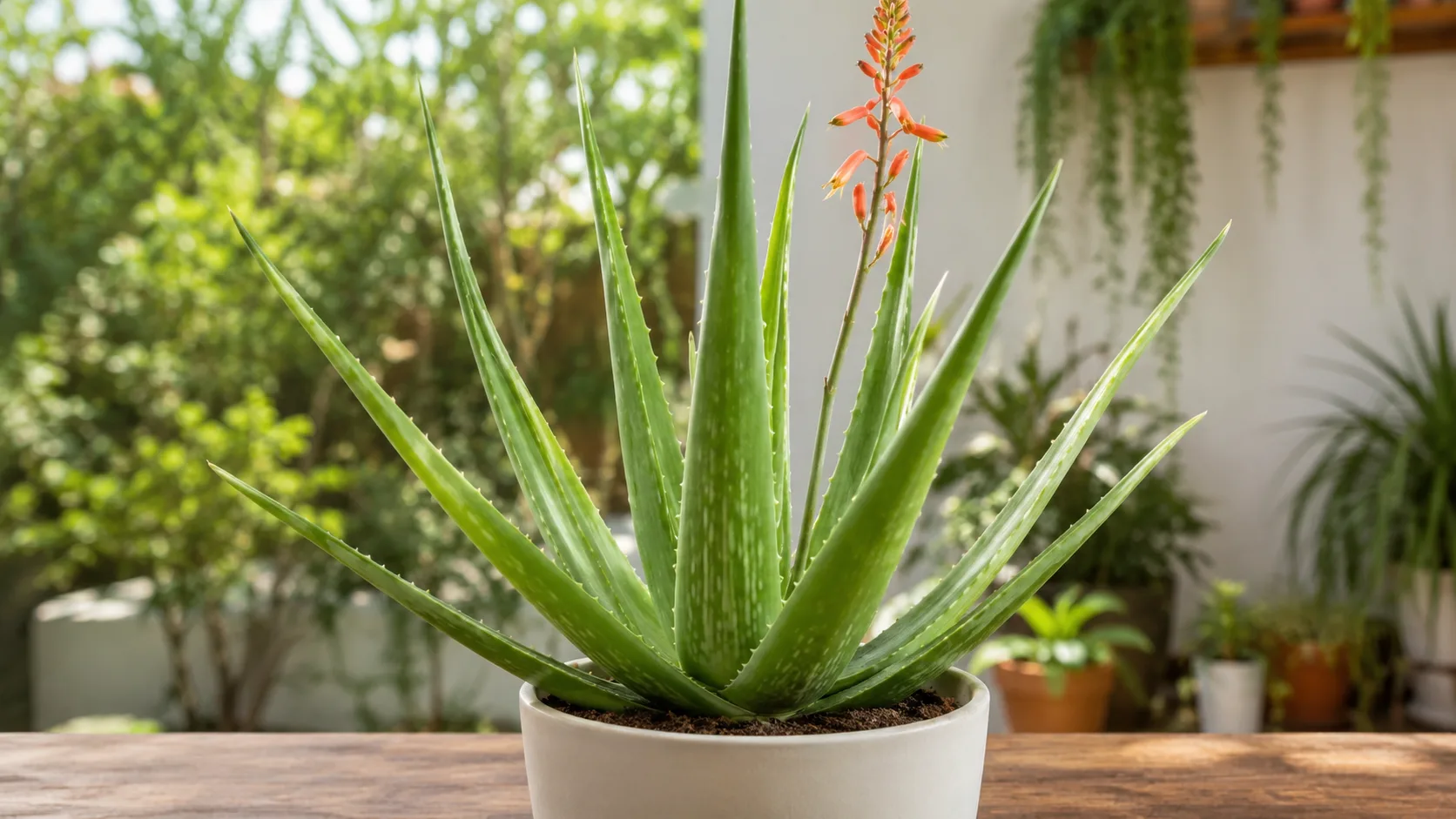
Aloe Vera Watering: Soak-and-Dry Method, Frequency, and How to Fix Mistakes
Aloe Vera Watering: Soak-and-Dry Method, Frequency, and How to Fix Mistakes
By sai-ananth · Reviewed by LeafyPixels Review Board · Last expert review: June 2026
Yellow, mushy leaves on wet soil almost always mean the roots met water too often - not that your aloe is thirsty. Aloe vera watering fails when growers treat a leaf succulent like a tropical foliage plant and water on a calendar. The species evolved across the Arabian Peninsula and dry parts of North Africa, storing water in thick leaves and tolerating long gaps between drinks. Indoors, that biology translates into one rule: soak deeply, drain completely, then let the mix dry all the way through before the next drink. For species context, toxicity, and placement, see our Aloe Vera overview. This page owns watering; the soil, light, and repotting guides cover the other half of the dry-down equation.
What Aloe Vera Actually Needs From Water
Aloe vera is a leaf succulent. The plant stores water in its tissues and uses that reserve to survive the long dry stretches between rainfall pulses in habitat. The Missouri Botanical Garden Plant Finder describes Aloe vera as tolerant of drought and dry indoor air, and explicitly warns growers to avoid overwatering on Aloe Vera. That single warning is the most important sentence in any aloe care guide, because more indoor aloes die from too much water than from too little.
Your job is not to keep the soil “a little moist.” Your job is to let it dry from top to bottom, soak the root zone thoroughly, and then leave the plant alone until the mix is bone dry again. Light intensity changes how fast that cycle runs - a plant on a bright sill dries faster than the same pot in a dim corner, which is why our Aloe Vera light guide pairs naturally with every watering decision.
Why Aloe Stores Water in Its Leaves
The thick, fleshy leaves are reservoirs. The gel inside each leaf is roughly 99% water along with polysaccharides and sugars the plant uses for storage. When soil moisture drops, aloe draws on those internal reserves, which is why a healthy, well-watered rosette feels firm and heavy while a thirsty one feels lighter and slightly flexible.
That storage is also why aloe survives missed waterings, vacations, and forgetful owners far better than most tropical houseplants. It is built for drought, not daily drinks. “More often” is almost never the right answer to an aloe problem. “More thoughtfully” is.
The Soak-and-Dry Rule in Plain English
The soak-and-dry method is a two-step routine: water deeply so the entire root ball gets wet, then wait until the soil dries all the way through before watering again. Pour slowly and evenly over the mix until water runs from the drainage hole, let the pot finish draining, and do not touch the watering can until the soil is dry throughout.
This works because aloe roots are adapted to a wet-dry cycle. They absorb water efficiently when it is suddenly available and tolerate dry air in the soil between drinks. What they do not tolerate is constantly damp mix, because wet soil with limited air suffocates fine roots and opens the door to rot. The North Carolina Extension Gardener Plant Toolbox makes the same point: allow the soil to dry between watering, then water well and let the water drain from the pot, and water less frequently in winter.
The University of Arizona Cooperative Extension frames it as completely soaking the soil but allowing it to dry between waterings - the same rhythm, stated plainly for potted aloe.
How Often to Water Aloe Vera Indoors
There is no single correct calendar answer. Frequency depends on pot size, pot material, light, temperature, humidity, and growth stage. For most indoor aloes, a practical starting range is roughly every 2 to 3 weeks during active spring and summer growth, and roughly every 4 to 6 weeks during the slower fall and winter period. Some plants in small terracotta on sunny windowsills dry in 10 to 14 days. The same plant in a large plastic pot in a dim room may stay moist for more than a month.
Anyone who promises a fixed weekly interval is setting the plant up for drought stress or root rot on Aloe Vera. Use the ranges above, then trust your finger, skewer, pot weight, and leaf squeeze - not the date on the calendar.
A Realistic Summer and Winter Schedule
In spring and summer, an indoor aloe in a typical 4 to 6 inch terracotta pot in bright light usually needs water every 14 to 21 days. The plant is actively growing, temperatures are higher, and leaves transpire faster. Check weekly, water only when the soil is fully dry, and expect roughly twice a month for most homes.
In fall and winter, growth slows, light drops, and cool indoor air holds less demand for water. Most aloes need water only every 4 to 6 weeks, and some in low light or cool rooms can go 8 weeks between drinks. A weekly schedule that felt right in July becomes a slow drowning routine by December. The Missouri Botanical Garden recommends reducing winter watering to the minimum, and the Royal Horticultural Society repeats it: during winter, reduce watering to a minimum as the plant enters a dormant period.
Documented dry-down example: In LeafyPixels grow notes, a healthy 4-inch unglazed terracotta aloe on a south-facing windowsill (indoor temps 72–78°F / 22–26°C) typically needed a full soak every 16 to 18 days in July and every 35 to 42 days in January with central heating running. The same rosette in a 6-inch glazed ceramic pot in medium indirect light dried in roughly 24 days in summer and 50+ days in winter. Your home will differ - track one pot for two full cycles and you will know your rhythm better than any blog table.
| Season | Typical frequency (indoor aloe) | What to watch |
|---|---|---|
| Spring | Every 14 to 21 days | New center growth, faster dry-down than winter |
| Summer | Every 14 to 21 days | Hot windowsills, AC-dried air, brighter light |
| Fall | Every 21 to 30 days | Growth slowing, mix staying damp longer |
| Winter | Every 28 to 45 days | Dormancy, dim rooms, cool sills, slow dry-down |
Why the Calendar Is a Clue, Not a Rule
Watering on the same day every week because the calendar says so overwaters one plant and underwateres another in the same home. The cleaner habit is to use the calendar as a reminder to check, then let the soil, pot weight, and leaf firmness make the actual decision. If the mix is dry two inches down, the pot feels light, and a mid-leaf squeeze reads firm-but-not-plump, water. If not, wait - even if it has been three weeks.
Central heating and air conditioning change the math indoors. Heated winter air pulls moisture from leaf surfaces and can accelerate dry-down near vents, while a cool, dim back bedroom may hold damp soil for weeks. Extensions rarely spell out those indoor modifiers; tracking your own pot closes the gap.
How to Tell If Your Aloe Vera Needs Water
The fastest read is the soil, not the leaves - but leaves confirm what the mix is telling you. Fully dry soil from top to bottom is a green light. Anything else means wait. Combine at least two of the tests below; they take under a minute and prevent most aloe watering mistakes.
The Finger Test, Skewer Test, and Pot Weight Test
Finger or knuckle test: Push a clean finger into the mix to the second knuckle, roughly 2 inches down. Cool, damp soil or any cling means wait. Completely dry soil with a clean finger means go.
Skewer or chopstick test: Push a dry wooden skewer 2 to 3 inches into the mix, wait a minute, pull it out. Damp soil sticks and darkens the wood. Dry soil leaves it clean. This is the best check for deep pots where surface color lies.
Pot weight test: Lift the pot right after a thorough watering and remember that weight. As the mix dries, the container loses noticeable mass. In winter, the difference between “still damp” and “ready” can mean two extra weeks of waiting. Many growers lift first, then confirm with finger or skewer.
Moisture meters: Consumer probes can work as a secondary check, but they often read wet long after the root zone has dried - especially in chunky aloe soil mixes with lots of perlite or pumice. Treat a meter as a hint, not the final authority. Finger, skewer, and weight together beat any single probe for aloe.
The Leaf Squeeze Test
Gently squeeze a thick outer or mid-leaf between thumb and finger. A well-hydrated aloe leaf is firm and springy. A thirsty leaf is slightly soft and pliable - the plant is drawing on its gel reserve. An overwatered leaf is waterlogged, mushy, or easily bruised; stop watering and inspect roots if several leaves feel that way on wet soil.
University of Arizona Extension succulent guidance notes that puckered or less-plump leaves signal thirst, while soggy leaves mean too much water - the same squeeze logic growers use on aloe rosettes. Pair the squeeze with a soil probe: firm leaves on bone-dry soil still mean wait; soft leaves on dry soil mean it is time to soak.
How to Water Aloe Vera the Right Way
A good aloe watering wets the entire root ball, then drains completely. Place the pot in a sink or saucer. Pour room-temperature water slowly and evenly over the mix, moving around the inner edge so water soaks in rather than running straight down the side. Keep pouring until water runs freely from the drainage hole. Let the pot rest and drain for several minutes. Empty the saucer. Do not let the pot sit in standing water.
Top Watering Done Cleanly
Top watering is the default because it flushes excess salts from the soil. The critical rule: keep water off the rosette. Aloe leaves radiate from a compact central crown, and water that pools in that crown and stays there - especially in cool rooms - invites crown rot. Pour onto the mix around the inside of the pot, not into the center of the plant.
A long-spout watering can gives more control than a wide jug. After watering, tip the pot slightly to confirm no water sits at the leaf bases. Empty saucer water within 15 to 30 minutes.
Bottom Watering and When It Helps
Bottom watering sets the pot in a shallow tray of room-temperature water and lets the mix absorb moisture upward through the drainage hole. Use it when soil has shrunk and repels top water, or when you want to avoid the crown entirely.
It has limits. Water moving up can leave fertilizer salts near the top of the mix. Leaving the pot in water for hours recreates the saturated conditions that cause rot. If you bottom water, use a shallow tray, soak 15 to 30 minutes until the surface feels slightly moist, then drain thoroughly.
What Water to Use on Aloe Vera
Aloe is not fussy about water type, but it is not indifferent. The best water is room-temperature and low in salts. Hard tap water can leave white crust on soil and terracotta rims. Heavily fluoridated tap water can cause brown leaf tips that mimic underwatering on Aloe Vera - leading growers to add more water to a quality problem.
A practical priority list: rainwater first; distilled or reverse-osmosis water for plants with persistent tip burn; filtered tap for chlorine reduction but not full fluoride removal; standard tap for most plants in moderately soft water. Avoid sodium-based softener water - sodium accumulates in soil and damages roots. Never use ice-cold water; it shocks roots and can mark leaves on contact.
Letting tap water sit 24 hours off-gasses chlorine but does not remove fluoride or minerals. For fluoride-sensitive plants, switch water source rather than relying on standing water alone.
Pot, Soil, and Drainage
Even perfect watering fails in the wrong pot or mix. Three decisions matter: material, size, and drainage.
Unglazed terracotta is the safest default. Porous walls let moisture evaporate from the sides, speeding dry-down. NC State recommends clay pots for aloe for exactly that reason. Glazed ceramic and plastic hold moisture longer - fine for disciplined waterers, punishing for calendar waterers. Whatever the material, the pot must have a drainage hole.
Pot size: Choose a container only 1 to 2 inches wider than the root ball. Oversized pots hold soil the roots cannot use quickly; that extra volume stays wet and mimics overwatering. Aloe prefers being slightly root-bound and often pups more in a snug pot.
Soil mix: Use fast-draining cactus and succulent mix amended with 25% to 50% perlite, pumice, or coarse sand. Iowa State University Extension recommends roughly one part organic material to two parts mineral material for succulents. Regular potting soil alone is too moisture-retentive. See our full Aloe Vera soil guide for mix ratios and the squeeze test.
| Pot material | Relative dry-down speed | Best for |
|---|---|---|
| Unglazed terracotta | Fastest | Beginners, bright windows, rot-prone plants |
| Glazed ceramic | Moderate | Stable indoor temps, careful checkers |
| Plastic | Slowest | Low-light rooms, growers who under-water |
Overwatered vs Underwatered Aloe Vera
Overwatering is the most common killer. The plant suffocates at the root zone; leaves show the result. Underwatering is less common indoors but appears in small terracotta on hot sills or in very dry heated air.
| Clue | Overwatered aloe | Underwatered aloe |
|---|---|---|
| Leaf texture | Soft, mushy, sometimes translucent | Thin, wrinkled, curling inward |
| Leaf color | Yellow or pale green, often from base up | Dull green with brown, papery tips |
| Base of plant | Soft, dark, or collapsing | Firm |
| Soil | Wet or persistently damp, may smell sour | Bone dry, may pull from pot edge |
| Pot weight | Heavy | Light |
| Roots | Brown/black, soft, slimy | Pale tan, firm; may be dry and brittle |
| What to do | Stop water, unpot, trim rot, repot dry mix | Rehydrate slowly, resume soak-and-dry |
Overwatered - watch for: soft mushy translucent leaves; yellowing from the base; wet heavy pot; sour soil smell; crown that feels unstable. Pathogens such as Pythium and Phytophthora spread in saturated mix - cut the wet soil and you cut the disease.
Underwatered - watch for: thin curled leaves still firm at the base; brown dry tips; soil gap at pot edge; stalled growth; matte dusty color. Brown tips can also mean fluoride - check soil moisture before adding another drink.
How to Save an Overwatered Aloe With Root Rot
Root rot is time-sensitive but often recoverable if the crown is still firm.
- Stop watering and unpot. Shake off old mix. Healthy roots are pale tan and firm; rotted roots are dark, soft, and may slide off the core.
- Trim all soft, dark, slimy tissue with a sterile blade. Cut into firm pale tissue if rot climbed the stem. Sterilize between cuts.
- Inspect the crown. A soft brown growing point may be lost; firm leaves can sometimes restart from pups or cuttings.
- Callous 2 to 5 days in dry shade with good airflow. Skipping this invites fresh rot.
- Repot in dry fast-draining mix in a clean pot with drainage - ideally terracotta one size appropriate to trimmed roots.
- Wait 5 to 7 days before the first moderate soak, then return to soak-and-dry.
When trimming rotted roots, aloe sap can irritate skin - see the overview safety section before handling open cuts. Mushy leaves present at rescue will not green up; trim them once the plant stabilizes.
How to Revive an Underwatered Aloe Vera
Underwatered plants usually recover faster than overwatered ones because aloe is built for drought. If soil has pulled from the pot edge, top water may channel down the sides without wetting the root ball. Bottom water 20 to 45 minutes until the surface feels slightly moist, drain fully, then resume normal soak-and-dry once the mix dries throughout.
Trim leaves that are mostly brown and crispy - that tissue is dead. New firmness at the center within a few weeks signals success.
Watering After Repotting and Root Trims
Freshly disturbed roots need a dry rest. After repotting, dividing pups, or any significant root trim - including rot rescue - hold off watering for 5 to 7 days so cut surfaces callus. Introducing water to open wounds invites fungal rot. Aloe leaves store enough water to sustain the plant through the wait.
Penn State Extension and Arizona Extension both emphasize letting cut wounds dry before replanting and watering. The first post-rest drink should be a moderate soak, not a flood. Full step-by-step repot timing lives on our Aloe Vera repotting guide.
Pups in small pots dry faster than the parent rosette. A newly separated pup in a 3 to 4 inch pot may need its first drink sooner than a mature plant - but still only after the callus period and only when the top of the mix is dry.
Common mistakes to avoid: watering on a fixed weekly schedule; misting leaves; pouring into the rosette; pots without drainage; overpotting; watering before callus after repot; treating brown tips as thirst without checking fluoride; watering outdoor aloes during rain.
About This Guide
Written by sai-ananth and reviewed by the LeafyPixels Review Board (reviewed June 15, 2026). Recommendations are checked against Missouri Botanical Garden, NC State Extension, Royal Horticultural Society, Iowa State University Extension, University of Arizona Cooperative Extension, Penn State Extension, and LeafyPixels plant-care data before publication.
Conclusion
Aloe vera watering succeeds when you respect leaf storage and root oxygen: soak until drainage runs, keep water out of the rosette, and let the entire mix dry before the next drink. In most homes that means roughly every 2 to 3 weeks in active growth and every 4 to 6 weeks in winter - adjusted by pot material, light, and your own finger, skewer, weight, and leaf-squeeze checks.
If leaves go mushy on wet soil, stop watering, inspect roots, and repot into gritty mix after callusing. If leaves thin and wrinkle on dry soil, bottom-water once, then return to soak-and-dry. After any repot or root trim, wait 5 to 7 days before the first drink.
Next steps in the Aloe Vera cluster: overview · soil · light · repotting · fertilizer · propagation. If dry-down stays slow despite careful watering, brighter light or a grittier mix - not more water - is usually the fix.
When to use this page vs other Aloe Vera guides
- Aloe Vera overview - Start here for whole-plant context before deep-diving this topic.
- Aloe Vera problems hub - Jump to symptom-specific fix guides when this care topic does not resolve the issue.
- Overwatering on Aloe Vera - Escalate here when watering adjustments are not enough.
- Underwatering on Aloe Vera - Escalate here when watering adjustments are not enough.
- Root Rot on Aloe Vera - Escalate here when watering adjustments are not enough.