Overwatering on Aloe Vera: Causes, Checks & Fixes
Quick answer
Overwatered Aloe Vera keeps damp soil while outer leaves turn soft, yellow, or translucent at the base. First step: stop watering immediately and do not resume until the top two inches of mix are completely dry and the pot feels lighter.
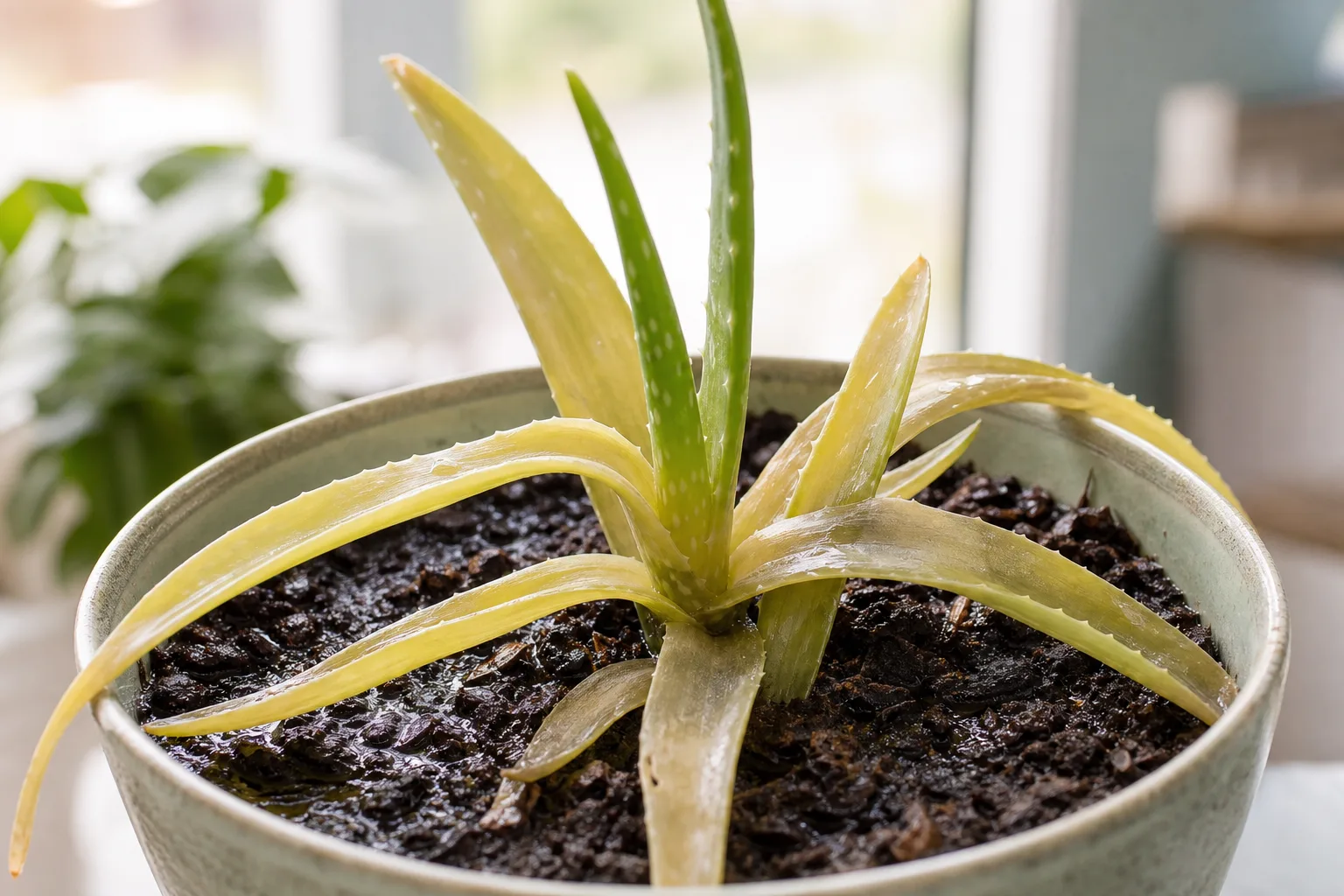
Overwatering on Aloe Vera: Causes, Checks & Fixes
This guide covers overwatering on Aloe Vera. See also the general Overwatering guide, watering, and light pages for this plant.
Overwatering on Aloe Vera: Causes, Checks & Fixes
Quick answer
If your Aloe Vera (Aloe vera) leaves feel soft, mushy, or translucent while the soil is still damp, you are almost certainly dealing with overwatering-not a thirsty plant asking for another drink. Aloe vera stores water in thick leaves adapted to dry Arabian Peninsula seasons; its roots expect a full dry-down between deep soaks, not a constantly moist mix.
First fix: stop watering immediately. Do not scrape the soil, repot, or fertilize on day one. Wait until the top two inches of mix are completely dry and the container feels noticeably lighter-then reassess leaf firmness at the base before you water again.
This page covers leaf-level overwatering stress-mushy tissue, yellowing bases, and wet-soil wilt. For white fuzz on the surface only, see mold on soil. For brown mushy roots and crown surgery, see root rot.
What overwatered aloe looks like
Overwatering on Aloe Vera shows up in the leaves and root zone, not just on the soil surface.
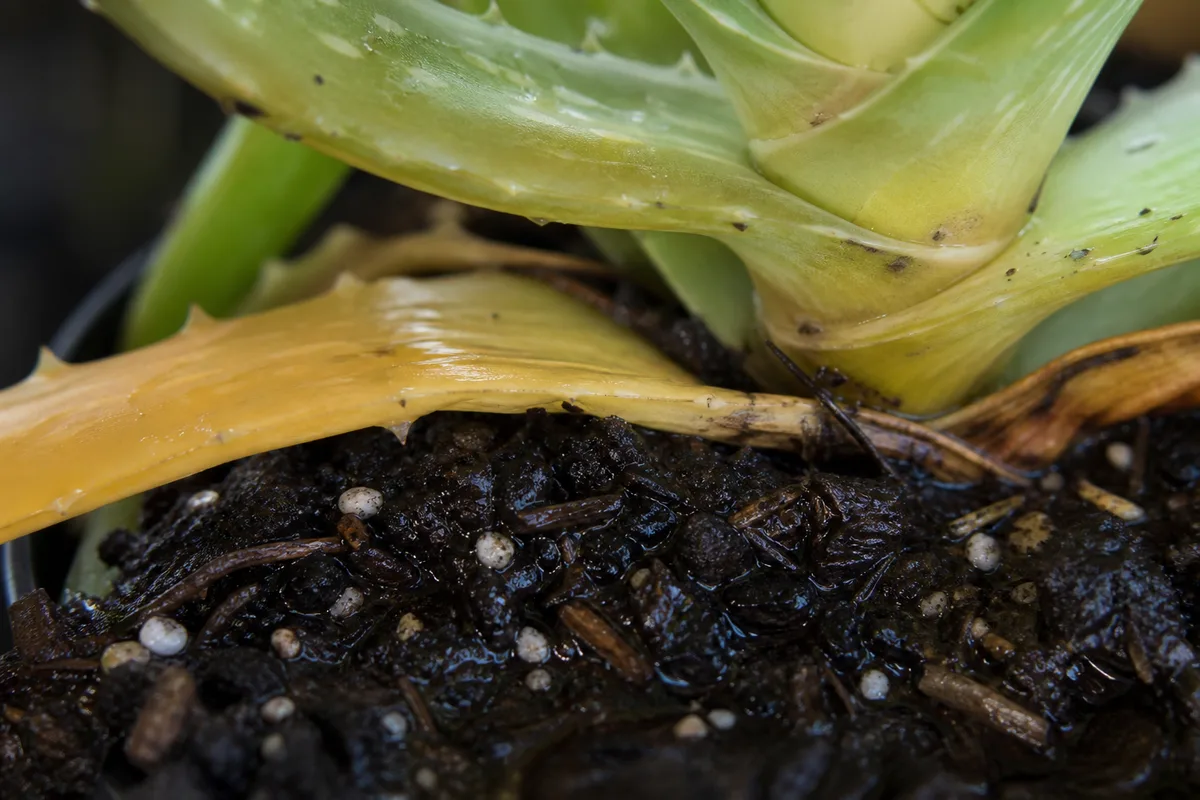
Overwatering symptoms on Aloe Vera - compare with healthy tissue on the same plant.
Early signs
- Lower leaves yellow while mix stays damp-not the crisp tan edges of drought
- Leaves feel spongy or translucent when you squeeze them, especially at the base
- Pot feels heavy days after you thought you watered lightly
- Soil stays dark and cool two inches down for a week or more
- Fungus gnats hovering when you disturb the pot-shared wet-soil habitat
Advanced signs
- Outer leaves collapse or pull away with mushy brown tissue at the attachment point
- Sour or stagnant smell from drainage holes
- Rosette wilts on wet soil-the aloe paradox: leaves look thirsty while rotting roots cannot absorb
- Soft stem at soil line-overwatering sliding into crown rot
Healthy aloe in active growth has firm, plump leaves and a mix that dries through within one to three weeks depending on pot size, material, and light. The thick leaves can stay green and heavy even while roots are already struggling-that is why wet-soil checks matter more than leaf color alone.
Why Aloe Vera is especially vulnerable
Aloe Vera is a leaf succulent built for pulse rainfall and long dry spells. UF/IFAS recommends letting soil dry completely between waterings and warns that oversized containers hold too much moisture around roots. When mix stays saturated, succulents will not tolerate staying wet and fine roots lose oxygen before you see obvious leaf damage.
Several patterns cause overwatering on Aloe Vera overview more than on moisture-loving houseplants:
Calendar watering. Watering every Sunday regardless of soil dryness keeps the root zone wet. Aloe needs the soak-and-dry rhythm-deep drink, then full dry-down-not frequent sips.
Heavy peat-rich mix. Standard potting soil retains water at the root zone long after the leaves have had enough. Without perlite, pumice, or coarse grit, even careful watering schedules fail.
Winter dormancy mistakes. During cool low-light months, aloe metabolism drops sharply and needs very little water. One generous drink in December can leave mix soggy for weeks-the highest-risk window for mushy leaves and the rot that follows.
Oversized pots and standing saucer water. Extra soil volume holds moisture the root ball never reaches. Water pooling in a saucer re-wets mix from below.
Low light slowing evaporation. Dim corners slow dry-down; aloe wants bright indirect to direct morning sun so the soak-and-dry cycle can complete.
How to confirm overwatering (vs. underwatering)
Work through these checks before Aloe Vera repotting guide or trimming:
| Signal | Overwatering | Underwatering |
|---|---|---|
| Pot weight | Heavy for days | Light, easy to lift |
| Soil at 2 inches | Cool, damp, clings to finger | Dry, crumbly, pulls from pot edge |
| Leaf texture | Soft, spongy, translucent at base | Firm but thin or slightly wrinkled |
| Leaf color | Yellow from base upward | Dull green, tan crispy tips |
| Smell | Sour from drain holes | None |
| After watering | Stays limp on wet mix | Perks within 24–48 hours |
- Pot weight - Lift the container. Heavy days after a light watering means water is not exiting.
- Two-inch finger or skewer test - Push to the second knuckle or two inches with a bamboo skewer. Damp clinging mix confirms wet roots; align with the watering guide dry check.
- Leaf base squeeze - Gently press outer leaves where they meet the stem. Mushy tissue on damp soil is overwatering; firm thin leaves on dry soil suggests underwatering.
- Smell and companions - Sour odor, persistent yellow lower leaves on otherwise wet mix, or drooping on heavy soil all point the same direction.
- Season context - Indoor winter with stalled growth? Assume dormancy and treat wet mix as more dangerous, not less.
If only the top centimeter was wet after one mistake but leaves are still firm, you likely caught early stress. Soft translucent bases plus wet deep soil means act now-do not wait for surface mold to appear.
First fix: stop watering and assess
Pause all irrigation until the top two inches of mix are bone dry and the pot feels lighter.
That single step prevents the most common cascade: watering again because leaves look limp. On wet soil, limp aloe leaves mean root stress, not thirst. Overwatering is among the most common indoor plant failures-adding more water deepens the damage.
Once dry-down is underway:
- Move the pot to the brightest spot you have with airflow around it-evaporation helps without another drink.
- Empty any saucer and confirm drainage holes are open.
- Press lower leaf bases daily. Firm plump tissue after dry soil is reassuring. Increasing softness means prepare to unpot within twenty-four hours per the root rot guide.
- Do not remove mushy leaves yet unless they pull away with foul tissue-wait until you know whether roots need surgery.
Repotting on day one is usually wrong for mild overwatering. Reserve unpotting for soft bases, sour smell, or failure to dry within two to three weeks in warm active growth.
Step-by-step recovery when leaves are mushy
If outer leaves are soft but the crown still feels firm after one to two weeks of dry-down:
- Unpot and rinse roots - Brush away wet mix and inspect. Healthy aloe roots are firm and pale tan or white; dark slimy roots need trimming per root rot recovery.
- Remove only mushy leaf bases - Outer leaves that are translucent or oozing will not recover; snap or cut them at firm tissue with clean scissors.
- Air-dry one to two days if you trimmed roots - Let cut surfaces callus on newspaper in Aloe Vera light guide.
- Repot into dry cactus mix sized to the root mass-not a larger pot-with drainage holes.
- Withhold water one to two weeks after repot, then resume soak-and-dry from the watering guide.
Mild cases with firm crowns and no root slime often recover with dry-down alone-no repot needed.
Recovery timeline and what to watch
Improvement is measured by stable inner leaves and new center growth, not by mushy outer leaves re-firming.
- One to two weeks: Mix dries through; pot weight drops; soft leaves may brown and dry in place while the crown stays firm.
- Three to four weeks: In warm months, new leaf tips at the rosette center signal roots are working again.
- Winter: Dry-down can take longer-patience beats another watering “to help.”
Good signs: Firm crown, dry soil surface before each future watering, no sour smell, new leaves in spring.
Bad signs: Spreading softness up the stem, black mush at soil line, wilt on dry soil after recovery attempt-escalate immediately to root rot.
What not to do
Do not water because leaves look slightly thin while mix is still damp-that deepens root failure.
Do not fertilize a waterlogged plant; stressed roots cannot use nutrients and salts worsen damage.
Do not repot into a larger container “to help drying”-more soil volume holds more moisture.
Do not confuse this with mold on soil alone; surface fuzz without mushy leaves is an earlier moisture flag, but both share the same fix-dry the mix.
Do not keep summer watering frequency through winter dormancy.
How to prevent overwatering next time
Match irrigation to aloe biology: allow soil to dry between thorough waterings, then soak until runoff exits drainage holes and empty the saucer within thirty minutes. Use a gritty cactus blend, right-sized pots, and bright light so the two-inch dry test passes before every drink.
Terracotta vs. plastic: Unglazed clay pulls moisture through porous walls and often dries faster; plastic keeps mix damp longer-adjust intervals, not the dry-soil rule.
Treat the first soft lower leaf as a moisture alarm, not a cosmetic issue. Fixing wet roots early keeps offsets growing and keeps root rot out of the picture.
When to worry - escalate to root rot
Act within twenty-four hours when:
- Entire crown turns soft on wet or recently wet mix
- Stem is brown and soggy at soil level
- All roots are dark slime when rinsed
- Plant collapses despite dry surface-decay may already be in the crown
Those patterns need root surgery, pup salvage, or discard-not another dry-down cycle. Follow the root rot guide step by step.
When to use this page vs other Aloe Vera guides
- Aloe Vera watering guide - Use for routine moisture checks before assuming overwatering is the main issue.
- Aloe Vera problems hub - Browse all 16 common issues on this species.
- Root Rot on Aloe Vera - Different entry point when symptoms overlap with overwatering.
- Yellow Leaves on Aloe Vera - Different entry point when symptoms overlap with overwatering.
- Wilting on Aloe Vera - Different entry point when symptoms overlap with overwatering.