Drooping Leaves on Aloe Vera: Causes, Checks & Fixes
Quick answer
Drooping leaves on Aloe Vera usually mean the rosette lost upright posture over days-not a sudden overnight collapse. Press an outer leaf and check soil at the bottom of the pot: soft tissue with wet mix points to overwatering or root decline; firm but flat outer leaves with dry mix point to underwatering; pale stretched leaves often mean too little light. First step: run the leaf-firmness test before you water.
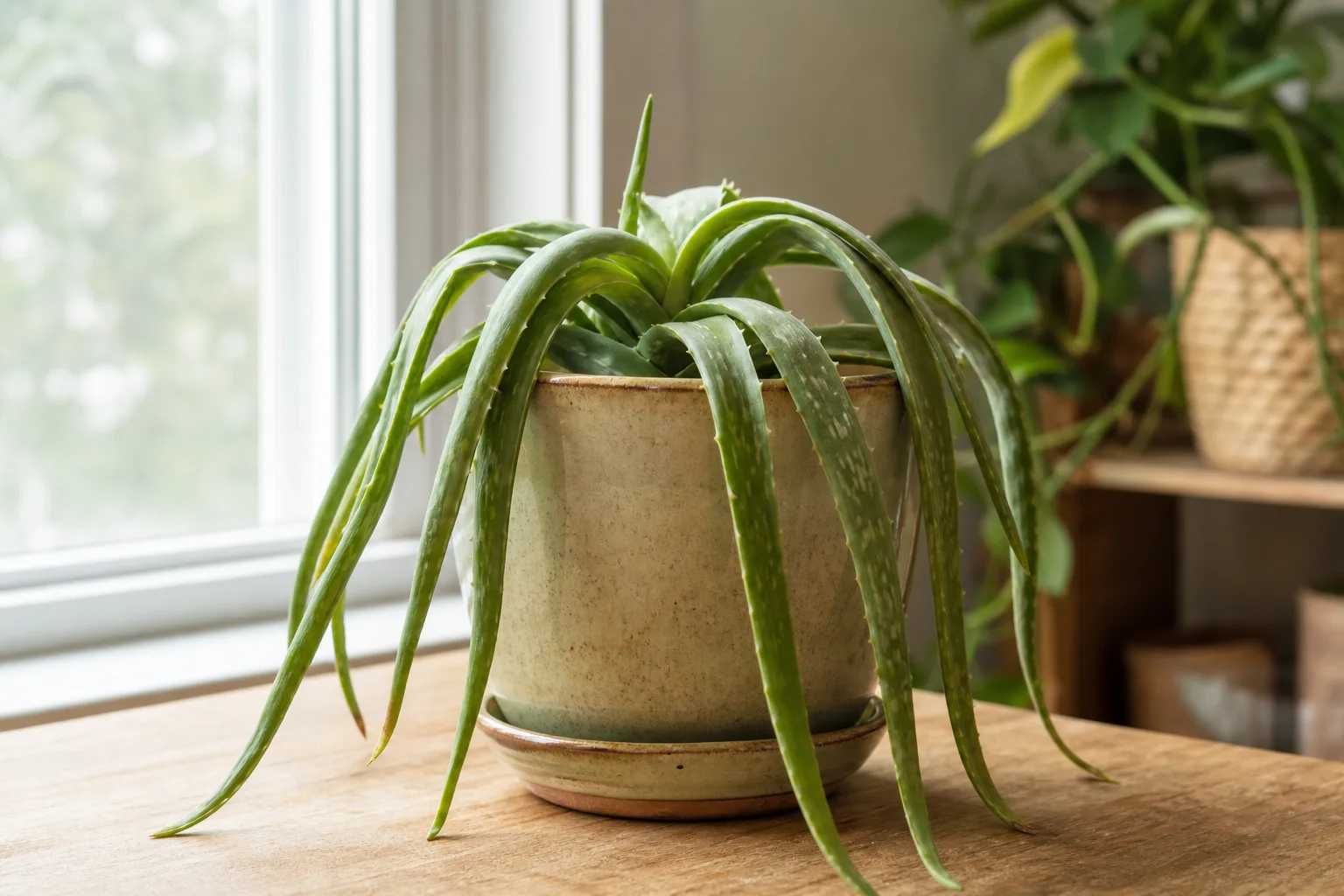
Drooping Leaves on Aloe Vera: Causes, Checks & Fixes
This guide covers drooping leaves on Aloe Vera. See also the general Drooping Leaves guide, watering, and light pages for this plant.
Drooping Leaves on Aloe Vera: Causes, Checks & Fixes
Quick answer
Drooping leaves on Aloe Vera (Aloe vera) describe a gradual loss of upright posture-outer leaves splay outward, the rosette leans, or the whole plant looks floppy over several days. Unlike acute wilting, drooping is often slower and the leaves may still feel partly firm.
First step: press an outer leaf and probe soil in the bottom third of the pot. Soft, squishy tissue with damp or heavy mix → stop watering and inspect roots-see overwatering and root rot. Firm but flat or slightly wrinkled leaves with dusty dry mix → one deep soak, then full dry-down-see underwatering. Pale, stretched, weak leaves → move to brighter light-see not enough light.
What drooping leaves look like on Aloe Vera
Healthy Aloe Vera holds thick lance-shaped leaves in a tight rosette, each blade rigid enough to stand at a slight outward angle. Drooping changes posture, not always color:
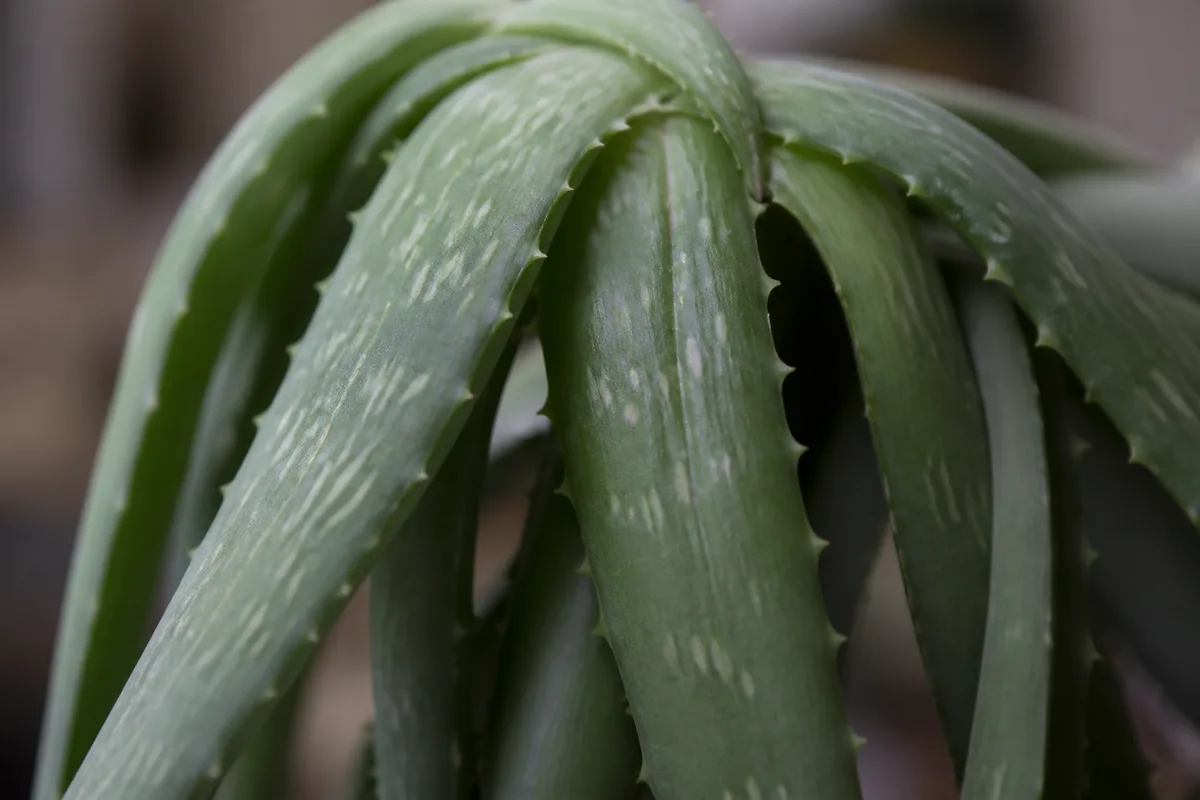
Drooping Leaves symptoms on Aloe Vera - compare with healthy tissue on the same plant.
Overwatered droop (wet soil branch):
- Outer leaves splay flat or fold downward while the pot feels heavy
- Leaves turn pale, yellow, or translucent at the base before the tips
- Tissue feels soft or waterlogged when pressed-not merely thin
- Mix stays dark and cool at the surface for many days after watering
- The rosette may lean as lower leaves lose structural integrity
Underwatered droop (dry soil branch):
- Outer ring droops first; center leaves may still stand upright
- Leaves look thin, slightly puckered, or leathery but remain firm when squeezed
- Brown dry tips on margins that feel papery, not mushy
- Pot feels very light; mix is dusty dry several inches down, sometimes shrunk from the pot wall
Low-light droop (etiolation):
- Leaves grow longer, paler, and weaker, then flop under their own weight
- Rosette leans toward the window; new growth looks stretched rather than compact
- Soil moisture may be normal-the problem is weak tissue, not necessarily water
- SDSU Extension notes that too little light causes Aloe leaves to droop
Repot or transplant droop:
- Posture sags for several days after repotting even when care is correct
- Fine root hairs were disturbed; uptake drops temporarily
- Usually improves once roots settle-unless the plant was watered into soggy fresh mix
Drooping vs wilting - which page to use
Both symptoms look similar from across the room. Use this split:
| What you see | Best fit |
|---|---|
| Gradual sag over days, leaves still partly firm, rosette leaning | This page - drooping leaves |
| Sudden collapse overnight, whole rosette limp, panic about water vs rot | Wilting |
| Yellow lower leaves, soil wet a week+, sour smell | Overwatering |
| Mushy roots, soft crown, brown base tissue | Root rot |
| Thin puckered leaves, feather-light pot, dusty dry mix | Underwatering |
| Pale stretched weak growth toward light | Not enough light |
Drooping answers “why won’t my aloe stand up anymore?” Wilting answers “why did it collapse so fast?”
Why Aloe Vera gets drooping leaves
Aloe stores water in thick succulent leaves arranged in a basal rosette. Drooping happens when leaf turgor drops or new tissue grows too weak to support itself-usually from water imbalance, light, or root function.
Overwatering and root decline
The most common indoor cause. When soil stays wet, roots lose oxygen and decay. Damaged roots move less water upward, so leaves lose rigidity despite wet mix-owners see droop and water again, accelerating rot. Heavy peat mix, blocked drainage holes, oversized pots, and winter calendar watering on a dormant plant all keep the root zone saturated. NC State Extension warns that overwatering leads to roots rotting on Aloe vera.
Underwatering and flat outer leaves
Aloe survives drought better than soggy roots, but weeks without a real soak in a bright window drains leaf reserves. The plant sacrifices the outer ring first-those leaves flatten and droop while the center may look fine. Small terracotta pots in hot sun can dry fully in a week during summer growth.
Too little light
In dim corners, Aloe produces weak, elongated leaves that cannot hold themselves upright. Too little light causes drooping and leggy growth. This is structural weakness, not rot-though the floppy look sends many owners to the watering can for the wrong fix.
Cold drafts and winter window stress
Aloe slows below about 55°F (13°C). A plant on a cold single-pane windowsill in winter can lose turgor from rapid leaf water loss in dry heated air, or sit too wet in a cool room where evaporation stalled. Both show as droop without an obvious watering mistake.
Root-bound or top-heavy pots
Mature aloes produce offsets (pups) that widen the rosette. In a small pot, crowded roots drink the small soil reservoir quickly-outer leaves droop from drought-or the top-heavy rosette leans and splays because the base lacks stability. Repotting helps, but fresh disturbance can cause temporary droop for several days.
Repotting and transplant shock
Teasing roots aggressively or watering immediately into wet nursery mix after repotting stresses uptake. Drooping for three to seven days post-repot is common if moisture and light stay stable afterward.
How to confirm the cause
Work through these checks in order. One wrong branch wastes weeks.
| Check | Wet-soil droop | Dry-soil droop | Low-light droop |
|---|---|---|---|
| Leaf feel | Soft, mushy, or translucent | Firm but flat or puckered | Pale, thin, stretched |
| Pot weight | Heavy | Very light | Normal |
| Soil at depth | Wet or damp | Dusty dry throughout | Often normal dry-down |
| Leaf color | Yellow or pale at base | Brown dry tips, green elsewhere | Uniformly paler than before |
| Recent change | Overwatered or cool wet spell | Weeks without deep soak | Moved to dim spot or winter gloom |
Detailed confirmation steps:
- Leaf firmness test - Press an outer leaf and one near the center. Soft and squishy = wet branch. Firm but deflated = dry branch. Long pale floppy blades with normal soil = light branch.
- Moisture at depth - Surface dust lies. Probe the bottom third of the pot with a finger or skewer.
- Pot weight - Lift the container. Heavy + droopy ≠ thirsty.
- Smell and base check - Sour odor or soft tissue at the soil line = rot risk, not drought.
- Light audit - Has the plant been more than a few feet from a window for months? Are new leaves noticeably longer than older ones?
- Root peek (wet branch only) - Slide the plant out. Brown mushy roots with wet mix confirm root rot-do not soak.
Make one diagnosis before acting.
The first fix to try
If soil is wet and leaves feel soft: stop watering immediately. Move to Aloe Vera light guide with good air movement, empty any saucer water, and do not add moisture until you inspect roots. That single pause prevents the fatal mistake of watering a drooping plant that is already overwatered.
If soil is dry and leaves are firm but flat: give one thorough soak until water runs from drainage holes, pause ten minutes, water once more, and drain the saucer completely. No fertilizer, no repot, no daily sips.
If soil is normal but leaves are pale and stretched: move the pot to bright indirect light or morning direct sun within a week-do not jump straight to harsh south glass on a weak rosette.
Step-by-step recovery
Wet-soil droop
- Stop watering; confirm drainage holes are open.
- Unpot if leaves keep softening after the mix surface dries-rinse old mix from roots.
- Trim brown, mushy, or slimy roots with a clean blade; keep firm pale tissue.
- Let cut surfaces callous one to two days in dry air.
- Repot into fresh gritty cactus mix-see soil guidance-in a pot only slightly larger than the root mass.
- Hold water five to seven days after repotting, then resume soak-and-dry per the watering guide.
Dry-soil droop
- Soak as above; use bottom-watering if mix has shrunk from pot sides and water channels through.
- Place in bright indirect to morning direct sun.
- Wait until mix is completely dry before the next drink.
- Expect firmer posture within one to three days. Brown tips will not green up.
Low-light droop
- Move incrementally to brighter exposure over one to two weeks-sudden full south sun can sunburn weak tissue.
- Rotate the pot weekly so the rosette grows evenly.
- Do not overwater to “help” weak leaves-etiolated tissue needs light, not extra moisture.
- New center growth should look shorter and greener within three to six weeks as light improves.
Post-repot droop
- Keep stable light and slightly dry mix-not bone dry, not soggy.
- Avoid fertilizing or moving again for two weeks.
- If droop worsens with wet mix after repot, unpot and check for buried rot at the old soil line.
Recovery timeline
Drought droop: Outer leaves often firm and lift partially within 24–72 hours after a proper soak. Full cosmetic recovery may take two to six weeks during active growth. Dead brown tips stay brown.
Overwatering droop: Recovery is measured in weeks, not hours. Old splayed leaves rarely return to perfect upright form. Success means firm new center leaves, no spreading base softness, and healthy roots on re-inspection.
Low-light droop: Posture improves as new compact growth replaces weak stretched leaves-plan on one to two months of gradual improvement, not overnight perk-up.
Repot droop: Most plants stabilize within three to ten days if moisture and light stay consistent.
Judge success by new center growth and root firmness, not by old outer leaves standing at perfect angles again.
Lookalike symptoms
Wilting vs drooping: Wilting is acute collapse; drooping is slower posture change. Same fixes apply once you confirm wet vs dry-but start on the wilting page if the plant looked fine yesterday and collapsed today.
Root rot vs reversible droop: Reversible overwatered droop has some firm roots and a crown that still feels solid. Advanced rot shows mushy crown, sour smell, and black roots throughout-see root rot.
Pests: Mealybugs at the base weaken the stem and cause leaning. Fungus gnats often signal chronically wet soil-fix drainage before leaves will stand firm again.
Pet chewed leaves: Drooping from physical damage is obvious-trim torn tissue if needed. Aloe is toxic to cats and dogs if ingested; keep chewed plants away from pets and contact your vet if ingestion is suspected-this page does not replace veterinary advice.
Mistakes to avoid
Do not water because leaves look floppy without checking soil moisture at depth-this kills more aloes than drought.
Do not mist leaves instead of fixing root-zone moisture. Aloe needs water in the mix, not humidity on foliage.
Do not fertilize a drooping plant to stiffen leaves. Fix water, light, or roots first.
Do not repot into a larger pot hoping it will dry faster-extra wet mix volume worsens rot.
Do not stack treatments-soak, repot, prune, and relocate on the same day hide which fix helped.
Do not remove all drooping green leaves prematurely-they may partially recover and still store water.
How to prevent drooping leaves next time
Build prevention around dry-down, light, and pot fit:
- Water only when mix is completely dry-often every two to four weeks in warm bright months, less in winter dormancy
- Use fast-draining cactus mix in a pot with several drainage holes; terracotta helps even dry-down
- Empty saucers within 30 minutes of every soak
- Check pot weight weekly until you know light versus saturated by feel
- Keep bright indirect to morning direct sun-Aloe requires bright indirect light indoors
- Repot when pups crowd the pot or the rosette becomes unstable-see repotting
- Slow watering in cool dim months when evaporation drops
Match rhythm to your home, not a generic calendar. Full seasonal detail lives in the Aloe Vera watering guide and overview.
When to worry
Treat as urgent if the crown feels soft, the base smells sour, or leaves stay limp while soil has been wet for a week or more after you stopped watering-follow root rot guidance before the plant declines past saving.
Lower urgency: gradual outer-leaf droop with dry soil-soak within a day or two. Pale stretched growth without rot signs-improve light over weeks.
For acute overnight collapse, read wilting. For chronic wet soil without full collapse, read overwatering. For thin puckered leaves and bone-dry mix, read underwatering.
Conclusion
Drooping leaves on Aloe Vera are a posture problem with a diagnostic fork, not a single cause. The thick leaves and water-storing tissue mean outer blades often sag first while the center still looks alive-whether from drought, rot, or weak light. Press a leaf, probe deep soil, then choose pause and inspect, one deep soak, or brighter light-never all three blindly. Get that branch right and most aloes regain firm new growth within weeks; get it wrong and a slowly drooping rosette can slide into crown rot in days.
When to use this page vs other Aloe Vera guides
- Aloe Vera watering guide - Use for routine moisture checks before assuming drooping leaves is the main issue.
- Aloe Vera problems hub - Browse all 16 common issues on this species.
- Underwatering on Aloe Vera - Different entry point when symptoms overlap with drooping leaves.
- Overwatering on Aloe Vera - Different entry point when symptoms overlap with drooping leaves.
- Root Rot on Aloe Vera - Different entry point when symptoms overlap with drooping leaves.