Not Enough Light on Aloe Vera: Causes, Checks & Fixes
Quick answer
Aloe Vera without enough light stretches toward windows, grows pale and floppy, and stalls. In dim rooms the same watering schedule keeps soil wet longer and invites rot-so fix placement first, then match watering to the brighter spot. Move the pot within a few feet of a south, east, or west window before repotting, fertilizing, or watering more.
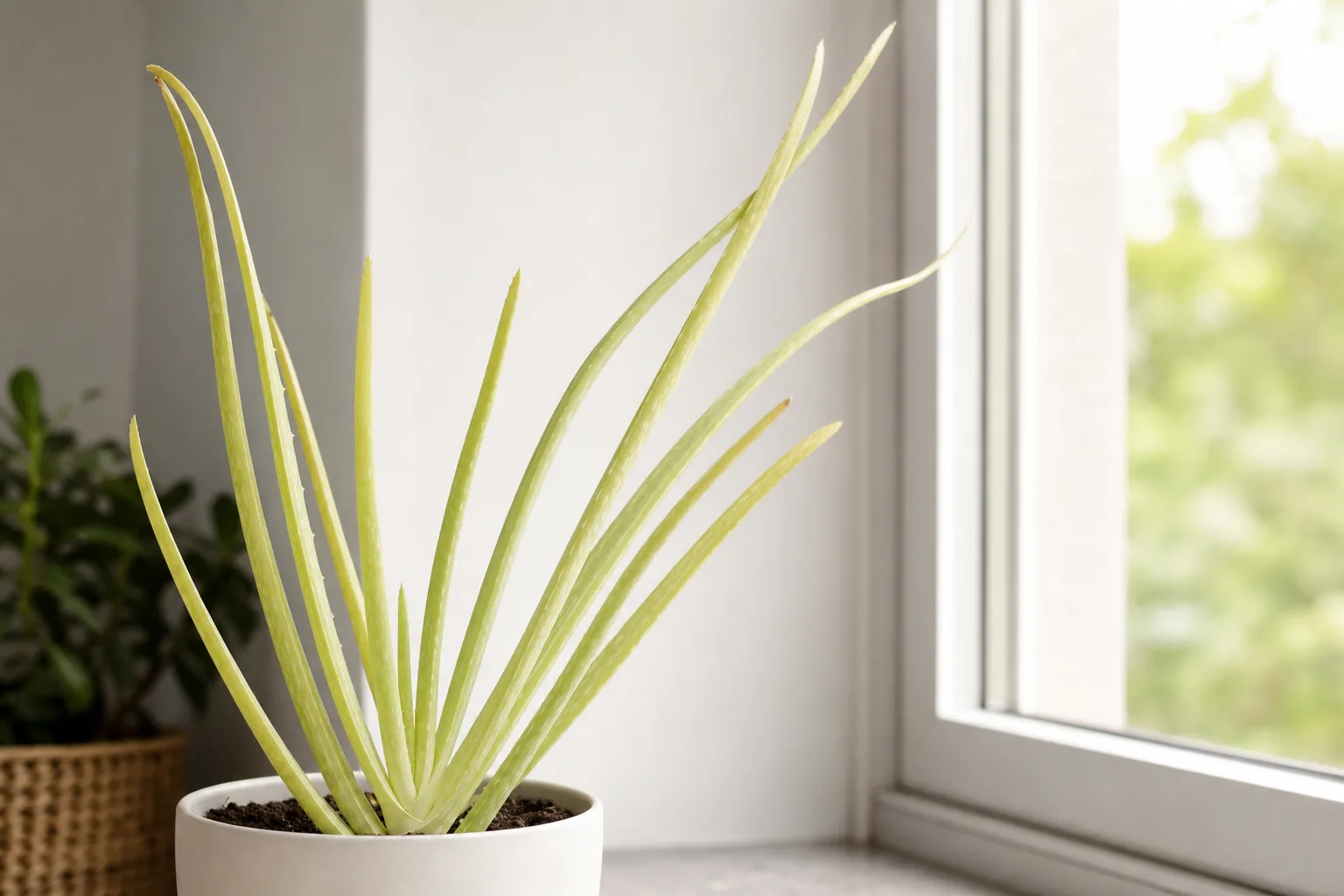
Not Enough Light on Aloe Vera: Causes, Checks & Fixes
This guide covers not enough light on Aloe Vera. See also the general Not Enough Light guide, watering, and light pages for this plant.
Not Enough Light on Aloe Vera: Causes, Checks & Fixes
Quick answer
Not enough light on Aloe Vera (Aloe vera) shows up as stretching, pale leaves, and a rosette that leans toward the brightest corner-not as sudden mushy collapse. This succulent evolved under strong sun on the Arabian Peninsula; indoors it belongs in a high-light spot, not a bookshelf or bathroom with a small window.
First step: move the pot closer to your brightest window today. Aim for within a few feet of a south, east, or west exposure where the plant gets several hours of bright light daily. Do not repot, fertilize, or increase watering until you have tried brighter placement for two to three weeks and watched how new leaves respond.
Dim light plus wet soil is a common trap: photosynthesis slows in weak light, so the plant uses less water while many owners keep the same watering calendar-soil stays damp longer and roots rot. If leaves are soft on wet mix, read our overwatering and root rot guides after you improve light. For proactive window placement and grow-light specs, see the Aloe Vera light guide. If stretch is already extreme, pair this page with leggy growth for reshaping after relighting.
What not enough light looks like on Aloe Vera
Healthy Aloe Vera forms a compact rosette of thick, firm, gray-green leaves with a slight upward arch. When light is too weak, the plant etiolates-stretching toward the window in a survival response that sacrifices the tight form succulents are known for.
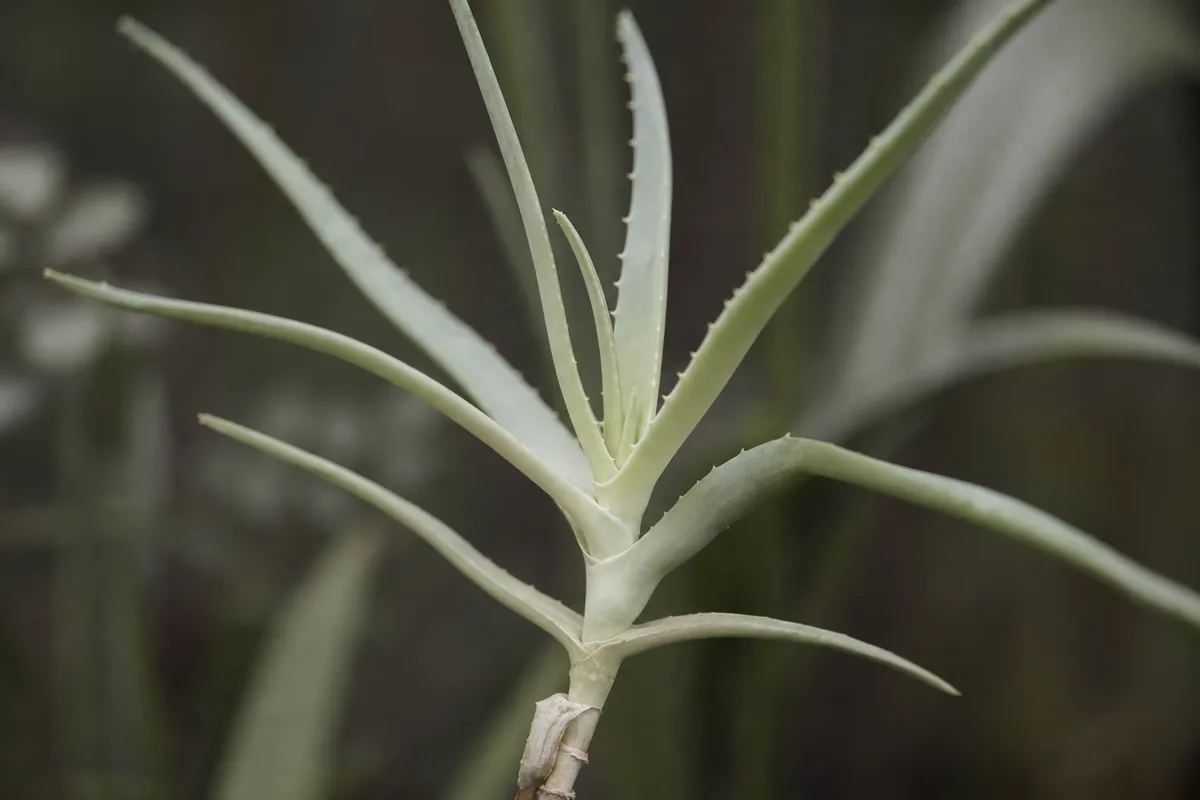
Not Enough Light symptoms on Aloe Vera - compare with healthy tissue on the same plant.
Typical signs on this species:
- Leggy growth - new leaves emerge farther apart on a lengthening stem; the rosette looks tall and thin instead of low and dense
- Leaning - the whole plant angles toward one light source; outer leaves may fold or bend at the base
- Pale or washed-out color - chlorophyll production drops, so leaves turn light green or yellow-green instead of the firm gray-green of a well-lit plant
- Slow or stalled growth - months pass with no new leaves because the plant cannot generate enough energy
- Thin, weak leaves - foliage feels less plump and may flop; this is light weakness, not always underwatering
- No flowers indoors - blooming on container plants only happens in optimum bright conditions, so a dim aloe may never flower even when otherwise healthy
Photo check (stretch vs. compact): Compare the gap between your two newest leaf pairs to gaps on older stem sections. Widening spacing on new growth confirms etiolation; a firm low rosette with only lower outer leaves sprawling is often normal age. Original leaf-spacing photo pending for a future update.
What stretched tissue cannot do: etiolated leaves do not shorten once you add light. Old stretched leaves stay long. Recovery is measured by tighter spacing and firmer texture on the next leaf set, not by old foliage snapping back.
Normal lookalikes: mature Aloe Vera outer leaves naturally droop and sprawl away from the center-that is age, not low light. A firm caudex-like base with only lower-leaf spread differs from a rosette that is actively reaching toward glass with wide gaps between every new leaf.
Why Aloe Vera gets not enough light
Indoor placement mistakes
Aloe Vera is grouped with cacti and succulents that need high indoor light-well above what low-light foliage plants tolerate. Missouri Botanical Garden places cacti and succulents in high-light categories; Penn State Extension recommends placing aloe near sunny windows for full sun to bright indirect light. North Carolina Extension states most varieties need at least six hours of sun and grow best in full sun or very bright indirect light.
That need clashes with how aloe is often sold and displayed:
- Dim interior rooms - hall tables, office desks, and bathrooms rarely deliver the hours of bright light aloe requires; in low light, succulents become lanky and pale
- Distance from windows - light intensity drops sharply with distance from glass; a pot six feet into a room may be low light even when the window looks sunny to you
- North-facing windows - weak in most Northern Hemisphere homes; aloe may survive but will not stay compact
- Acclimation from nurseries - plants grown under greenhouse intensity then parked in a dim shop or dark corner arrive already stressed
Seasonal light drop
The same window delivers fewer hours and lower intensity from October through February, so a plant that was fine in summer can etiolate by spring. Penn State Extension notes grow lights are a good option when natural lighting is inadequate-especially during short winter days when a south window that worked in July fails in January.
Obstructions and distance from glass
Heavy curtains, tinted film, outdoor awnings, and dirty panes cut usable light more than owners expect. Even a bright room fails if the pot sits in the middle of the floor instead of on or beside the sill-see the light guide for how far from glass aloe should sit.
Light-watering interaction
Photosynthesis slows in weak light, so the plant uses less water. Many owners keep the same watering schedule, leaving soil wet longer. That pattern invites root rot and floppy, bleached leaves that mimic thirst. Fixing light often matters more than adding water-match soak-and-dry timing to how fast the mix dries in the new brighter spot per our watering guide.
Not enough light vs. leggy growth on Aloe Vera
These symptoms overlap because chronic low light causes etiolation, but each page answers a different question:
| What you are trying to decide | Best guide | Why |
|---|---|---|
| Dim placement, pale color, unsure whether light is the limiter | This page (not enough light) | Window triage, confirmation checks, grow-light setup, light-watering rot warning |
| Long internode gaps, weak stem, reshaping after relighting | Leggy growth | Permanent stretched tissue, pruning, beheading, and structural recovery |
| Compact rosette but few new leaves or pups for months | Slow growth | Stall without extreme stretch-season, pot crowding, or moderate light |
| Proactive placement before problems appear | Light guide | Window scorecard, outdoor hardening, seasonal moves |
Leggy growth is the structural result of insufficient light over weeks or months. Start here when you need to confirm dim light is the limiter and fix placement first; switch to the leggy growth guide when stretch is already severe and you need to decide whether to wait for compact new leaves or prune the worst tissue.
How to confirm the cause
Work through these checks before changing pot size or fertilizer:
- Window direction and distance - Is the pot within two to five feet of a south, east, or west window? North-only exposure or deep interior placement strongly suggests light is the limiter.
- Lean and leaf spacing - Does the rosette point toward one window? Are new leaves farther apart than leaves from when you first got the plant?
- Leaf firmness and color - Firm but pale and stretched points to light. Soft, translucent, or mushy leaves with sour-smelling soil point to overwatering-especially common in dim rooms.
- Season - Did stretching start or worsen during winter? Compare current placement to where the plant sat in summer.
- Two-week brighter test - Move the pot to the brightest safe spot without jumping straight into hot afternoon sun on glass. If the next leaf emerges closer to its neighbor and looks greener, light was the problem.
- Pup development - Offsets that stay tiny or fail to firm up often reflect weak energy from insufficient light, not just crowded roots.
If soil is dry throughout, leaves are firm but wrinkled, and the plant is not stretching, underwatering may explain wilt better than low light-see our underwatering guide before assuming every pale aloe needs more sun.
First fix for Aloe Vera
Move the pot to the brightest location you can provide-within a few feet of a sunny window.
For most homes that means:
- South or west window - brightest indirect light; keep the pot a few feet from hot glass so magnified afternoon sun does not scorch water-filled leaves
- East window - excellent morning sun without the harshest midday heat; often ideal for indoor aloe
- Rotate every two to three months so all sides receive light and the rosette does not permanently lean
New York Botanical Garden guidance recommends a minimum of six hours of sunlight per day for indoor aloe. Without that extended bright exposure, the plant stretches and loses compact form.
Grow-light winter backup
When natural light is insufficient-common from October through February-add a full-spectrum LED or white fluorescent grow light six to twelve inches above the rosette for 12–16 hours daily on a timer. Penn State Extension recommends grow lights when adequate natural lighting is unavailable.
Practical indoor targets for aloe rosettes:
- Spectrum: full-spectrum white LED, roughly 6,000–7,500 K color temperature (cool white-blue), not warm household bulbs alone
- Intensity: aim for 200–400 µmol/m²/s at the leaf surface-comparable to a bright windowsill; Iowa State University Extension explains how to calculate PPFD from fixture specs or light-meter readings
- Duration: 12–16 hours daily because artificial light is weaker than daylight; total daily light (DLI) matters as much as peak intensity
- Distance: start at 12 inches and adjust-leaves turning bleached or crisp mean the fixture is too close or too long per day
Regular desk lamps and warm-white bulbs rarely deliver enough PAR for compact succulent growth even when they look bright to human eyes. Full fixture guidance lives on the Aloe Vera light guide.
Acclimate when upgrading light. If the plant has lived in a dim corner for months, do not thrust it against hot south glass in one move. Shift it closer to the window over seven to ten days, or introduce a grow light at a slightly greater distance first, then lower it gradually. Sudden intense sun can scorch leaves that developed in shade.
Do not repot, fertilize, or water more heavily as your first response. Stressed aloe in new light needs stable, dry-tolerant care while it reallocates energy to tighter growth.
Step-by-step recovery
Once the plant is in brighter light:
- Hold watering until the soil is completely dry through the pot-the same rule as healthy aloe, but recheck timing because brighter light dries soil faster.
- Watch the next two leaf sets - tighter spacing and deeper green color mean the fix is working.
- Remove only badly stretched or damaged outer leaves after the plant firms up in brighter light; use a clean knife and let cuts dry if you remove large sections. Severe stretch may need the leggy growth beheading workflow.
- Adjust winter care - when days shorten, either move the pot to the sunniest available sill or extend grow-light hours so etiolation does not return each spring.
- Support weak stems only if needed - a severely etiolated rosette may need a stake temporarily; long-term strength comes from new compact growth, not propping forever.
If pups are present, leave them attached until the parent stabilizes. They often green up once the shared root system receives adequate light.
Recovery vignette: dim bathroom shelf to east window
A common pattern: aloe on a bathroom shelf three feet from a frosted north window looks pale by March, with the newest leaves spaced twice as far apart as growth from the previous summer. Week 1: move to an east windowsill six inches from glass; stop watering until the mix is dry throughout. Week 3: the first new leaf after the move sits noticeably closer to its neighbor and looks deeper gray-green. Month 3: three compact leaves improve the silhouette; the oldest stretched outer leaves are trimmed for appearance only-the stem gaps they created stay permanent. This timeline assumes firm leaves and dry soil; soft bases on wet mix would need root rot triage first.
Recovery timeline
Expect to see improved color and spacing on the next new leaf within two to three weeks after a meaningful light upgrade. Full rosette correction takes several months because you are waiting for multiple new leaves to replace the visual dominance of old stretched foliage.
| Timeframe | What to expect |
|---|---|
| 1–2 weeks | Plant may lean less toward the window as light arrives from a better angle; no visible shortening of old leaves |
| 2–4 weeks | First new leaf after the move should sit closer to the previous one and look greener |
| 2–3 months | Several compact leaves improve overall appearance; worst outer leaves can be trimmed if desired |
| 6+ months | Mature rosette looks substantially fuller if light stays adequate through winter |
Signs the problem is improving: new leaves closer together, firmer texture, deeper green color, upright growth, and faster pup development.
Signs it is getting worse: continued stretching despite a brighter window (light still insufficient), leaves turning brown and crisp at tips from sudden scorch, or soft mushy base with wet soil (shift focus to overwatering and root rot-low light may have masked rot risk).
Lookalike symptoms
| What you see | More likely cause | Quick check |
|---|---|---|
| Long gaps between leaves, lean toward window | Not enough light | Brighter window test for two weeks |
| Soft, translucent, mushy leaves; sour soil | Overwatering / root rot | Unpot; roots brown and mushy |
| Thin, wrinkled firm leaves; very dry soil | Underwatering | Pot light; soil dusty dry throughout |
| Brown crispy patches on sun-facing side | Too much direct sun | Scorched after sudden move to hot glass |
| Lower outer leaves flat on soil; firm center | Normal mature habit | Center still produces upright new leaves |
| No flowers on indoor plant | Low light or immaturity | Flowering needs bright optimum conditions |
Compare drooping leaves when lower foliage sprawls but the center still grows firm upright leaves-that pattern is often age, not etiolation.
Mistakes to avoid
- Treating every floppy aloe with more water - low light reduces water use; wet soil in dim rooms worsens rot
- Jumping to full hot afternoon sun - acclimate over a week to prevent scorch on shade-grown leaves
- Fertilizing to “wake up” a stretched plant - without adequate light, fertilizer pushes weak, soft growth susceptible to rot
- Repotting before fixing light - a bigger pot in the same dark corner does not solve etiolation
- Judging success by old leaves - stretched foliage is permanent; watch new growth only
- Ignoring winter - the same window may fail from October through February without supplemental light
Aloe Vera care cross-check
Light and watering move together on this succulent. Missouri Botanical Garden notes aloe is best in full sun to part shade, needs bright light for flowering, and should be watered very moderately-reduced further in winter when growth slows.
Practical pairing for low-light recovery:
- Soil - fast-draining cactus mix; never heavy peat that stays wet in a dim room
- Pot - terracotta with a drainage hole; empty saucers after watering
- Water - only when soil is completely dry; in brighter light after recovery, dry checks may be needed more often, not less
- Temperature - comfortable indoor range; cold drafts on a window sill can discolor leaves separately from light stress
How to prevent not enough light next time
- Place new aloe within a few feet of your brightest window from day one-not where the pot looks best decoratively
- Rotate the pot every two to three months for even growth
- Clean windows seasonally and open curtains during daylight hours
- Add grow lights before winter etiolation appears if your brightest window still falls short of six hours of strong light
- Re-check placement each autumn when day length drops; move the pot or extend artificial hours proactively
- Match watering to light seasonally - less water in dark winter months, more frequent dry checks in bright summer growth
When to worry
Pure light stress is rarely fatal if you correct placement early. Escalate when:
- The base goes soft and mushy with wet soil-inspect roots for rot before assuming more light alone will save the plant
- Stems are so weak they snap under the rosette weight-support temporarily, but plan to propagate firm pups per the propagation guide if the main stem cannot recover
- Leaves develop bleached white patches after a rushed move to intense sun-pull back from glass and acclimate more slowly
- No new growth for six months even after a confirmed brighter spot and proper dry watering-reassess whether the window is still too dim and grow lights are needed
Aloe Vera can linger for years in survival mode with weak light, but it will not look or behave like a healthy medicinal aloe until light matches what this sun-adapted succulent expects.
Related aloe guides
- Aloe Vera overview - culture hub
- Light · Watering · Soil
- Leggy growth · Slow growth · Drooping leaves
- Overwatering · Root rot · Underwatering
FAQs
Why is my aloe vera stretching toward the window?
Stretching toward glass is etiolation-shade avoidance when photons are too weak for compact growth. On aloe, you will also see wider gaps between new leaf pairs, paler gray-green color, and thin floppy foliage. If the next leaf sits closer to its neighbor within two to three weeks after a brighter move, light was the limiter-not root rot or nutrient deficiency.
How do I know my aloe is pale from low light and not underwatering?
Press the leaves-they should feel firm, not mushy. Stick a finger into the pot base; wet soil in a dim room points to overwatering layered on low light, not thirst alone. Underwatering shows very dry soil throughout with thin but firm wrinkled leaves and no strong window lean. Low light adds lean, pale color across the rosette, and long gaps between new leaves.
Will stretched aloe leaves shorten after I add light?
No. Etiolated leaves stay long and thin permanently. Judge recovery by the next one or two leaf sets-new growth should sit closer together, feel firmer, and look deeper green. Trim only the worst outer leaves once the plant is stable in brighter light; for severe stretch see our leggy growth guide for pruning or beheading options.
When is low light urgent on Aloe Vera?
A plant collapsing flat with soft translucent leaves in a dark corner with wet soil needs root inspection first-chronic low light slows water use and invites rot. Pure light stress is slower; move the plant before stems weaken enough to snap or pups fail to develop. Escalate to the root rot guide if the base is mushy despite fixing light.
What grow light setup works for aloe in winter?
Use a full-spectrum LED (6,000–7,500 K) 6–12 inches above the rosette for 12–16 hours daily on a timer. Aim for roughly 200–400 µmol/m²/s at the leaf surface-the same range as a bright windowsill. Regular desk lamps are too weak; see our light guide for window placement and acclimation details.