Root Rot on Aloe Vera: Crown vs. Pup Salvage Guide
Quick answer
Root rot on Aloe Vera follows chronically wet cactus mix-limp outer leaves on heavy damp soil are the classic trap. First step: stop watering, press outer leaf bases for mush, and unpot within 24 hours if the mix smells sour or tissue is soft.
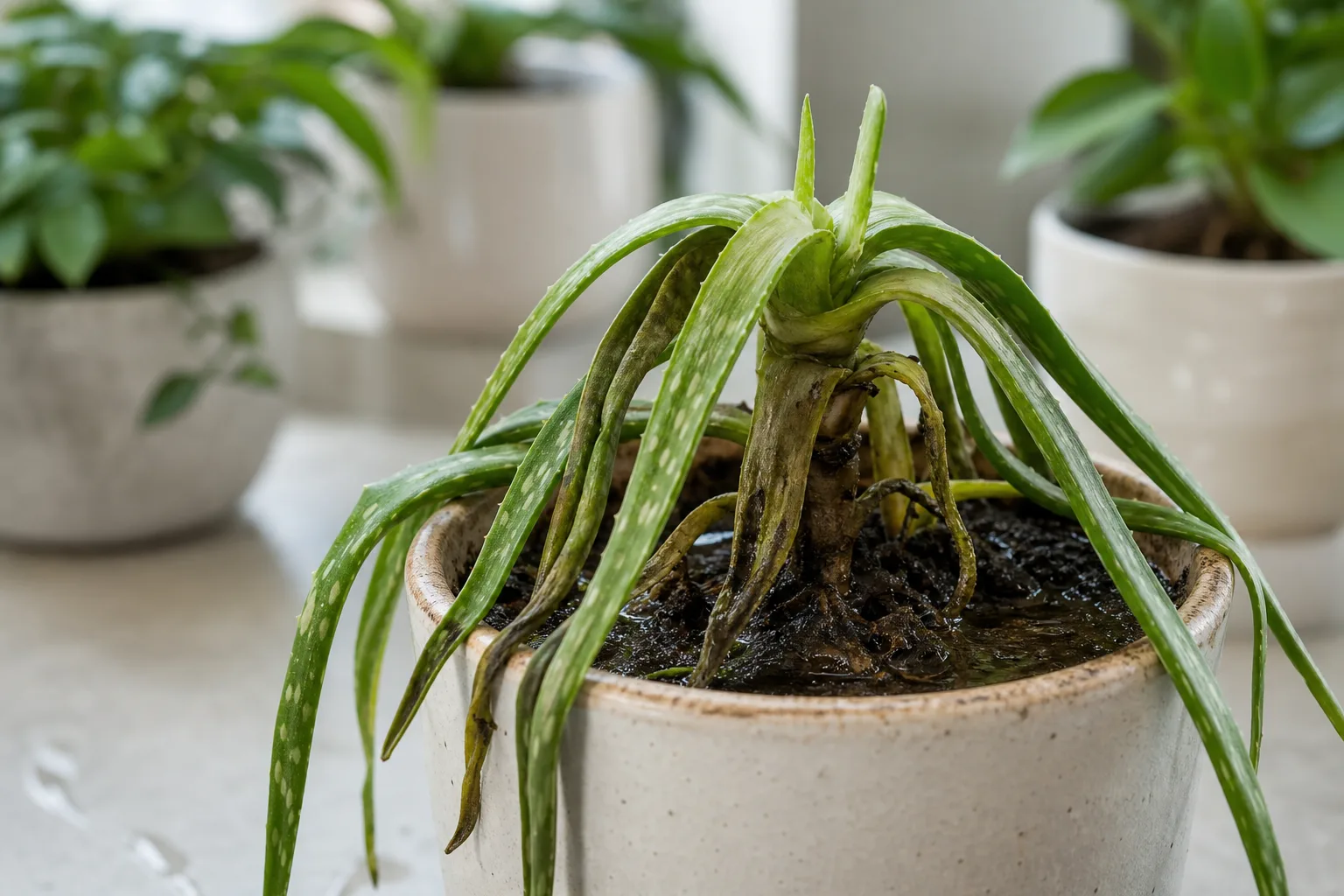
Root Rot on Aloe Vera: Causes, Checks & Fixes
This guide covers root rot on Aloe Vera. See also the general Root Rot guide, watering, and light pages for this plant.
Root Rot on Aloe Vera: Causes, Checks & Fixes
Quick answer
Root rot on Aloe Vera (Aloe vera) is almost always a watering and drainage failure, not a mysterious disease. Overwatering should be avoided-it can lead to roots rotting on a succulent that evolved for dry intervals. This plant stores water in thick leaves, so limp outer leaves on damp soil are the signature trap-growers water again, and rotting roots lose even more function.
First step: stop watering immediately. Lift the pot. If the mix is wet and heavy, press an outer leaf at the base. Soft mushy tissue at the leaf base plus sour-smelling mix means treat root rot as likely before you unpot, trim, or repot.
| What you find | What it usually means | Read next |
|---|---|---|
| Mushy roots after unpotting, wilt on wet mix | Root breakdown-may already reach the crown | Stay on this page; use the crown squeeze test and salvage table below |
| Black mush at the soil line on the main rosette | Crown rot at the base | Salvage firm pups; mother may be lost-see crown-vs-pup table |
| Firm leaves, dry soil, slightly wrinkled tissue | Underwatering, not rot | Aloe underwatering guide |
For soak-and-dry rhythm and seasonal cuts, see the aloe watering guide. For baseline culture, see the Aloe Vera overview. This page covers confirmation, root surgery, pup salvage, and recovery timing.
Root rot vs. other aloe problems
| Pattern | Pot weight | Soil at 2 inches | Leaf base | What it usually means |
|---|---|---|---|---|
| Root rot | Heavy | Wet, cool | Soft, mushy, blackening | Failed roots on saturated mix |
| Underwatering | Light | Dry and crumbly | Firm, thin, slightly wrinkled | Turgor loss from drought |
| Normal pup crowding | Normal | Dry on schedule | Firm; pups at base | Not rot unless base is mushy |
| Cold damage | Normal | Dry | Firm but discolored tips | Not rot unless base softens on wet mix |
Compare with overwatering before roots fail, underwatering with a light dry pot, and brown tips from drought or fluoride without mushy bases.
What root rot looks like on Aloe Vera
On aloe, rot often starts at the outer leaf bases and root crown while upper inner leaves still look acceptable.
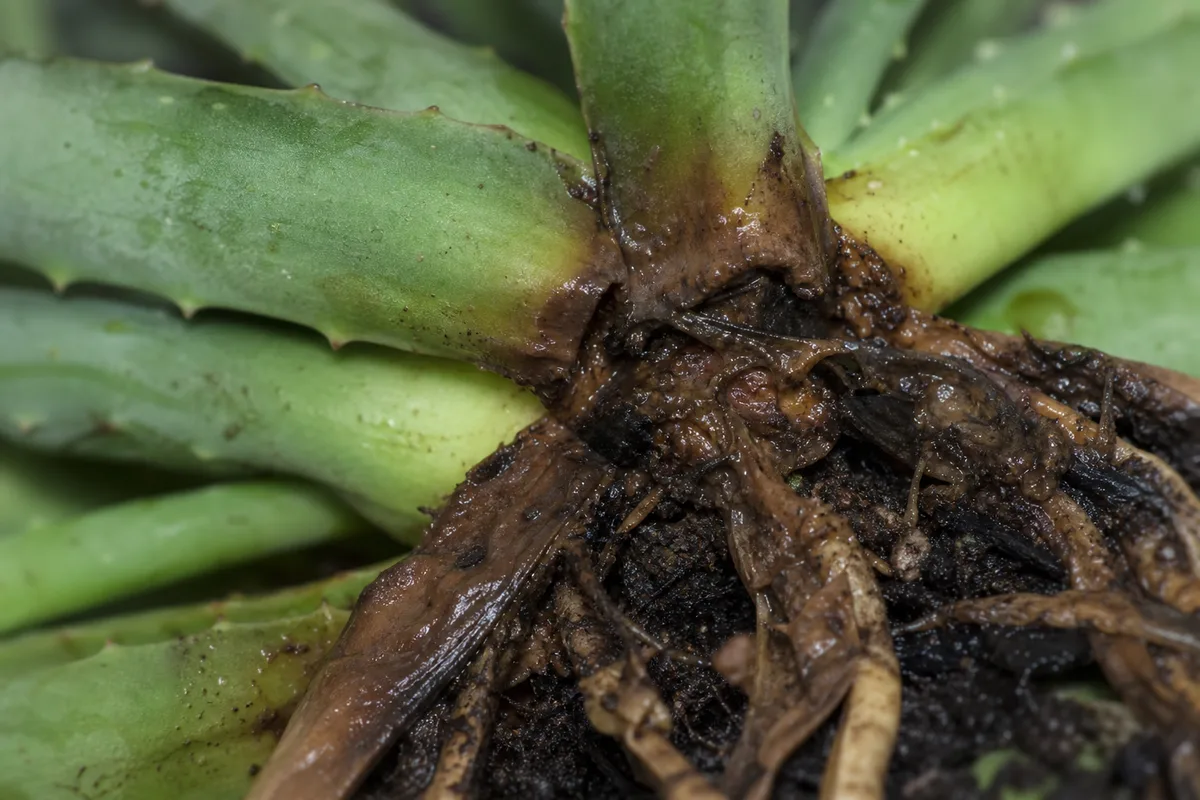
Root Rot symptoms on Aloe Vera - compare with healthy tissue on the same plant.
Early signs
- Yellowing outer leaves while mix stays damp
- Soft base tissue where leaves meet the stem-leaves pull away easily
- Sour smell from pot or drain holes
- Limp rosette on wet soil that does not firm after watering
Photo check (early rot): On the lowest outer leaf pair, press the tissue where the leaf meets the crown. Firm green-gray flesh with only slight yellowing suggests overwatering stress; tissue that dents under gentle pressure and smells sour means unpot today. Original leaf-base photo pending for a future update.
Advanced signs
- Black mushy stem at soil line-crown rot
- Leaves detaching with foul-smelling base tissue
- Roots that dissolve when rinsed-healthy aloe roots stay firm and white or tan
- Pup collapse when offset roots rot with the parent
Photo check (crown vs. pups): After unpotting, compare the main rosette base to attached offsets. A black mushy mother crown with firm pups showing white roots is the classic salvage case-separate offsets before repotting the parent tissue you can still trim to firm flesh. Original crown-vs-pup photo pending for a future update.
Why Aloe Vera gets root rot
Overwatering on wet mix. Aloe needs soil to completely dry between waterings in very well-drained succulent soil. Watering while the top two inches are still damp keeps the root zone oxygen-poor.
Wrong mix and no drainage. Missouri Botanical Garden notes aloe must grow in sandy well-drained potting loam with excellent drainage-standard potting soil without perlite, pots without holes, and saucers left full trap water around the crown.
Winter overwatering. Aloe slows in cool low-light months. Water very moderately in spring through fall but reduce to the minimum in winter. The same weekly watering that worked in summer leaves mix wet for weeks-roots in cold wet soil decay faster.
Oversized pots and pup crowding. UF/IFAS warns that too large a container can hold excess moisture that leads to root rot. Dense offset clusters in stagnant mix dry slowly at the center while the surface looks fine.
Variegated and slow-growing cultivars. Cream-striped or dwarf aloes photosynthesize less per leaf and use water more slowly than standard green rosettes on the same schedule. If your plant is variegated or stays compact in low light, stretch dry intervals and confirm the top two inches are dry-not just the surface-before soaking.
How to confirm the cause
- Pot weight - Heavy days after watering on a collapsing rosette suggests failed roots.
- Leaf base squeeze - Mushy black tissue at outer leaf bases confirms advanced rot.
- Unpot and rinse - Knock the plant gently out, rinse mix away, and inspect root color and firmness.
- Smell - Sour odor from mix supports rot over simple overwatering stress.
- Pup inspection - Firm pups with white roots can be saved separately even if the mother crown fails.
Crown vs. pup salvage decision table
| Crown / root finding | Pup condition | Salvage path | Realistic outcome |
|---|---|---|---|
| Mostly firm crown; 25–50% mushy roots | Pups firm with white roots | Trim rot, air-dry, repot mother dry; leave pups attached or divide if crowded | Mother often recovers in 2–3 weeks |
| Soft black tissue at soil line on mother | Pups firm, clean roots when rinsed | Separate pups first; discard or trim mother to firm tissue only if any remains | Mother lost; pups root in 3–4 weeks |
| Crown fully black and mushy | One or more pups still firm | Cut pups free with sterile knife; trim any pup mush; pot offsets alone | Offsets are the save-mother is compost |
| Crown mushy and pups soft at base | - | No viable tissue | Discard all; sterilize pot; fresh mix next plant |
| Firm crown; roots mostly slime | Pups also rotting | Full rescue trim same day; consider whether any offset has firm leaf tissue | Low odds-act within 24 hours |
First fix for Aloe Vera
Stop watering and unpot within 24 hours if leaf bases are soft or mix smells sour.
Lay the rosette sideways, rinse roots clean, and trim every dark mushy root to firm white tissue with sterile scissors. Remove outer leaves that are mushy at the base-they will not recover. If the crown is firm and roots are partially healthy, let cut surfaces dry one to two days, then repot into fresh dry cactus mix in a pot sized to the root mass.
Do not water for one to two weeks after repot-then one cautious soak. Follow soak-and-dry from the watering guide.
If the main crown is black and mushy, salvage firm pups with clean roots into separate small pots per the propagation guide before you spend time on the failing mother rosette.
Step-by-step recovery
- Unpot and rinse - Remove all old wet mix from roots.
- Trim rot - Roots, mushy leaf bases, and black crown tissue back to firm green/white.
- Separate pups - When the table above points to offset salvage, divide before repotting.
- Air-dry - One to two days on newspaper so cuts callus.
- Repot dry - Fresh cactus mix, drainage holes, no deep burial of healed crown.
- Withhold water - One to two weeks minimum.
- Resume soak-and-dry - Top two inches dry between drinks.
- Monitor pups - New firm leaves or offset growth means recovery.
Recovery timeline
Mild cases with firm crown and partial healthy roots may stabilize within two to three weeks after repot. Crown rot with salvageable pups often means the mother is lost but offsets root within three to four weeks in dry mix. Outer damaged leaves never re-green-watch inner new growth.
Annotated recovery snapshot (illustrative)
A windowsill aloe watered weekly through a cool December developed yellow outer leaves and a heavy pot while inner leaves still looked plump. Unpotting showed roughly 35% brown mushy roots and soft tissue on two lowest leaves, but three pups with firm leaves and white roots remained attached. After separating pups, trimming mother roots to firm tissue, air-drying cuts 36 hours, and repotting all into dry cactus mix with no water for ten days, the first firm new leaf on a pup appeared around week three. Original before/after root photos pending for a future update-use firm new growth and re-inspected root color, not old yellow outer leaves, as progress markers.
What not to do
- Do not water a wilted aloe on wet soil-damaged roots cannot move water upward, so more water accelerates decay.
- Do not repot into regular potting soil without drainage amendments.
- Do not fertilize until new growth resumes.
- Do not leave the rosette sitting in a wet saucer during recovery.
- Do not delay pup separation when the mother crown is black mush but offsets are firm-rot spreads through shared tissue quickly.
Pet note: Aloe is toxic to cats and dogs-dispose of mushy trimmed leaves safely during rescue and keep the pot away from pets until cleanup is complete.
How to prevent root rot next time
Use cactus mix, drainage holes, and top-two-inch dry checks. Never let your plant sit in water after watering. Empty saucers. Cut winter watering sharply per the watering guide. Repot when pups overcrowd the pot per the repotting guide-increase pot size by no more than one to two inches at a time.
When to worry
Act immediately when the entire crown turns black mush, all roots are slime, or pups also soften at the base. Discard severely compromised tissue; save only firm offsets with clean roots.
Salvage decision checklist:
- Firm crown after trim → repot dry, follow timeline above
- Mushy crown, firm pups → separate pups first; mother usually lost
- Mushy crown and mushy pups → discard; sterilize pot
- Re-rot within six weeks after two thorough trims → review mix, pot size, and winter schedule before a third rescue attempt
Related aloe guides
- Aloe Vera overview - culture hub
- Overwatering · Underwatering · Wilting
- Watering · Soil · Repotting · Propagation
FAQs
How can I confirm root rot on Aloe Vera?
Confirm when the pot feels heavy, mix smells sour, roots are brown and mushy when rinsed, and outer leaves yellow or go soft at the base despite moisture. Healthy aloe roots are firm and white or tan. A light dry pot with thin but firm leaves usually means underwatering.
Can I save Aloe Vera pups if the mother rosette is rotting?
Often yes. Offsets with firm leaves and clean white roots can be separated and potted alone even when the parent crown is compromised. Cut away any mushy tissue on pups before repotting into dry cactus mix.
Why does my aloe wilt when the soil is still wet?
Wilt on wet soil means roots are failing. Aloe stores water in thick leaves, so the rosette can look thirsty while rotting roots cannot absorb. Watering again makes decay worse-stop and inspect first.
How long should I wait to water after repotting a rotted aloe?
Wait at least one to two weeks after trimming and repotting into dry mix so cut surfaces callus. Then give one cautious soak and resume soak-and-dry per the watering guide-top two inches dry before the next drink.
How do I prevent root rot on Aloe Vera?
Use fast-draining cactus mix, pots with drainage holes, and water only when the top two inches are dry. Empty saucers within 30 minutes. Winter dormancy needs longer dry intervals-wet cold roots rot fast.