Fungus Gnats on Aloe Vera: Overwatering Warning & Dry-Down
Quick answer
Fungus gnats on Aloe Vera almost always mean soak-and-dry failed-peat-heavy mix or winter watering left the surface damp. First step: stop watering and push a skewer two inches into the mix; if it comes out damp, dry the pot completely before any BTI or traps.
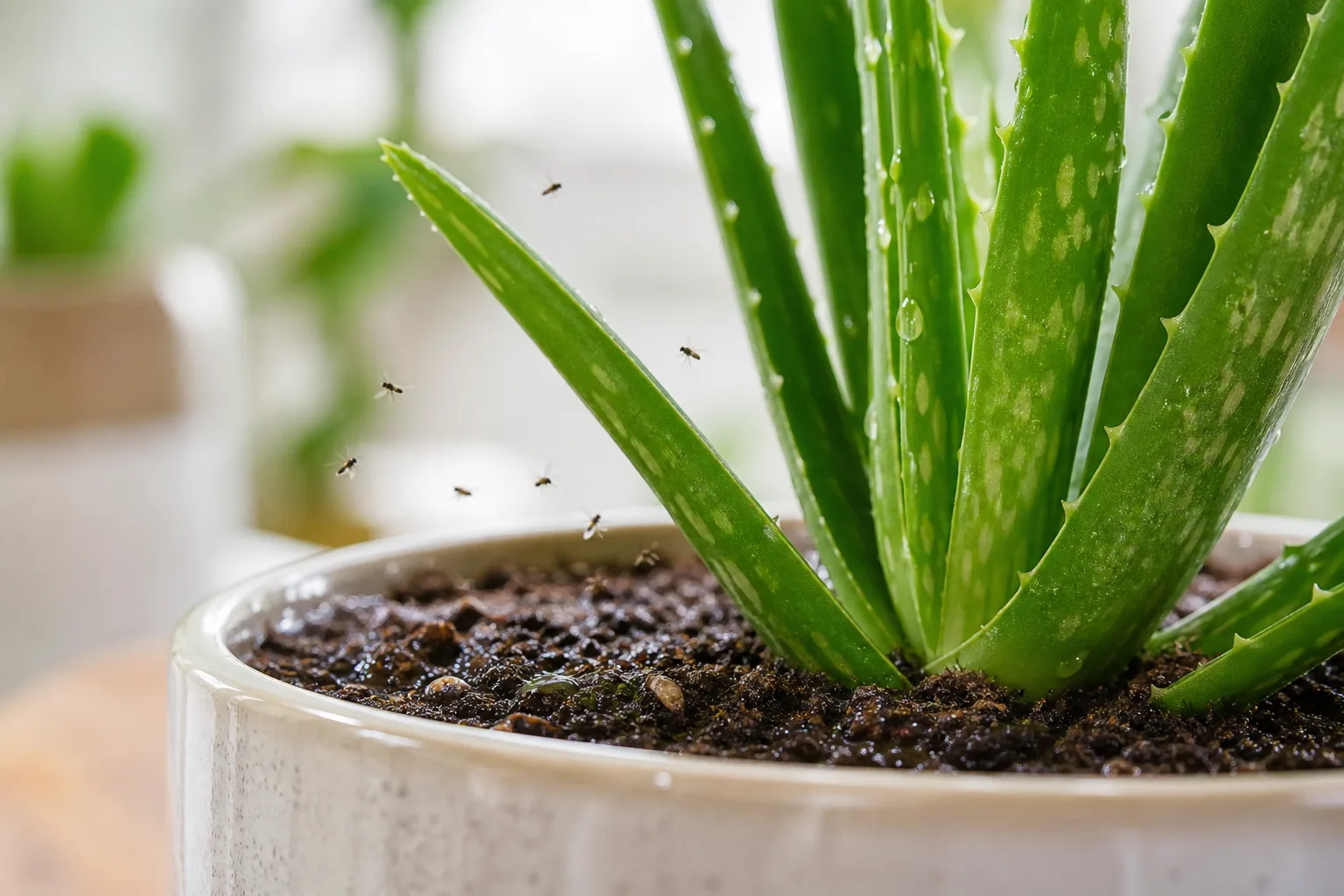
Fungus Gnats on Aloe Vera: Overwatering Warning & Dry-Down Fix
This guide covers fungus gnats on Aloe Vera. See also the general Fungus Gnats guide, watering, and light pages for this plant.
Fungus Gnats on Aloe Vera: Overwatering Warning & Dry-Down Fix
Quick answer
Fungus gnats on Aloe Vera (Aloe vera) are not a random pest invasion-they are a moisture alarm. Fungus gnats thrive in moist potting soil rich in organic matter, and aloe is a leaf succulent built for long dry spells between deep drinks. When gnats hover over your pot, the top layer of mix has stayed damp too long, almost always because soak-and-dry failed (calendar watering, peat-heavy bagged soil, winter overwatering, or a pot that drains poorly).
First step: stop watering and test the mix. Push a wooden skewer two inches into the soil. If it comes out cool, damp, or with mix clinging to it, the pot is still too wet-do not add BTI, traps, or hydrogen peroxide yet. Let the entire root zone dry per the aloe watering guide before any larval treatment.
Aloe’s thick leaves can look fine while roots sit in soggy mix, so pair fly checks with a firm vs. mushy leaf squeeze at the outer bases. Soft translucent tissue on wet soil means escalate to overwatering and root rot rescue-not gnat spray on leaves.
For full species context-light, soil, and seasonal rhythm-start with the Aloe Vera overview.
Visual check: Adults are about 1/8 inch long, dark, and mosquito-like-they rise from damp soil when you water, not from thick aloe leaves. Photo reference: yellow sticky trap at soil line beside a firm aloe rosette, with tiny dark flies visible on the card.
Why gnats on Aloe almost always mean the soil is too wet
Adult fungus gnats are tiny dark flies-roughly fruit-fly size-that lay eggs in consistently moist organic soil. Larvae live in the top two to three inches of growing medium and feed on fungi, algae, and decaying organic matter; they also chew fine roots and root hairs. Adults are a nuisance; larvae signal that your substrate has been hospitable to moisture-loving fungi.
Soak-and-dry failure and peat-heavy mix
Aloe evolved in rocky, fast-draining desert soil. Indoors, it needs a gritty cactus mix in very well-drained soils that dries through within days, not standard peat-heavy potting soil that holds water for a week. Overwatering contributes to fungi that larvae feed on-so gnats and overwatering share the same root cause on aloe.
Common triggers on this species:
- Calendar watering through winter when the plant needs water every four to six weeks, not every two
- Bottom-watering that keeps the surface layer moist while the owner thinks the plant is “dry”
- Store-bought succulent mix that is still too peat-rich without added pumice or coarse sand
- Plastic pots in dim rooms where evaporation is slow and the skewer stays damp for weeks
- Saucers left full after watering, wicking moisture back into the root zone
If your mix matches the problems in the aloe soil guide-dense, spongy, slow to dry-gnats will return until you correct the substrate, not just kill flies.
Why bottom-watering can still breed gnats
Bottom-watering helps avoid crown rot when done carefully, but leaving a pot in a water tray too long saturates the entire mix. Even a short soak can leave the top inch damp for days in peat-heavy soil-exactly where females lay eggs. For gnat recovery, top-water sparingly around the pot edge only after a full dry-down, or bottom-water for 15 to 30 minutes and drain completely.
Wisconsin Horticulture Extension notes that bottom-watering can keep the soil surface drier when done correctly-but only if you remove the pot from standing water promptly and let the top inch dry between sessions. On aloe in heavy peat, the surface often stays egg-friendly even when roots below have drunk their fill.
What fungus gnats look like on Aloe Vera
Healthy aloe leaves are smooth, thick, and firm-not fuzzy. Pest signs are in the soil and air around the pot, not cottony patches on leaves (that pattern suggests mealybugs).
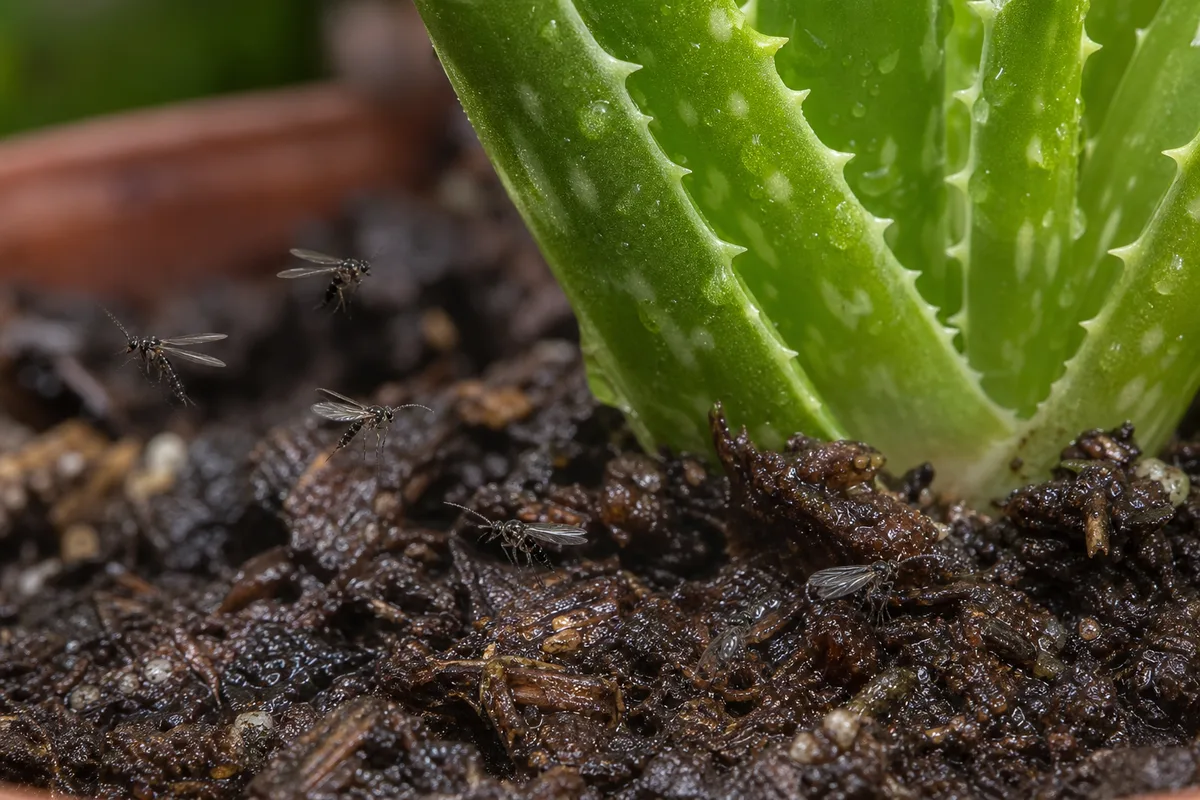
Fungus Gnats symptoms on Aloe Vera - compare with healthy tissue on the same plant.
Adults around the pot
- Tiny black or gray flies hovering over the soil surface
- Flies rising in a small cloud when you move or water the pot
- Adults resting on windows, lamps, or nearby walls-yellow sticky traps catch them for monitoring
Larvae in the top inch of mix
- Small translucent worms, roughly ¼ inch long, visible when you scrape the surface gently
- Potato test: wedge a raw potato slice into the top of the mix overnight; check underside for larvae next morning-then discard the slice. Colorado State Agricultural Biology recommends this slice method to confirm soil-dwelling larvae.
- Larvae in the top 1 to 2 inches confirm breeding in your pot, not a nearby drain
Larva confirmation: Scrape the top inch of damp mix from an aloe pot-translucent worm-like larvae with dark head capsules confirm active breeding in that container. Photo reference: potato-slice underside showing larvae beside an aloe rosette base.
What Aloe damage looks like (often hidden until late)
Gnat damage alone is usually mild on a firm, well-drained aloe. The danger is compound stress: gnats indicate wet mix, and wet mix kills aloe roots. Watch for:
- Limp outer leaves while soil is still damp-roots may already be failing
- Yellowing lowest leaves that feel soft at the base
- Slow pup production in a plant that used to offset freely
- Sour smell from drain holes-pairs gnats with root rot risk
Aloe stores water in leaves, so the rosette can appear plump while fine roots are being chewed and rotting underneath.
Firm vs. mushy check: Pinch the lowest outer leaf at the base-firm tissue means moisture correction may be enough; mushy translucent tissue on wet soil means root rescue. Photo reference: side-by-side squeeze comparison of firm vs. soft lower aloe leaf bases.
Fungus gnats vs. fruit flies on Aloe
| Sign | Fungus gnats | Fruit flies |
|---|---|---|
| Hangout | Soil surface, pot rim | Kitchen, compost, fruit bowl |
| Trigger | Damp organic mix | Fermenting food, trash |
| Larvae | In top inch of potting mix | Not in aloe soil |
| Fix | Dry soil + BTI | Remove food source; still dry aloe soil |
If flies swarm the kitchen but not the plant, your aloe may be fine-still run the skewer test in case both problems overlap.
Confirm fungus gnats in five checks
- Skewer at two inches - Damp or clinging mix explains why gnats persist; bone-dry mix with flies may mean a neighboring plant or drain source.
- Cover test - Screen the pot overnight; gnats caught on the cover confirm this container as the breeding site.
- Potato slice - Larvae under the slice confirm active breeding in the mix.
- Leaf base squeeze - Firm tissue = moisture fix may be enough. Mushy base on wet soil = root rescue path.
- Trap trend - One yellow sticky trap per pot; fewer adults over two weeks after dry-down confirms progress.
First fix: dry the pot completely
Do not reach for sprays on aloe leaves. This species has smooth succulent foliage and a tight rosette crown-foliar pesticides pool in the center and leave residue on thick leaves. The first fix is cultural: break the wet cycle.
- Stop all watering until a skewer pushed two inches deep comes out clean and dry.
- Empty saucers and move the pot to brighter indirect light if it sits in a dim corner-faster evaporation helps, within aloe’s light limits.
- Scrape algae or mold from the surface and discard the top ½ inch of peat crust if present; it holds moisture and feeds larvae.
- Lift the pot daily; learn the weight difference between wet and dry.
Allow the surface of container soil to dry between waterings-on aloe, that means the top two inches, not just a dusty surface over soggy peat below.
When the mix is dry through, resume soak-and-dry from the watering guide-deep drink, full drain, then wait until dry again.
Dry-down speed by pot type
How long a full dry-down takes depends on container material and room conditions-not the calendar:
| Pot type | Typical dry-down (6-inch pot, bright room) | What to watch |
|---|---|---|
| Unglazed terracotta | 5–10 days after one soak | Unglazed ceramic dries faster than plastic through the walls; skewer may clear faster at the rim than center |
| Plastic or glazed ceramic | 10–21 days; longer in winter dim rooms | Surface can look light while mix two inches down stays damp-always probe depth |
| Oversized decorative pot | 3–5+ weeks if root ball is small | Heavy pot weight long after “surface looks dry” is a gnat incubator |
In cool January rooms, even terracotta aloes in 4-inch pots may need four to six weeks between drinks. Winter gnats usually mean you are still on a summer watering calendar.
Treat larvae and adults (after dry-down)
Only after the pot dries should you add controls. Layer them in this order:
Yellow sticky traps
Place small yellow sticky cards just above the soil surface-one per pot. They catch egg-laying adults and show whether counts are falling. Traps alone will not end an infestation if soil stays moist.
BTI drench
Bacillus thuringiensis israelensis (Bti) is a biological larvicide toxic to fungus gnat larvae, not to people, pets, or mature plants when used as labeled. Mix four tablespoons of Mosquito Bits in one gallon of water, soak 30 minutes, skim granules, and apply the strained liquid as a soil drench. Repeat weekly for three weeks to break overlapping generations. Bti breaks down quickly in soil, so repeat applications are normal.
Pour drench around the pot edge, not into the rosette crown.
What not to use on Aloe leaves
- Do not spray neem, soap, or oil across the rosette-moisture and residue in the crown invite rot on thick-leaved succulents.
- Skip hydrogen peroxide drenches if you are also using Bti; peroxide can kill beneficial bacteria in the treatment.
- Do not water more to “help” a limp aloe while gnats are present-limp on wet soil is a root problem.
Recovery timeline
| Phase | What to expect |
|---|---|
| Days 1–7 | Surface dries; fewer flies when you disturb the pot |
| Weeks 1–2 | Sticky trap catch drops if soil stays dry |
| Weeks 3–4 | Full cycle break after three weekly BTI drenches if larvae were heavy |
| Leaf recovery | Mushy leaves do not re-firm-watch for new firm center growth |
Observed recovery pattern: On a mature aloe in a 6-inch terracotta pot with peat-heavy store mix, skipping two planned waterings until the skewer cleared at two inches dropped sticky-trap catches from roughly 18 adults per week to under 4 over fourteen days-without BTI, once larvae in the upper mix starved. Heavier infestations with confirmed larvae in waterlogged plastic pots usually need BTI on the weekly schedule alongside dry-down.
Judge success by dry skewer tests, falling trap counts, and firm leaf bases-not by whether you still see an occasional stray fly.
When this is root rot - not just gnats
Gnats prove the mix was wet. Mushy leaves prove roots may be dying.
| Pattern | Gnats only | Gnats + root rot |
|---|---|---|
| Leaf base | Firm | Soft, translucent, blackening |
| Pot weight | Light after dry-down | Stays heavy; sour smell |
| Soil | Dry skewer after hold | Stays cool and damp deep down |
| After dry-down | Plant stable | Continues to collapse |
Firm vs. mushy check: Pinch the lowest outer leaf at the base. Firm tissue that is only slightly thin may mean underwatering after a long dry hold-one cautious soak. Mushy tissue that pulls away easily means stop BTI cycles and follow root rot unpot, trim, and repot into fresh cactus mix.
Do not repot a waterlogged aloe into fresh mix without trimming dead roots and letting cut surfaces callus-wet rot spreads into new soil.
Repot during an active waterlogged infestation
If gnats persist but leaves stay firm, dry-down and BTI are usually enough-repotting wet aloe roots unnecessarily shocks the plant.
Repot same-day when:
- Mix smells sour and skewer stays damp two weeks after zero watering
- Outer leaves are mushy at the base on a heavy pot
- Larvae return weekly despite correct dry-down and three BTI cycles-peat has broken down and holds water like a sponge
Repot protocol for waterlogged aloe:
- Stop watering and unpot gently-shake off wet peat, do not yank firm roots.
- Trim black, mushy, or hollow roots with clean scissors; keep firm white or tan roots.
- Let cut surfaces callus 24–48 hours in dry shade-aloe wounds rot if planted wet.
- Discard old mix entirely-do not reuse peat that hosted larvae and fungi.
- Repot into fresh gritty cactus mix in a pot only one size up with open drainage holes; do not water for five to seven days.
- Resume soak-and-dry from the watering guide once the skewer reads dry and leaves stay firm.
Firm offset pups at the base may survive even when the main rosette fails-inspect before discarding the whole pot.
Mistakes that make Aloe gnats worse
- Watering on schedule instead of when the skewer is dry two inches down
- Misting the rosette or leaving crown water after top-watering
- Keeping peat-heavy “succulent” mix without perlite, pumice, or coarse sand
- Running BTI or peroxide while soil is still saturated-fixes flies, not soggy roots
- Ignoring winter dormancy-same weekly can that worked in July overwaters in January
- Treating gnats as a leaf pest and spraying foliage while soil stays wet
- Repotting into fresh mix without trimming rot-gnats may clear briefly while roots keep dying in wet new soil
Prevent gnats on Aloe long term
- Soak-and-dry always - Water deeply, drain fully, wait until dry two inches down; cut frequency sharply in winter.
- Gritty mix - Aim for fast drain per the soil guide; refresh when peat breaks down and holds water.
- Terracotta or drainage holes - Plastic is fine if you respect dry skewer tests; never let pots sit in standing water.
- Quarantine new plants two weeks (six weeks for heavy retail peat pots)-gnats often hitchhike in moist store potting mix.
- Sticky trap sentinel - One trap near new acquisitions catches adults early.
- Top-layer refresh - Replace the top inch with coarse pumice if algae keeps returning.
When gnats are gone and leaves stay firm, you have fixed the real problem: moisture rhythm matched to a desert succulent-not just killed flies.
Related Aloe Vera guides
- Aloe Vera overview - baseline light, water, and care hub
- Watering - soak-and-dry rhythm gnats flag when it drifts too wet
- Soil - gritty mix targets that prevent chronic surface moisture
- Overwatering - the culture mistake gnats usually signal
- Root rot - when wet soil has already damaged roots
- Mealybugs - cottony patches on leaves, not soil flies
- Mold on soil - surface fuzz on the same damp peat
FAQs
My Aloe leaves are mushy and I have gnats-do I treat the bugs or the roots first?
Treat the wet soil and roots first. Mushy leaf bases on a heavy damp pot point to overwatering or root rot, not a gnat-only problem. Stop watering, squeeze outer leaves at the base, and follow the root rot page if tissue is soft. Gnats are a symptom of the same moisture failure-dry-down and mix correction come before chasing flies.
Can I use the same cactus mix after a gnat infestation?
If the mix drains fast and roots are firm, you can keep it after larvae are gone and the surface stays dry between waterings. If the mix stayed soggy for weeks, smelled sour, or roots were mushy, discard it and repot into fresh gritty cactus mix per the soil guide. Larvae feed on fungi and organic matter in wet peat-mineral-heavy mix is less hospitable long term.
Why do fungus gnats appear on Aloe Vera in winter?
Aloe slows growth in cool low-light months but many owners keep a summer watering schedule. Soil that took 14 days to dry in July may stay damp for five or six weeks in January-perfect for gnat larvae in the top inch. Winter gnats usually mean the calendar is watering the plant, not the skewer test.
Will fungus gnat larvae damage Aloe Vera roots?
Larvae chew fine roots and feed on fungi in moist organic mix. On a healthy aloe in fast-draining cactus soil, damage is usually minor once you dry the pot. On an already overwatered aloe with failing roots, larvae add stress-you may see limp leaves on wet soil. Judge severity by leaf firmness at the base, not fly count alone.
Are yellow sticky traps enough to fix gnats on Aloe Vera?
Traps catch adult flies but do not stop eggs and larvae in damp soil. Use traps to monitor improvement after you dry the mix-not as the only fix. Pair traps with a full dry-down cycle and weekly BTI drenches if adults keep emerging after two weeks of dry surface soil.