Mealybugs on Aloe Vera: Causes, Checks & Fixes
Quick answer
Mealybugs on Aloe Vera hide in smooth rosette leaf axils and on offset pups-not on fuzzy foliage. First step: isolate the plant and inspect leaf bases and pup clusters with a hand lens before spraying anything.
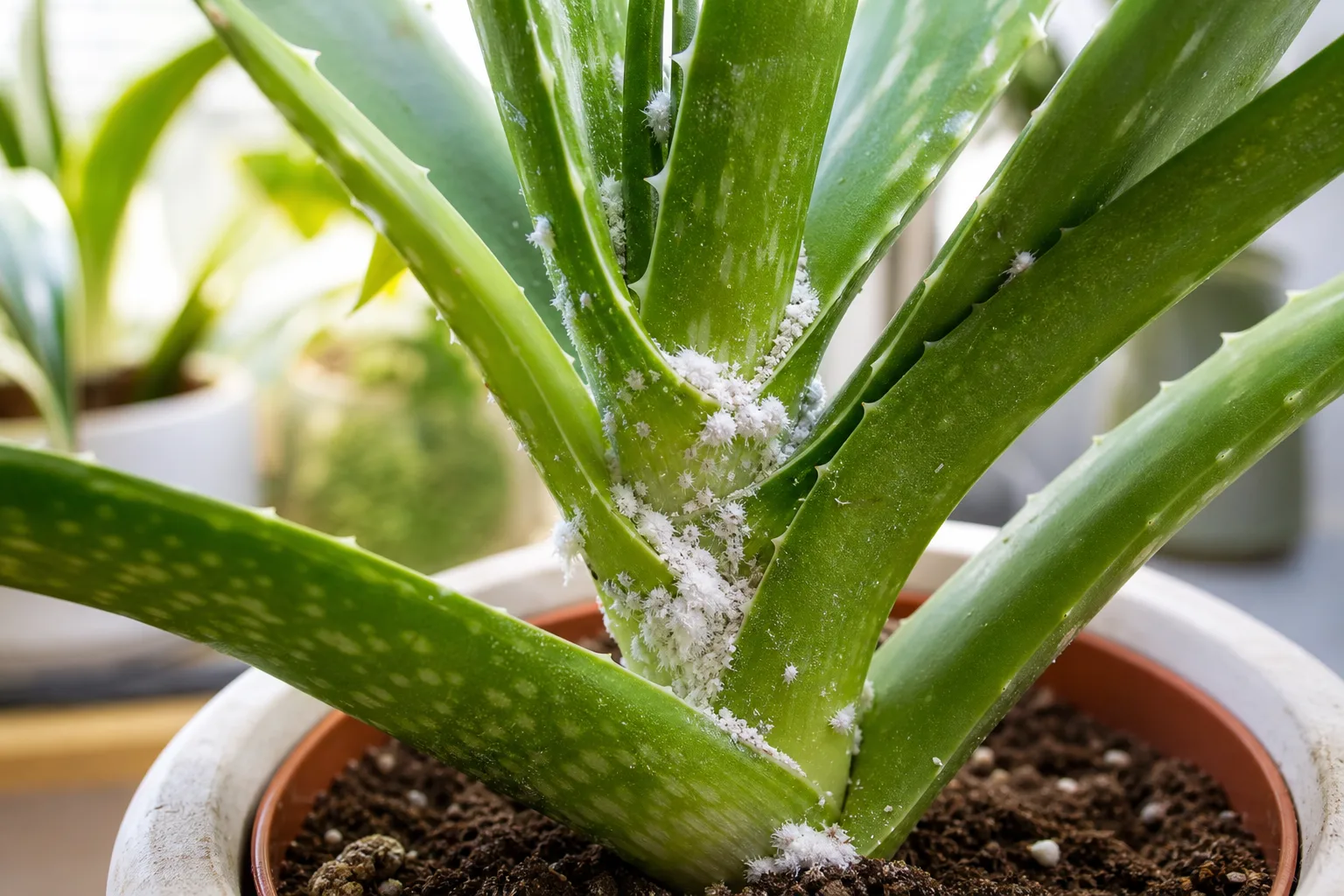
Mealybugs on Aloe Vera: Causes, Checks & Fixes
This guide covers mealybugs on Aloe Vera. See also the general Mealybugs guide, watering, and light pages for this plant.
Mealybugs on Aloe Vera: Causes, Checks & Fixes
Quick answer
Mealybugs on Aloe Vera (Aloe vera) are soft-bodied scale relatives that nest in the tight spaces where thick succulent leaves meet the stem and where pup offsets emerge from the mother rosette. Aloe leaves are smooth and waxy-not fuzzy-so cottony white clusters stand out clearly against green tissue when you look at the base of the rosette, not just the leaf tips.
First step: isolate the pot and inspect leaf axils and pups with a hand lens. Confirm live mealybugs before you spray soap, oil, or alcohol. Sticky honeydew on the pot rim or ants on the saucer mean sap feeding is already underway.
Pet note: Aloe vera is toxic to cats and dogs if chewed. Keep treated plants and trimmed debris out of reach during recovery.
What mealybugs look like on Aloe Vera
Healthy aloe leaves are firm, plump, and slightly rigid with smooth margins. Mealybug damage looks different:
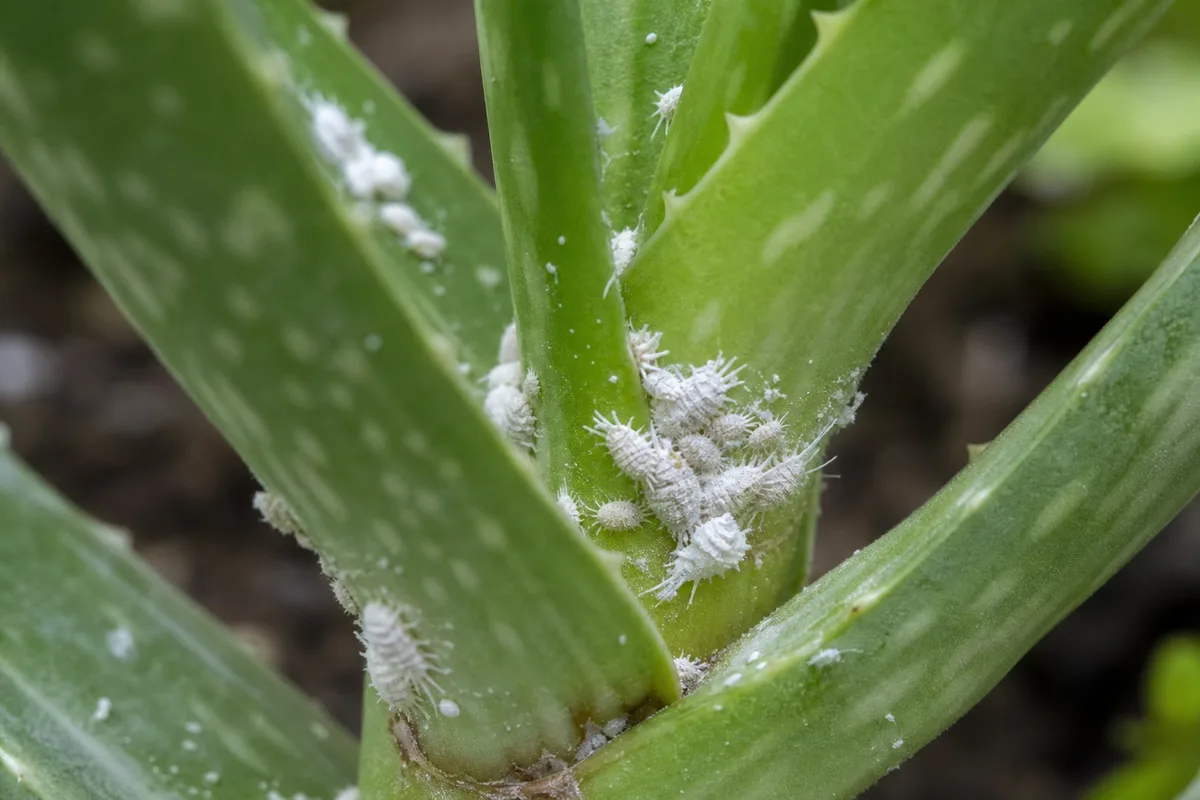
Mealybugs symptoms on Aloe Vera - compare with healthy tissue on the same plant.
- White cottony masses in leaf axils, at the stem base, and tucked against pup clusters
- Flat oval insects 1/8 inch or smaller when you pull apart the cotton-mealybugs are slow-moving when exposed
- Sticky honeydew on leaves or pot surfaces below colonies
- Ant activity on the pot or shelf-ants farm mealybugs for honeydew
- Sooty black mold on honeydew-coated leaves; it wipes off and is not sunburn
- Stunted or twisted new pups when feeding is heavy at the offset zone
Mealybugs rarely sit on the flat upper leaf surfaces where sun hits hardest-they prefer sheltered axils and the protected base where leaves overlap. On a typical indoor aloe, the first colony you spot is often a thumb-sized cottony tuft where a pup offset presses against the mother rosette-easy to miss if you only scan leaf tips from above.
Diagnostic vignette: Tilt the pot and sight along the leaf bases at bench height with a phone flashlight. Cottony wax catches sidelight against smooth green tissue; mineral crust on the pot rim stays flat and chalky, and sun-scorch patches sit on outer leaf faces, not in axils.
Confirm mealybugs vs. lookalikes
| Sign | Mealybugs | Mineral crust | Leaf spot / scorch |
|---|---|---|---|
| Texture | Cottony, moves when probed | Hard white crust on pot, not insects | Flat brown/tan patches on leaf face |
| Location | Axils, base, pups | Pot rim, soil surface salts | Sun-facing outer leaves |
| Stickiness | Honeydew present | Dry and powdery | Dry |
| Alcohol test | Insects turn brown/orange | No change | No change |
Run the alcohol swab test on one suspect cluster: dab 70% isopropyl on cotton. Mealybugs treated with alcohol turn light brown; crust and leaf spots behave differently.
Work through these confirmation checks before treating:
- Pup and axil focus - Spread outer leaves gently and inspect where pups emerge and where thick leaves overlap at the crown.
- Crush test - Touch wax with a dry swab. Mealybugs smear pinkish when crushed; perlite splash and hard-water spots do not.
- Movement - Nudge exposed insects with a toothpick. Mealybugs shift slowly; scale bumps stay glued in place.
- Honeydew trail - Sticky residue on the saucer or lower leaves supports sap feeders, not spider mites or mineral deposits.
- Neighbor scan - Check succulents on the same shelf before you treat-mealybugs hitchhike between pots.
Why Aloe Vera gets mealybugs
Aloe is not especially pest-prone, but its growth habit creates hiding spots. Pup offsets produce tender new tissue at the base where mealybugs colonize. Most indoor outbreaks start with introduction on newly purchased succulents, cuttings, or plants summered outdoors.
NC State Extension lists mealybugs among pests to watch on Aloe vera alongside scale and spider mites-the same honeydew chain that can coat smooth aloe leaves in sooty mold.
overwatering on Aloe Vera does not cause mealybugs directly, but weak or stressed succulents in stagnant air can host larger colonies once insects are present. Dense rosettes in dim corners with poor airflow slow your detection.
Warm indoor rooms favor year-round reproduction. Mealybugs thrive where winters are mild or absent-exactly the conditions on a windowsill collection. Natural predators rarely reach houseplants indoors, so a small axil colony can rebuild within a week if you treat once and stop.
Compare with aphids on soft new growth, hard immobile scale bumps on older leaf bases (see the Aloe Vera overview pest section), spider mites with stippling and webbing, and fungus gnats as a soil fly problem-not a leaf pest.
First fix for Aloe Vera
Isolate the plant and dab visible mealybugs with a cotton swab dipped in 70% isopropyl alcohol.
Target clusters in leaf axils and on pups where a fine swab reaches better than a spray. Support the rosette with one hand while you work so leaves do not snap. UC IPM recommends dabbing houseplant mealybugs with 70% or less isopropyl alcohol and testing a small area first-spot-test one outer leaf and wait 48 hours before treating the whole plant; check for spotting or softening.
Why alcohol first? It kills on contact without soaking the rosette center, where trapped moisture invites rot. Insecticidal soap and horticultural oil must contact insects directly and work best as follow-up for colonies you cannot reach with a swab.
After the first pass, wait 24 hours and re-inspect. Repeat dabs every five to seven days for two to three cycles-newly hatched crawlers require repeat treatment because one pass misses eggs tucked in crevices.
Step-by-step recovery
- Isolate - Move away from other succulents; check neighbors for cottony specks.
- Alcohol dabs - All visible colonies at axils, base, and pups.
- Gentle rinse - Optional lukewarm shower to wash honeydew; dry rosette center afterward.
- Soap mist if needed - Dilute insecticidal soap on unreachable clusters; avoid midday sun.
- Root check - If white wax appears on drain holes, unpot and inspect for root mealy; repot into fresh cactus mix if found.
- Monitor pups - New clean offset growth means the infestation is clearing.
Light infestation (one pup cluster): A thorough dab pass plus one follow-up check in five to seven days may be enough.
Moderate infestation (multiple axils or pups): Dab every visible colony, then repeat weekly for at least three cycles. Add insecticidal soap only on clusters a swab cannot reach.
Heavy infestation (wax across several pups, ants present, sooty mold): Treat aggressively with alcohol and soap, inspect every nearby succulent, and consider saving only clean pups if the mother rosette base is compromised.
Recovery timeline
Visible cottony clusters often shrink within one week of consistent alcohol passes. Sticky honeydew stops within days once feeding ends. Damaged leaf tissue does not re-green-judge success by clean new pups and firm existing leaves without fresh cotton. Heavy infestations may need three weekly treatment cycles.
What can recover: Pups that emerge after treatment should look clean and firm. Honeydew washes off mature leaves; sooty mold fades once stickiness is gone.
What may not recover: Leaves that yellowed or twisted during heavy feeding stay cosmetically marked-they still store gel but will not fully smooth out.
Signs treatment is working: Fewer wax clusters at each check, no fresh honeydew, ants disappearing, and upright new offset growth.
Signs the problem is worsening: Wax spreading to additional pups, white material at drainage holes after crown treatment, or colonies returning within days after three full weekly cycles.
What not to do
- Do not blast the rosette with a forceful hose-water trapped in the center invites rot.
- Do not apply systemic pesticides without reading succulent safety labels.
- Do not harvest gel from leaves treated with soap or oil until residues are gone and you have rinsed thoroughly.
- Do not ignore ants-follow trails to hidden colonies.
- Do not use dish soap instead of labeled insecticidal soap-household detergents can burn succulent leaves in bright window light after application.
How to prevent mealybugs next time
Quarantine new aloes two weeks. Scout leaf bases and pups during weekly care. Keep sharp drainage per the watering guide so roots stay vigorous. Isolate at the first white speck-early axil colonies are far easier than a pup cluster infestation.
Inspect plants regularly when bringing them indoors from patios or when mixing new nursery stock into a collection. A hand lens at the pup zone during watering beats three weeks of repeat treatment.
When to worry
Escalate when cotton covers multiple pups, white wax appears on roots, the rosette base softens (possible root rot from overwatering during treatment), or colonies return within days after three treatment cycles. Severe root mealy may require discarding the mother and saving clean pups only.
Heavily infested houseplants may need discarding to protect a large succulent collection-reserve that for specimens where wax fills every axil and treatment cannot reach the crown center.
Related Aloe Vera problems
- Aphids - honeydew overlap; insects on tender new growth and flower stalks
- Spider mites - stippling and webbing on smooth leaf faces, not cottony axil wax
- Root rot - soft rosette base risk if rinse water pools during treatment
- Watering - soak-and-dry rhythm during recovery
- Aloe Vera overview - species hub and pest cross-reference
Conclusion
Mealybugs on Aloe Vera hide where this succulent is easiest to misread-tight leaf axils and pup offsets at the rosette base, not the flat sun-facing leaf tips. Confirm cottony wax with the alcohol swab test, isolate the pot, and dab colonies with 70% alcohol before layering soap on unreachable crevices. Repeat weekly until new pups stay clean, keep the rosette center dry during rinses, and protect pets from toxic leaf tissue during recovery. Caught at one pup cluster, mealybugs are a nuisance; left across a crowded offset ring, they can stunt growth and coat smooth leaves in sooty mold.
When to use this page vs other Aloe Vera guides
- Aloe Vera watering guide - Use for routine moisture checks before assuming mealybugs is the main issue.
- Aloe Vera problems hub - Browse all 16 common issues on this species.
- Yellow Leaves on Aloe Vera - Different entry point when symptoms overlap with mealybugs.
- Slow Growth on Aloe Vera - Different entry point when symptoms overlap with mealybugs.
- Spider Mites on Aloe Vera - Different entry point when symptoms overlap with mealybugs.