Spider Mites on Aloe Vera: Causes, Checks & Fixes
Quick answer
Spider mites on Aloe Vera show as fine stippling and webbing on firm thick leaves-often while the soil is intentionally dry during winter heating. First step: isolate the pot and tap-test leaf undersides over white paper before spraying anything.
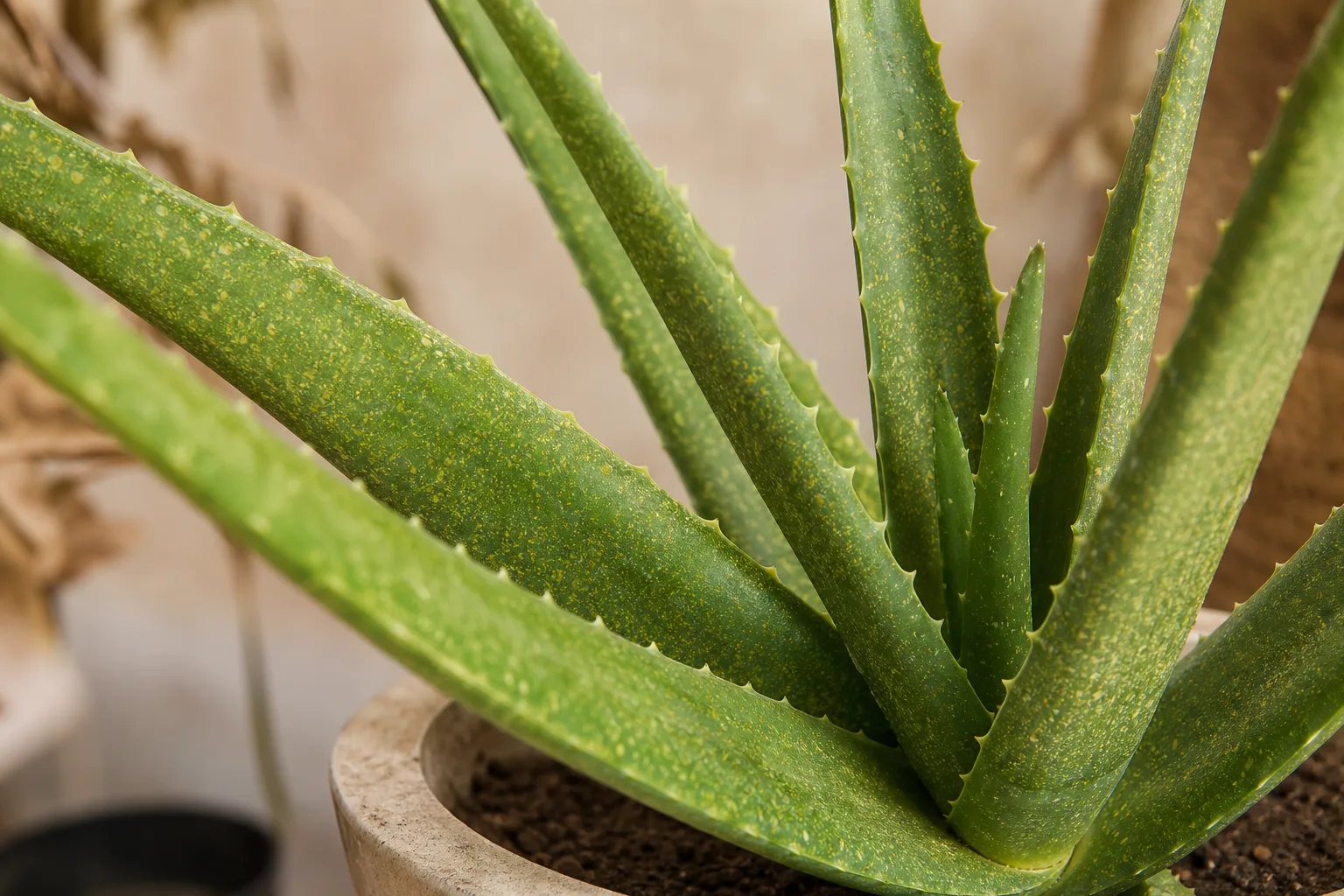
Spider Mites on Aloe Vera: Causes, Checks & Fixes
This guide covers spider mites on Aloe Vera. See also the general Spider Mites guide, watering, and light pages for this plant.
Spider Mites on Aloe Vera: Causes, Checks & Fixes
Quick answer
Spider mites on Aloe Vera (Aloe vera) are tiny eight-legged arachnids-not insects-that pierce thick succulent leaves and leave pale stippling, bronzing, and fine silk where leaves overlap at the rosette crown. Aloe stores water in firm leaves and you water on a dry-down rhythm, so many growers are surprised to see pest damage while the mix is dry. That combination is common: spider mites thrive in warm, dry air on window sills and near heating vents even when the roots are not overwatered.
First step: isolate the pot and confirm live mites with a white-paper tap test on leaf undersides before you spray soap, oil, or miticide. Webbing plus moving specks rules out sunburn and underwatering on Aloe Vera brown tips; a soft mushy base on wet soil points to root rot instead.
Pet note: Aloe vera is toxic to cats and dogs if chewed. Keep treated plants and debris away from pets during recovery.
What spider mites look like on Aloe Vera
Healthy aloe leaves are firm, smooth, and slightly rigid-not fuzzy. Mite damage stands out differently than on thin-leaved houseplants because early stippling can look subtle on thick gray-green tissue until you tilt leaves toward the light.
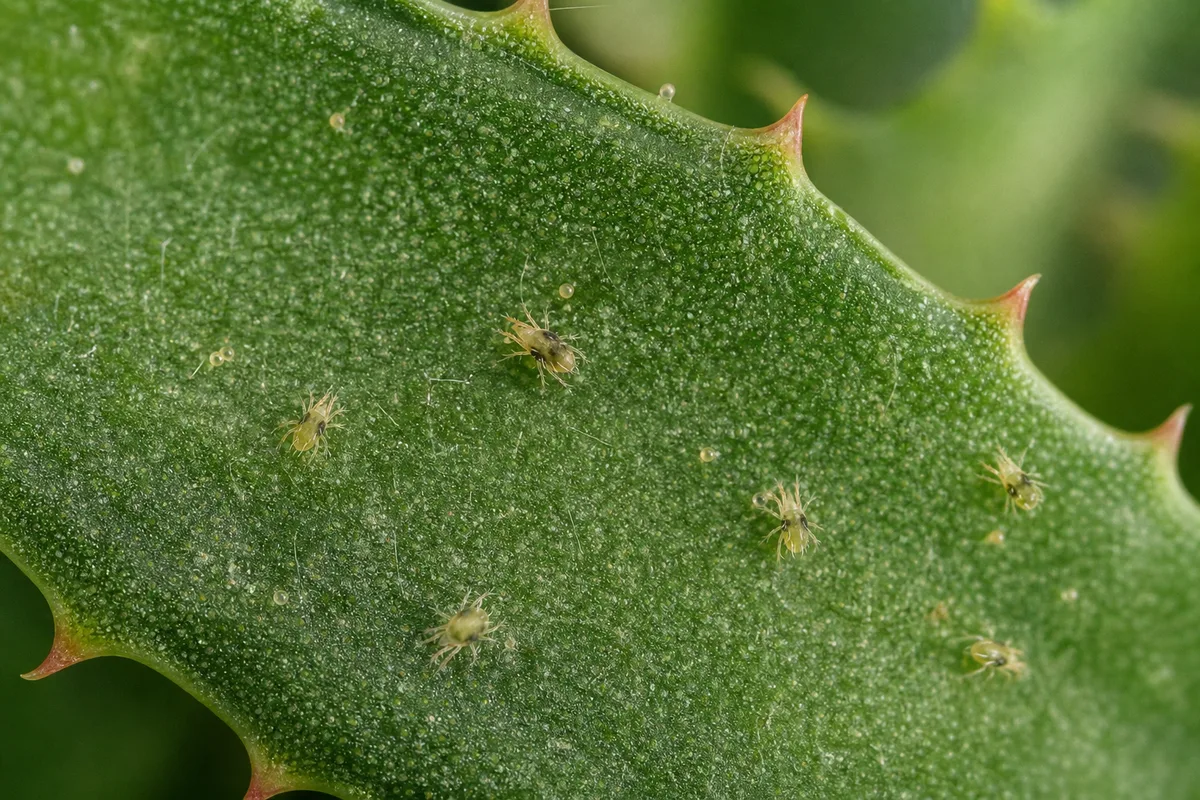
Spider Mites symptoms on Aloe Vera - compare with healthy tissue on the same plant.
- Fine yellow or white stipples scattered across flat leaf faces; bronzing as feeding continues
- Delicate webbing at leaf bases and in the tight rosette center where leaves overlap
- Tiny moving specks on undersides-about 1/50 inch long, often yellow-green or reddish
- Amber eggs, whitish cast skins, and black fecal specks visible with a 10× hand lens
- Crispy leaf edges only on heavily infested outer leaves; the plant stays firm at the base unless a separate water problem is present
Because aloe leaves are broad and smooth, mites often colonize the exposed flat surfaces and sheltered crown zone rather than deep axils-unlike mealybugs, which prefer cottony clusters in leaf bases and on pups.
Confirm mites vs. rot, sunburn, mealybugs, thrips, and underwatering
| Sign | Spider mites | Sunburn / scorch | Underwatering / low humidity | Mealybugs | Root rot |
|---|---|---|---|---|---|
| Leaf texture | Firm; stippling on surface | Firm; bleached or rust patches on sun side | Thin, slightly concave leaves | Firm; cottony masses in axils | Soft mushy base |
| Webbing | Fine silk at crown or undersides | None | None | Waxy threads possible | None |
| Soil moisture | Often dry (mite-friendly air) | Varies | Very dry | Varies | Wet, sour mix |
| Paper tap test | Specks crawl slowly | No specks | No specks | Insects in cotton, not stipple pattern | No specks |
| Location | Window sill, heat vent, dry winter room | South or west glass | Neglected dry-down | Base of rosette, pups | Stem base |
Five-step inspection checklist
- Feel the base - Firm plump tissue with dry soil fits mites; soft stem on damp mix is rot-see the watering guide.
- White-paper tap test - Hold paper under a leaf and tap sharply; watch for tiny moving creatures.
- Lens the crown - Check where thick leaves overlap for webbing and eggs.
- Trace the light - Bleached patches on the sun-facing side without stippling or webbing suggest sun stress, not mites.
- Scout neighbors - Mites spread on hands, tools, and air currents; inspect other succulents on the same shelf.
Why Aloe Vera gets spider mites
Aloe is drought-tolerant, but its microclimate at the leaf surface can still be hot and dry. Winter indoor heating, forced-air vents, and sunny south-facing glass lower humidity around the rosette while you correctly let soil dry between waterings. That dry-air pocket is exactly what two-spotted spider mites favor.
Common entry scenarios:
- New nursery plant brought home without quarantine
- Winter heating season with the pot on a warm window ledge
- Crowded succulent shelf where mites walk from pot to pot
- Summer outdoors then back inside without a rinse and scout
overwatering on Aloe Vera does not cause mites, but treating pests with repeated rinses without dry-down discipline can invite crown rot-a separate problem from the mites themselves. Compare with low humidity stress (crispy tips without stippling) and brown tips from salt or drought.
First fix for Aloe Vera
Isolate the pot away from other plants and rinse mite colonies off leaf undersides with lukewarm water-without flooding the rosette crown.
Support the rosette with one hand. Angle the pot so water runs down outer leaf surfaces and out of drainage holes rather than pooling in the center cup. Blot any water trapped where leaves meet the stem. Let the plant dry in Aloe Vera light guide for several hours before evening.
Why rinse first? It knocks down adults and webbing without chemical residue on a plant you may harvest for gel later. You get a cleaner view of remaining colonies before any spray.
After the rinse dries, re-run the paper tap test. If specks still move, plan a labeled insecticidal soap or horticultural oil follow-up-mites are arachnids, so products aimed only at insects often fail unless the label lists spider mites.
Crown-safe rinse technique for succulent rosettes
- Rinse at the soil line and leaf undersides, not straight into the crown funnel
- Use lukewarm water; cold shocks and hot water can mark succulent tissue
- Tilt and blot-a dry cloth pressed gently into the crown removes pooled drops
- Finish by mid-afternoon so leaves dry before cool night temperatures
- Skip heavy rinses if the base is already soft; fix root rot first
Insecticidal soap and horticultural oil on window-sill aloe
Insecticidal soaps and plant oils kill soft-bodied pests by contact-they must wet the mites directly and leave little residual activity. Coat undersides and leaf bases where webbing hides.
Timing matters on sun-stressed aloe: Do not spray in full sun or above about 90 °F-treat at lights-out or move the pot to bright shade until foliage dries. Spot-test one outer leaf and wait 48 hours before treating the whole rosette.
Repeat applications every five to seven days-three cycles cover most of the egg-to-adult life cycle when temperatures are warm. Most miticides do not kill eggs, so one spray rarely finishes the job.
Step-by-step recovery
- Isolate - Move to a separate room; wash hands and tools after handling.
- Rinse - Crown-safe shower as above; let dry completely.
- Confirm - Paper tap test; photograph stippling for comparison in a week.
- Soap or oil - If mites persist, spray labeled product on undersides at dusk.
- Repeat - Days 7 and 14 (and day 21 if webbing returns).
- Humidity tweak - Move off heat vents; a pebble tray near-not under-the pot raises ambient moisture without wetting soil.
- Watch new growth - Clean center leaves or healthy pups mean you are winning.
Recovery timeline
Stippling stops spreading within one to two weeks of consistent treatment. Webbing should not reappear after the third cycle if you reached the mites under overlapping leaves. Existing stippled tissue does not re-green-track recovery by new unfurling leaves and firm outer foliage without fresh dots.
Bad signs: webbing spreads to pups within days of treatment, leaves cup inward and gray despite dry soil (possible secondary stress), or the stem base softens-stop rinsing and assess for rot.
What not to do
- Do not assume insecticides without miticide activity will work-mites are not insects; read labels for spider mite coverage.
- Do not let rinse water pool in the rosette crown overnight-trapped moisture on a succulent crown invites root rot even when soil is gritty and fast-draining.
- Do not spray oil or soap at midday on a south window-phytotoxic spotting on heat-stressed aloe leaves is common.
- Do not overwater “to help” a stressed plant-wet roots weaken aloe faster than mites alone.
- Do not harvest gel from leaves treated with soap or oil until you have rinsed thoroughly and residues are gone.
How to prevent spider mites next time
Quarantine new aloes two weeks. During weekly care, inspect tops and undersides of leaves-especially in dry winter rooms. Keep the pot off radiator ledges; aloe still wants bright light from the overview care guide, just not the blast of dry forced air.
A damp cloth wipe on smooth aloe leaves monthly removes dust and early mites before colonies web the crown. Grouping succulents slightly can raise humidity, but avoid crowding so air still moves.
Weekly rosette crown checks during heating season catch webbing when a single rinse can still finish the job.
When to escalate - miticides, extension help, and pet safety
Escalate when webbing covers most of the rosette, three soap/oil cycles fail, or mites jump to multiple plants. A miticide labeled for spider mites on ornamentals may be needed-verify indoor use on the label and treat in a ventilated area.
Contact your local cooperative extension office for identification help if paper-tap specks are absent but stippling spreads-lookalike stress can compound.
Pets: Aloe vera is toxic to cats and dogs. Pesticide residues and chewed leaf pieces both warrant keeping plants isolated during treatment. Call your veterinarian or ASPCA Animal Poison Control at 888-426-4435 if ingestion is suspected.
Discard the mother plant and save only clean, mite-free pups if the crown is heavily webbed and inner leaves collapse-sometimes a fresh start beats months of chemical rotation.
When to use this page vs other Aloe Vera guides
- Aloe Vera watering guide - Use for routine moisture checks before assuming spider mites is the main issue.
- Aloe Vera problems hub - Browse all 16 common issues on this species.
- Low Humidity on Aloe Vera - Different entry point when symptoms overlap with spider mites.
- Slow Growth on Aloe Vera - Different entry point when symptoms overlap with spider mites.