Aphids on Aloe Vera: Causes, Checks & Fixes
Quick answer
Aphids on Aloe Vera cluster on tender new pups and flower stalks-not thick mature leaves. First step: isolate the pot and rinse colonies off with a firm stream of lukewarm water before any spray.
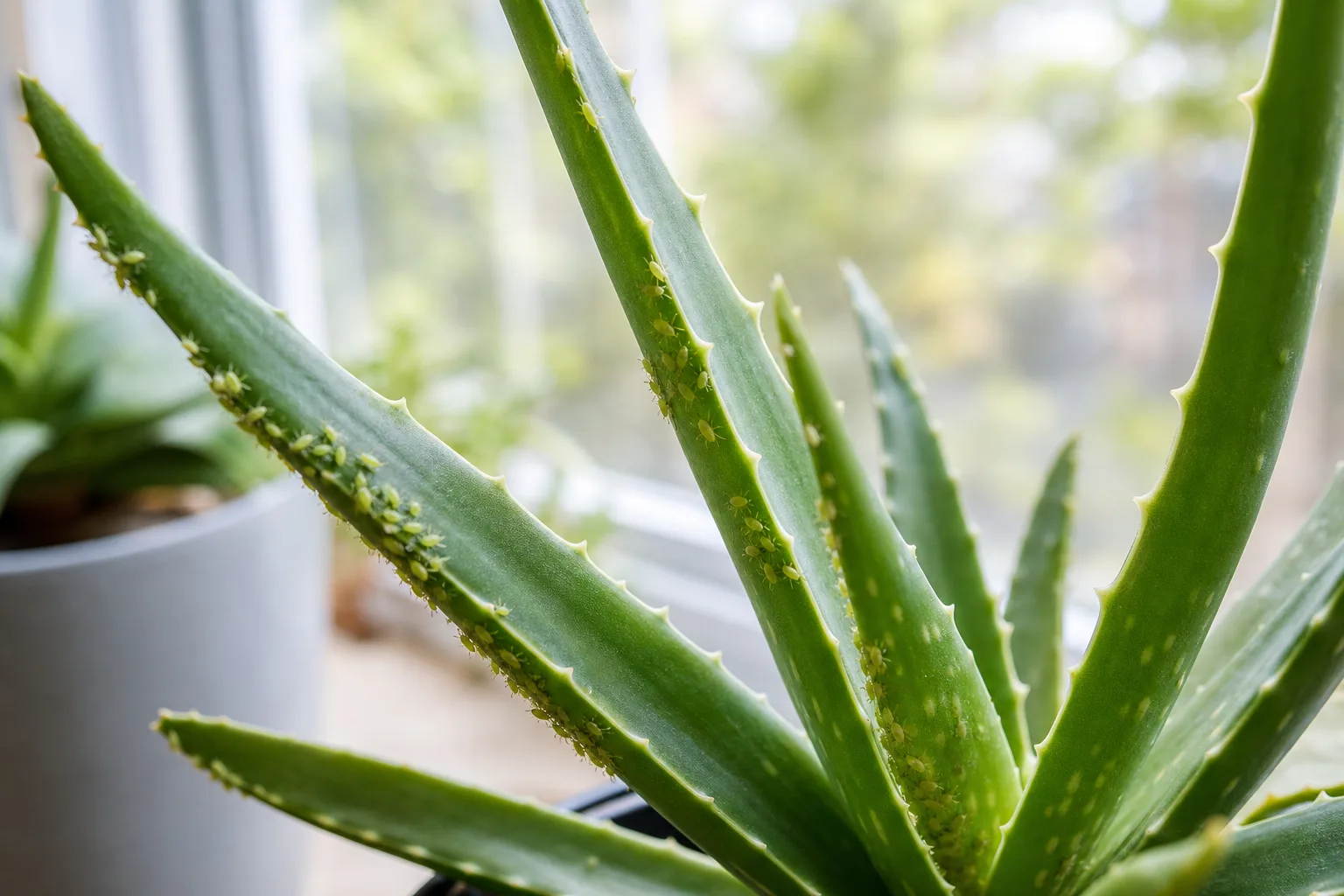
Aphids on Aloe Vera: Causes, Checks & Fixes
This guide covers aphids on Aloe Vera. See also the general Aphids guide, watering, and light pages for this plant.
Aphids on Aloe Vera: Causes, Checks & Fixes
Quick answer
Aphids on Aloe Vera (Aloe vera) are small, soft-bodied sap feeders that colonize tender new tissue-fresh pups, opening leaf tips, and flower stalks-not the thick, mature leaves that make aloe easy to recognize. Indoors, populations can climb fast because natural predators rarely reach houseplants.
First step: isolate the pot and rinse aphids off with a firm stream of lukewarm water. Aloe’s smooth, glossy cuticle handles a shower or sink spray better than fuzzy succulents, and dislodging live insects before any product reduces spread to offsets and neighbors. Confirm you see moving insects or sticky honeydew, then repeat rinses or move to insecticidal soap only if colonies return within a few days.
Pet note: Aloe vera is toxic to cats and dogs if chewed-keep treated plants out of reach during recovery. For baseline care while you treat, see the Aloe Vera watering guide.
What aphids look like on Aloe Vera
On aloe, aphids usually gather where growth is still soft:
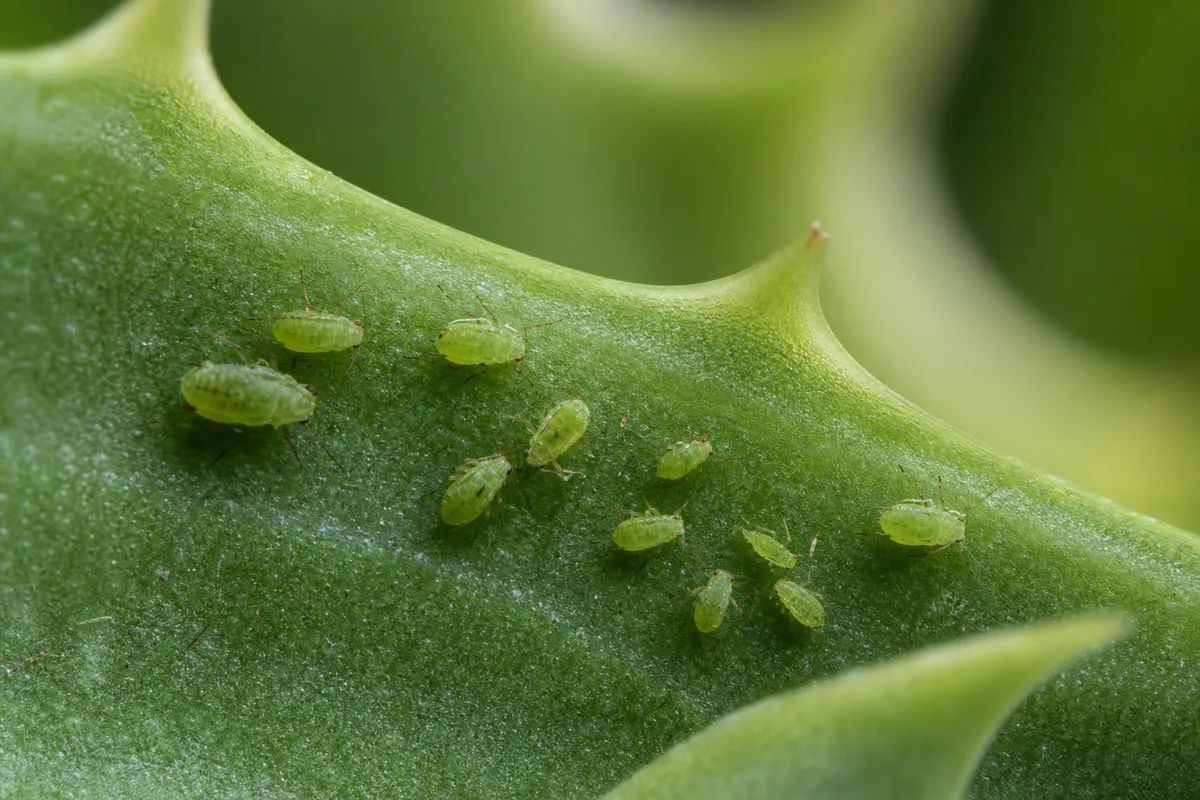
Aphids symptoms on Aloe Vera - compare with healthy tissue on the same plant.
- New pups at the mother plant’s base, tucked against older leaves
- Young leaf tips in the rosette center before tissue firms up
- Flower stalks and buds when the plant blooms-often the heaviest infestation site
- Leaf axils where a new leaf meets the stem
Individual aphids are pear-shaped, roughly 1/16 to 1/8 inch long, and commonly green, though black, brown, or yellow forms appear on houseplants. Most are wingless, but winged adults can show up when a colony gets crowded, which is your cue that neighboring pots are at risk.
Damage on aloe shows up as:
- Shiny, sticky honeydew on leaf surfaces or the pot rim
- Slight curling or puckering of young leaves (mature leaves rarely curl)
- Stunted or twisted new pups if feeding continues through active growth
- Black sooty mold on honeydew in advanced cases
- Whitish cast skins left behind after molting, often mistaken for dust
Healthy older aloe leaves are thick and firm; aphids seldom cover them the way they blanket soft herb stems. If every leaf tip in the rosette looks coated in insects, the infestation has been there longer than a casual glance suggests.
Diagnostic vignette: Tilt the pot and sight along pup bases at bench height with a phone flashlight. Green pear-shaped bodies catch sidelight against smooth green tissue; mineral crust on the pot rim stays flat and chalky, and sun-scorch patches sit on outer leaf faces, not clustered on soft new shoots.
Why Aloe Vera gets aphids
Aloe is not aphid-proof-it is slow-growing and tough, which means small colonies on new pups can persist unnoticed until honeydew or distorted growth gives them away.
New plants and open windows are the usual entry points. Aphids hitchhike on nursery stock, cuttings, or outdoor summer pots brought back inside. Skipping quarantine is the fastest way they reach an established aloe collection-inspect plants regularly when bringing them indoors from patios or when mixing new nursery stock into a collection.
Soft, nitrogen-rich new growth attracts aphids. Aloe fed with high-nitrogen fertilizer during spring push produces tender shoots that sap feeders prefer. Heavy nitrogen feeding pushes tender shoots that aphids prefer-aphids exploit exactly that window on pups and flower spikes. Keep feeding light per the Aloe Vera fertilizer guide.
Indoor conditions favor the pest, not predators. Outdoors, lady beetles, lacewings, and parasitic wasps knock populations down. On a windowsill, those helpers rarely arrive, so aphid numbers can increase with great speed when females reproduce without mating.
Flower stalks create a perfect feeding lane. When aloe blooms, the stalk and buds are softer than foliage and often extend above the rosette where insects are easy to miss during routine watering. A colony on a single stalk can seed pups below.
overwatering on Aloe Vera does not cause aphids directly, but chronically wet soil weakens aloe and overlaps with fungus gnat issues-fix drainage and dry cycles alongside pest treatment so the plant is not fighting two stressors.
How to confirm the cause
Work through these checks before spraying anything:
- Location on the plant - Are insects on new pups, young tips, or a flower stalk? Aphids fit that pattern. Mealybugs prefer tight crown crevices with white wax; scale sits as immobile bumps on older leaf bases.
- Movement - Touch a cluster with a toothpick. Aphids shift slowly. Scale does not move. Mealybugs smear waxy white when crushed.
- Honeydew - Sticky residue on leaves or the saucer points to sap feeders (aphids, scale, mealybugs), not spider mites.
- Leaf texture - Mature aloe leaves firm and plump with insects only near tips? That matches aphids. Fine stippling and webbing on undersides suggest spider mites instead.
- Nearby plants - Scan pots on the same shelf. Aphids colonize many houseplant species; one clean aloe beside an infested herb still needs isolation until you are sure crawlers have not traveled.
- Recent changes - New nursery purchase, patio aloe brought indoors after summer, open window season, or heavy spring fertilizer narrows the likely introduction route.
If you find cottony white masses in the crown, read the mealybug guide instead-alcohol dab treatment works better there than rinse-alone for aphids.
Symptom lookalike comparison
| What you see | Likely cause | How to tell apart |
|---|---|---|
| Green clusters on new pups | Aphids | Pear-shaped, slow-moving, honeydew present |
| White cottony patches in crown | Mealybugs | Waxy threads, no cornicles, alcohol smears pink |
| Brown immobile bumps on old leaves | Scale | Hard shell, does not move when scraped |
| Fine stippling + webbing | Spider mites | Tap test over white paper; dry indoor air context |
| Chalky dry spots on mature leaves | Mineral or water deposits | Wipes off dry; no insects under lens |
| Ants on pot, no visible bugs | Honeydew from hidden aphids or scale | Inspect pups and stalks closely |
First fix for Aloe Vera
Move the pot away from other plants and rinse aphids off with lukewarm water.
Take the aloe to a sink, shower, or outdoor hose on a mild day. Support the rosette with one hand and spray new pups, leaf axils, flower stalks, and young tips with enough force to knock insects loose-not so hard that you tear soft tissue. Tilt the pot so water runs off rather than pooling in the crown for hours.
Let leaves dry in bright indirect light before returning the plant to its spot. Aloe’s thick cuticle recovers quickly from rinsing when the room is warm and airflow is decent-unlike powdery echeverias, aloe’s glossy green surface tolerates firm rinsing well.
Make this one correction first. Do not repot, fertilize, and spray on the same day-you need to see whether rinsing alone knocked the colony down before adding products.
When to cut an infested flower stalk
Red aloe flower stalks are soft and often the first place aphids hide during bloom:
- Treat in place when you can see and reach every insect with a rinse or soap spray.
- Prune at the base when colonies sit inside curled bud crevices water cannot reach, when the bloom is mostly spent, or when aphids return after two targeted soap cycles on that stalk alone. Bag prunings in sealed trash-not the compost pile indoors.
- Do not cut healthy pups to save one flower stalk-offset production matters more for long-term vigor on slow-growing aloe.
Insecticidal soap and neem on succulent foliage
If live aphids remain after two rinses spaced three to four days apart, apply a product labeled for houseplants:
- Insecticidal soap - coat insects directly on pups and stalks; mature leaf surfaces need coverage only where you see colonies. Many formulations can be used on food crops up to the day of harvest, but always follow your specific label.
- Neem oil or horticultural oil - useful when honeydew has built up, but test one outer leaf first and avoid temperatures above 90°F or hot direct sun for 48 hours after application.
Repeat contact sprays every five to seven days for two to three cycles. Soaps and oils kill only insects wet at application-they do not linger on aloe leaves the way systemic products might.
Step-by-step recovery
Once the first rinse or spray is done, follow this sequence:
- Keep the plant isolated until you see no new honeydew and no live insects for at least two weeks.
- Inspect pups and new tips every three to four days with a hand lens-aphids hide in the overlap between offset leaves and the mother rosette.
- Second rinse or soap pass at day five to seven if you spot even a few survivors.
- Wipe honeydew from mature leaves with a damp cloth so sooty mold does not spread; discard the cloth after one plant.
- Hold fertilizer until new growth looks normal and the pest is clearly gone-feeding a stressed aloe pushes soft tissue aphids prefer.
- Check neighbors at each inspection; treat any new hotspot before returning the aloe to the group.
If ants trail to the pot, they are farming honeydew. Ants protect aphids from predators-sticky ant barriers on pot feet or removing the aphid source breaks that cycle faster than chasing ants alone.
Recovery timeline
Expect visible insect counts to drop within 48 hours of a thorough rinse. Contact sprays show results within a day when coverage reaches hidden axils.
One to two weeks: honeydew stops appearing; young leaves stop curling further.
Two to four weeks: after two or three spray cycles, new pups should emerge without insects attached.
Distorted leaves: a pup leaf that curled tightly under heavy feeding may stay slightly twisted-that is cosmetic, not a sign of active pest. Judge success by clean new offsets, not perfect old tissue.
Flower stalks: if you removed an infested stalk, the plant redirects energy to pups; blooming may wait until the next season.
Call recovery stalled if winged aphids reappear, sooty mold covers more than a few leaves, or new pups open already coated in insects after three treatment rounds.
What not to do
- Using dish soap - Do not mix homemade soap products as this can burn plants. Use labeled insecticidal soap only.
- Spraying in hot direct sun - oils and soaps on sun-heated aloe foliage cause patchy scorch. Treat in morning or evening light.
- One rinse and done - eggs and nymphs hatch within days; plan for repeat passes.
- Ignoring the flower stalk - leaving an infested spike treats the rosette while the stalk reseeds aphids onto pups below.
- Returning to the shelf too soon - two aphid-free days is not enough; hold isolation for two weeks minimum.
- Overwatering during recovery - soggy soil stresses aloe on top of pest damage; keep the usual dry-between-waterings rhythm from the watering guide.
- Broad indoor pesticides - unnecessary on a single pot and risky in living spaces; rinsing and labeled soaps solve most aloe aphid cases.
How to prevent aphids next time
- Quarantine new aloes and offsets for two weeks before placing them beside established plants-isolate the plant from others when pests are detected.
- Inspect patio aloes before winter move-in - summer outdoor pots are a common aphid source when brought back to a windowsill collection.
- Inspect pups weekly during spring and summer active growth-the same moment you check whether soil is dry.
- Fertilize lightly with low-nitrogen succulent formula once in spring per the fertilizer guide, not on a heavy houseplant schedule.
- Keep bright light and sharp drainage per the light and soil guides so growth is steady rather than a flush of soft, pest-friendly tissue after a dark winter.
- Remove spent flower stalks promptly if you do not need seed-fewer soft feeding sites.
Pet safety and gel harvest after treatment
Pets: Aloe vera contains saponins and anthraquinones toxic to cats and dogs. Clinical signs include vomiting, lethargy, and diarrhea if leaves are chewed. Keep treated plants and trimmed debris out of reach until sprays dry. If a pet ingests aloe leaves or treated foliage, contact your veterinarian or the ASPCA Animal Poison Control Center (888-426-4435)-do not wait for symptoms.
Gel harvest: Many growers keep aloe for the inner gel, separate from the pest issue. After insecticidal soap treatment, many labeled soaps can be used up to the day of harvest on food crops-but always check your product label for pre-harvest interval and re-entry timing. Rinse the outer leaf skin thoroughly, peel away the yellow latex layer beneath the skin (the part that carries most anthraquinones), and harvest only from leaves that were not recently sprayed with neem or horticultural oil. When in doubt, wait one full treatment cycle plus a thorough rinse before extracting gel from treated leaves.
Systemic drenches: Imidacloprid and similar soil systemics are rarely needed on a single indoor aloe and are inappropriate if you harvest gel for personal use-stick with isolate, rinse, and contact sprays unless an extension agent recommends escalation for a chronic multi-plant infestation.
Related Aloe Vera problems
- Aloe Vera overview - species hub and baseline care
- Mealybugs - cottony wax in crown axils; alcohol dab protocol
- Spider mites - stippling and webbing on smooth leaf faces
- Fungus gnats - often overlaps when soil stays wet during treatment
- Root rot - crown moisture risk if rinse water pools
- Watering · Light · Fertilizer · Soil - keep baseline care steady while treating
Conclusion
Aphids on Aloe Vera concentrate where this succulent is easiest to miss during a quick watering glance-soft pup offsets and flower stalks, not the thick mature leaves you notice first. Confirm pear-shaped insects with honeydew, isolate the pot, rinse firmly before spraying, and cut infested flower stalks when bud crevices hide colonies soap cannot reach. Protect pets from toxic leaf tissue, follow label guidance before harvesting gel from treated leaves, and judge recovery by clean new pups-not perfect older tissue that already curled under feeding.
When to use this page vs other Aloe Vera guides
- Aloe Vera watering guide - Use for routine moisture checks before assuming aphids is the main issue.
- Aloe Vera problems hub - Browse all 16 common issues on this species.
- Mealybugs on Aloe Vera - Different entry point when symptoms overlap with aphids.
- Spider Mites on Aloe Vera - Different entry point when symptoms overlap with aphids.
- Yellow Leaves on Aloe Vera - Different entry point when symptoms overlap with aphids.