Wilting on Alocasia Amazonica: Causes, Checks & Fixes
Quick answer
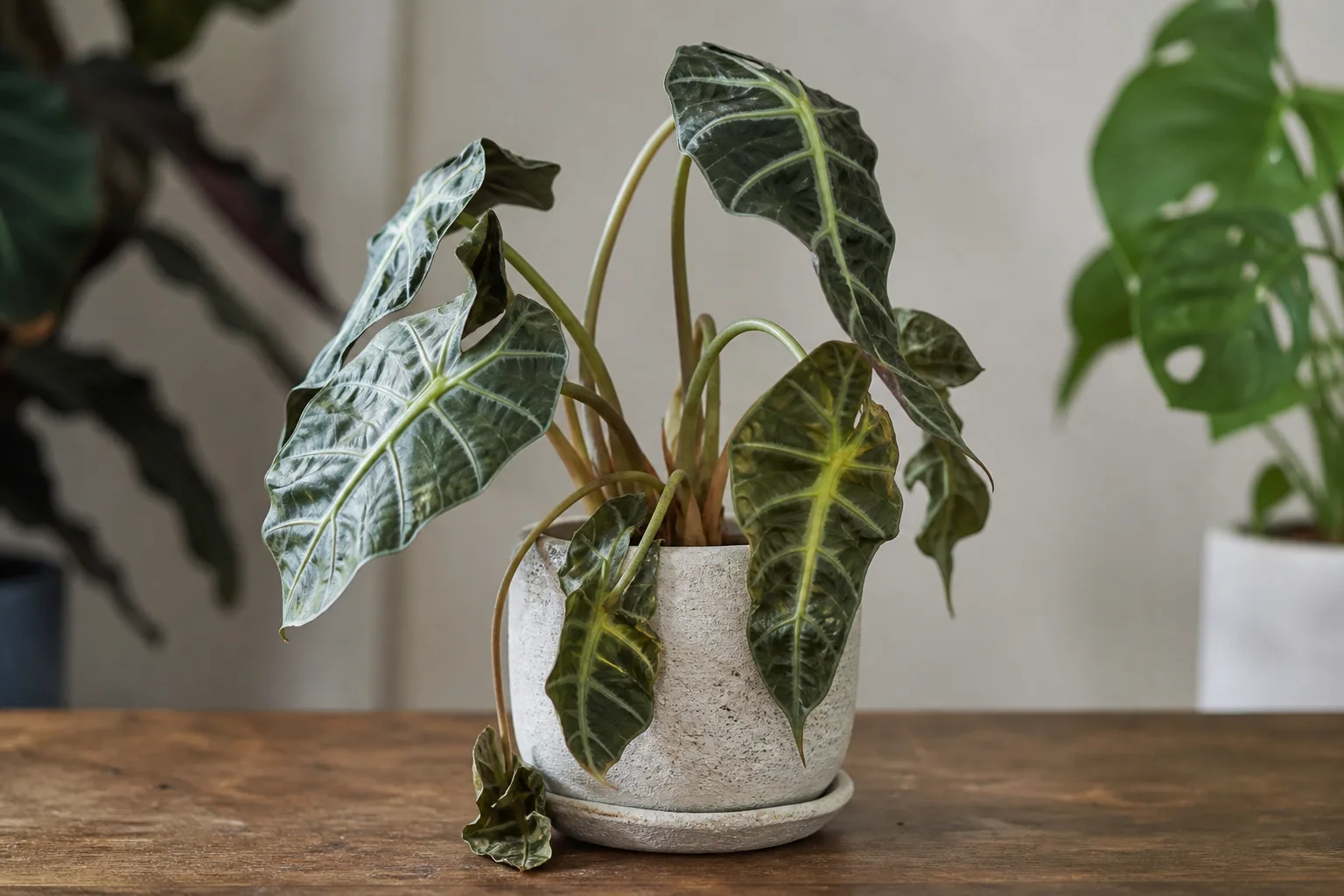
Wilting on Alocasia Amazonica is an acute collapse of leaf turgor-petioles go limp and arrowhead blades hang. If soil is wet but leaves wilt, do not water; press the corm at the soil line first. A soft corm means rot; a firm corm with dry soil means thirst. First step: finger-test moisture to the second knuckle, then gently squeeze the corm through the surface before adding any water.
Wilting on Alocasia Amazonica: Causes, Checks & Fixes
This guide covers wilting on Alocasia Amazonica. See also the general Wilting guide, watering, and light pages for this plant.
Wilting on Alocasia Amazonica: Causes, Checks & Fixes
Quick answer
Wilting on Alocasia Amazonica (Alocasia × amazonica, African Mask / ‘Polly’) is acute turgor loss-the thin petioles that hold large arrowhead leaves lose stiffness and the plant collapses faster than most houseplants because those heavy blades outrun root recovery. The emergency question is not “does it need water?” but “can the roots still supply water?”
First step: check soil moisture to the second knuckle, then press the corm at the soil line before you touch the watering can. If the top 1–2 inches are wet and leaves are limp, do not add water-wilt on wet mix almost always means root or corm failure, not thirst. If the mix is dry and lightweight and the corm feels firm, a thorough soak is the correct first move. Full diagnosis paths below; for watering rhythm detail see the Alocasia Amazonica watering guide.
Wilting vs. drooping on Alocasia Amazonica
These words overlap in conversation but point to different pages on this site:
| Signal | Wilting (this page) | Drooping (drooping-leaves) |
|---|---|---|
| Speed | Hours to 1–2 days | Days to weeks |
| Petiole feel | Soft, collapsed, may not hold leaf weight | Limp but plant still partly upright |
| Common trigger | Wet-soil rot, severe dry-out, repot shock, cold draft | Gradual underwatering, low light lean, mild humidity stress |
| Pot weight | Heavy (wet wilt) or very light (dry wilt) | Often intermediate |
| First action | Corm firmness test before any water | Soil moisture + light direction check |
Use wilting when the plant looks like it “fell over” and you need an emergency wet-vs-dry decision. Use drooping when posture slipped gradually and the corm still feels firm without sour soil.
What wilting looks like on Alocasia Amazonica
Visual signs at a glance
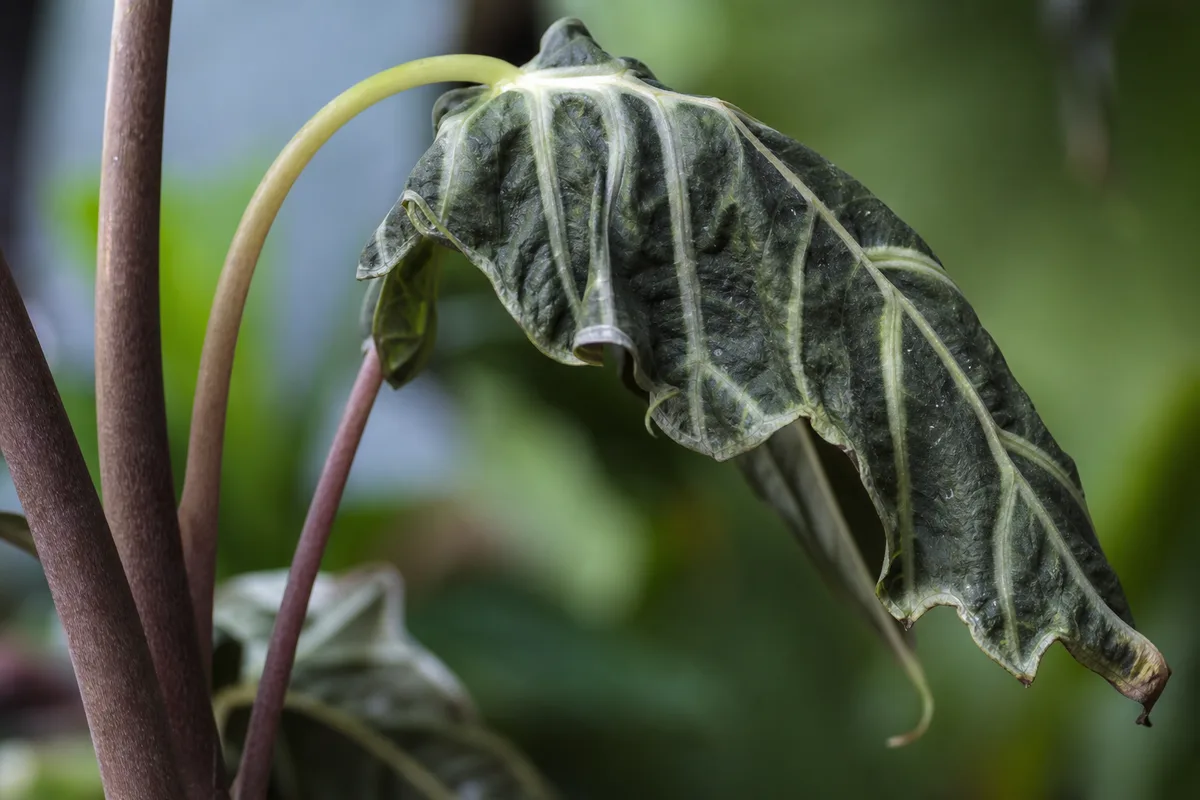
Wilting symptoms on Alocasia Amazonica - compare with healthy tissue on the same plant.
Without a photo in hand, compare three postures you can check in under a minute:
| What you see | Pot / soil | Corm press | Likely type |
|---|---|---|---|
| Whole plant flattened; petioles fold like cooked pasta | Heavy; dark surface 1–2 days after watering | Firm or soft-test before acting | Wet-wilt if soft; investigate if firm on wet mix |
| Leaves hang but one side still partly upright; mix pulls from walls | Very light; gap between mix and pot edge | Firm | Dry-wilt or hydrophobic mix |
| Leaves yellow and drop one at a time over weeks; bare firm crown | Barely moist; winter room | Firm, neutral smell | Dormancy-not emergency wilt |
Wet-wilt (moist soil, limp leaves)
Soil stays dark and cool 1–2 days after the last watering. The pot feels heavy. Lower leaves turn uniform soft yellow while petioles go limp despite damp mix-the signature of roots that cannot absorb water. Fungus gnats may hover near the surface. Press the corm: soft or sour-smelling tissue confirms rot escalation; see root rot for surgery steps.
Dry-wilt (light pot, limp leaves)
Mix pulls from pot edges. The container feels noticeably lighter. Leaf margins may look papery or crisp at the edges while petioles soften. The corm should still feel firm when pressed. A deep soak until water runs from drainage holes usually shows improvement within 24 hours if caught before the growth tip desiccates.
Hydrophobic-mix wilt (watered recently, still limp)
Peat- or coco-heavy aroid mix that dried completely can channel water down the pot sides without rewetting the root ball center. The surface may look briefly damp while the corm zone stays dry-so the plant wilts even though you watered yesterday. Lift the pot: if it feels only slightly heavier than bone dry and water ran through in seconds, suspect hydrophobic mix rather than rot. A bottom soak for 20–30 minutes rewets the center; recheck corm firmness before assuming thirst is solved.
Dormancy collapse
In fall and winter, Alocasia Amazonica often slows and may drop leaves as the corm rests. The RHS notes that foliage loss during cooler, drier winter conditions is normal if temperatures stay above about 10°C (50°F). Leaves yellow and fall one by one over weeks-not overnight. The corm stays firm and neutral-smelling. Reduce water; do not treat dormancy like rot.
Post-repot limp
Fresh Alocasia Amazonica repotting guide disturbs feeder roots. Wilt within the first week after repotting, especially if the mix was overwatered to “settle” the plant, is common. Firm corm + slightly dry mix + Alocasia Amazonica light guide usually stabilizes in 7–14 days. Worsening wilt with wet mix after repot means inspect roots immediately.
Why Alocasia Amazonica wilts
Overwatering and corm rot
Alocasia grows from a corm-a storage organ at the soil line. Saturated, oxygen-poor mix suffocates roots; pathogens such as Pythium and Phytophthora invade stressed tissue and move from feeder roots into the corm. Large arrow leaves collapse before owners notice root damage because transpiration demand stays high while uptake fails. Overwatering, especially while dormant, can cause roots to rot-the single most common fatal mistake on this hybrid indoors.
Underwatering
A firm corm can buffer short droughts, but extended dryness desiccates fine roots and petioles lose turgor. Dry-wilt is faster to fix than wet-wilt but repeated cycles weaken the corm. See underwatering if crispy edges and lightweight pots repeat between wilts.
Winter dormancy and low temperatures
Cool, wet soil compounds rot risk. NC State Extension places comfort between about 68°F and 77°F (20–25°C) for active growth; cold drafts and AC vents chill the root zone while leaves still transpire. A plant near a winter window may wilt from cold stress even when soil moisture looks adequate.
Repot and transplant shock
Root disturbance limits uptake temporarily. Overwatering “to help” a freshly repotted Amazonica is a common wilt trigger-the disturbed root ball stays wet too long in the center while surface soil looks merely damp.
Cold drafts, low humidity, and pests (secondary)
Low humidity rarely causes full-plant collapse alone on Amazonica, but it accelerates dry-wilt when watering slips. Spider mites and heavy aphid feeding weaken new leaves and can precede wilt on an already stressed corm-check undersides if wilt follows stippling or sticky residue.
How to confirm the cause (corm test + checklist)
Work through these in order:
- Soil moisture at depth - Finger to the second knuckle (~2 inches). Wet + wilt = stop watering. Dry + wilt + firm corm = soak candidate.
- Pot weight - Lift the pot. Heavy after several dry days suggests chronic saturation; very light supports dry-wilt.
- Corm firmness - Gently press through the soil at the crown. Firm and earthy = corm viable. Soft, dark, or foul = rot-unpot now.
- Stem base - Mushy tissue at the soil line with sour smell confirms advanced rot beyond simple thirst.
- Smell - Swampy or rotten odor from drainage holes supports rot; neutral dry scent supports underwatering.
- Season and recent care - Leafless firm corm in January fits dormancy. Wilt 3 days after repot fits shock. Wilt after calendar watering in a dim room fits overwatering.
- Leaf pattern - Whole-plant collapse = water or corm crisis. One bent petiole after a bump = mechanical damage, not systemic wilt.
| Pattern | Likely cause | First action |
|---|---|---|
| Wet soil, limp leaves, soft corm | Corm / root rot | Stop water; unpot and trim rot |
| Dry soil, light pot, firm corm | Underwatering | Deep soak; drain fully |
| Water ran through fast, firm corm, still limp | Hydrophobic mix | Bottom soak; see watering guide |
| Leaf drop over weeks, firm corm, winter | Dormancy | Reduce water; wait for spring |
| Wilt within 7 days of repot, firm corm | Transplant shock | Hold water; bright indirect light |
| Wilt near AC vent or cold window | Cold / draft stress | Move to stable warmth |
Diagnosing houseplant problems starts with the same wet-vs-dry fork-wilt does not tell you which direction to go until soil and roots are checked.
First fix for Alocasia Amazonica
Match one action to what the corm and soil tell you-do not stack repot, prune, and soak on the same day.
- Wet soil + limp leaves: Stop watering. Unpot within 24–48 hours and inspect the corm. If soft, follow the root rot trim-and-repot protocol. If corm is firm but mix is soggy, repot into dry chunky aroid mix without watering for 5–7 days.
- Dry soil + firm corm: Water deeply until drainage runs free, empty the saucer, and recheck posture in 24 hours.
- Firm corm + hydrophobic mix: Bottom-soak 20–30 minutes per the watering guide, drain fully, then recheck turgor before watering again on calendar.
- Firm corm + winter leaf loss: Reduce watering to every 2–3 weeks; do not soak a dormant corm on a calendar.
- Post-repot wilt + firm corm: Hold water 5–7 days unless soil is bone dry through the root ball; keep bright indirect light and humidity above 50%.
That single matched action prevents the fatal error of watering a rotting corm because the leaves look thirsty.
Step-by-step recovery by cause
Wet-wilt / rot path
Stop water, unpot, and inspect the corm within 24–48 hours. Soft or foul tissue needs the full root rot surgery and repot workflow-trim to firm white roots, air-dry cut surfaces, repot into chunky aroid mix, and hold water 5–7 days before resuming lightly. Do not fertilize until a new center leaf unfurls. This page stops at triage; the root-rot guide owns step-by-step trim depth and fungicide decisions.
Dry-wilt path
- Bottom-soak or top-water until the full root ball rehydrates.
- Empty saucer; do not leave standing water.
- Adjust rhythm per the watering guide-top 1–2 inches dry in active season.
- Trim only leaves that stay collapsed and brown after 7–10 days.
Dormancy path
- Keep corm barely moist-not wet-in the brightest indirect light available.
- Stop fertilizer until spring growth resumes.
- Expect new leaves when temperatures stay above 16°C (60°F) through the growing season.
Recovery timeline and success signs
| Severity | What to expect |
|---|---|
| Mild dry-wilt, firm corm | Petioles stiffen within 24 hours; new posture in 3–5 days |
| Moderate rot, firm corm after trim | 4–6 weeks to new center leaf |
| Severe rot, small soft corm spots | Weeks to months; some old leaves never recover |
| Terminal soft corm | Not recoverable |
Success = firm corm + new growth tip, not every old arrowhead standing tall. Yellow or translucent leaves usually stay damaged; watch the center.
Recovery checkpoint: After a firm-corm rot trim in bright indirect light with sparse watering, many indoor Amazonicas show the first new center leaf in roughly 4–6 weeks-matching extension guidance to judge recovery by new growth, not by old blades re-firming. If no growth tip appears after 8 weeks with a still-firm corm, recheck for hidden soft tissue at the crown and compare against the root rot escalation steps.
Lookalike symptoms
- Gradual droop without collapse → drooping-leaves
- Yellow lower leaves, wet soil, no acute collapse yet → overwatering
- Crispy edges, dry pot, slow limpness → underwatering
- Leafless firm corm in winter → normal dormancy on the overview
- One snapped petiole after moving the pot → mechanical damage; support the leaf, do not repot
- Stippling and webbing → spider mites weakening uptake
What not to do
Do not water because leaves look limp when soil is already wet-that accelerates root rot on houseplants. Do not fertilize a wilted corm. Do not repot into dense peat-heavy mix “to save” a wet-wilt plant. Do not move a collapsed plant into direct sun to “perk it up.” Do not judge recovery hourly; check the corm weekly during rot recovery.
Do not confuse this page with gradual drooping-stacking both diagnoses leads to unnecessary repots.
How to prevent wilting next time
Run the watering guide rhythm: water when the top 1–2 inches of chunky aroid mix dry in active growth, cut volume sharply in fall, and never let the pot sit in runoff. Keep temperatures above 16°C (60°F) during growth and away from cold drafts. Use bright indirect light so the plant drinks predictably. Inspect the corm firmness when you change seasons-winter is when wet soil kills dormant corms.
When to worry
Escalate immediately if the corm is soft, smells rotten, or darkens through the tissue, if multiple leaves collapse in under a week on wet soil, or if wilt spreads after you already repotted for rot. A firm corm with dry soil rarely needs escalation beyond one correct soak.
For pet households: Alocasia contains insoluble calcium oxalate crystals toxic to cats and dogs-wear gloves when handling cut corm tissue and keep wilted leaves away from pets.
Related Alocasia problems
- Watering guide - corm-first wet-wilt logic and seasonal schedules
- Root rot - trim, repot, and recovery when the corm is still firm
- Overwatering - early yellowing before full collapse
- Underwatering - dry-wilt and crispy margins
- Drooping leaves - gradual posture, not emergency collapse
- Alocasia Amazonica overview - dormancy, light, and soil context
When to use this page vs other Alocasia Amazonica guides
- Alocasia Amazonica watering guide - Use for routine moisture checks before assuming wilting is the main issue.
- Alocasia Amazonica problems hub - Browse all 16 common issues on this species.
- Underwatering on Alocasia Amazonica - Different entry point when symptoms overlap with wilting.
- Overwatering on Alocasia Amazonica - Different entry point when symptoms overlap with wilting.
- Root Rot on Alocasia Amazonica - Different entry point when symptoms overlap with wilting.
Related Alocasia Amazonica guides
- Alocasia Amazonica overview
- Alocasia Amazonica watering
- Alocasia Amazonica light
- Alocasia Amazonica soil
- Underwatering on Alocasia Amazonica
- Overwatering on Alocasia Amazonica
- Root Rot on Alocasia Amazonica
- Drooping Leaves on Alocasia Amazonica
- Yellow Leaves on Alocasia Amazonica
- Alocasia Amazonica problems