Overwatering on Alocasia Amazonica: Causes, Checks & Fixes
Quick answer
Overwatering on Alocasia Amazonica shows as a heavy wet pot, limp arrow-shaped leaves, and yellow lower foliage while mix stays damp. First step: stop watering, probe the top 1–2 inches, and squeeze the corm-firm tissue means dry-down may be enough; mushy tissue means unpot today.
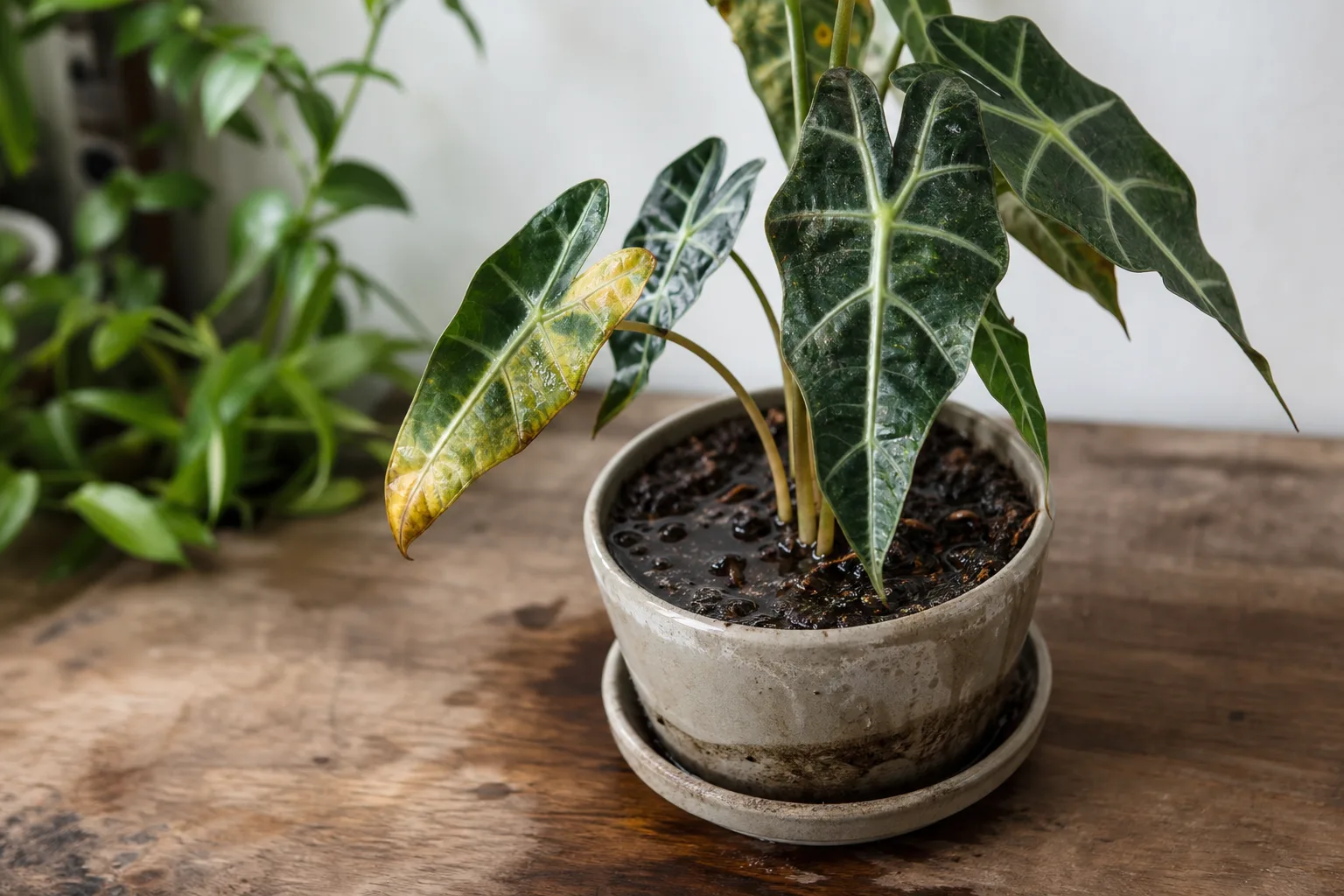
Overwatering on Alocasia Amazonica: Causes, Checks & Fixes
This guide covers overwatering on Alocasia Amazonica. See also the general Overwatering guide, watering, and light pages for this plant.
Overwatering on Alocasia Amazonica: Causes, Checks & Fixes
Quick answer
Overwatering on Alocasia Amazonica-the dark-veined African Mask plant sold as Alocasia × amazonica or cultivars like ‘Polly’-means the corm and root zone stay wet too long. This corm-based aroid cannot tolerate saturated mix the way outdoor Colocasia types sometimes can. When pore spaces fill with water, roots lose oxygen, opportunistic pathogens move in, and leaves wilt even though the pot feels heavy.
First step: stop watering immediately. Probe the top 1–2 inches of mix. If soil clings wet and leaves are limp-not crispy-do not add water. Brush soil from the stem base and squeeze the corm: firm, potato-like tissue means a careful dry-down may be enough; soft, sunken, or sour-smelling tissue means unpot and inspect roots today.
The single most useful rule on Amazonica: wet soil plus wilt almost always means root stress, not thirst. For confirmed mushy roots and full rescue steps, see root rot. For the opposite pattern, see underwatering. For seasonal rhythm and dormancy dry-down, see the watering guide.
What overwatering looks like on Alocasia Amazonica
On this upright rosette aroid, overwatering damage often starts underground while a few upper leaves still look acceptable. Dense dark foliage hides how long mix has stayed saturated.
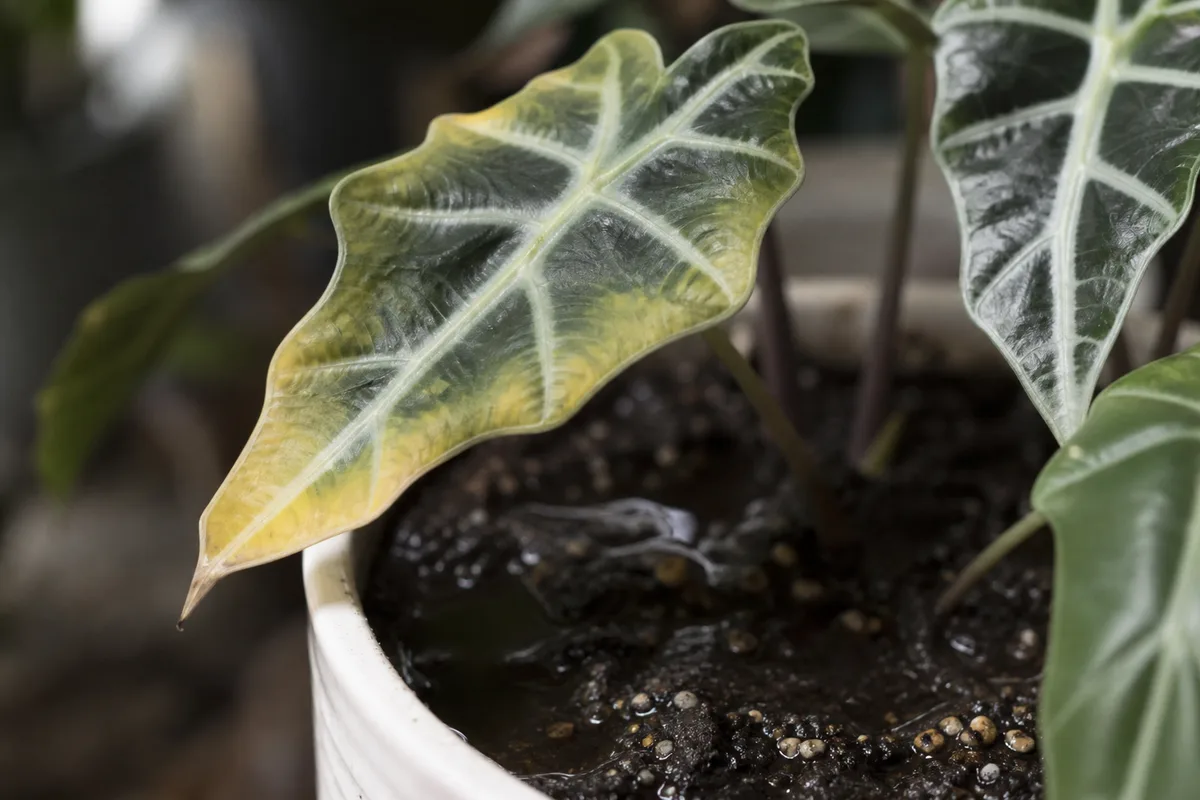
Overwatering symptoms on Alocasia Amazonica - compare with healthy tissue on the same plant.
Early signs
- Limp, soft arrow-shaped leaves while mix remains damp or wet at 1–2 inches depth
- Multiple lower leaves turning a uniform soft yellow within days-not the single aging leaf Amazonica naturally sheds every few weeks
- Heavy pot that still feels waterlogged 2–3 days after the last drink
- Sour or swampy smell when you lift the pot or press the surface
- Fungus gnats hovering over persistently wet surface soil
- Edema or translucent soft spots on leaf blades from cells bursting in oversaturated tissue
- Stalled or smaller new leaves unfurling from the central growth point
Advanced signs (escalate to root-rot rescue)
- Wet-wilt: drooping leaves on wet soil that do not perk up after you stop watering for several days
- Mushy petiole bases at the soil line
- Corm softening when squeezed through the pot wall or after a partial unpot
- Brown, slimy roots that smell foul when rinsed
Healthy overwatered roots, when caught early, may still be pale and firm-the corm is the decision point. Once roots turn jelly and the corm softens, follow the full root rot recovery protocol.
Why Alocasia Amazonica gets overwatered
The corm problem: why wet soil kills Alocasia Amazonica overview faster than others
Alocasia Amazonica grows from a corm-a swollen underground storage organ that holds water, starch, and the plant’s entire future growth tip. Feeder roots radiate outward; when mix stays saturated, those roots suffocate and opportunistic pathogens such as Pythium and Phytophthora colonize weakened tissue and move into the corm itself.
The corm can survive short dry spells-it evolved in tropical forests with seasonal rain-but it cannot survive long periods of oxygen-poor, waterlogged substrate. Cool indoor rooms slow evaporation, so the same summer watering volume that worked in July can leave mix wet for two weeks in a dim corner by November. That gap between how fast you water and how fast the pot dries is where most Amazonica losses begin.
Common indoor triggers specific to this species:
- Calendar watering on a fixed weekly schedule instead of checking pot weight or soil depth
- Dense peat-heavy nursery mix that holds water at the bottom while the surface looks dry
- Oversized pots or decorative cachepots that trap runoff and keep the root ball saturated
- Bottom-watering every cycle without top flushes-shallow wet layers mask depth saturation (see the watering guide)
- Fear-driven overcorrection after one dry spell-drenching a stressed plant before confirming soil was actually dry
- Low-light rooms where transpiration slows but watering stays on a summer rhythm-the low-light overwatering trap yellows lower leaves on soil that never dries
Winter dormancy and overwatering risk
From late fall through winter, shorter days and cooler room temperatures push many Alocasias into slow growth or full dormancy. The corm pulls very little water while evaporation drops-so the same soak that dried in five days in July may stay wet for two weeks in January.
The RHS is explicit: reduce watering to a minimum in winter because overwatering, especially while dormant, can cause roots to rot. Leaves may yellow and drop one at a time during rest-that is normal when the corm stays firm and earthy-smelling. Wet soil for days with a softening corm is rot from watering a sleeping plant, not dormancy.
Do not confuse dormancy leaf drop with overwatering: dormant Amazonica holds a firm corm and slows water uptake; overwatered plants show multiple soft yellow leaves, sour soil, and often fungus gnats on persistently damp mix.
How to confirm the cause
Work through these checks in order before you repot or trim.
Pot-weight and finger-depth checks
- Soil moisture at depth - Insert a finger or wooden skewer 1–2 inches (2.5–5 cm) into the mix. Clinging wet soil at that depth while leaves wilt supports overwatering. Dusty dry soil at depth with a light pot points to underwatering instead.
- Pot weight - Lift the container. A heavy, sloshy feel days after watering confirms slow dry-down. Compare to how it felt right after a thorough soak-you should notice a clear lighter phase before the next drink.
- Corm squeeze test - Brush soil from the stem base. Firm tan tissue means dry-down or light rescue may work. Soft, discolored, or foul-smelling tissue means unpot today.
- Leaf texture - Overwatered leaves are limp and soft without crispy brown margins. Papery edges on dry soil suggest thirst, not rot.
- Season and environment - Note cool dim rooms, cachepots, and whether the plant recently moved to lower light-each slows evaporation without slowing your watering hand.
Symptom lookalike comparison
| What you see | More likely cause | What to do |
|---|---|---|
| Drooping + wet heavy soil + soft yellow lower leaves | Overwatering / early root stress | Stop watering; check corm firmness |
| Drooping + wet soil + mushy corm / slimy roots | Advanced root rot | Unpot; trim; see root rot guide |
| Drooping + bone-dry soil + crispy edges | Underwatering | One thorough soak; reset checks |
| All leaves dropped in cool months + firm corm | Winter dormancy | Reduce water; do not repot |
| Limp leaves + moist soil + very dry winter air | Low humidity (may coexist) | Humidifier; still fix wet-soil rhythm |
| Wilting after you watered + soil still wet | Wet-wilt / failing roots | Stop watering; unpot if no improvement in 48–72 hours |
The wet-wilt rule: If soil is wet and leaves are limp, adding water deepens the damage. Wilting with moist soil often means roots cannot absorb water-not that the plant is thirsty.
The first fix to try
If the corm is still firm and roots are not yet mushy: stop watering until the top 1–2 inches of chunky aroid mix dry.
That single action lets oxygen return to the root zone without the shock of immediate Alocasia Amazonica repotting guide. Move the plant to Alocasia Amazonica light guide with good airflow so the mix dries evenly-cool dim corners keep substrate wet for weeks. Do not fertilize. Do not repot into a larger pot to “help drying.”
Then wait and observe:
- 48–72 hours: Surface should lighten; pot weight should drop noticeably
- Several days to a week: Lower yellow leaves may continue fading-old damage does not reverse-but new growth should not collapse
- If wilt persists on wet soil after a full dry-down cycle: unpot and inspect. Firm roots on dry mix mean a different problem (wilting, cold, pests); mushy roots mean escalate to the recovery steps below.
Empty any saucer water within 30 minutes of every watering session. Never let the pot sit in standing runoff.
Step-by-step recovery when the corm or roots are mushy
When the corm softens or roots turn brown and slimy, dry-down alone is not enough. Work through these steps in order-full detail and pathogen context live on the root rot page if you need a deeper rescue reference.
- Unpot and rinse roots under lukewarm water. Shake off saturated mix. Healthy tissue is pale tan to white and firm; rotten tissue is brown, stringy, and foul-smelling.
- Assess the corm. Squeeze gently. Firm, dense, earthy-smelling tissue means recovery is likely. Soft throughout or foul deep inside is usually fatal-salvage any firm offsets if present.
- Trim all mushy roots back to clean white tissue with sterilized scissors. Carve soft corm spots until you reach firm pale flesh. Dust cuts with ground cinnamon and let the corm air-dry 30–60 minutes on a paper towel.
- Repot into fresh chunky aroid mix-orchid bark, perlite, and coco in a clean pot with drainage holes sized to the trimmed root mass, not the foliage spread. See soil requirements for mix ratios.
- Hold water 5–7 days after repot so cut surfaces callus. Keep bright indirect light, 60–80% humidity, and warmth above 16°C (60°F).
- Resume lightly once the top inch dries-about half your normal volume. Do not return to a calendar schedule until new leaf growth emerges from the crown.
- Hold fertilizer until the first new leaf fully unfurls.
Recovery timeline and what to watch
| Severity | What to expect |
|---|---|
| Mild (wet soil, firm corm, no mushy roots) | Pot dries in 3–7 days; limp leaves may firm slightly; no new yellowing after dry-down |
| Moderate (some yellow lower leaves, firm corm, mostly white roots after unpot) | 1–3 weeks to stable moisture; old yellow leaves may drop; watch for new firm petioles |
| Severe (trimmed mushy roots, carved corm spots) | 4–6 weeks before new arrow leaf; some foliage loss is normal; judge by new growth, not old yellow tissue |
Signs recovery is working: pot weight drops on schedule, no new soft yellow leaves, firm corm, and eventually a new arrow-shaped leaf from the central growth tip.
Signs the problem is worsening: sour smell intensifies, corm softens further, multiple leaves collapse in a week, or wet-wilt persists after confirmed dry-down-unpot immediately if you have not already.
What not to do
- Do not water because leaves look limp when soil is already wet-the classic wet-wilt mistake
- Do not fertilize a waterlogged or recovering plant; stressed roots burn easily
- Do not repot into a larger pot “to help drying”-extra wet mix rots corms faster
- Do not mist as a substitute for fixing soil moisture-surface moisture does not aerate the root zone
- Do not resume your old calendar after one dry-down without learning how many days your pot actually needs
- Do not assume death if leaves drop in winter with a firm corm-that may be dormancy, not fatal rot
How to prevent overwatering next time
During active growth (roughly April through October indoors), water when the top 5 cm (about 2 inches) of compost has dried-typically every 7–14 days in many homes, but often faster in bright light and small terracotta pots. Turn the pot slightly at each watering so it does not lean toward the window.
In winter dormancy, let the top 50–70% of mix dry between drinks, then water just enough to rehydrate-not drench. The corm should never sit in cold, wet soil, and it should never desiccate completely in a heated room.
Build a simple habit:
- Finger or skewer check before every major watering-not the calendar
- Pot-weight comparison after each soak so you feel the “ready” weight
- Saucer emptied within 30 minutes of every watering
- Drainage holes open-no sealed cachepots holding runoff
- Schedule reset after any move to brighter light, cooler room, or larger pot
If mix dries within one to two days every time, the plant may be pot-bound-slightly upsize with chunky mix, not more frequent drowning. If mix stays wet more than 5–7 days after a normal soak in active season, check mix density, pot size, and light before adding more water.
When to worry
Act the same day if the corm collapses when squeezed, petiole bases turn mushy at the soil line, or the pot smells strongly sour with multiple yellow leaves collapsing at once. Those signs mean rot is advancing into the corm-not a wait-and-see dry-down case.
Unpot within 48–72 hours if wet-wilt persists after the top 1–2 inches have fully dried and the pot weight has dropped-roots are likely failing even if you cannot see mush yet.
Do not panic if leaves yellow one at a time in cool winter months with a firm corm and lightly moist mix-you may be seeing dormancy, not overwatering. The distinction is firm corm plus gradual leaf loss versus wet soil plus soft tissue plus sour smell.
A corm that is soft throughout and foul-smelling deep inside is usually not saveable on the main plant. Firm offsets at the base may still be dividable-see the root rot guide for salvage detail.
Conclusion
Overwatering on Alocasia Amazonica is a corm and oxygen problem, not a mystery leaf disease. Heavy wet soil plus limp leaves tells you the root zone stayed saturated too long-while the most dangerous trap is watering again because the plant looks thirsty. Stop the soak, confirm corm firmness, dry the mix or trim and repot if tissue has turned mushy, then rebuild a check-based rhythm matched to season and pot weight.
Old yellow leaves will not turn green again, but new firm arrow-shaped foliage from the crown means the corm survived. Match that outcome by treating the watering can as a precision tool-not a weekly habit-and by cutting volume sharply when Amazonica slows for winter rest.
When to use this page vs other Alocasia Amazonica guides
- Alocasia Amazonica watering guide - Use for routine moisture checks before assuming overwatering is the main issue.
- Alocasia Amazonica problems hub - Browse all 16 common issues on this species.
- Root Rot on Alocasia Amazonica - Different entry point when symptoms overlap with overwatering.
- Yellow Leaves on Alocasia Amazonica - Different entry point when symptoms overlap with overwatering.
- Wilting on Alocasia Amazonica - Different entry point when symptoms overlap with overwatering.
Related Alocasia Amazonica guides
- Alocasia Amazonica overview
- Alocasia Amazonica watering
- Alocasia Amazonica light
- Alocasia Amazonica soil
- Root Rot on Alocasia Amazonica
- Yellow Leaves on Alocasia Amazonica
- Wilting on Alocasia Amazonica
- Fungus Gnats on Alocasia Amazonica
- Mold on Soil on Alocasia Amazonica
- Drooping Leaves on Alocasia Amazonica
- Alocasia Amazonica problems