The Chunky Soil Mix That Saves Alocasia Amazonica
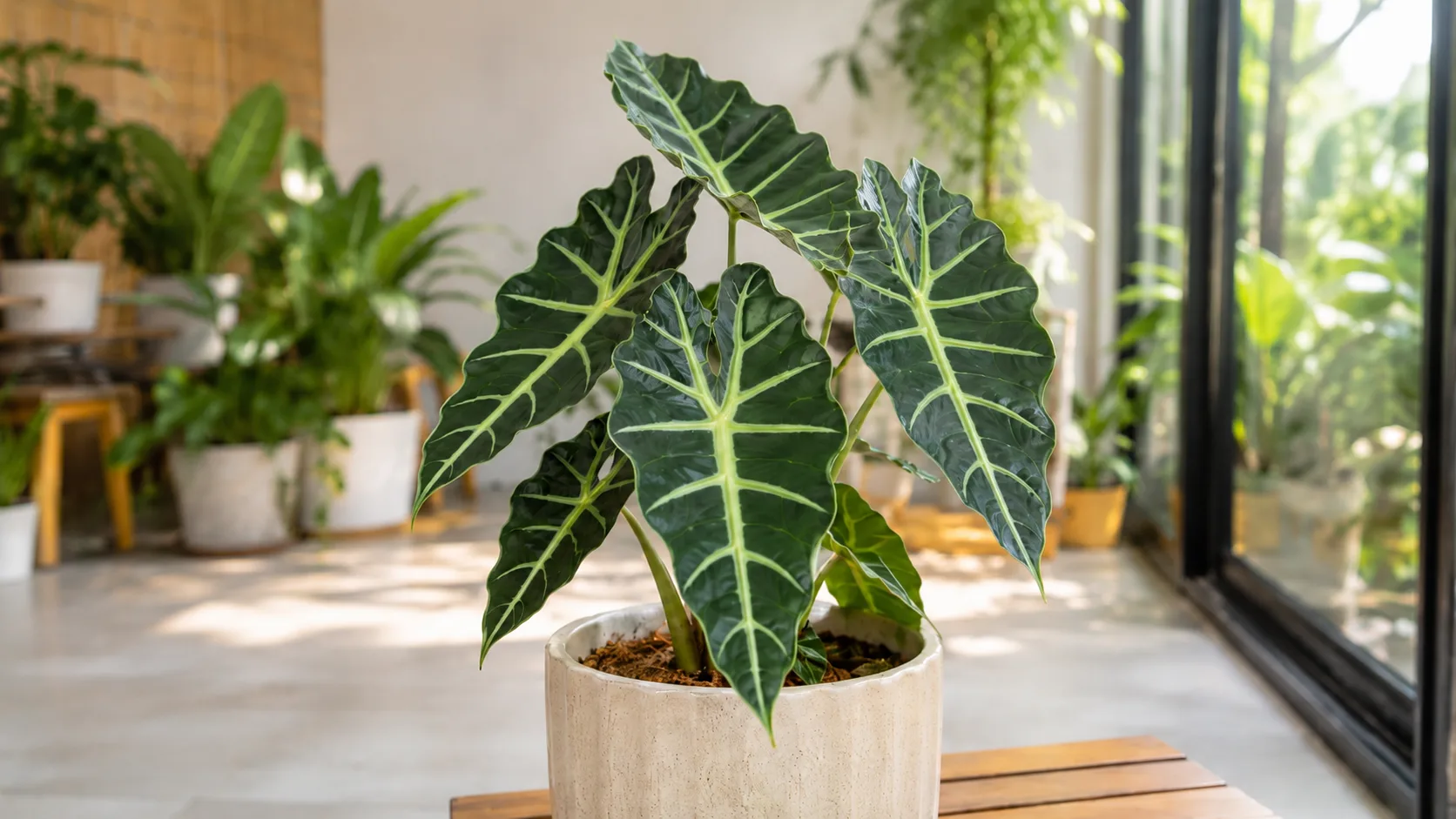
The Chunky Soil Mix That Saves Alocasia Amazonica
The Chunky Soil Mix That Saves Alocasia Amazonica
If you have ever lost an Alocasia Amazonica to soft yellowing leaves and a mushy base, the problem was almost certainly the soil, not the Alocasia Amazonica watering guide. Standard potting mix is too dense, holds water for too long, and chokes the very rhizomes the plant depends on. The fix is not a smaller watering can - it is a chunky, well-aerated aroid mix that drains in minutes, holds just enough moisture between drinks, and stays open to oxygen for years.
This guide gives you the exact soil mix Alocasia Amazonica needs: the ingredients, the ratios, the pH target, the home-by-home adjustments, and the pre-made bags that are actually worth buying. It is built on the same principles that the Missouri Botanical Garden, the Royal Horticultural Society, and serious aroid growers all converge on: well-drained, slightly acidic, and never compacted around the roots.
Why Alocasia Amazonica Needs a Different Soil Mix
Alocasia Amazonica (Alocasia × amazonica) is sold as a houseplant, but its parent species come from the forest floor of Southeast Asia, where roots anchor into decomposing bark, leaf debris, and pockets of moist air. The Missouri Botanical Garden’s plant finder describes the genus as preferring “consistently moist, organically rich, well-drained soils” - three adjectives that standard bagged potting soil rarely delivers together. The plant does not want to be packed into fine, peat-heavy compost. It wants the equivalent of a forest-floor duff: chunky, breathable, and fast-draining.
What the Roots Are Telling You
Alocasia roots are thick, fleshy, and adapted to oxygen-rich pockets. When those pockets collapse - when fine particles migrate into air gaps and the mix compacts - the roots suffocate, stop pulling water, and become an entry point for Pythium and bacterial soft rot. The Clemson HGIC guide on root and crown rot pathogens attributes most root rot on Alocasia Amazonica to “low oxygen or anaerobic conditions” created by prolonged standing water or compacted water-soaked soils, with Phytophthora and Pythium species being the primary water mold pathogens. You do not see this happening. You see a plant that drops leaves, yellows from the stem outward, and lifts out of the pot with brown, smelly roots. The substrate has been failing for weeks.
The Corm Problem in Dense Soil
Alocasia Amazonica grows from a corm (a compressed underground stem) that stores energy through dormancy. In a dense, water-retentive mix, the corm sits in moisture that never quite evaporates, and the same pathogens that rot roots begin to break down the corm itself. Once the corm goes soft, the plant cannot regenerate, even if the foliage above looks fine for a while. A chunky mix protects the corm the way gravel protects a bulb: it lets air circulate around the storage organ and prevents the anaerobic conditions that turn healthy tissue into mush.
The Three Jobs Your Soil Has to Do
Every ingredient in an aroid mix is there to do one of three jobs, and every failure mode comes back to one of them being neglected. The Blooming Expert and The Plant Runner aroid guides, the International Aroid Society community mix ratios, and university extension services all describe the same three functions under different names. Keeping them in mind makes every recipe tweak make sense.
Drainage
Drainage is the speed at which excess water leaves the pot. Alocasia Amazonica needs water to flow through the root zone within a minute or two of a thorough watering. The RHS Alocasia growing guide recommends adding horticultural grit to any compost used for alocasia for exactly this reason - water has to escape, not pool. Drainage is built by the chunky particles in the mix: bark, perlite, pumice, lava gravel. They create channels that gravity can use. A drainage hole in the pot is necessary, but not sufficient. If the mix itself holds water, the hole does not save you.
Aeration
Aeration is the air that remains in the root zone after drainage. Even after a deep watering, the spaces between bark and perlite should still hold air. This is what most generic “tropical potting mix” fails to provide. Coco coir alone, without chunky additions, collapses into a dense cake within weeks, and fine peat compacts even faster. Aeration is what keeps roots metabolising between waterings, and it is the single most overlooked variable in off-the-shelf mixes. If you can squeeze a handful of your final mix and have it spring back open, you have got the texture right. If it stays compressed in a ball, the mix is too fine.
Moisture Retention
Retention is the moisture the mix holds in the thin organic fraction after the bulk of the water has drained. Alocasia roots cannot tolerate complete drying - the corm desiccates and natural dormancy turns into permanent damage. A proportion of fine organic matter, usually coco coir, peat moss, or worm castings, maintains micro-level moisture without saturating the substrate. The trick is to keep this fraction small and well-distributed, not the dominant ingredient. Roughly a quarter to a third of the total mix by volume is enough to bridge 4 to 7 days between waterings under typical indoor conditions.
The Core Ingredients Explained
Most “best soil for alocasia” lists throw ingredient names at you without telling you what each one does. Here is the role of every common aroid-mix component, with the trade-offs that matter for Alocasia Amazonica specifically.
Orchid Bark and Pine Bark
Bark is the structural backbone of a chunky aroid mix. Orchid bark (usually fir bark, graded for orchid use) and pine bark fines both work, and the difference is mostly texture and longevity. Orchid bark is chunkier, lasts longer, and resists breaking down for two to three years; pine bark is finer, cheaper, and decomposes faster. Either is fine, but the chunkier the grade, the more air pockets you create. Bark is also mildly acidic as it breaks down, which helps keep the substrate inside the 5.5–6.5 pH range that Alocasia prefers. Avoid decorative mulches, which are often dyed and may be treated with chemicals that disrupt root growth.
Perlite and Pumice
Perlite is a heat-expanded volcanic glass that is very light, very porous, and very good at keeping air pockets open. Pumice is a similar volcanic rock, slightly heavier, and preferred by growers who want a mix that does not float to the top during watering. Both serve the same function: permanent, non-collapsing drainage. A common mistake is skipping perlite because bark “looks like” it provides enough drainage. It does not. Perlite does specific work - distributing fine air pockets throughout the matrix - that bark alone cannot replicate. For Alocasia Amazonica, target at least 20% perlite or pumice by volume in the final mix, and 30% if you tend to overwater or live in a humid climate.
Coco Coir vs Peat Moss
Both are organic, both hold moisture, and both acidify the substrate slightly. Coco coir (coconut fibre) is the more sustainable and more forgiving option. It rewets easily after drying out, it does not compact as aggressively as peat, and it has a near-neutral starting pH that you can tune. Peat moss holds more water per gram but is harder to rehydrate once it dries, has a lower starting pH (more acidic), and raises sustainability concerns. For Alocasia Amazonica, coco coir is the safer pick. If you only have peat on hand, use less of it and consider blending with a buffering agent such as a teaspoon of dolomitic lime per litre of mix to keep the pH from drifting too low.
Horticultural Charcoal
Horticultural (activated) charcoal is the optional-but-recommended ingredient that makes a mix last. It absorbs impurities, buffers pH swings, reduces bacterial buildup, and keeps the substrate from going sour over time. PDA Exotic Plants’ mix guide and Miyagi’s Garden both include it as a 5–10% fraction. Use only the chunky horticultural grade, not the powder sold for aquariums, and distribute it evenly through the mix. A small amount - typically one part in ten - is enough.
Worm Castings
Worm castings are the nutrient component of a chunky aroid mix. Bark, perlite, pumice, and charcoal are all inert - they hold air and water but feed nothing. A small fraction of worm castings (or well-made compost) provides slow-release organic nutrition and beneficial microbes without burning sensitive roots. The standard fraction is 5–10% of the total mix. If you skip worm castings, you must feed more aggressively with a balanced liquid fertiliser during the growing season. The castings are not optional for a low-maintenance setup, but they are substitutable with compost at the same ratio.
The DIY Aroid Mix Recipe, Step by Step
The most widely recommended Alocasia Amazonica soil mix ratio is a 3-2-2-1 with a half-part nutrition boost. It is the recipe that serious aroid growers converge on, the one that mirrors what species-specific pre-made blends are trying to replicate, and the one that gives you full control over particle size. Here is the ingredient list and the method.
| Ingredient | Ratio by volume | Role |
|---|---|---|
| Orchid bark (medium grade) | 3 parts | Structure and air pockets |
| Perlite or horticultural pumice | 2 parts | Drainage and aeration |
| Coco coir (pre-moistened) | 2 parts | Moisture retention and pH buffering |
| Horticultural charcoal (chunky) | 1 part | Filtration and substrate longevity |
| Worm castings | ½ part | Slow-release organic nutrition |
Method. Pre-moisten the coco coir by soaking it in water and squeezing out the excess; dry coir resists mixing and sheds water down the side of the pot for the first few waterings. Measure each ingredient by volume using the same container - a solo cup, a 1-litre pot, a small bucket - and dump them into a large tub or wheelbarrow. Mix thoroughly with your hands (wear a dust mask if your perlite is dry) until the colour and texture look even, with no clumps of coir or pockets of perlite.
Potting. Fill the new pot one-third full, set the Alocasia at the same depth it was growing before, and backfill loosely. Do not compact the mix. Water once to settle the substrate, then top up if the level drops. The pot should have multiple drainage holes - one is rarely enough for a chunky mix that uses a watering can with any enthusiasm.
Watering cadence. Under typical indoor conditions with Alocasia Amazonica light guide, expect to water every 4 to 7 days in the growing season and significantly less during dormancy. The single best test is to push a finger or a chopstick two inches into the mix; if it comes out dry, water. If it comes out damp, wait. A pot that stays wet for more than 7 days is too dense, even if it is the recipe above - the issue is usually the bark grade or the perlite ratio, not the recipe itself.
Adjusting the Recipe for Your Home
A recipe is a starting point, not a religion. The same Alocasia mix behaves differently in a dry, bright apartment in Arizona than in a humid, low-light flat in coastal England. Here is how to tune the 3-2-2-1 base for the room you actually live in.
Dry, hot, or well-ventilated rooms. Increase coco coir by half a part and reduce perlite by half a part. The mix will hold moisture longer and you can stretch watering by an extra day or two. Adding a small handful of sphagnum moss on top of the substrate also helps buffer evaporation without changing the structure underneath.
Humid, dim, or low-airflow rooms. Increase bark and perlite by half a part each and reduce coco coir by half a part. Add a touch more horticultural charcoal. The mix will dry faster, but more importantly, it will never sit wet long enough for anaerobic rot to set in. A humid home with poor airflow is the highest-risk environment for an Alocasia, and it is where most growers learn the hard way that “more perlite” is a kindness, not an overcorrection.
Tropical climate (60–80% ambient humidity). Stick to the standard 3-2-2-1 and consider a small layer of LECA at the bottom of the pot to keep the substrate from wicking water back up through the drainage holes. This is one of the few legitimate uses of a drainage layer, and even here it is optional.
Heated indoor winter. Indoor heating pulls humidity below 30% in most homes. Increase the coco coir fraction slightly, group the Alocasia with other tropicals, and accept that the plant will probably drop leaves and go semi-dormant regardless of soil quality. The mix is what gets it through the dormancy; the mix is not what wakes it up.
Pre-Made Mixes Worth Buying
DIY is not for everyone. Buying a pre-made aroid mix is faster, less dusty, and gives consistent results. The trade-off is cost per litre and a reduced ability to tune particle size to your environment. Here is what to look for, and three pre-made options that genuinely work for Alocasia Amazonica.
What “good” looks like in a bag. A pre-made aroid mix for Alocasia should be visibly chunky, with bark pieces you can identify, a high perlite or pumice content, and a moisture-retentive organic fraction that smells earthy rather than sour. Avoid anything described as “general purpose,” “moisture control,” or “for all houseplants” - those are tuned for a different plant, and Alocasia is sensitive enough that the difference matters.
Top pre-made picks:
- Bonsai Jack Aroid Mix - a chunky, fast-draining blend widely used for sensitive aroids. It is gritty, low in fine organic matter, and forces careful watering. Best for growers who tend to overwater and want a forgiving safety net.
- Gardenera Premium Alocasia Mix - a species-specific blend with Canadian peat moss, perlite, orchid bark, horticultural charcoal, and worm castings, plus lime and gypsum for pH balance. Best for beginners who want a single bag, no amendments, and a clear feeding window.
- Oh Happy Plants “Pray For Us” blend - a popular chunky aroid mix used by the Ohio Tropics team specifically for Alocasia. Drains fast, holds just enough moisture, and is forgiving of slight underwatering on Alocasia Amazonica. Best for growers who want a tested, named recipe without measuring anything themselves.
- Espoma Organic Potting Mix, amended - a widely available base. If you already have a bag, mix 2 parts Espoma with 1 part orchid bark and ½ part perlite for a workable Alocasia substrate. Espoma itself recommends amending with bark for aroids.
- FoxFarm Ocean Forest, amended - nutrient-rich, popular, and too dense out of the bag. Mix 2 parts Ocean Forest with 1 part medium orchid bark and 1 part perlite, and consider a small handful of horticultural charcoal.
Amending an existing bag. If you already own a bag of standard tropical potting mix and want to convert it for Alocasia, the minimum amendment is 30% perlite and 20% orchid bark by volume. That is enough to take a borderline mix into workable territory; it is not enough to take it to ideal. For best results, push the amendments to 40% perlite and 25% bark, and reduce the original mix to 35% of the total.
Common Soil Mistakes That Kill Alocasias
Most Alocasia Amazonica deaths are soil mistakes wearing the mask of watering problems. Here is what to watch for, what each one does, and how to fix it.
Using standard potting soil without amendment. Fine peat-based mixes collapse within weeks. Air pockets disappear, water sits, roots suffocate, and the substrate turns anaerobic within the first month. Fix: unpot, rinse the roots, and repot in a chunky mix. By the time yellow leaves appear, root damage is advanced, so act at the first sign of slow drying rather than waiting for visible decline.
Adding a gravel or LECA layer at the bottom of the pot. This is the oldest gardening myth that will not die. A drainage layer does not improve drainage - it raises the perched water table and keeps the bottom of the root zone wetter for longer. A chunky mix throughout the pot is the only fix. If you want to use LECA, switch to semi-hydroponics, where LECA is the substrate.
Compacting the mix during potting. Pressing the substrate down around the roots is the most common rookie error. Alocasia roots need air pockets, and a compacted mix is functionally the same as a dense mix. Fix: backfill loosely, tap the pot on the bench to settle, and water once to settle further. The surface should feel firm but springy, not hard.
Potting in a too-large container. An oversized pot holds more wet mix than the roots can use, and the unused volume stays saturated. Fix: go up only 1 to 2 inches in pot diameter at a time, even if the existing pot looks crowded. Alocasia Amazonica actually prefers a slightly tight root zone.
Blocking the drainage hole. A single small drainage hole partially blocked by compacted mix or by a tight-fitting saucer is the same as no drainage at all. Fix: at least two drainage holes, each at least 1 cm in diameter, and an elevated pot base that allows air underneath.
Ignoring pH drift. Bark breaks down acidic, peat starts acidic, and alkaline tap water pushes the mix the other way over months. A substrate that started at 5.8 can drift to 6.8 within a year in hard-water areas. Fix: test pH every 3 to 4 months with a basic probe, refresh the mix if it drifts above 6.8 or below 5.2, and use filtered or rainwater if your tap water is heavily alkaline.
Watering on a fixed schedule. Soil moisture depends on temperature, humidity, light, pot size, and the plant’s growth phase. A schedule ignores all of these. Fix: water only when the top 1 to 2 inches of the mix is dry, and reduce watering dramatically during dormancy. A dormant Alocasia in wet soil is a dead Alocasia.
Alocasia Amazonica repotting guide and Refreshing the Mix Over Time
A chunky aroid mix is not a one-and-done setup. Bark breaks down, perlite floats upward, coco coir compacts, and the structure that worked on day one gradually fills in. Expect to refresh the substrate every 18 to 24 months for a healthy, actively growing Alocasia, and annually for a plant that has been through dormancy or has been kept in suboptimal conditions.
When to repot. The clearest signals are roots circling the surface or growing out of the drainage holes, water running straight through the pot without being absorbed, a mix that dries in 2 days or stays wet for 10, and salt or mineral crust forming on the surface. Repot during active growth in spring or early summer, not in the middle of dormancy, and avoid repotting a stressed plant unless the substrate is clearly the problem.
How to repot. Water the plant 24 hours before to soften the roots. Slide it out, gently tease apart the root ball, and shake off as much old mix as possible. Cut away any dark, mushy, or hollow roots with sterilised scissors. If the corm is soft, the plant is usually past saving; if it is firm, repot and water sparingly until you see new growth. Settle the plant into the new pot at the same depth it was growing, backfill with fresh 3-2-2-1 mix, and hold off on fertiliser for 4 to 6 weeks to let the roots re-establish.
Refreshing without full repotting. If the plant is too large to repot comfortably, top-dress annually: scrape off the top 2 to 3 cm of old mix, replace it with fresh chunky substrate, and water gently. This buys you 6 to 12 months and is a low-stress way to keep the substrate alive between full repots.
Conclusion
The right Alocasia Amazonica soil mix is chunky, well-drained, slightly acidic, and built from a small number of ingredients that each do a specific job. The 3-2-2-1 recipe - three parts orchid bark, two parts perlite, two parts coco coir, one part horticultural charcoal, and a half-part worm castings - is the most reliable starting point because it gives you air pockets, drainage, moisture retention, and slow-release nutrition in a single, repeatable formula. The pH target is 5.5 to 6.5, the watering trigger is the top one to two inches drying out, and the pot must have multiple drainage holes.
The practical decision is whether to mix your own or buy a tested pre-made blend. DIY is cheaper per litre, fully customisable, and the best way to learn what your specific environment needs. Pre-made is faster, less dusty, and gives consistent results for the cost. Either path works as long as the final substrate is visibly chunky, drains in under a minute, and stays open to oxygen for at least a year.
If you have been losing Alocasia plants to yellowing leaves and soft corms, the soil is the most likely cause. Refresh it, repot into the 3-2-2-1 base, water only when the top inch dries, and resist the urge to overcompensate with fertiliser. A healthy Alocasia Amazonica growing in the right mix is one of the most striking indoor plants you can keep, and the substrate is what makes that possible.
When to use this page vs other Alocasia Amazonica guides
- Alocasia Amazonica overview - Start here for whole-plant context before deep-diving this topic.
- Alocasia Amazonica problems hub - Jump to symptom-specific fix guides when this care topic does not resolve the issue.
- Root Rot on Alocasia Amazonica - Escalate here when soil adjustments are not enough.
- Mold on Soil on Alocasia Amazonica - Escalate here when soil adjustments are not enough.
Related Alocasia Amazonica guides
- Alocasia Amazonica overview
- Alocasia Amazonica watering
- Alocasia Amazonica light
- Alocasia Amazonica propagation
- Alocasia Amazonica fertilizer
- Alocasia Amazonica repotting
- Root Rot on Alocasia Amazonica
- Mold on Soil on Alocasia Amazonica
- Alocasia Amazonica problems
Related tool
Try the Soil Mix Calculator with alocasia-amazonica pre-selected to estimate needs for your setup.