Underwatering on Alocasia Amazonica: Causes, Checks & Fixes
Quick answer
Underwatering on Alocasia Amazonica shows as a very light pot, drooping arrow-shaped leaves, and dry mix 2–3 cm down. First step: check soil depth, then bottom-water or soak slowly until the root zone is moist and excess drains away.
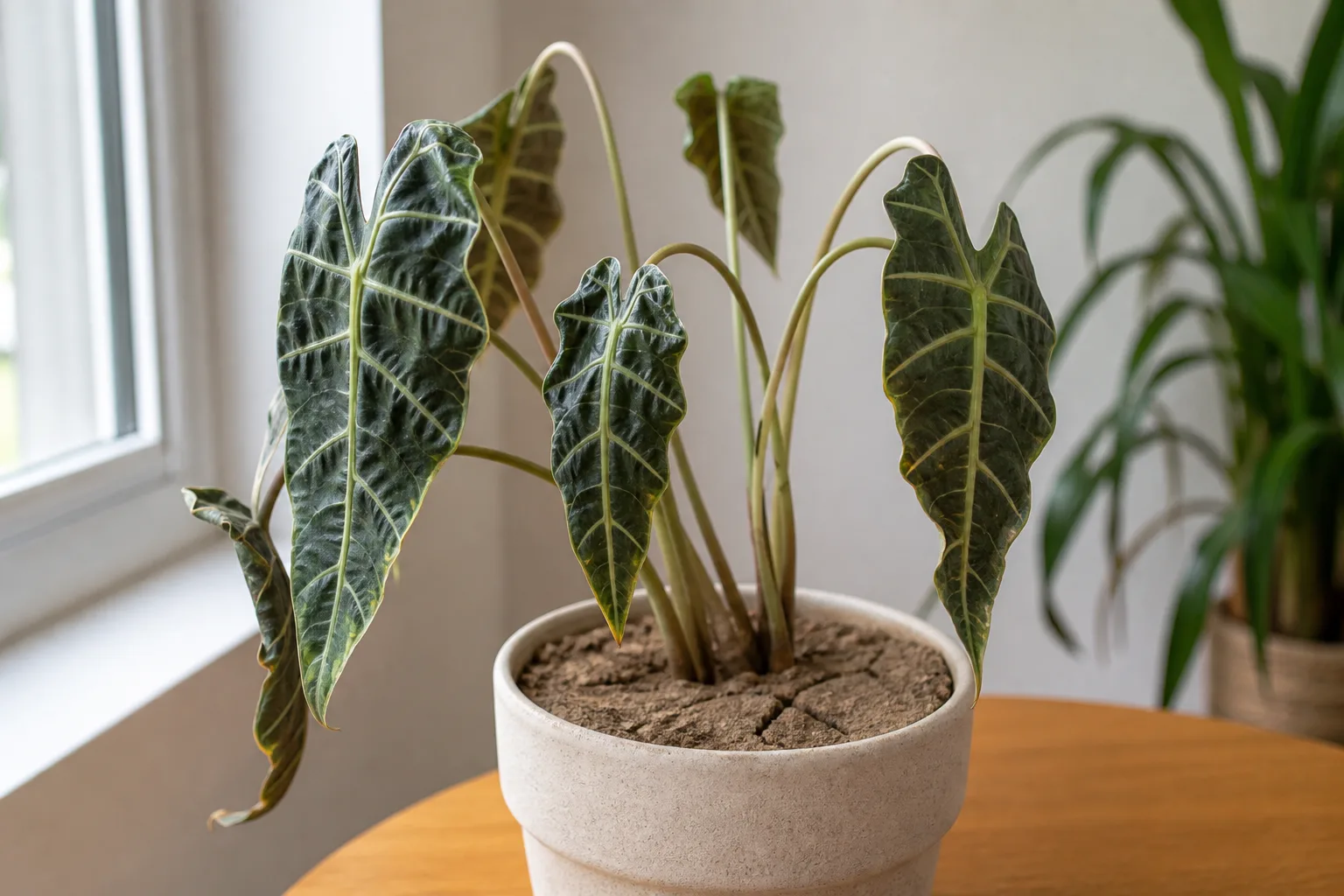
Underwatering on Alocasia Amazonica: Causes, Checks & Fixes
This guide covers underwatering on Alocasia Amazonica. See also the general Underwatering guide, watering, and light pages for this plant.
Underwatering on Alocasia Amazonica: Causes, Checks & Fixes
Quick answer
Underwatering on Alocasia Amazonica (Alocasia × amazonica, African Mask plant) means the root zone stayed dry too long for Alocasia Amazonica overview to replace the water its large, thin leaves lose every day. The pot feels light, arrow-shaped foliage goes limp, and leaf edges turn papery or brown.
First step: check soil moisture 2–3 cm down before you pour. If the mix is bone dry at that depth, rehydrate once-bottom-water or soak slowly until water runs from the drainage holes, then empty the saucer. Do not give daily sips that never reach deep roots, and do not assume every drooping leaf means thirst (wet soil with wilt often signals root rot on Alocasia Amazonica instead).
What underwatering looks like on Alocasia Amazonica
Alocasia Amazonica has bold, arrow-shaped leaves on upright petioles. Those leaves have a lot of surface area and lose water quickly in bright light or dry air-so drought stress shows up fast when watering lags behind uptake.
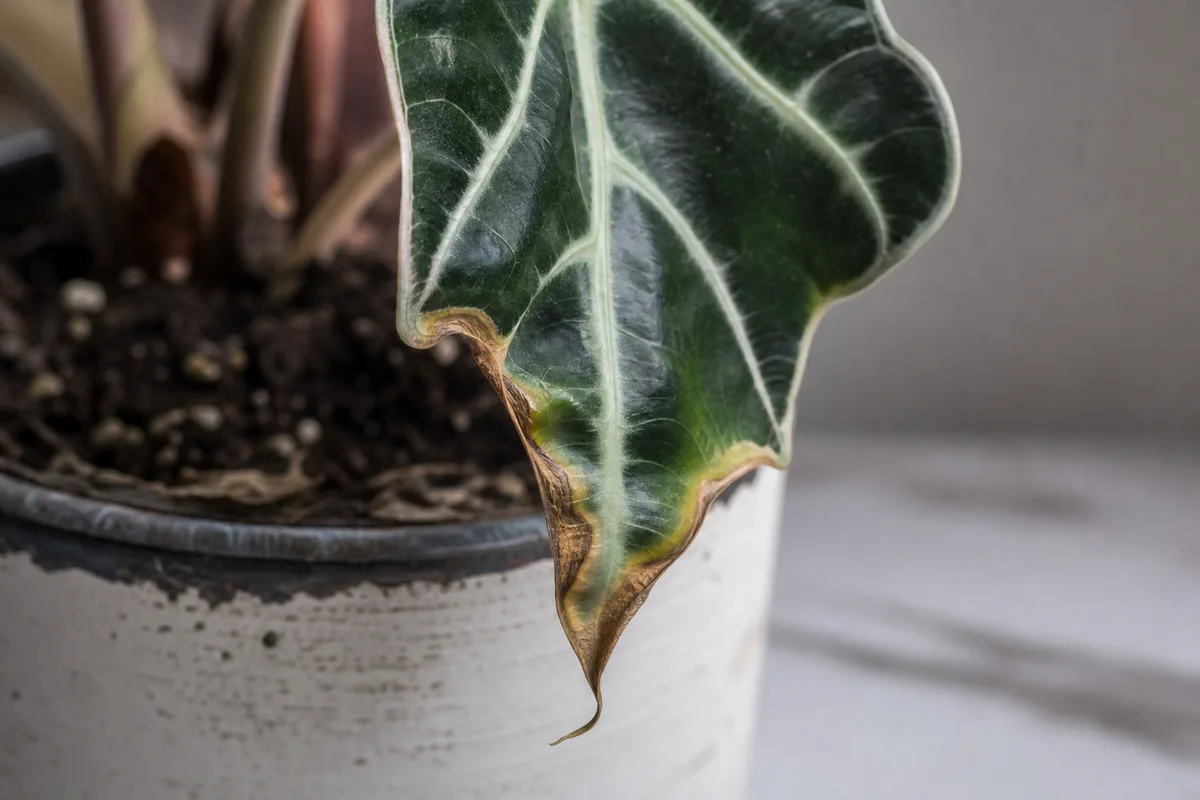
Underwatering symptoms on Alocasia Amazonica - compare with healthy tissue on the same plant.
Typical underwatering signs include:
- Drooping or limp leaves that feel soft but not mushy at the petiole base
- Crispy brown margins or tips on otherwise green foliage
- Soil pulling away from the inside of the pot wall
- A very light pot compared with how it feels right after a thorough drink
- Slow or stalled growth during the active season (spring through autumn)
- Water running straight through the pot without wetting the center-often a sign the mix has gone hydrophobic after drying out completely
Healthy underwatered roots, when you unpot, are usually firm, pale, and dry-not brown, mushy, or foul-smelling. That distinction matters because Alocasia wilts from both too little water and from roots damaged by too much.
Normal lookalikes to separate first: One older leaf yellowing and dropping as a new one opens is common on alocasias. Winter dormancy can shed most foliage while the corm rests-that is not the same as chronic summer drought. Low humidity alone can crisp edges even when soil is moist; underwatering adds dry soil to that pattern.
Why Alocasia Amazonica gets underwatered
Alocasias evolved in tropical forests with steady warmth and humidity. Indoors, their big leaves transpire heavily whenever the plant sits in Alocasia Amazonica light guide and warm room air. The same traits that make Alocasia Amazonica dramatic also make it drink faster than many low-light houseplants.
Common triggers specific to this species:
- Calendar watering instead of checking the pot-every 7–14 days is only a starting range; bright windows and summer heat can dry a small pot in a few days
- Fear of overwatering on Alocasia Amazonica after reading that alocasias rot easily-skipping drinks until leaves collapse is a frequent overcorrection
- Fast-draining aroid mix in terracotta, which is correct for rot prevention but dries faster than dense peat in plastic
- Undersized or root-filled pots that hold little moisture; if compost dries within a day or two of watering, the plant is likely pot-bound
- Hydrophobic dry mix-when peat or bark stays dry inside, surface sprinkles never reach roots
- Winter confusion-watering must drop during dormancy, but letting the corm desiccate completely in a heated room still causes stress
Alocasia Amazonica is not drought-tolerant. Unlike outdoor Colocasia types that tolerate wet feet, alocasia roots need oxygen between drinks and will fail if kept soggy-but they also cannot stay bone dry through an active growth spurt.
How to confirm the cause
Work through these checks in order before you rehydrate:
- Soil moisture at depth - Insert a finger or wooden skewer 2–3 cm (about 1 inch) into the mix. Dusty dry at that depth supports underwatering. Damp or cool soil deep down while leaves wilt suggests overwatering or root rot.
- Pot weight - Lift the pot. A light, hollow feel with dry soil confirms drought. A heavy pot with wet surface soil does not.
- Leaf and stem texture - Underwatered leaves are limp with dry, papery edges; the petiole base stays firm. Mushy stems with wet soil point to rot.
- The perk test - If the plant was dry, one thorough watering should show visible turgor recovery within several hours to a day. No improvement with wet soil means roots are not functioning.
- Environment - Note bright south or west windows, radiators, and winter heating that speed drying. Also note if humidity is very low-dry air can mimic thirst even when soil is moderately moist.
- Season - During active growth (roughly April through October indoors), alocasias use more water. In winter dormancy, leaves may drop with less frequent watering-that is normal if the corm stays firm and you are not letting the mix stay dust-dry for weeks.
If soil is wet, stems are soft, or the pot smells sour, stop-treat as possible overwatering or root rot instead of adding more water.
First fix for Alocasia Amazonica
If-and only if-the top 2–3 cm of mix is dry, give one thorough rehydration.
Choose one method:
- Top-water slowly - Pour room-temperature water in stages until it runs freely from drainage holes. Pause if water channels down the dry gap along the pot edge; come back in ten minutes and water again so the root ball actually absorbs moisture.
- Bottom-water - Set the pot in a basin with 2–3 cm of water for 20–45 minutes until the surface darkens. Lift out, let excess drain completely, and never leave the pot sitting in a full saucer.
After soaking, empty the saucer within 30 minutes. Alocasia roots need moisture, not a standing water bath.
Then wait. Do not water again until the top 2–3 cm dries once more. Your only job for the next week is to learn how many days that takes in your home.
Step-by-step recovery
For mild drought-limp leaves, dry soil, firm roots-one good soak is usually enough.
If the plant has been dry repeatedly or water ran through without soaking:
- Bottom-water twice in one session if the first pass did not darken the surface-dry peat often needs a second soak.
- Move to stable bright indirect light if the plant was baking in direct sun while dry; heat plus drought accelerates collapse.
- Raise humidity to 60–80% after rehydrating if your air is very dry-transpiration drops and recovery is faster.
- Trim fully brown leaves only after turgor returns; they will not repair, and removing them early adds stress.
- Repot only if the mix is hydrophobic throughout or roots have filled the pot and dry out within 48 hours. Use fresh aroid mix with bark and perlite; choose a pot only slightly larger.
Hold fertilizer until new growth looks stable. Feeding drought-stressed roots can burn tender tissue.
Recovery timeline
| Severity | What to expect |
|---|---|
| Mild (one missed drink) | Leaves perk within hours to 1–2 days after a proper soak |
| Moderate (crispy edges, repeated dry cycles) | Turgor returns in 2–5 days; old edge damage remains permanent |
| Severe (multiple leaves yellowing/dropping from drought) | Several weeks to see new arrow leaves; some old foliage may be lost |
Judge recovery by new firm leaves and a stable Alocasia Amazonica watering guide-not by old crispy margins turning green.
Lookalike symptoms
| What you see | More likely cause | What to do |
|---|---|---|
| Drooping + bone-dry soil + crispy edges | Underwatering | Soak once; reset check schedule |
| Drooping + wet soil + yellow lower leaves | Overwatering / root rot | Stop watering; inspect roots |
| Crispy edges + moist soil + dry winter air | Low humidity | Humidifier; do not drench soil |
| All leaves dropped in cool months + firm corm | Winter dormancy | Reduce water; keep above 10°C |
| Wilting after you watered + soil still wet | Root damage | Unpot; trim mushy roots; dry mix |
Drooping that improves after a single thorough drink on dry soil is the classic underwatering tell on Alocasia Amazonica.
Mistakes to avoid
- Misting instead of watering roots - Surface moisture does not rehydrate a dry root ball.
- Daily shallow sips - They keep the top damp while the center stays dry.
- Drenching on a schedule after one dry spell without checking depth-swings straight into overwatering.
- Fertilizing a wilted plant before soil moisture is corrected.
- Alocasia Amazonica repotting guide into a much larger pot to “hold more water”-excess wet mix rots alocasia corms.
- Ignoring pot-bound signals - When mix dries out within a day or two every time, the plant needs a slightly larger home, not more frequent panic watering.
How to prevent underwatering next time
During active growth, water when the top 2–3 cm of aroid mix is dry-typically every 7–14 days in many homes, but often faster in bright light, small pots, or terracotta. Turn the pot slightly at each watering so it does not lean toward the window.
In winter dormancy, cut back frequency sharply, but do not let the corm shrivel in a heated room. A light drink every few weeks is often enough to prevent desiccation while avoiding rot.
Build a simple habit:
- Finger or skewer check before every major watering
- Saucer emptied within 30 minutes of each soak
- Humidity kept in the 60–80% range when possible
- Faster drying after a move to brighter light triggers a schedule adjustment, not panic
When to worry
Treat the same day if the plant is fully collapsed with dust-dry soil in hot, bright conditions during the growing season. Also act promptly if multiple leaves yellow and drop after repeated dry cycles-you may be losing foliage faster than the corm can replace it.
Do not assume the plant is dead if it drops leaves in winter with a firm corm and you have been watering lightly-that may be dormancy, not fatal drought.
Unpot and inspect if wilt persists more than 48 hours after a confirmed thorough soak on dry soil. Firm roots that still will not move water can signal hidden rot or cold damage, not simple thirst.
Conclusion
Underwatering on Alocasia Amazonica is a moisture-timing problem, not a mystery disease. Dry soil several centimeters down, a light pot, and limp leaves with crispy edges tell you the root zone ran out of water while the plant was actively growing. One patient, thorough soak-then a check-based rhythm matched to your light and pot-usually restores turgor within days. Old brown edges will not heal, but new arrow-shaped leaves will show you the plant is back on track.
When to use this page vs other Alocasia Amazonica guides
- Alocasia Amazonica watering guide - Use for routine moisture checks before assuming underwatering is the main issue.
- Alocasia Amazonica problems hub - Browse all 16 common issues on this species.
- Wilting on Alocasia Amazonica - Different entry point when symptoms overlap with underwatering.
- Brown Tips on Alocasia Amazonica - Different entry point when symptoms overlap with underwatering.
- Yellow Leaves on Alocasia Amazonica - Different entry point when symptoms overlap with underwatering.
Related Alocasia Amazonica guides
- Alocasia Amazonica overview
- Alocasia Amazonica watering
- Alocasia Amazonica light
- Alocasia Amazonica soil
- Wilting on Alocasia Amazonica
- Brown Tips on Alocasia Amazonica
- Yellow Leaves on Alocasia Amazonica
- Overwatering on Alocasia Amazonica
- Drooping Leaves on Alocasia Amazonica
- Alocasia Amazonica problems