Alocasia Amazonica Repotting Guide: When, How, and Soil Mix
Alocasia Amazonica Repotting Guide: When, How, and Soil Mix
Alocasia Amazonica Repotting Guide: When, How, and Soil Mix
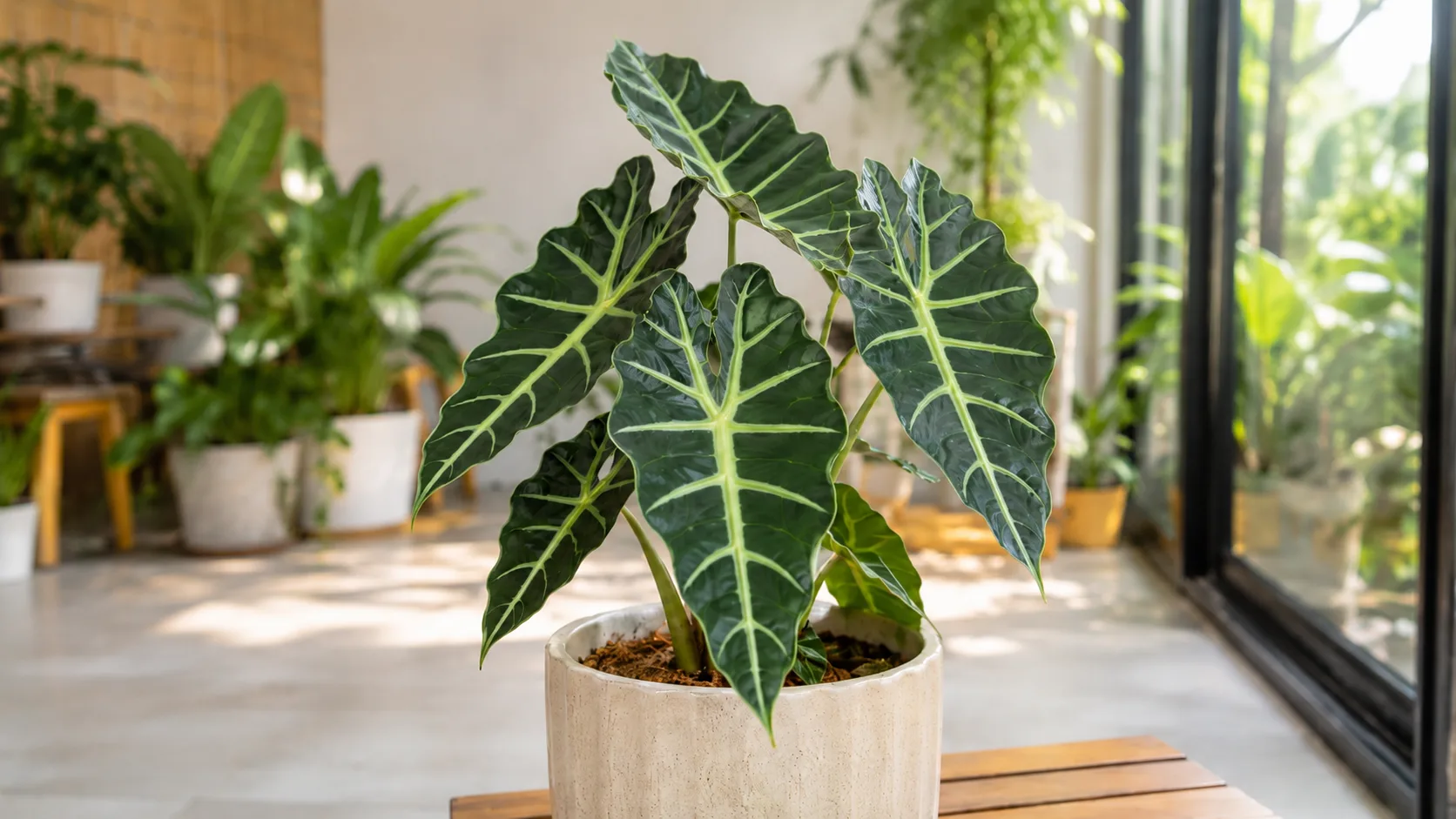
Repotting Alocasia Amazonica is the moment when a healthy plant either gains two seasons of vigorous growth or quietly rots at the rhizome because the new pot was too large, the mix was too dense, or the job was done in midwinter. The dramatic, white-veined leaves get all the attention, but the underground corm and rhizome are what actually survive a bad repot-and what you are trying to protect every time you unpot the plant. This guide is written for the grower who needs to know whether to refresh soil in the same container, step up one pot size, divide corms, or wait until spring, with extension-backed timing and a clear emergency path when roots are already failing.
If you are new to this hybrid, start with the Alocasia Amazonica overview for naming, dormancy, and baseline care. For day-to-day moisture rhythm after repotting, see the watering guide.
Alocasia Amazonica vs. Polly: What You Are Actually Repotting
The plant on your shelf labeled “Alocasia Amazonica” or “African mask plant” is almost certainly Alocasia × amazonica-a hybrid bred in Florida in the 1950s from Southeast Asian parents, not a wild Amazon species. The Missouri Botanical Garden Plant Finder notes that although the name suggests an Amazon origin, no Alocasia species are native to South America.
Alocasia ‘Polly’ is not a separate species. It is a compact tissue-culture sport of the same hybrid, sold under both “Amazonica” and “Polly” labels at different retailers. Every repotting rule in this article applies identically to a ‘Polly’ specimen. LeafyPixels maintains separate care URLs for search clarity; if you landed here from a “Polly” label, you are in the right place. The repotting workflow differs from slow-growing succulents because this hybrid pushes thick rhizomes, storage corms, and fleshy roots that exhaust bark-based mixes within 12–18 months of active growth as structural bark fines decompose.
Why Alocasia Amazonica Needs a Fresh Pot Every 1–2 Years
The RHS Alocasia growing guide recommends repotting most alocasias every couple of years, especially faster-growing types, and checking annually for crowded roots. Alocasia Amazonica fits that faster-growing category indoors when light and humidity are adequate. Even a plant that is not yet root-bound benefits from a scheduled refresh because the structural ingredients in aroid mixes-orchid bark, pine fines, perlite-physically break down faster than the plant outgrows the pot.
Substrate breakdown and pathogen risk
Organic components in any container mix compress as they decompose. Air pockets close, water lingers longer after each irrigation, and the root zone can shift toward low-oxygen conditions where Pythium and Phytophthora thrive. The Clemson HGIC factsheet on root and crown rot pathogens attributes most root rot on Alocasia Amazonica to prolonged standing water or compacted, water-soaked soils. Above ground you may only see one yellow leaf or stalled growth; underground the rhizome has been sitting in failing mix for weeks. A 1–2 year repotting rhythm resets structure before that slow collapse becomes irreversible.
Corms and why repotting is your propagation window
Alocasia Amazonica stores energy in marble-sized corms tucked around the central rhizome. Repotting is often the only time you see them. Firm tan corms can be separated and started on moist sphagnum or perlite; mushy corms should be discarded. That makes the unpotting step both a health inspection and a free propagation opportunity-details on sprouting corms live in the propagation guide, but the repotting window in spring is when success rates are highest because active roots heal and establish quickly.
Signs Your Alocasia Amazonica Is Ready for Repotting
Roots circling, poking out, or lifting the plant
The clearest trigger is roots emerging from drainage holes, circling the soil surface, or pressing the crown above the original soil line so the plant tips easily. Slide the root ball out gently: if it holds the pot shape with a dense white or tan root perimeter and little loose mix, the plant is root-bound and ready for an upgrade or a same-pot refresh with root teasing. The Penn State Extension houseplant repotting guide lists roots growing through drainage holes or a pot-bound rootball as the standard signal for moving to a larger container.
Watering and growth clues
Two opposite watering symptoms point to the same problem. Water that rushes straight through the pot means the root mass has displaced soil. Water that pools on the surface for minutes before draining means structure has collapsed. Stalled growth in bright indirect light-with otherwise normal watering habits-often means the root system, not the leaves, is the bottleneck. New leaves arriving smaller than the previous flush is a quieter sign that the pot is exhausted even when foliage still looks acceptable.
Repot Now, Refresh Mix, or Wait? (Decision Guide)
Not every repot requires a bigger pot. Treat refresh and upgrade as different jobs:
- Refresh (same pot): Mix has broken down, water behavior has changed, or it has been 18–24 months since the last repot-but roots are not circling aggressively. Remove the plant, gently tease or trim circling roots, shake off old mix, and repot at the same depth with fresh aroid mix. No upsize.
- Upgrade (larger pot): Roots are visibly bound, the plant lifts out of the soil, or growth has stalled despite good care. Move up only 1–2 inches (2.5–5 cm) in diameter.
- Wait: Plant is dormant (few or no leaves, cool room), or only one ambiguous sign appears in late fall. Hold until you see 2–3 inches of new spring growth unless rot is active.
A worked example: a healthy specimen in a 6-inch (15 cm) nursery pot with roots just beginning to circle goes into a 7- or 8-inch terracotta pot-not a 10-inch decorative cachepot. If the roots are not bound but the bark has turned to dust, refresh in the same 6-inch pot with new mix.
Best Time of Year to Repot Alocasia Amazonica
Why spring and early summer win
Spring is the single best season. The RHS Alocasia growing guide advises checking for overcrowded roots and repotting in spring when necessary. Active growth means active root production, faster healing at cut tips, and quicker colonization of fresh mix. The NC State Extension entry for Alocasia × mortfontanensis aligns with treating division and repotting as active-growth tasks. Most extension houseplant guides, including Iowa State University Extension’s houseplant care overview, place repotting at the start of the growing season when new shoots appear-not mid-dormancy. In most temperate homes, the practical window runs from mid-March through early June, when you see new petioles emerging, not when the plant is already in peak summer flush.
Dormancy and emergency exceptions
In winter the RHS recommends cooler, drier conditions while keeping temperatures above 10°C (50°F), and foliage loss during dormancy is normal. Repotting a leafless, slow-rooted plant into fresh wet mix in cool conditions invites rot because disturbed roots cannot dry the soil at the rate you are adding moisture. Wait for new spring growth unless you face an emergency: sour-smelling mix, black mushy roots visible at drainage holes, or a broken pot. Emergency protocol is covered below; routine jobs can wait.
Choosing the Right Pot Size and Material
The 1–2 inch upsize rule
The RHS Alocasia growing guide recommends choosing a pot only about 5 cm (2 in) larger in diameter each time to avoid overpotting problems. Oversized pots hold excess soil the roots cannot colonize quickly; that uncolonized zone stays wet and anaerobic. Alocasia Amazonica tolerates slight snugness better than chronic sogginess. Drainage holes are non-negotiable-standing water at the bottom rots rhizomes regardless of mix quality.
Terracotta, plastic, glazed, and nursery pots
Terracotta is porous, wicks moisture through the walls, and adds weight so top-heavy plants tip less-the RHS specifically notes that larger alocasias are best in heavy terracotta for stability. Plastic and glazed ceramic retain moisture longer, which helps in dry homes but raises rot risk if you water on a summer schedule in a cool winter room. Clear nursery pots let you inspect roots without unpotting; pair them with a cachepot if aesthetics matter. Match your post-repot watering checks to the material: terracotta usually needs attention sooner than plastic in the same room.
| Material | Drying speed | Best for |
|---|---|---|
| Terracotta | Fastest | Overwaterers; humid rooms; top-heavy specimens |
| Plastic nursery | Slowest | Dry homes; growers who underwater |
| Glazed ceramic | Moderate | Stable watering habits; decorative display with drainage |
Regardless of material, never repot into a decorative outer pot that traps runoff unless the inner nursery pot lifts out easily after every watering.
Soil Mix for Repotting (Essentials)
Standard bagged potting soil holds too much water for this root system. For repot day you need a chunky, well-draining aroid blend-coarse enough that a squeezed handful springs back open, not compacted like dough. The RHS recommends peat-free houseplant compost with horticultural grit at roughly three parts compost to one part grit for drainage; most indoor growers push even more bark and perlite for Amazonica-type hybrids.
A practical repot batch: combine peat-free base, orchid bark, and perlite or pumice so the finished mix drains within about a week after a thorough watering in a warm room. Pre-moisten the mix lightly before potting so components bind without dusting your workspace. Full ingredient ratios, pH targets, and home-by-home adjustments are in the dedicated Alocasia Amazonica soil guide-this page keeps only what you need at the potting bench, not a second full recipe.
The Clemson HGIC indoor soil mixes factsheet notes that slightly acidic mixes in the 5.3–6.5 pH range suit most foliage houseplants; bark and coco drift acidic, which suits this hybrid.
Step-by-Step Repotting Process
Water thoroughly 12–24 hours before repotting so roots flex instead of snap. The Penn State Extension repotting guide recommends this pre-water step and soaking new porous terracotta overnight so dry clay does not wick moisture from fresh mix on day one.
Safety first: Wear gloves. Alocasia sap contains insoluble calcium oxalate crystals; the RHS advises gloves because sap can irritate skin. Wash exposed skin promptly and avoid touching eyes. The ASPCA lists Alocasia as toxic to cats, dogs, and horses if chewed-bag old mix and fallen leaves where pets cannot reach them during cleanup.
Sterilize shears with isopropyl alcohol or 10% bleach solution. Lay out the new pot, fresh mix, and workspace covers.
- Unpot: Tip the container on its side, support the petiole bases, and tap or squeeze the pot sides. Never yank stems-petioles snap easily. Run a knife around the inside edge if stuck.
- Inspect: Shake off old mix. Healthy roots are firm and pale tan to white. Trim black, soft, or foul-smelling roots back to firm tissue. Identify corms (firm tan “marbles”) and offsets with their own roots; leave attached offsets that are small but sprouting unless you plan to propagate.
- Tease: Gently loosen circling roots so they grow outward instead of continuing to circle-the Penn State Extension repotting guide recommends teasing densely matted roots before backfilling.
- Position: Add bottom mix so the crown sits at the same depth as before-the RHS positions the top of the rootball just below the compost surface. Burying the crown invites crown rot; exposing the rhizome dries it out.
- Backfill: Fill around the root ball, tapping the pot to settle mix without compacting. Leave roughly 2.5 cm (1 in) headspace below the rim for watering.
- Water in: Water until drainage runs free, then discard saucer water. Do not let the pot sit in standing water.
Corm division at repot: Only divide when the clump has at least three growth points. Each piece needs roots, rhizome tissue, and preferably a leaf. Single-crown plants cut in half often fail on both halves. For corm-only propagation, see the propagation guide.
Post-Repot Care and Avoiding Transplant Shock
Expect one or two older leaves to yellow or droop within the first week while fine feeder roots regrow-that is normal stress, not automatic death of the corm. Squeeze the crown gently: firm tissue means the plant is recovering; soft, smelly tissue means rot and needs the emergency path below.
Keep bright indirect light-no direct sun on recovering leaves. Maintain roughly 18–27°C (65–80°F) and humidity toward 60–80% if you can. Water once after repotting, then wait until the top 2–3 cm of mix feel dry before the next drink; follow the watering guide rhythm rather than a calendar.
Do not fertilize for 4–6 weeks. Fresh mix already contains compost and castings; salts on tender new root tips burn easily. The RHS Alocasia growing guide ties reduced winter feeding to dormancy-the same pause logic applies after repotting while roots re-establish. If repotting in late summer pushes the waiting period into dormancy, skip fertilizer entirely until the following spring. Most plants show new white root tips within 10–14 days and resume leaf production within 3–6 weeks when warmth and light are adequate.
For fertilizer timing once recovery is complete, see the Alocasia Amazonica fertilizer guide. For light placement during recovery, see the light guide.
Emergency Repot: Root Rot During Dormancy
When stems are mushy at the base, soil smells sour, or roots are black and slimy, repot immediately regardless of season-even if the plant has no leaves.
- Unpot and rinse away all old mix.
- Cut away every soft root and rhizome tissue until only firm white or tan tissue remains. Sterilize blades between cuts.
- Dust cut surfaces with cinnamon or allow them to air-dry 1–2 hours in a warm, shaded spot.
- Repot into dry fresh chunky mix in a pot sized to the remaining root mass (often smaller than the old pot).
- Hold water for about 7 days, then give a cautious soak and resume checking dryness at the top 2–3 cm only.
If all leaves drop but the corm remains firm and earthy-smelling, the plant may still be alive-reduce water to dormancy levels and wait for spring. A mushy corm will not recover. When firm offsets remain after crown loss, salvage via the propagation guide.
Common mistakes to avoid: overpotting by 4+ inches; repotting into standard potting soil; burying the crown; fertilizing in week one; repotting a stressed dormant plant without rot present; decorative pots without drainage holes.
Conclusion
Use this post-repot checklist before you close the bag of old mix:
- Repotted in spring or early summer during active growth, unless rot forced an emergency job
- Chose same pot (refresh) or 1–2 inch upsize (upgrade)-never jumped multiple sizes
- Used chunky aroid mix from the soil guide, pre-moistened, with crown at the same depth
- Wore gloves, kept pets away from debris, and washed skin after handling sap
- Watered once thoroughly, then waited for the top 2–3 cm to dry before watering again
- Held fertilizer 4–6 weeks and avoided direct sun during recovery
- Checked the corm for firmness if leaves yellowed-firm means wait; mush means trim and dry repot
Done calmly, repotting takes under an hour and buys another 12–24 months of stable root-zone oxygen-the single best insurance against the slow decline owners mistake for “Alocasia being difficult.”
When to use this page vs other Alocasia Amazonica guides
- Alocasia Amazonica overview - Start here for whole-plant context before deep-diving this topic.
- Alocasia Amazonica problems hub - Jump to symptom-specific fix guides when this care topic does not resolve the issue.
- Root Rot on Alocasia Amazonica - Escalate here when repotting adjustments are not enough.