Alocasia Amazonica Fertilizer Guide: NPK, Schedule
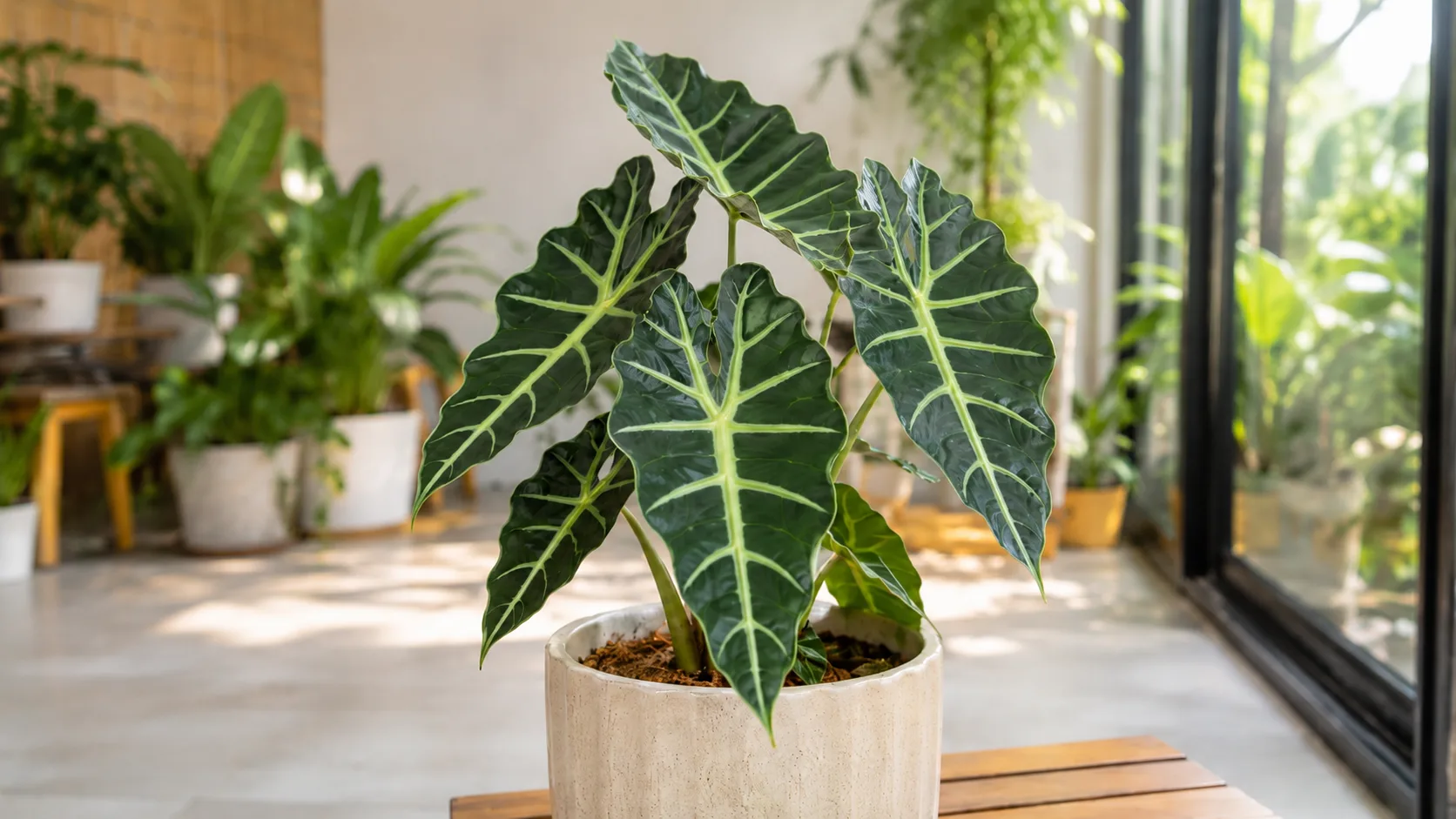
Alocasia Amazonica Fertilizer Guide: NPK, Schedule, and Dormancy Feeding Rules
Alocasia Amazonica Fertilizer Guide: NPK, Schedule, and Dormancy Feeding Rules
Alocasia Amazonica responds to fertilizer the way a tropical understory plant should - it grows fast when the light, water, and humidity are right, and it slows down hard when they are not. The job of a fertilizer routine is not to push the plant; it is to refill the soil with what an actively growing aroid is actually pulling out of the pot. Get that simple, and the leaves come in larger, deeper, and cleaner. Get it wrong, and you are usually the reason the tips are brown and the soil has a white crust.
This guide walks through the NPK ratio Alocasia Amazonica prefers, the schedule that matches its growth rhythm, the dormancy rule that prevents most of the common damage, and the recovery steps if you have already pushed too hard. It is grounded in university extension guidance on houseplant fertilization, aroid-society growing notes, and the practical experience of growers who keep these plants for years rather than months.
If symptoms persist, see the Yellow Leaves on Alocasia Amazonica guide.
What “Alocasia Amazonica Fertilizer” Actually Means
Why aroid feeding is different from general houseplant feeding
“Alocasia Amazonica fertilizer” is shorthand for the NPK ratio, dilution, and frequency that match a tropical aroid grown in a small indoor pot. Aroids are not heavy feeders in the lawn-grass sense. They evolved on the forest floor, where the nutrient supply is steady but thin, and where the root system shares space with fungi and microbes that help release nitrogen and potassium slowly. Pouring strong synthetic fertilizer at them the way you would feed a tomato plant almost always backfires - salts build up in a small pot faster than the plant can use them, and the roots burn before the leaves ever look better.
University extension guidance on houseplant fertilization is consistent on this point. The University of Maryland Extension and the Missouri Botanical Garden both recommend feeding actively growing houseplants with a balanced water-soluble fertilizer at half the label strength, and pausing entirely when growth slows, because roots in a small container are easily burned by a single over-concentrated dose. The same logic applies to Alocasia Amazonica, with one extra constraint: it is more salt-sensitive than most foliage houseplants, so erring lighter is the safer default. The plant pulls nitrogen (N) to build new leaf tissue and chlorophyll, phosphorus (P) to maintain root and energy systems, and potassium (K) to regulate water movement and stress response. During active growth - roughly spring through early autumn in most homes - it is laying down a new leaf every few weeks and the demand is real. During the cooler, darker months, the corm is resting and the plant is using almost nothing. That single seasonal cycle is the entire reason a “set-and-forget” fertilizer schedule is the most common cause of problems with Alocasia Amazonica overview. The plant does not have a set need; it has a seasonal need, and your feeding should follow it.
The Best NPK Ratio for Alocasia Amazonica
There is no single correct NPK ratio for Alocasia Amazonica. There are two safe families of ratios, and the right choice depends on your water, your soil, and how much attention you want to pay. Both are widely recommended in aroid-society guidance and by extension publications.
Balanced 20-20-20 vs foliage-leaning 3-1-2
A balanced formula such as 20-20-20 or 10-10-10 is the safe default and the one most extension services suggest for general houseplant use. The Missouri Botanical Garden’s houseplant fact sheet points to a balanced NPK analysis like 10-10-10 for routine feeding, applied only while the plant is actively growing. For Alocasia Amazonica, the standard practice is to dilute that balanced fertilizer to half the strength on the label, mix it into a normal watering, and apply it to already-moist soil. The 10-10-10 version is slightly easier on sensitive roots because each nutrient is at a lower absolute concentration, which gives you a wider margin if you happen to feed a slightly dry pot or a slightly stressed plant. The Clemson HGIC houseplant factsheet explicitly recommends 20-20-20 for foliage plants, diluted or applied at the label rate on a 2–3 month schedule.
A foliage-leaning 3-1-2 ratio, such as 9-3-6 or 12-4-8, is the alternative that many aroid collectors prefer. The idea is simple: aroids in active growth use roughly three times as much nitrogen as phosphorus, and a balanced 20-20-20 supplies more phosphorus than the plant will actually consume in a foliage-focused growing season. Excess phosphorus does not help leaf production, and over time it can interfere with uptake of calcium, potassium, and micronutrients. A 3-1-2 ratio matches the plant’s actual demand more closely, which means you can feed at a low concentration without running into deficiencies. Dyna-Gro Foliage Pro 9-3-6 is the most commonly cited example in aroid-society discussions because it is also urea-free and supplies calcium and magnesium, two nutrients that many liquid fertilizers leave out.
Liquid feeds vs slow-release pellets
Liquid fertilizers are the better fit for Alocasia Amazonica in a small pot. You control the dose, you can dilute to half or quarter strength, and the salts flush out with the next watering. Slow-release pellets release nutrients on a curve you cannot easily see, and in a small pot they can dump a too-strong pulse of nitrogen after a heavy watering - exactly the conditions that cause leaf-tip burn. If you do use slow-release, use it sparingly, top-dress only, and skip the liquid feeding for the season. Foliar sprays are not necessary for Alocasia Amazonica; the leaves are sensitive and most of the plant’s nutrition is taken up by the roots.
When to Fertilize Alocasia Amazonica: Seasonal Schedule
Frequency is the second half of “what fertilizer does an Alocasia Amazonica need,” and the right answer is the part that most generic care pages get wrong. They give a number without telling you when that number applies.
Spring restart and summer maintenance
In spring, do not feed the moment you see green. The root system is rebuilding after winter, and the first new leaf is funded largely by stored energy in the corm. Fertilizing too early pushes nutrients into a root system that is not yet pulling, and the salts sit in the medium. A reliable rule used by experienced aroid growers is to wait for the second new leaf to unfurl before resuming any fertilizer. At that point the plant is clearly in active growth, the roots are taking up water again, and a half-strength feed will be used rather than stored as salt. During the active growing season that follows, Alocasia Amazonica does well with a half-strength balanced or 3-1-2 liquid feed every four to six weeks. The exact interval depends on the size of the pot and how often you water. In a small pot with frequent watering, nutrients leach out faster and a four-week interval is reasonable. In a larger pot with chunky aroid mix, a six-week interval is plenty. Aroid-society guidance and houseplant extension publications agree on the same range. A common beginner mistake is to shorten that interval to every two weeks “for faster growth”; the plant does not grow faster, but the salt load in the pot does.
Autumn taper into winter rest
As days shorten and light drops in mid-autumn, taper before you stop. A practical approach is to switch to quarter-strength feeds at the same interval, then move to plain water only once you have done one or two of those lighter feeds. This gives the plant a soft landing into dormancy and prevents a hard cliff between full feeding and no feeding, which is the condition that most often leaves salts sitting in cold, damp medium over winter.
Dormancy and Winter: When to Stop Fertilizing
The single most important rule in an Alocasia Amazonica fertilizer routine is to stop feeding during dormancy. This is the rule that, when broken, causes the most lasting damage.
Dormancy is a normal part of the Alocasia life cycle. As days shorten and indoor temperatures drop, the plant pulls nutrients out of its older leaves and stores them in the corm underground. The visible signs are familiar to anyone who has grown the species for more than one winter: growth slows or stops, one or two of the oldest leaves yellow and drop, and the medium stays wet for noticeably longer because the plant is drinking almost nothing. A warm room with steady bright light can keep the plant in a partial, semi-active state through winter, but even then, growth is much slower and nutrient demand is much lower.
Why fertilizer during dormancy damages the corm
A dormant plant is not pulling water or nutrients at summer rates. Anything you add to the pot accumulates. Fertilizer salts concentrate in a cold, damp medium, and over weeks they damage the fine root tips and, in severe cases, the corm itself. The University of Maryland Extension warns that “during the winter months, indoor plants don’t need fertilizer because reduced light and temperature result in reduced growth. Fertilizing at this time could harm some plants. Fertilize from March through September.” Practical guidance from aroid-society sources is the same: stop fertilizing completely once growth has slowed, do not resume until the plant has pushed at least two new leaves in spring, and start at half strength when you do resume.
How to Fertilize Alocasia Amazonica Step by Step
A safe fertilizer pass for Alocasia Amazonica has three steps. First, dilute the fertilizer to half the strength on the label - for a 20-20-20 powder, that is roughly half a teaspoon per gallon of water; for a 3-1-2 liquid such as 9-3-6, follow the label’s “indoor foliage” rate and then halve it. Second, water the plant with plain water the day before, or at least make sure the medium is already moist. Fertilizer onto dry medium is the single most common cause of root burn on this species, because dry roots absorb the salt solution at full strength. Third, pour the fertilizer solution slowly over the medium until it runs out the drainage hole, then let the pot drain completely. Do not let the pot sit in a saucer of fertilizer solution.
A small measuring spoon or a graduated syringe is the cheapest upgrade you can make to a fertilizer routine. Eyeballed doses are how most over-fertilizing accidents happen. A watering can with a narrow spout keeps the solution off the leaves and the crown, which matters because Alocasia stems hold water in their petiole bases and trapped fertilizer solution there can encourage rot. If you are feeding multiple aroids, label the watering can “fertilizer” so no one accidentally pours a full-strength dose on a sensitive plant.
Over-Fertilizing: Symptoms and Causes
Alocasia Amazonica is one of the more salt-sensitive foliage houseplants, and over-fertilizing is the single most common reason a healthy-looking plant suddenly declines. The good news is that early-stage damage is fully recoverable.
Leaf-level and soil-level signs
The first sign of fertilizer burn is almost always brown, crispy leaf tips. The plant cannot move salts out of the leaf margin, so that is where they concentrate. From there, the damage moves inward as a tan or brown edge along the leaf, sometimes with a yellow halo. Edema - small, water-soaked blisters on the underside of the leaf that turn into corky brown spots - is another common sign, and it is the plant’s tissue swelling faster than the cells can handle because the salt concentration in the medium is pulling water in abnormally. Wilting that does not recover overnight, even in moist soil, is a more serious sign that root damage has already happened. At the soil level, a white crust on the surface of the medium, a ring of salt around the rim of a clay pot, or a sour smell from the pot are all signs that salts have built up to harmful levels. The University of Maryland Extension notes that mineral and fertilizer salt deposits on the soil surface or pot rim are a reliable indicator that the medium needs flushing. Alocasia Amazonica in salty soil also tends to push out smaller new leaves and to drop older leaves more aggressively than a plant in clean medium.
How to Flush Fertilizer Salts from Alocasia Soil
Flushing is the standard remedy for salt buildup and the recovery move after accidental over-feeding. The University of Maryland Extension recommends periodic leaching as a maintenance practice for any houseplant grown in a pot, and prescribes flushing with “a volume at least that of the pot size” repeated several times to wash salts out the drainage holes.
The procedure is straightforward. Take the plant to a sink, bathtub, or outdoor spot where water can drain freely. Remove any visible white crust from the soil surface by scraping off the top quarter inch of medium. Slowly pour room-temperature water over the medium at roughly two to three times the volume of the pot - for a 6-inch pot that holds about 5 cups of water, plan on 10 to 15 cups. Let it drain completely, then repeat once more. Let the plant rest in a spot with good airflow until the medium returns to its normal moisture level before the next regular watering. Hold off on fertilizer for at least four to six weeks afterward. If the root system is clearly damaged - dark, soft, or shriveled - repot into fresh, unamended aroid mix, hold all fertilizer, and wait for new growth before resuming. Damaged leaf tips will not turn green again; new leaves will come in clean once the salt load is back in a safe range.
Organic Options: Worm Castings, Compost Tea, and Kelp
Organic fertilizers are a good fit for Alocasia Amazonica when used as supplements rather than as the sole nutrient source. Worm castings, compost tea, and liquid kelp all work, but none of them supply enough macronutrients on their own to feed a vigorous aroid through the growing season.
Worm castings have an NPK of roughly 0.5-0.5-0.5, so they are best mixed into the potting medium at a 10–20% ratio at Alocasia Amazonica repotting guide time, or top-dressed with one to two tablespoons per month during active growth. Their real value is soil biology: they introduce beneficial microbes that help the root system access nutrients already in the medium. Compost tea, brewed by steeping compost in dechlorinated water for 24 to 48 hours, works as a monthly soil drench. Liquid kelp supplies potassium and trace minerals, which supports stress tolerance and root health. A practical rotation through the growing season is half-strength balanced liquid fertilizer one month, compost tea or worm-casting tea the next, and so on. This gives the plant a steady nutrient supply and keeps the soil food web active.
If you prefer to use only organic methods, plan on more frequent but more dilute applications, and accept that growth will be a touch slower than under a balanced synthetic program. The plant will still look excellent, and the risk of salt burn drops to almost nothing.
Common Mistakes with Alocasia Amazonica Fertilizer
Most problems with this species come from a small set of recurring mistakes. Knowing them in advance saves a season of recovery.
The first is feeding at full strength. Even a balanced fertilizer is more concentrated than this plant wants in a small pot. Always dilute to half. The second is feeding a dry plant. Roots in dry medium absorb the salt solution at full concentration and burn. Always water the day before. The third is feeding during dormancy. A dormant plant cannot use the nutrients, and they accumulate. Stop in autumn and do not restart until the second new leaf in spring. The fourth is feeding a stressed plant. If the plant is dropping leaves, has a salt crust, or has just been repotted, fertilizer is the wrong move; flush, rest, and wait. The fifth is feeding on a fixed calendar without checking the plant. A four-to-six week interval is a starting point, not a rule - if the plant is in a cool room in low light, stretch the interval; if it is in a warm, bright window and pushing new leaves, the closer end of the range is fine.
Connecting Fertilizer to Light, Water, Soil, and Repotting
Fertilizer only works when the rest of the care is in range. Alocasia Amazonica in bright, indirect light and a chunky, well-draining aroid mix will use a half-strength feed efficiently; the same plant in a dim corner with soggy medium will build up salts fast. The order of importance is light, Alocasia Amazonica watering guide, soil mix and pot drainage, and only then fertilizer. If growth is slow, fix light and water before adding more nutrients.
Repotting matters too. A fresh medium in a slightly larger pot contains a small reservoir of nutrients, which is why newly repotted Alocasia Amazonica does not need fertilizer for the first four to six weeks. Starting a feeding schedule on top of fresh medium is a common cause of the very burn the grower was trying to prevent. If the medium includes a slow-release component, count that as your fertilizer for the first couple of months and resume liquid feeding only when the plant is clearly using those nutrients.
Quick-Reference Summary
For readers who want a one-pass summary before re-reading the sections that matter most: use a balanced 20-20-20 or a foliage-leaning 3-1-2 (such as 9-3-6), diluted to half the label strength. Feed every four to six weeks during active growth, starting in spring at the second new leaf. Taper through autumn and stop entirely during winter dormancy. Flush the medium with plain water every four to six weeks during the feeding season, or any time you see a white crust on the soil. If leaf tips turn brown or you see edema, hold all fertilizer, flush, and wait four to six weeks before resuming at half strength.
Conclusion
A good Alocasia Amazonica fertilizer routine is mostly about restraint. The plant does not want a lot of food; it wants the right food, in the right dilution, at the right times of year. A balanced 20-20-20 or a foliage-leaning 3-1-2 ratio at half strength, applied every four to six weeks during the growing season and paused completely through winter dormancy, covers the practical need. Pre-watering the medium, flushing salts periodically, and restarting in spring at the second new leaf are the three habits that turn a routine into a reliable one. Pair the feeding plan with Alocasia Amazonica light guide, a chunky well-draining mix, and a steady watering rhythm, and the plant will give you the deep green, sharply veined leaves it is known for - without the brown tips, salt crust, and post-dormancy collapse that come from overcorrecting.
When to use this page vs other Alocasia Amazonica guides
- Alocasia Amazonica overview - Start here for whole-plant context before deep-diving this topic.
- Alocasia Amazonica problems hub - Jump to symptom-specific fix guides when this care topic does not resolve the issue.
Related Alocasia Amazonica guides
- Alocasia Amazonica overview
- Alocasia Amazonica watering
- Alocasia Amazonica light
- Alocasia Amazonica soil
- Alocasia Amazonica propagation
- Alocasia Amazonica repotting
- Alocasia Amazonica problems
Related tool
Try the Fertilizer Dilution Calculator with alocasia-amazonica pre-selected to estimate needs for your setup.