Drooping Leaves on Alocasia Amazonica: Causes, Checks &
Quick answer
Drooping on Alocasia Amazonica (*Alocasia × amazonica*) usually traces to wet corm stress, dry soil, winter dormancy, or recent repot shock-not a single calendar mistake. First step: press the corm at the soil line and check moisture to the second knuckle before you water again.
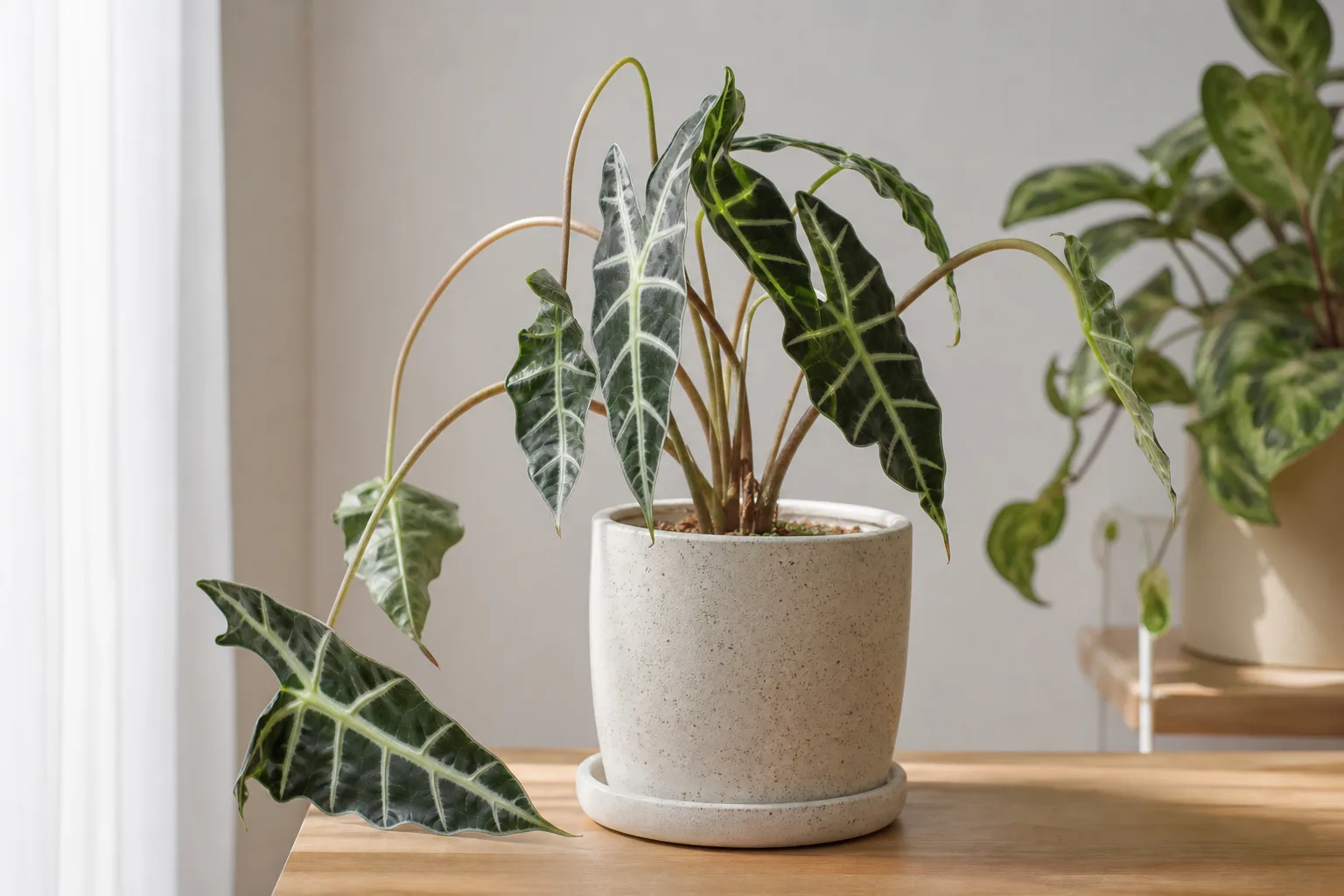
Drooping Leaves on Alocasia Amazonica: Causes, Checks & Fixes
This guide covers drooping leaves on Alocasia Amazonica. See also the general Drooping Leaves guide, watering, and light pages for this plant.
Drooping Leaves on Alocasia Amazonica: Causes, Checks & Fixes
Quick answer
Drooping leaves on Alocasia Amazonica-the compact hybrid sold as African Mask or ‘Polly’-show up when petioles lose turgor and arrowhead blades hang below their normal angle. On this species, large glossy leaves sit on relatively thin petioles, so the plant droops faster than thick-stemmed houseplants when roots or the underground corm cannot supply water.
The most common triggers are overwatering or soggy mix (wet soil + limp leaves), underwatering (dry pot + firm corm), winter dormancy (gradual yellow-and-droop on older leaves while the corm stays solid), repot or transplant shock, and low humidity or cold drafts stressing active growth.
First step: check soil moisture and corm firmness before you reach for the watering can. Insert a finger to the second knuckle. Press the corm gently at the soil surface. If the mix is wet and leaves are drooping, do not add water-that combination usually means root or corm failure, not thirst. If the mix is dry and the corm feels firm, a thorough soak is the correct first move. For acute collapse rather than gradual sag, see wilting.
What drooping looks like on Alocasia Amazonica
Healthy Amazonica holds arrow-shaped leaves at a confident upward or outward angle on stiff petioles. Drooping shows as:
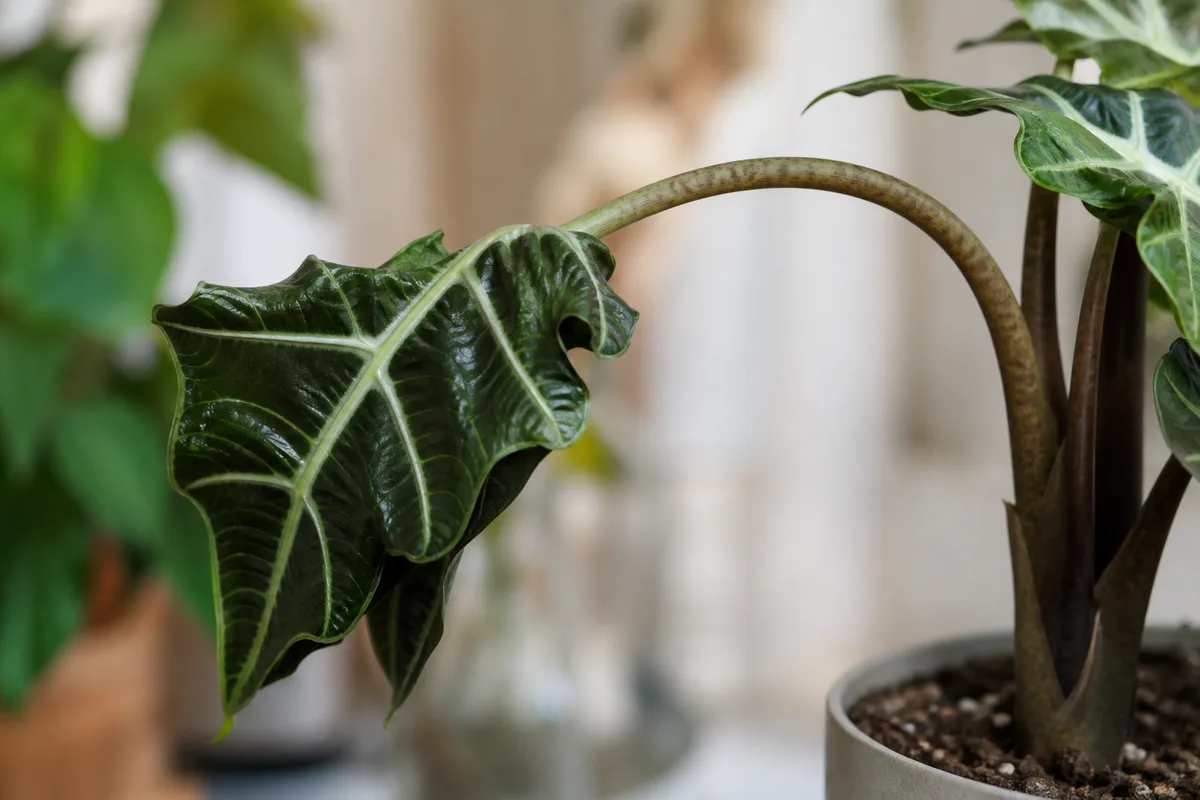
A slender petiole that has lost stiffness - the arrowhead blade hangs below its normal upright angle while tissue stays green, often the first sign before widespread yellowing.
- Single petiole sag - one leaf hangs while neighbors stay upright; often localized stress, mechanical damage, or an older leaf dying back
- Whole-plant softening - multiple petioles lose stiffness at once; usually watering, root health, or environmental shock
- Dormancy pattern - oldest leaves yellow from the tip or base, then droop and drop; corm remains firm; growth slows or stops in cool months
- Post-repot limpness - all leaves soften within days of Alocasia Amazonica repotting guide even when you watered carefully; root hairs were disturbed
The leaf blade itself may still look green during early droop. Do not wait for widespread yellowing before you diagnose-petiole angle changes first on Alocasia because each leaf is held on a single slender stalk rather than a woody branch.
Normal lookalikes: A newly unfurling leaf may hang until it hardens off-that is not stress. One lower leaf drooping while the crown pushes new growth often means natural senescence, not an emergency.
Why Alocasia Amazonica gets drooping leaves
Overwatering and corm stress
Alocasia Amazonica stores water in a fleshy corm and wants consistently moist-but not saturated-substrate during active growth. When soil stays waterlogged, roots lose oxygen and function, feeder roots die, and the plant cannot move water to petioles even though the mix feels wet. The RHS Alocasia guide warns that overwatering, especially while dormant, can cause roots to rot.
Calendar watering, oversized pots, heavy peat mixes, and cool rooms that slow evaporation all keep Amazonica roots saturated longer than this plant tolerates. Root rot and leaf spots can occur from overwatering on Alocasia species generally.
Underwatering
The same corm that rots in wet soil also shrinks when dry too long. Extended drought kills fine roots; petioles soften and leaves hang. Dry-wilt is usually faster to reverse than wet-wilt if the corm is still firm. See underwatering when the pot is lightweight and mix pulls from the edges.
Winter dormancy
Alocasias evolved in tropical forests with a seasonal slowdown. In home conditions, shorter days and cooler rooms trigger dormancy: the plant may lose some foliage while the corm rests. Drooping plus yellowing on older leaves in late fall or winter-with a firm corm-is often normal, not rot. Reduce watering to a minimum during this period; overwatering dormant corms is a common kill step.
Repot and transplant shock
Amazonica has shallow, fleshy roots that resent disturbance. Repotting, switching to a much larger pot, or burying the corm too deep can interrupt water uptake for days. Leaves droop even when moisture looks adequate because root hairs need time to re-establish.
Low humidity, drafts, and insufficient light
Alocasias prefer medium to high humidity during the growing season. Dry indoor air rarely collapses a healthy plant alone, but it accelerates underwatering stress and favors spider mites, which weaken new leaves. Cold drafts below about 10°C (50°F) damage tropical foliage; weak light slows growth so the plant drinks less predictably and wet soil persists longer.
Lookalike symptoms to rule out
| What you see | Likely cause | How to tell apart |
|---|---|---|
| Gradual petiole sag, wet cool soil | Overwatering / early rot | Wilt persists despite moisture; corm may soften |
| Limp leaves, dry lightweight pot | Underwatering | Corm firm; perk after deep soak within 1–2 days |
| Oldest leaves yellow then droop, winter | Dormancy | Corm firm; no sour smell; growth paused |
| All leaves soft 2–5 days after repot | Transplant shock | Recent pot change; corm usually still firm |
| Fine stippling, webbing, sticky residue | Pests | Insects on undersides; not fixed by watering alone |
| Sudden collapse of multiple leaves | Acute wilt | See wilting triage |
How to confirm the cause
Work through these checks in order:
- Soil moisture to the second knuckle - wet and cool at depth means stop watering; dry means soak may be appropriate
- Pot weight - heavy pot days after watering confirms slow drying; very light pot confirms drought
- Corm firmness - press gently at the soil line; firm and plump is healthy, soft or mushy is urgent
- Smell - sour or rotten odor from drainage holes suggests anaerobic soil and rot pathogens
- Leaf pattern - one old leaf vs. whole plant; yellowing order (oldest first suggests dormancy or overwatering)
- Recent care - repot within the last week, fertilizer spike, move to a cold window, or calendar watering in a dim room
- Season - October through February in the Northern Hemisphere increases dormancy likelihood
- Pest scan - stippling, webbing, or honeydew on new arrowhead leaves
If wet soil and drooping persist after the surface dries for several days, unpot and inspect roots rather than guessing. The watering guide explains corm-first checks in more detail.
First fix for Alocasia Amazonica
Match one action to what you confirmed-do not stack repotting, pruning, and fertilizer on day one.
- Wet soil + drooping leaves: Stop watering immediately. Move to Alocasia Amazonica light guide (not hot direct sun) to help the mix dry. If the corm is still firm, wait until the top 2 inches of mix are dry before the next small drink. If the corm feels soft or soil smells sour, unpot within 24–48 hours and follow the root rot protocol.
- Dry soil + firm corm: Water thoroughly until excess runs from drainage holes; empty the saucer within 30 minutes. Recheck petiole stiffness the next morning.
- Firm corm + winter slowdown + oldest leaves yellowing: Reduce watering to sparingly moist-not wet-and keep temperatures above 10°C (50°F). Do not discard the pot; wait for spring growth.
- Recent repot + firm corm: Hold off further disturbance. Keep humidity steady and light bright but indirect; avoid fertilizing until new growth appears.
This single-branch approach tells you within a week whether the problem was moisture, rot, or seasonal rest.
Step-by-step recovery by cause
Overwatering / corm stress
- Stop watering until the top 2 inches of mix dry.
- Confirm drainage holes are open and the pot is not sitting in runoff.
- If leaves keep drooping on wet mix, unpot and inspect the corm and roots-trim mushy tissue, repot into fresh chunky aroid mix, and hold water 5–7 days.
- Resume light watering only when the corm is firm and new root tips appear white.
- Full details: overwatering and root rot.
Underwatering
- Soak until water runs freely from drainage holes.
- Mist lightly or use a pebble tray if ambient humidity is below about 40%.
- Adjust rhythm per the watering guide-typically when the top 1–2 inches of mix dry during active growth.
Dormancy
- Move to a cooler, still-bright spot if possible; avoid cold drafts below 10°C (50°F).
- Reduce watering to a minimum while the corm rests.
- When a pointed growth tip emerges in spring, resume gradual watering as new leaves unfurl-early post-dormancy roots are easily overwatered.
Repot shock
- Do not repot again unless roots are rotting.
- Keep humidity moderate and light stable.
- Expect petioles to stiffen as new root hairs form over 1–3 weeks.
Recovery timeline
- Mild underwatering droop: Petioles often regain partial stiffness within 24–48 hours after a proper soak if the corm stayed firm.
- Overwatering caught early (firm corm, no mushy roots): Soil drying and stable petioles may take 5–10 days; new upright leaves in 2–4 weeks confirm recovery.
- Root rot with trimmed roots: 3–6 weeks before a new petiole emerges upright; old collapsed leaves rarely re-firm.
- Dormancy: Leaf drop may continue for several weeks in winter; spring flush is the success signal.
- Repot shock: Most plants stabilize within 1–3 weeks if the corm remains solid.
Judge progress by new growth angle and corm firmness, not by old leaves suddenly standing tall again.
What not to do
- Do not water more when soil is already wet and leaves are drooping - you accelerate corm rot.
- Do not fertilize a stressed plant - salts add stress while roots are compromised.
- Do not repot on day one unless rot is confirmed - disturbance on an already drooping Amazonica often drops additional leaves.
- Do not discard a leafless pot in winter - a firm dormant corm can resprout in spring.
- Do not mist as a substitute for fixing soil moisture - humidity helps, but soggy roots need drying, not more surface moisture.
Alocasia Amazonica care cross-check
After you stabilize drooping, confirm baseline care matches this plant’s needs:
| Factor | Target for recovery |
|---|---|
| Light | Bright indirect; avoid weak corners that slow drying |
| Water | Top 1–2 inches dry before watering in active season; minimum in dormancy |
| Humidity | Medium to high; 40%+ avoids extra petiole stress |
| Temperature | Above 16°C (60°F) in growth; never below 10°C (50°F) |
| Soil | Chunky, well-drained aroid mix; pot with drainage holes |
| Fertilizer | Hold until new clean growth after stress resolves |
See the overview and watering guide for full rhythm detail.
How to prevent drooping leaves next time
- Water by pot check, not calendar - lift the pot and feel the top 2 inches of mix.
- Cut watering sharply in fall when growth slows; dormant corms rot easily in wet soil.
- Use appropriate pot size - only 2 inches wider when repotting; oversized pots stay wet too long.
- Keep bright indirect light so the plant uses water at a predictable rate.
- Quarantine and inspect new plants - pest-weakened leaves droop before you notice mites.
- Inspect the corm when seasons change - winter is when wet-soil kills show up on Alocasia.
When to worry
Escalate immediately if:
- The corm feels soft or collapses when pressed
- Soil smells sour or roots are black and mushy
- Multiple petioles collapse within days on wet mix
- The central growth tip turns brown or mushy
Those patterns suggest advancing rot-not dormancy and not simple thirst. Start the root rot rescue path the same day.
Lower urgency: one older leaf drooping on an otherwise firm plant, or gradual winter yellowing with a solid corm and no foul odor.
Related Alocasia problems
- Wilting - sudden collapse and emergency triage
- Overwatering - wet soil patterns and drainage fixes
- Underwatering - dry-soil recovery
- Root rot - corm surgery when rot is confirmed
- Yellow leaves - color change alongside droop
- Low humidity - edge browning and mite risk
Recovery is measured by the next upright petiole, not yesterday’s collapsed leaf.
When to use this page vs other Alocasia Amazonica guides
- Alocasia Amazonica watering guide - Use for routine moisture checks before assuming drooping leaves is the main issue.
- Alocasia Amazonica problems hub - Browse all 16 common issues on this species.
- Underwatering on Alocasia Amazonica - Different entry point when symptoms overlap with drooping leaves.
- Overwatering on Alocasia Amazonica - Different entry point when symptoms overlap with drooping leaves.
- Root Rot on Alocasia Amazonica - Different entry point when symptoms overlap with drooping leaves.