Spider Mites on Alocasia Amazonica: Causes, Checks & Fixes
Quick answer
Spider mites on Alocasia Amazonica show as fine stippling and webbing on dark arrowhead leaves, often in dry winter air near a heater. First step: isolate the plant and rinse leaf undersides with lukewarm water before applying any spray.
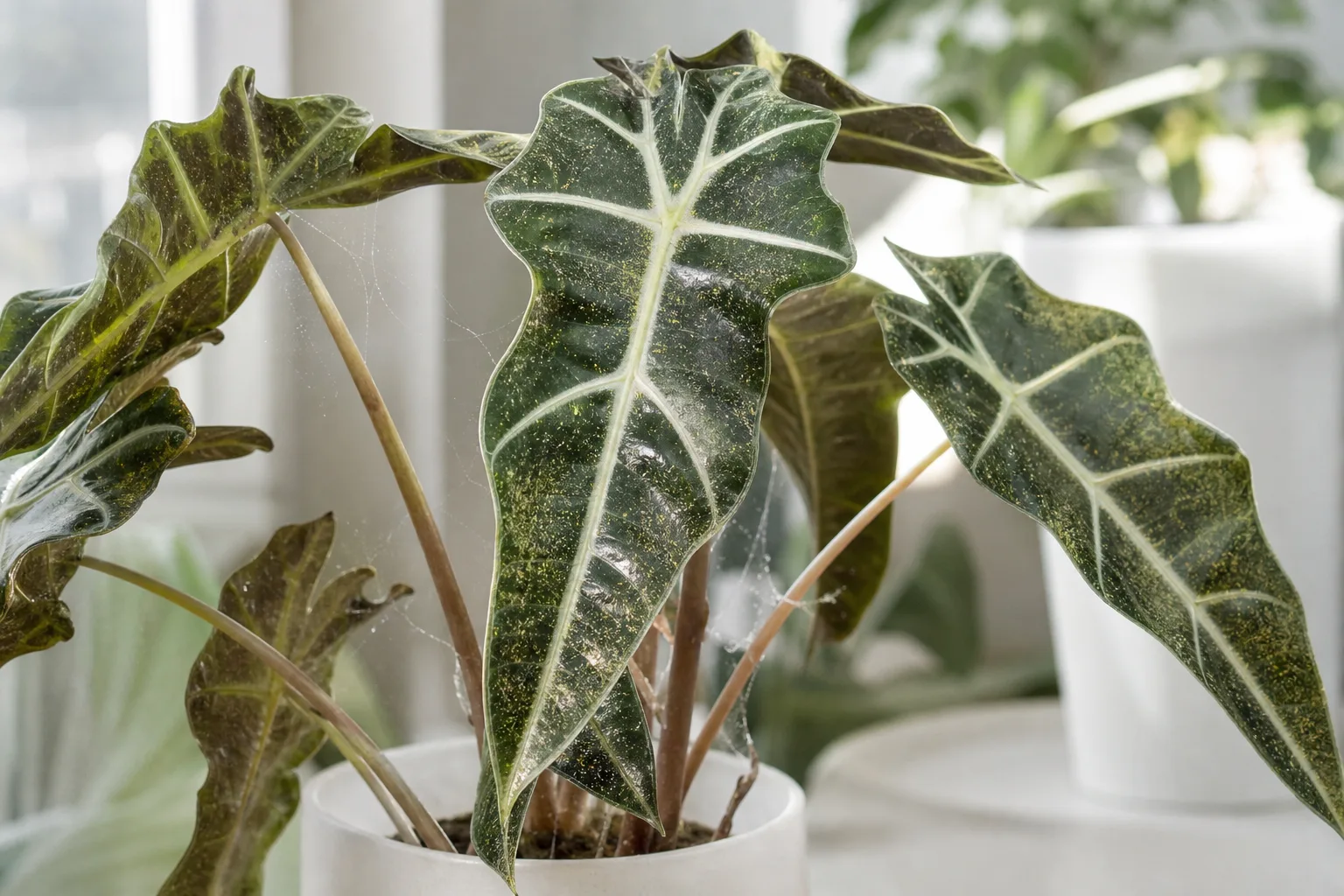
Spider Mites on Alocasia Amazonica: Causes, Checks & Fixes
This guide covers spider mites on Alocasia Amazonica. See also the general Spider Mites guide, watering, and light pages for this plant.
Spider Mites on Alocasia Amazonica: Causes, Checks & Fixes
Quick answer
Spider mites on Alocasia Amazonica (Alocasia × amazonica, African Mask plant) are tiny arachnids that feed on leaf undersides, draining chlorophyll until dark glossy arrowhead leaves show fine yellow or white stippling and, in heavier cases, delicate webbing at petiole bases. On this humidity-loving aroid, the paradox is familiar: the plant wants 60–80% humidity, but the south-window ledge above a radiator in January often sits below 30%-exactly where two-spotted spider mites thrive in warm, dry air.
First step: isolate the plant and rinse leaf undersides with lukewarm water. Move the pot away from other plants until you finish inspection and at least two weeks pass with no new stippling or webbing after treatment. Use a steady stream to wash the undersides of every arrowhead leaf, petiole base, and the crown where leaves emerge. Mites feed from below; rinsing the tops alone misses the colony.
Do not repot, fertilize, or prune heavily on day one. Stressed Alocasia Amazonica drops leaves easily; confirm live mites and knock down numbers before stacking soap sprays or oils.
What spider mites look like on Alocasia Amazonica
Two-spotted spider mites are less than 1/20 inch long-nearly invisible without magnification. They live in colonies on leaf undersides and spin fine silk webbing as they move. Damage starts as stippling: tiny pale dots where chlorophyll was removed. On Alocasia Amazonica’s dark, glossy foliage, those dots are easy to miss until leaves take on a dull bronze cast or edges crisp.
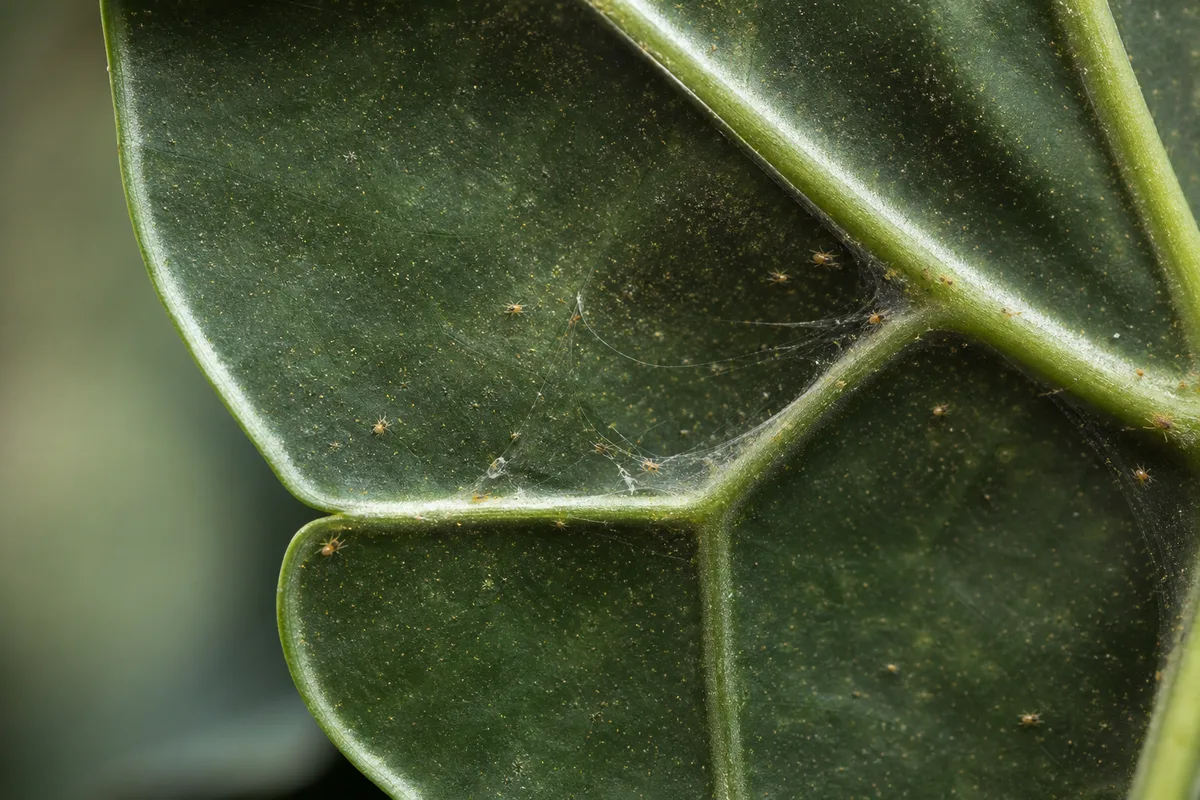
Spider Mites symptoms on Alocasia Amazonica - compare with healthy tissue on the same plant.
On this species, check these spots first:
- Leaf undersides along veins - especially lower, older arrowhead leaves where colonies start before climbing
- Petiole bases - where the leaf stalk meets the main stem; webbing often anchors here first
- The leaf crown - mites move into tight folds where new leaves emerge
- Backlit inspection - hold a suspect leaf toward a window; stippling shows as pinpricks of light through dark tissue before bronzing spreads across the surface
- Webbing - fine silk threads at leaf axils and stem joints; webbing distinguishes mites from thrips and aphids
Heavy infestations cause yellowing, leaf drop, and distorted new growth. Old stippled tissue does not green up again-judge recovery by clean leaves unfurling after treatment, not by damaged foliage suddenly darkening.
Normal lookalikes: A single yellow lower leaf during winter dormancy is not mites. Edema from overwatering on Alocasia Amazonica in cool humid conditions shows raised, blister-like bumps on leaf undersides, not flat stippling dots. Hard-water mineral crust is dry and powdery, not accompanied by webbing.
Why Alocasia Amazonica gets spider mites
Alocasia Amazonica evolved as a tropical aroid that wants steady warmth and high humidity. Indoors, it often sits in the brightest spot available-a south or west window-while forced-air heat drops ambient humidity to 20–30% in winter. That combination creates a dry microclimate at the glass even when a humidifier runs elsewhere in the room. Spider mites develop fastest under hot, dry conditions and on water-stressed plants.
Common triggers in home collections:
- Winter heating season - furnaces, radiators, and heat vents desiccate air just where Amazonica gets the most light
- Grouped plant displays - mites walk on webbing between pots on the same shelf; Alocasia is often grouped with other tropicals
- Missed early signs on dark leaves - stippling hides on black-green arrowhead tissue until bronzing is obvious
- Dormant leaf drop - when the plant sheds foliage below 60°F (15°C), mites can persist on petiole stubs and reinfest spring growth
- New plant introduction - mites hitchhike on nursery stock without quarantine
The RHS notes that low humidity on Alocasia can attract red spider mites, which thrive in dry atmospheres. This is not a sign your plant is inherently weak-it signals a gap between the humidity this hybrid prefers and the dry pocket where you placed it for light. See the low humidity guide when edge browning and stippling appear together in January.
How to confirm the cause
Work through these checks in order before treating:
- Isolate immediately - move the pot away from other plants until you finish inspection and at least two weeks pass with no new webbing after treatment
- Run the white-paper tap test - hold white paper under a suspect leaf and tap the blade; slow-moving specks confirm mites
- Inspect with magnification - a 10× hand lens reveals mites and eggs on dark Alocasia undersides the naked eye misses
- Look for webbing at petiole bases - silk threads at leaf axils point to mites; thrips leave silvery scrape marks without webbing
- Check during dormancy - if the plant is leafless, examine bare petiole stubs and the corm crown for webbing and moving specks
- Rule out edema and fungal spots - edema bumps are raised and water-soaked; fungal lesions have defined margins and often yellow halos
If you find soft pear-shaped insects with sticky honeydew on unfurling leaves, see the aphids guide. If white cottony wax fills crown folds, see mealybugs-contact treatments overlap, but the inspection path differs.
Symptom lookalike comparison
| What you see | Likely cause | How to tell apart |
|---|---|---|
| Fine pale dots on upper leaf surface | Spider mites | Tap test shows moving specks; webbing on undersides |
| Raised water-soaked bumps on undersides | Edema | No webbing; follows overwatering in cool humid air |
| Silvery streaks, no webbing | Thrips | Insects run fast when disturbed |
| Sticky shine on new growth | Aphids | Soft moving clusters on unfurling leaves |
| Yellow lower leaf only, firm corm | Dormancy | No stippling; seasonal leaf drop below 60°F (15°C) |
| Dry white crust on leaf tops | Mineral deposits | Wipes off dry; no mites on tap test |
| Brown spots with yellow halos | Fungal leaf spot | Defined lesions; no webbing or moving specks |
Multiple yellow leaves with wet soil point to overwatering or root stress, not mites-confirm insects before treating.
First fix for Alocasia Amazonica
Isolate the plant and rinse leaf undersides with lukewarm water.
Take the pot to a sink, shower, or outdoor hose (weather permitting) and spray leaf undersides with a forceful stream of water until running water carries mites away. Tilt each arrowhead leaf to expose the underside; work from lower leaves up toward the crown. Use enough pressure to dislodge colonies but not so much that you tear soft new growth.
Rinse technique without soaking the corm crown: Alocasia Amazonica stores energy in an underground corm. Direct a steady stream at leaf undersides and petioles, not straight down into the crown center for prolonged soaking-especially during winter dormancy when the plant carries fewer leaves and wet crowns invite rot. Let the plant drain fully before returning it to bright indirect light, not hot direct sun while foliage is wet.
This single step tells you whether you are dealing with a light colony on one or two leaves or webbing throughout the crown. Do not reach for sprays until rinsing is complete and you have confirmed live mites.
Step-by-step recovery
Once rinsing is done, continue in this order based on what you find:
- Apply insecticidal soap or horticultural oil if live mites remain - use a product labeled for houseplants and mites, not homemade dish soap, which can burn plants. Coat undersides of every leaf and petiole base until runoff; contact sprays only kill mites they touch.
- Repeat every three to five days for at least two weeks - mite eggs hatch on a cycle one spray rarely catches; plan on two to three applications minimum, continuing until two consecutive inspections show no live mites or new webbing.
- Test oil on one leaf first - narrow-range horticultural oil smothers mites on contact but can burn foliage in hot direct sun; test a small area and avoid treating heat-stressed leaves in afternoon window light.
- Raise local humidity after foliage dries - a humidifier near the plant supports recovery without leaving leaves wet overnight; target 50–60% minimum, with 60–80% ideal during active growth per the main care guide.
- Hold fertilizer - skip feeding until new growth emerges clean for at least two weeks. Stressed Alocasia Amazonica does not need nitrogen while fighting sap loss.
- Monitor the collection - check neighboring plants twice weekly for three weeks. Mites spread on webbing before stippling shows on every pot.
- Inspect through dormancy - if leaves yellow and drop in cool months, continue checking bare petiole stubs and adjacent pots; mites do not pause when the plant looks dormant.
Neem oil can supplement soap on stubborn colonies, but the same contact-and-repeat rules apply. On Amazonica’s glossy dark arrowhead blades, neem can leave a dull film that takes several rinses to clear; horticultural oil smothers on contact without that residue but carries higher burn risk in hot window light. Test either product on one lower leaf and wait 48 hours before treating the whole plant.
General insecticides labeled for insects often fail against mites-choose products specifically labeled for spider mites or use soap and oil.
For enclosed plant shelves or cabinet setups where soap sprays are hard to repeat, predatory mites such as Phytoseiulus persimilis can supplement contact treatments-release them only after rinsing and avoid systemic insecticides for at least two weeks, since those chemicals kill beneficial predators too.
Gloves, toxicity, and pet safety during treatment
Alocasia Amazonica contains calcium oxalate crystals that irritate skin and are toxic if chewed. Wear gloves when rinsing or spraying large leaves if sap contacts your hands. Keep treated plants out of reach of cats and dogs until foliage is dry, and call your veterinarian or ASPCA Animal Poison Control at (888) 426-4435 if a pet ingests any plant tissue.
Recovery timeline
Light infestations caught on one or two lower leaves often clear within one to two weeks of rinsing plus two or three soap or oil applications. You should see fewer live mites within days and no new webbing within a week if coverage was thorough.
Moderate infestations involving multiple arrowhead leaves or crown webbing typically need three to four treatment cycles at three- to five-day intervals before the plant is truly clear. Judge success by clean new leaves unfurling without fresh stippling-not by old bronzed foliage greening up.
If populations rebound after three consistent treatment cycles, look for a hidden reservoir: a second infested plant nearby, mites on petiole stubs during dormancy, or dry heat from a vent keeping local humidity too low. That pattern needs isolation of all affected pots and tighter repeat intervals-not a single rinse alone.
Mistakes to avoid
- Spraying soap before rinsing - you waste product on loose mites that water would have removed
- Using homemade dish soap - leaf burn on Alocasia Amazonica is common; use labeled insecticidal soap
- Treating in direct sun - wet leaves in hot window light scorch easily; treat in indirect light and let dry
- Stopping after one application - contact sprays miss eggs that hatch within days
- Soaking the corm crown during rinse - prolonged water in the crown center risks rot, especially on leafless dormant plants
- Applying horticultural oil to sun-stressed leaves - phytotoxicity shows as pale patches that mimic pest damage
- Using general insecticides for mites - most insect sprays do not control spider mites; use labeled miticides, soap, or oil
- Fertilizing to “help recovery” - nitrogen pushes soft new growth while the plant is still clearing mites
- Returning the plant to the group too soon - two weeks with zero live mites and no new webbing is a safer minimum
How to prevent spider mites next time
- Quarantine new plants for at least two weeks before placing them near your Alocasia
- Inspect weekly during heating season - check petiole bases and leaf undersides, not just the glossy tops visible during casual watering
- Run a humidifier in the room or near the plant when furnace heat drops RH below 50%
- Keep pots off radiator ledges - move the plant a foot back from glass or redirect vent airflow
- Rinse foliage occasionally during watering to knock off early colonists before they reproduce
- Inspect dormant plants - bare petiole stubs and the corm crown still need checks when foliage is gone
- Review the main care guide when winter edge browning appears-low humidity and mites often arrive together
Early detection matters because stippling on dark arrowhead leaves stays invisible until bronzing spreads. A ten-second backlit check of one lower leaf during each watering catches most home infestations before webbing covers the crown.
When to worry
Escalate treatment if webbing spreads across multiple leaves within days, stippling reaches new unfurling growth, or neighboring tropicals on the same shelf show pale dots. Those patterns mean an established colony, not a recent hitchhiker.
If the corm crown softens, smells sour, or turns mushy after repeated rinses, stop soaking the crown and start the root rot rescue path the same day-wet crowns on leafless dormant plants are a common secondary risk when mite rinses pool in the center.
Consider discarding severely infested plants only when most new growth stays stippled despite four or more treatment cycles at proper intervals, the corm feels soft, and mites return immediately after rinsing. Alocasia Amazonica can recover from heavy leaf loss if the root system and crown stay firm-but a plant that never produces clean new leaves despite consistent isolation and contact sprays is often costing you neighboring pots.
For chronic infestations that survive four or more soap and oil cycles at three- to five-day intervals, contact your local cooperative extension office before escalating to miticides-extension agents can confirm whether you are dealing with two-spotted spider mites, broad mites, or russet mites, which require different products. If chemical escalation is warranted, miticide applications at five- to seven-day intervals may be needed-choose products labeled for indoor ornamentals and spider mites.
For most indoor collections, isolation, thorough rinsing, and repeated contact sprays resolve spider mites without systemic chemicals. Recovery is measured by the next unfurling arrowhead leaf, not yesterday’s bronzed one.
Related Alocasia Amazonica problems
- Alocasia Amazonica overview - light, humidity, dormancy, and baseline care context
- Low humidity - edge browning and dry-air mite flare-ups that often arrive together in winter
- Root rot - crown softness or sour smell after repeated rinses on leafless plants
- Aphids - sticky honeydew on unfurling leaves, no webbing
- Mealybugs - white cottony wax in crown folds, not stippling dots
- Watering guide - wet-soil yellowing vs. mite stippling on dry, stressed foliage
- Light guide - bright-window placement that creates the dry microclimate mites favor
When to use this page vs other Alocasia Amazonica guides
- Alocasia Amazonica watering guide - Use for routine moisture checks before assuming spider mites is the main issue.
- Alocasia Amazonica problems hub - Browse all 16 common issues on this species.
- Low Humidity on Alocasia Amazonica - Different entry point when symptoms overlap with spider mites.
- Slow Growth on Alocasia Amazonica - Different entry point when symptoms overlap with spider mites.