Mealybugs on Alocasia Amazonica: Causes, Checks & Fixes
Quick answer
Mealybugs on Alocasia Amazonica hide in leaf axils and the tight crown center. First step: isolate the plant and dab visible insects with 70% isopropyl alcohol on a cotton swab, then repeat weekly for at least three weeks.
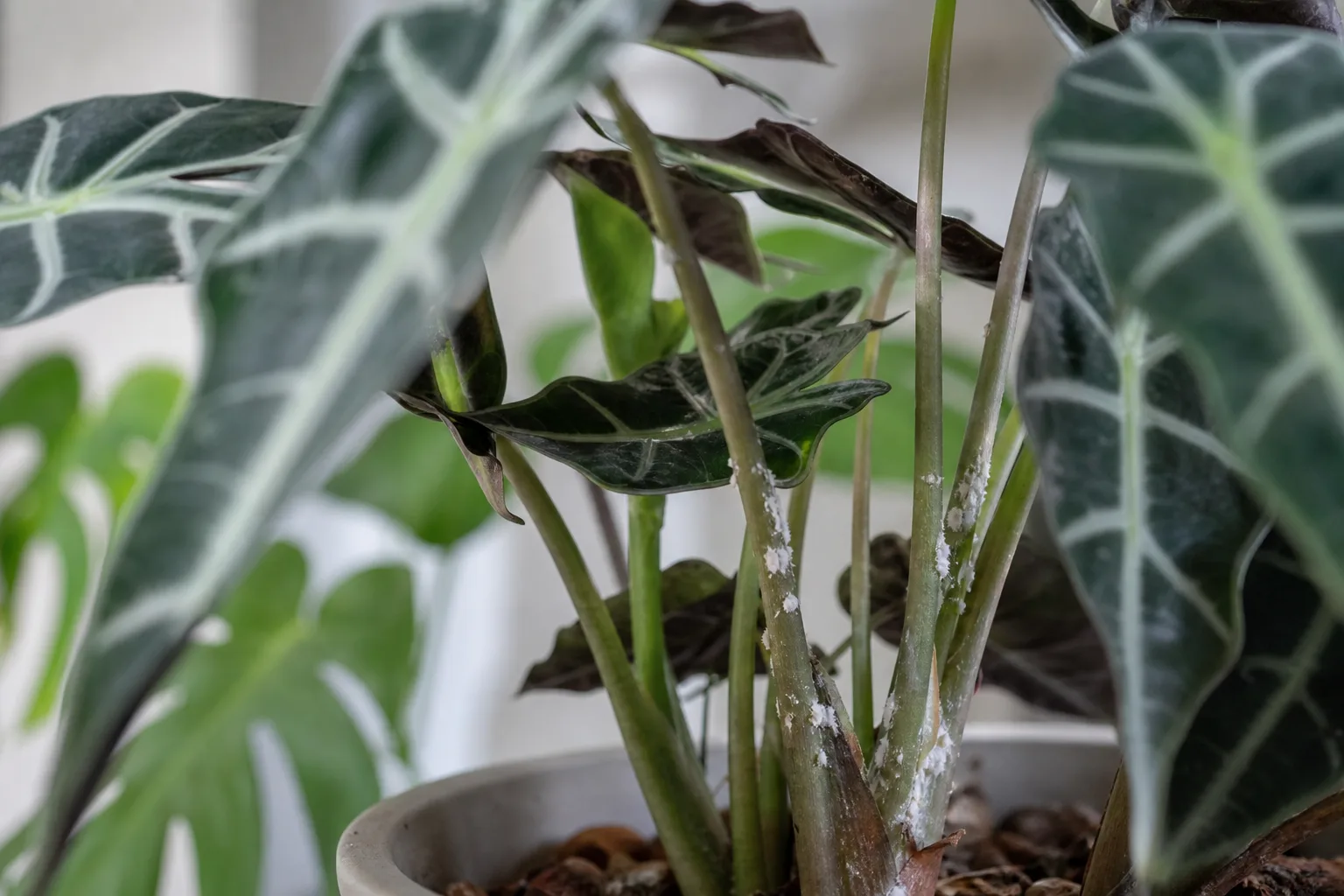
Mealybugs on Alocasia Amazonica: Causes, Checks & Fixes
This guide covers mealybugs on Alocasia Amazonica. See also the general Mealybugs guide, watering, and light pages for this plant.
Mealybugs on Alocasia Amazonica: Causes, Checks & Fixes
Quick answer
Mealybugs on Alocasia Amazonica (Alocasia × amazonica, African Mask plant) are sap-sucking insects that colonize the sheltered folds your plant creates fastest-tight leaf axils, petiole bases, and the rolled center where new arrowhead leaves emerge. On this species, the first visible clue is often white cottony wax tucked into the crown, not on the glossy leaf surface where you look during casual watering.
First step: isolate the plant and dab every visible insect with alcohol. Move the pot away from other plants until you finish inspection and at least two weeks pass with no new colonies after treatment. Use a cotton swab dipped in 70% isopropyl alcohol to coat individual mealybugs in the crown and along petioles. Alcohol only works on contact, so you must reach insects directly-not spray the air around the plant.
Do not repot, fertilize, or prune heavily on day one. Stressed Alocasia Amazonica drops leaves easily; focus on confirming live insects and removing them before stacking soap sprays or systemic products.
Scope on this site: This page owns mealybug ID and removal on Alocasia Amazonica. For stippling and webbing instead of cottony wax, see spider mites. For pear-shaped insects on new growth, see aphids. For white wax at the soil line after foliage clears, follow the root rot repot protocol.
Crown treatment snapshot (March 2026)
A 14 cm Alocasia ‘Polly’ on a shared tropical shelf developed cottony clusters in two crown axils and one petiole base by mid-March. After three weekly passes-alcohol dab on each wax tuft, one insecticidal soap application fanning open overlapping leaves, honeydew wiped from the pot rim-the first new arrowhead leaf unfurled clean at day 22. One older lower leaf with sooty honeydew stain never re-greened and was cut at the base. The pot stayed isolated until day 28 with zero live insects on twice-weekly checks.
Natural fuzz vs. mealybugs on Alocasia Amazonica
Many Alocasia cultivars-including Alocasia × amazonica and dwarf forms like ‘Polly’ and ‘Bambino’-carry even, pale fuzz on petiole bases. That texture is part of the plant, not a pest. It sits in a uniform band where the leaf stalk meets the stem, feels dry to the touch, and does not produce sticky residue.
Mealybugs look different:
- Irregular cottony clumps in leaf axils, crown folds, and stem nodes-not an even petiole ring
- Sticky honeydew on nearby leaves, pot rims, or saucers
- Slow movement when you prod the cluster with a swab
- Pink or orange smear when crushed with alcohol (see confirmation below)
On dwarf Polly and Bambino, crown leaves overlap more tightly than on full-size Amazonica-wax can hide in smaller folds, so use side lighting and a hand lens at the center before you treat the whole plant.
When comparing photos or live plants, shoot the crown axil from the side (mealybugs) and the petiole base ring from below (natural fuzz). Honeydew on the pot rim is a pest signal natural fuzz never produces.
What mealybugs look like on Alocasia Amazonica
Mealybugs are soft-bodied insects covered with white, powdery or cottony wax, usually about 3/16 inch long. They feed in dense clusters rather than scattering across the whole plant. Females lay eggs inside waxy sacs; newly hatched crawlers move briefly before settling in a new fold-often how infestations jump to neighboring pots.
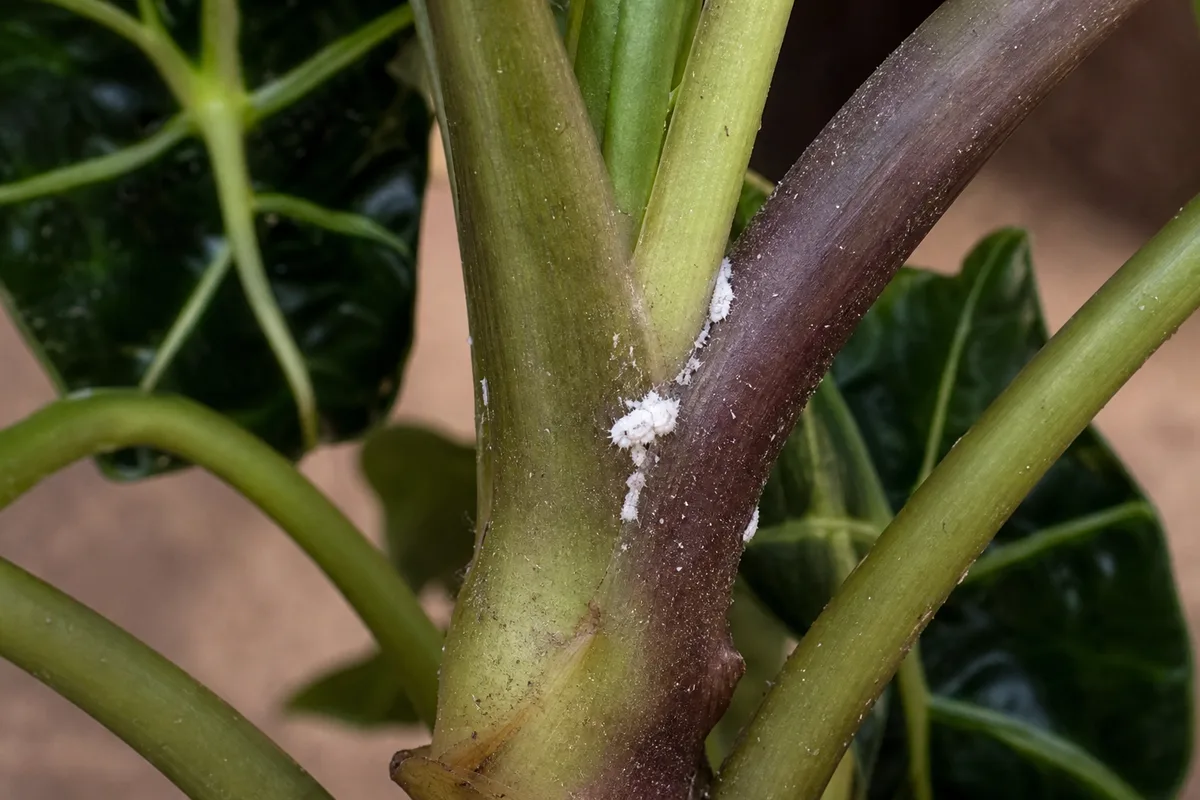
Mealybugs symptoms on Alocasia Amazonica - compare with healthy tissue on the same plant.
On Alocasia Amazonica, check these spots first:
- The leaf crown - where a new arrowhead leaf is still folded; wax hides in the tight roll where sprays miss
- Petiole bases - where the leaf stalk meets the main stem; the angle gives cover and sap is rich here
- Leaf undersides along veins - especially on lower, older leaves that stay close to the soil
- Stem nodes - small white tufts where side shoots or spent petioles were removed
- Honeydew - a sticky, shiny film on leaves or the pot rim that may later turn black with sooty mold
Damage follows feeding pressure. Mild colonies may only slow one new leaf. Heavier infestations cause yellowing, leaf drop, and stunted unfurling. Wax and cast skins can look like dust until you look with magnification.
Normal lookalikes: Evenly distributed pale fuzz on petiole bases is natural on many Alocasia cultivars-not mealybugs. Mineral crust from hard water is dry and powdery, not sticky. A single yellow lower leaf during winter dormancy is not pests-confirm insects before treating.
Why Alocasia Amazonica gets mealybugs
Alocasia Amazonica keeps a tight rosette of upright arrowhead leaves. That architecture gives mealybugs protected feeding sites that stay humid and hidden longer than on open-canopy plants like a fiddle-leaf fig. When spring growth pushes soft new leaves, crawlers have fresh tissue to colonize before you notice wax in the crown.
Common triggers in home collections:
- New plant introduction - mealybugs hitchhike on nursery stock, shared humidifier trays, or plants moved indoors from patios without quarantine
- Soft, nitrogen-rich growth - heavy fertilizer during active growth produces lush shoots that attract sap feeders; UC IPM notes excess nitrogen with regular watering stimulates egg laying
- Indoor conditions without predators - lady beetles and parasitic wasps that control mealybugs outdoors rarely reach houseplant collections
- Grouped tropical displays - Alocasia Amazonica is often shelved with philodendrons, ferns, and palms; crawlers walk between pots in the same humid corner
- Warm, steady humidity - the 60–80% range this plant prefers also suits mealybugs year-round indoors
This plant is not weak by nature, but its crown folds prolong reinfestation: one missed egg sac in the center can repopulate the whole plant within about two months as crawlers hatch and settle.
How to confirm the cause
Work through these checks in order before treating:
- Isolate immediately - move the pot away from other plants until you finish inspection and at least two weeks pass with no new wax after treatment
- Inspect with magnification - a 10× hand lens reveals white bodies and waxy filaments in dark Alocasia foliage the naked eye misses
- Run the alcohol swab test - dab a suspect tuft with alcohol; mealybug bodies often turn light brown when treated, while mineral deposits and natural fuzz do not
- Test for honeydew - sticky residue on the leaf or saucer confirms sap feeders; dry crusts point elsewhere
- Disturb the cluster - mealybugs move slowly when prodded; thrips run quickly and spider mites are nearly invisible without stippling
- Check neighbors - examine plants on the same shelf; mealybugs spread before symptoms show on every pot
If leaves show fine webbing and bronze stippling instead of cottony wax, see the spider mite guide. If you find soft pear-shaped insects on unfurling leaves with heavy honeydew, see aphids-contact treatments overlap, but the inspection path differs.
Symptom lookalike comparison
| What you see | Likely cause | How to tell apart | Urgency |
|---|---|---|---|
| White cottony tufts in leaf axils | Mealybugs | Smears brown/pink when crushed with alcohol; sticky honeydew nearby | Treat this week |
| Even pale fuzz on petiole bases | Natural Alocasia texture | Uniform coverage; no honeydew; alcohol does not smear | No treatment |
| Hard brown or tan bumps on stems | Scale | Immobile shells; no legs or wax filaments visible | Treat within days |
| Dry white powder on leaf tops | Mineral deposits from hard water | Wipes off dry; not clustered in axils | Not pests |
| Gray-white film on leaf surfaces | Powdery mildew | Flat fungal coating; not raised cottony bodies | See mildew care |
| Fine stippling + webbing | Spider mites | Tap test over white paper; mites move as specks | Treat within days |
Yellow lower leaves alone during cool months often reflect dormancy or overwatering, not pests-confirm live insects before treating.
First fix for Alocasia Amazonica
Isolate the plant and dab mealybugs with 70% isopropyl alcohol on a cotton swab.
Work in good light at the sink or on a tray you can wash afterward. Dip a fresh swab in alcohol and coat each visible insect until the wax dissolves. Target petiole bases, crown folds, and stem nodes where leaves meet the main stalk. Replace swabs as they load with wax-reusing a dirty swab spreads crawlers.
Before treating the whole plant, test alcohol on one petiole or leaf edge and wait 24 hours. Alocasia Amazonica foliage can show phytotoxicity in hot direct sun or on already stressed leaves. Treat in bright indirect light, not a hot window.
This single step tells you whether you are dealing with a light hitchhiker colony or wax buried deep in curled crown leaves. Do not reach for sprays until you have touched every cluster you can see.
Step-by-step recovery
Once isolation and alcohol dabs are underway, continue in this order based on what you find:
- Manual removal on small colonies - repeat alcohol dabs every five to seven days. Contact treatments only kill insects they touch; eggs and crawlers hatch on a cycle one pass rarely catches. Plan on three to four weekly rounds minimum.
- Apply insecticidal soap if live mealybugs remain - use a product labeled for houseplants, not homemade dish soap, which can burn plants. Coat petiole bases, crown folds, and leaf undersides until runoff; soap has no residual effect.
- Work the crown systematically - gently fan open overlapping leaves with one hand while you wet axils with the other. Mealybugs hide where unfurling arrowhead leaves overlap; missing the center is the most common reason treatments fail.
- Prune only when necessary - if a leaf is tightly wrapped around a dense colony alcohol cannot reach, cut that petiole at the base rather than repeatedly soaking the crown.
- Hold fertilizer - skip feeding until new growth emerges clean for at least two weeks. Soft nitrogen-rich shoots feed the next wave; see the fertilizer guide for when to resume.
- Monitor the collection - check neighboring plants twice weekly for three weeks. Mealybugs spread before wax shows on every pot.
- Address ants if present - ants feed on honeydew and protect mealybugs from predators; sticky barriers around pot feet reduce ant access.
Neem oil or narrow-range horticultural oil can supplement soap on stubborn colonies, but test a small leaf area first and avoid applying in hot, direct sun or to wilted plants. Oils smother insects on contact, same as soap-and soft unfurling Alocasia leaves burn more easily than mature foliage.
Dormancy-season treatment notes
When Alocasia Amazonica drops lower leaves in cool months, fewer panels remain to treat-work slowly on the crown and surviving petioles. Pests do not pause during dormancy. Use lighter alcohol dabs and one soap pass at most per week; a stressed plant with three leaves tolerates less chemical load than a summer flush.
Recovery timeline
Light infestations caught in one or two crown axils often clear within one to two weeks of consistent alcohol dabs plus one soap application if needed. You should see fewer live insects within days and no new honeydew within a week if coverage was thorough.
Moderate infestations involving multiple petioles or hidden crown wax typically need three to four weekly treatments before the plant is truly clear. Judge success by clean new leaves unfurling without fresh wax, not by old yellow foliage suddenly greening-those leaves rarely recover fully.
If populations rebound after three consistent treatment cycles, look for a hidden reservoir: a second infested plant nearby, wax inside leaves too curled to wet, or root-feeding mealybugs below the soil line. That pattern may need same-day unpot and root rinse per the root rot rescue protocol-not more surface dabs alone.
Mistakes to avoid
- Spraying soap before manual removal - you waste product on insects alcohol would have killed on contact
- Using homemade dish soap - leaf burn on Alocasia Amazonica is common; use labeled insecticidal soap
- Treating in direct sun - wet leaves in hot window light scorch easily; treat in indirect light and let dry
- Stopping after one application - contact sprays miss eggs and crawlers that hatch within days
- Fertilizing to “help recovery” - soft new growth from nitrogen feeds the next mealybug wave
- Returning the plant to the group too soon - two weeks with zero live insects is a safer minimum
- Composting infested prunings indoors - crawlers can survive on cut petioles and spread to other pots
- Applying alcohol to open wounds or sun-stressed leaves - phytotoxicity shows as pale patches that mimic pest damage
Alocasia Amazonica contains calcium oxalate crystals and is toxic if chewed. Wear gloves when wiping large numbers of insects if sap gets on your skin, and keep the plant out of reach of pets during treatment. Contact your veterinarian or ASPCA Animal Poison Control if a pet ingests treated foliage.
How to prevent mealybugs next time
- Quarantine new plants for at least two weeks before placing them near your Alocasia
- Inspect weekly during spring and summer growth-check the crown and petiole bases, not just the leaf tops
- Inspect after nursery purchases and plant swaps - mealybugs are common on tropical foliage in humid retail displays
- Space pots on shared shelves so crawlers cannot walk between plants unnoticed; wipe saucers when you rotate pots
- Avoid excess nitrogen - steady growth is healthier than soft, pest-friendly flushes
- Review the main care guide when adding new Alocasia to your collection-consistent baseline care makes pest signals easier to spot
Early detection matters because mealybugs inside crown folds are hard to reach once wax accumulates. A ten-second check of the center during each watering catches most home infestations before honeydew spreads to neighboring leaves.
When to worry
Escalate treatment if you see sooty mold covering large leaf areas, multiple plants in the same room showing white wax or sticky residue, or wax returning within days after four or more weekly treatment cycles. Those patterns mean the infestation is established or hidden in roots-not a recent hitchhiker.
When white wax clusters ring the soil line or populations rebound after thorough foliage treatment, unpot the same day and inspect roots for ground mealybugs. Follow the numbered trim-and-repot steps on the root rot guide-rinse roots, discard old mix, and repot into fresh chunky aroid mix before returning to contact sprays on foliage alone.
Consider discarding severely infested plants only when most new growth stays coated in wax despite consistent care, the corm feels soft, and insects return after repotting and root inspection. Alocasia Amazonica can recover from heavy leaf loss if the root system and crown stay firm-but a plant that never produces clean new leaves despite isolation and repeated contact sprays is often costing you neighboring pots.
For chronic crown colonies unreachable by alcohol or soap, systemic options such as imidacloprid plant spikes exist for houseplants, but UMD Extension notes systemic products as an option when contact sprays fail and UC IPM reports they are less reliable against mealybugs than other sap feeders. Avoid systemics on plants you plan to move outdoors during pollinator season. For most indoor collections, isolation, thorough alcohol dabs, and repeated contact sprays resolve mealybugs without systemic chemicals. Recovery is measured by the next unfurling leaf, not yesterday’s damaged one.
If infestations repeat across seasons despite quarantine, contact your local cooperative extension office for identification help-long-tailed mealybug (Pseudococcus longispinus) gives birth to live crawlers and needs different monitoring than citrus mealybug egg sacs.
Related Alocasia Amazonica problems
- Overview - African Mask culture, toxicity, and seasonal care hub
- Spider mites - stippling and webbing lookalike in dry winter air
- Aphids - pear-shaped insects on new growth with honeydew
- Root rot - numbered unpot protocol when root mealybugs or wet stress overlap
- Overwatering - yellow lower leaves without wax
- Yellow leaves - dormancy vs. pest damage patterns
- Fungus gnats - tiny flies from wet soil, not crown wax
- Watering · Light · Fertilizer · Repotting - baseline care during recovery
FAQs
Is the white fuzz on my Alocasia natural or mealybugs?
Natural fuzz on African Mask petiole bases is evenly distributed and does not smear when crushed with alcohol. Mealybugs form irregular cottony clumps in leaf axils, move when disturbed, and leave sticky honeydew on nearby leaves or the pot rim. If the white material reappears in the same axil within days after wiping, treat as mealybugs.
What should I check first for mealybugs on Alocasia Amazonica?
Inspect the crown center and petiole bases with a 10× hand lens before treating the whole plant. Mealybugs shelter where unfurling arrowhead leaves overlap, so start at the newest growth and work outward along each stem. Also check the soil line for root mealybugs if honeydew appears without obvious crown wax.
Will damaged Alocasia Amazonica leaves recover from mealybugs?
Leaves with heavy yellowing or sap loss usually stay marked even after insects are gone. Recovery shows up in the next clean leaves once the crown is clear and the plant is not under additional water or light stress. Judge success by the next unfurling arrowhead leaf, not by older blemished panels.
Can I treat mealybugs during Alocasia winter dormancy?
Yes-pests do not pause when lower leaves yellow in cool months. Isolate and treat anyway, but expect slower new growth and avoid heavy soap or alcohol on the few remaining leaves; test one petiole first. Hold fertilizer until spring growth resumes clean.
How do I prevent mealybugs on Alocasia Amazonica next time?
Quarantine new plants for two weeks, inspect crown folds during each watering, and avoid heavy nitrogen feeding that pushes soft shoots pests prefer. Space pots on shared shelves and wipe saucers when rotating plants so crawlers cannot walk between containers unnoticed.
When to use this page vs other Alocasia Amazonica guides
- Alocasia Amazonica watering guide - Use for routine moisture checks before assuming mealybugs is the main issue.
- Alocasia Amazonica problems hub - Browse all 16 common issues on this species.
- Yellow Leaves on Alocasia Amazonica - Different entry point when symptoms overlap with mealybugs.
- Slow Growth on Alocasia Amazonica - Different entry point when symptoms overlap with mealybugs.
- Spider Mites on Alocasia Amazonica - Different entry point when symptoms overlap with mealybugs.