Slow Growth on Alocasia Amazonica: Causes, Checks & Fixes
Quick answer
Slow growth on Alocasia Amazonica is often normal winter dormancy-if the underground corm is firm and leafless, wait and reduce watering. During warm active growth, weak light, cool air below 60°F (15°C), low humidity, or spider mites are the usual brakes. First step: check season and squeeze the corm through the soil before you repot, fertilize, or add water.
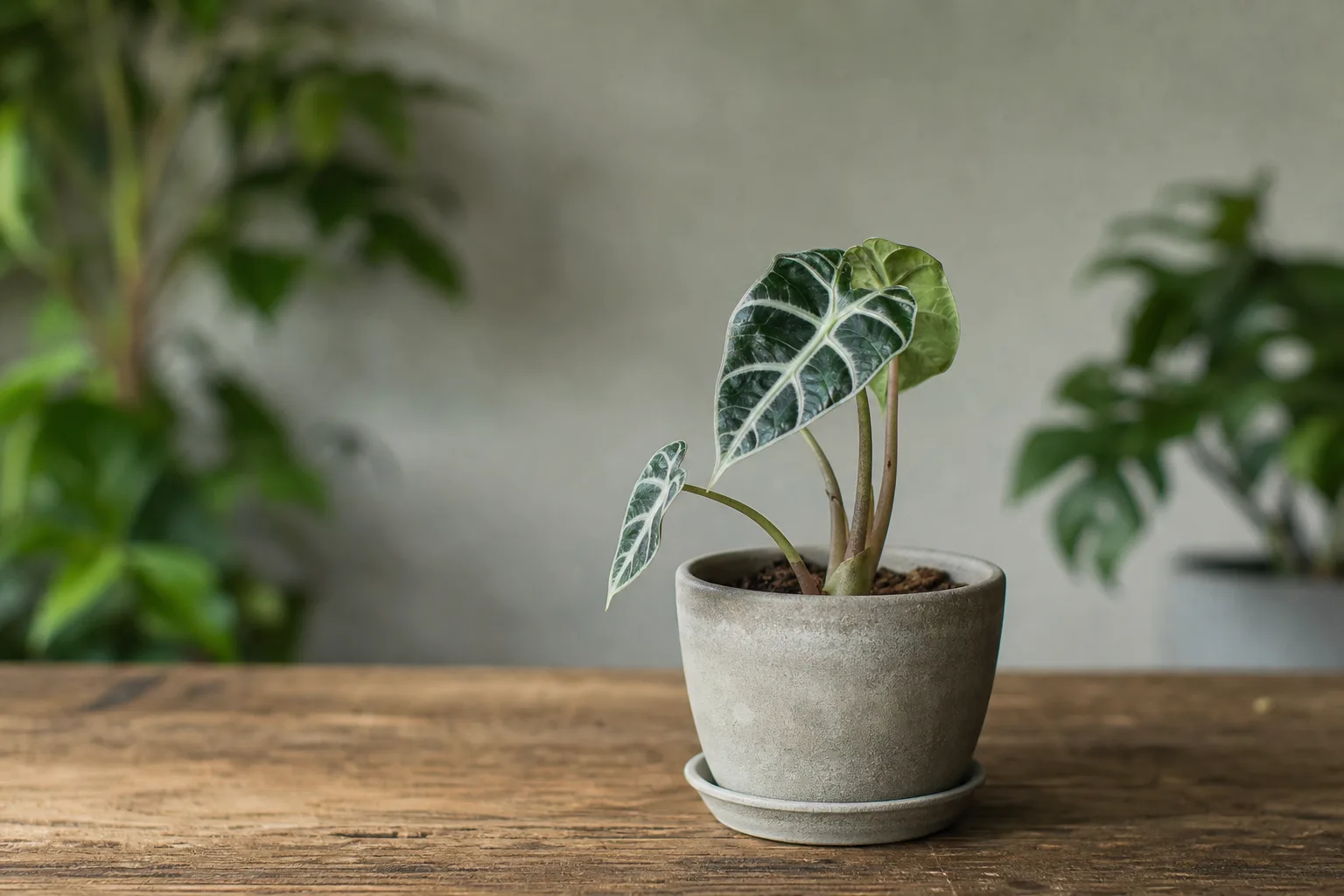
Slow Growth on Alocasia Amazonica: Causes, Checks & Fixes
This guide covers slow growth on Alocasia Amazonica. See also the general Slow Growth guide, watering, and light pages for this plant.
Slow Growth on Alocasia Amazonica: Causes, Checks & Fixes
Quick answer
Slow growth on Alocasia Amazonica (Alocasia × amazonica, including the compact ‘Polly’ sold as African mask plant) is not always a problem. This hybrid grows from an underground corm and naturally pauses-or drops all leaves-when shorter days, cooler rooms, and dry winter air signal rest. Concern starts when warm spring and summer return and you still see no new leaves, no petiole extension, and no spring flush for weeks despite firm corm tissue.
First step: note the season, then gently squeeze the corm through the soil surface. If it is firm and neutral-smelling with bare soil in winter, treat slow growth as likely dormancy-reduce watering and wait. If temperatures are warm, the corm is firm, and growth still stalls, check light intensity and leaf undersides for spider mites before you repot, fertilize, or soak the pot.
For full care context, see the Alocasia Amazonica overview on dormancy rhythm, corm biology, and seasonal watering.
What slow growth looks like on Alocasia Amazonica
On this aroid, “slow” means judging new leaf frequency, leaf size, petiole length, and season together-not comparing it to fast growers like pothos.
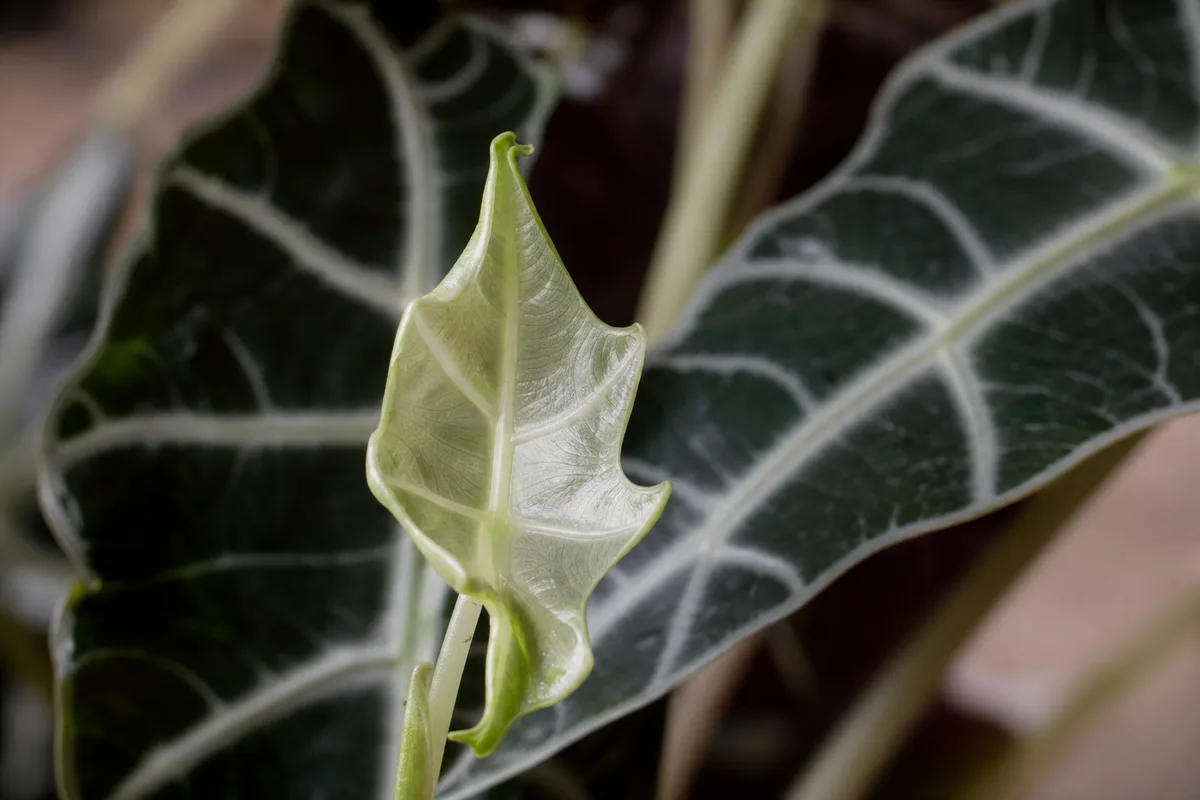
Slow Growth symptoms on Alocasia Amazonica - compare with healthy tissue on the same plant.
Typical slow-growth patterns:
- No new leaves for weeks during warm spring or summer while older leaves stay green but static
- Each new leaf smaller than the last, with faded silvery veining-often the first sign of insufficient light before petioles stretch
- Long, thin petioles holding small blades in a dim corner-growth is happening, but weakly (overlap with leggy growth)
- Leaves that unfurl slowly, stay small, or abort in dry winter air or when spider mites stipple tender new tissue
- A leafless pot for one to three months in winter while the corm stays underground-looks dead but may be normal dormancy
Normal slow periods you should not panic over:
- Winter dormancy-the plant may drop all foliage and live off the corm when temperatures fall below about 60°F (15°C) and daylight shortens; the RHS notes alocasias need a cooler, drier winter rest and may lose foliage without harm
- Single old leaf yellowing and dying as one new leaf opens-normal nutrient cycling on a corm-based plant
- Two to four weeks after Alocasia Amazonica repotting guide-root disturbance pauses top growth even when care is correct
- First two to three weeks after a window move-the plant adjusts before pushing the next flush
Compare firm versus soft corm every time. Slow growth with a soft, yielding, or sour-smelling corm and wet soil is rot-not patience. Slow growth with a firm corm and appropriate season is often dormancy or a fixable cultural limit.
Why Alocasia Amazonica gets slow growth
Alocasia × amazonica is a hybrid with large, rhizomatous, corm-bearing growth bred for dramatic foliage, not steady year-round production like many foliage houseplants. It pushes leaves in spring and summer flushes, then conserves energy in the corm when conditions fall short.
Winter dormancy and corm retreat (most common in cold months)
When indoor temperatures drop below 60°F (15°C) and light weakens, the plant pulls nutrients from leaves back into the corm and may drop all above-ground growth. This looks alarming but is a normal conservation strategy. overwatering on Alocasia Amazonica a leafless dormant corm is the fastest way to turn rest into rot-see the watering guide for winter dry-down.
Insufficient bright indirect light
Alocasias grow best in bright but indirect light; they survive lower light but growth slows markedly. On Amazonica, weak light shows up as smaller new blades, longer petioles, and faded white veining before the plant retreats toward dormancy. A spot that looks bright to your eyes may still fall below what this hybrid needs for weekly summer leaf production-details in the light guide.
Cool temperatures and drafts
NC State Extension recommends air temperatures not drop below 60°F for this hybrid. Sustained cool near drafty windows, exterior doors, or AC vents stalls metabolic activity and triggers leaf drop even when watering is correct.
Low humidity slowing leaf expansion
The RHS links low humidity to browning leaf edges and red spider mites, which thrive in dry indoor heat. New leaves may struggle to unfurl or stay small when ambient humidity sits well below 50% for weeks-see low humidity for the full pattern.
Root stress from overwatering or dense soil
Thick aroid roots and the corm rot quickly in soggy, oxygen-poor mix. Early root damage limits uptake before leaves yellow dramatically, so growth stalls while the plant still looks mostly green. Heavy peat-based indoor mix without bark or perlite keeps the root zone wet too long-see root rot if the corm softens.
Spider mites stunting new growth
NC State Extension lists spider mites among problems to monitor on this plant. Spider mites prefer warm, dry environments and cause stippling that weakens new leaves before webbing is obvious. Alocasia Amazonica in winter near heating vents is a common setup for mite-stunted flushes-full treatment steps on the spider mites page.
Recent repotting or relocation shock
Dividing offsets, refreshing mix, or moving the pot to a new window temporarily limits root function. The corm may sit visually static for two to four weeks while roots settle-normal if the corm stays firm and you avoid stacking other stressors.
What usually is not the cause
Alocasia Amazonica does not need direct sun to grow-it needs bright indirect light, not a south-facing bake. Fertilizer rarely fixes slow growth when light is weak, roots are wet, or the plant is dormant. Severe root binding is less common as a growth limiter than dense, slow-draining soil and overwatering on this species.
How to confirm the cause
Work through this order before repotting, feeding, or watering heavily:
- Season and room temperature - Is it late fall through early spring with shorter days, or warm active growth above about 65°F (18°C)? A leafless pot in January with a firm corm often means dormancy, not death.
- Corm firmness - Gently press through the soil at the crown. Firm and neutral-smelling supports wait-or-light-fix. Soft, mushy, or sour means stop watering and inspect for root rot.
- Light intensity at the leaf - Are new leaves smaller than older ones? Are petioles stretching toward the window? Fewer than several hours of bright indirect light during warm months strongly points to light as the bottleneck-see not enough light.
- Soil moisture at depth - Check the top 1–2 inches per the watering guide. Chronic wet mix with stalled growth suggests root stress. Bone-dry mix through winter on a dormant corm is appropriate; bone-dry mix on an actively leafing plant in summer may limit expansion.
- Pot weight and drainage - A heavy pot that never lightens, or a saucer holding water, slows growth by keeping roots oxygen-starved.
- Humidity and heat sources - Is the plant near a radiator, furnace vent, or sunny winter glass where air is hot and dry? That pattern favors mites and small, slow unfurling leaves.
- Recent changes - Repot, division, or a major move within the last month explains a short pause.
- New growth and leaf undersides - Look for yellow stippling, fine webbing, or distorted emerging leaves. Tap a leaf over white paper to confirm moving specks before treating.
If warm weather, wet soil, and a soft corm appear together, treat as crown or root rot risk before assuming the plant needs fertilizer or a larger pot.
First fix for Alocasia Amazonica
If the corm is firm and the plant is leafless in winter, reduce watering to every three to five weeks and wait-do not repot, fertilize, or soak the pot.
Match the first fix to what you confirmed:
- Dormant, firm corm, cool season: hold bright indirect light if possible, water lightly only to prevent corm desiccation, stop all fertilizer until a spring growth tip appears.
- Warm season, firm corm, dim placement: move to the brightest indirect spot-or add a grow light-before changing water, feed, or pot size. See the light guide for placement.
- Confirmed spider mites on new growth: isolate the plant and rinse leaf undersides thoroughly with lukewarm water as the first action; follow the spider mites guide for repeat treatment.
- Wet mix, firm corm, stalled growth: improve airflow and light first, then let the top 1–2 inches dry before the next drink-do not add water to force growth.
- Soft corm or sour soil: stop watering, unpot, and trim rot per the root rot page-not a patience issue.
Do not stack repotting, pruning, fertilizer, and pesticide on the same day. Amazonica responds best to one correction, then a two-to-four-week watch on corm firmness and new leaf tips.
Step-by-step recovery
Once the first fix matches your diagnosis:
- Hold placement stable - Pick the corrected light or humidity spot and leave the pot there through the next flush. Repeated moves abort emerging leaves.
- Match watering to season and growth state - Active summer growth: water when the top 1–2 inches dry. Dormant leafless corm: minimal moisture every few weeks only.
- Raise humidity if air is dry - Target roughly 60% during heating season with a humidifier or grouped plants; this supports unfurling and discourages mites.
- Add feed only after active growth restarts - Half-strength balanced fertilizer every three to six weeks in spring and summer, not on a dormant or waterlogged corm.
- Treat pests if confirmed - Repeat rinses and labeled miticide or soap at intervals until new leaves emerge clean for two weeks.
- Repot only when mix fails - Dense, never-drying soil or mushy roots need fresh chunky aroid mix-not a larger pot on day one for mild slowness alone.
- Track new leaves, not old ones - Photograph the crown monthly; count new blades per flush during warm months rather than judging daily petiole angle.
Recovery timeline
Light correction during warm active growth often produces the first noticeably larger leaf within two to four weeks; a full spring flush may take four to eight weeks after placement stabilizes.
Post-dormancy wake-up commonly takes two to six weeks after temperatures stay above about 65°F (18°C) and you resume normal watering before the first new petiole emerges.
Repotting pause usually breaks within two to four weeks if the corm stays firm and light is adequate.
Spider mite recovery - stippling stops spreading within one to two weeks of consistent rinsing and treatment; watch for clean new growth, not repair of heavily stippled old blades.
Early root stress from overwatering can take several weeks of corrected dry-down; advanced soft corm rot may never fully restore lost tissue.
Signs you are on track: firm corm, a visible growth tip in spring, new leaves arriving in a flush with strong veining, and petioles shortening relative to the prior weak growth-not just unchanged bare soil.
Lookalike symptoms
Slow growth on Alocasia Amazonica overlaps with other problems:
| What you see | Likely cause | Where to read next |
|---|---|---|
| Leafless pot, firm corm, winter | Normal dormancy | Overview |
| Long petioles, small pale leaves, dim room | Not enough light | Not enough light |
| Stippling, webbing, dry heat | Spider mites | Spider mites |
| Yellow leaves, wet soil, soft corm | Root rot / overwatering | Root rot |
| Crispy edges, slow unfurling, dry air | Low humidity | Low humidity |
| Stretched stems but some new tissue | Leggy growth (light-related) | Leggy growth |
Always pair growth rate with season, corm firmness, and soil moisture-reading leaf count alone misleads on this corm-based hybrid.
What not to do
Do not fertilize a leafless dormant corm or a waterlogged plant hoping to “wake it up”-salts accumulate while uptake is minimal. Do not repot a bare winter corm into fresh wet mix; dormancy needs stable, barely moist conditions. Do not increase watering on a leafless pot in December because the soil looks dry on top. Do not expect summer flush rates in winter rest. Do not judge progress daily; track new leaf tips over weeks.
Do not stack repotting, heavy pruning, and pesticide on the same day. When treating pests on this species, remember Alocasia is toxic to cats and dogs-isolate treated plants from pets and wash hands after handling foliage.
How to prevent slow growth next time
Match care to Amazonica’s rhythm: bright indirect light year-round or supplemental grow lights in winter, water when the top 1–2 inches of chunky aroid mix dry during active growth, humidity around 60% when heating runs, and temperatures above 16°C (60°F) during the growing season. Reduce water and stop feed in fall as growth slows. Inspect leaf undersides weekly in dry indoor air. Acclimate window moves over two to three weeks rather than jumping from a dim room to harsh direct sun.
Accept that winter pause is normal on this hybrid-a firm corm and patience through short days matter more than chasing growth with excess water or fertilizer.
When to escalate
Escalate immediately if the corm feels soft or smells sour, if multiple leaves yellow while soil stays wet, or if stippling and webbing spread despite rinsing-those patterns need rot surgery or sustained mite treatment, not waiting.
If a firm corm shows no spring growth tip by mid-spring despite warm temperatures and corrected light, unpot and inspect roots for hidden rot or desiccated corm tissue.
For pet exposure during stress or pest treatment, contact the ASPCA Animal Poison Control Center at (888) 426-4435 if a cat or dog chews treated foliage-every part of Alocasia contains irritating calcium oxalate crystals.
When to use this page vs other Alocasia Amazonica guides
- Alocasia Amazonica watering guide - Use for routine moisture checks before assuming slow growth is the main issue.
- Alocasia Amazonica problems hub - Browse all 16 common issues on this species.
- Not Enough Light on Alocasia Amazonica - Different entry point when symptoms overlap with slow growth.
- Leggy Growth on Alocasia Amazonica - Different entry point when symptoms overlap with slow growth.
- Yellow Leaves on Alocasia Amazonica - Different entry point when symptoms overlap with slow growth.