Leggy Growth on Alocasia Amazonica: Causes, Checks & Fixes
Quick answer
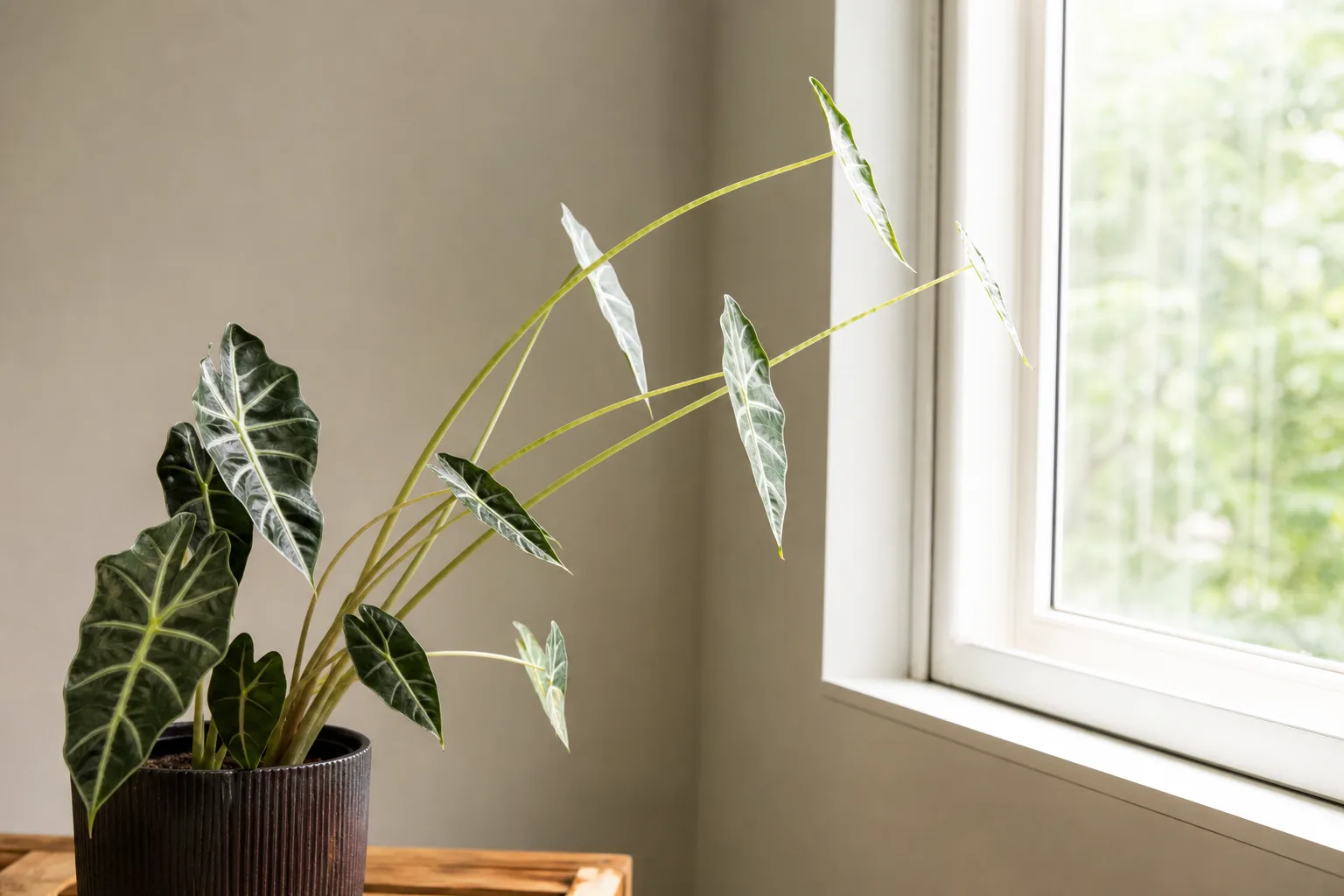
Leggy growth on Alocasia Amazonica means petioles are stretching toward light-new leaves emerge smaller, stems lean one direction, and the plant looks tall and sparse. First step: move the pot to your brightest safe indirect-light spot before changing water or fertilizer.
Leggy Growth on Alocasia Amazonica: Causes, Checks & Fixes
This guide covers leggy growth on Alocasia Amazonica. See also the general Leggy Growth guide, watering, and light pages for this plant.
Leggy Growth on Alocasia Amazonica: Causes, Checks & Fixes
Quick answer
Leggy growth on Alocasia Amazonica (Alocasia × amazonica, African Mask plant) is etiolation-the plant stretching its petioles toward whatever light it can find. Indoors, that almost always means the spot is too dim for an aroid built for part shade, filtered sun, or bright indirect light, not deep interior shade. When photosynthesis drops, petioles stretch toward the brightest direction while new leaves emerge smaller and farther apart.
First step: move the pot to your brightest safe indirect-light location before repotting, fertilizing, or increasing water. Alocasia Amazonica in shade uses moisture slowly-adding water or feed to a dark, stretching plant usually makes droop and yellowing worse, not better.
How this page differs from our not-enough-light guide: that URL covers the full low-light symptom set-droop, slow growth, dull color, and seasonal light drops. This page focuses on stretch diagnosis: telling normal elephant-ear petiole height from true etiolation, running the 14-day brighter-placement test, and deciding when legginess overlaps with overwatering, dormancy, or spider mites.
What leggy growth looks like on Alocasia Amazonica
Leggy growth rarely appears overnight. The pattern builds over weeks as the plant hunts for photons:
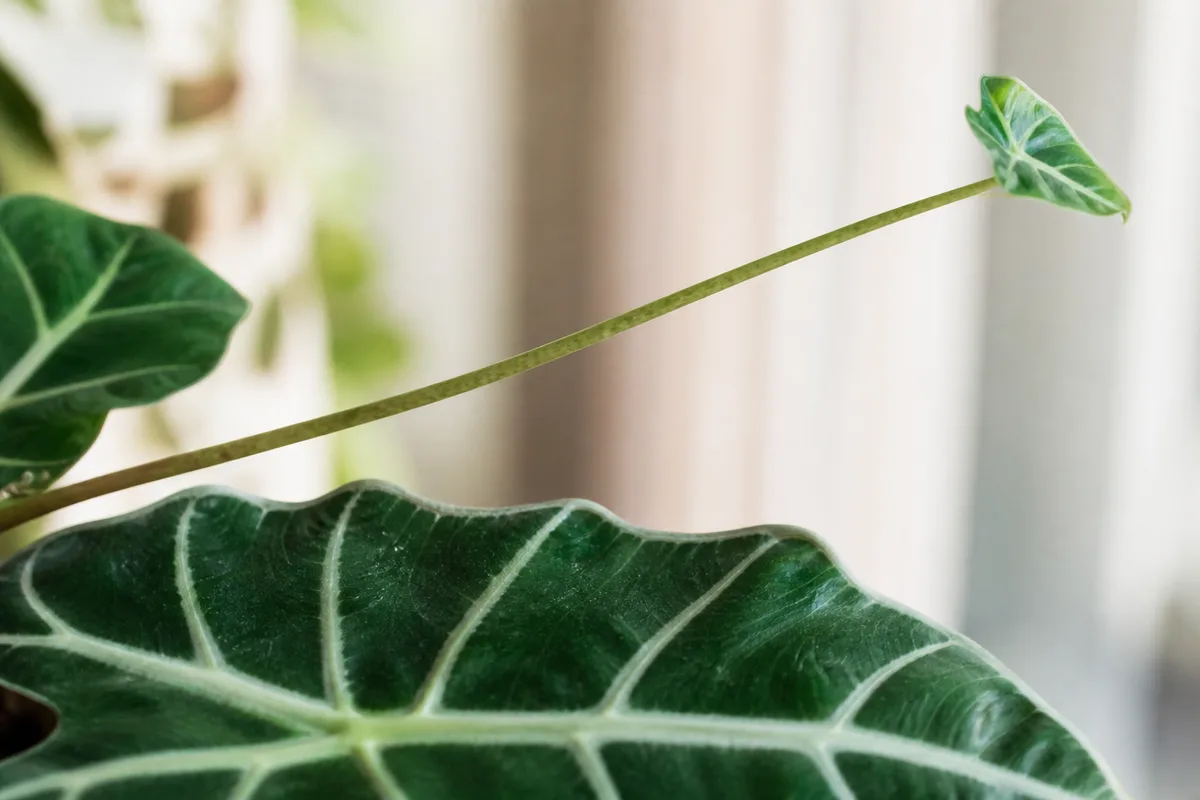
Stretched petiole with a smaller new arrowhead leaf at the tip - new blades emerge smaller and farther apart as the plant reaches toward the brightest window.
- Longer, thinner petioles (leaf stems) reaching toward the brightest direction
- Smaller new leaves compared with older arrowhead blades at the base
- One-sided lean or a plant that only grows toward the window
- Increased spacing between leaves on the same stem-gaps widen as stretch continues
- Duller, darker green foliage with less contrast on the white veins
- Drooping on elongated stems that cannot support leaf weight
- Soil that stays damp at the surface for many days after watering
The visual cue is change, not length alone. Alocasia species naturally carry long petioles-that upright elephant-ear silhouette is normal architecture. Leggy growth means those stems keep getting longer, new blades keep shrinking, and the plant works harder to reach the glass each month. If the pot has not moved but growth weakens through autumn, winter daylight drop or a blocked window is often the trigger.
Leggy growth vs normal petiole length
This distinction trips up many African Mask owners. A healthy Alocasia Amazonica in good light still has tall stems-the dramatic vertical habit is part of the cultivar. What separates healthy height from etiolation:
| Sign | Normal long petioles | Leggy etiolation |
|---|---|---|
| New leaf size | Matches or exceeds recent leaves | Clearly smaller than mature leaves below |
| Stem direction | Upright or evenly balanced | Strong lean toward one light source |
| Vein contrast | Bold white veining on dark bronze-green | Dull, thin growth with faded pattern |
| Spacing trend | Stable over several new leaves | Gaps between leaves widen each cycle |
| Season | Compact growth in bright months | Worsening stretch through winter |
If you are unsure, compare the last two emerging leaves to a mature leaf from three months ago. Smaller blades plus longer reach toward the window confirm leggy growth-not just “how Alocasia looks.”
Why Alocasia Amazonica gets leggy growth
Insufficient bright indirect light is the primary cause indoors. Alocasias grow best in bright but indirect light-they can survive lower light, but growth becomes much slower and stems stretch. Alocasia Amazonica is marketed as a houseplant for bold foliage, yet it is not a snake-plant-class low-light survivor. It needs enough energy to push new corms and leaves through an airy aroid mix.
Several home conditions stack against it:
Distance from windows. Light intensity decreases rapidly as distance from the light source increases-a spot that looks bright to human eyes may read as low light at leaf level, especially more than 1–2 metres from a window or behind tinted glass.
North-facing rooms and interior shelves. North-facing windows deliver the lowest natural light in most homes. Alocasia Amazonica may persist there for a while, but petioles stretch and leaf size shrinks.
Winter short days. Even a good summer placement can become marginal by December. Shorter photoperiod plus weaker sun angle often stalls compact growth and worsens lean.
One-sided window exposure. A plant on a shelf with light from only one direction grows asymmetrically-the shaded side produces longer, weaker petioles reaching across the room.
The watering trap. Plants that do not receive adequate lighting can become stressed or waterlogged because the pot dries slowly. Many owners respond to drooping stretched stems by watering again-creating wet soil, yellow lower leaves, and fungus gnats that look like a root crisis when light is the root cause.
Marketing versus biology. Alocasia Amazonica is sold as an easy statement plant, but its natural habit is filtered tropical light with high humidity-not a dim apartment corner. That mismatch sets up leggy failure in north-facing rooms before the owner realizes light is the limiter.
Rare secondary contributors include nitrogen push in dim conditions (soft, pale stretch without lean) and competition from taller plants blocking window light-but on Alocasia Amazonica, etiolation from low light accounts for the vast majority of leggy growth cases.
How to confirm the cause
Work through these checks in order before repotting or feeding:
- Window direction and distance - Is the pot on an interior table, a north window, or within arm’s reach of east or filtered south light?
- Newest leaf size - Are the last two leaves clearly smaller than mature ones below them?
- Lean and stretch - Does the plant point toward one light source with longer stems on the shaded side?
- Soil dry-down speed - After a normal watering, how many days until the top 2–3 cm feels dry? Slow dry-down in a dim room supports a light diagnosis.
- Season - Did symptoms start or worsen in late autumn? Seasonal light drop is common.
- Corm firmness - Press the soil surface gently near the base. A firm corm with slow growth in cool months may be dormancy; a soft base with sour soil is not.
Quick confirmation test: Move the plant to a brighter indirect location for 14 days without changing anything else. If the next emerging leaf is larger and stem spacing tightens, low light was driving the stretch. No improvement may mean overwatering, dormancy, or pests need a separate look-use the decision table below.
Leggy etiolation vs dormancy vs overwatering
| Pattern | Key signs | Urgency | First action |
|---|---|---|---|
| Leggy etiolation | Smaller new leaves, window lean, widening stem gaps; corm firm; soil dries slowly but not sour | Low–medium - slow decline | Move to brighter indirect light or add grow light |
| Winter dormancy | Little new growth, some leaf loss; corm firm; soil dries on schedule; plant was healthy in brighter months | Low - normal rest | Hold water slightly; keep in brightest safe spot; wait for spring |
| Overwatering in shade | Limp leaves, wet soil 7+ days, sour smell, yellow bottom leaves, fungus gnats | High - same day if base softens | Stop watering; unpot and inspect roots if multiple leaves yellow at once |
| Spider mites | Fine webbing, stippled undersides, dust-like specks in dry heat | Medium - isolate promptly | Rinse undersides; confirm pests before assuming light alone |
First fix for Alocasia Amazonica
Move the pot to your brightest safe indirect-light location.
Practical targets indoors:
- Within 0.5–1 metre of an east-facing window
- A south- or west-facing window with a sheer curtain or 0.5–1 metre back from direct sun
- A plant stand that raises leaves toward the glass without pressing foliage against hot panes
Do not jump straight to unfiltered midday sun on south glass-if grown in direct sun, leaf burn and pale foliage may result when light intensity spikes too fast. Increase exposure over 7–10 days if you are moving from a very dark corner.
If no window gives enough filtered light, add a full-spectrum LED grow light 15–30 cm above the canopy for 12–14 hours daily. That single change beats repotting, misting, or fertilizing a plant that simply cannot fuel compact new growth.
After moving to brighter light: check dry-down before the next drink. Brighter conditions speed water use-your old watering schedule may now be too much and cause yellowing right after a good light fix.
Step-by-step recovery
Once the plant is in brighter indirect light-or under a grow light-follow this sequence:
- Pause extra watering - Let the top 2–3 cm of mix dry before the next drink. Brighter light will speed dry-down; your old schedule may now be too much. See the watering guide for corm-first checks.
- Rotate the pot a quarter turn weekly - Even light reduces one-sided lean. Rotation alone cannot fix a dark room, but it helps once levels improve.
- Hold fertilizer for two weeks - Wait until you see a new leaf unfurling with better color. Feeding a stressed, low-energy plant adds salt stress without fixing the cause.
- Trim only fully spent leaves - Remove yellow or brown leaves that have finished declining. Keep any green tissue that still photosynthesizes. Alocasia is toxic to cats and dogs if chewed-wear gloves when handling cut foliage and keep trimmings away from pets.
- Watch the next two new leaves - Shorter petioles and larger blades mean the fix is working. If new growth still shrinks, the spot is still too dim-move closer to the window or lower the grow light slightly.
- Adjust winter watering - As light drops in autumn, dry-down slows again. Cut back water before leaves yellow from a wet, dark root zone.
Optional pruning of severely stretched petioles: wait until at least one healthy new leaf has opened in the brighter spot, then remove the weakest yellowing stems at the base. Aggressive pruning on day one removes photosynthetic tissue the plant still needs. More detail on safe cuts is in the pruning guide.
Recovery timeline
Expect visible direction change within one to two weeks once light improves-less lean on new stems, faster dry-down, and a firmer overall posture. A clearly larger, better-colored new leaf usually takes three to six weeks, depending on season and temperature.
Old stretched petioles do not shorten after you fix light. Judge success on new growth, not by waiting for existing stems to compact. If no healthier leaf emerges after six weeks in a confirmed brighter spot, inspect roots and pests-another stressor may be blocking recovery.
Lookalike symptoms
Not enough light (overlap) - Leggy growth and low light are the same etiolation process on Alocasia Amazonica. This page focuses on stretch and petiole length; the not-enough-light guide covers the broader low-light symptom set including droop and slow growth.
Overwatering in shade - Limp leaves with wet soil, sour smell, and yellow bottom leaves while the crown still looks pale. Low light often slows drying; both problems can coexist. Check moisture at 2–3 cm depth before the next drink. If multiple leaves yellow at once and the base feels soft, unpot the same day-see root rot.
Winter dormancy - Alocasia Amazonica may rest in cool months with little new growth and some leaf loss. In winter, alocasias need cooler, drier conditions and may lose foliage before resuming growth in spring. Dormancy is normal when the corm is firm, soil dries on schedule, and the plant was healthy in brighter months. Total collapse in a dark, wet pot is not normal dormancy.
Slow growth without stretch - If petiole length stays stable but new leaves are scarce, see slow growth for dormancy, temperature, and feeding factors separate from etiolation.
Spider mites - Fine webbing and stippled leaves in dry air mimic weak growth. Inspect leaf undersides with a magnifier before assuming light alone is the issue.
What not to do
Do not place Alocasia Amazonica in hot direct afternoon sun on day one to “fix” legginess-leaf burn and bleached patches are permanent on damaged tissue. Do not overwater because stretched stems droop in shade; wet soil in low light invites root decline. Do not fertilize heavily to force compact growth-without adequate light, salts accumulate and yellow leaves further. Do not assume rotation alone replaces more light; turning the pot does not raise foot-candles at leaf level. Do not repot on day one-leggy growth is a light problem, not a root-space problem. Do not increase water immediately after moving to a brighter spot without checking whether the top 2–3 cm has dried.
How to prevent leggy growth next time
Treat bright filtered light as non-negotiable for Alocasia Amazonica-pair it with your normal aroid mix and humidity targets from the light guide. Before buying or placing a pot, ask whether the spot receives meaningful daylight for most of the day, not just a few morning minutes.
Seasonal habits that help:
- Move the plant closer to glass or extend grow-light hours from October through February
- Clean windows and open sheers during daylight hours
- Re-check dry-down after any furniture or curtain change near the window
- Match watering to how fast the pot dries in the current light, not last summer’s schedule
When to worry
Leggy growth alone is rarely fatal if the corm stays firm-but leggy growth plus chronic wet soil can kill Alocasia Amazonica. Worry when multiple leaves yellow at once, the base feels soft, soil smells sour, or fungus gnats swarm despite “careful” watering. Those signs mean unpot and inspect roots the same day-see root rot-not just slide the pot nearer a window.
A firm plant with long stems in a dim room is a slow decline, not an emergency. Fix placement soon, but you do not need to repot or prune aggressively on day one. The priority is giving the leaves enough energy to grow compact new foliage-everything else follows from that.
Related Alocasia Amazonica guides
- Not enough light - broader low-light diagnostics and recovery
- Light requirements - placement and grow-light setup
- Watering - corm-first moisture checks in brighter light
- Pruning - when and how to remove spent stretched leaves
- Overview - full African Mask care profile