Mealybugs on Aglaonema Maria: Causes, Checks & Fixes
Quick answer
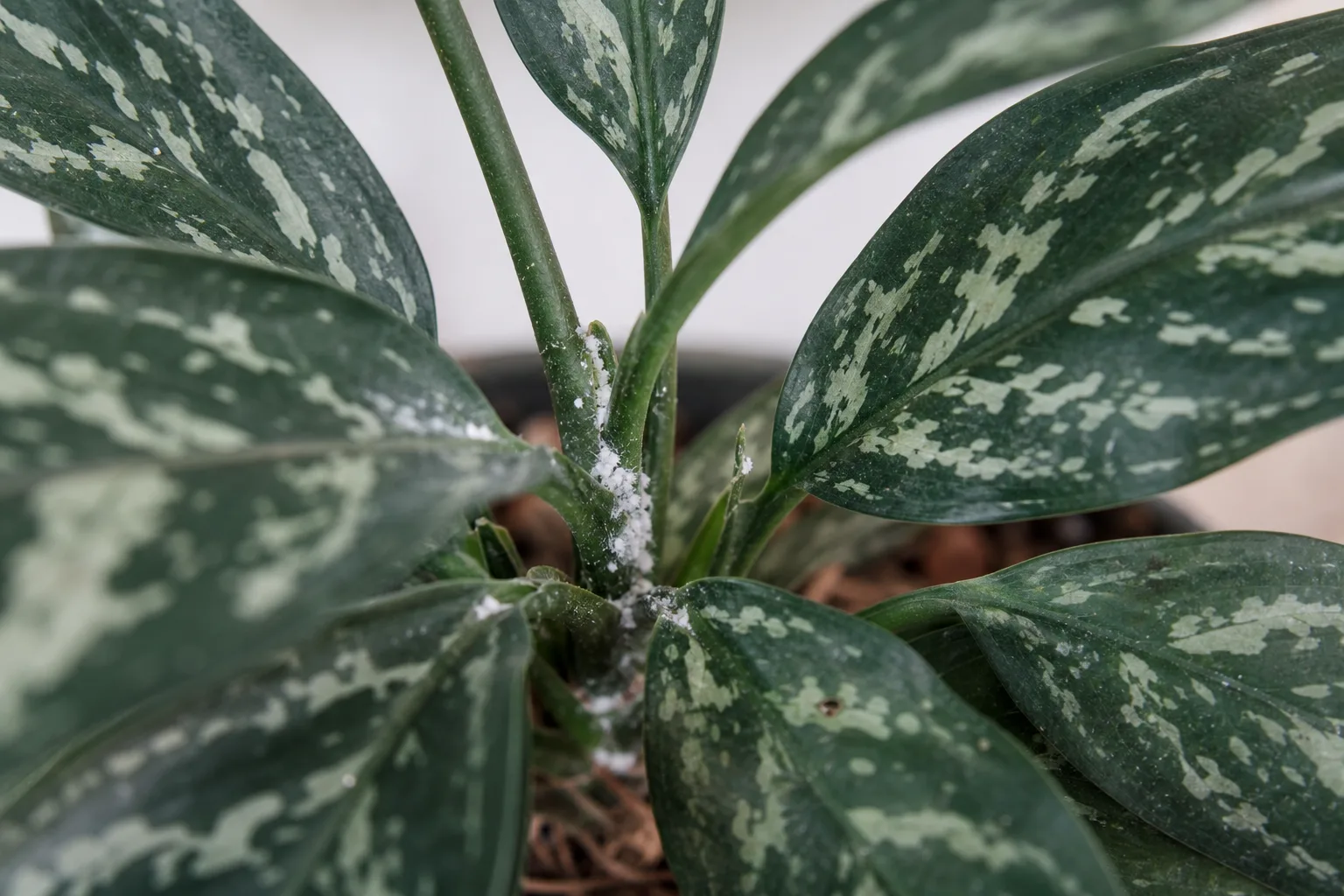
White cottony clusters in Aglaonema Maria's crown or leaf axils are usually mealybugs-not normal leaf fuzz. Crush a sample with a swab; a pink smear confirms insects. First step: isolate the plant and dab visible colonies with 70% isopropyl alcohol on a cotton swab after a spot test on one variegated leaf.
Mealybugs on Aglaonema Maria: Causes, Checks & Fixes
This guide covers mealybugs on Aglaonema Maria. See also the general Mealybugs guide, watering, and light pages for this plant.
Mealybugs on Aglaonema Maria: Causes, Checks & Fixes
Quick answer
Mealybugs on Aglaonema Maria are soft-bodied sap feeders that hide in the tight crown where new leaves emerge and along petiole bases on this compact Chinese evergreen. You may notice white, cottony wax clusters before yellowing, sticky honeydew, or ants on the pot rim-especially on the dark green/silver variegation where contrast makes the pests easier to spot once you look closely.
The pink-crush test settles most confusion with Maria’s naturally textured leaves. Dab a cotton swab on a white cluster and crush it gently. Mealybugs leave a pink or reddish smear from their body fluids. Mineral crust, dried water spots, and normal leaf fuzz do not smear pink and do not cluster in axils.
First step: isolate the plant and dab every visible colony with alcohol. Move Aglaonema Maria away from other houseplants, then touch 70% isopropyl alcohol to each wax mass with a cotton swab or fine brush. Spot-test one variegated leaf first and wait 24–48 hours before treating the whole plant-Maria’s silver sections can show burn if alcohol sits on sun-warmed foliage.
Do not fertilize, repot, or soak the central crown on day one. Remove insects first and keep baseline care steady using the Maria watering guide.
What mealybugs look like on Aglaonema Maria
On this slow-growing cultivar, mealybugs often concentrate in one sheltered zone-the crown center or a single leaf axil-while older variegated leaves still look fine. That pattern sends owners searching for “white fuzz” when the problem is already established below the newest leaf.
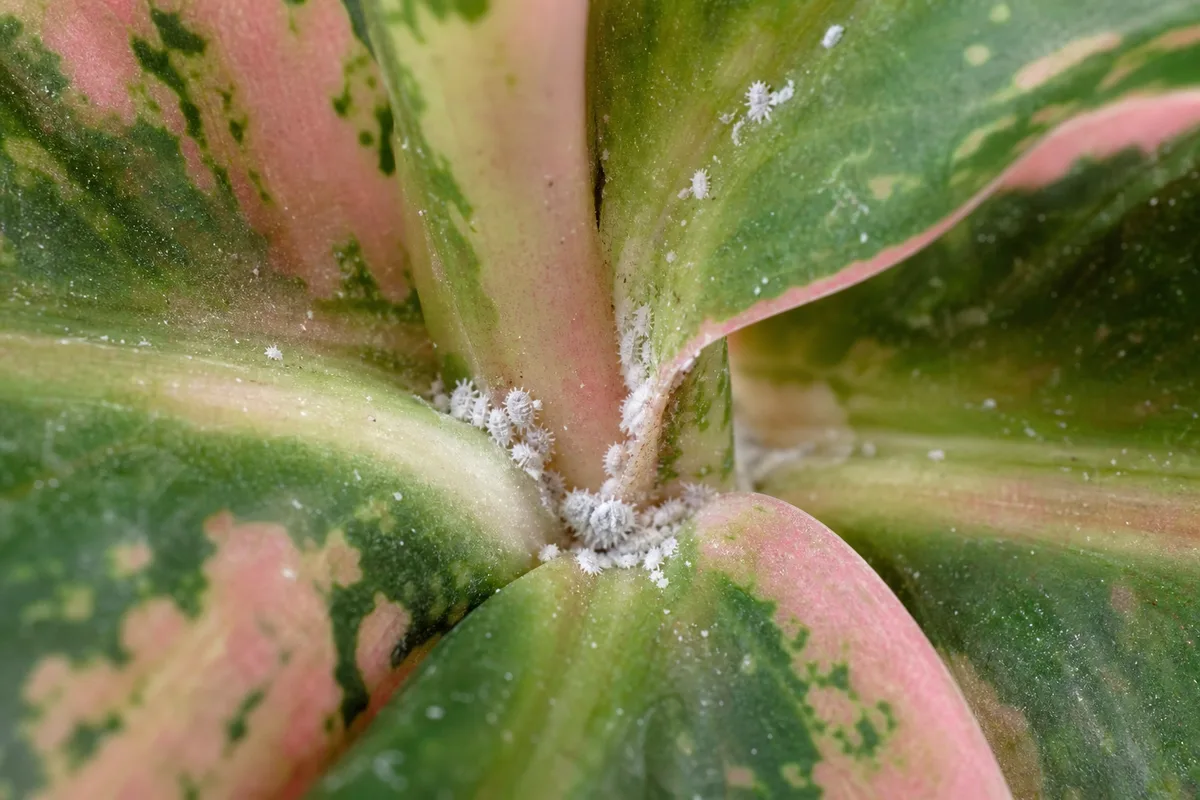
Mealybugs symptoms on Aglaonema Maria - compare with healthy tissue on the same plant.
Typical signs include:
- White, cottony wax masses along petioles, in leaf bases, and where stems branch-often tucked under the newest unfolding leaf
- Pink smear on a crushed swab when you dab and press a cluster (the fastest field test on Maria)
- Sticky, shiny honeydew on leaf surfaces or the pot rim; sooty mold may follow on sticky spots
- Yellowing, curling, or dropped leaves when feeding has gone on for weeks on a plant that replaces leaves slowly
- Ants on the pot or saucer, farming mealybugs for honeydew
- White wax at the soil line on the stem or outer roots when root mealybugs are present-check when foliage clusters keep returning after treatment
Aglaonema Maria grows upright with leaves emerging from a central crown. Mealybugs exploit the tight rosette and the slight fuzz on leaf margins-easy to miss if you only glance at the top surface of mature silver-striped foliage.
Maria vs. other Aglaonema cultivars
Maria’s dark green leaves with silver stripes carry a slight, even fuzz along leaf margins that is fixed to the tissue. Clemson HGIC lists ‘Maria’ as dark green with silver stripes, distinct from smoother cultivars like Silver Bay, which has silver-centered leaves with less marginal texture. That difference matters because Maria owners more often mistake normal edge fuzz for pests. On Silver Bay, separate cottony tufts in axils stand out against smoother leaf surfaces; on Maria, you need the pink-crush test to tell fixed margin texture from waxy insect colonies.
Why Aglaonema Maria gets mealybugs
Mealybugs rarely mean your Chinese evergreen is dying. They mean protected feeding sites exist and natural predators are absent indoors.
Tight crowns and leaf axils shelter colonies. Mealybugs feed in groups and prefer sheltered joints where leaves meet stems. Maria’s compact rosette keeps wax masses hidden from casual watering checks-especially under the pale leaf still wrapped around the stem.
Introduction from outside the home is the usual starting point: a new nursery plant, shared shelf space, or tools moved between pots without cleaning. Aglaonema is among houseplants commonly affected by mealybugs indoors. Maria is not uniquely susceptible, but slow leaf turnover means a small colony can persist unnoticed until honeydew or yellowing shows up on lower leaves.
Tender new growth from over-fertilization gives mealybugs softer tissue to colonize. Excess nitrogen combined with regular watering pushes soft shoots mealybugs prefer for egg laying-see the fertilizer guide for Maria’s light feeding rhythm during active growth only.
Indoor warmth supports steady reproduction. Without cold snaps or outdoor predators, mealybug populations can persist year-round on houseplants. Warm room air does not cause infestations by itself, but it lets colonies rebuild between missed treatment weeks.
Stress lowers resistance slightly. Maria tolerates low to moderate indirect light and average humidity well, but chronic overwatering on Aglaonema Maria, cold drafts below about 55°F, or a sudden move to harsh direct sun can slow growth and leave sheltered axils vulnerable longer. Stressed plants do not “attract” mealybugs magically-they simply give pests more time in protected sites before you notice them.
How to confirm the cause
Work through these checks before spraying the whole plant:
- Inspect the crown first - Fold back the newest leaf and check petiole bases with a hand lens. Maria’s worst colonies often sit where you cannot see them from above.
- Run the pink-crush test - Dab a white cluster with a cotton swab and crush it. Pink or red smear confirms mealybugs; no smear plus no movement points to mineral deposits or normal fuzz.
- Test movement - Mealybugs are slow but legs may be visible under magnification. Scale stays fixed to the stem; aphids are pear-shaped and mobile on tender new growth.
- Look for honeydew - A shiny, tacky film on leaves or the pot confirms sap feeders. Dry brown tips without stickiness point to culture problems-see brown tips.
- Check the soil line - White wax on outer roots or the stem base suggests root mealybugs. Gently scrape the top inch of mix and inspect stem tissue below the soil surface.
- Scan the collection - Mealybugs spread to other houseplants on hands, tools, and shared watering trays. Inspect nearby pots, especially any with recent nursery tags.
You have confirmed mealybugs when you see cottony wax clusters plus either the pink-crush result, honeydew, or live slow-moving insects under magnification tied to those clusters.
Symptom lookalike comparison
| What you see | Likely cause | How to tell apart |
|---|---|---|
| White cottony tufts in leaf axils + pink smear | Mealybugs | Waxy clusters; smear pink when crushed |
| Tiny pear-shaped insects on new crown leaves | Aphids | Mobile soft bodies; no cottony wax |
| Brown fixed bumps on stems | Scale (no Maria-specific guide yet) | Shells do not smear or move; scrape test reveals hard covering |
| Fine stippling + webbing in dry air | Spider mites | Tap test over white paper; mites crawl |
| Even, fixed fuzz on leaf margins | Normal Maria texture | No separate clusters; no pink smear |
| White crust on soil surface only | Mineral or algae | Wipe does not reveal insects; check mold on soil |
| Silvery streaks or scraped leaf tissue | Thrips (no Maria-specific guide yet) | Scraping or stippling damage, not round wax masses; shake leaves over white paper |
First fix for Aglaonema Maria
Isolate the plant and dab every visible mealybug with 70% isopropyl alcohol.
Place Aglaonema Maria away from other pots. Dip a cotton swab or fine artist’s brush in 70% isopropyl alcohol and touch each wax mass directly until the cottony coating dissolves and insects die on contact. Work methodically through the crown, petiole bases, and stem joints-Maria’s worst colonies hide where leaves overlap.
This is the correct first action because alcohol kills mealybugs on contact without coating the entire plant in spray on day one. Wait until treated areas dry before adding soap or oil. Test alcohol on one variegated leaf 24–48 hours ahead if Maria sits in bright light or you have never treated this cultivar before.
Do not pour alcohol into the central growing point or soak the crown-Maria is sensitive to standing moisture in the heart of the rosette during treatment.
Step-by-step recovery
After the initial alcohol dabs, continue in this order based on severity:
Light infestations (a few clusters in one axil)
- Dab again in seven days to catch newly hatched crawlers that escaped the first pass. Weekly repeats are standard until no live insects appear for two consecutive checks.
- Wipe honeydew from leaves with a damp cloth so sooty mold does not spread across silver variegation.
- Watch the crown for three weeks. If counts stay near zero, no spray is needed.
Moderate infestations (clusters on multiple leaves or stems)
- Continue weekly alcohol dabs on every wax mass you can reach with a swab.
- Add insecticidal soap labeled for houseplants once foliage is dry. Coat leaf undersides, petioles, and stem joints where mealybugs hide. Soaps kill on contact only-missed insects under wax survive.
- Repeat soap every five to seven days for two to three cycles alongside alcohol touch-ups on stubborn colonies.
- Prune only heavily infested leaves you cannot reach-snip at the petiole base with clean scissors. Do not strip the plant bare; Maria is slow to replace lost foliage.
Heavy infestations (sooty mold, ants, spread to neighbors)
- Treat every affected plant in the room, not just Maria.
- Inspect for root mealybugs at the soil line. If wax returns on stems after foliage clears, consider Aglaonema Maria repotting guide into fresh mix after rinsing roots-only when the plant is otherwise stable.
- Add horticultural oil or neem only if alcohol and soap fail after three proper weekly rounds-spot-test one leaf for 48 hours and avoid hot sun or cold drafts after application. Variegated Aglaonema leaves can speckle from oils; a single-leaf test is worth the wait.
- Manage ants if they are protecting mealybugs-remove ant trails and sticky barriers on pot feet break that partnership.
- Hold fertilizer until new growth emerges clean for two weeks. Soft, nitrogen-rich shoots from heavy feeding give the next wave of mealybugs easier tissue to colonize.
Repotting is rarely needed for foliage mealybugs alone. Only consider fresh mix when root mealybugs are confirmed or soil is heavily contaminated from an outdoor infestation.
Recovery timeline
Expect visible wax clusters to decline within two weeks of consistent weekly alcohol dabs. Full clearance usually takes three to four weekly treatment passes because each cycle misses eggs and newly hatched crawlers sheltered under fresh wax.
Signs you are winning:
- No live wax masses in the crown when you check with a lens
- Honeydew stops accumulating; ants disappear from the pot
- The next unfurling leaf opens without fresh cottony clusters
- Firm, normally colored new growth replaces yellowed lower leaves
Signs the problem is worsening:
- New colonies appear on stems that looked clean last week
- Sooty mold covers large areas of silver variegation
- White wax rings the soil line after foliage treatment
- Colonies jump to other plants in the same room
Aglaonema Maria grows slowly. Allow four to six weeks before judging full recovery. Old yellowed or sooty leaves may never look perfect; focus on clean crown growth instead-as discussed in the overview guide.
In a typical indoor recovery, three weekly alcohol swab passes cleared crown wax on a variegated Maria in moderate indirect light; the next unfurling leaf opened clean at week five with no fresh cottony tufts. Your timeline may differ, but clean crown growth-not old blemishes-tells you the cycle is breaking.
Mistakes to avoid
- Spraying soap before isolating and dabbing - You scatter crawlers to neighboring pots while missing wax-protected adults in Maria’s crown.
- One-and-done treatment - Indoor mealybugs need repeated weekly contact treatments because wax and staggered hatching protect survivors.
- Homemade dish soap mixes - Household detergents burn plants more often than labeled insecticidal soap. Use a product formulated for houseplants.
- Alcohol on sun-warmed variegated leaves - Phytotoxicity risk rises on hot foliage; treat in shade and spot-test silver sections first.
- Soaking the central crown - Rinse or soap application that pools in Maria’s rosette invites rot while the plant is already stressed from sap loss.
- Returning the plant to the shelf too soon - Keep it isolated until you have seen no live mealybugs for at least two weeks after the last treatment.
- Feeding to “help recovery” - Fertilizer pushes soft new tissue mealybugs prefer. Wait for clean growth first.
- Ignoring ants - Ants protect mealybugs from predators; honeydew keeps coming until both are addressed.
How to prevent mealybugs next time
- Quarantine new plants for at least two weeks before placing them near Maria.
- Inspect the crown weekly during spring and summer growth-one minute with a lens beats a month-long infestation hidden in leaf axils.
- Clean tools between pots when pruning or repotting so wax-covered stems do not transfer crawlers.
- Fertilize lightly during active growth only; avoid nitrogen-heavy pushes that produce oversized soft shoots mealybugs prefer.
- Check common houseplant pests regularly during watering, especially in crown centers where Maria is most vulnerable.
Prevention is mostly early detection and isolation, not pesticide schedules.
When to worry
Most Aglaonema Maria plants survive mealybugs with consistent alcohol dabs and repeated contact sprays. Worry when:
- The entire crown is coated with wax and new leaves cannot unfurl cleanly
- Multiple plants in the room are infested and colonies reappear within days of treatment
- Sooty mold covers most of the leaf surface and blocks light to an already slow-growing plant
- Root mealybugs persist at the soil line after three proper weekly treatment cycles on foliage
- You have completed three alcohol-and-soap cycles and still find live colonies on every new leaf
When to escalate treatment
Use this decision path once you have confirmed mealybugs-not before running the pink-crush test:
| Situation | Next step |
|---|---|
| A few wax clusters in one axil; pink smear confirmed | Alcohol dabs weekly for two to three passes; no spray needed if counts stay near zero |
| Clusters on multiple leaves; honeydew present | Alcohol dabs plus labeled insecticidal soap every five to seven days for two to three cycles |
| Soap and alcohol fail after three weekly rounds; wax returns on new leaves | Spot-test horticultural oil or neem on one variegated leaf; apply only if no burn after 48 hours |
| Wax rings soil line after foliage clears | Inspect for root mealybugs; repot with rinsed roots only when the plant is otherwise stable |
| Crown fully coated; multi-plant spread; no clean growth for two months | Propagate a clean division if one exists, or discard the worst plant to protect the collection |
Contact your local extension office if chronic infestations return despite correct treatment-sometimes the source is a nearby infested plant you have not found yet.
Related Aglaonema Maria problems
- Aglaonema Maria overview - baseline light, water, and slow leaf-turnover context
- Aphids - pear-shaped insects on tender crown shoots; honeydew lookalike
- Spider mites - stippling and webbing in dry indoor air
- Brown tips - dry margin damage without sticky honeydew
- Mold on soil - white crust on mix surface vs. stem wax
- Yellow leaves - when yellowing is not pest-related
- Root rot - crown moisture sensitivity during treatment
- Watering · Light · Fertilizer - keep baseline care steady while treating
FAQs
Is the white stuff on my Aglaonema Maria leaves mealybugs or normal fuzz?
Maria’s dark green and silver foliage can look slightly fuzzy at the edges, but that texture is even and fixed to the leaf surface. Mealybugs form separate cottony tufts in leaf axils, along petioles, and in the crown center-and they smear pink when crushed. If the white material wipes off as a waxy cluster and reappears in the same spot within days, treat as mealybugs.
What should I check first for mealybugs on Aglaonema Maria?
Fold back the newest leaf at the crown and inspect where petioles meet the stem with a hand lens. Mealybugs hide in that tight rosette long before they spread to older variegated leaves. Also check the soil line for root mealybugs and scan nearby pots if you recently added a nursery plant.
Will damaged Aglaonema Maria leaves recover from mealybugs?
Leaves with heavy yellowing, curling, or sooty mold may not fully flatten again because Maria replaces foliage slowly. Judge recovery by clean new crown leaves over four to six weeks, not by old blemishes. Once insects are gone, the next unfurling leaf should open without fresh wax clusters.
Can I use neem oil on Aglaonema Maria without damaging the silver variegation?
Neem and horticultural oils can burn variegated Chinese evergreen leaves, especially in direct sun or above about 90°F. Spot-test one leaf for 48 hours before spraying the whole plant. On Maria, alcohol dabs and labeled insecticidal soap on a weekly repeat schedule usually work before you need oil.
When is mealybugs urgent on Aglaonema Maria?
Act immediately if colonies appear on multiple plants, honeydew has attracted ants, or sooty mold is spreading across silver-striped leaves. Also treat urgently when white wax clusters ring the soil line-that pattern suggests root mealybugs that travel between pots on water or tools.
When to use this page vs other Aglaonema Maria guides
- Aglaonema Maria watering guide - Use for routine moisture checks before assuming mealybugs is the main issue.
- Aglaonema Maria problems hub - Browse all 16 common issues on this species.
- Yellow Leaves on Aglaonema Maria - Different entry point when symptoms overlap with mealybugs.
- Slow Growth on Aglaonema Maria - Different entry point when symptoms overlap with mealybugs.
- Spider Mites on Aglaonema Maria - Different entry point when symptoms overlap with mealybugs.