Aphids on Aglaonema Maria: Causes, Checks & Fixes
Quick answer
Aphids on Aglaonema Maria often damage one pale new crown leaf while older variegated foliage still looks healthy-that pattern is normal for this slow grower. First step: isolate the plant and rinse leaf undersides, petioles, and the crown with lukewarm water to knock off live insects before any spray.
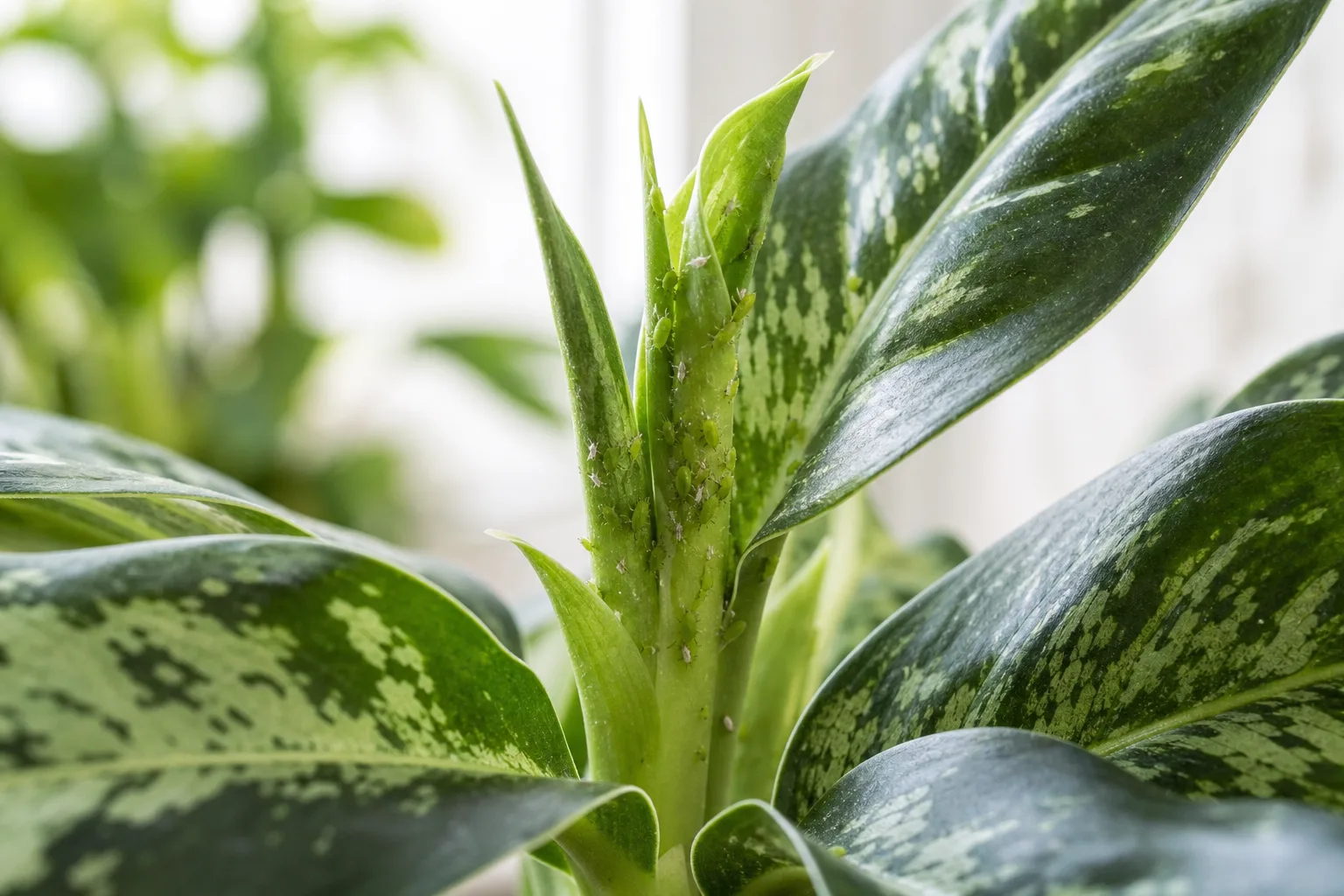
Aphids on Aglaonema Maria: Causes, Checks & Fixes
This guide covers aphids on Aglaonema Maria. See also the general Aphids guide, watering, and light pages for this plant.
Aphids on Aglaonema Maria: Causes, Checks & Fixes
Quick answer
On Aglaonema Maria, aphids often show up as one sick new leaf while older silver-striped foliage still looks fine-a pattern that sends owners searching for watering or light problems when the issue is already concentrated in the crown. These small, soft-bodied sap feeders cluster on the pale leaf unfolding from the center, fresh side shoots, and occasionally any flower stalk the plant produces. You may notice sticky residue on dark green and silver leaves, slight curling of young foliage, or ants on the pot rim before you spot the insects themselves.
First step: isolate the plant and rinse it. Isolate the plant from others when pests appear, then shower or spray lukewarm water across leaf undersides, petioles, and the crown until running water carries aphids off. That single step confirms you are dealing with mobile soft-bodied pests and reduces the colony before you reach for soap or oil.
Do not fertilize, repot, or prune heavily on day one. A stressed Chinese evergreen recovers faster when you remove pests first and keep care boring for a week-see the Maria watering guide for baseline moisture while you treat.
What aphids look like on Aglaonema Maria
On this slow-growing cultivar, damage often appears on one new leaf while older variegated foliage still looks clean. That pattern confuses owners who assume the whole plant is healthy because the mature leaves show no insects.
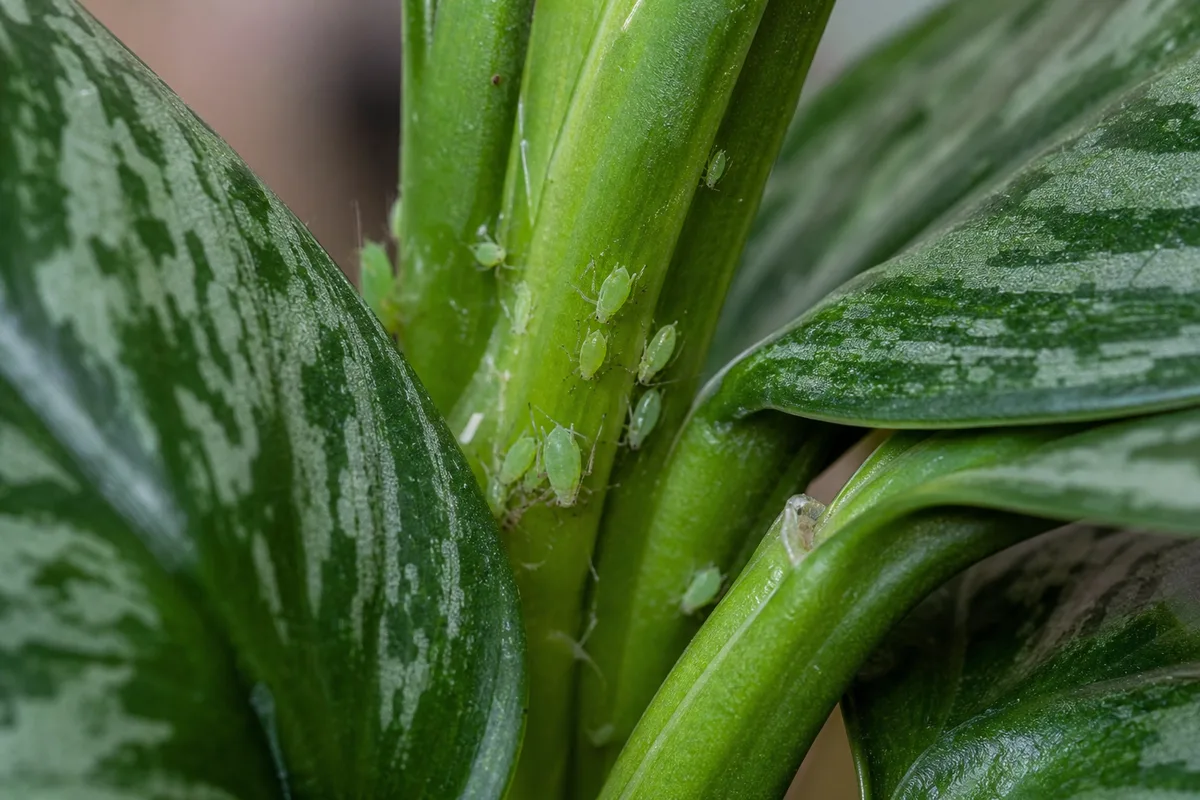
Aphids symptoms on Aglaonema Maria - compare with healthy tissue on the same plant.
Typical signs include:
- Clusters of tiny pear-shaped insects on new leaves, stem joints, and the crown-green is common indoors, but black, brown, or yellow forms also occur
- Sticky, shiny honeydew on leaf surfaces or the pot rim; sooty black mold may follow on the sticky spots
- Curled or puckered young leaves while older leaves stay flat
- Ants on the pot, saucer, or nearby surfaces, farming aphids for honeydew
- Whitish cast skins left behind after aphids molt, often stuck near colonies
- Stunted or twisted new shoots when feeding has gone on for weeks
Aglaonema Maria grows upright with leaves emerging from a central crown. Aphids hide in the tight space where the newest leaf wraps the stem-easy to miss if you only glance at the top surface of older foliage.
Why honeydew is easy to miss on Maria
Maria’s dark green leaves with silver stripes can hide sticky honeydew until it catches dust or attracts ants. On smoother, lighter-leaved houseplants, a shiny film stands out immediately. On Maria, the first clue is often ants on the saucer or a single new leaf curling-not a glossy patch you notice from across the room. That is why the crown-fold check matters more on this cultivar than a quick top-down glance.
Why Aglaonema Maria gets aphids
Aphids rarely mean your Chinese evergreen is dying. They mean soft, nitrogen-rich tissue is available and predators are absent indoors.
New growth is the main attractant. Aphids pierce stems and leaves with slender mouthparts and feed on plant fluids. Fresh Aglaonema shoots are softer than hardened older leaves, so colonies concentrate there-especially after a growth flush from spring light, Aglaonema Maria repotting guide, or heavy fertilizer per the fertilizer guide.
Indoor conditions favor rapid reproduction. Warm room temperatures let aphid populations expand quickly because females give birth to live young without mating. A handful of insects on a new leaf can become a crown-wide infestation within two weeks if nothing interrupts them.
Introduction from outside the home is the usual starting point: a new nursery plant, an open window near a garden, or an infested neighbor on the shelf. Maria is not uniquely susceptible, but its compact crown and slow leaf turnover mean a small colony can persist unnoticed until honeydew or curling shows up.
Stress lowers resistance slightly. This plant tolerates low light and average humidity well, but chronic overwatering, cold drafts below about 55°F, or a sudden move to harsh direct sun can slow growth and leave new tissue vulnerable longer. Stressed plants do not “attract” aphids magically-they simply give pests more time on soft shoots before leaves harden off. Cross-check placement with the light guide if growth has stalled.
How to confirm the cause
Work through these checks before spraying chemicals:
- Locate colonies - Fold back the newest leaf at the crown and check petiole bases. Use a hand lens if insects look like dust specks.
- Test movement - Touch a suspect cluster with a cotton swab. Aphids move slowly or drop off; mealybugs smear white wax; scale stays fixed to the stem.
- Look for honeydew - A shiny, tacky film on leaves or the pot confirms sap feeders. Dry brown tips without stickiness point to culture problems-see brown tips, not aphids.
- Check for ants - Ants on the pot often mean aphids or scale are producing honeydew somewhere above soil line.
- Inspect the collection - Aphids spread to other houseplants. Scan nearby pots, especially any with fresh growth.
- Rule out lookalikes - Thrips leave silvery scrape marks, not round clusters. Spider mites cause stippling and fine webbing in dry air. Powdery dust on soil is not aphids.
You have confirmed aphids when you see live pear-shaped insects on tender tissue plus either honeydew, cast skins, or consistent new-leaf curling tied to those clusters.
Symptom lookalike comparison
| What you see | Likely cause | How to tell apart |
|---|---|---|
| Sticky leaves + tiny moving insects on new growth | Aphids | Pear-shaped bodies, clusters on tender shoots |
| White cottony masses in leaf axils | Mealybugs | Waxy fluff; does not wash off with water alone |
| Brown bumps on stems | Scale (no Maria-specific guide yet) | Fixed shells; no legs or antennae visible |
| Fine stippling + webbing in dry air | Spider mites | Tap test over white paper; mites crawl |
| Silvery streaks on leaves | Thrips (no Maria-specific guide yet) | Scraping damage, not round clusters |
| Yellow lower leaves, dry soil | Underwatering | No insects; soil light and pot light |
| Yellow leaves, wet soil, no pests | Overwatering | Check roots; no honeydew |
First fix for Aglaonema Maria
Isolate the plant and rinse off every aphid you can reach with water.
Place Aglaonema Maria in a sink, shower, or outdoors in shade. Spray lukewarm water forcefully across leaf undersides, the crown, and stem joints while tipping the pot so water runs through-not into-the central growing point for hours. Repeat until you see insects washing away.
This is the correct first action because aphids sit exposed on the plant (unlike soil-dwelling pests), and a thorough rinse knocks down numbers immediately without risking leaf burn from soap on a plant you have not yet inspected. Wait until foliage dries before the next step.
Step-by-step recovery
After the initial rinse, continue in this order based on severity:
Light infestations (few aphids on one shoot)
- Rinse again in three to four days to catch nymphs that hatched after the first wash.
- Wipe sticky honeydew from leaves with a damp cloth so sooty mold does not spread across silver variegation.
- Watch the crown for two weeks. If counts stay near zero, no spray is needed.
Moderate infestations (clusters on multiple new leaves)
- Apply insecticidal soap labeled for houseplants once foliage is dry. Coat leaf undersides, petioles, and stem joints where aphids hide. Soaps kill on contact only-missed insects survive.
- Repeat every five to seven days for two to three cycles. Repeat applications are usually necessary because eggs and nymphs hatch on staggered schedules; one spray rarely clears an indoor colony.
- Prune only heavily infested leaves you cannot reach with spray-snip at the base of the petiole with clean scissors. Do not strip the plant bare; Maria is slow to replace lost foliage.
Heavy infestations (curled leaves, ants, spread to neighbors)
- Treat every affected plant in the room, not just Maria.
- Add horticultural oil or neem only if soap alone fails after three rounds-follow the spot-test protocol below before coating variegated leaves.
- Manage ants if they are protecting aphids-sticky barriers on pot feet or removing ant trails breaks that partnership.
- Hold fertilizer until new growth emerges clean for two weeks. Soft, fast push growth from excess nitrogen makes the next wave of aphids easier to feed on.
Repotting is rarely needed for foliage aphids. Only consider fresh mix if you also find root aphids (unusual on indoor Aglaonema) or if the soil was contaminated from an outdoor infestation.
Oil and neem spot-test protocol for variegated leaves
Maria’s silver-striped foliage can react to oils more visibly than plain green cultivars. Before spraying the whole plant:
- Choose one mature leaf in moderate indirect light-not the newest crown leaf still unfurling.
- Apply a small test patch of diluted horticultural oil or neem per label directions to the underside only.
- Wait 48 hours and check for yellow speckling, brown edges, or wilting on both green and silver sections.
- Spray the full plant only if the test leaf stays clean-early morning or evening, avoiding direct sun and temperatures above 90°F.
If the spot test fails, stay with rinsing and insecticidal soap rather than pushing oil on variegated tissue.
Recovery timeline
Expect visible aphid reduction within 48 hours of a thorough rinse. Soap cycles take two to three weeks to break the reproduction cycle completely because each treatment misses eggs and newly hatched nymphs.
Signs you are winning:
- No live aphids on new leaves when you check with a lens
- Honeydew stops accumulating; ants disappear from the pot
- The next unfurling leaf opens flat without tight curling
- Firm, normally colored new growth replaces damaged shoots
Signs the problem is worsening:
- Winged aphids appear (the colony is dispersing)
- Sooty mold covers large leaf areas
- New leaves keep curling even mid-treatment
- Colonies jump to other plants in the same room
Aglaonema Maria grows slowly. Allow four to six weeks before judging full recovery. Old curled leaves may never flatten; focus on clean crown growth instead-as discussed in the overview guide.
In a typical indoor recovery, three soap cycles on a five- to seven-day schedule after an initial rinse cleared crown aphids on a variegated Maria in moderate indirect light; the next unfurling leaf opened clean at week five with no live insects on the petiole base. Your timeline may differ, but clean crown growth-not old blemishes-tells you the cycle is breaking.
Mistakes to avoid
- Spraying soap before rinsing - You waste product on insects that water would have removed, and soap on dusty leaves increases burn risk.
- One-and-done treatment - Indoor aphids need repeated contact sprays because no residual protection remains after the product dries.
- Homemade dish soap mixes - Household detergents burn plants more often than labeled insecticidal soap. Use a product formulated for houseplants.
- Treating in direct sun or above 90°F - Wet soap on leaves in heat causes speckling on variegated Chinese evergreens.
- Returning the plant to the shelf too soon - Keep it isolated until you have seen no live aphids for at least two weeks after the last treatment.
- Feeding to “help recovery” - Fertilizer pushes soft new tissue aphids prefer. Wait for clean growth first.
- Ignoring ants - Ants protect aphids from predators; honeydew keeps coming until both are addressed.
- Pouring rinse water into the crown - Standing moisture in Maria’s central rosette during treatment invites rot while the plant is already losing sap.
Aglaonema Maria care cross-check
While treating aphids, keep baseline care steady-swings in light or water stress the plant on top of pest damage.
- Light: Low to moderate, indirect light suits Maria’s variegation. Do not move it to direct sun to “dry out” pests; that scorches leaves.
- Water: Water when the top half of the mix dries per the watering guide. Soggy soil does not cause aphids, but it weakens roots while the plant is already losing sap.
- Humidity: Average household levels are fine. Extra humidity alone will not eliminate aphids.
- Temperature: Keep above 55°F. Cold-stressed plants recover slowly from combined pest and chill damage.
- Handling: Aglaonema Maria is toxic to cats and dogs. Rinse and treat on a counter pets cannot reach; wash hands after handling sap and pruned tissue. If a pet chews Maria leaves or treated foliage, contact your veterinarian or the ASPCA Animal Poison Control Center (888-426-4435)-do not wait for symptoms.
How to prevent aphids next time
- Quarantine new plants for at least two weeks before placing them near Maria.
- Fold back the crown weekly during spring and summer growth-one minute with a lens beats a three-week infestation hidden under the newest leaf.
- Rinse foliage occasionally when you water, especially after bringing plants indoors from patios.
- Fertilize lightly during active growth only; avoid over-fertilizing with nitrogen that produces oversized soft shoots.
- Keep ants off plant shelves so natural predators (lady beetles, lacewings) can help if aphids arrive on an open-window plant.
Prevention is mostly early detection and isolation, not pesticide schedules.
When to worry
Most Aglaonema Maria plants survive aphids with consistent rinsing and repeated contact sprays. Worry when:
- The entire crown is coated with insects and new leaves cannot open
- Multiple plants in the room are infested and winged aphids are visible
- Sooty mold covers most of the leaf surface and blocks light to an already slow-growing plant
- You have completed three proper soap cycles and still find live colonies on every new leaf
When to escalate treatment
Use this decision path once you have confirmed aphids-not before folding back the crown and checking for live insects:
| Situation | Next step |
|---|---|
| A few aphids on one new shoot; rinse removed most | Repeat rinse in three to four days; no spray if counts stay near zero |
| Clusters on multiple new leaves; honeydew present | Labeled insecticidal soap every five to seven days for two to three cycles after initial rinse |
| Soap fails after three rounds; live aphids on every new leaf | Spot-test horticultural oil or neem on one variegated leaf; apply only if no burn after 48 hours |
| Chronic reinfestation despite correct contact sprays on all room plants | Consider imidacloprid soil drench or spike labeled for houseplants-systemic uptake can reach aphids soap misses, but use only as a last resort indoors and never on plants you will set outside while blooming (bee toxicity risk) |
| Crown fully coated; multi-plant spread; no clean growth for two months | Propagate a clean division if one exists, or discard the worst plant to protect the collection |
Contact your local extension office if chronic infestations return despite correct treatment-sometimes the source is a nearby infested plant you have not found yet.
Systemic drenches on indoor Aglaonema
Imidacloprid products taken up through roots can control aphids that contact sprays miss, especially when colonies hide deep in the crown fold. They are not a first-line fix on Maria:
- Apply only after rinse plus repeated soap cycles fail, using a product labeled for indoor ornamentals and following dilution exactly.
- Systemics have long residual activity and can affect beneficial insects if you later move the plant outdoors.
- Do not use on bee-attractive plants placed outside during summer.
- Hold fertilizer when applying systemics until you understand how the product interacts with Maria’s light feeding rhythm.
For most indoor Maria infestations, isolate → rinse → repeated soap clears the problem without moving to systemics.
Related Aglaonema Maria problems
- Aglaonema Maria overview - baseline light, water, and slow leaf-turnover context
- Mealybugs - cottony wax in crown axils; pink-crush test
- Spider mites - stippling and webbing in dry indoor air
- Brown tips - dry margin damage without sticky honeydew
- Yellow leaves - when yellowing is not pest-related
- Root rot - crown moisture sensitivity during treatment
- Watering · Light · Fertilizer - keep baseline care steady while treating
FAQs
How can I confirm aphids on Aglaonema Maria?
Fold back the newest leaf at the crown and look for tiny pear-shaped insects on petiole bases and tender shoots. Sticky honeydew on dark green and silver foliage, curled young leaves, and ants on the pot rim are strong clues. Mealybugs leave cottony white clusters; scale has hard shells-neither moves when you touch them.
What should I check first for aphids on Aglaonema Maria?
Inspect the newest unfurling leaf and any fresh side shoots before treating the whole plant. Aphids prefer soft tissue, so a heavy colony on one tender shoot can explain damage elsewhere. Also check nearby plants and any recent nursery purchases that skipped quarantine.
Will neem oil burn Aglaonema Maria’s variegated leaves?
Neem and horticultural oils can speckle or burn variegated Chinese evergreen foliage-especially in direct sun or above about 90°F. Spot-test one Maria leaf for 48 hours before spraying the whole plant. On this cultivar, thorough rinsing plus labeled insecticidal soap on a five- to seven-day repeat schedule usually clears aphids before you need oil.
Should I propagate a clean side shoot instead of treating a heavily infested Aglaonema Maria?
If the entire crown is coated, winged aphids are dispersing, and three proper soap cycles still leave live colonies on every new leaf, propagation or discard may be more practical than endless spraying. Maria replaces foliage slowly-a clean division from an unaffected side shoot protects the rest of your collection when the main rosette has no clean growth left.
How do I prevent aphids on Aglaonema Maria next time?
Quarantine new plants for two weeks, fold back the crown weekly during spring growth, and avoid heavy nitrogen fertilizer that pushes soft, aphid-friendly shoots. Keep baseline care steady using the Maria watering and light guides so the plant is not stressed while you inspect for hitchhikers.
When to use this page vs other Aglaonema Maria guides
- Aglaonema Maria watering guide - Use for routine moisture checks before assuming aphids is the main issue.
- Aglaonema Maria problems hub - Browse all 16 common issues on this species.
- Mealybugs on Aglaonema Maria - Different entry point when symptoms overlap with aphids.
- Spider Mites on Aglaonema Maria - Different entry point when symptoms overlap with aphids.
- Yellow Leaves on Aglaonema Maria - Different entry point when symptoms overlap with aphids.