Brown Tips on Aglaonema Maria: Causes, Checks & Fixes
Quick answer
On Aglaonema Maria, brown leaf tips most often come from fluoride or mineral buildup in the tap water, fertilizer salt crust on the soil, or a small nursery pot drying unevenly in a heating-vent draft. First, move the pot off the vent or AC duct and check the top half of the mix before adding any water.
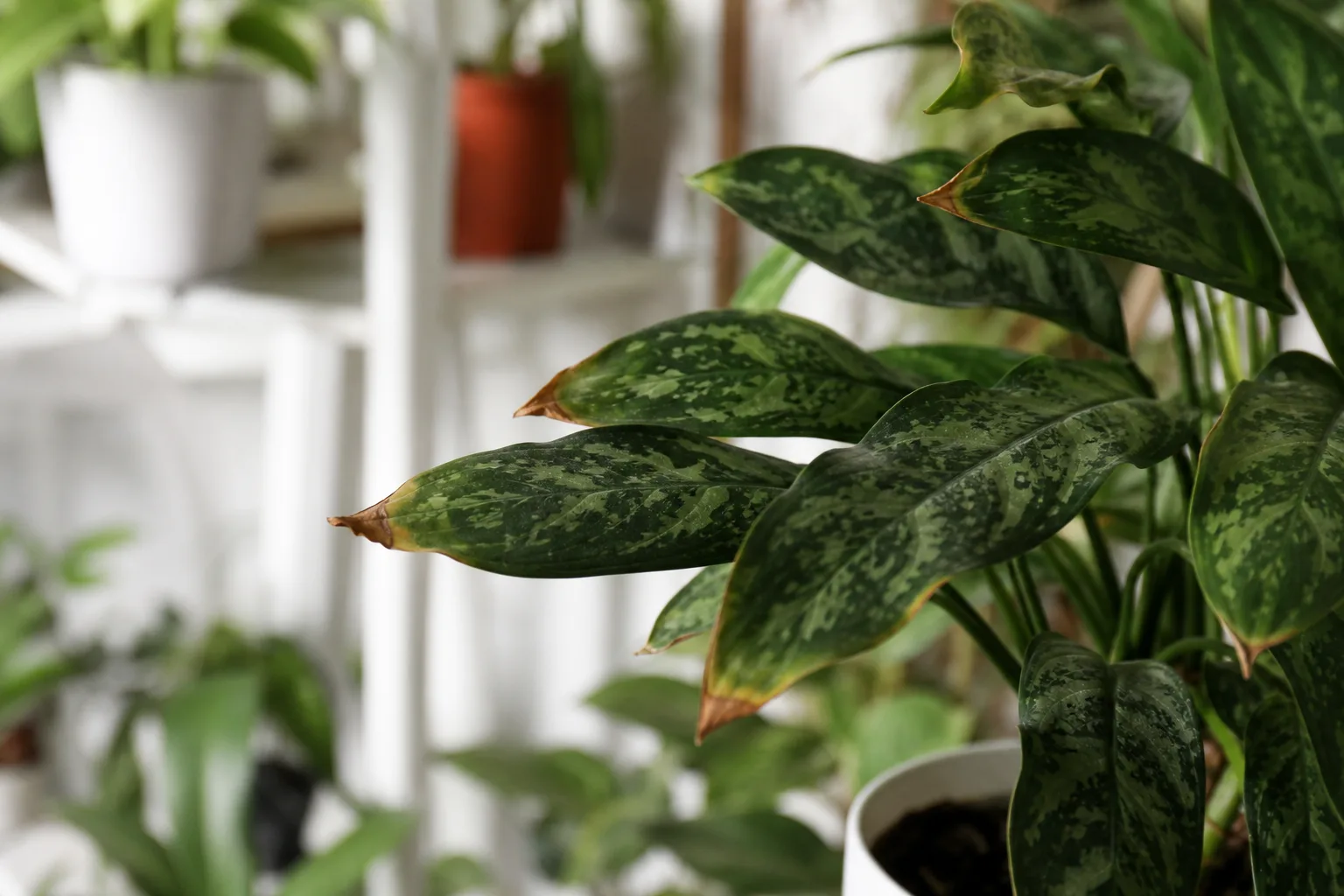
Brown Tips on Aglaonema Maria: Causes, Checks & Fixes
This guide covers brown tips on Aglaonema Maria. See also the general Brown Tips guide, watering, and light pages for this plant.
Brown Tips on Aglaonema Maria: Causes, Checks & Fixes
Quick answer
Aglaonema ‘Maria’ is one of the narrowest-leaved Chinese evergreens in cultivation. Its compact 12-18 inch crown carries dark green, lance-shaped blades feathered with subtle silver-gray chevrons that hug the midrib, a much narrower silver footprint than Silver Bay’s bold central band, and no pink or red anthocyanin pigment at all. In the low-to-medium indirect light where this cultivar settles best, growth is slow enough that each new crown leaf is genuinely informative. That is also why a single brown tip on a single Maria leaf often feels urgent: when a plant pushes out only a handful of new leaves per year, every emerging blade matters.
Brown tips on Maria are a margin-stress signal with a Maria-specific pattern. The most common causes, in order, are fluoride or salt buildup in the tap water and fertilizer, a small nursery pot drying unevenly in a heating-vent draft, and roots losing oxygen in a mix that stays wet too long in a cool or dim room. The plant-specific fix is placement and water quality, not extra humidity and not more water.
First fix: move the pot off the heating vent or AC duct, then check the top half of the mix with a finger or wooden skewer before adding any water. If the mix is still damp halfway down, do not water. If the mix is appropriately dry, water thoroughly until runoff exits the drainage holes and empty the saucer.
For the universal science of how chronic wet mix damages roots and how leaf tips dry first when humidity drops, see the global brown tips guide. The rest of this page focuses on what is specific to Maria.
What brown tips look like on Aglaonema Maria
Maria’s leaves are narrow, elliptical, and held upright on short stems. The silver variegation on this cultivar is feathered along the midrib, not a wide central block like Silver Bay, and the silver is never pink or red. That pattern is the first diagnostic anchor: any tip burn that does not sit on a clearly lance-shaped, dark-margined, silver-feathered blade is probably a different cultivar, a mislabeled plant, or a different problem.
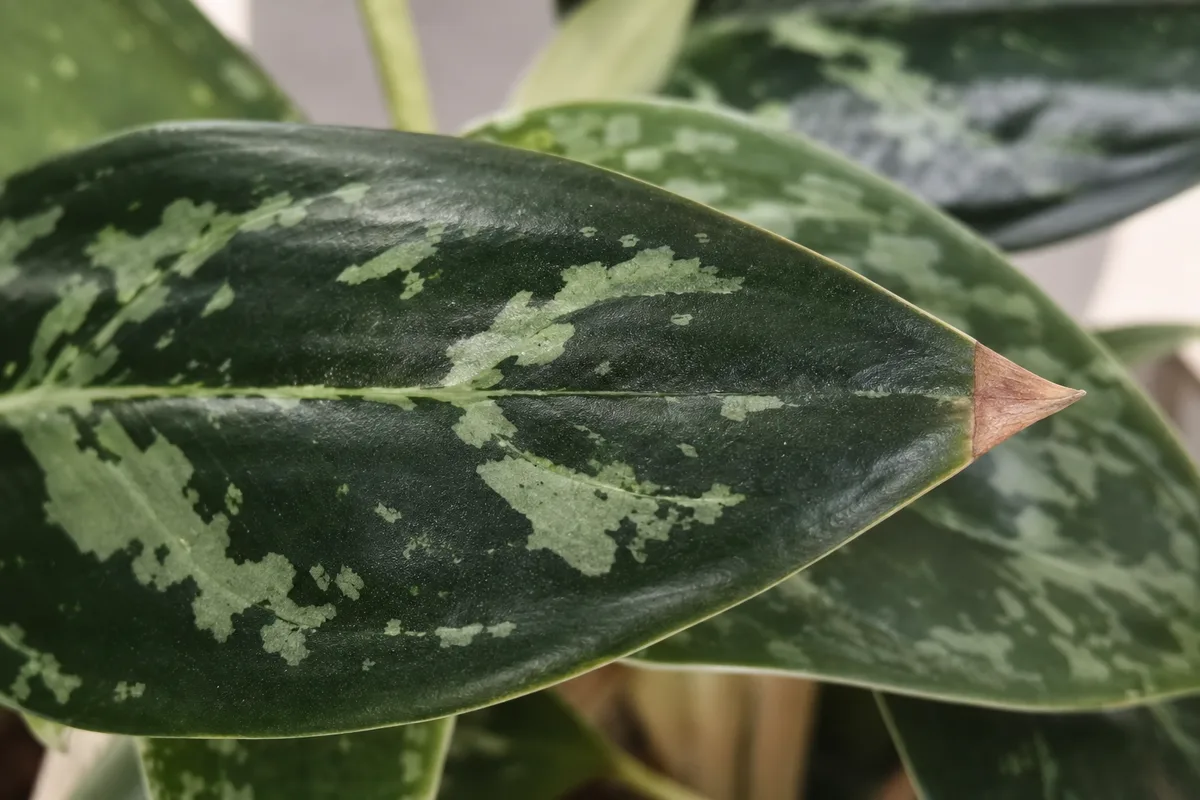
Brown tip symptoms on Aglaonema Maria - compare with the clean silver feathering on healthy tissue of the same plant.
Common tip-burn patterns on this cultivar:
- Old-leaf vent burn - the oldest outer leaves develop dry, tan-to-brown tips while newer center leaves keep crisp silver feathering. Tips feel papery, not soft. The pot usually sits within a foot of a heating vent, a cold AC duct, or a radiator.
- Fluoride or salt burn - tips brown on new leaves within days of unfurling, sometimes with a faint yellow halo between brown and green. You may also see a white crust on the soil surface or pot rim. Often follows months of hard tap water or steady feeding without flushes.
- Overwatering tip stress - tips crisp while the soil stays wet, the pot feels heavy days after watering, and lower leaves may yellow or feel limp. Roots lose function in saturated mix, so leaf margins dry even though the cause is too much water, not too little.
- Direct sun scorch - Maria belongs in low to medium indirect light. Direct rays on the silver zones can bleach or scorch tips and margins, with a patchy pattern on the sun-facing surface rather than uniform tips on every leaf.
- Cosmetic aging - one or two oldest bottom leaves may show minor tip browning over months on an otherwise stable plant. New crown growth stays clean. This is low priority if watering and placement are sound.
Worry when browning hits new center growth, spreads down leaf margins on most leaves, or pairs with wet, sour-smelling soil. A few millimeters of tan on one old leaf near a winter vent is cosmetic.
Why Maria’s narrow silver-feathered blade shows tip burn first
Maria is unusually sensitive to leaf-tip damage for two reasons that the broader Chinese evergreen guides gloss over: the blade shape and the variegation pattern.
First, the leaf is narrow and lance-shaped, not the broad oval of Silver Bay or the wide spear of Red Aglaonemas. The tip is the hydraulically most distant point from the petiole, and on a narrow blade that distance is reached faster relative to the leaf’s stored water. When transpiration briefly outpaces root delivery - a cold draft, a vent blast, a moment of dry air - the narrow tip is the first tissue to desicceate. The silver feathering is concentrated along the midrib, so the dark green margins around the silver chevron carry the tip margin furthest from any water column. This is also why Silver Bay, with its broader blade and bigger central silver block, often shows mid-leaf bleach in direct sun instead of crisp narrow-tip browning.
Second, Maria’s variegation is silver anthocyanin-free. Pink Dalmatian and Red Valentine carry anthocyanin pigments that visibly fade under stress, so growers can read stress through color shift before any tip burn appears. Maria has no pigment shift to read. The first sign that something is wrong on Maria is almost always mechanical: a tan tip on a leaf you cannot otherwise explain. The Missouri Botanical Garden notes that leaf tips die first when water delivery cannot keep up with transpiration, and that pathway is shortest on a narrow lance-shaped blade.
Maria’s compact nursery pot dries unevenly in a way Silver Bay’s container does not
Most Maria specimens are sold in small 4 to 6 inch nursery pots with a tight root mass and a thin shell of mix around the perimeter. Silver Bay, by contrast, is usually stepped up into an 8 to 10 inch pot before sale because the cultivar is larger and faster. That difference matters more than growers expect.
A small pot with a dense root ball has less margin for error in three directions at once:
- The mix dries quickly on the side facing the room or a vent, so the leaves on that side crisp while the leaves on the sheltered side stay green.
- The mix around the perimeter dries while the center stays damp, which produces uneven water delivery and a tip that crisps even though the surface feels dry - the classic Maria misread.
- A small reservoir runs out of water faster than a larger Silver Bay pot in the same room, so the plant swings between dry and freshly watered more often. Each swing stresses fine roots.
HortScience reports that mature Silver Bay leaves reach about 30 cm long and 10 cm wide in production - roughly twice the leaf area of a typical Maria blade. The larger Silver Bay pot holds a deeper reservoir that smooths over short dry-down swings; Maria’s smaller pot does not. If your Maria is in a 4-inch pot and the silver feathering is fading on one side only, the answer is usually pot size and airflow, not water quality.
Why fluoride and salts, not dry air, are the prime suspects on Maria
This is where the universal brown tips advice often misleads Maria owners. Most tropical brown tips articles tell you to raise humidity first. Maria tolerates average household humidity better than calatheas, ferns, or peace lilies, and Clemson Cooperative Extension classifies Chinese evergreen as a plant that handles normal indoor humidity. The cultivar is also less humidity-sensitive than the broader Araceae group, so a humidity fix alone rarely stops new tip browning on Maria.
The two leading causes on this cultivar are fluoride and fertilizer salts.
Chinese evergreens in the Araceae family are sensitive to fluoride and chloride in municipal tap water. Brown leaf tips from fluoride or chlorine buildup accumulate in leaf tissue over months, with the highest concentration sitting at the tip margin where water evaporates and leaves minerals behind. Resting tap water uncovered for 24 hours lets chlorine off-gas. Fluoride does not evaporate from standing water. The UConn plant science fact sheet on brown leaf tips is explicit: a yellow halo between brown and green tissue, paired with white crust on the soil, points to fluoride or salt injury rather than humidity.
Fertilizer salts work the same way: Maria is a light feeder, and overfeeding or skipping periodic flushes lets salts concentrate in the root zone. Excess salts draw water out of root cells and burn leaf edges and tips, often with the same yellow-halo signature.
Both causes are easy to misread as underwatering because the tip looks dry. Adding more water does not fix mineral injury and can worsen root stress on a plant that already sits in a small pot.
How to confirm the cause on Maria
Work through this order, because the wrong layer of fix is what stacks wasted effort:
- Which leaves are affected. Old outer leaves only, with new silver-feathered crown leaves clean, points to airflow or aging. New leaves tipping within days of unfurling points to fluoride or salts. Most leaves, with the pot wet, points to root stress.
- Probe the top half of the mix. Cool and damp halfway down means pause watering. Dry through that zone with a lightweight pot suggests drought or uneven dry-down is possible. Heavy pot days after watering confirms slow dry-down, often paired with small-pot constraints.
- Placement and airflow. Within a foot of a heating vent, a cold AC duct, or a cold window at night? Maria in a draft shows one-sided tip burn.
- Pot rim and soil surface. White crust or gritty deposits suggest salt buildup from fertilizer or hard water.
- Water source. Months of untreated tap water with recurring new-leaf tip burn supports fluoride or mineral sensitivity.
- Light exposure. Direct sun on the silver feathering? Bleach is different from tip necrosis - check that the damage sits on a sun-facing surface, not the tip margin.
- Root spot-check - if wet soil pairs with spreading margin browning. Gently slide the plant partway out. Firm pale roots support a dry-down fix. Mushy brown roots confirm rot and need trimming before recovery - see Maria root rot.
Confirmed fluoride or salt burn shows tipping on new leaves, possible white crust, and a history of hard tap water or steady feeding. Confirmed vent or airflow burn shows dry papery tips on older leaves, clean new silver-feathered growth, and a pot sitting in a drafty microclimate.
First fix for Aglaonema Maria
Move the pot off the heating vent or AC duct, then probe the top half of the mix before adding any water.
That single action corrects the two mistakes that cause most repeat tip burn on this cultivar: treating dry-air symptoms with extra water, and leaving the plant in airflow that keeps tip margins desiccating.
After placement and the moisture check:
- If the mix is still damp halfway down, do not water. Wait until the top half dries.
- If the mix is appropriately dry and placement is stable, water thoroughly until runoff exits the drainage holes, then empty the saucer.
- If new leaves keep tipping within weeks, switch to filtered, distilled, or rested tap water for the next four to six weeks and skip fertilizer until new growth stays clean.
- If white crust covers the soil, plan a plain-water flush during the next watering - not on the same day as the placement change, and never on a waterlogged pot that smells sour or has soft stems.
Make this one correction first. Wait at least two weeks before stacking a second fix unless salt buildup is obvious.
If roots are mushy
When a spot-check finds brown, slimy roots and sour-smelling mix with browning margins on most leaves, escalate to root rot recovery on Aglaonema Maria: unpot, trim dead roots, let cut surfaces dry briefly, and repot into a fresh airy mix. That path is for confirmed rot, not for a few tan tips on one old leaf near a vent.
Editorial case note: small pot, hard tap water, vent draft
A Maria in a 5-inch plastic nursery pot on a home-office desk developed brown tips on three outer silver-feathered leaves during late February. New center leaves started tipping within a week of unfurling. The pot sat about 12 inches from a ceiling heat register; the owner had watered with untreated city tap water for nine months.
Actions taken: moved the pot to a stable corner away from the vent; switched to a fluoride-rated filter pitcher; skipped fertilizer; probed the top half of the mix and watered only when that zone had dried. The small pot was left in place because the root ball was not crowded and the dry-down rhythm matched the room once airflow was corrected.
Outcome: the next two crown leaves opened with clean dark-green tips and intact silver feathering by day 21. A third clean leaf by day 35 confirmed the water-and-placement fix. Older tipped leaves were trimmed cosmetically after day 25, leaving a thin brown edge.
This pattern - new-leaf tipping plus vent proximity plus long tap-water history in a small pot - points to overlapping fluoride sensitivity, airflow stress, and small-pot dry-down swings. Fix placement and water source together rather than chasing humidity alone.
Recovery timeline
Brown tip tissue does not turn green again. Recovery is read from new growth out of the center:
- Airflow or vent burn - new silver-feathered leaves often emerge with clean tips within two to three weeks after placement improves. Old tipped leaves can stay trimmed or in place.
- Fluoride or salt burn - switching water and flushing salts may take four to eight weeks before several consecutive new leaves show clean margins. Maria grows slowly, so plan on one to two new leaves per month in active indoor conditions, not weekly flushes of new growth.
- Overwatering tip stress - tips stop spreading once soil oxygen returns, often within one to two dry-down cycles. New leaves emerge crisp within two to four weeks if roots are still firm.
- Advanced root rot - recovery is slower and may be partial. If the crown softens or new leaves keep browning after a dry-down and root trim, the plant may not be saveable.
Signs of improvement: new silver-feathered leaves with clean dark green tips, pot weight dropping on a normal schedule, and browning that does not spread down margins. Signs of worsening: sour smell, soft stems, tipping on every new leaf despite filtered water, or soil that never dries. Pink Dalmatian and Red Valentine show additional recovery signals in pigment intensity; Maria does not, so structural cues carry the diagnosis alone.
What not to do on Aglaonema Maria
Do not water more because tips look dry when soil is already wet. Maria’s small pot holds less water than you expect, but its roots still lose function in saturated mix, and adding water deepens the exact problem.
Do not mist as the only humidity fix for Maria. The cultivar tolerates average household humidity; misting alone does not address the airflow or water-quality cause that drives tip burn on this plant.
Do not fertilize a tipped, stressed plant to force new growth. Salt buildup from overfeeding causes the same tip burn you are trying to fix, and Maria pushes out so few leaves per year that a flush of salt-driven new damage takes months to grow out of.
Do not repot on day one unless roots are mushy, salt crust is severe, or drainage has failed. A bigger pot holds more water, which can make drying slower in a dim room. Step up only after placement and water quality are correct.
Do not trim brown tips back into green tissue. Cut along the natural leaf shape and leave a thin brown edge to avoid wounding healthy cells - this matters more on narrow lance blades like Maria because there is less margin to absorb a bad cut.
Do not flush a waterlogged Maria that smells sour or has soft stems. Dry the root zone first or escalate to root-rot recovery.
How to prevent brown tips on Aglaonema Maria
Prevention on this cultivar is about stable placement, clean water, and matching watering to a small pot:
- Placement first - keep Maria off radiators, away from AC and heating vents, and out of direct sun on the silver zones.
- Water by dryness, not calendar - check the top half of the mix every time. In a small 4 to 6 inch pot in medium light, expect water every 10 to 14 days in summer and every 18 to 25 days in cool winter rooms.
- Use appropriate water - filtered, fluoride-rated, distilled, or well-rested tap water if new leaves repeatedly tip. Most municipal water is fine if tips stay clean on new silver-feathered growth.
- Feed lightly - half-strength balanced fertilizer during spring and summer only; skip feeding in fall and winter.
- Flush salts occasionally - one thorough plain-water flush during active growth if you feed regularly, after the pot has first drained freely.
- Match pot to root mass - if the root ball is loose in the pot, the mix dries too fast on the perimeter; if the roots circle tightly, water runs straight through. Either extreme changes how tips respond to the same watering rhythm.
When to worry
Treat brown tips as urgent when:
- Browning spreads from tips down most leaf margins on many leaves at once.
- Soil smells sour or stems feel soft at the soil line while tips crisp.
- New center growth tips brown within days of unfurling despite filtered water and good placement - inspect roots the same week.
- The plant collapses despite moist soil - roots may be failing to absorb water.
A few tan tips on one or two oldest leaves near a winter vent on an otherwise stable Maria is cosmetic. Widespread margin browning with wet soil is not - inspect roots promptly.
Maria cross-check against sibling cultivars
This page is calibrated to Maria. If you grow other Chinese evergreens alongside Maria, the same tip pattern can mean different things:
- Silver Bay has a wider blade with a bold silver central band. Tip browning on Silver Bay is more often accompanied by mid-leaf bleach from direct sun, because the broader silver center absorbs more light.
- Pink Dalmatian carries anthocyanin-driven pink speckles. Recovery on Pink Dalmatian is read through pink pigment intensity returning, not just clean margins. Pink Dalmatian also tolerates a touch less fluoride before showing damage.
- Red Valentine has broad red-toned margins and needs brighter indirect light to keep its color. Tip burn on Red Valentine often pairs with fading red pigment under low light - a different signal than Maria’s mechanical margin necrosis.
If your plant does not match Maria’s narrow silver-feathered leaf shape, switch to the cultivar-specific page. The Aglaonema Maria overview covers baseline care, the Aglaonema Maria watering guide covers dry-down rhythm, and the Aglaonema Maria fertilizer guide covers feeding and salt management.
When to use this page vs other Aglaonema Maria guides
- Aglaonema Maria watering guide - use for routine moisture checks before assuming brown tips is the main issue.
- Aglaonema Maria problems hub - browse all 16 common issues on this species.
- Low Humidity on Aglaonema Maria - different entry point when older leaves show widespread dry edges rather than isolated tip burn.
- Underwatering on Aglaonema Maria - different entry point when the pot stays light and mix pulls away from the sides.
- Overwatering on Aglaonema Maria - different entry point when the pot stays wet and lower leaves are failing.
- Root Rot on Aglaonema Maria - escalate here the moment you see soft stems or sour-smelling mix.
Related Aglaonema Maria guides
- Aglaonema Maria overview
- Aglaonema Maria watering
- Aglaonema Maria light
- Aglaonema Maria soil
- Low Humidity on Aglaonema Maria
- Underwatering on Aglaonema Maria
- Overwatering on Aglaonema Maria
- Yellow Leaves on Aglaonema Maria
- Aglaonema Maria problems
- Global brown tips guide
- Houseplant symptoms hub
Plant-only diagnostic anchors on Aglaonema Maria
These are the Maria-specific signals worth memorizing before you change anything:
- The leaf is lance-shaped and narrow, with silver feathering along the midrib and a dark green margin. Pink or red pigment means a different cultivar.
- Maria is usually sold in a small 4 to 6 inch nursery pot, which dries unevenly on the perimeter while the center stays damp - one-sided tip burn is common.
- Maria grows slowly in low-to-medium indirect light. Recovery is measured across one to two new leaves per month, not weekly.
- No anthocyanin pigment means Maria does not give you a color signal. Mechanical cues - clean dark green tips on new silver-feathered leaves - carry the diagnosis.
These four anchors would be wrong on Silver Bay (broad blade, bold silver center, larger pot, faster growth), on Pink Dalmatian (pink speckles, anthocyanin signal, color fade under stress), and on Red Valentine (red margins, brighter light requirement, faster water use). Read them through Maria’s morphology first; the universal brown-tips science is the same as for any other houseplant.