Low Humidity on Aglaonema Maria: Causes, Checks & Fixes
Quick answer
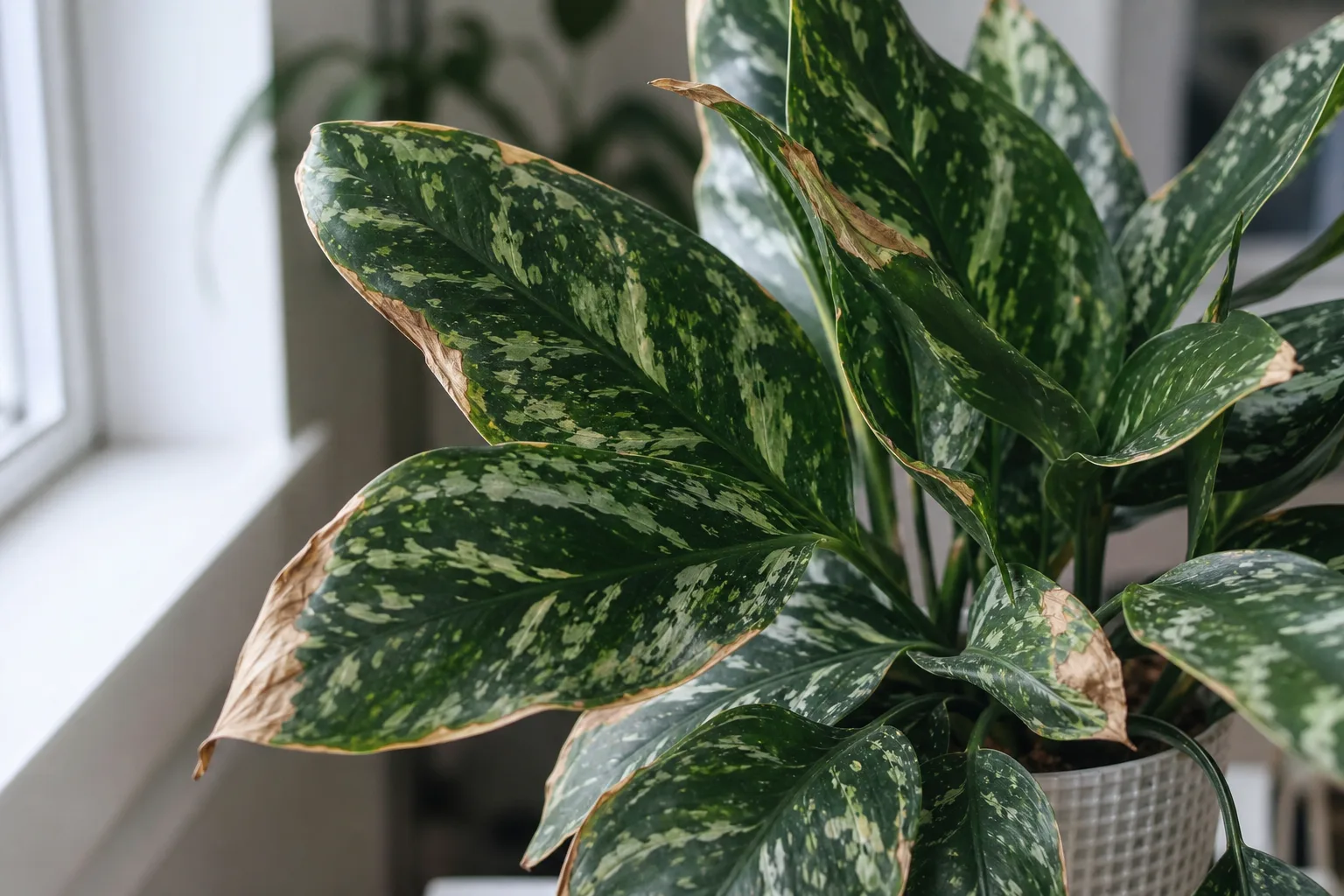
Low humidity on Aglaonema Maria shows as dry, papery brown tips on older leaves while new silver-striped growth stays clean-common near heating vents in winter. First step: scan vent and radiator placement, then check relative humidity at foliage height; if below about 40% with acceptable soil moisture, move the pot off forced-air paths before you add water.
Low Humidity on Aglaonema Maria: Causes, Checks & Fixes
This guide covers low humidity on Aglaonema Maria. See also the general Low Humidity guide, watering, and light pages for this plant.
Low Humidity on Aglaonema Maria: Causes, Checks & Fixes
Quick answer
Low humidity on Aglaonema Maria (Aglaonema commutatum ‘Maria’) means the air around the plant is too dry for this compact Chinese evergreen to replace moisture lost through its broad leaf tips-especially in heated winter rooms or beside forced-air vents. The classic pattern is dry, tan-to-brown tips on older outer leaves while new silver-striped center growth stays green and firm, with soil moisture still in Maria’s normal range.
First step: move the pot off heating vents, radiators, and AC drafts, then probe the top half of the mix before you add water. Maria is drought-tolerant; brown tips from dry air often get worse when owners water a pot that is already damp. If placement is stable and a hygrometer at foliage height reads below about 40% RH, raise ambient moisture with a humidifier, plant grouping, or pebble tray with the pot base above the water line.
For tip patterns that include new-leaf burn, white soil crust, or wet heavy soil, see brown tips on Aglaonema Maria-that page covers mineral and root-stress lookalikes in depth. This page owns dry-air stress when Maria’s Aglaonema Maria watering guide is otherwise sound.
Does Aglaonema Maria need high humidity?
Maria is more forgiving than prayer plants, ferns, or calatheas, but it is not immune to dry indoor air. Clemson Cooperative Extension lists Chinese evergreen as remarkably tolerant-it handles poor light, dry air, air-conditioning, and drought-and notes that most cultivars grow well in an average house with low to moderate humidity. That tolerance is why Maria thrives in offices and north-facing rooms where fussier tropicals fail.
The same source describes humidity preference as moderate, not tropical-greenhouse high. In practice, Maria usually stays healthy at roughly 40–50% relative humidity or typical heated-home levels above about 30%, as long as the pot is not in a vent’s direct path. Problems appear when winter heating drops whole-room RH to 20–35%-common in centrally heated homes per Penn State Extension-and the plant sits where hot or cold airflow pulls moisture from leaf margins faster than roots can supply it.
Maria’s dark green leaves with silver striping along the veins mean the plant photosynthesizes efficiently in low light, but the broad leaf tips are still the first tissue to desiccate when air is harsh. You do not need a greenhouse; you need to keep Maria out of microclimates that are drier than the rest of the room.
What low humidity looks like on Aglaonema Maria
Healthy Maria leaves are glossy, lance-shaped, and firm from base to tip, with dark green margins and silver stripes on short upright stems. Low-humidity damage usually follows a recognizable pattern:
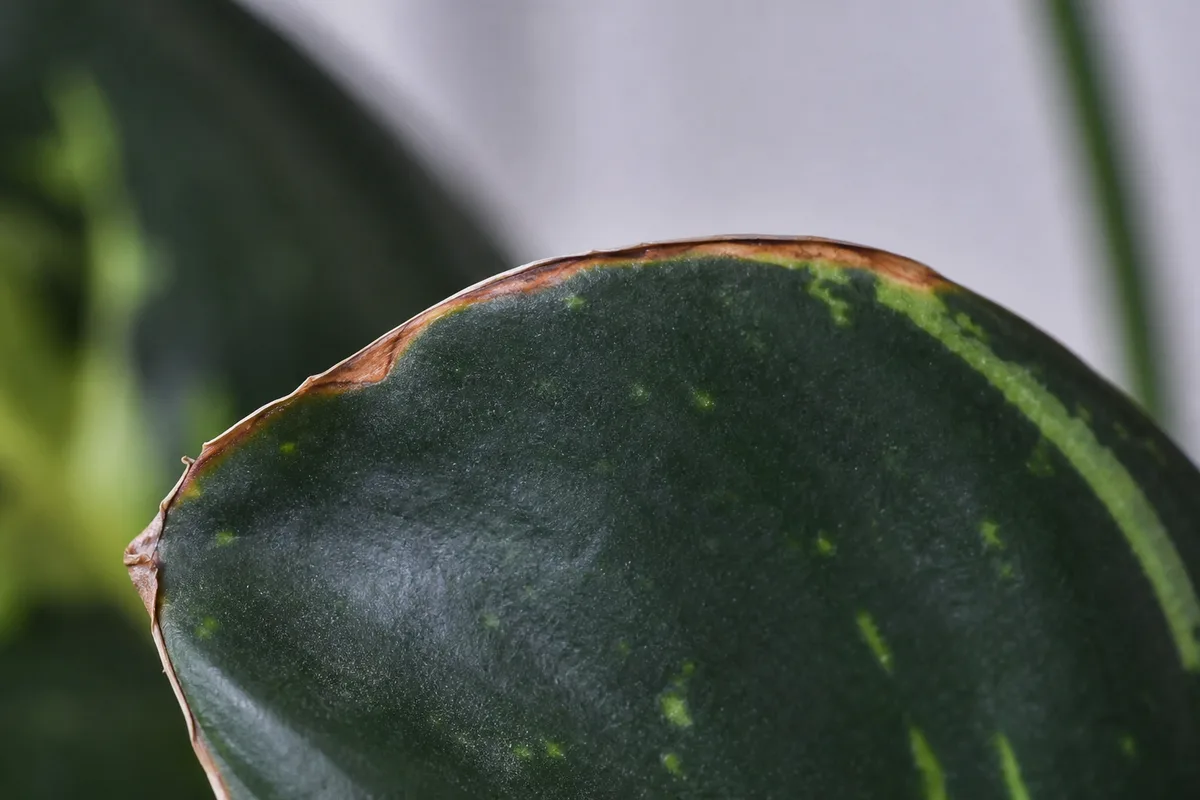
Low Humidity symptoms on Aglaonema Maria - compare with healthy tissue on the same plant.
- Oldest leaves first - Outer, lower leaves develop dry, papery tan-to-brown tips while newer center leaves stay green with crisp silver patterning.
- Moist-enough soil, crispy tips - The top half of the mix reads appropriately dry on Maria’s schedule, but tips brown anyway-a hallmark of air moisture failure, not thirst.
- Vent-side damage - Browning appears on the leaf surface facing a radiator, floor vent, or cold AC stream before the rest of the plant.
- Winter timing - Symptoms worsen after heating season begins or when a plant moves from a humid nursery bench to a dry apartment.
- Slow growth, not collapse - Maria rarely wilts dramatically from dry air alone; margins crisp while stems stay firm unless you overwater in response.
Normal minor tip wear on one or two bottom leaves on an otherwise stable plant is low priority. Multiple leaves tipping on the vent-facing side in a dry room is not-act on placement and humidity before the pattern spreads.
Why Aglaonema Maria gets low-humidity stress
Winter heating and forced-air drafts
Illinois Extension notes that indoor relative humidity can plummet below 20% in winter while most houseplants prefer 40–50% for healthy growth. Central heating removes moisture from already-dry cold outdoor air. Maria near a heat register loses water from leaf tips faster than its drought-tolerant root system can replace it-even when you have not changed your watering calendar.
Pots on windowsills above radiators, beside floor vents, or in the direct path of AC create localized dry zones. NC State Extension warns that Aglaonema leaves may turn brown in very dry air or a drafty location-exactly the Maria pattern when airflow is constant but room-average humidity looks acceptable.
Maria tolerates average air-but not every spot in the room
Because Clemson lists Chinese evergreen among the most durable houseplants, owners sometimes assume humidity never matters. That is only true when placement is stable. Maria in the middle of a living room may be fine at 35% RH while Maria six inches from a winter vent crisps within weeks. The species tolerates low to moderate humidity; it does not tolerate continuous desiccating airflow on foliage.
Compared to calatheas or maidenhair ferns, Maria needs modest intervention-a moved pot or a pebble tray often suffices. Compared to cacti, Maria still expects tropical-ish air when heat runs daily for months.
Dry heat and pest pressure
Warm, dry air also favors spider mites on stressed houseplants. If you see stippling and fine webbing-not just clean papery tips-see spider mites on Aglaonema Maria after you stabilize humidity. Dry-air tip burn and mite damage can overlap in the same winter room.
Lookalike symptoms to rule out
Low humidity overlaps with several other Maria problems. Use this table before you buy a humidifier or change water:
| Pattern | Likely issue | Key differentiator |
|---|---|---|
| Papery tips on oldest leaves, clean new growth, near vent | Low humidity | RH below ~40%; draft or winter heat; soil moisture normal |
| Tips on new leaves unfurling, white soil crust | Brown tips - salt or fluoride | Hard tap water or heavy feeding; not vent-specific |
| Crispy tips, wet heavy soil, limp lower leaves | Overwatering | Top half still damp days after watering; sour smell possible |
| Crispy tips, very light pot, bone-dry mix | Underwatering | Whole plant slightly limp; perks after thorough soak |
| Fine stippling + webbing on undersides | Spider mites | Dry warm air plus pest signs; not margin-only necrosis |
| Yellow lower leaves spreading, wet mix | Root stress / yellow leaves | Whole-leaf color change, not isolated dry tips |
The high-value scenario: “Soil probe says Maria is on schedule, but oldest tips crisp in January beside a heat register” → fix placement and raise RH, not water.
How to confirm low humidity is the cause
Work through this confirmation workflow in order:
- Which leaves are affected - Oldest outer leaves only, new center growth clean = dry air or aging likely. New leaves tipping within days = water quality or salts likely (brown tips guide).
- Moisture through the top half - Cool and damp halfway down means do not add water even if tips look dry. Appropriately dry on Maria’s rhythm with crispy tips points to air, not roots.
- Placement and airflow scan - Is the pot above a radiator, beside a floor vent, in an AC stream, or on a sun-heated windowsill above a heat source? Measure 3–4 feet from vents as a safer minimum in winter.
- Relative humidity at foliage height - A digital hygrometer near the canopy (not on the windowsill) gives a useful reading. Below ~40% with matching symptoms supports low humidity; most houseplants benefit from higher winter moisture than heated homes provide.
- Season and recent moves - Did symptoms start when heat turned on or after a room change? Nursery-to-home adjustment often shows tip burn in the first dry winter even when care is correct.
- New growth check - Clean silver-striped leaves emerging from the crown mean the environment is acceptable once placement is fixed. New tips browning despite good placement suggests minerals or watering-not this page’s primary diagnosis.
Confirmed dry-air stress: papery tips on older leaves, clean new growth, vent or winter-heat proximity, acceptable soil moisture, and low RH reading or obvious draft.
First fix for Aglaonema Maria
Move the pot off heating vents, radiators, and AC drafts-then probe the top half of the mix before you add water.
That single step addresses Maria’s two most common dry-air mistakes: leaving the plant in airflow that keeps desiccating margins, and overwatering because brown tips look like thirst. Maria should be watered when the top half of the soil dries-not when tips brown on an already-damp root ball.
After relocation:
- Wait one week and watch new center growth. If tips on new leaves stay clean, placement was likely the main fix.
- If RH at foliage height stays below ~40% and oldest tips keep crisping, add one humidity method below-do not stack misting, Aglaonema Maria repotting guide, and fertilizer the same week.
Do not compensate with extra watering, heavy feeding, or daily misting on day one.
Raise local humidity for Aglaonema Maria
Choose one method first; Maria rarely needs a full greenhouse setup.
Humidifier (most reliable for dry winter rooms)
A small cool-mist humidifier run several hours daily during heating season raises ambient moisture more consistently than misting. Penn State Extension recommends portable humidifiers when whole-house levels fall below comfortable ranges in winter. Place the unit several feet from Maria-not blowing directly into the crown-so foliage does not stay wet overnight. Clean the tank regularly to avoid bacterial buildup.
Plant grouping
Illinois Extension notes that clustering plants lets shared transpiration create a modest microclimate. Group Maria with other broadleaf tropicals on a table away from vents. This helps mild dryness; it is less effective when one plant sits alone beside a radiator.
Pebble tray
Set the pot on a wide tray of pebbles with water below the pot base so roots never sit in standing water. Evaporation raises humidity locally around the canopy. Refill as needed. Pair with vent clearance for best results on Maria.
What not to rely on
NC State Richmond County Extension debunks misting as a humidity fix-the benefit lasts minutes and can encourage foliar problems if leaves stay wet. Brief misting does not replace moving off vents or running a humidifier. Avoid misting Maria repeatedly with hard tap water if fluoride spotting is already a concern.
Recovery timeline
Dry-air tip damage on Maria is cosmetic on old leaves and recoverable at the growing point. Brown tip tissue will not re-green. Judge success by new leaves from the center emerging with clean margins for two to three weeks after placement and humidity stabilize.
Mild winter tip burn on a few lower leaves often stops spreading within one to two weeks once the pot leaves the vent path. If you add a humidifier, allow three to four weeks before expecting clear improvement on new growth-Maria is slow.
Worry if new center leaves tip despite filtered water, stable placement, and RH above 40%-inspect for salt crust, wet soil, or pests. Widespread margin browning with sour-smelling wet mix is root stress, not humidity alone.
What not to do
Do not overwater because tips look dry when the top half of the mix is still damp-Maria’s biggest indoor risk is wet soil, not drought. Do not mist heavily every day expecting RH to rise; use a humidifier or pebble tray instead. Do not fertilize a stressed Maria to “green up” tipped leaves. Do not repot, prune heavily, and add humidity gadgets on the same day-change placement first, then wait. Do not confuse dry-air tips on old leaves with fluoride burn on new leaves-see brown tips if new growth keeps failing after air fixes. Do not ignore stippling and webbing in a hot dry room-check for spider mites.
How to prevent dry-air stress next winter
Before heating season, audit Maria’s spot against the overview care targets: low to medium indirect light, water when the top half dries, and stable room air without vent drafts.
- Relocate in fall - Move Maria off windowsills above radiators and at least 3–4 feet from forced-air outlets before daily heat runs.
- Track RH once - A hygrometer reading in November tells you whether a humidifier is worth running January through March.
- Group or tray - Keep Maria near other plants or on a pebble tray in the driest room you grow in.
- Match watering to season - Maria uses less water in low light and cool rooms; wet soil plus dry air still crisps tips because roots cannot deliver water efficiently.
- Review water quality separately - If tips hit new leaves every season despite good humidity, address tap-water minerals on the brown tips page rather than chasing more humidity.
Aglaonema Maria care cross-check
If dry-air symptoms keep returning, compare your setup to what this cultivar needs:
| Checkpoint | Healthy target | Low-humidity risk when wrong |
|---|---|---|
| Airflow | Stable room air; no vent drafts | Radiators, AC, cold glass drying margins |
| Relative humidity | ~40–50% or stable average home | Below ~35% with constant heat; vent microclimates |
| Soil moisture | Top half dry before watering | Overwatering when tips look “dry” |
| Symptom pattern | Oldest tips only; clean new growth | New-leaf tip burn → check water quality |
| Season | Stable or humidifier in winter | First heating month without placement audit |
| Pests | Clean undersides | Dry heat plus stippling → spider mites |
Fix the failed checkpoint before repotting for size or adding fertilizer. Maria rewards boring, stable care more than aggressive intervention.
When to use this page vs other Aglaonema Maria guides
- Aglaonema Maria watering guide - Use for routine moisture checks before assuming low humidity is the main issue.
- Aglaonema Maria problems hub - Browse all 16 common issues on this species.
- Brown Tips on Aglaonema Maria - Different entry point when symptoms overlap with low humidity.