Yellow Leaves on Aglaonema Maria: Causes, Checks & Fixes
Quick answer
On Aglaonema Maria, yellow leaves most often come from soil staying wet too long, especially in dim or cool conditions. First check the root zone before you change anything else: if the pot is still heavy and damp, pause watering and reassess drainage, light, and temperature.
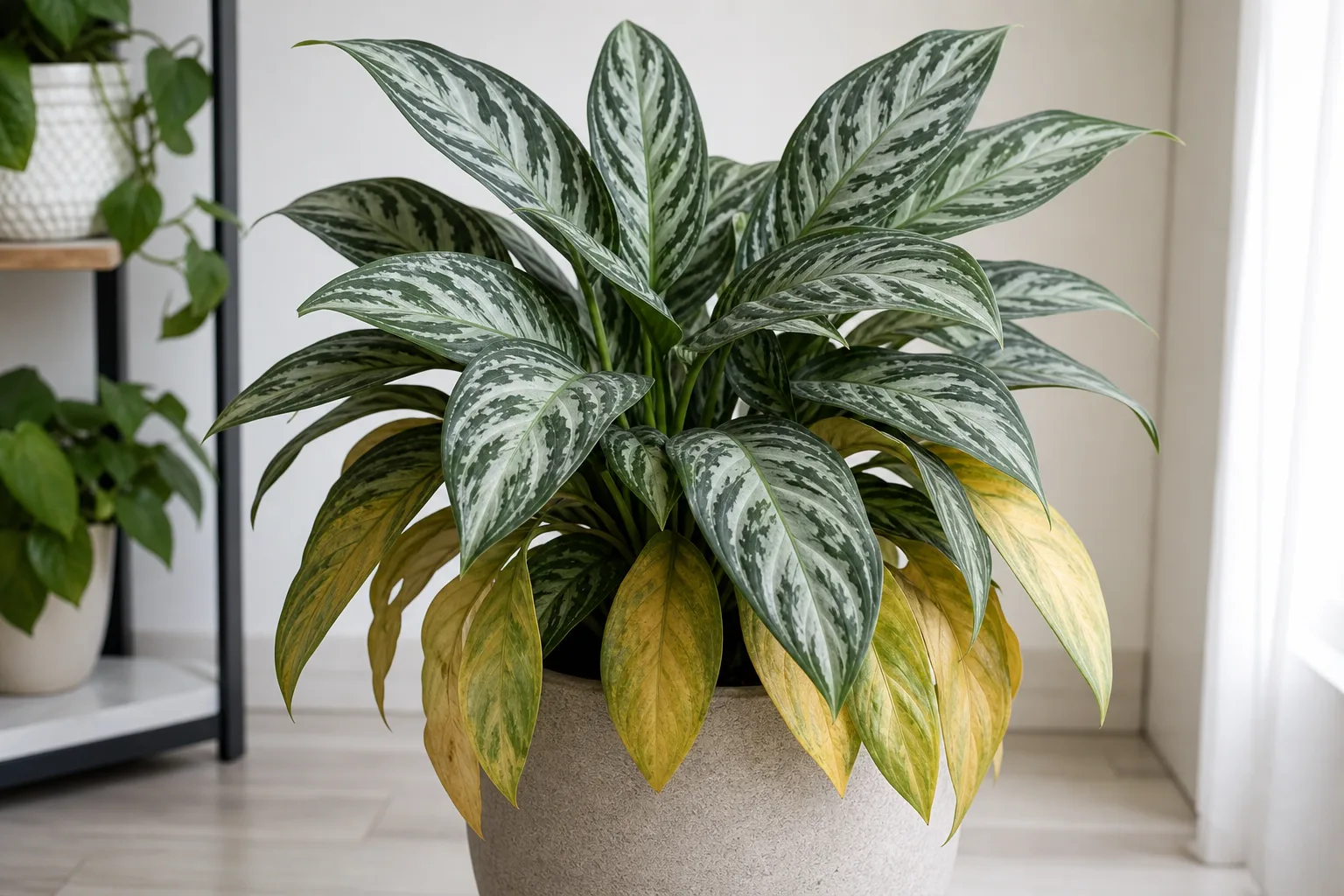
Yellow Leaves on Aglaonema Maria: Causes, Checks & Fixes
This guide covers yellow leaves on Aglaonema Maria. See also the general Yellow Leaves guide, watering, and light pages for this plant.
Yellow Leaves on Aglaonema Maria: Causes, Checks & Fixes
Quick answer
Yellow leaves on Aglaonema ‘Maria’ are a symptom, not a diagnosis. On this slow-growing Chinese evergreen, the most common cause in homes is still wet soil that stays wet too long, especially in dim rooms or cool seasons. Clemson Cooperative Extension and UF/IFAS both describe Aglaonema as a plant that tolerates lower light but suffers when overwatered.
First fix: check the pot before you change anything else. If the mix is still damp below the surface and the pot feels heavy, do not add more water. Instead, pause watering and review Aglaonema Maria watering, light, and drainage. If the plant is yellowing while the pot is wet and the stem base is soft, move quickly to root rot on Aglaonema Maria.
What Yellow Leaves Usually Look Like on Maria
Pattern matters more than the color alone.
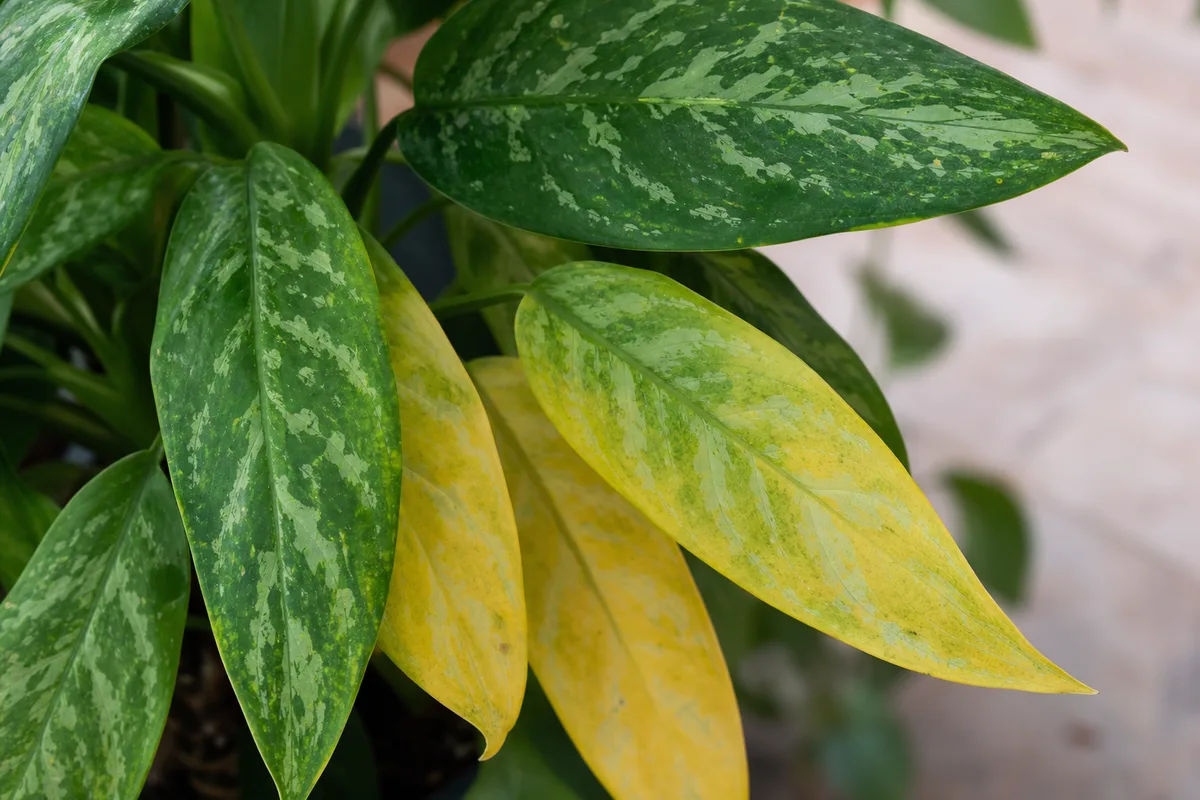
On Maria, one slow-fading bottom leaf is different from several leaves yellowing together in a wet pot.
Common patterns:
- one old lower leaf at a time: often normal aging
- several lower leaves yellowing together in damp mix: more often overwatering or root stress
- patchy paling on the window-facing side: more often direct-light stress
- yellowing after a cold snap or vent exposure: more often temperature stress layered on wet roots
- new center growth yellowing: more concerning than old-leaf yellowing
This is why the page should not start with fertilizer. Yellow leaves on Maria are usually better read through the pot and placement first.
Why Aglaonema Maria Yellows So Easily in Wet Conditions
Maria is slower and more shade-tolerant than many tropical houseplants, but that also means it can sit in damp mix for too long without using much water. Clemson Cooperative Extension recommends watering Chinese evergreen only when the upper soil layer dries and warns that overwatering can cause rot. NC State Extension likewise places Aglaonema in the aroid group that wants moisture without waterlogging.
In practice, yellowing often starts when one or more of these stack together:
- a dense retail potting mix
- low light
- a pot that is too large
- a cachepot holding runoff
- winter or air-conditioned rooms that slow drying
Maria is not a cactus, but it is much easier to keep too wet than many growers expect.
The Most Common Causes
Overwatering and poor dry-down
This is the leading cause. Wet soil keeps oxygen away from roots and can push older leaves yellow first. If the pot stays heavy for days after watering, go to overwatering on Aglaonema Maria.
Normal lower-leaf aging
A single oldest leaf fading over time while the center stays strong is normal. Do not repot or fertilize a healthy plant because one lower leaf aged out.
Cold stress
Clemson Cooperative Extension lists Chinese evergreen as a warm-growing foliage plant and notes damage risk as temperatures fall. Yellowing often worsens when cool drafts combine with wet soil. If the plant sits on cold glass or under AC, check low temperature and draft issues before assuming thirst.
Too much direct light
Maria wants low to medium indirect light, not harsh direct sun. UF/IFAS describes Aglaonema as a low-light foliage plant; direct sun can bleach and stress the leaves rather than help them recover.
Salt buildup and water quality
Brown tips with yellow halos, crust on the pot rim, and new leaves that look weak can point more to brown tips on Aglaonema Maria or fertilizer buildup than to simple overwatering.
How to Tell Which Cause Fits
Use this order:
- Check the mix below the surface. Damp lower mix with yellowing leaves pushes the diagnosis toward root stress.
- Lift the pot. A heavy pot supports waiting, not watering.
- Check which leaves are affected. Oldest only is less urgent than center growth.
- Review placement. Dim corner, cold sill, or direct sun each change the meaning of the same yellow leaf.
- Inspect the base if needed. Softness or sour smell is a red flag for root rot on Aglaonema Maria.
First Fix: Stop Chasing the Color and Read the Pot
The first fix is usually to pause watering until the top part of the mix actually dries, not to add fertilizer or move straight to repotting.
If the plant is only mildly stressed and the roots are probably still sound:
- let the mix dry further
- empty any saucer or cachepot water
- move the plant into steadier indirect light
- keep it away from cold drafts
If the pot is wet and the plant is getting worse, open the root rot page instead of waiting for more yellow leaves.
When to Repot and When Not To
Repot sooner when:
- the mix is compacted or sour
- water runs poorly through the pot
- the plant sits in a peat-heavy plug that never seems to dry
- roots are failing and you need to inspect them
Do not repot on day one just because leaves turned yellow. A healthy plant with one aging lower leaf or a plant that simply needs a longer dry-down can be made worse by unnecessary disturbance.
Recovery Timeline
Yellow leaves do not set the recovery timeline. New growth does.
- fully yellow leaves usually stay yellow
- mild overwatering often improves once oxygen returns to the root zone
- new center leaves should stay greener if the fix was correct
If yellowing keeps climbing toward the center despite better moisture control, reassess the roots and the diagnosis through the Aglaonema Maria problems hub.
What Not to Do
Do not water again just because the leaves look limp if the pot is still wet.
Do not move the plant into direct sun to “dry it out.”
Do not assume every yellow leaf needs fertilizer.
Do not ignore temperature and airflow while you troubleshoot moisture. On Maria, wet roots plus cool conditions are far more damaging than either factor alone.
Prevention
Most prevention comes down to matching water to actual drying speed:
- water by dryness, not by weekday
- use a pot with drainage
- keep the plant in low to medium indirect light
- avoid leaving runoff trapped in decorative outer pots
- let winter and dim rooms slow the schedule naturally
Those same habits reduce risk for underwatering on Aglaonema Maria, wilting on Aglaonema Maria, and mold on soil on Aglaonema Maria.
When to Use This Page vs Other Aglaonema Maria Guides
- Aglaonema Maria watering: use for routine moisture decisions before the plant declines.
- Overwatering on Aglaonema Maria: use when the pot stays wet and multiple leaves are failing.
- Brown Tips on Aglaonema Maria: use when the main problem is crisp margins rather than whole yellow leaves.
- Root Rot on Aglaonema Maria: use when the base softens or the soil smells sour.
- Aglaonema Maria problems hub: use when the pattern still feels mixed.