Aglaonema Maria Propagation: Step-by-Step Guide
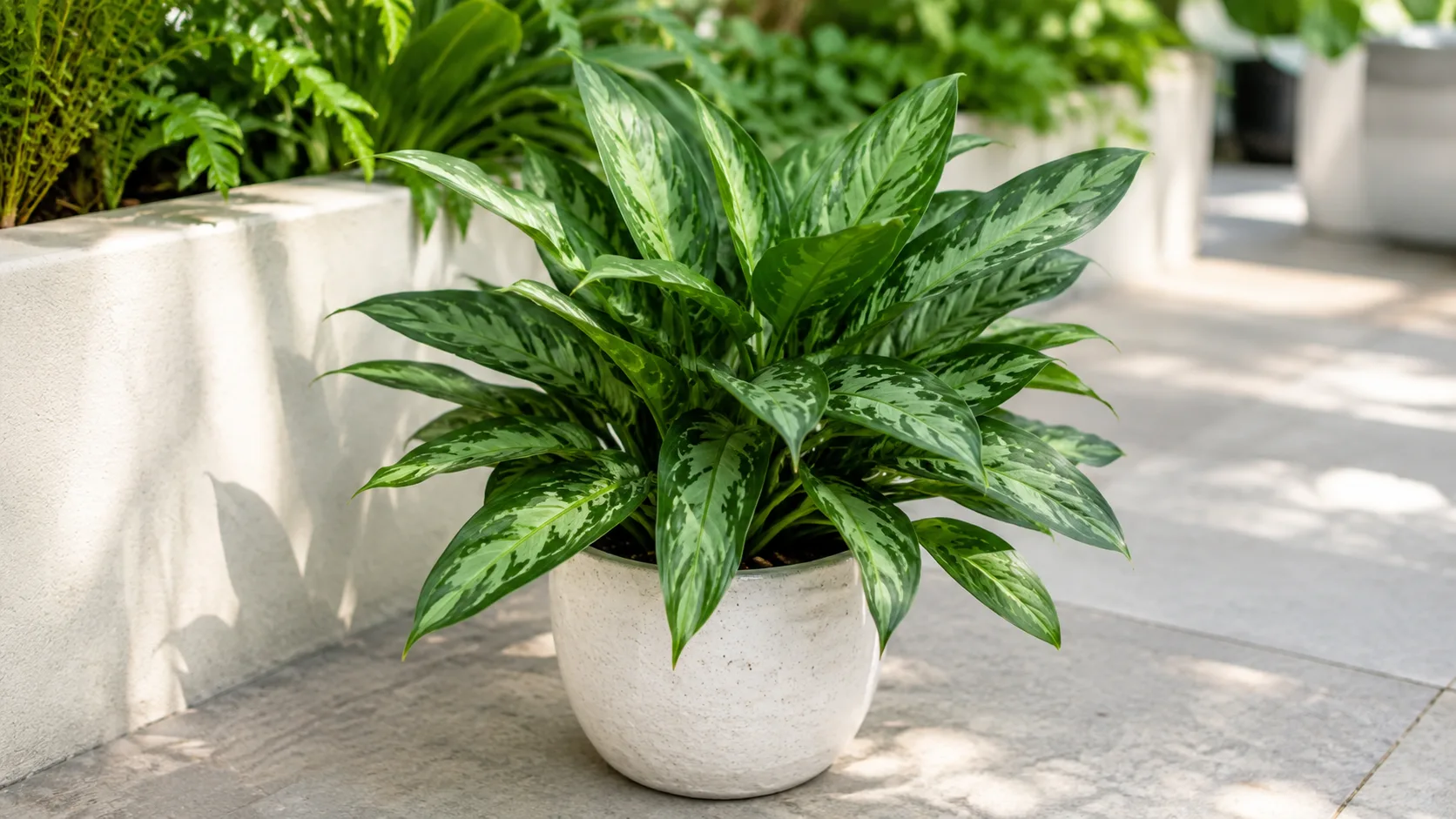
Aglaonema Maria Propagation: Step-by-Step Guide
Aglaonema Maria Propagation: Step-by-Step Guide
Aglaonema ‘Maria’ is usually propagated vegetatively, which means making a genetically matching plant from an existing stem or rooted shoot. That matters for a named cultivar: seed-grown offspring may not preserve Maria’s dense growth and silver-green leaf pattern. University of Florida IFAS guidance for commercial Aglaonema production identifies rooted stem cuttings and division of basal shoots as the main propagation methods, noting that micropropagation (tissue culture) has not been successful with this genus. At home, those same methods work well when you control the two variables that decide most outcomes: stem health and the balance between moisture and air around developing roots.
Propagation is not an emergency response for every struggling plant. A cutting taken from a severely rotted, chilled, or pest-infested parent carries less stored energy and may carry the original problem into a new pot. Start with firm tissue, active buds, and clean tools. Then choose a method that fits the plant you actually have rather than the method that looks easiest in a short video.
Quick Answer: Three Reliable Ways to Propagate Maria
There are three practical approaches. Division is the fastest when the pot already contains several rooted shoots, because each division begins with roots and foliage. Direct-to-medium stem cuttings avoid the transition from water roots to potting mix and are often the most efficient choice for a healthy cane. Water-rooted stem cuttings let you watch root development, but they require careful handling and a gradual move into potting mix.
For the lowest-risk result, divide a well-rooted basal shoot while Aglaonema Maria repotting guide. For a tall or bare-stemmed plant, take a top cutting and retain the rooted stump, which may activate dormant buds. Do not rely on a detached leaf alone. Aglaonema is a stem-propagated plant; a leaf without viable stem tissue and a growth point is not a dependable route to a new plant. NC State Extension notes that the genus Aglaonema is in the Araceae family and is one of the easiest houseplants to grow, with division and stem cutting being standard propagation routes for the genus.
Check the Plant Before You Propagate
Use a healthy, hydrated plant, but do not soak it immediately before cutting. Water normally a day or two ahead if the mix is dry, then inspect stems, leaf undersides, petioles, and roots. Suitable stems feel firm rather than hollow or mushy. The leaves may have minor cosmetic damage, but the plant should not be collapsing from root loss, bacterial soft rot, severe mites, or cold injury.
Look at the plant’s architecture. Many retail pots contain several separately rooted cuttings placed together to create a full specimen. Those can often be separated, but a cluster of petioles does not automatically mean several independent plants. Trace each stem to the potting mix and, when unpotted, determine whether it owns a useful root section. If all stems connect to one compact crown, forcing them apart may cause more damage than taking a cutting.
Quarantine a plant with visible pests before propagation. Multiplying it also multiplies the treatment problem, and a humidity enclosure can accelerate pest activity. If roots smell sour or outer tissue slips off when touched, remove the decayed material and stabilize the parent before deciding what can be salvaged. Propagation works best as planned multiplication, not as the last step after all firm tissue has disappeared.
Choose the Best Time for Propagation
Warm, bright conditions matter more than the name of the month. Aglaonema roots more predictably when indoor temperatures are stable, days are reasonably bright, and the parent is producing or preparing to produce growth. In many homes, that window falls in spring through early summer. A plant under grow lights in a warm room may root at other times, while a plant beside a cold winter window may stall even in fresh medium.
Aim for roughly normal warm-room conditions, avoid cold drafts, and give the propagation Aglaonema Maria light guide. Heat can speed biological activity, but a hot windowsill also increases dehydration and cooks enclosed cuttings. If the room is cool, a thermostatically controlled propagation mat can warm the root zone; it should not make the medium hot. Postpone optional division when the plant is already adjusting to a move, has just suffered drought, or is recovering from root rot on Aglaonema Maria.
Pick the Right Propagation Method
Choose by starting material, not convenience alone. A rooted offset rewards division. A healthy, leafy top on a long stem suits a top cutting. Several inches of bare but firm cane can become node-bearing sections. Water is useful when observation is the priority, while an airy solid medium reduces the later environmental change.
| Starting condition | Best first choice | Main advantage | Main risk |
|---|---|---|---|
| Several rooted shoots in one pot | Division | Immediate root system | Root damage while separating |
| Tall stem with healthy top growth | Top cutting in medium | Resets a leggy plant | Cutting loses water before rooting |
| Firm bare cane with visible nodes | Cane sections | Creates several potential plants | Orientation errors and rot |
| Beginner who wants visible roots | Water cutting | Easy root inspection | Fragile roots and transition stress |
Division for a Crowded, Multi-Stem Plant
Division is not the same as tearing a root ball into equal pieces. The goal is to identify natural units: a basal shoot or stem with enough attached roots to support itself. A good division has firm roots, at least some foliage, and a crown that remains intact. The fewer roots a division has, the more conservative its leaf load and aftercare must be.
This method is efficient because it skips the root-initiation stage. The new plant may still pause while damaged root tips recover, but it does not have to build an entire root system from a bare stem. Division also preserves a bushy form sooner than a single cutting. Its disadvantage is that every new plant depends on the quality of the roots you can preserve during separation.
Stem Cuttings Rooted in Potting Medium
Direct rooting uses a small container and a clean, moist, highly aerated medium. UF IFAS production guidance reports that Aglaonema cuttings root best in well-aerated media and gives a pH range of 5.5 to 6.5 for commercial culture, with an air space of 10 to 20 percent. A household mix does not need laboratory measurements, but it should hold slight, even moisture without collapsing into a saturated mass. Fine potting mix amended with perlite or another stable porous ingredient is more suitable than dense garden soil.
Medium rooting is less visually satisfying because roots are hidden. The payoff is that new roots develop in the physical environment where the plant will continue growing. You avoid transferring thin water-adapted roots into a coarser, more oxygenated substrate. Use a clear nursery cup with drainage holes if root visibility helps, but shield it inside an opaque cachepot so roots are not continuously exposed to light.
Stem Cuttings Rooted in Water
Aglaonema stems can form adventitious roots in water if at least one viable node remains submerged and the leaves stay above the waterline. Use a narrow, clean vessel that supports the stem without crushing it. Refresh cloudy water, rinse the vessel, and maintain the level as water evaporates. Bright indirect light supports the leaves; direct sun promotes heat and algae.
Water propagation is neither automatically safer nor automatically harmful. Its main benefit is early detection: you can see callus, root initials, discoloration, and rot. Its limitation appears later, because water-formed roots can be delicate and must adjust to a potting mix with different moisture and oxygen patterns. Transfer before the roots become a tangled mass, and keep the new mix modestly moist during the first settling period rather than switching immediately to long dry intervals.
Prepare Clean Tools and Rooting Supplies
Gather a sharp knife or bypass pruners, small pots with drainage, labels, and your chosen rooting medium before unpotting or cutting. A dull blade crushes tissue and leaves a larger damaged zone. Wash visible debris from the blade, then disinfect it with an appropriate product such as 70% isopropyl alcohol, allowing contact and drying time. According to the University of Minnesota Extension, 70% isopropyl alcohol (or higher) is effective against bacteria, fungi, and viruses on pruning tools and does not require dilution or a prolonged soak. Clean between plants and again after cutting suspect tissue.
Wear gloves if your skin is sensitive. Like other aroids, Aglaonema contains calcium oxalate crystals; sap may irritate skin and the plant should be kept away from children or pets that chew foliage. The Pet Poison Helpline lists Chinese evergreen among Araceae-family plants whose insoluble calcium oxalate crystals are released on chewing and cause oral irritation, pain, drooling, and (rarely) airway swelling. Keep cut pieces off kitchen food-preparation surfaces. This is a handling precaution, not a reason to fear routine propagation.
For direct rooting, pre-moisten the medium so it feels evenly damp but releases no stream of water when squeezed. A useful starting blend is two parts fine indoor potting mix to one part perlite, adjusted for your climate and watering habits. In a very humid home, add more coarse aeration. In a hot, dry room, retain enough fine material that the small pot does not become dust-dry in a single day.
How to Divide Aglaonema Maria Step by Step
Slide the plant from its pot while supporting the stems near the base. If roots circle the container, squeeze a flexible nursery pot or run a blunt tool around the inside rather than pulling the foliage. Remove only enough loose medium to see where major stems and roots connect. Complete bare-root washing is usually unnecessary and can make fine roots harder to handle.
Identify a natural division and tease roots apart with your fingers. Follow roots back to the intended shoot, preserving as many as possible. If two sections are inseparable, make one decisive cut through the shared connection with a disinfected blade instead of repeatedly ripping the crown. Trim only roots that are dead, hollow, blackened, or mushy; firm tan, cream, or light-brown roots can be functional.
Pot each division at its previous depth in a container only slightly larger than its root mass. Firm the medium enough to remove large voids, but do not compress it hard. Water thoroughly and let excess drain. Return the original plant and the divisions to stable warmth and indirect light, then resist the urge to compensate for root disturbance with constant watering.
Separate Basal Shoots Without Stripping Roots
The best basal shoot is not necessarily the smallest. A tiny shoot with one threadlike root may survive, but leaving it attached longer usually produces a stronger independent plant. Choose a shoot whose roots branch through its own portion of the root ball. If separating it would remove nearly all roots from the parent or leave the offset bare, postpone the operation.
When roots interlock tightly, work from the bottom and outside of the root ball toward the crown. Untangle long roots rather than pulling the stems in opposite directions. Some breakage is normal, but widespread snapping indicates that the root ball is too dry, too compacted, or being handled too aggressively. After division, remove a severely damaged lower leaf only if it is failing; routine heavy defoliation deprives the new plant of photosynthetic capacity.
How to Take and Root a Stem Cutting
Select a firm stem with healthy upper growth. A practical top cutting often carries several leaves and enough stem to include multiple nodes, consistent with UF IFAS guidance that commercial cuttings commonly have four to five leaves, with three-leaf cuttings generally rooting and growing less well after potting. Extremely large leaf loads can lose water faster than an unrooted stem replaces it, so do not choose the entire tallest cane simply because it looks impressive. A compact, healthy section is easier to stabilize.
Make a clean cut below a node and remove any leaf whose petiole would sit in water or medium. Let surface moisture dry briefly while preparing the pot, but do not leave the cutting exposed for hours in hot, dry air. Insert at least one node into the moist medium and keep the leafy crown upright. The medium should contact the stem without being rammed tightly around it.
If the cutting is top-heavy, use a slim stake. Do not bury a long stretch of leafless stem unnecessarily; more buried tissue creates more area that can decay. A loose clear bag or propagation box can slow moisture loss in a dry home, but provide some air exchange and keep the enclosure out of direct sun. Open it regularly and remove fallen leaves before they mold.
Find Nodes and Make the Correct Cut
A node is the stem region where a leaf or bud attaches and where new roots or shoots can arise. On an older Aglaonema cane, nodes may look like rings, scars, or slight bumps rather than the obvious joints seen on a vine. Examine the stem from several angles. The smooth section between nodes is the internode and cannot replace a missing growth point.
For a top cutting, cut roughly a short distance below a node so the node remains on the propagation. Avoid cutting directly through the swollen node. For multiple sections, mark the upper end before dividing the cane; once the leaves are gone, orientation becomes surprisingly easy to lose. A wax pencil mark or angled cut at the top and straight cut at the bottom prevents planting sections upside down.
Use Leafless Cane Sections When the Stem Is Bare
A firm leafless cane is still useful if it contains viable nodes. Cut it into sections with at least one clear node, keeping track of top and bottom. Insert each section upright with a node at or just below the surface, or lay it horizontally on moist medium and press it partly in. Horizontal placement is helpful when orientation is uncertain because emerging shoots can turn upward.
Leafless sections have no leaves to power photosynthesis, so they depend on stored carbohydrates. They may sit unchanged before a bud swells, and impatience often causes growers to overwater them. Keep the medium lightly moist, warm, and aerated. Discard a section only when it becomes soft, smells rotten, or dries into a hollow husk; a firm dormant cane still has a chance.
Give New Propagations Stable Aftercare
Place propagations in bright, indirect light with stable warmth. Very low light slows energy production and keeps the medium wet longer, while direct midday sun can dehydrate an unrooted cutting. Humidity helps reduce leaf water loss, but saturated air cannot compensate for waterlogged medium. The stem still needs oxygen, and the enclosure needs enough ventilation to prevent persistent condensation and fungal growth.
Judge watering by the small pot, not the parent plant’s old schedule. Check moisture with a finger, wooden skewer, or pot weight. Rewater when the upper layer begins losing moisture but before the entire rooting zone becomes bone dry. Never let the pot stand in drained water, and do not add fertilizer while the cutting has no established roots; mineral salts do not create roots and can stress injured tissue.
Do not tug the cutting every few days. Resistance can indicate roots, but repeated pulling tears new root hairs. Watch instead for sustained new leaf movement, a swelling bud, or roots visible at drainage holes. One yellowing old leaf is not automatic failure because the cutting may reallocate stored resources. Rapid yellowing combined with a soft stem or sour smell requires inspection.
Understand the Rooting Timeline
There is no honest universal number of days. Warmth, stem maturity, node viability, light, method, and parent health all affect rooting. A healthy leafy cutting under favorable conditions may show root initials in several weeks, while a leafless cane or cool-season cutting can take much longer. Treat four to eight weeks as an observation window, not a deadline or guarantee. The University of Florida Aglaonema production guidance states that commercial Aglaonema production keeps a root-zone temperature of 70 to 80 °F to produce roots in roughly 4 to 6 weeks, with cooler conditions extending that timeline.
Progress occurs in stages: the wound stabilizes, root initials form, roots elongate, and branching increases. A white bump is promising but is not yet a working root system. A cutting is better prepared for potting when it has several roots with some branching, not one long fragile strand. In medium, new growth plus a stable stem is useful evidence, although a cutting can push a leaf from stored energy before it has enough roots.
Record the date and method on a label. That prevents normal slow development from feeling endless and lets you compare conditions over time. If nothing visible happens but the stem remains firm and leaves remain reasonably stable, continue consistent care. Constantly changing light, medium, vessel, and humidity resets the environment and makes the result harder to interpret.
Diagnose Propagation Problems
Most failures trace to poor starting tissue, excess water with too little air, dehydration, cold, or contaminated tools. Rot usually begins as a soft dark area that expands. Dehydration produces limp leaves and a wrinkled stem, but severely rotted roots can create similar wilting because they cannot absorb water. Check the stem and medium before automatically adding more water.
Brown leaf edges alone are nonspecific. They can follow low humidity, root disturbance, salt buildup, or old damage. Pale new growth may reflect low light or an immature leaf rather than a need for immediate feeding. Diagnose patterns: which tissue changed first, whether the stem is firm, how long the medium stays wet, and whether roots are growing.
Rescue Rotting, Yellowing, or Stalled Cuttings
For localized rot, remove the cutting, rinse away debris, and cut back to uniformly firm, clean tissue with a disinfected blade. Disinfect the tool again between cuts. If no viable node remains above the rot, that section cannot produce a complete new plant. Re-root the healthy portion in fresh, airy medium or clean water and correct the condition that caused the decay.
For a stalled but firm cutting, first improve light and temperature within safe limits and verify that the medium is not continuously saturated. Do not solve every delay by recutting; each wound consumes stored reserves. For a dehydrated cutting in dry air, reduce leaf stress with a ventilated enclosure and more consistent moisture. Remove a yellow leaf when it detaches easily or begins decomposing, but avoid stripping healthy foliage preemptively.
Move a Rooted Cutting Into Its First Pot
Use a small pot with drainage, generally just wide enough to hold the roots without severe bending. An oversized container contains a large volume of wet, unused medium and makes moisture harder to manage. Fill around the roots with an airy Aglaonema mix, keeping the original stem depth. Do not bury the petioles or crown to make the plant stand taller.
For a water-rooted cutting, handle roots by supporting the stem and guiding roots into a prepared hole. Do not force them through compact dry mix. Water thoroughly to settle the substrate, then keep it slightly more evenly moist for the first couple of weeks while the roots adapt. Gradually move toward normal watering based on how quickly the pot dries.
Delay fertilizer until the plant is established and showing sustained growth. Keep light and temperature stable during the transition rather than repotting, feeding, and moving to brighter sun at once. If the cutting wilts briefly but the stem and roots remain firm, maintain consistent care. If wilting worsens while the medium stays wet, inspect for damaged or decaying roots rather than watering again.
Conclusion
Successful Aglaonema Maria propagation begins with method selection. Divide a naturally rooted shoot for the quickest, least uncertain start; root a healthy stem section in airy medium to avoid a later water-to-soil transition; or use water when visible root development helps you monitor progress. Every method still depends on a viable node, clean tissue, stable warmth, indirect light, and moisture that does not exclude oxygen.
Use the plant’s condition as your schedule. Firm stems, branching roots, stable leaves, and new growth matter more than a promised number of days. If you make clean cuts, preserve roots during division, and resist overwatering on Aglaonema Maria slow cuttings, Maria is a forgiving plant to multiply. The result is not merely another stem in a pot, but an independently rooted plant prepared for normal care.
When to use this page vs other Aglaonema Maria guides
- Aglaonema Maria overview - Start here for whole-plant context before deep-diving this topic.
- Aglaonema Maria problems hub - Jump to symptom-specific fix guides when this care topic does not resolve the issue.
Related Aglaonema Maria guides
- Aglaonema Maria overview
- Aglaonema Maria watering
- Aglaonema Maria light
- Aglaonema Maria soil
- Aglaonema Maria fertilizer
- Aglaonema Maria repotting
- Aglaonema Maria problems
Related tool
Try the Propagation Success Calculator with aglaonema-maria pre-selected to estimate needs for your setup.