Slow Growth on Aglaonema Maria: Causes, Checks & Fixes
Quick answer
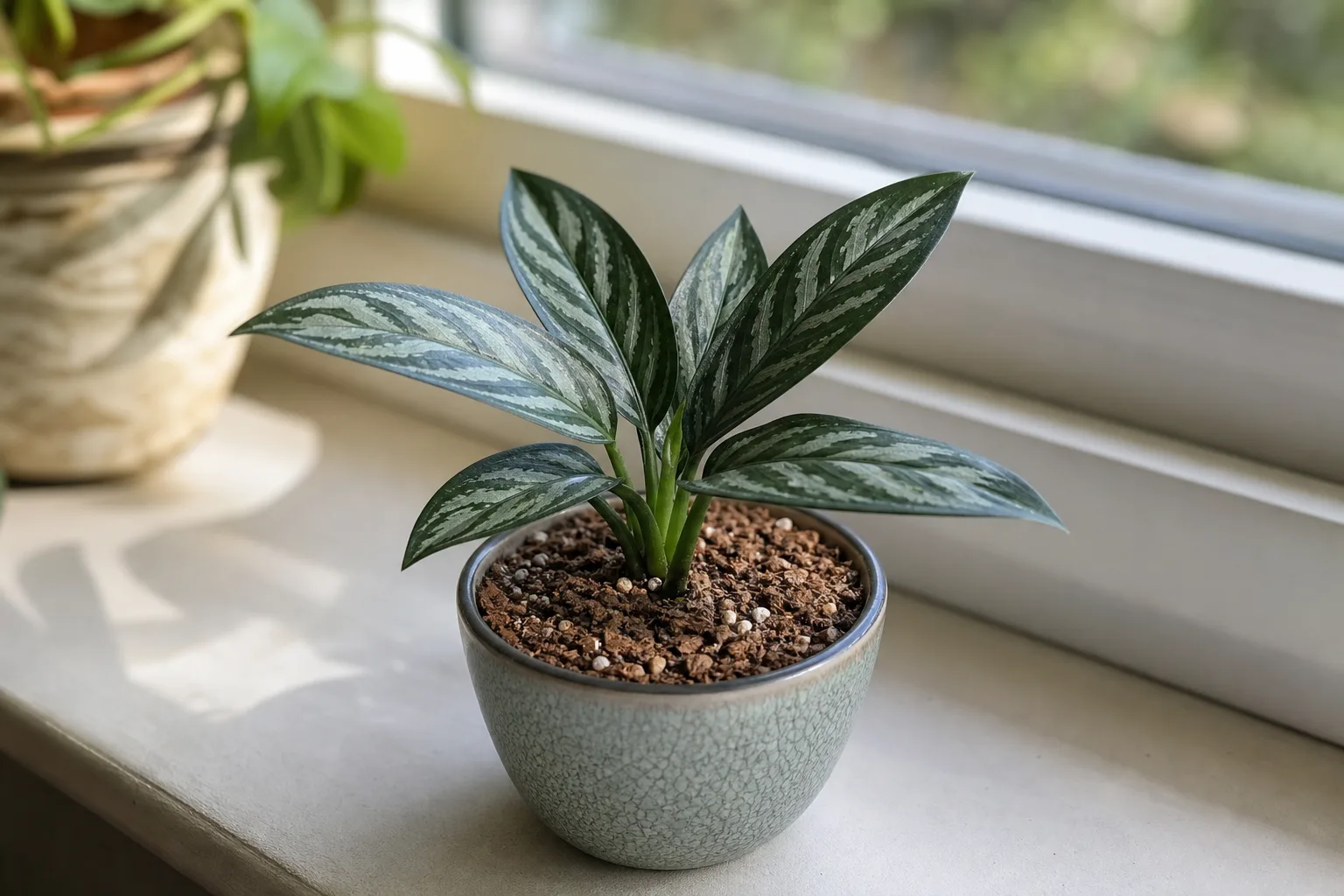
Slow growth on Aglaonema Maria is usually normal-this cultivar is bred for compact, low-light survival, not pothos speed. First step: confirm whether you have healthy slow pace (firm leaves, occasional new growth in warm months) or true stall (no new leaves across a bright season, shrinking foliage, wet soil in a dim corner) before changing water, light, or pot size.
Slow Growth on Aglaonema Maria: Causes, Checks & Fixes
This guide covers slow growth on Aglaonema Maria. See also the general Slow Growth guide, watering, and light pages for this plant.
Slow Growth on Aglaonema Maria: Causes, Checks & Fixes
Quick answer
If you searched “Aglaonema Maria slow growth,” you are probably wondering whether your plant is stuck-or just being Maria. On Aglaonema commutatum ‘Maria’, slow growth is usually normal, not a defect. The Royal Horticultural Society describes ‘Maria’ as a slow-growing herbaceous perennial with compact, silver-striped foliage bred for filtered light indoors. Maria was selected for survival in dim offices, not for pothos-like speed.
First fix: decide whether growth is healthy-slow or stalled-slow. Before repotting, fertilizing, or watering more, run a five-minute check-newest leaf size compared with older leaves, how long the pot takes to dry down, whether any new leaf appeared during the last warm season, and whether stems are compact or stretching. See the Maria overview for baseline expectations: above the light compensation floor, Maria grows slowly-and that is success.
Do not try to “wake up” a Maria with heavy feed or a bigger pot in a dark corner. That is how slow growers end up with wet soil and months of true stagnation.
What normal slow growth looks like on Aglaonema Maria
Maria’s signature is dark green lance-shaped leaves with silver-gray chevron striping on short petioles in a tight rosette. Healthy slow growth keeps that profile even when height barely changes.
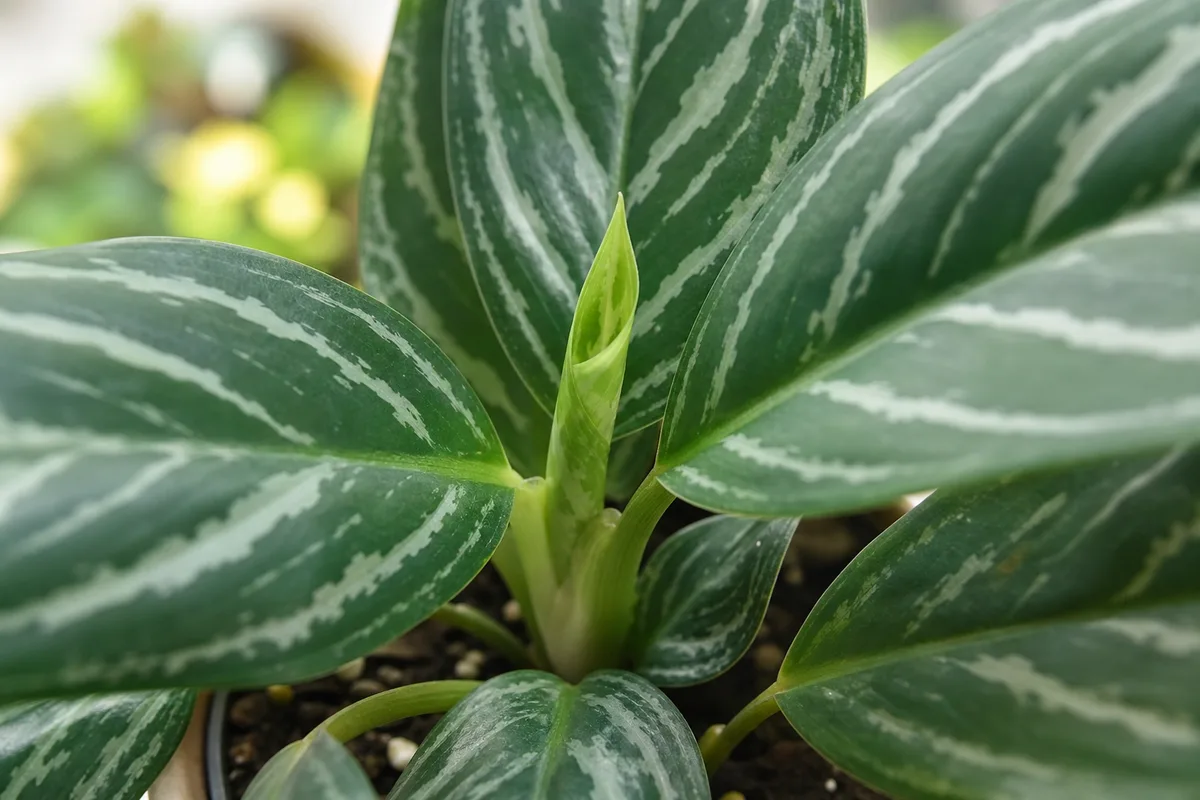
Compact crown with crisp silver striping and one slow-emerging leaf - healthy Maria pace, not a stalled plant.
Expected pace indoors
In moderate indirect light-a few feet from an east or north window, or under sustained office fluorescents-most Maria plants push one to three new leaves across spring through early fall. Each leaf may take several weeks to unfurl fully. A desk Maria that adds two leaves in fourteen months is often perfectly healthy. Compare pace to your light level, not to a fast vine in the same room.
University of Arkansas Extension notes that Aglaonema’s light compensation point-the intensity where photosynthesis equals respiration-is around 10 foot-candles. Above that floor the plant can grow; below it, an Aglaonema will not grow but will not die-it waits. The average interior room provides roughly 20 to 60 foot-candles, so Maria often grows, but slowly. That biology is why “low-light tolerant” does not mean “fast.”
Seasonal winter slowdown
From late fall through winter, shorter days and cooler rooms slow Maria further. Little or no new growth from November through February is normal in most homes. Resume judging pace when temperatures stabilize and daylight lengthens. A plant that sat quietly all winter and pushes one firm leaf in April is on schedule-not recovering from crisis.
Signs Maria is healthy despite slow pace
- Existing leaves stay firm, dark green, and crisply silver-striped
- New leaves, when they appear, match or nearly match the size of mature foliage
- Stems stay short; the plant does not lean hard toward one window
- Soil dries on a predictable rhythm for your light level-even if that rhythm is slow in shade
- Crown feels firm at the base where new leaves emerge
- Lower leaf loss is occasional-one aging basal leaf every few months, not a steady yellowing wave
If your Maria matches that list, patience is the correct care plan.
When slow growth is actually a problem
Slow pace becomes a stall when the plant cannot maintain leaf quality or produce any new tissue during favorable conditions.
Watch for these abnormal patterns:
- No new leaves across an entire warm bright season while neighbors in the same window are actively growing
- Each new leaf smaller, thinner, or paler than the one before-silver patterning fades toward flat green
- Soil stays wet for two weeks or more in a dim corner while growth stops-roots may be suffocating
- Stems stretch with wide gaps between leaves-that is etiolation from insufficient light, not normal compact slowness; see not enough light
- Yellow lower leaves spreading upward on persistently damp mix-pair with root rot checks
- White crust on soil surface and brown leaf margins after repeated feeding in shade-salt stress, not hunger
- Sudden halt after repotting, a cold draft, or a move-acclimation or chilling may have paused growth below 55 °F
Maria’s dark green color can mask insufficient light longer than pale cultivars do. Judge from new leaf production and soil drying speed, not leaf color alone.
Why Aglaonema Maria grows slowly
Several factors stack on this cultivar-not every slow Maria shares the same limiter.
Naturally slow cultivar biology. Maria is not a racehorse houseplant. Clemson Extension classifies Chinese evergreen as durable and slow-growing indoors. Compact habit was a breeding goal, not an accident.
Light as the usual ceiling. Photosynthesis supplies the energy for new leaves; fertilizer supplies minerals but cannot replace light. According to the University of Minnesota Extension, all plants require light for photosynthesis-and in inadequate light, added nutrients can build salts in a pot where slow growth removes little. Maria in a windowless hallway may survive but will not push leaves quickly. Brighter filtered indirect light often increases pace modestly until another factor limits growth.
Low light beyond tolerance. Maria tolerates dim conditions better than most foliage plants, but prolonged deprivation still stalls growth, stretches stems, and keeps soil wet too long. The light guide explains filtered placement and seasonal adjustments.
Root-bound and pot size. Maria prefers a snug root zone, but when roots circle densely, water runs straight through and new leaves stop. Oversized pots are equally risky-extra wet mix Maria cannot use, especially in shade.
Overwatering in dim corners. When transpiration drops in low light, the same watering rhythm that worked near a window leaves roots in stale moisture. Wet soil plus zero growth in a cubicle often means root stress, not normal patience. See overwatering if lower leaves yellow on damp mix.
Cold and acclimation stress. Chinese evergreens prefer 68 to 80 °F and are sensitive below about 55 °F. Chilling or a recent move can pause growth for weeks even when light and water are correct.
Over-fertilization in shade. Monthly full-strength feed in a dim office builds soluble salts Maria cannot use. Brown margins and stalled new growth after feeding point here-not to a need for more fertilizer.
How to confirm the cause
Work through these checks in order so you do not repot, feed, or flood a plant that only needs brighter indirect light-or vice versa.
-
New leaf log - When did the last leaf unfurl? If none appeared through last spring and summer in a spot with real daylight, suspect light or roots. If one or two firm leaves arrived, you likely have normal slow pace.
-
Leaf-size trend - Compare the newest leaf to one from six months ago or a purchase photo. Stable size means healthy slow growth. Shrinking or duller new foliage signals stress.
-
Stem spacing - Compact short petioles mean adequate light for Maria’s habit. Long lean stems toward one window mean insufficient light-fix placement before any other intervention.
-
Soil dry-down - Push a finger into the top half of the mix. If Maria used to dry on your schedule but now stays damp ten days or more without wilting, reduced light or root congestion may have slowed water use. Pair wet soil with yellow lower leaves before assuming normal slowness.
-
Pot weight and drainage - Lift the pot after watering and again when you think it is dry. A pot that feels light within days but never produces growth may be root-bound. A pot that stays heavy for weeks in shade suggests overwatering habitat.
-
Light relationship - Identify the nearest window direction and distance. Within about two to four feet of an unobstructed east or north window usually supports Maria’s slow but steady pace. More than six feet from any window, or a room with no daylight, often stalls even Aglaonema unless a grow light runs long enough daily.
-
Root peek - If wet-soil stall persists after you stop watering and improve light, slide the plant from the pot. Healthy roots are firm and pale; circling dense roots or mushy brown tissue explain months without new leaves. The repotting guide covers timing and pot sizing.
-
Recent history - Repotting, chilling, pest damage, or a sudden move to a much darker shelf narrows the cause quickly.
Confirmed normal slow growth: firm leaves, occasional new foliage in warm months, compact habit, soil drying appropriately for your light. Confirmed stall: zero warm-season growth in adequate light, shrinking new leaves, wet stagnant soil, or circling/mushy roots.
Lookalike symptoms on Aglaonema Maria
| What you see | More likely cause | Quick differentiator |
|---|---|---|
| Compact plant, firm silver-striped leaves, one to two new leaves per warm season | Normal Maria pace | No stretch; crown firm; soil dries on rhythm |
| Long stems, lean toward window, wide leaf spacing | Not enough light | Etiolation pattern; see leggy growth |
| Yellow lower leaves, sour wet soil, no new growth | Overwatering / root stress | Mix stays damp weeks; not just slow |
| Little winter growth, resumes in spring | Seasonal dormancy | Expected pause; firm foliage throughout |
| Whole plant limp on wet soil | Wilting / root rot | Turgor loss, not just slow push-see wilting |
| Pale new leaves after heavy feeding in shade | Salt / fertilizer stress | White crust on soil; margins brown |
Slow growth and low light often travel together on Maria because a plant photosynthesizing weakly uses less water. Fixing light without adjusting water can leave roots in stale moisture-watch dry-down after any placement change.
First fix for Aglaonema Maria
Confirm normal vs. abnormal growth before changing anything.
If Maria shows healthy slow signs-firm compact foliage, occasional new leaves, appropriate dry-down-no intervention is the first fix. Accept Maria’s pace. Move it only if you want modestly faster growth and have brighter filtered light available.
If Maria shows stall signs, pick the single most likely limiter:
-
Dim placement with stretch or zero warm-season leaves → Move to the brightest indirect spot you can offer today-east or north window within a few feet, or add a full-spectrum LED for 10–12 hours daily. Do not jump to direct sun; Maria scorches in hot rays. See the light guide.
-
Wet soil for weeks in shade → Stop watering until the top half of mix dries. Improve light or airflow so the pot can dry. Inspect roots if yellowing spreads.
-
Root-bound (water runs through instantly, no new growth in good light) → Repot into the next pot size with fresh well-drained mix in spring-not winter, not the same week you change light and feed.
-
Pale new leaves in adequate light with depleted mix → After light and watering check out, a dilute balanced feed during active growth may help. Follow the fertilizer guide checklist first.
Make one correction at a time, then wait four to six weeks before stacking repotting, pruning, and fertilizer. Maria responds slowly; rushing stacked treatments hides which change helped.
Recovery timeline
Normal slow Maria does not need a “recovery” window-you are already succeeding.
Light-limited stall: After a brighter indirect placement, the next one or two leaves tell the story. Tighter spacing and firmer texture often show within three to six weeks during spring or summer. Winter moves may take six to eight weeks because day length is short.
Root-bound repot: Expect one to three weeks of adjustment after spring repotting, then watch for a new leaf within four to eight weeks in adequate light. Maria is not a fast responder after root disturbance.
Overwatering recovery: Once soil dries and roots remain firm, new growth may resume in two to six weeks. Yellowed lower leaves rarely green up-judge progress by upright new foliage, not old damaged tissue.
Cold shock pause: After warmth returns, growth often restarts within two to four weeks if the crown stayed firm.
Signs improvement is working: new leaves closer together, clearer silver striping, faster (but still modest) dry-down, upright habit without strong lean.
Signs the problem is worsening: continued stretch after a month in clearly brighter indirect light, spreading yellow on wet soil, soft crown, or new leaves emerging smaller after repeated feeding.
What not to do
Do not repot and fertilize simultaneously on a stalled Maria-you will not know which stressor caused the next symptom. Do not remove healthy leaves because “nothing is happening”; Maria has few leaves to spare on a slow grower. Do not pour more water onto a plant that is not growing in a dim corner; wet soil in low light is a common stall accelerator. Do not place Maria in direct afternoon sun to force speed-scorched leaves set you back further. Do not assume every slow Maria needs food; fertilizer in deep shade often worsens margins. Do not compare Maria to pothos, spider plants, or tradescantia in the same room-different species, different pace.
How to prevent abnormal slow growth next time
Place Maria where low to medium indirect light is realistic all year-not only where the pot looks good on a shelf. Water when the top 1–2 inches of mix are dry-in dim rooms that can mean longer intervals, not more frequent drinks. Repot on a one-to-two-year rhythm or when roots circle drain holes, going up only one pot size. Feed lightly during active growth only after light and roots check out. Track new leaves monthly with a photo so you notice true stall early instead of repotting on impulse.
Seasonal habits: move slightly closer to glass in late autumn or extend grow-light hours in winter; clean dusty leaves so they capture more light; rotate the pot weekly for even growth.
Judge success by firm compact foliage and occasional new leaves, not height. A Maria with crisp silver markings growing slowly in moderate indirect light is healthier than a tall soft plant pushed with fertilizer in a dark corner.
Related Maria guides
- Maria overview - baseline care and why slow growth is normal
- Light requirements - filtered placement and light as growth limiter
- Fertilizer - deficiency vs. over-feeding in shade
- Not enough light - stall vs. stretch
- Repotting - root-bound diagnosis and timing
- Root rot - wet-soil stall with yellowing
- Leggy growth - elongated stems, not compact slowness
Conclusion
Aglaonema Maria is supposed to grow slowly. Compact silver-striped foliage, one to three new leaves across a warm season, and a quiet winter pause are the cultivar working as designed-not a care failure. Before you repot, fertilize, or water more, confirm whether you are seeing healthy slow pace or true stall using new leaf production, leaf size, soil dry-down, and light level. Fix the real limiter once, then give Maria time. This species rewards steady hands, not hurry.