Aphids on Zebra Plant: Causes, Checks & Fixes
Quick answer
Aphids on Zebra Plant show up as soft clusters on new shoots and developing bracts, often with sticky honeydew and curled young leaves. First step: isolate the plant and rinse bugs off leaf undersides and stem tips with lukewarm water before applying any spray.
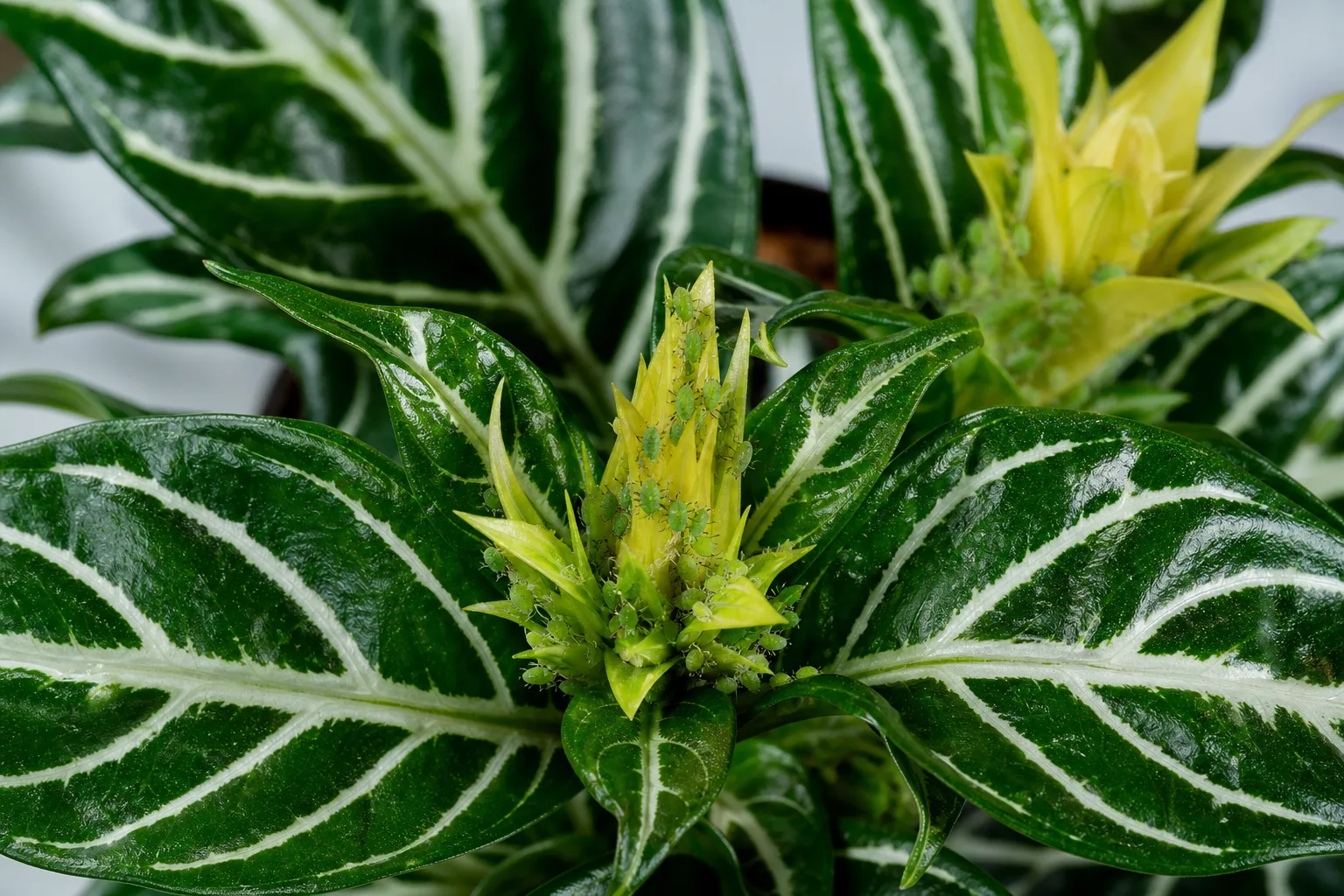
Aphids on Zebra Plant: Causes, Checks & Fixes
This guide covers aphids on Zebra Plant. See also the general Aphids guide, watering, and light pages for this plant.
Aphids on Zebra Plant: Causes, Checks & Fixes
Quick answer
Aphids on Zebra Plant (Aphelandra squarrosa) almost always settle on tender new growth-the soft shoots and developing yellow bracts that make this Brazilian native famous. Soft-bodied insects pierce sap from unfolding leaves, leaving curled tips, sticky honeydew, and sometimes ants on the pot rim. The damage looks dramatic on boldly striped foliage, but established zebra plants rarely die from aphids alone when you catch colonies early.
First step: isolate the plant and rinse aphids off leaf undersides and stem tips with lukewarm water. Hold stems gently, spray from below, and let foliage dry in Zebra Plant light guide the same day. Avoid soaking the crown-Missouri Botanical Garden notes that crown rot can occur on Aphelandra squarrosa when conditions stay too wet at the base. Only after a thorough rinse should you consider insecticidal soap on persistent colonies.
What aphids look like on Zebra Plant
Zebra plants push new leaves and bract spikes from upright stems. Those unfolding tissues are softer than hardened foliage-exactly where aphids cluster. UC IPM describes aphids as small, soft-bodied, pear-shaped insects that may be green, yellow, brown, red, or black, often feeding in dense groups on leaves and stems.
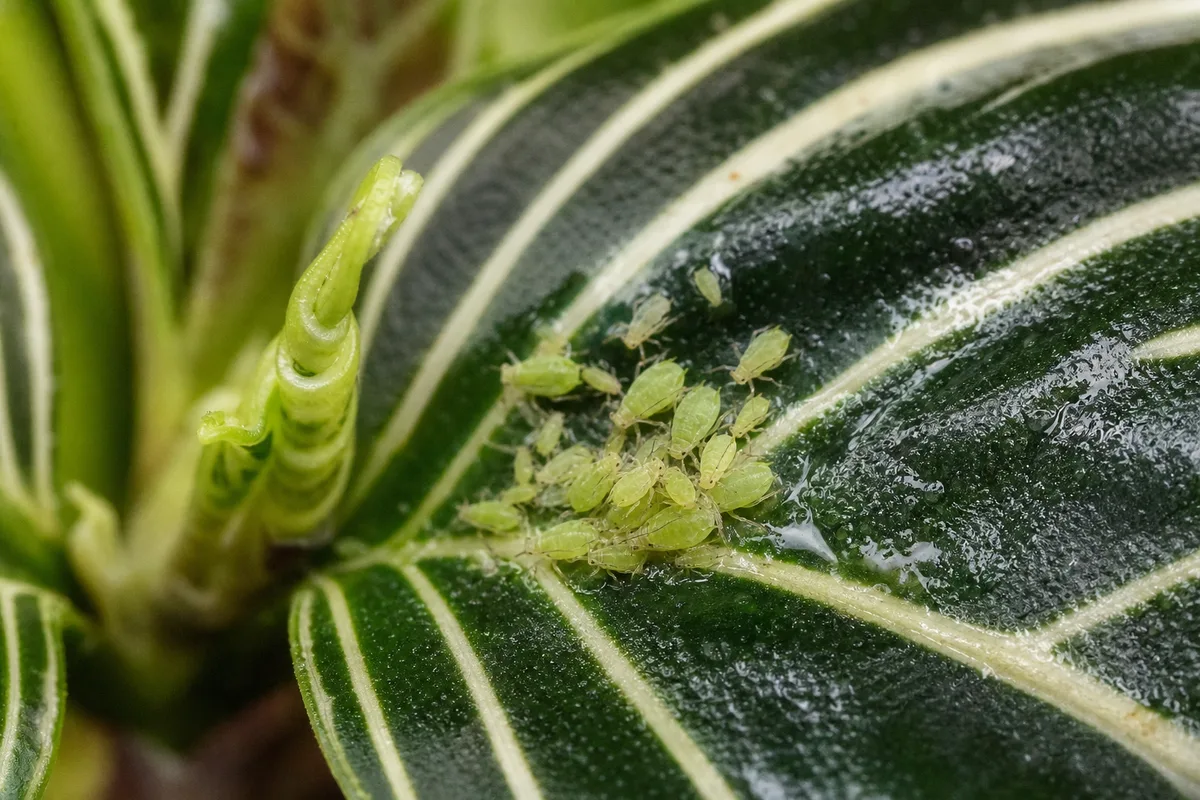
Aphids symptoms on Zebra Plant - compare with healthy tissue on the same plant.
On Aphelandra squarrosa, expect:
- Soft clusters on the newest shoots, leaf undersides, and developing yellow bracts
- Curled or puckered young leaves before white zebra stripes fully develop
- Shiny, sticky honeydew on upper leaf surfaces, bracts, or the pot saucer
- Ants on the container exterior, farming honeydew below
- Sooty black mold growing on dried honeydew-not on the leaf tissue itself
- Slowed bract development or bud drop when feeding is heavy, while older lower leaves may look fine
Zebra plant leaves are dark green with prominent white veins. Aphid damage is different from normal aging: affected new leaves stay distorted, feel tacky, and carry visible insects when you flip them over. If older leaves look fine but one shoot near a bract spike is sticky and curled, suspect aphids on that shoot only.
Why Zebra Plant gets aphids
Aphids are not a random zebra plant weakness-they exploit conditions Aphelandra squarrosa already provides when it is growing well.
Constant soft new growth. Happy zebra plants in bright indirect light with evenly moist soil produce fresh leaves and bract spikes regularly, especially in spring and early summer. UC IPM notes that aphids feed on soft, new plant growth and that high nitrogen levels push tender shoots they prefer. Zebra plants fertilized heavily during active growth can push lush, aphid-friendly tissue faster than you notice.
Humid indoor culture. Zebra plant requires high humidity and temperatures that do not dip below 65°F-Missouri Botanical Garden recommends growing in humidified rooms or on wet pebbles. That environment suits tropical foliage but also keeps colonies comfortable on sheltered undersides where rinses do not reach as easily.
Bract spikes as feeding sites. Chicago Botanic Garden notes that zebra plants are often sold as small flowering pot plants with yellow bracts. Aphids target these soft bract tips and the tender leaves surrounding them, threatening the showy bloom display before flowers even open.
Introduction routes. Most indoor infestations arrive on new nursery plants, cuttings, or plants that summer outdoors in shade and return through an open window. Missouri Botanical Garden lists aphids among pests to watch for on zebra plant. Aphids reproduce quickly in warm conditions-populations can explode on a single new leaf before upper leaves show symptoms.
Ant protection. When ants tend aphids for honeydew, natural predators have a harder time. UC IPM emphasizes that ants protect aphids from natural enemies while harvesting the sweet residue aphids excrete.
How to confirm the cause
Work through these checks before you spray:
- Location on the plant - Aphids concentrate on newest shoots, bract tips, and undersides. Damage only on old lower leaves with no insects points elsewhere.
- Hand lens inspection - Confirm pear-shaped bodies and, on many species, small tubelike cornicles on the rear. Mealybugs look cottony in leaf axils; scale looks like fixed brown bumps on stems; spider mites leave stippling and webbing in dry air.
- Sticky test - Honeydew feels tacky and may grow wipe-able sooty mold. Normal zebra plant leaves are not sticky unless pests or residue are present.
- Ant check - Ant trails on the pot or shelf strongly suggest aphids or other honeydew producers on the plant above.
- Shake test - Gently tap an infested leaf over white paper. Aphids fall as live insects; powdery mildew or dust does not.
- Neighbor scan - Inspect other tropicals on the same humid shelf-Calathea, Maranta, and other soft-leaved plants share aphid pressure.
- Care cross-check - Confirm soil is evenly moist but not waterlogged. overwatering on Zebra Plant causes yellow lower leaves on zebra plant; underwatering on Zebra Plant causes wilt and bud drop-but neither creates insect clusters.
If you find no live insects and no honeydew, look at drafts, low humidity, or inconsistent watering before treating for pests.
First fix for Zebra Plant
Isolate the plant and rinse aphids off with lukewarm water, targeting leaf undersides, stem tips, and bract spikes.
Move the zebra plant away from other houseplants. In a sink or shower, use moderate water pressure to dislodge colonies from the backs of leaves and developing bracts. UC IPM recommends spraying aphids with a strong stream of water to knock them off sturdy plants-use enough force to dislodge insects but not so much that you tear thin new leaves or soak the crown. Tip the pot so water runs through the drainage hole without leaving standing moisture at the stem base.
Let leaves dry in bright indirect light the same day. Repeat every two to three days until inspections show no live aphids.
Do not reach for insecticide on day one if a rinse removes the colony. Do not fertilize a pest-hit plant hoping to replace damaged leaves-that produces more soft tissue aphids prefer. Do not repot unless you also find root aphids in the soil, which is uncommon on indoor Aphelandra squarrosa.
Step-by-step recovery
After the initial rinse:
- Repeat water dislodging every two to three days until two inspections a week apart find no live aphids. Physical removal is the safest first treatment for a humidity-sensitive plant.
- Apply insecticidal soap if colonies persist. Clemson Extension notes that insecticidal soaps kill soft-bodied insects like aphids on contact and can also wash honeydew and sooty mold from leaves. Use a product labeled for houseplants, coat tops and undersides thoroughly, and repeat every four to seven days because soap has no residual activity.
- Test before full spray - Apply soap to one leaf and wait 24 hours. Avoid treating in direct sun or above 90°F, as Clemson Extension warns this can cause phytotoxicity on sensitive foliage.
- Wipe sooty mold off upper leaves and bracts with a damp cloth once honeydew production stops. The mold is cosmetic but blocks light if thick.
- Trim badly distorted leaves only after pests are gone and only if curled tissue still harbors hidden colonies you cannot rinse out.
- Manage ants on pot rims or shelves so predators can reach aphids.
- Inspect neighbors that shared the same humid shelf for two weeks before mixing the collection again.
Because zebra plant is non-toxic to cats and dogs per ASPCA, rinsing and labeled soap treatments are practical in pet homes-still keep pets away until sprays dry.
Recovery timeline
Water knockdown shows results within two to three days when colonies are moderate. A full soap course may take one to two weeks with label-interval repeats. Sooty mold fades as honeydew dries up; expect cleaner new growth and intact bract development within two to four weeks once insects stay gone.
Curled young leaves rarely flatten perfectly-judge recovery by clean new shoots and bracts, not old distorted tissue. Missouri Botanical Garden recommends cutting plants back after flowering to control growth; light pruning after pest recovery can also remove damaged tips and encourage compact new foliage.
Lookalike symptoms to rule out
Mealybugs appear as white cottony masses in leaf axils and stem joints, not as soft moving clusters on new growth. They are a common companion pest on tropical houseplants including Aphelandra squarrosa.
Scale insects attach as immobile brown shell-like bumps along stems. They also produce honeydew but do not cluster as soft groups on bract tips.
Spider mites cause fine stippling and webbing, especially when humidity drops below what Aphelandra squarrosa needs. Mites thrive in dry air; aphids prefer tender new growth regardless of humidity.
Powdery mildew puts a dry white powder on leaf surfaces, not a tacky film. Healthy Houseplants notes powdery mildew risk when humidity is high without airflow-different from honeydew stickiness.
Low humidity curl affects leaf margins and tips without insects. Zebra plants need 60–70% humidity; dry air curls edges but leaves feel dry, not tacky, and show no clusters.
Mistakes to avoid
Do not spray insecticidal soap during peak direct sun on zebra plant-even bright indirect light plus wet soap can mark thin leaves. Treat early morning or evening.
Do not ignore ants. Controlling aphids alone is harder while ants defend colonies.
Do not increase nitrogen fertilizer during an active infestation-that fuels soft aphid-friendly growth.
Do not let rinse water pool at the crown. Consistent moisture in the soil is fine; standing water on the stem base invites crown rot.
Do not assume one treatment is enough. Aphids reproduce rapidly; eggs hatch within days and require follow-up rinses or soap applications.
How to prevent aphids next time
Scout new growth and bract spikes weekly from late winter through spring, when Aphelandra squarrosa pushes its softest tissue. Quarantine new nursery plants for two weeks before placing them near your collection.
Keep even moisture without waterlogging-Missouri Botanical Garden stresses that soils must not be allowed to dry out on zebra plant, but soggy mix stresses roots and weakens pest resistance.
Avoid excess nitrogen during active growth. Use slow-release or half-strength organic fertilizer on the schedule your plant already tolerates.
If you summer the plant outdoors, place it in shade as MOBOT recommends and rinse thoroughly before bringing it back indoors through windows or doors.
Preserve beneficial insects. Lady beetles, lacewings, and parasitic wasps control aphids when broad-spectrum sprays have not wiped them out.
Improve gentle airflow in humid rooms so bract spikes and leaf undersides dry after misting or rinsing.
When to worry
Treat as urgent when honeydew and sooty mold spread across most of the canopy within days, bract buds abort before opening, or new growth stalls completely while colonies cover multiple stems. Sap loss combined with zebra plant’s humidity demands can stress the plant faster than on tougher species.
A few aphids on one new leaf are not urgent-rinse first and recheck in three days.
Replace or heavily cut back a severely declining plant only after two weeks of consistent treatment fail and new growth still shows live colonies. Established zebra plants with healthy roots usually recover from moderate aphid pressure when caught early.
Conclusion
Aphids on Zebra Plant target the same soft new growth and bract spikes you grow Zebra Plant overview for. Inspect undersides and bract tips, isolate and rinse before you spray, and repeat until new striped leaves and clean bracts return. That diagnostic path protects both foliage pattern and bloom potential without unnecessary chemicals on a humidity-sensitive tropical.
When to use this page vs other Zebra Plant guides
- Zebra Plant watering guide - Use for routine moisture checks before assuming aphids is the main issue.
- Zebra Plant problems hub - Browse all 32 common issues on this species.
- Sticky Leaves on Zebra Plant - Different entry point when symptoms overlap with aphids.
- Curling Leaves on Zebra Plant - Different entry point when symptoms overlap with aphids.
- Mealybugs on Zebra Plant - Different entry point when symptoms overlap with aphids.