Sticky Leaves on Zebra Plant: Causes, Checks & Fixes
Quick answer
Sticky leaves on Zebra Plant almost always mean honeydew from scale, aphids, or mealybugs-not normal plant moisture. First step: isolate the plant and inspect leaf axils, stem joints, and undersides before wiping or spraying anything.
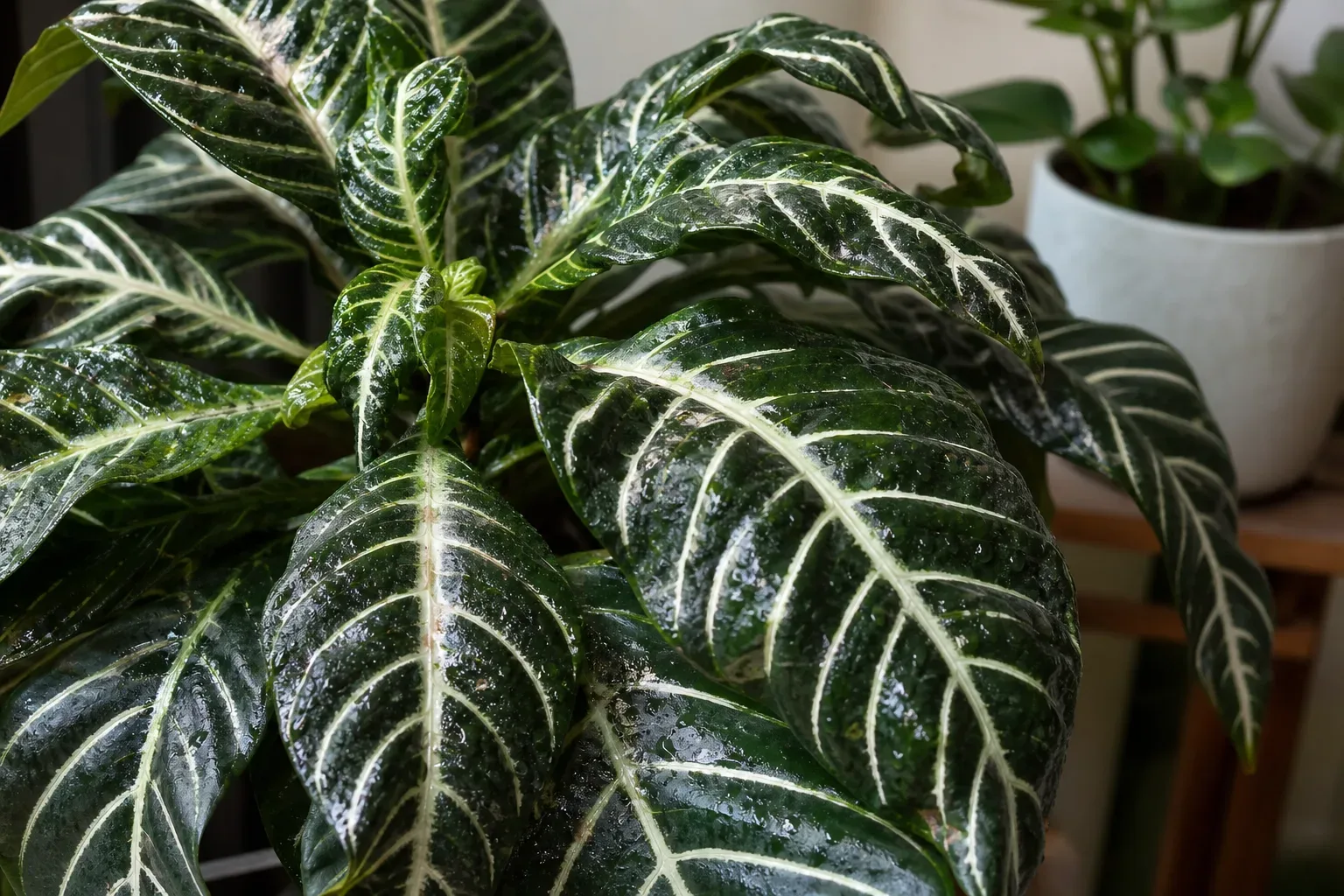
Sticky Leaves on Zebra Plant: Causes, Checks & Fixes
This guide covers sticky leaves on Zebra Plant. See also the general Sticky Leaves guide, watering, and light pages for this plant.
Sticky Leaves on Zebra Plant: Causes, Checks & Fixes
Quick answer
Sticky leaves on Zebra Plant (Aphelandra squarrosa) are not a normal feature of healthy foliage. Unlike some flowering annuals with naturally resinous leaves, this tropical acanthus shows tackiness when sap-feeding insects excrete honeydew-a sugary waste that coats striped leaves, stems, and sometimes the table below the pot.
First step: isolate the plant and inspect leaf axils, stem joints, and leaf undersides before you wipe or spray. You need to confirm scale, aphids, or mealybugs are present. Wiping alone returns within days if the insects remain. Once you identify the pest, targeted treatment-not a bundle of random sprays-is the correct path.
What sticky leaves look like on Zebra Plant
Healthy Zebra Plant leaves feel smooth and glossy, with bold white veins on dark green blades. Sticky-leaf trouble shows up differently:
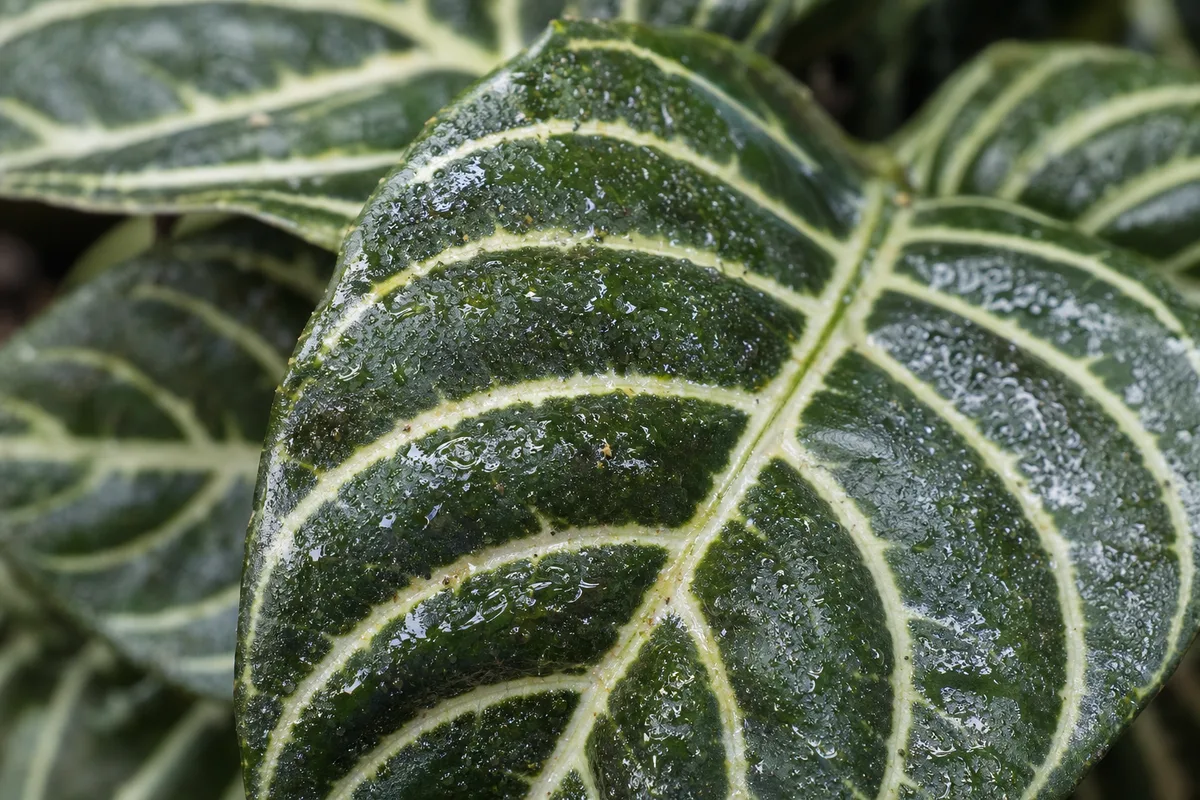
Sticky Leaves symptoms on Zebra Plant - compare with healthy tissue on the same plant.
Honeydew from pests:
- Shiny, tacky film on upper leaf surfaces where drips landed
- Stickiness concentrated near stem joints, new growth tips, or along leaf midribs on the underside
- Brown shell-like scale bumps on upright stems
- White cottony mealybug clusters tucked in leaf axils
- Soft green, black, or pink aphid groups on tender new shoots
- Black sooty mold that smears when wiped with a damp cloth
- Ant trails on the pot rim, saucer, or nearby surfaces
Common lookalikes:
- Mist or hard-water film - dries within a few hours, feels chalky or spotty rather than uniformly tacky, and has no insects or ants
- Spilled fertilizer or foliar spray residue - usually on outer leaf faces only, not tied to stem joints
- Normal leaf shine - glossy texture without stickiness that transfers to your fingers
Zebra Plant’s upright growth habit means honeydew often pools on lower leaves beneath an infested stem section. Check both the sticky leaves and the stems above them.
Why Zebra Plant gets sticky leaves
Zebra Plant is a warm, humid tropical species that pushes soft new growth when conditions are right. That tender tissue attracts aphids and provides protected crevices where mealybugs and scale settle. Missouri Botanical Garden lists aphids, mealybugs, scale, and spider mites among pests to watch on this species-the first three are classic honeydew producers.
These insects pierce phloem sap and excrete excess sugar as honeydew. Aphids, some scales, and mealybugs excrete honeydew that coats leaves and attracts ants-the sticky substance itself does not infect tissue, but it signals active feeding and can support sooty mold growth that blocks light on heavily coated leaves.
Indoor Zebra Plants face several risk factors:
- New introductions - scale and mealybugs often hitchhike on purchased plants
- Protected stem joints - upright acanthus stems offer axils where immobile scale hides
- Humidity management - the plant wants 60–70% humidity; dry air invites spider mites, while dense humid foliage without airflow lets pest colonies expand unnoticed
- Ant partnerships - ants harvest honeydew and may protect aphid colonies from predators, so ant activity on the pot is a red flag
Sticky leaves are a symptom of pests, not a separate disease. The fix always starts with finding and reducing the insect population.
How to confirm the cause
Work through these checks in order:
- Finger test - Rub a sticky upper leaf. Honeydew feels tacky and may leave a shiny smear; sooty mold adds a black film. Mist residue feels less sticky once dry.
- Trace upward - Find the stem section above the stickiest leaves. Scale and mealybugs usually sit on stems and axils, not randomly on old lower foliage alone.
- Axil and joint inspection - Use a hand lens on leaf-stem junctions. Mealybugs look cottony; scale looks like flat tan or brown bumps; aphids cluster as soft-bodied groups on new tips.
- Underside check - Flip leaves along the midrib. Aphids and immature scale often feed on undersides where the bold zebra striping makes pests harder to spot from above.
- Ant survey - Ants on the saucer or counter strongly suggest honeydew production above, even when insects are still small.
- Shake test - Disturb the top growth gently. Whiteflies are uncommon on Zebra Plant but fly in a cloud when present; aphids stay put; scale does not move.
- Rule out care-only stress - Dry crispy tips, bud drop, or uniform wilting without tackiness point to humidity or watering issues, not honeydew. Sticky leaves plus pests confirm the diagnosis.
If you find insects or sooty mold with tacky residue, pest honeydew is confirmed. If the plant looks healthy with no bugs and stickiness fades after a few hours, you likely misted or splashed water-no pest treatment needed.
First fix for Zebra Plant
Isolate the plant and wipe every stem joint and leaf underside with a damp cloth to remove honeydew and expose pests.
Move the pot away from other houseplants so crawlers and ants cannot bridge to neighbors. Support the upright stem with one hand and wipe axils, midribs, and stem bumps with a soft cloth dipped in lukewarm water. This single step clears fresh honeydew, reveals scale and mealybug hiding spots, and dislodges soft aphids before you choose a spray.
Do not start with heavy oil sprays on day one if you have not identified the pest. Do not repot unless you find mealybugs in the root zone-a rare but possible hideout on heavily infested plants.
Step-by-step recovery
After the initial wipe and isolation, match treatment to what you found:
Scale on stems
Scrape individual bumps with a fingernail or dab each with a cotton swab dipped in 70% isopropyl alcohol. Follow with horticultural oil or insecticidal soap on stems and leaf undersides per label directions. Scale insects on indoor plants need repeat applications every five to seven days for several weeks because immobile adults protect eggs underneath their shells.
Mealybugs in axils
Alcohol swabs on visible cottony masses, then insecticidal soap sprayed into crevices where leaves meet the stem. Check again in one week-mealybug egg masses hide in tight joints on Aphelandra’s upright structure.
Aphids on new growth
Rinse new shoots under lukewarm running water to knock off soft-bodied aphids, then apply insecticidal soap to new tips and undersides. Aphids reproduce quickly on tender zebra plant shoots, so a second treatment one week later is often necessary.
Sooty mold cleanup
Once insects are controlled, wipe coated leaves with a damp cloth. Sooty mold does not infect the leaf-it grows on honeydew. New growth should emerge clean within two to three weeks if pests stay gone.
When to escalate
If more than a third of stems carry scale, mealybug cotton covers multiple axils, or ants persist after two treatment cycles, consider discarding the plant before neighbors are infested. Heavy honeydew infestations may warrant discarding the plant to protect others.
Throughout recovery, keep normal Zebra Plant care steady-Zebra Plant light guide, 60–70% humidity, and watering when the top inch of soil dries. Do not fertilize a pest-stressed plant until new growth looks healthy again.
Recovery timeline
Expect one to two weeks before fresh honeydew stops appearing after effective treatment. Sooty mold wipes away immediately but may leave dull patches until leaves are replaced. Two to four weeks of weekly checks and repeat sprays are typical for scale and mealybug because eggs hatch on staggered schedules.
Signs recovery is working:
- Fingers no longer pick up tackiness from upper leaves
- No new sooty mold after wiping
- New striped leaves open clean without stickiness
- Ant activity on the saucer fades
Signs the problem is worsening:
- Stickiness spreads to previously clean stems
- Yellow bract buds drop while pests remain
- Lower leaves yellow and fall in clusters
- Stems soften at the base on wet soil-may mean overlapping root rot on Zebra Plant, not honeydew alone
Lookalike symptoms to rule out
Low humidity stress - crispy brown tips, curled leaf edges, and bud drop without stickiness or insects. Fix humidity and watering, not insecticides.
Powdery mildew - white powdery coating on leaf faces, not tacky sugar. Improves with airflow; different treatment path.
Hard-water spots - pale dried mineral dots after misting with tap water. Wipe off dry; no ants or stem bumps.
Normal gloss - healthy Aphelandra foliage is naturally shiny. If your fingers do not stick and there are no pests, the plant is fine.
Mistakes to avoid
- Wiping leaves without treating insects - honeydew returns within days while colonies grow
- Spraying oil in hot direct sun - can burn glossy striped foliage; treat in bright indirect light and let leaves dry the same day
- Ignoring ants - they protect aphids; control ants or remove the food source by clearing pests
- Misting to “wash” stickiness - surface mist does not reach axils and can worsen fungal issues on dense foliage
- Fertilizing during infestation - pushes soft growth that aphids prefer
- Confusing with Haworthia “zebra plant” - Aphelandra squarrosa is a tropical acanthus, not the succulent; sticky leaves on this species mean pests, not normal sap
Zebra Plant care cross-check
While treating pests, keep the conditions this species needs so recovery is not fighting stress:
- Bright indirect light; avoid harsh direct sun on treated leaves
- 60–70% humidity via humidifier or pebble tray
- Water when the top inch of soil dries; avoid soggy peat that weakens roots
- Gentle airflow in humid rooms to deter fungal issues
Zebra Plant is non-toxic to cats and dogs, but rinse treated leaves before pets browse foliage and keep alcohol swabs out of reach during treatment.
How to prevent sticky leaves next time
- Quarantine new plants for two weeks before placing near your Zebra Plant
- Scout monthly - leaf axils and stem joints first, especially after bringing plants indoors for winter
- Treat honeydew early - one shiny spot on a stem joint warrants alcohol dabs before sooty mold spreads across striped leaves
- Inspect purchases - reject plants with sticky residue, ants, or stem bumps in the store
- Balance humidity and airflow - meet the plant’s moisture needs without letting dense foliage stay wet and stagnant
Sticky leaves are preventable when you catch sap feeders before honeydew coats the bold foliage that makes this plant worth the extra care.
When to worry
Sticky leaves alone are manageable. Treat as urgent when:
- More than a third of the plant shows pests or sooty mold
- Yellow flower bracts abort en masse during bloom season
- Stems soften at soil line on wet mix-possible root rot overlapping pest stress
- Ants persist after two treatment rounds, suggesting a hidden colony in another pot nearby
- New growth stops entirely while stickiness spreads
In those cases, aggressive isolation, repeated labeled treatments, or discarding a heavily infested plant may be safer than risking your entire collection.
When to use this page vs other Zebra Plant guides
- Zebra Plant watering guide - Use for routine moisture checks before assuming sticky leaves is the main issue.
- Zebra Plant problems hub - Browse all 32 common issues on this species.