Brown Leaves on Swedish Ivy: Causes, Checks & Fixes
Quick answer
Use this page when entire Swedish Ivy leaves or large brown zones appear-not just dry margins (see crispy-leaves) or tip-only burn (see brown-tips). First, check whether the top inch of mix is bone dry or still wet, pinch a mature leaf for firmness, then match the browning pattern before you water, move, or prune.
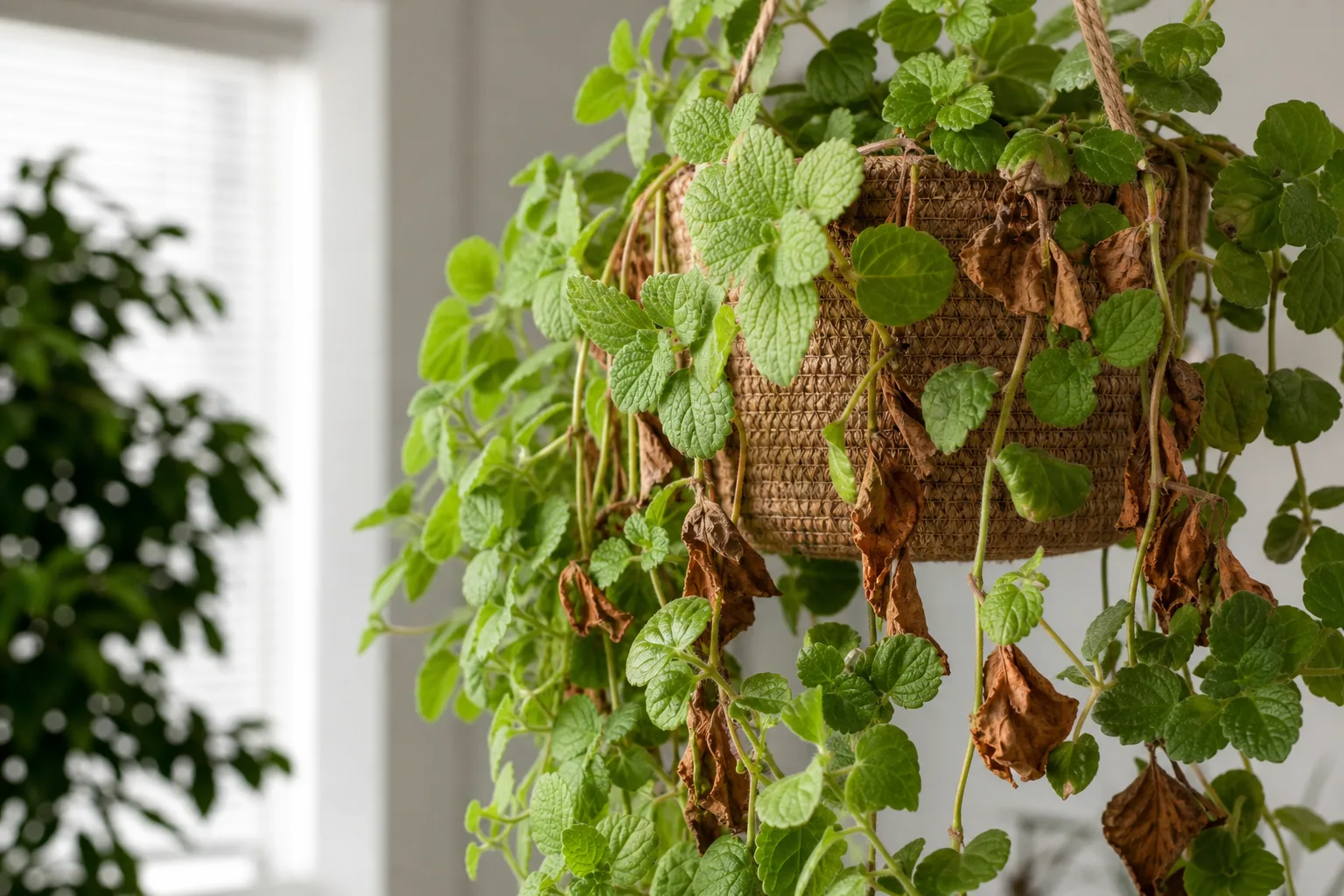
Brown Leaves on Swedish Ivy: Causes, Checks & Fixes
This guide covers brown leaves on Swedish Ivy. See also the general Brown Leaves guide, watering, and light pages for this plant.
Brown Leaves on Swedish Ivy: Causes, Checks & Fixes
Quick answer
Whole brown leaves on Swedish Ivy are usually water rhythm, sun, cold, or salts-not a nutrient spray fix. This glossy, scalloped trailer in a hanging basket shows five distinct brown patterns: crispy dry margins after drought, tan scorch patches on sun-facing foliage, soft stem-base browning on wet soil, whole-leaf drop after cold drafts, and marginal necrosis from fertilizer salts on otherwise well-watered plants.
Use this page for whole-leaf browning triage. For edge-only dryness without large dead zones, see crispy leaves on Swedish Ivy. For tip-only marginal burn without full-leaf death, see brown tips. For advanced wet-soil collapse, escalate to root rot.
First step: check the top inch of mix, lift the pot, and pinch a mature leaf. A light, dusty-dry basket with soft rubbery leaves needs a deep soak-not more pruning. A heavy wet pot with limp stems needs drying out and possibly root inspection-not another drink. Do not fertilize brown leaves, and do not move the plant into stronger sun hoping it will recover.
What brown leaves look like on Swedish Ivy
Swedish Ivy (Plectranthus verticillatus, often sold as Plectranthus australis) carries thick, glossy, scalloped leaves on trailing square stems. Brown damage shows up in distinct patterns:
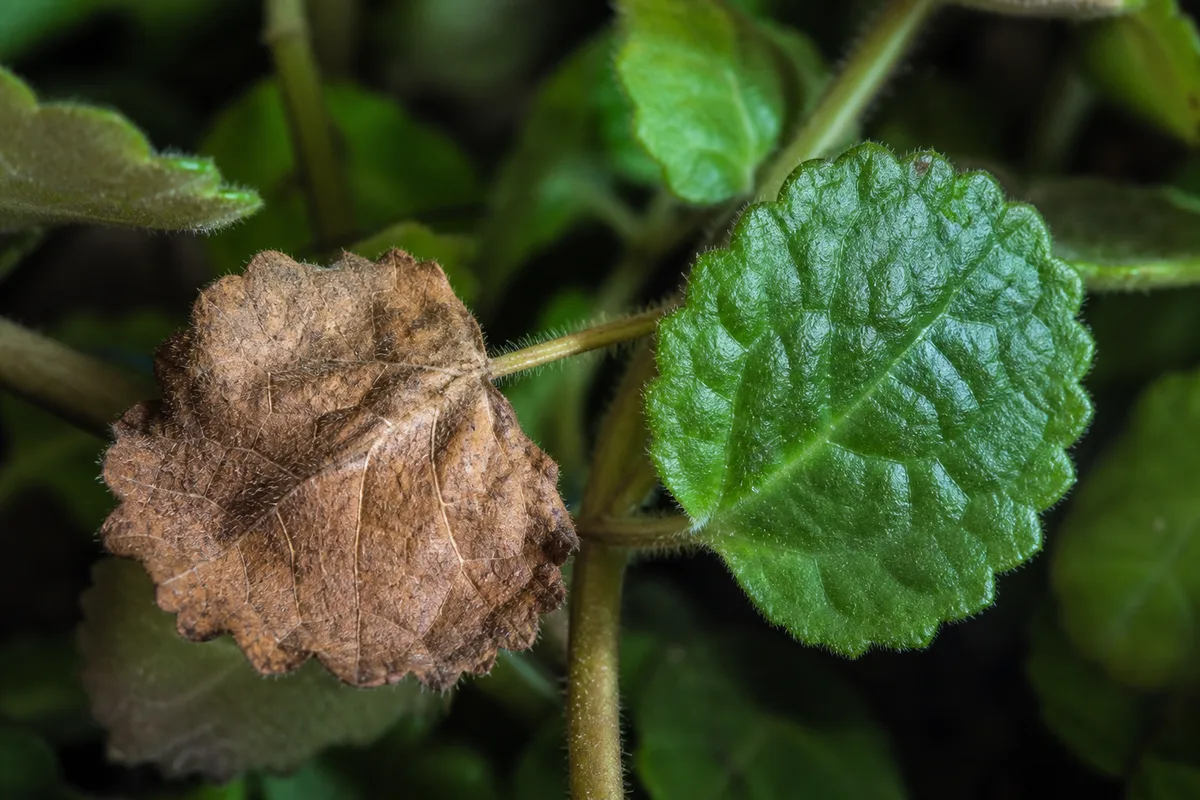
Brown Leaves symptoms on Swedish Ivy - compare with healthy tissue on the same plant.
Crispy margins (drought)
- Dry brown edges or tips that crack when rubbed-margins desiccate when the root zone has been dry too long
- Outer runners in bright hanging baskets brown first during repeated dry cycles
- Pot feels light; top inch of mix is dusty dry
- Mature leaves feel soft and rubbery when pinched-the leaf-firmness signal from the watering guide
- Lower leaves often brown before upper tips during chronic thirst
Tan or bleached scorch patches (sun)
- Dry tan, bleached, or brown patches on the leaf half facing a sunny window-not uniform edge crisping
- Soil moisture may be normal; damage is localized to one exposed side
- Often follows moving a basket closer to south or west glass, or removing a sheer curtain
- Shaded tissue on the same leaf stays green while the sun-facing half dies
Whole-leaf drop (cold or draft)
- Entire leaves turn brown and fall after sudden temperature swings, cold glass contact, or HVAC blasts
- Outer trailing stems on a winter windowsill are hit first
- Soil moisture may look fine; timing matches a cold night or draft event
- Cross-check cold damage and draft stress if placement is the suspect
Soft stem-base browning (rot)
- Mushy brown tissue at the soil line with yellowing above on trailing stems
- Wet, heavy mix; sour smell at drainage holes
- Wilting that does not recover after watering-damaged roots cannot supply water evenly, so leaves brown even though mix feels wet
- Fungus gnats may hover when soil stays saturated in oversized baskets
Marginal necrosis (salts)
- Brown margins after heavy feeding or repeated top watering without flushing
- Pattern looks like drought but happens on well-watered plants with a heavy pot
- White crust on soil surface or pot rim may accompany edge burn
- See brown tips when damage stays confined to tips and margins without whole-leaf death
Fully brown leaves will not green up again. Partially green leaves can still help the plant photosynthesize until new growth replaces them.
Why Swedish Ivy gets brown leaves
Swedish Ivy evolved as a woodland and forest-margin ground cover in southern Africa-filtered light, quick drainage, and moisture in bursts. Indoors, brown leaves usually mean that rhythm broke.
Underwatering is common on fast-growing trailers in bright light. The species stores moisture in semi-succulent leaves but still needs regular drinks during active growth. When the top 1 to 2 inches of mix stay dry too long, margins desiccate and turn crispy brown while stems go limp. A bright summer basket can dry in a week; treating that like a winter schedule guarantees repeated brown cycles.
Too much direct sun scorches glossy foliage built for woodland-filtered light. Direct sun burns the leaves when a sudden move to unfiltered south glass-or reflected heat from a window-bleaches or browns patches within days while the shaded side of each leaf stays green.
Overwatering and root rot damage roots so leaves brown on wet soil. PlantZAfrica warns plainly that waterlogged plants develop root rot-the primary indoor failure mode. Damaged roots cannot move water upward evenly, so older leaves brown and drop while stems soften near the crown.
Cold and draft stress hurt Swedish Ivy quickly. The species does not tolerate frost; indoors, prolonged exposure below about 50°F (10°C) or repeated cold blasts from exterior doors browns and drops outer foliage-even when watering was correct.
Fertilizer salt injury accumulates along leaf margins when feeding is heavy during low-light months. Excess fertilizer salts taken up by the plant can accumulate at leaf margins and tips, causing salt burn and marginal necrosis-a pattern that looks like drought but happens on well-watered plants.
Pest stress is less common but spider mites or mealybugs can stipple or weaken leaves until edges brown. Check undersides before assuming a watering mistake alone.
Winter rhythm mismatch is an under-read cause: growth slows from November through February, but many growers keep summer watering frequency. Brown leaves on constantly damp winter soil are especially dangerous because roots use little water while the mix stays airless.
How to confirm the cause
Work through these checks in order, then use the decision table below.
- Top-inch moisture - Dusty dry mix supports underwatering; wet, heavy mix with limp stems supports rot.
- Pot weight - Light and dry fits drought; heavy days after watering fits overwatering or poor drainage.
- Leaf-firmness pinch - Gently squeeze a mature leaf. Soft, rubbery texture on a light dry pot confirms thirst. Firm leaves on a heavy wet pot mean root stress-not drought.
- Stem base firmness - Mushy brown bases with sour odor confirm rot. Firm dry bases with limp tips fit thirst.
- Light exposure - Note which leaf sides browned. Sun-facing patches with otherwise moist soil suggest scorch, not underwatering.
- Recent changes - New window placement, winter heat vents, vacation dry-down, or a heavy fertilizer dose narrows the cause quickly.
- Pest scan - Webbing, cottony clumps, or stippling on undersides mean treat pests before adjusting water again.
If soil is wet and stems are soft, do not soak the plant “because leaves look dry.” That worsens rot.
Confirmation decision table
| Pattern | Pot weight / soil | Leaf pinch | Stem bases | Likely cause | First action |
|---|---|---|---|---|---|
| Crispy margins, limp runners | Light, dry top inch | Soft, rubbery | Firm | Underwatering | Deep soak; see underwatering |
| Tan patches on sun-facing side | Often normal moisture | Firm | Firm | Sun scorch | Move to Swedish Ivy light guide |
| Whole leaves brown and drop | May feel normal | Firm unless drought followed | Firm | Cold / draft | Move off cold glass; cold damage |
| Brown spread on wet soil | Heavy, wet for days | Firm or limp | Soft, sour smell | Root rot | Stop water; root rot |
| Margins brown, well-watered | Heavy, no dry-down | Firm | Firm | Salt injury | Flush mix; hold fertilizer |
| Stippling + webbing | Variable | Pale, stippled | Firm | Pest stress | Rinse; spider mites |
First fix for Swedish Ivy
Match your first action to moisture and pattern-not panic.
Drought path
If the top inch is dry, the pot feels light, stem bases are firm, and mature leaves feel soft when pinched: water thoroughly until excess drains, then empty the saucer. Wait 24 hours before judging recovery.
If mix has pulled away from pot walls after vacation neglect or water runs straight through the surface, bottom-soak the basket in a basin of room-temperature water halfway up the pot for 30–60 minutes so dry peat can reabsorb moisture, then drain fully. That hydrophobic dry-mix trap produces brown margins even after you “watered” from the top.
Rot path
If the mix is wet and heavy with limp stems: stop watering, move to bright indirect light with airflow, and let the top half dry. Unpot only if stems soften or soil smells sour-follow the root rot guide before Swedish Ivy repotting guide on day one.
Scorch path
If sun scorch is obvious on sun-facing patches: move to bright indirect light without direct midday sun on foliage. Remove fully dead leaves; leave partially green tissue.
Cold path
If cold damage is recent: move away from cold glass and drafts. Trim only fully dead leaves after the plant stabilizes in stable room temperatures.
Make one primary correction before stacking repot, fertilizer, and heavy pruning.
Step-by-step recovery
After the first fix:
- Wait 24–48 hours before changing course. Limp drought-stressed stems often firm after one deep soak; wet-root cases need dry-down time.
- Trim fully brown leaves with clean scissors. Cosmetic pruning is fine; stripping every partially green leaf slows recovery.
- Hold fertilizer until new tip growth looks plump and glossy for two weeks.
- Stabilize placement - Bright indirect light, no harsh sun, no heater blasts or cold drafts.
- Repot only if needed - Sour smell, mushy roots, or repeatedly waterlogged mix in an oversized hanging basket. Use fresh well-draining media sized to the root ball.
- Pinch healthy tips after recovery - Encourages bushier replacement growth on bare runners.
Recovery timeline
Hours 0–24: Drought-stressed leaves often perk after a thorough soak if roots are intact. Scorched patches stay dead.
Days 3–14: New scalloped leaves should look normal during spring and summer growth. Continued marginal browning on wet soil means rot or salts-not more water.
Weeks 2–4: Trailing stems fill in sparse sections if light and watering stay consistent. Old brown leaves may drop; that is normal once conditions stabilize.
When to worry: Browning spreads to new tips while soil stays wet, stem bases blacken, or the plant stays wilted 48 hours after a confirmed deep soak on dry soil.
A recovery pattern worth tracking
A common fix after south-window scorch: move the basket back to bright indirect light, remove fully dead leaves, and wait. New scalloped tips often emerge clean within two weeks during active growth-without repotting or feeding. If the same plant had wet soil and soft stem bases instead, that timeline would need root inspection first, not patience alone.
Lookalike symptoms
| Your symptom | Best page | Why |
|---|---|---|
| Papery brown edges only, rest of leaf green | Crispy leaves | Edge-only dryness or scorch without whole-leaf death |
| Brown tips and margins, leaf center green | Brown tips | Salt or drought tip burn without full-leaf browning |
| Yellow leaves with wet heavy pot | Yellow leaves | Early overwatering before tissue fully browns |
| Limp cascade, unclear moisture | Drooping leaves | Wilt paradox on wet vs. dry soil |
| Whole plant wilted on wet soil | Root rot | Advanced root failure, not cosmetic browning |
| Sudden drop after cold night | Cold damage | Temperature kill vs. chronic drought |
| Black spots with yellow halos | Isolate and improve airflow | Possible leaf spot-not typical Swedish Ivy browning |
Normal old-leaf drop: A few lower leaves yellow and brown seasonally on long trailers. Widespread browning on new growth is not normal aging.
What not to do
Do not water on a calendar without checking the top inch-scheduled watering causes both underwatering and overwatering on houseplants.
Do not move stressed plants into stronger sun to “help them recover.” Scorched Swedish Ivy needs less direct light, not more.
Do not fertilize brown leaves to “green them up.” Feeding stressed or waterlogged roots worsens salt burn and rot.
Do not mist leaves instead of fixing roots - Surface moisture does not rehydrate a dry root ball and can encourage rot on wet stems.
Do not remove every partially green leaf - Keep functioning tissue until replacements grow.
Swedish Ivy care cross-check
Align fixes with how this species grows indoors-full rhythm detail lives in the watering guide and overview.
- Light: Bright light indoors with protection from harsh midday sun on trailing baskets.
- Water trigger: Top inch dry, then soak until drainage. Empty saucers within 30 minutes.
- Seasonal cadence: Roughly every 7 to 10 days in spring and summer active growth; every 14 to 21 days in winter slowdown-always adjusted for your pot, light, and room temperature.
- Leaf-firmness check: Pinch mature leaves before watering. Soft, rubbery leaves on a light pot mean thirst; firm leaves on a heavy pot mean wait-even if margins look stressed.
- Temperature: Roughly 16–24°C (60–75°F); keep away from cold drafts and sub-50°F (10°C) exposure.
- Container: Drainage holes required; oversized hanging baskets stay wet too long around shallow roots.
- Feeding: Light, seasonal feeding only during active growth-not as a fix for brown leaves.
How to prevent brown leaves next time
- Weigh the pot after watering and again when the top inch feels dry-muscle memory beats a calendar.
- Filter intense window sun with sheer curtains or move baskets back from south-facing glass in summer.
- Stretch winter intervals when growth slows, but do not let bright baskets go bone dry for weeks.
- Flush salts occasionally if you feed regularly-run water through the pot until excess drains freely.
- Keep backups - Swedish Ivy roots easily from firm tip cuttings if a parent plant succumbs to rot; see the propagation guide.
Track one basket through a full dry-down cycle in your light. Once you know how fast it dries in summer versus winter, brown leaves become easier to prevent than to repair.
When to worry
Act promptly when:
- New tip growth browns while soil stays wet
- Stem bases soften and smell sour
- Most of a long runner browns after a cold snap near a window
- Browning continues two weeks after you corrected water and light
For severe rot on otherwise firm upper stems, take healthy tip cuttings and dispose of the rotted base. Swedish Ivy propagates readily from stem tip cuttings; fresh starts beat nursing a fully collapsed root system-timing and technique are in the propagation guide.
When to use this page vs other Swedish Ivy guides
- Swedish Ivy watering guide - Use for routine moisture checks before assuming brown leaves is the main issue.
- Swedish Ivy problems hub - Browse all 18 common issues on this species.
- Yellow Leaves on Swedish Ivy - Different entry point when symptoms overlap with brown leaves.
- Black Spots on Swedish Ivy - Different entry point when symptoms overlap with brown leaves.