Drooping Leaves on Swedish Ivy: Causes, Checks & Fixes
Quick answer
Drooping leaves on Swedish Ivy mean roots cannot keep fleshy leaves firm-either the mix is too dry or too wet and roots are failing. Lift the pot and check the top inch of soil before you change anything.
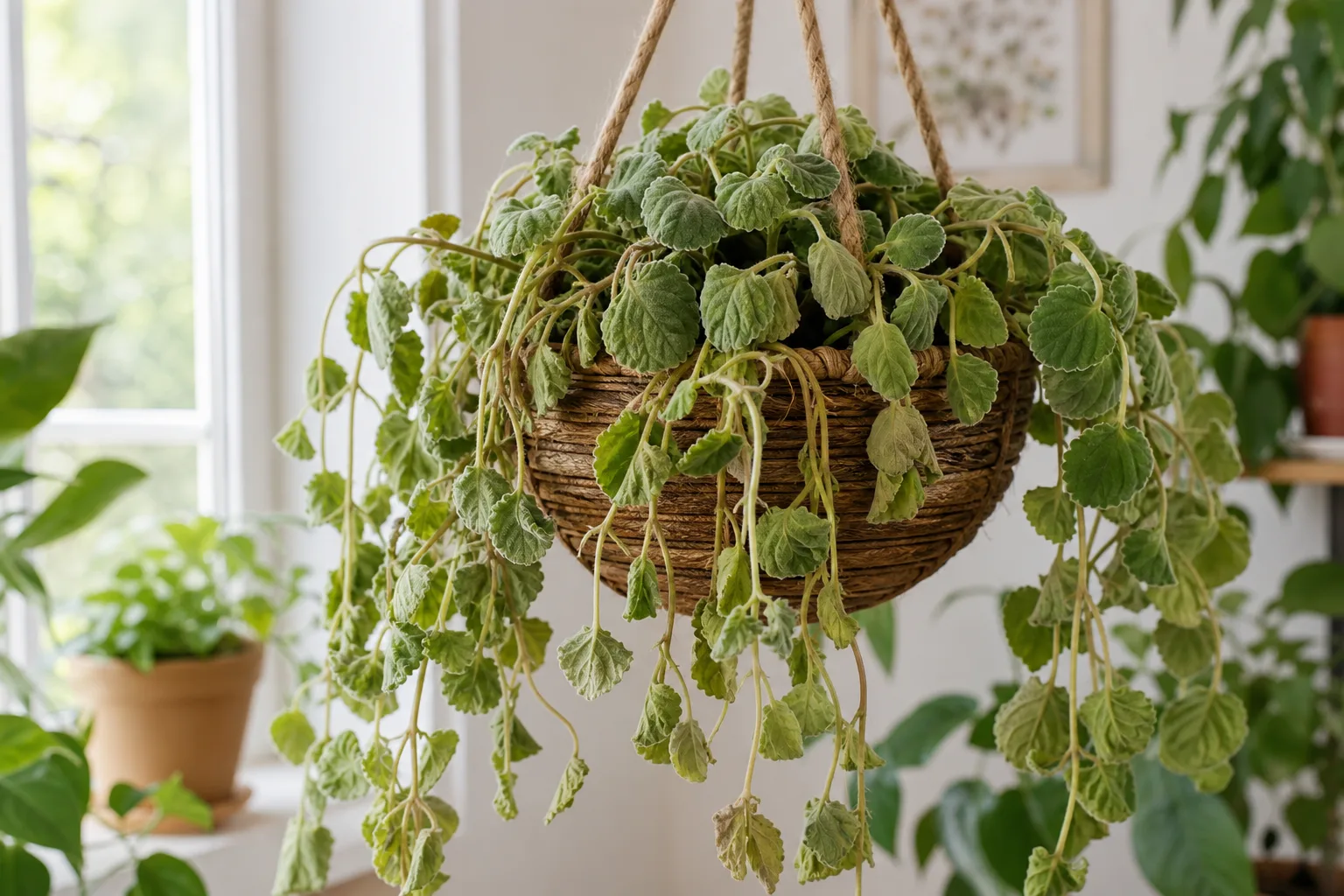
Drooping Leaves on Swedish Ivy: Causes, Checks & Fixes
This guide covers drooping leaves on Swedish Ivy. See also the general Drooping Leaves guide, watering, and light pages for this plant.
Drooping Leaves on Swedish Ivy: Causes, Checks & Fixes
Quick answer
Drooping leaves on Swedish Ivy (Plectranthus australis) look dramatic because the plant normally holds plump, glossy, scalloped leaves on stiff trailing stems. When those leaves hang limp, the issue is almost always water transport-not a mystery leaf disease.
The trap is that underwatering and overwatering can look identical from above. Dry roots cannot push water into semi-succulent foliage; rotting roots cannot take up water even when the pot feels wet. Before you reach for the watering can, lift the pot and check the top inch of soil. That single step separates thirst from root failure and keeps you from watering a drowning plant.
Why Swedish Ivy leaves droop
Swedish Ivy (Plectranthus australis) grows as a fast, trailing herb with fleshy leaves and square stems that store some water. In a hanging basket, long stems and exposed leaf surfaces lose moisture steadily-especially in bright rooms or during warm active growth. When turgor pressure drops inside leaf cells, petioles lose rigidity and the whole cascade can sag.
Several causes fit Swedish Ivy’s actual care profile:
Underwatering. When the mix has been dry too long, the plant cannot replace water lost through those plump leaves. The pot feels light, the top inch is dry, and stems may still feel firm. Swedish Ivy is forgiving-it often droops as a sure sign of under-watering and perks back after a drink-but repeated drought cycles weaken shallow roots and slow new growth.
Overwatering and root stress. Saturated soil suffocates fine roots. Damaged roots cannot take up water, so foliage droops despite wet soil-the classic wilt paradox. Overwatering is the more common killer indoors: yellow lower leaves, mushy stem bases, and sour-smelling mix often follow if the pattern continues.
Environmental shock. A recent move, Swedish Ivy repotting guide, cold draft from a window or exterior door, or sudden light change can trigger temporary droop even when moisture is technically adequate. Trailing baskets near HVAC vents are especially vulnerable.
Too much direct light. Outdoors, harsh sun can burn and dull foliage. Indoors, a basket pushed against a hot south window can lose water faster than roots replace it, causing partial droop on the exposed side first.
Heat stress. Temperatures above the comfort zone increase transpiration. If roots cannot keep pace-because the mix is dry or damaged-leaves collapse.
Pest sap loss. Mealybugs and spider mites can hit Swedish Ivy early in a collection. Heavy feeding weakens tissue and may accompany limp leaves, stippling, or sticky residue-but water mismatch remains the first explanation to rule out.
What drooping leaves look like on Swedish Ivy
Healthy Swedish Ivy holds upright to slightly arching stems with firm, glossy green leaves-often with scalloped edges. Variegated forms show white margins when well hydrated. Drooping changes the silhouette before color always changes.
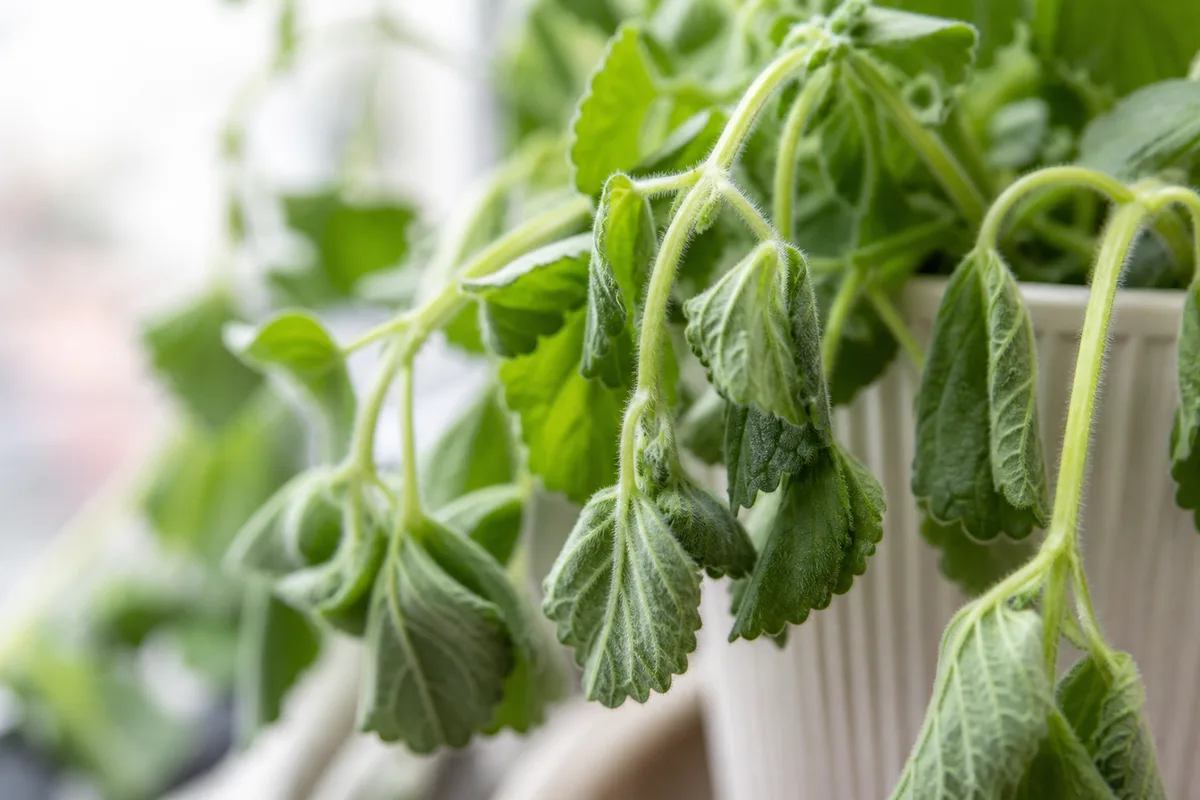
Drooping Leaves symptoms on Swedish Ivy - compare with healthy tissue on the same plant.
Thirst-related droop:
- Leaves hang downward but stay green at first
- Pot feels noticeably light
- Top inch of soil is dry; mix may pull slightly from pot edges in severe cases
- Leaves feel less plump but not mushy
- Perking within hours after a thorough watering strongly confirms simple dehydration
Overwatering-related droop:
- Leaves limp while soil stays wet for days
- Pot feels heavy; saucer may hold standing water
- Lower leaves may yellow; stem bases at the soil line feel soft
- Soil may smell sour or musty
- Drooping persists or worsens after you add more water
Shock-related droop:
- Starts within days of a move, repot, or temperature swing
- Often affects multiple stems at once while some tips still look normal
- Soil moisture may be fine; timing matches the change
- Gradual firming over one to two weeks once conditions stabilize
Light or heat droop:
- Partial collapse on the side facing a window or heater
- Leaves may look dull before they hang fully limp
- Soil moisture pattern may not explain one-sided sagging
One or two older leaves drooping slowly while new tips stay firm may be normal aging-not an emergency.
How to confirm the cause
Work through these checks in order. Each step narrows the diagnosis before you act.
- Pot weight test - Lift the container. If it is light, it needs water; heavy and wet suggests overwatering or poor drainage.
- Soil probe - Insert your finger one inch into the mix. That depth matches Swedish Ivy’s standard dry-down checkpoint from the care guide.
- Stem squeeze - Pinch stems at the soil line. Firm stems with dry soil mean thirst. Soft, collapsing bases with wet soil mean root damage-do not water again yet.
- Smell check - Sour or musty odor from drainage holes supports rotting roots, not simple thirst.
- Drainage review - Confirm holes are open and the basket is not sitting in a full saucer. Stagnant water at the bottom keeps shallow roots wet.
- Timing review - Did you repot, move, or expose the plant to a new draft in the last two weeks? Shock droop fits a recent change with otherwise reasonable moisture.
- Light and heat scan - Note if droop hits one side of the basket. Partial collapse on one exposure suggests light or heat stress.
- Underside inspection - Check for mealybug cotton, stippling, or fine webbing if water checks do not explain the pattern.
If dry soil and a light pot confirm thirst, you have a clear underwatering diagnosis. If wet soil, heavy pot, and soft stems align, treat as root stress first-adding water will deepen the problem.
First fix for Swedish Ivy
Lift the pot. If the top inch of soil is dry and the pot is light, water thoroughly once until water runs from the drainage holes, then discard saucer water.
That is the correct first action for thirst-driven droop on Swedish Ivy. Use room-temperature water and wet the full root ball-not a splash on the surface. Wait six to twenty-four hours and check whether leaves regain partial firmness. Trailing stems should feel less limp and leaves less papery when turgor returns.
If the pot is heavy, soil is wet, or stem bases feel soft, do not water. Stop irrigation, move the basket out of direct sun, and let the mix dry toward the top inch before any next watering. If stems stay soft after several days of dry-down, unpot and inspect roots-trim mushy tissue and repot into fresh well-drained mix only when rot is confirmed.
Do not repot, fertilize, or prune heavily on day one unless roots are clearly failing. Swedish Ivy recovers faster when you fix one variable at a time.
Step-by-step recovery
After the first fix, follow the path that matches your diagnosis.
For underwatering:
- Water thoroughly once, then wait for partial perk-up before watering again.
- If soil repelled water and ran straight through dry pockets, bottom-soak the pot in a tray of water for twenty to thirty minutes, then drain fully.
- Move the basket out of harsh direct sun until turgor returns-Swedish Ivy light guide is enough during recovery.
- Resume the normal rhythm: water when the top inch dries, not on a fixed calendar.
For overwatering without confirmed rot:
- Stop watering until the top inch of mix is dry.
- Empty the saucer after every future watering.
- Improve airflow around the basket so foliage dries between drinks.
- Reduce winter watering when growth slows-roots use less moisture in cool months.
For confirmed root rot:
- Unpot and rinse roots gently under lukewarm water.
- Trim all brown, mushy roots back to firm white tissue with clean scissors.
- Discard soggy old mix; scrub or replace the pot.
- Repot into fresh well-drained potting media and wait several days before the first light watering.
- If the parent plant is too far gone, take stem tip cuttings from the healthiest branches and root them in clean media-the species roots easily from cuttings.
For shock or draft droop:
- Move the basket to a stable bright indirect spot away from vents, exterior doors, and cold windows.
- Hold watering steady at the normal dry-down rhythm-do not compensate with extra water.
- Avoid moving the plant again for at least two weeks while it settles.
For pest-related droop:
- Isolate the basket from other houseplants.
- Rinse leaf undersides and stem joints with a strong stream of water.
- Treat confirmed mealybugs or spider mites with insecticidal soap if colonies persist-follow label directions.
Recovery timeline
Simple thirst-driven droop often improves within six to twenty-four hours after one thorough watering. Severe dryness that needed a bottom soak may take a full day before trailing stems feel less limp.
Overwatering recovery without rot takes several days to two weeks as the mix dries and roots regain function. Judge progress by stopped spread of droop and firm new tips-not by old leaves springing fully upright.
Root rot recovery is measured in weeks. New firm growth at stem tips and a stable dry-down rhythm mean the plant is winning. Continued softening at the base despite dry soil means rot is advancing-propagate cuttings before the last healthy tissue fails.
Shock droop usually resolves within one to two weeks once temperature and light stay stable. No new collapse after the first week is a good sign.
Lookalike symptoms to rule out
Leggy pale growth without droop points to insufficient light, not water failure. Stems stretch and leaves pale while still holding some firmness-move to brighter indirect light and pinch tips.
Yellow leaves with wet soil often signal overwatering advancing toward rot, not simple thirst. Do not add water hoping leaves green up.
Crispy brown leaf edges with dry soil confirm chronic underwatering or low humidity stress-not the soft limp droop of acute thirst. Edges will not revert; new growth should come in clean once watering stabilizes.
Mealybug cotton on stems can mimic random wilting on one branch. Isolate and inspect before assuming root problems.
Normal post-bloom slump after heavy flowering is minor and localized-pinching faded stems encourages branching without a full watering overhaul.
Mistakes to avoid
Do not water automatically because leaves look limp-check soil first. Wet-soil droop gets worse with more water.
Do not let Swedish Ivy sit in a full saucer. Shallow roots drown quickly in stagnant water.
Do not repot on day one unless mix is failing or rot is confirmed. Fresh disturbance on a stressed trailer adds shock.
Do not fertilize during acute droop. Salt stress on damaged roots slows recovery.
Do not place a drooping basket in direct sun hoping to dry soil faster-heat increases water loss on already stressed leaves.
Do not assume every limp leaf will stand back up. Old tissue may stay slightly soft; judge recovery by new growth and stem firmness.
How to prevent drooping leaves next time
Water when the top inch of soil feels dry, not on a fixed weekly schedule. In bright warm rooms that may mean more frequent drinks; in cool winter months, less.
Use well-drained potting media in a container with open drainage holes. Trailing baskets dry unevenly-lift and check weight rather than guessing from the surface alone.
Keep bright light indoors. Avoid hot south windows without matching soil moisture. Rotate the basket occasionally so all sides get even light.
Maintain stable temperatures around 60–75°F (16–24°C). Move baskets away from cold drafts and blasting heat vents.
Reduce watering when growth slows in winter. The same volume that worked in summer keeps roots wet too long in cooler months.
Pinch stem tips after blooms fade to keep the plant bushy-dense growth uses water more evenly than a few long bare runners.
Because Swedish Ivy is non-toxic to cats and dogs, it often lives on reachable shelves and hanging hooks-still keep saucers emptied and check weight regularly since pet traffic can knock baskets and disrupt Swedish Ivy watering guide.
When to worry
Treat as urgent when drooping comes with wet soil, soft stem bases, or sour smell-that pattern often precedes fatal stem rot on trailing Plectranthus. Take firm cuttings early if the base keeps softening.
Also act quickly when most of the plant collapses within forty-eight hours despite what seemed like adequate care, or when droop persists more than forty-eight hours after a correct thirst watering on dry soil.
Lower urgency fits temporary droop on a light dry pot that perks after one thorough drink, or one-sided sag after a recent move that stabilizes within a week.
If wilting does not recover after proper watering correction and stems stay firm, look deeper-pests, compacted mix, or a pot that has outgrown its drainage.
Conclusion
Drooping Swedish Ivy leaves are a water-transport signal, not a death sentence. Lift the pot, read the top inch of soil, and match your first action to what you find-drink for dry light pots, dry-down for wet heavy ones. That diagnostic path saves thirsty trailers from drowning and catches root failure before soft stems spread up the cascade. Once turgor returns, keep a steady dry-down rhythm in bright indirect light and your basket should stay firm through the next growth flush.
When to use this page vs other Swedish Ivy guides
- Swedish Ivy watering guide - Use for routine moisture checks before assuming drooping leaves is the main issue.
- Swedish Ivy problems hub - Browse all 18 common issues on this species.