Swedish Ivy Light Requirements: Best Window and Sun Guide
Swedish Ivy Light Requirements: Best Window and Sun Guide
Swedish Ivy Light Requirements: Best Window and Sun Guide
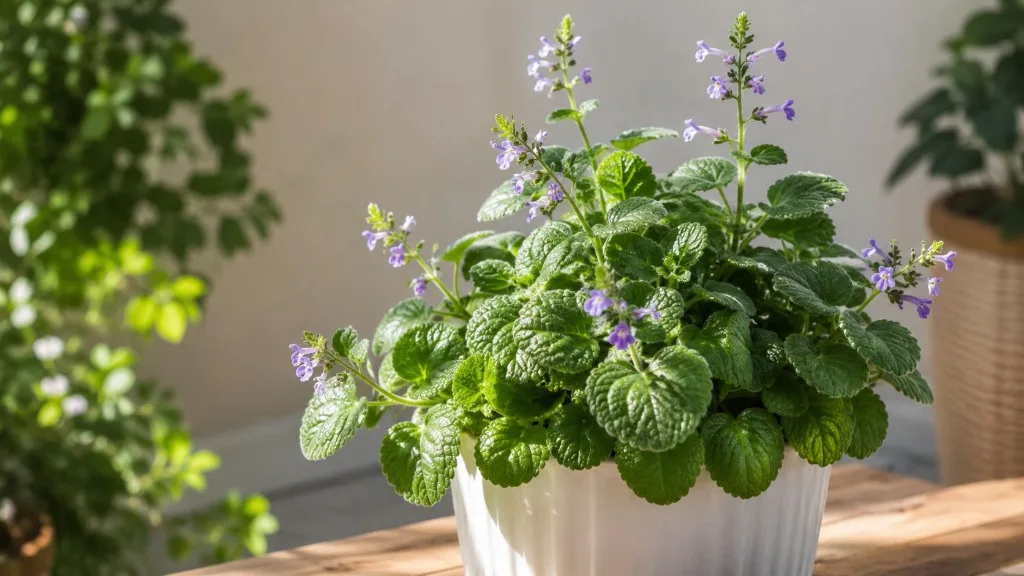
Swedish ivy looks effortless in photos - glossy scalloped leaves spilling from a hanging basket, soft enough for a kitchen corner, tough enough to forgive a missed watering. That reputation hides a narrow truth about light. Plectranthus verticillatus (still sold under the older name Plectranthus australis on many tags) is not a deep-shade vine and not a full-sun succulent. It is a fast-growing, soft-leaved understory ground cover from southern Africa that wants bright, indirect light for most of the day - strong ambient brightness without the leaf-cooking intensity of unfiltered midday sun on a west window or hot patio.
The practical target is four to six hours of bright indirect light daily, with the plant close enough to the window that light actually reaches the leaves, not just the wall behind the pot. Missouri Botanical Garden describes Swedish ivy as performing best in light shade or sun-dappled areas, tolerating lower light only with reduced vigor, and suffering leaf scorch under harsh direct sun. Royal Horticultural Society recommends partial shade and warns to shade from hot sun - too much direct exposure dulls or damages foliage and too little light produces leggy, stretched stems.
This guide focuses on the decisions that keep Swedish ivy full and trailing rather than thin at the base: how much light it actually needs, where to hang it indoors, how much direct sun is safe, what low light really costs, when grow lights make sense, and how to read new growth instead of guessing from how bright the room feels to your eyes.
How Much Light Swedish Ivy Actually Needs
Swedish ivy belongs to the Lamiaceae (mint) family - a group of often aromatic, fast-growing plants that respond quickly when conditions shift. Indoors, that responsiveness is an advantage. Change the light and you will see the result on the next flush of stems within one to two weeks, sometimes faster in warm, humid kitchens where the plant already grows actively.
The usable range for healthy, compact trailing growth is bright indirect light to medium indirect light. Bright indirect means the plant sits in a well-lit zone where you could read comfortably all day without turning on lamps, but where direct sunbeams do not land on the leaves for long stretches. Medium indirect still works for survival and moderate growth, especially for solid green plants, but it is not where Swedish ivy looks its best long-term. Deep shade - a spot far from windows, blocked by furniture, or under a dark shelf - produces the classic etiolation pattern: long gaps between leaves, smaller new foliage, soft stems that lean hard toward the nearest light source, and a thinning crown even while trailing tips still look acceptable.
Outdoors in USDA zones 10–11, Swedish ivy can grow as a spreading ground cover in partial shade - dappled light under open canopy or bright shade with protection from harsh afternoon rays. (Missouri Botanical Garden) In most U.S. homes it lives as a houseplant year-round or spends summers on a shaded patio. Either way, the light logic is the same: bright but filtered, not baking and not dim.
Light also sets the pace for everything else you do. A Swedish ivy in correct light dries its pot faster, branches more willingly after pinching, and recovers from propagation cuts with less rot risk. A dim plant grows slowly, stays wet longer, and invites root problems if you water on the schedule that worked for a brighter windowsill. Treat light as the throttle for the whole care system, not an isolated detail you set once and forget.
The Short Answer for Busy Growers
If you only remember four rules, use these. Default placement: hang or place the pot within 12 inches (30 cm) of an east-facing window, or a south/west window filtered by a sheer curtain during peak hours. Daily target: aim for four to six hours of bright indirect light - not four hours of direct sun on the leaves. Direct sun: limited morning sun is fine for acclimated plants; avoid hot afternoon sun through glass unless gradually hardened and watched daily. Diagnostic: judge light by new leaves and internode length on the freshest stems, not by old damaged foliage that will never recover its old shape.
Give any placement change 10 to 14 days before calling it a failure. Swedish ivy reacts quickly, but existing scorched or stretched leaves are historical records of the old spot. Only new growth tells you whether the current light is right.
Why Light Controls Trailing Growth and Crown Health
Trailing plants fool growers because the visible cascade can look fine while the crown near the soil weakens. Swedish ivy often hangs below the window line. The tips receive decent light while the upper stems and soil zone sit in relative shade. Over months, the plant develops long bare sections at the top, sparse leaves near the hanger, and vigorous growth only at the ends - a light problem disguised as a pruning problem.
Bright, indirect light supports short internodes - the spaces between leaf pairs along a stem. Short internodes mean a fuller, bushier plant that fills a basket from the top down. Insufficient light stretches those gaps, producing the leggy look people blame on fertilizer or age. The fix is almost always more usable photons reaching the crown, not more feed in a dim corner.
Swedish ivy also uses light to regulate leaf size and color. In good light, new leaves are glossy, appropriately sized, and evenly green (or evenly patterned on variegated types). In low light, new leaves may emerge smaller, paler, or thinner, and the plant may drop older leaves at the base because it cannot support full foliage on limited energy capture. That pattern mimics underwatering, which is why light and moisture checks belong together - but if the soil rhythm is consistent and base leaves still yellow while stems stretch, light is the prime suspect.
What South African Native Habitat Tells You Indoors
In its native range in southern Africa, Swedish ivy grows as a ground-hugging perennial in partially shaded sites - forest margins, rocky slopes, and understory pockets where light is bright but filtered and temperatures stay moderate. PlantZAfrica notes it is abundant along forest margins and woodland in frost-free southeastern Africa. It did not evolve for all-day equatorial canopy floor darkness or for open desert sun.
That ecology translates cleanly indoors. You are trying to recreate open shade: the kind of light you feel under a high tree on a clear day, or in a bright room where curtains diffuse sunbeams. A dark interior hallway is not “shade” in the horticultural sense - it is insufficient light. A south window with noon sun blazing through clear glass is not “bright indirect” - it is direct exposure that soft-leaved Plectranthus tissues handle poorly without acclimation.
Understanding the native cue prevents two common errors: treating Swedish ivy like a pothos that survives indefinitely in a dim bathroom, and treating it like a succulents-on-the-sill plant that should “toughen up” in full afternoon sun. It is neither. It is a bright-shade trailer that rewards proximity to windows and punishes both extremes.
Best Window Placement for Swedish Ivy
Compass direction is a starting guess, not a verdict. A labeled “south window” blocked by a porch roof may deliver less usable light than an open east window. What matters is how many hours of bright, mostly indirect light reach the plant’s crown and upper stems, and whether direct sunbeams hit leaf surfaces during the hottest part of the day.
For hanging baskets, height matters as much as direction. A basket hung level with the top of the window frame usually outperforms one suspended mid-wall where trailing stems get light but the root crown sits in a shadow pool. If you must hang lower, choose a brighter window or supplement with a grow light aimed at the upper portion of the plant, not just the dangling tips.
Rotate the pot a quarter turn every few days if growth leans one direction. Swedish ivy is not as rigid as some sun-trackers, but consistent one-sided light produces asymmetric baskets that look lopsided even when health is fine.
East, North, South, and West Exposures Compared
An east-facing window is the most reliable default for Swedish ivy indoors. Morning sun is bright but cooler than late-day sun, giving gentle direct rays early followed by strong indirect light the rest of the day. Many plants that scorch on west windows thrive east - including variegated Swedish ivy with pale leaf zones that lack pigment protection.
A north-facing window supplies soft, low-intensity indirect light all day. In summer at higher latitudes, north can sustain moderate growth for Swedish ivy, especially if the pot sits on the sill. In winter or on deeply shaded north exposures, expect slower growth, longer internodes, and a need for supplemental lighting if you want a dense basket rather than a sparse trailer. North is workable; north plus three feet of distance from the glass is often not.
A south-facing window delivers the strongest winter sun in the northern hemisphere and can be excellent for Swedish ivy from fall through spring when rays enter at a lower angle and heat load is moderate. In summer, south glass can overheat leaves and intensify direct beam duration. Pull the basket back slightly, diffuse peak hours with a sheer curtain, or shift to bright indirect placement a foot or two from the pane when you see pale patches on the glass-facing side.
A west-facing window provides strong afternoon rays - the highest scorch risk for Swedish ivy unless filtered. West can work in cool seasons or when trees outside block peak sun, but treat unfiltered west as a stress test, not a default. If west is your only bright option, diffuse noon to late afternoon and watch the side of the plant facing the glass daily during the first two weeks.
Direct Sun Tolerance and Safe Acclimation
Swedish ivy is not a direct-sun plant in the sense of succulents or rosemary on a baking ledge. Horticultural references consistently warn that too much direct sunlight scorches leaves, dulls color, and can cause drooping even when soil moisture is correct. Royal Horticultural Society likewise recommends partial shade and protection from hot sun. That said, some direct sun - especially cool morning exposure - is tolerable and sometimes beneficial when the plant is acclimated and the leaf tissue formed under similar brightness.
The key word is acclimated. Leaves developed in low light contain photosynthetic machinery calibrated for shade. Move that plant suddenly to a south sill at noon and you get photobleaching (pale or whitened zones), crisp brown edges, or midday leaf curl within days. Increase exposure gradually over 7 to 14 days, moving the pot a few inches closer to the light source every two or three days, or adding one hour of gentle direct sun before extending duration.
Solid green Swedish ivy generally tolerates more direct sun than variegated forms, but neither type belongs in harsh, unfiltered afternoon sun without monitoring. If you want to test sun tolerance, do it in spring or fall when window and patio heat is lower, not in midsummer when glass and dark pots amplify temperature.
Morning Sun vs Afternoon Sun Risk
Morning sun combines useful direct photons with lower leaf temperatures. For Swedish ivy on an east windowsill or east patio, one to two hours of early direct sun often improves compactness without scorch - especially if the plant was already growing in bright indirect light nearby.
Afternoon sun through west or south glass carries higher heat load and sharper UV intensity relative to many indoor environments. Soft Plectranthus leaves lose water fast, heat up, and show damage on the sun-facing surface first. Afternoon direct sun is where bleached patches and crispy margins appear even on plants labeled “easy care.” If afternoon sun is unavoidable, use sheer diffusion, increase airflow, and keep soil moisture stable without overwatering - wilt from root rot in dim soil plus sun stress on leaves is a miserable combination.
Outdoors for summer, place containers in bright shade - under a pergola slat, open tree canopy, or east-facing wall - rather than open west patio stone that reflects heat upward into the basket. Swedish ivy can summer outside once nights stay above about 50°F (10°C), but the container should return indoors before frost. (PlantZAfrica)
Low-Light Limits, Leggy Growth, and Recovery
Swedish ivy can survive in lower light longer than many flowering houseplants. Survival is not the same as the lush trailing habit that made you buy the plant. In medium-to-low indirect light, growth continues but internodes lengthen, leaves shrink, and the plant invests energy in reaching brighter zones rather than filling in horizontally.
Low light also weakens the link between watering and growth. A dim Swedish ivy uses less water, stays wet longer, and becomes vulnerable to root rot if you maintain a bright-window Swedish Ivy watering guide out of habit. If you must keep the plant in a darker spot temporarily, reduce watering frequency and skip fertilizer until growth visibly improves - but recognize that the real fix is more light, not a moisture tweak alone.
Leggy Swedish ivy can be partially recovered by moving to brighter indirect light and pinching long stems to force branching. Old bare sections may not releaf densely without propagation resets (rooting tip cuttings and replanting a fresh cluster), which is why prevention beats rescue. Start new baskets in adequate light rather than trying to rehabilitate a crown that spent a year in a dim hallway.
When Medium Light Works Temporarily
Medium indirect light - think a bright room but not direct window proximity - can maintain Swedish ivy for weeks to a few months during winter dimness or while a brighter room is unavailable. Expect slower growth, fewer new stems, and less need for Swedish Ivy repotting guide or feeding. Watch for progressive stretching; if internodes on new growth exceed roughly 2 inches (5 cm) repeatedly, medium light has become low light for Swedish Ivy overview’s genetics and pot size.
Medium light is also acceptable for fresh cuttings rooting in a humid, stable environment where intense light would desiccate leaves before roots form. Once rooted, move young plants toward brighter indirect exposure within a week or two so they do not harden into a leggy shape from the start.
Variegated Swedish Ivy and Light Sensitivity
Variegated Swedish ivy - leaves splashed with cream or white zones - follows the same bright indirect baseline but with less margin for error on both ends of the spectrum. Pale tissue lacks chlorophyll and protective pigment in the whitest areas, so direct sun scorches variegated sections first, often leaving tan patches that do not green back.
In too much light, some variegated plants lose contrast as white zones shrink or green expands - a stress response that can look like reversion. In too little light, variegation may fade toward plain green because the plant maximizes photosynthetic area. The sweet spot is stable bright indirect light with minimal direct sun except gentle morning rays.
If you grow both solid green and variegated baskets, do not assume identical placement. The green plant may tolerate a slightly brighter sill while the variegated one needs one step softer exposure - farther from glass, sheer filtered, or east instead of west. Compare new leaves only when tuning variegated plants; old leaves retain old damage patterns indefinitely.
Seasonal Light Shifts Indoors and Outdoors
Indoor light is not static. Swedish ivy on an east windowsill in January may receive a very different daily photon total than the same sill in June - lower sun angle in winter often helps south and east exposures; higher summer angle can introduce unexpected direct beam duration or hot glass.
Adjust expectations seasonally rather than chasing a fixed calendar rule. In winter, growth slows; the plant may tolerate slightly dimmer conditions without exploding into legginess immediately, but long winter stretching still compounds by spring. In summer, watch for sudden scorch when trees outside leaf out and then cut afternoon shade, or when you move a plant closer to open windows for “more air” without noticing sun now hits leaves directly.
If you summer Swedish ivy outdoors, acclimate both directions. Hardening off outward takes a week of bright shade before any direct morning sun. Bringing it back indoors in fall requires checking that the old indoor spot still qualifies as bright indirect - furniture moves and new curtains change light more than people remember.
Growers in the southern hemisphere mirror the logic with seasonal sun shifts reversed, but the plant’s needs remain: protect from harsh midday/direct exposure; avoid chronic dimness.
Grow Lights When Natural Windows Fall Short
When the brightest window still produces stretching, or when a north room is the only option, full-spectrum LED grow lights fill the gap more reliably than hoping the plant adapts. Swedish ivy responds well to supplemental light because it is a fast-growing foliage plant with moderate intensity demands - not a high-light succulent, not a deep-shade fern.
Start with a full-spectrum LED fixture or bulb rated for houseplants, positioned 10 to 12 inches (25–30 cm) above the crown - not just above the trailing tips. Run lights 10 to 12 hours daily, aligned roughly with natural day rhythm using a timer. Leaves should look evenly lit; if only the bottom cascade glows while the crown stays dark, lower the fixture or use a secondary small lamp for the top.
Increase intensity gradually if new growth still stretches after two weeks. Decrease distance or add an hour before assuming the plant is “just lazy.” Conversely, if leaves look heat-stressed or pale under LEDs, raise the fixture 2 to 4 inches - light quantity can be correct while heat at the canopy is too high.
Grow lights also solve office and interior room problems where windows exist but the plant sits too far away. Remember that indoor brightness drops sharply with distance; a Swedish ivy on a desk six feet from a window is often in low light even if the room feels sunny to you.
Distance, Hours, and Spectrum Basics
Distance controls intensity faster than wattage labels on consumer bulbs. Begin at 12 inches for typical small LED panels and adjust by reading new internode length after 14 days.
Hours: 10–12 hours on mimics a reasonable day length for continuous indoor growing. Swedish ivy does not require ultra-long photoperiods; excessive 16–18 hour schedules without corresponding care adjustment can stress plants and algae on saucers in humid setups.
Spectrum: Full-spectrum white LEDs (around 4000–6500K appearance) support balanced foliage growth. You do not need expensive bloom spectrums - Swedish ivy is grown for leaves, not flowers indoors, though occasional spikes of small lavender-white flowers may appear in bright conditions.
Combine grow lights with natural window light when possible. Hybrid setups often outperform either alone in winter.
The New-Growth Light Test That Beats Room Brightness
The most reliable light diagnostic for Swedish ivy is boring and effective: inspect the newest leaves and the youngest inch of stem. Old leaves at the bottom may be yellow from age, scorched from last summer’s window, or damaged from past overwatering. They will not tell you whether today’s placement works.
Healthy new growth in correct light shows firm stems, leaf pairs spaced closely, glossy color matching the cultivar, and active tip growth without desperate lean. Problematic new growth in too little light shows long internodes, smaller leaves, pale green or dull color, and strong directional lean toward the brightest source. Problematic new growth in too much light shows bleached or faded patches, crisp edges on the sun-facing side, cupping or curling during midday, or sudden leaf drop after a recent move.
Perform the test on a consistent schedule - every Sunday, check the top three inches of each major stem. Photograph the same angle monthly if you tend to forget prior shape. Trailing plants hide crown weakness until the basket looks empty at the hanger; the new-growth test catches that early.
Pair the test with a shadow-hand check at the plant’s leaf height. At midday, hold your hand roughly 12 inches above the crown. A soft, diffuse shadow with recognizable fingers suggests adequate indirect brightness for Swedish ivy. A sharp, dark shadow means direct beam exposure - fine for short morning periods on acclimated plants, risky for variegated types at noon. No readable shadow means move closer to the window or add a grow light.
Warning Signs of Too Much or Too Little Light
Light stress on Swedish ivy is readable once you know which symptoms belong to which failure mode. The table below is a field guide, not a substitute for checking roots and pests - but light should be the first variable when several signs cluster after a recent move.
Too little light - common signs:
- Long internodes on new growth (stems look like they’re climbing toward the window)
- Smaller, paler new leaves compared to older foliage formed in better light
- Bare stems at the crown while only tip growth looks healthy
- Slow recovery after pruning or propagation
- Persistent lean even after rotation
- Soil staying wet longer than expected at the same watering volume
Too much light - common signs:
- Bleached or whitened patches, especially on variegated zones
- Crisp brown edges or tan scorch spots on sun-facing leaf surfaces
- Midday leaf curl or dull, droopy appearance despite moist soil
- Sudden leaf drop on Swedish Ivy within days of moving to a brighter sill
- Faded variegation pattern or uneven color after exposure jumps
- Hot-to-touch leaves on window-side foliage in summer
When symptoms are mixed - yellow lower leaves plus stretching - start with light correction, then reassess watering after 10 days in the improved placement. Changing water, fertilizer, and light simultaneously makes failures impossible to diagnose.
Separating Light Stress from Water Stress
Light and water mistakes overlap in trailing houseplants because light intensity changes how fast roots use moisture. A Swedish ivy moved from a dim corner to a bright east window will need more frequent watering within a week. If you keep the old sparse schedule, wilting may look like “too much sun” when it is actually underwatering in higher transpiration.
Conversely, a plant in low light with chronically wet soil may show yellow leaves that resemble sun scorch from the edge inward, but roots will feel soft and soil will smell sour if rot has started. Lift the pot, check moisture depth with a finger or chopstick, and sniff the drainage hole before blaming light alone.
Use this sequence when unsure: (1) confirm pot drainage and soil dryness depth; (2) evaluate new-growth internode length and color; (3) note whether damage is one-sided toward the window (sun) or uniform base yellowing in dim rooms (often water/low light combo); (4) adjust one variable - usually light placement first for trailing Plectranthus - then wait 10–14 days.
How to Move Swedish Ivy Without Leaf Drop or Scorch
Swedish ivy handles gradual change well and punishes sudden jumps. Whether you are moving toward brighter or softer light, treat relocation as acclimation, not teleportation.
Moving to brighter light: shift the pot closer over 7–14 days in small increments, or add one hour of morning direct sun before extending. Avoid mid-move fertilizer spikes. Expect some old leaves to look unchanged while new ones improve - that is normal.
Moving to softer light: usually easier, but a plant hardened in strong sun may drop a few leaves when shifted indoors in fall. Reduce watering slightly as growth slows. Do not interpret every dropped leaf as failure if new growth after two weeks looks stable.
Hanging basket moves: when raising or lowering a basket, remember the crown height changed relative to the window. Lowering a basket six inches can move the crown from bright indirect to medium/low without you consciously deciding to reduce light.
After any move: wait 10–14 days before repotting, fertilizing heavily, or declaring the spot wrong. Swedish ivy communicates on the next growth flush, not the afternoon after you rehang the hook.
If scorch appears mid-acclimation, step back one increment - farther from glass or behind sheer - and stabilize before trying again. Leaves with crisp damage will not heal cosmetically; trim lightly if unsightly, but prioritize protecting new tissue.
Conclusion
Swedish ivy light requirements are straightforward once you stop judging by room brightness and start judging by window exposure, crown proximity, and new growth. The plant wants bright indirect light for most of the day - roughly four to six hours of strong, filtered brightness - with gentle morning sun acceptable for acclimated plants and harsh afternoon direct sun avoided, especially through hot glass. It tolerates medium light temporarily but rewards bright placement with compact stems, glossy leaves, and full baskets; it survives low light longer than it thrives there, slowly becoming leggy and crown-bare while trailing tips mask the problem.
Place hanging pots close to suitable windows - east is the safest default, south and west with diffusion, north with seasonal realism - and use grow lights when distance or architecture blocks usable photons. Read new leaves and internode spacing after every move, link brighter light to slightly faster watering, and acclimate gradually when increasing exposure. Variegated plants need the same baseline with less direct-sun margin. Get light right and Swedish ivy stays in the easy-care category people praise; get it wrong and no amount of misting or feeding fixes the stretch.
When to use this page vs other Swedish Ivy guides
- Swedish Ivy overview - Start here for whole-plant context before deep-diving this topic.
- Swedish Ivy problems hub - Jump to symptom-specific fix guides when this care topic does not resolve the issue.
- Leggy Growth on Swedish Ivy - Escalate here when light adjustments are not enough.
- Leaf Drop on Swedish Ivy - Escalate here when light adjustments are not enough.
Related Swedish Ivy guides
- Swedish Ivy overview
- Swedish Ivy watering
- Swedish Ivy soil
- Swedish Ivy propagation
- Swedish Ivy fertilizer
- Swedish Ivy repotting
- Leggy Growth on Swedish Ivy
- Leaf Drop on Swedish Ivy
- Swedish Ivy problems
Related tool
Try the Plant Problem Diagnosis Tool with swedish-ivy pre-selected to estimate needs for your setup.