Leaf Drop on Swedish Ivy: Causes, Checks & Fixes
Quick answer
Leaf drop on Swedish Ivy is almost always a stress response-not normal aging. Sudden light changes, cold drafts, or water swings trigger shedding on this fast-growing trailer. Hold care steady, move the basket away from vents, and check soil moisture at the top inch before you change anything else.
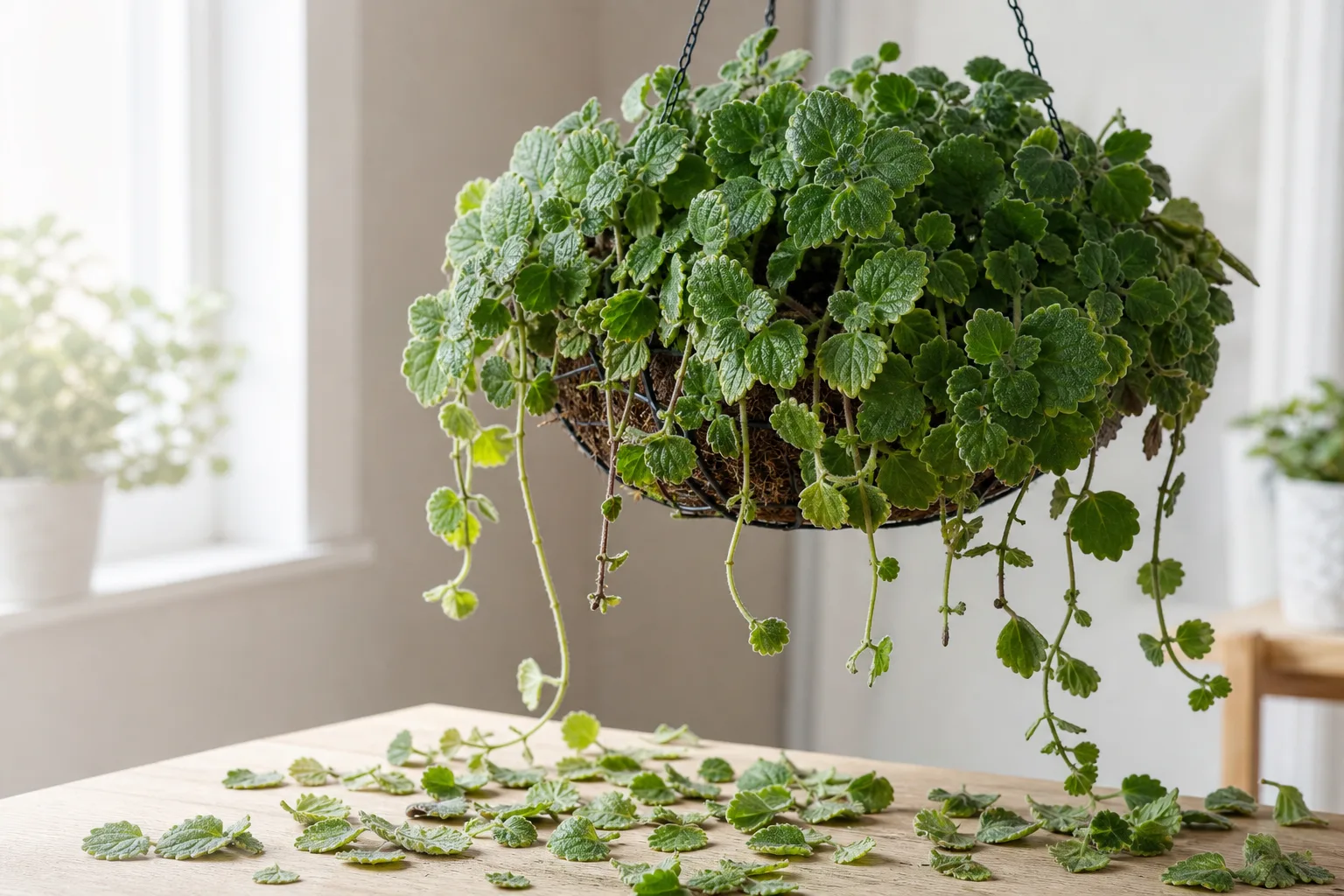
Leaf Drop on Swedish Ivy: Causes, Checks & Fixes
This guide covers leaf drop on Swedish Ivy. See also the general Leaf Drop guide, watering, and light pages for this plant.
Leaf Drop on Swedish Ivy: Causes, Checks & Fixes
Quick answer
Leaf drop on Swedish Ivy (Plectranthus australis) means the plant is shedding foliage faster than it can replace it-a defensive response to stress, not a cosmetic quirk. On this fast-growing trailing species, leaves detach easily when roots, light, or temperature swing out of balance.
The most common indoor triggers fit Swedish Ivy’s actual profile: sudden light reduction after a move, cold or hot drafts from vents and exterior doors, watering that alternates between bone-dry and soggy, and root failure from staying wet too long. Any stress-including temperature change, reduction of light, or relocating a plant-can result in leaf drop on houseplants generally, and Swedish Ivy reacts quickly because its shallow roots and fleshy leaves cannot buffer shock for long.
First action: stop changing care, move the basket to a stable bright indirect spot away from drafts and heat vents, and check the top inch of soil before adjusting water. Do not repot, fertilize, or prune heavily on day one.
Why Swedish Ivy drops leaves
Swedish Ivy grows as a fast-growing, evergreen trailer with glossy scalloped leaves on square stems. It prefers bright light indoors and even moisture-not extremes. When conditions shift faster than roots can adapt, the plant sheds leaves it can no longer support.
Environmental shock is the headline cause on Swedish Ivy. Moving a hanging basket from a bright porch to a dim corner, placing it beside a blasting heat vent, or exposing it to a cold window after a warm summer spot triggers mass drop within days. Plants moved back inside after spending summer outdoors rarely receive enough light and will invariably drop leaves as they adjust to lower light, lower humidity, and indoor heating.
Temperature and draft stress hit Swedish Ivy hard. The species does best around average room temperatures and can tolerate brief cooler periods, but prolonged exposure to chilling temperatures can damage leaves-wilting, discoloration, and drop follow. Baskets near exterior doors, air-conditioning vents, and radiator blasts lose leaves from transpiration shock even when soil moisture looks fine.
Watering inconsistency is the second major driver. Alternating drought and saturation stresses shallow roots. Overwatered Swedish Ivy may yellow and drop lower leaves while soil stays wet; underwatered plants drop crisp leaves from runners that could not maintain turgor. Wilted leaves with wet soil often mean rotting roots cannot take up water-a pattern that looks like thirst but worsens with more water.
Swedish Ivy repotting guide and transplant shock commonly trigger temporary shedding even when the new mix is correct. Disturbed roots plus changed light angle in a new container often produce a week or two of leaf fall before growth resumes.
Pest sap loss can accelerate drop when infestations are heavy. Mealybugs and spider mites are the pests most often cited on Swedish Ivy; sticky residue, stippling, or fine webbing on leaf undersides warrant inspection before you assume environmental shock alone.
Normal aging sheds an occasional lower leaf on long trailing stems. Problematic drop is continuous, rapid, or includes otherwise healthy green leaves on multiple runners at once.
What leaf drop looks like on Swedish Ivy
Healthy Swedish Ivy holds plump, glossy green leaves on firm trailing stems. Variegated forms show crisp white margins when well hydrated. Leaf drop changes the silhouette before the whole plant collapses.
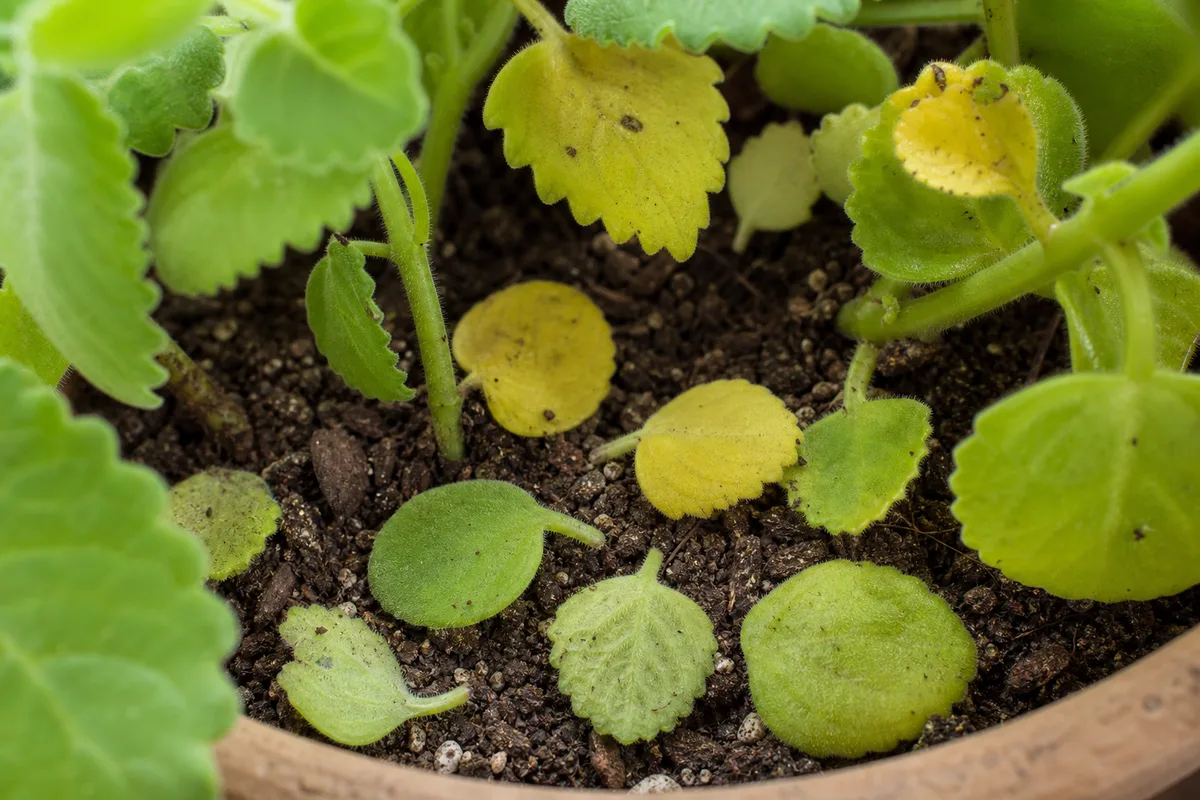
Leaf Drop symptoms on Swedish Ivy - compare with healthy tissue on the same plant.
Shock-related drop:
- Leaves detach with little resistance when touched
- Shedding often starts within days of a move, repot, or seasonal shift indoors
- May include green leaves, not only yellow or brown ones
- Inner and lower sections thin first while some tip growth still looks normal
- Soil moisture may be reasonable; timing matches the environmental change
Water-stress drop:
- Yellow lower leaves that fall while soil stays wet for days (overwatering pattern)
- Crisp leaves dropping from dry, light pots with pulled-back mix (underwatering pattern)
- Drooping may accompany drop before leaves detach completely
Draft or cold drop:
- Sudden mass shedding near a window, door, or vent
- Leaves may look dull or slightly off-color before they fall
- Often affects the side of the basket facing the cold or hot airflow first
Pest-related drop:
- Sticky film on leaves or nearby surfaces
- Cottony mealybug clusters in stem joints
- Fine webbing and stippling on undersides from spider mites
- Drop may cluster on infested stems while others look fine initially
One or two old leaves falling from the base of a long runner while new tips stay firm is usually normal senescence-not an emergency.
How to confirm the cause
Work through these checks in order. Each step narrows the diagnosis before you act.
- Change log - Did you move, repot, rotate toward a new window, or open heating vents in the last two weeks? Recent change plus green leaf fall strongly suggests shock.
- Draft scan - Stand near the basket and feel for cold air from windows, doors, or AC. Hot blasts from radiators and heat registers count too.
- Light level - Compare current placement to Swedish Ivy light guide near an east or west window. Dim corners after a bright outdoor season explain leaf drop when light is reduced.
- Pot weight test - Lift the container. If it is light, drought may be involved; heavy and wet suggests overwatering or poor drainage.
- Soil probe - Insert your finger one inch into the mix-the standard dry-down checkpoint for Swedish Ivy.
- Stem squeeze - Pinch stems at the soil line. Soft bases with wet soil mean root damage; firm stems with dry soil point to thirst.
- Smell check - Sour odor from drainage holes supports rotting roots, not simple shock.
- Underside inspection - Look for mealybug cotton, stippling, or webbing if water and environment checks do not explain the pattern.
If timing matches a recent move and soil moisture is middle-of-the-road, treat as acclimation shock first. If wet soil, heavy pot, and soft stems align, treat as root stress-not relocation shock.
First fix for Swedish Ivy
Move the basket to a stable bright indirect location away from drafts, heat vents, and cold windows-then hold every other variable steady for at least two weeks.
That is the correct first action for shock-driven leaf drop on Swedish Ivy. Do not repot, fertilize, prune back hard, or dramatically change watering on day one. Sudden care swings deepen the stress that triggered shedding in the first place.
While the plant settles:
- Keep watering at the normal rhythm: water when the top inch of soil feels dry, not on panic schedule
- Empty the saucer after every drink so shallow roots are not standing in water
- Avoid moving the basket again unless the current spot is clearly hostile (direct sun scorch, active draft)
If the pot is heavy, soil is wet, and stem bases feel soft, do not water until the top inch dries-even if leaves keep falling. Root failure masquerades as shock; adding water deepens rot.
If the pot is light and the top inch is dry, one thorough watering is appropriate-but only after confirming thirst, not automatically because leaves are falling.
Step-by-step recovery
After stabilizing placement, follow the path that matches your diagnosis.
For environmental or relocation shock:
- Hold light, temperature, and watering steady for two to four weeks
- Increase humidity slightly if indoor heating is very dry-a pebble tray helps, but avoid misting trailing stems constantly
- Remove fallen debris from the saucer and soil surface to reduce fungus-gnat habitat
- Pinch only dead or fully detached tissue; leave healthy leaves for photosynthesis
For overwatering without confirmed rot:
- Stop watering until the top inch of mix is dry
- Confirm drainage holes are open and the basket is not sitting in a full saucer
- Improve airflow around foliage so leaves dry between drinks
- Reduce winter watering when growth slows
For confirmed root rot:
- Unpot and rinse roots gently under lukewarm water
- Trim mushy brown roots back to firm white tissue with clean scissors
- Repot into fresh well-drained potting media sized to the root ball
- If the parent plant is too far gone, take stem tip cuttings from the healthiest branches and root them in clean media
For underwatering:
- Water thoroughly once until water runs from drainage holes, then discard saucer water
- If mix repelled water, bottom-soak twenty to thirty minutes, then drain fully
- Resume the top-inch dry-down rhythm-do not keep soil soggy to “prevent” more drop
For pest-related drop:
- Isolate the basket from other houseplants
- Rinse leaf undersides and stem joints with a strong stream of water
- Treat confirmed mealybugs or spider mites with insecticidal soap if colonies persist-follow label directions
Recovery timeline
Shock-driven drop should slow within one to three weeks once light and temperature stay stable. If the cause is not drought or overwatering, the plant may slowly adapt to the new location-full canopy rebuild on trailing stems may take several months as new nodes produce leaves.
Water-stress recovery often shows fewer leaves falling each week within seven to fourteen days after the correct watering correction. New firm tips are the best early sign.
Root rot recovery is measured in weeks. Judge by stopped base softening and fresh growth at stem tips-not by old bare runners refilling overnight.
Pest recovery depends on treatment success; expect two to three weeks after mites or mealybugs are controlled before drop fully stops.
Lookalike symptoms to rule out
Leggy pale growth without drop points to insufficient light, not shock. Stems stretch and leaves pale while still attached-move to brighter indirect light and pinch tips.
Yellow leaves that stay attached often signal advancing overwatering before they fall. Wet soil plus yellowing lower leaves is a water problem, not draft stress alone.
Crispy brown edges on attached leaves confirm chronic underwatering or low humidity-not the clean detachments of shock drop. Edges will not revert; new growth should come in clean once watering stabilizes.
Drooping without drop may be simple thirst or early root stress. Lift the pot before assuming leaves will fall next.
Normal post-bloom leaf loss after heavy flowering is minor and localized-pinching faded stems encourages branching without a full environmental overhaul.
Mistakes to avoid
Do not repot immediately after leaf drop starts unless roots are clearly failing. Unnecessary repotting adds shock during an already unstable period.
Do not fertilize to force quick regrowth. Salt on stressed shallow roots slows recovery.
Do not change multiple variables at once-moving, repotting, and altering water rhythm together guarantees more drop.
Do not assume all shedding is normal aging. Widespread green leaf loss on multiple runners is never “just old leaves.”
Do not place a dropping basket in direct sun hoping to dry soil faster-too much direct light bleaches and burns leaves on Swedish Ivy.
Do not ignore wet soil because the plant “looks shocked.” Root rot drop worsens silently while you wait for acclimation.
How to prevent leaf drop next time
Keep the basket in bright indirect light year-round. Avoid abrupt moves from bright outdoor summer spots to dim indoor corners without a gradual transition period.
Maintain stable temperatures around 60–75°F (16–24°C). Buffer hanging hooks away from exterior doors, open windows in winter, and HVAC vents.
Water when the top inch of soil feels dry-not on a fixed calendar. Reduce frequency when winter growth slows so roots are not kept wet in cool months.
Use well-drained potting media in containers with open drainage holes. Never let the basket sit in a full saucer.
Inspect regularly for mealybugs and spider mites-Swedish Ivy is often an early host in a collection.
When bringing plants indoors after summer, expect some drop but minimize it by placing them in the brightest acceptable spot immediately rather than staging them in a dim hallway.
Because Swedish Ivy is non-toxic to cats and dogs, it often lives on reachable shelves-still keep placement stable since pet traffic can knock baskets into drafty zones.
When to worry
Treat as urgent when green leaves detach in clusters within days, stems soften at the soil line, or soil smells sour-that pattern often precedes fatal stem rot on trailing Plectranthus. Take firm cuttings early if the base keeps weakening.
Also act quickly when drop continues heavily for more than two weeks despite stable bright indirect light and corrected watering, or when most runners thin within a week after what seemed like minor care changes.
Lower urgency fits gradual shedding of a few lower leaves on long stems while new tips stay firm, or temporary drop after a recent move that slows within the first week once drafts are eliminated.
Conclusion
Leaf drop on Swedish Ivy is the plant telling you conditions shifted faster than its shallow roots could handle-not a random failure. Stabilize bright indirect light, eliminate drafts, and read the top inch of soil before you repot, fertilize, or overhaul watering. Most shock-driven shedding slows within weeks once care stays boring; root and pest problems need targeted fixes but follow the same rule-one clear correction at a time. Judge recovery by firm new tips and stopped shedding, not by expecting every bare node to refill overnight.
When to use this page vs other Swedish Ivy guides
- Swedish Ivy watering guide - Use for routine moisture checks before assuming leaf drop is the main issue.
- Swedish Ivy problems hub - Browse all 18 common issues on this species.
- Yellow Leaves on Swedish Ivy - Different entry point when symptoms overlap with leaf drop.
- Drooping Leaves on Swedish Ivy - Different entry point when symptoms overlap with leaf drop.