Yellow Leaves on Swedish Ivy: Causes, Checks & Fixes
Quick answer
Yellow leaves on Swedish Ivy usually mean the root zone is out of balance-most often wet soil in a heavy hanging basket, not a nutrient shortage. Lift the pot, check stem bases at the soil line, and match your first fix to wet vs. dry soil before you water again.
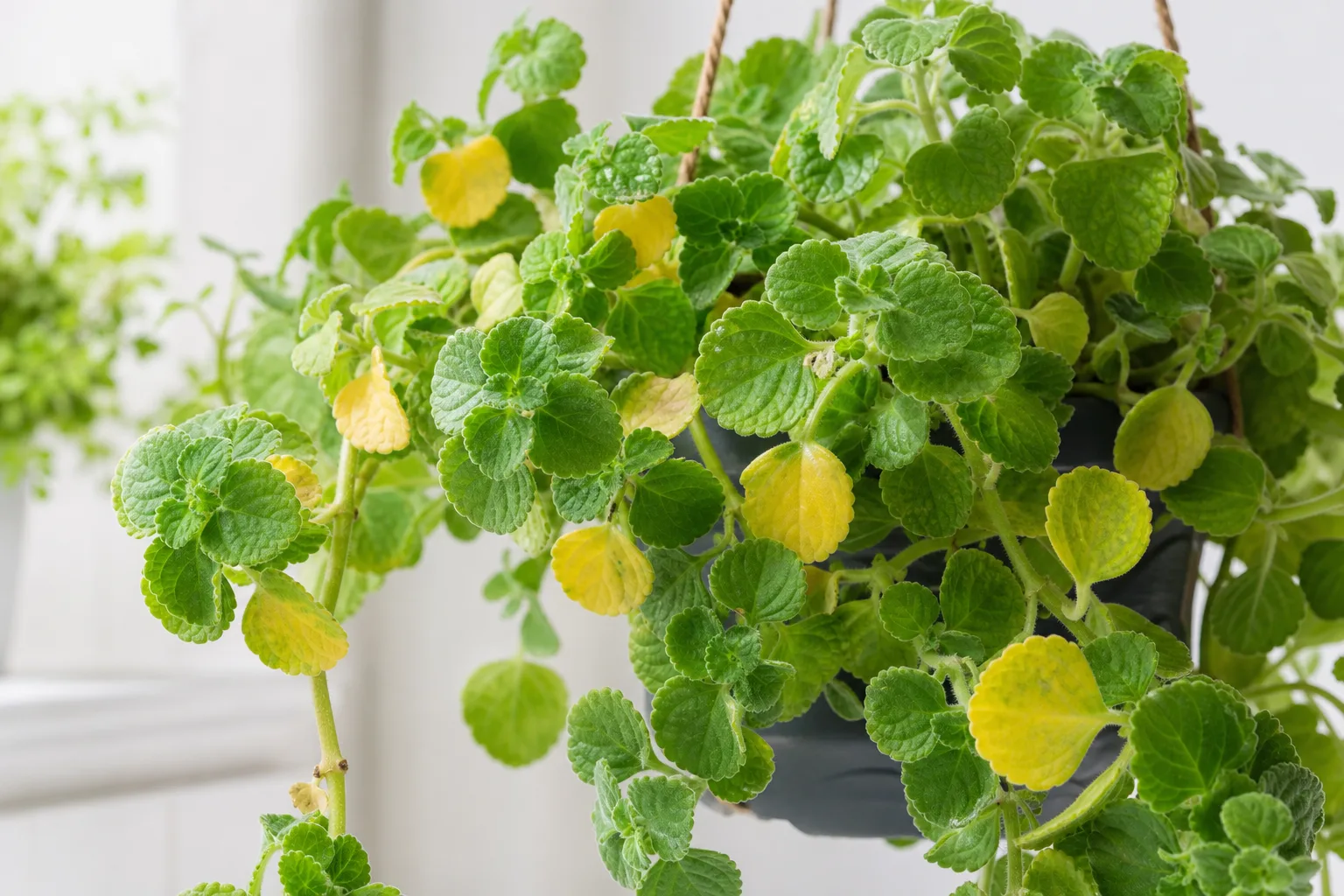
Yellow Leaves on Swedish Ivy: Causes, Checks & Fixes
This guide covers yellow leaves on Swedish Ivy. See also the general Yellow Leaves guide, watering, and light pages for this plant.
Yellow Leaves on Swedish Ivy: Causes, Checks & Fixes
Quick answer
Your hanging Swedish Ivy’s scalloped leaves are turning yellow while the pot still feels heavy-that pattern almost always points to wet-root stress, not hunger. Swedish Ivy (Plectranthus verticillatus, often sold as Plectranthus australis) is a fast trailing herb with semi-succulent leaves on square stems. It wants humusy, medium-moisture, well-drained soil-not a constantly soggy hanging-basket core.
First action: lift the pot and press stem bases where they meet the soil. A heavy wet basket with soft stem tissue means stop watering and inspect roots before anything else. A light dry pot with drooping runners points to thirst instead-see the underwatering guide. Widespread yellow on wet soil with firm stems still needs dry-down and brighter light; escalate to the root rot guide if bases keep softening or the mix smells sour.
This page is the multi-cause yellow-leaf diagnostic hub for Swedish Ivy. For deep wet-soil rescue, also use overwatering on Swedish Ivy. For limp leaves with unclear moisture, cross-check drooping leaves.
What yellow leaves look like on Swedish Ivy
Healthy Swedish Ivy holds glossy green, scalloped leaves on stiff trailing runners. Yellowing changes the color before the whole plant collapses-and the pattern tells you which branch to follow.
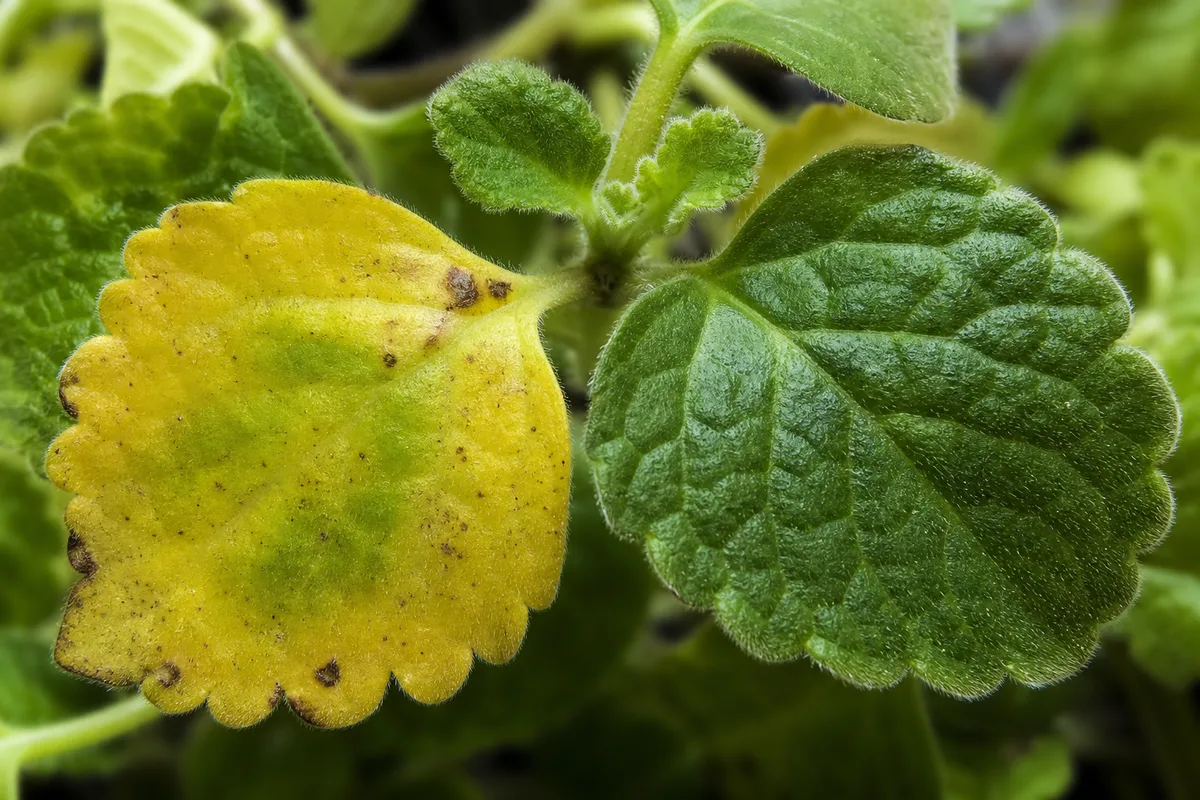
Yellow Leaves symptoms on Swedish Ivy - compare with healthy tissue on the same plant.
Overwatering and root-stress yellowing:
- Several leaves yellow at once, often starting on lower runners while tips may still look green briefly
- Leaves feel softer and less glossy; petioles lose spring
- Pot stays heavy days after the last watering
- Stem bases at the soil line feel spongy or collapsing-an urgent signal on shallow-rooted trailers
- Mix may smell sour or musty at drainage holes
- Fungus gnats may hover when soil stays wet too long
Underwatering yellowing (less common but real):
- Yellow leaves may look crisp rather than mushy
- Pot feels light; top inch of mix is dry
- Runners droop even as some leaves yellow-thirst and stress overlap
- Stems at the soil line usually stay firm
- One thorough watering often stops spread within days if roots are healthy
Low-light yellowing:
- Upper leaves turn pale yellow-green or lose gloss while internodes stretch
- Soil stays wet longer than in a bright room-you may be overwatering because light dropped
- Often follows moving a basket to a dim corner or winter light fade
- See not enough light on Swedish Ivy for placement fixes
Cold-draft yellowing:
- Yellowing can hit quickly after nights near a cold window or blasting HVAC
- Soil moisture may look normal; timing matches a temperature swing
- Leaf drop sometimes accompanies yellow blades on exposed runners
- Cross-check draft stress if the basket sits on a winter sill
Normal lower-leaf aging:
- One yellow leaf on an old long runner with bare stem below
- New glossy tips at the ends stay firm and green
- Pot weight and moisture feel normal for your rhythm
- Slow fade over weeks-not a sudden cascade
A real pattern to recognize
A common winter scenario: a 10-inch hanging basket in a dim corner, watered on the old summer schedule. Seven days after watering the pot still feels heavy, three scalloped leaves on lower runners turn buttery yellow, but stem bases are firm. Dry-down plus a brighter east window often produces new glossy tips within two to three weeks-without Swedish Ivy repotting guide. If stem bases had been soft or the mix sour, that same basket would need root inspection instead of patience alone.
Why Swedish Ivy gets yellow leaves
Swedish Ivy yellows when roots cannot support foliage-from too much water, too little, wrong light, cold stress, or simple aging. The species’ trailing habit and hanging-basket popularity make moisture mismatch the top indoor cause.
Oversized pots and wet cores. Large hanging baskets hold a mass of mix around relatively shallow roots. The center stays saturated while the surface dries-so you water again and yellowing spreads. This is the “heavy pot / sparse root” trap mentioned in the Swedish ivy overview.
Slow dry-down in dim light. In low light, transpiration and growth slow, but many growers keep the same calendar. Wet soil suffocates fine roots; yellowing with stunted growth is a classic overwatering symptom on moisture-sensitive houseplants.
Winter rhythm mismatch. Cooler rooms and shorter days mean roots use less water from November through February. The summer weekly soak becomes excessive.
Underwatering after repeated drought. Swedish Ivy droops as a sure sign of under-watering and recovers quickly-but chronic dry cycles stress shallow roots until lower leaves yellow and crisp.
Cold exposure. Swedish Ivy does not tolerate frost; indoors, treat about 55°F (13°C) as a practical stress floor-below that, leaves yellow and drop even when watering was correct.
Natural senescence. Old lower leaves on long trailers age out. That is normal on a plant that grows fast at the tips.
Lookalike symptoms to rule out
| Pattern | Pot weight / soil | Stem bases | Leaf texture | Likely cause | Next step |
|---|---|---|---|---|---|
| Widespread yellow, limp runners | Heavy, wet for days | Soft or sour smell | Soft, dull | Overwatering / early root rot | Stop water; see overwatering |
| Yellow with droop | Light, dry top inch | Firm | Less plump, may crisp | Underwatering | One thorough soak; underwatering guide |
| Pale upper leaves, stretch | Often wet too long | Firm | Pale yellow-green | Low light + slow dry-down | Brighter indirect light; not enough light |
| Sudden yellow after cold night | May feel normal | Firm unless rot followed | May drop quickly | Cold draft / window chill | Move off cold glass; draft stress |
| One yellow leaf on old runner | Normal for your rhythm | Firm | Single fading leaf | Normal aging | None if new tips healthy |
| Yellow spreading, mushy roots | Heavy, sour mix | Soft, collapsing | Soft, widespread | Root rot | Unpot, trim, repot; root rot |
Do not confuse with drooping alone. Limp leaves on wet soil can mean roots fail to take up water-the wilt paradox covered in drooping leaves. Yellowing often arrives in the same overwatering arc but needs its own cause match.
How to confirm the cause
Work through these six checks before you change watering, light, or fertilizer.
- Pot-weight test - Lift the hanging basket. A light pot needs water; a heavy pot days after watering points to excess moisture or poor drainage.
- Top-inch probe - Insert your finger one inch into the mix. UF/IFAS recommends watering Swedish Ivy when the top inch feels dry-that depth matters more than surface crust.
- Stem-base squeeze - Pinch stems where they enter the soil. Firm bases with dry soil suggest thirst. Soft bases with wet soil mean escalate-do not water again yet.
- Smell check - Sour or swampy odor from drainage holes supports oxygen-poor roots, not simple aging.
- Light and placement review - Did you recently move the basket to a dim corner, winter window, or drafty door? Pale stretchy growth plus yellow upper leaves fits low light; sudden yellow after a cold night fits temperature stress.
- Aging vs. stress count - One yellow leaf on an old runner with firm new tips is different from five yellow leaves in a week on wet soil. Count spread and speed.
If wet soil, heavy pot, and soft stems align, treat as root stress first. If dry soil and light pot align with droop, one thorough watering is the correct test-not more diagnosis days.
First fix for Swedish Ivy
Match your first action to what you confirmed. Do one primary fix before stacking repot, fertilizer, or heavy pruning.
When overwatering or wet soil is confirmed
Stop watering immediately. Move the basket to bright indirect light so the mix dries toward the top inch. Empty saucers and confirm drainage holes are open. Do not fertilize on wet soil.
If stem bases stay firm after one full dry-down cycle, resume watering only when the top inch is dry. If bases soften, soil smells sour, or yellowing spreads on still-wet mix, unpot and inspect roots-follow the root rot guide and the trim-and-repot sequence in overwatering.
When underwatering is confirmed
Water thoroughly once until water runs from drainage holes, then discard saucer water. Wait twenty-four hours and check whether droop eases and yellow spread stops. Resume the normal rhythm from the watering guide-when the top inch dries, not on a fixed calendar.
When low light is the driver
Move to brighter indirect light first-east window, filtered west light, or closer to a bright north exposure. Hold watering steady at the dry-down checkpoint; do not add extra water because leaves look pale. Reduce frequency if the old summer schedule kept soil wet in the new dimmer spot.
When cold draft is the driver
Move the basket away from cold glass, exterior doors, and HVAC blasts. Hold watering steady. New tips staying firm over two weeks confirms recovery; continued yellowing on wet soil still needs a moisture check.
When normal aging is confirmed
No rescue needed if one old lower leaf fades while new tips stay glossy. You may gently remove the yellow leaf; do not repot or fertilize for a single senescent leaf.
Recovery timeline
Simple overwatering without rot: Yellow spread usually stops within several days to two weeks once the top inch dries and light is adequate. Old yellow leaves will not re-green-they drop as new glossy tips emerge. Judge success by firm stem bases and new growth, not old blade color.
Underwatering correction: After one proper soak, further yellowing often halts within days. Crisp yellow edges on old leaves may remain; new leaves should look plump.
Low-light correction: Pale yellow upper leaves tighten over two to four weeks as light improves and watering matches slower use. Internodes should shorten on new growth.
Cold-draft recovery: Stabilized temperatures often show firm new tips within one to two weeks. Leaves that fully yellowed will drop rather than re-green.
Root rot salvage: Recovery is measured in weeks. If soft stems advance despite dry soil, take stem tip cuttings from healthy runners before the last firm tissue fails-the species roots easily from cuttings.
What not to do
Do not fertilize yellow leaves while soil is still wet. Salt on damaged roots worsens stress.
Do not mist trailing stems to “help” yellow foliage-extra surface moisture on crowded runners near wet soil encourages rot.
Do not increase watering when leaves yellow in a dim corner. Fix light first.
Do not assume fertilizer deficiency on a fast-growing trailer in standard potting mix-water and light mismatches explain most indoor yellowing.
Do not judge recovery by old leaf color. Watch new glossy tips and stem firmness instead.
Do not repot on day one unless sour smell, mushy roots, or collapsing stem bases confirm failure-unnecessary repotting adds shock.
Swedish Ivy is non-toxic to cats and dogs, but cats may still chew fallen yellow leaves. Remove debris from reachable shelves; contact your veterinarian or the ASPCA Animal Poison Control Center at (888) 426-4435 if a pet shows persistent illness after eating plant matter.
How to prevent yellow leaves next time
Water when the top inch of soil feels dry, using pot weight as a backup check on hanging baskets. Use well-drained potting media in a container with open drainage holes-never let the basket sit in a full saucer.
Keep bright indirect light so soil dries predictably. Rotate the basket occasionally for even growth.
Right-size the pot to the root ball. Oversized decorative hanging baskets are a common yellow-leaf trap.
Reduce winter watering when growth slows in cooler months-the same volume that worked in summer keeps roots wet too long.
Review full moisture rhythm on the Swedish ivy watering guide and general care on the overview.
When to worry
Treat as urgent when yellowing spreads quickly with wet soil, soft stem bases, or sour smell-that combination often precedes fatal stem rot on trailing Plectranthus. Inspect roots before the next watering.
Also act quickly when most of the cascade yellows within a week despite what seemed like normal care, or when yellowing follows repotting into a much larger wet basket.
Lower urgency fits one yellow lower leaf on an old runner with firm new tips, or brief pale upper leaves after a dim move that improve once light is corrected.
Related Swedish Ivy problems
Use this page when you need to sort multiple yellow-leaf causes. Jump to a deeper guide when one cause is already clear:
- Swedish ivy overview - general care and troubleshooting entry
- Overwatering - wet-wilt, sour mix, and severity-based recovery
- Root rot - mushy roots and stem-base collapse
- Underwatering - dry pot and crisp yellow lookalike
- Drooping leaves - pot-weight paradox when color has not changed yet
- Not enough light - pale stretchy growth and slow dry-down
- Draft stress - cold-window yellowing
- Watering - prevention rhythm
Conclusion
Yellow leaves on Swedish Ivy are a diagnostic signal, not a single disease. Lift the hanging basket, read wet vs. dry weight, squeeze stem bases at the soil line, and match your first fix-dry-down for heavy wet pots, one thorough soak for light dry ones, brighter light for pale stretchy growth, stable warmth for draft shock. Old yellow blades rarely re-green; recovery shows in firm new tips. Once the root zone and light align, this forgiving trailer usually fills back in within weeks.
When to use this page vs other Swedish Ivy guides
- Swedish Ivy watering guide - Use for routine moisture checks before assuming yellow leaves is the main issue.
- Swedish Ivy problems hub - Browse all 18 common issues on this species.