Poor Drainage on Snake Plant: Causes, Checks & Fixes
Quick answer
Poor drainage on snake plant is a chronic pot-and-mix setup failure - dense soil, blocked holes, or an oversized container keeps rhizomes wet even when you water cautiously. First step: repot into fast-draining cactus mix amended with perlite (roughly 30–50% by volume is a common home heuristic), confirm open drainage holes, and empty saucers after every watering.
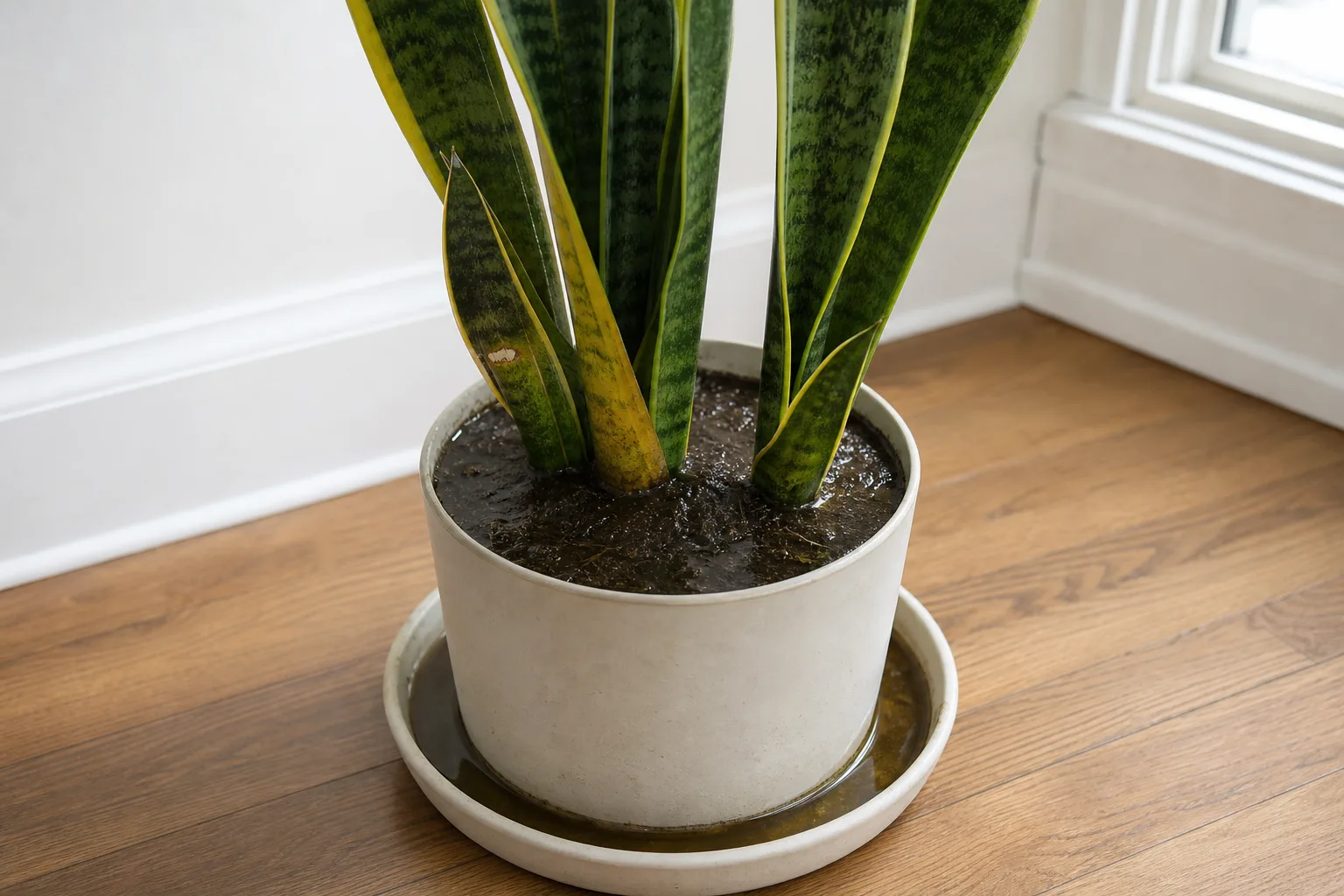
Poor Drainage on Snake Plant: Causes, Checks & Fixes
This guide covers poor drainage on Snake Plant. See also the general Poor Drainage guide, watering, and light pages for this plant.
Poor Drainage on Snake Plant: Causes, Checks & Fixes
Quick answer
If your snake plant pot stays heavy and damp for days after a modest drink - even though you have cut back watering - you are likely dealing with chronic setup failure, not a simple schedule mistake. Poor drainage keeps Dracaena trifasciata rhizomes in anaerobic wet soil, and rot can start while upper leaves still look upright.
First step: repot into fast-draining cactus mix amended with perlite (roughly 30–50% by volume is a common home heuristic, not an RHS prescription), confirm open drainage holes, and empty saucers after every watering.
Use this page when mix retention, blocked exits, compaction, or pot size are the problem. For watering too often on an otherwise adequate setup, see overwatering on snake plant. For dense peat alone, wrong soil mix. For blocked or missing holes, no drainage hole. For active mushy-root salvage, root rot.
Which guide should I use?
| What you notice | Most likely cause | Read next |
|---|---|---|
| Pot heavy days after watering; mix clumps when wet; you have not changed watering frequency | Poor drainage - chronic mix/pot setup failure | This guide |
| Mix drains in seconds and holes are open, but you watered before bone dryness | Overwatering - schedule error | Overwatering |
| Water pools in saucer; roots mat over holes; cachepot has no exit | Blocked or missing holes | No drainage hole |
| Nursery peat-heavy soil; never amended for succulents | Wrong soil mix | Wrong soil mix + soil guide |
| Recently repotted into a pot two sizes up; extra wet soil beyond roots | Pot too large | Pot too large |
| Mushy leaf bases, sour soil, black rhizome tissue | Active root rot | Root rot - repot here first only if setup is still the primary issue |
Snake plant stores water in thick, fleshy leaves and underground rhizomes, so it tolerates drought far better than wet soil. When drainage fails, every watering acts like overwatering even when you pour less - the same pathway NC State Extension describes when roots rot from overwatering on Dracaena trifasciata.
Why snake plant gets poor drainage
Dense peat-heavy mix
Standard moisture-retentive potting compost holds water for weeks in a dim room or plastic pot. Snake plant evolved in hot, dry African habitats with fast-draining substrates. Peat-heavy nursery soil that smears when squeezed is the most common indoor culprit - full mix recipes and squeeze tests live on the snake plant soil guide.
Blocked or missing drainage holes
Decorative cache pots, glued-in saucers, and roots matting over holes keep the lowest soil saturated. Missouri Botanical Garden recommends well-draining potting mix and warns against letting the plant stand in water - both are impossible if holes are blocked or saucers stay full. See no drainage hole on snake plant when water pools underneath despite cautious watering.
Compaction over time
Organic matter breaks down, fine particles settle, and the center of the pot becomes a dense wet plug while the surface looks merely damp. A mix that dried in one week during bright summer may take three weeks by autumn when low light and cool rooms slow evaporation. Refresh mix every two to three years before compaction silently fails - timing and technique on the repotting guide.
Oversized pots
RHS guidance is explicit: a much larger pot holds spare compost that stays damp after watering, encouraging root rot. Snake plant prefers a cosy-fitting container; extra wet soil beyond the root zone is especially dangerous for slow-growing rhizomes. If you recently jumped two pot sizes, read pot too large.
What poor drainage looks like on snake plant
Snake plant masks drainage failure longer than leafy tropicals because leaf water reserves keep blades upright for weeks while rhizomes fail underground. Watch for setup signals before full collapse:
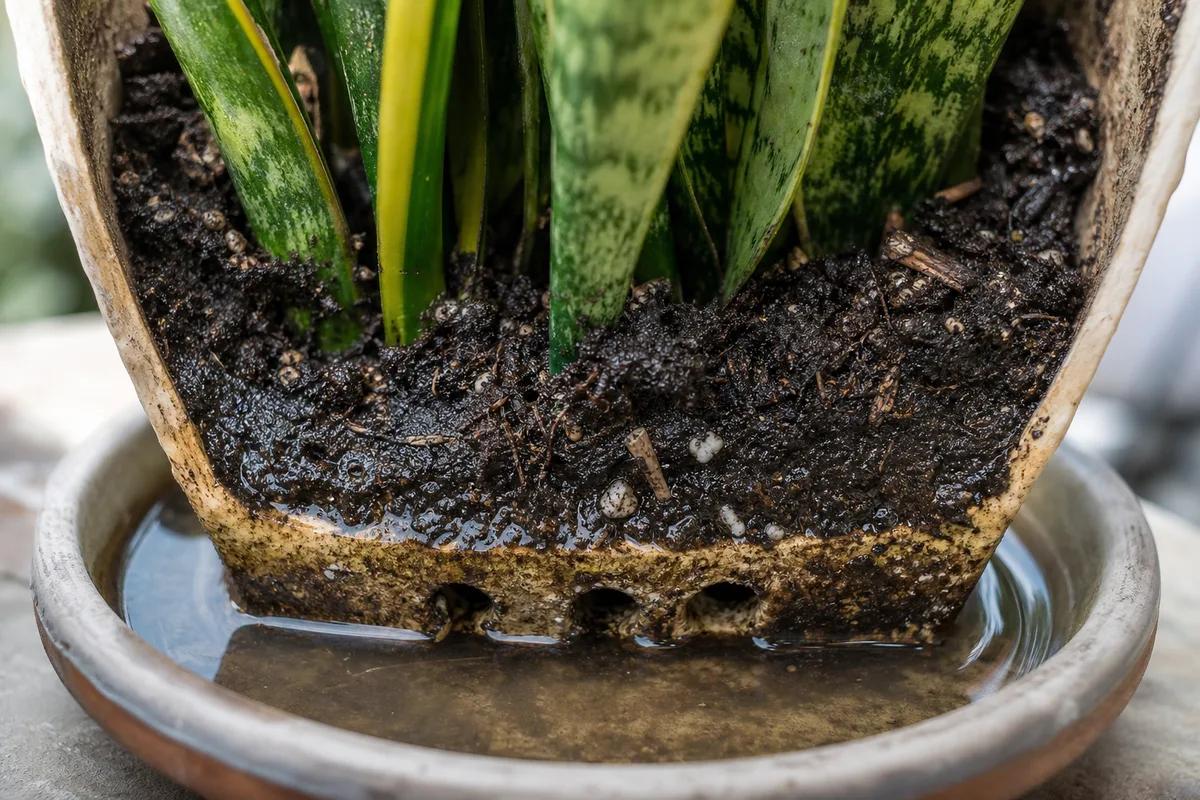
Poor Drainage symptoms on Snake Plant - compare with healthy tissue on the same plant.
Mild - fix mix before rot:
- Soil surface stays visibly damp three to five days after a single moderate watering
- Pot feels heavy when lifted, even though you have not watered recently
- Fungus gnats hover over persistently wet top inches - see fungus gnats
- White or gray mold on the soil surface from chronic moisture - see mold on soil
Severe - escalate toward root rot:
- Sour or swampy smell from the drainage hole
- Lower leaf bases turning soft, yellow, or translucent at soil level
- Rosette wobbles in the pot while leaves still look stiff above
- New growth stalling while existing leaves stay rigid - roots fail before leaves collapse
On inspection, compare pot weight after the same watering interval: a healthy snake plant in gritty mix should lighten noticeably within one to two weeks indoors in typical room conditions.
How to confirm the cause
Five-step inspection workflow
- Drainage holes - Confirm holes are open and water runs freely within seconds of watering. Lift the pot from its saucer; standing water underneath means poor outflow.
- Mix texture - Scrape the top inch aside. Gritty cactus mix should crumble; dense peat that smears when wet confirms retention problems.
- Pot weight timeline - Note how many days the pot stays heavy after watering. Good drainage should lighten within one to two weeks indoors.
- Leaf bases - Press where leaves meet soil. Firm is good; soft, wet bases suggest saturated roots below.
- Unpot if smell or softness is present - Rinse roots to see whether decay has started despite cautious watering.
Poor drainage vs. overwatering vs. blocked holes vs. wrong mix vs. active rot
| Check | Poor drainage (this page) | Overwatering | Blocked holes | Wrong mix | Active root rot |
|---|---|---|---|---|---|
| Pot weight days after water | Stays heavy | Heavy if watered too soon | Heavy; saucer pools | Heavy; slow dry-down | Heavy; may wobble |
| Mix texture | Dense or compacted | May be adequate | Any mix if hole blocked | Peat clumps when wet | Any; often sour |
| Watering history | Cautious; still wet | Frequent before dry | Any | Any | Often follows chronic wet |
| Leaf bases | Firm until late stage | Soft if chronic | Firm until late | Firm until late | Mushy, smelly |
| First fix | Repot gritty mix + holes | Stop water; dry-down | Clear holes / new pot | Replace mix | Root rot protocol |
Lookalike symptoms to rule out
Simple overwatering on a schedule can mimic poor drainage, but the fix differs: overwatering alone may resolve with dry-down if mix and holes are adequate. Underwatering shows a light pot, dusty dry soil throughout, and wrinkled firm leaves - not chronic heaviness. Cold damage can soften tissue without sour soil. If mix drains well and holes are open but you still water before bone dryness, use the overwatering guide instead.
First fix for snake plant
Repot into fast-draining mix the same week you confirm poor drainage - do not wait for full rot. Use dry cactus or succulent compost amended with roughly 30–50% perlite, pumice, or coarse horticultural sand by volume. That ratio is standard home practice for indoor succulents, not a single published RHS prescription - adjust upward in humid or low-light rooms. Choose a clean pot with open drainage holes only slightly larger than the root ball.
During repot:
- Shake off old compacted or peat-heavy soil gently; do not reuse sour-smelling mix.
- Trim any brown, mushy roots back to firm tissue with sterilized scissors.
- Do not water for five to seven days after repotting so cut surfaces can dry - align with the repotting guide withhold window.
- Place in Snake Plant light guide with good airflow so the new mix dries evenly.
Make this single correction before adding fertilizer, moving rooms, or upsizing again.
Step-by-step recovery
- Unpot and inspect rhizomes - firm, pale roots are healthy; black mushy sections must go.
- Repot into gritty mix at the same depth; do not bury leaf bases deeper than before.
- Wait five to seven days before the first light watering - only if the mix is fully dry and leaves feel firm.
- Empty the saucer within 30 minutes of every future watering.
- Watch for new pups or upright leaves over four to twelve weeks.
If rot was advanced - sour smell, black rhizome tissue, or collapsing rosette - follow the full root rot salvage protocol rather than repeating repot steps here. Mild drainage correction without active rot rarely needs aggressive root pruning.
Recovery vignette
A common indoor pattern: snake plant purchased in peat-heavy nursery mix, left in the original plastic pot inside a decorative cachepot with no drainage exit. Owner waters every three weeks in winter - cautious by succulent standards - yet the pot stays heavy. After repotting into cactus mix with roughly 40% perlite in a terracotta pot with open holes, pot weight normalizes within ten to fourteen days and leaf bases stay firm. No new pups for six weeks, then one upright shoot - typical for slow rhizome recovery after setup correction.
Recovery timeline
Mild drainage correction without active rot often stabilizes within two to four weeks once the mix dries predictably. Moderate cases with some yellowed lower leaves may need a full growing season before new pups appear. Severely rotted rhizomes rarely recover fully; propagation from healthy leaf sections or pups may be the salvage path per the root rot guide.
Damaged leaf tips and yellow bases do not green up again. Judge success by neutral-smelling soil, lighter pot weight between waterings, and firm new growth.
What not to do
- Do not respond to heavy wet pots by watering less often while keeping the same dense mix - the root zone still suffocates between drinks.
- Do not add pebbles in the pot bottom instead of fixing mix. WSU Extension research and Illinois Extension confirm gravel layers create a perched water table - water sits higher in the soil column, not lower.
- Do not repot into a much larger container to “give roots room” - extra wet soil volume worsens drainage stress.
- Do not fertilize until the plant pushes new growth in improved mix.
- Do not mist leaves; RHS advises never misting sansevierias - surface moisture does not fix a waterlogged root zone.
- Do not reuse contaminated mix after sour-smelling drainage failure.
How to prevent poor drainage next time
Match container, mix, and watering to snake plant’s drought-adapted biology:
- Use free-draining, peat-free cactus compost or two parts loam-based mix to one part horticultural grit - details on the soil guide.
- Choose pots with multiple drainage holes; terracotta helps the mix dry faster than glazed ceramic in the same room.
- Size pots to the root ball - only one to two inches wider at repot time per the repotting guide.
- Water when soil is bone dry throughout per the watering guide; pour until runoff, then discard saucer water.
- Refresh mix every two to three years before compaction silently fails.
- Keep the plant in bright indirect light so the pot dries on a predictable rhythm.
When to worry
Escalate immediately if soil smells sour, leaf bases soften, black tissue appears at the rhizome, or the plant collapses within days despite stopping water. These signs mean poor drainage has progressed to root rot - switch to the full salvage protocol.
Lower urgency applies when leaves are firm, smell is neutral, and the main issue is slow drying - repot into grittier mix before softness appears.
If repot into gritty mix fails and sour smell returns within two weeks despite bone-dry watering discipline, unpot again and consult a local extension office or master gardener - chronic rot or a hidden cachepot trap may need in-person diagnosis.
What to do next
- Pot heavy but leaves still firm? Repot into gritty mix this week - do not wait for yellowing.
- Unsure drainage vs. overwatering? Use the comparison table above; schedule errors go to overwatering.
- Blocked saucer or cachepot? Fix exits on no drainage hole before changing mix.
- Need mix recipes? See soil and repotting guides.
- Mushy bases or sour rhizomes? Follow root rot salvage steps.
- Broader care context? Start at the snake plant overview.
About this guide
This guide was written by sai-ananth and reviewed by the LeafyPixels Review Board against RHS sansevieria culture, NC State Dracaena trifasciata, Missouri Botanical Garden Plant Finder, WSU container drainage research, Illinois Extension container drainage, and LeafyPixels snake plant care pages. The cause-routing tables and recovery vignette are editorial diagnostics synthesized from extension drainage guidance and rhizome biology - not a single published case study. Perlite amendment ratios and post-repot dry-back intervals are home-climate heuristics aligned with the repotting guide. Reviewed 2026-06-17.
FAQs
Is my snake plant suffering poor drainage or overwatering?
Poor drainage means the mix and pot hold water too long regardless of how carefully you pour - the pot stays heavy for days, soil smells sour despite reduced watering, and drainage holes may be blocked or the container oversized. Overwatering is a schedule error when mix and holes are adequate but you water before bone dryness. If holes are open and mix is gritty yet you still water on a calendar, start with the overwatering guide. If the setup fails the pot-weight test, this page is the right path.
How can I confirm poor drainage on snake plant?
Confirm poor drainage when soil stays damp on the surface for days after a modest watering, the pot feels heavy while leaf bases soften, or water sits in the saucer for hours. Push your finger deep into the mix - if the center stays wet while you wait weeks between drinks, the mix or pot setup is holding water too long. Sour smell from the drainage hole with cautious watering strongly points to drainage failure, not simple overwatering alone.
What should I check first for poor drainage on snake plant?
Start with drainage holes - are they open, elevated above saucer water, and sized for the pot? Then probe mix texture; peat-heavy nursery soil that clumps when squeezed is a red flag on this drought-adapted species. Check pot weight days after watering and smell near the drainage hole before assuming the plant needs less water frequency alone.
Will damaged snake plant leaves recover from poor drainage?
Yellowed or softened leaf bases rarely return to firm green. Recovery means the mix dries predictably between waterings, leaf bases stop softening, and new pups or upright leaves emerge over the next one to three months. Old damaged tissue can be trimmed once the root zone stabilizes.
How do I prevent poor drainage on snake plant next time?
Use free-draining cactus or succulent compost amended with perlite or coarse sand, pots with open drainage holes, and containers only slightly larger than the root ball. Water when the entire pot is bone dry, pour off saucer runoff within 30 minutes, and refresh compacted mix every two to three years so drainage does not silently fail.
When to use this page vs other Snake Plant guides
- Snake Plant watering guide - Use for routine moisture checks before assuming poor drainage is the main issue.
- Snake Plant problems hub - Browse all 36 common issues on this species.