Wrong Soil Mix on Snake Plant: Causes, Checks & Fixes
Quick answer
Wrong soil mix on Snake Plant usually means a standard moisture-retentive potting blend that stays wet too long and suffocates drought-adapted rhizomes. First step: unpot, remove compacted peat sludge, and repot into cactus or succulent mix amended with 30–50% perlite or coarse sand.
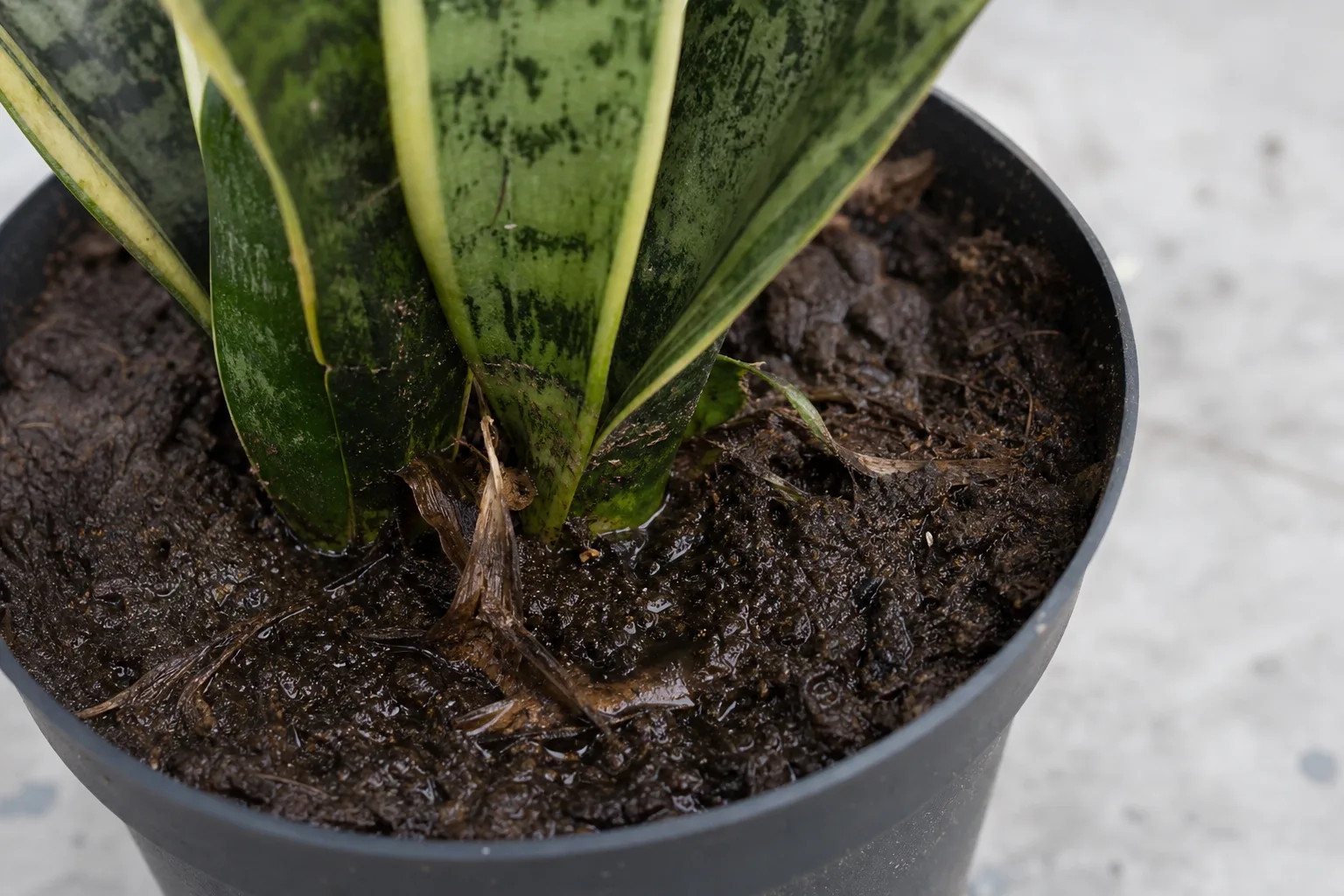
Wrong Soil Mix on Snake Plant: Causes, Checks & Fixes
This guide covers wrong soil mix on Snake Plant. See also the general Wrong Soil Mix guide, watering, and light pages for this plant.
Wrong Soil Mix on Snake Plant: Causes, Checks & Fixes
Quick answer
Wrong soil mix on Snake Plant usually means a standard moisture-retentive potting blend that stays wet too long and suffocates drought-adapted rhizomes. First step: unpot, remove compacted peat sludge, and repot into cactus or succulent mix amended with 30–50% perlite or coarse sand.
Snake Plant (Dracaena trifasciata) stores water in thick leaves and underground rhizomes, so it tolerates drought far better than a damp root zone. When peat-heavy indoor mix holds moisture for weeks, oxygen drops out of the substrate, rhizome tissue weakens, and symptoms that look like overwatering on Snake Plant appear even when you water sparingly. The fix is not watering less alone - it is changing the mix so the pot can actually dry between drinks.
Why Snake Plant gets wrong soil mix
Most Snake Plants arrive in or get repotted into all-purpose potting soil built for tropical foliage - peat moss, composted forest products, and fine bark that hold moisture for days. That texture suits pothos and peace lilies. For a plant native to dry West African habitats with succulent-like leaves, it is the wrong tool.
Missouri Botanical Garden recommends growing Snake Plant in a well-draining potting mix. Penn State Extension is more specific: choose a cactus potting mix or one with perlite. Standard moisture-retentive blends suffocate drought-adapted rhizomes because water fills pore spaces and pushes air out. Nursery mixes that stay wet for weeks indoors - especially in plastic pots, low-light offices, or humid bathrooms - keep rhizomes in low-oxygen conditions long enough for decay to start.
“Moisture control” and tropical-labeled soils make the problem worse. They add water-retentive polymers and extra coir to stretch time between waterings, which is the opposite of what Snake Plant overview needs. NYBG guidance for mother-in-law’s tongue notes that quick-draining soil is essential and suggests potting soil amended with up to one-third sand or perlite, or a commercial cactus mix. Even quality cactus blends sometimes need extra perlite in dim or humid rooms.
Oversized pots amplify bad mix. Extra soil volume around a small rhizome stays damp longer, so a peat-heavy blend in a too-large container behaves like chronic overwatering. Compacted, aged mix that has broken down into fine particles also loses the air gaps Snake Plant roots depend on.
What wrong soil mix looks like on Snake Plant
Wrong soil mix rarely announces itself on day one. The plant looks tough until the rhizome fails underground. Watch for these patterns together:
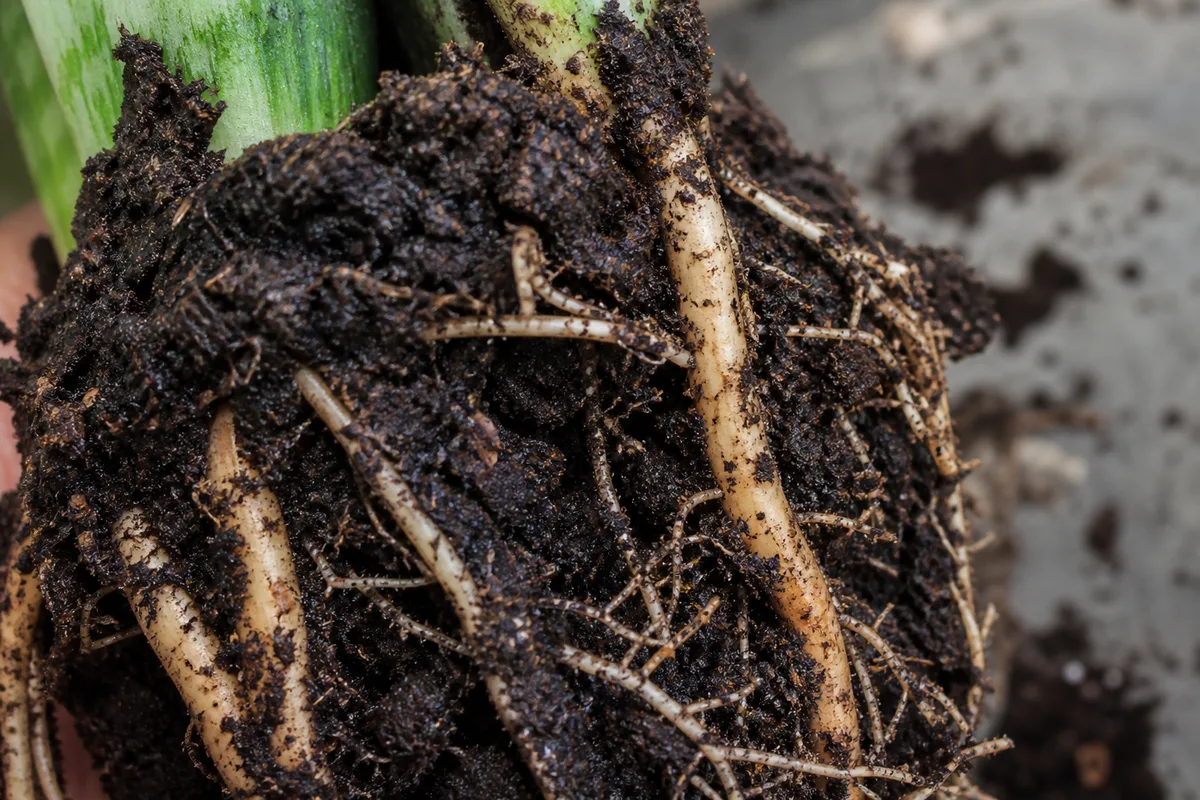
Wrong Soil Mix symptoms on Snake Plant - compare with healthy tissue on the same plant.
- Pot feels heavy three to seven days after watering while the surface still looks damp
- Mix on top stays moist for more than a week in a typical indoor room
- Water pools on the surface instead of draining through in seconds
- Lower leaves yellow or wrinkle while soil below is wet, not dusty dry
- New growth stalls or emerges soft and pale
- Leaf bases feel spongy at soil level even though upper leaves stay upright
- Fungus gnats hover persistently - a clue the surface stays wet too long
- A sour or swampy smell from the drainage hole or root zone
On Snake Plant, stiff sword-shaped leaves can mask rhizome trouble for weeks because foliage stores water. That is why pot weight, dry-down speed, and root firmness matter more than leaf color alone. RHS notes that overwatering and standing in water are the main health issues for sansevierias and can lead to root rot - the same failure chain dense mix triggers when it never dries.
How to confirm the cause
Do not repot on one yellow leaf. Use this inspection order:
- Dry-down test - After a normal watering, note how many days until the top two inches feel dry. If it takes more than seven to ten days in an average room, the mix is likely too retentive.
- Pot weight - Lift the container. Heavy and wet days after you thought the plant was dry points to water held in fine organic matter.
- Squeeze test - Moisten a handful of current mix and squeeze. If it forms a tight ball that does not crumble, it is too peat-heavy for Snake Plant.
- Drainage check - Water until runoff exits the hole. Slow percolation or pooling on top confirms texture problems.
- Unpot and inspect - Shake off mix and check rhizomes. Firm, pale tissue is healthy; dark, mushy, or hollow rhizomes mean damage has started.
If roots are still mostly firm and smell is neutral, you may have caught the problem early. If more than one-third of roots are mushy or leaf bases collapse, treat it as advanced - see the root-rot rescue path after Snake Plant repotting guide into gritty mix.
Lookalike symptoms to rule out
underwatering on Snake Plant causes wrinkled leaves and crispy tips, but the pot feels light and mix is dusty dry throughout. True overwatering on a good gritty mix is less common but possible - confirm by checking whether the blend drains fast and dries within days. Normal old-leaf yellowing hits the lowest leaves one at a time while the root zone stays stable. Low light slows dry-down and can mimic bad soil; moving to a brighter spot helps only if the mix itself drains well.
First fix for Snake Plant
Repot into cactus or succulent mix amended with 30–50% perlite or coarse sand. Make this one targeted correction before stacking fertilizer, pesticide, or a much larger pot on the same day.
Steps:
- Unpot - Slide the plant out and knock away old peat sludge from rhizomes and roots. Rinse lightly if needed to see tissue clearly.
- Trim damage - Cut away any mushy, black, or hollow rhizome sections back to firm tissue with clean scissors. Sterilize blades between cuts on badly affected plants.
- Mix the new substrate - Combine bagged cactus or succulent soil with perlite, pumice, or coarse horticultural sand until the blend crumbles when squeezed. Mississippi State Extension recommends cactus or succulent potting mixes with drainage holes for Sansevieria culture indoors.
- Repot - Use a clean pot with drainage holes only slightly wider than the rhizome. Plant at the same depth as before. Do not add a gravel layer at the bottom - it creates a perched water table above coarse material.
- Wait before watering - Let cut surfaces dry and the plant settle for five to seven days if you trimmed rhizomes; three to five days if roots were healthy. Then water thoroughly and empty the saucer.
The goal is a mix where water runs through in seconds and the surface dries within a few days, not weeks.
Step-by-step recovery after repot
Once in gritty mix:
- Place the plant in Snake Plant light guide with airflow so the new substrate dries evenly.
- Resume watering only when the entire pot is bone dry - push your finger to the bottom or use a moisture probe.
- Watch for new firm leaves or pups over four to eight weeks.
- Remove leaves that collapse completely; leave mostly green foliage until new growth appears.
- Re-check roots in six to eight weeks if yellowing continues - persistent wet smell means mix may still be too dense or the pot oversized.
Recovery timeline
Mild cases with firm rhizomes often stabilize within two to four weeks once the mix drains properly. Moderate cases with some trimmed tissue may need six to eight weeks before confident new growth. Old yellow or wrinkled leaves will not green up again - use firm rhizomes, neutral-smelling pot, and new upright leaves as your markers.
If the rhizome has little firm tissue left after trimming, focus on saving healthy pups or firm leaf sections rather than the main rosette.
What not to do
- Do not keep the plant in peat-heavy mix while only reducing water - rhizomes still suffocate in damp fine soil.
- Do not add a gravel drainage layer; it worsens saturation at the bottom of the root zone.
- Do not repot into a much larger pot with the same dense blend.
- Do not use fine play sand or beach sand - fine particles clog pores and slow drainage.
- Do not fertilize until new growth shows and watering is on a stable dry-down rhythm.
- Do not assume stiff leaves mean healthy roots - check the base and mix smell.
How to prevent wrong soil mix next time
Start with cactus or succulent blend plus 30–50% perlite or pumice for most homes. In humid rooms or plastic pots, push toward equal parts cactus mix and perlite. Use terra cotta when you can - it wicks moisture through the walls and helps the mix dry faster. Size pots to the rhizome, not the leaf height, and refresh compacted mix every two to three years as peat breaks down into fines.
Water only when bone dry throughout, and empty saucers after every soak. NC State Extension advises allowing soil to dry between waterings in the growing season and watering only every one to two months in winter - a rhythm that only works if the mix actually dries.
When to worry
Treat wrong soil mix as high severity on Snake Plant when:
- Leaf bases soften and collapse at soil level
- Mix smells sour even after you stop watering
- Water sits on the surface for days
- More than one-third of roots are mushy on inspection
- New damage appears within seven to ten days despite careful watering
Early repot into gritty mix while rhizomes are still mostly firm gives the best odds. Hollow crowns or leaves that pull out with no resistance mean salvage through pups or cuttings, not more of the same potting soil.
Conclusion
Wrong soil mix on Snake Plant is a drainage problem, not a mystery disease. Standard moisture-retentive blends stay wet too long for drought-adapted rhizomes. Confirm with slow dry-down, heavy wet pots, and a failing squeeze test; fix by repotting into cactus or succulent mix with 30–50% perlite or coarse sand. Prevent it by choosing gritty mix from the start, using drainage holes, and refreshing compacted soil every few years. Judge success by firm roots and new growth - not by old leaves returning to perfect green.
When to use this page vs other Snake Plant guides
- Snake Plant watering guide - Use for routine moisture checks before assuming wrong soil mix is the main issue.
- Snake Plant problems hub - Browse all 36 common issues on this species.