Mold on Soil on Snake Plant: Causes, Checks & Fixes
Quick answer
Surface mold on snake plant soil usually means the mix stays wet too long for a drought-tolerant succulent. Stop watering, scrape the top layer, and let the pot dry completely before watering again.
Mold on Soil on Snake Plant: Causes, Checks & Fixes
This guide covers mold on soil on Snake Plant. See also the general Mold on Soil guide, watering, and light pages for this plant.
Mold on Soil on Snake Plant: Causes, Checks & Fixes
Quick answer
Surface mold on snake plant (Dracaena trifasciata) soil almost always means the mix stays wet longer than this drought-tolerant succulent can tolerate. Snake plant stores water in its thick leaves and rhizomes, so it needs bone-dry cycles between waterings-not the lightly damp surface many other houseplants prefer. First step: stop watering immediately, scrape off the fuzzy top layer, and let the entire pot dry before you water again.
The mold itself is usually a saprophytic fungus feeding on organic matter in consistently moist mix. It is rarely attacking healthy snake plant tissue, but it is a reliable warning that your Snake Plant watering guide, drainage, or placement does not match how Snake Plant overview is grown indoors.
What mold on soil looks like on Snake Plant
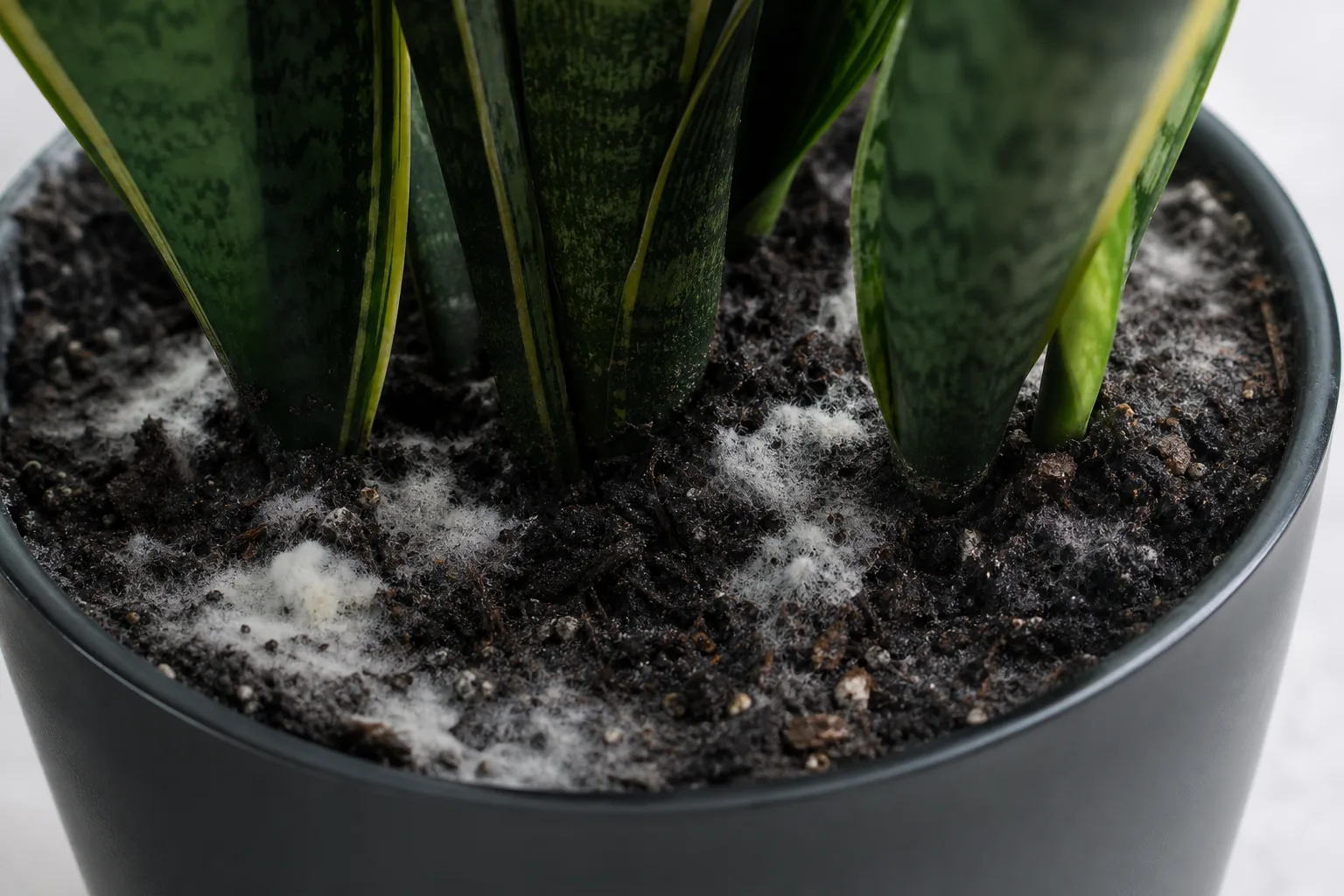
On snake plant pots, mold most often appears as a white, gray, or occasionally greenish fuzzy film on the soil surface. It may look cottony or thread-like, sometimes spreading in patches between leaf bases. You might notice it first through a musty smell when you move the pot, or through small flies hovering near the surface when fungus gnats share the same wet habitat.
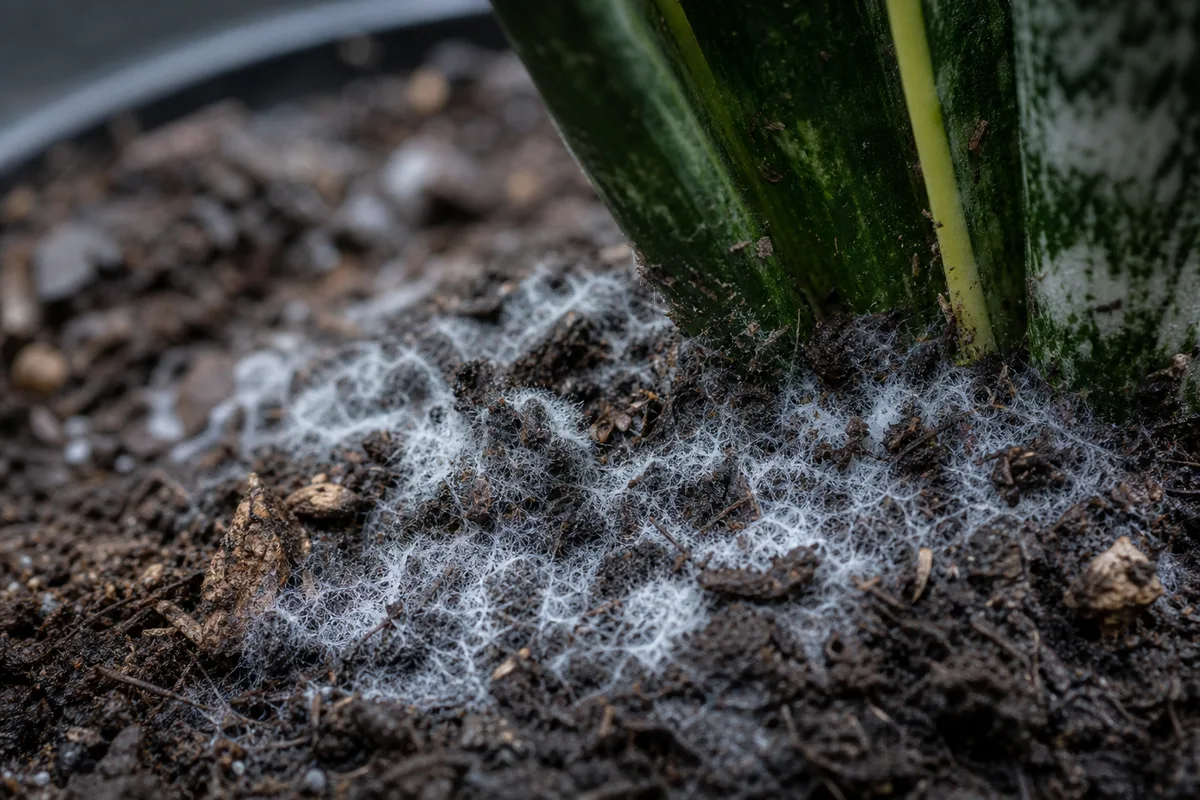
Mold on Soil symptoms on Snake Plant - compare with healthy tissue on the same plant.
Healthy snake plant leaves stay stiff, upright, and sword-shaped even when surface mold is present. That contrast matters: fuzzy soil with firm leaves usually points to a moisture problem in the root zone, not a leaf disease. If leaves are yellowing, soft at the base, or collapsing while the mix stays wet, treat that as possible root stress moving beyond cosmetic mold.
Mold can also show at drainage holes or along the pot rim where water sits longest. In low-light corners or oversized decorative pots without drainage, the surface may stay damp for a week or more after a single watering-exactly the conditions that keep mold returning.
Why Snake Plant gets mold on soil
Snake plant is built for dry intervals. It evolved with excellent drainage and careful watering as core requirements-not optional extras. When mix stays moist at the surface, saprophytic fungi colonize decaying peat, bark, or fallen leaf bits. The organism is doing its job breaking down organic matter; the real problem is that your snake plant’s pot never dries enough.
overwatering on Snake Plant on a drought schedule is the most common trigger. Many growers water snake plants on the same weekly rhythm they use for pothos or ferns. Snake plant typically needs water only when the soil is completely dry-roughly every two to four weeks in summer and every four to six weeks in winter in most homes. Watering while the center of the mix is still damp keeps the surface wet enough for mold.
Poor drainage amplifies the issue. Standard peat-heavy potting soil, pots without drainage holes, blocked saucers, and oversized containers all hold moisture far longer than snake plant roots need. Penn State Extension notes that you can kill snake plant by overwatering and should choose only containers with drainage holes to prevent soggy soil.
Low light and weak airflow slow evaporation. Snake plant tolerates dim rooms, but a plant in deep shade plus frequent watering dries slowly and grows little-so it uses even less of the water you add. Stagnant air around crowded plant shelves has the same effect: the surface stays damp, and spores that are already everywhere find easy footing.
Rich organic debris on the surface gives fungi extra food. Fallen snake plant leaf tips, old mulch, or a thick top dressing of compost keeps the upper layer moist and nutritious. That is harmless in a dry pot and problematic in a wet one.
How to confirm the cause
Work through these checks in order before Snake Plant repotting guide or spraying anything.
-
Pot weight and deep moisture. Lift the pot. If it feels heavy days after you thought it dried, moisture is trapped. Push a finger through a drainage hole or deep into the mix-snake plant should not get another drink until the soil is dry throughout, not just on top.
-
Surface pattern. White or gray fuzz on wet soil with firm leaves strongly suggests saprophytic surface mold from moisture. Green algae on the rim points to constant surface wetness plus low light. If mold returns within three to five days after scraping, the mix is staying too wet-scraping alone will not fix it.
-
Drainage audit. Confirm open drainage holes, no standing water in the saucer, and no decorative outer pot trapping moisture. Check whether the mix is dense peat that clumps when squeezed wet-snake plant does better in gritty cactus or succulent blend with perlite or coarse sand.
-
Companion signs. Fungus gnats around the pot usually mean the same overly moist, organic-rich surface mold prefers. Sour or swampy smell suggests conditions that can lead to root rot on Snake Plant-not just harmless surface fuzz.
-
Leaf and root clues. Firm, upright leaves with only surface mold mean you likely caught a moisture issue early. Soft leaf bases, yellowing lower leaves despite wet soil, or black mushy rhizome tissue when you probe gently at the soil line mean escalate beyond surface treatment.
First fix for Snake Plant
Make one change first so you can read the plant’s response: stop watering and dry the pot out completely.
Skip the next scheduled drink-even if leaves look fine, snake plant handles dry spells far better than wet ones. Scrape off the top one to two centimeters of moldy mix with a spoon and discard it in the trash, not the compost pile. Leave the plant in Snake Plant light guide with space around the pot so air moves across the soil surface.
Do not pour fungicide, cinnamon, or hydrogen peroxide as your first move unless mold covers a large area and you need a cosmetic stopgap. Those treatments do not replace drying the mix. After the pot feels light and the surface stays dry for several days, resume watering only when the soil is bone dry deep in the container-then water thoroughly until excess runs from drainage holes and empty the saucer.
If the plant sits in heavy peat mix inside a pot with no holes, drying may take weeks. In that case, the targeted correction is still stop watering-but plan a repot into fast-draining mix once the pot dries enough to work safely.
Step-by-step recovery
When surface mold appears on an otherwise healthy snake plant:
-
Isolate slightly if fungus gnats are present, so you do not spread adults to other wet pots-but nearby plants are only at risk if their soil is also staying moist.
-
Remove visible mold and debris. Scrape the affected surface layer and pick off fallen leaf pieces or old mulch.
-
Improve drying conditions. Move the pot to brighter indirect light if it has been in a dim corner. Give the container breathing room from neighboring plants. A gentle fan in the room can help surface drying without blasting the foliage.
-
Let the full root ball dry. Wait until the pot is light and a deep moisture check reads dry. For many homes in winter, that means skipping three to six weeks of watering.
-
Water correctly once. Soak until water exits the drainage holes, then discard saucer water. Never pour water into the center of the leaf rosette-Missouri Botanical Garden warns that water in the crown can cause rot on this species.
-
Refresh the surface if needed. After the mix dries, add a thin layer of dry cactus mix to replace what you scraped away.
-
Repot only if mold keeps returning, the mix smells sour, roots feel soft, or drainage cannot be improved in the current container. Repot into dry gritty mix, trim any mushy roots with clean tools, and withhold water for one to two weeks after repotting.
Recovery timeline
Pure surface mold on a firm snake plant often clears within one to two dry cycles once you stop overwatering-the fuzzy layer dries to harmless dust you can brush away. If you scraped mold and fixed drainage, expect the surface to stay clean within one to three weeks in bright conditions.
If underlying mix was soggy for months, recovery takes longer. Yellow leaves from chronic wetness will not green up again; watch for new pup growth or firm leaf tips as your success signal. Severe root damage can take several weeks to stabilize and may require trimming affected leaves after the root zone dries and stays stable.
Mold that reappears within days after scraping means the environment is still too wet-treat that as a drainage or watering-schedule problem, not a failed surface cleanup.
What not to do
Do not keep watering on your old calendar because the leaves still look upright. Snake plant hides drought stress well and shows overwatering late.
Do not repot into fresh mix on day one without checking moisture deep in the root ball-you may repot wet roots into wet conditions and make drying harder.
Do not mist snake plant or surround it with humidifiers to “help” it while fighting mold; this species prefers low to moderate household humidity and dries faster with less ambient moisture.
Do not assume mold is harmless and ignore it when gnats, sour smell, or yellowing leaves appear together. Surface saprophytes and root rot from overwatering share the same wet-soil cause on snake plant.
Do not stack fungicide sprays, heavy cinnamon doses, and repotting on the same day. Change moisture first, then escalate only if the pattern persists.
Causes to rule out
Several issues look similar on the shelf but need different fixes:
-
Green algae on the pot rim - surface moisture plus light, not necessarily the same fungus as white mold. Still fix watering, but algae often fades when the surface dries and light improves slightly.
-
Mineral or salt crust - white crust from hard water or fertilizer can look powdery but feels gritty, not fuzzy. Flush or repot if buildup is heavy; adjust feeding rather than drying alone.
-
Fungus gnats only, no visible mold on Snake Plant - shared wet-soil cause; drying the mix addresses both.
-
Root rot without surface mold - advanced overwatering may show soft bases and foul smell before fuzzy soil appears. Unpot and inspect if leaves decline while the calendar says you watered “normally.”
Lookalike symptoms on Snake Plant
Dry, wrinkled leaves with no mold point to underwatering on Snake Plant, not surface fungus. The pot will feel light and soil dusty throughout.
Brown crispy tips with dry soil often trace to fluoride, low humidity, or old leaf age-not mold. The surface stays dry.
Mealybugs show as white cottony clusters on leaf axils and undersides, not evenly across soil. Wipe and treat pests; moisture fixes alone will not clear them.
When in doubt, match the full pattern: wet heavy pot plus fuzzy soil plus optional gnats equals mold from overwatering on a plant that needs dry cycles.
Snake Plant care cross-check
Align mold treatment with how snake plant is normally grown indoors:
-
Watering: Water only when soil is completely dry throughout-push your finger to the bottom of the pot or use pot weight. Reduce watering sharply from fall to late winter.
-
Soil: Fast-draining gritty mix-cactus and succulent blend with perlite and coarse sand. Avoid dense all-purpose peat that stays wet for weeks.
-
Light: Bright indirect light for most of the day; tolerates low light but dries more predictably with stronger indirect exposure.
-
Pot: Terracotta or breathable containers with drainage holes; avoid oversized pots that hold excess moisture around sparse roots.
-
Humidity: 30–50% is fine; extra humidity around the pot slows surface drying.
If you recently moved the plant to a darker room, switched to heavier mix, or started watering when the top inch alone felt dry, mold often follows within two to four weeks. Correct that change before repeating surface scrapes.
How to prevent mold on soil next time
Prevention on snake plant is mostly about never letting the mix stay chronically moist:
- Check dryness at depth before every watering, not on a fixed weekly schedule.
- Use pots with drainage holes and empty saucers within thirty minutes of watering.
- Choose chunky, fast-draining substrate and repot every two to three years before peat breaks down into a water-retentive sponge.
- Remove fallen debris from the soil surface during routine care.
- Give pots airflow and enough light that the surface dries between drinks.
- In winter, stretch intervals toward the dry end of the range-every four to six weeks is common in cool, dim months.
A healthy snake plant in the right mix can go weeks without water. Treat that tolerance as your mold-prevention tool, not a sign the plant is neglected.
When to worry
Surface mold alone on firm leaves is a medium-priority care correction, not a rescue emergency. Worry and inspect roots when:
- Mold returns within days after removal.
- Soil smells sour or musty deep in the pot.
- Lower leaves yellow, soften, or collapse while mix stays wet.
- Fungus gnats persist after four to six weeks of proper drying.
- The pot stays heavy more than ten days after you stopped watering in a warm room.
Those patterns suggest wet conditions may already be damaging roots. Unpot, trim mushy tissue, and repot dry if inspection confirms rot.
Practical checks
Urgency check
Cosmetic surface mold with firm leaves and no odor gives you time to dry the pot out over one to three weeks. Soft leaf bases, spreading yellowing, or sour soil need same-week root inspection.
Best inspection order
For snake plant, check pot weight and deep soil moisture first, then drainage holes and saucer water, then surface mold extent, then leaf firmness at the base, then fungus gnat activity.
Severity note
This issue is marked medium for snake plant-a triage clue that wet soil is out of balance, not a guarantee the plant is dying. Many cases resolve once watering matches bone-dry cycles.
Escalation point
Repot or root-inspect when mold recurs after two dry cycles, leaves decline despite corrected watering, or rhizomes feel soft when you probe at the soil line.
When to use this page vs other Snake Plant guides
- Snake Plant watering guide - Use for routine moisture checks before assuming mold on soil is the main issue.
- Snake Plant problems hub - Browse all 36 common issues on this species.
- Fungus Gnats on Snake Plant - Different entry point when symptoms overlap with mold on soil.
- Overwatering on Snake Plant - Different entry point when symptoms overlap with mold on soil.
- Root Rot on Snake Plant - Different entry point when symptoms overlap with mold on soil.