Mealybugs on Schefflera: Causes, Checks & Fixes
Quick answer
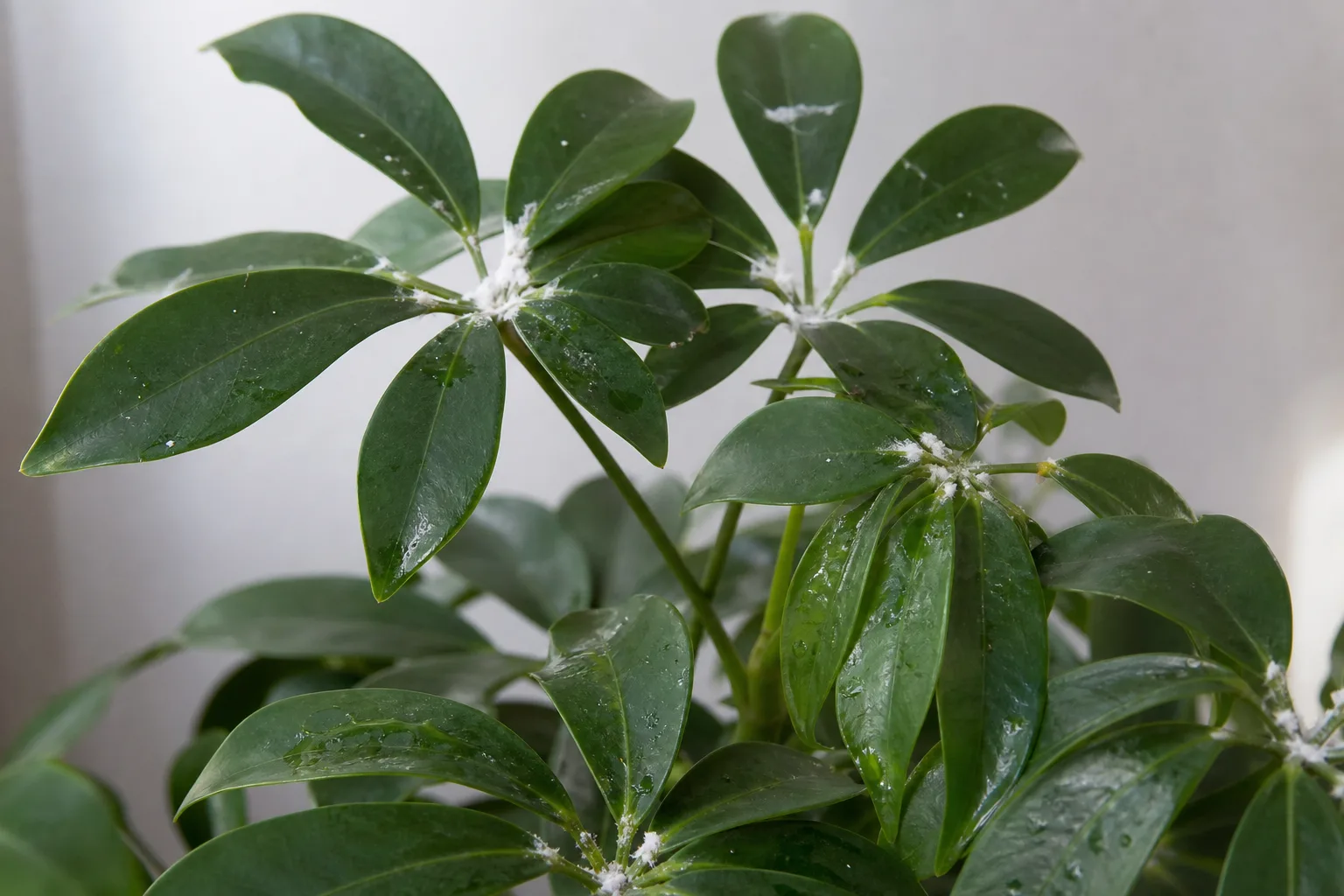
Mealybugs on Schefflera hide as white cottony tufts where compound leaf whorls meet the stem. First step: isolate the plant and dab every visible cluster with a cotton swab dipped in 70% rubbing alcohol before spraying anything.
Mealybugs on Schefflera: Causes, Checks & Fixes
This guide covers mealybugs on Schefflera. See also the general Mealybugs guide, watering, and light pages for this plant.
Mealybugs on Schefflera: Causes, Checks & Fixes
Quick answer
White cottony tufts tucked into the joints where Schefflera’s glossy leaflets meet each petiole-and where each whorl meets the stem-are the classic mealybug signature on umbrella plants. First step: isolate the plant away from neighbors and dab every visible cluster with a cotton swab dipped in 70% isopropyl rubbing alcohol before you reach for any spray. Alcohol dissolves the waxy coating on contact so you can lift insects out of sheltered axils that whole-plant misting misses.
This guide targets indoor Schefflera arboricola (dwarf umbrella tree), the compact species most often sold as a houseplant. Larger S. actinophylla (full-size umbrella tree) follows the same identification and alcohol-first protocol, but tall floor specimens need a step stool and sectional treatment to reach upper whorls-see the floor-specimen notes below. Missouri Botanical Garden lists mealybugs among pests that may appear on dwarf schefflera.
Do not start with a whole-plant pesticide until you have confirmed live mealybugs and cleared obvious colonies by hand. Sticky leaflets without cottony wax may point to aphids or scale insects instead-use the comparison table before repeating alcohol dabs on the wrong pest.
What mealybugs look like on Schefflera whorls
Schefflera grows upright with dense whorls of glossy oval leaflets radiating from central stems-exactly the sheltered architecture mealybugs prefer. North Carolina Extension notes mealybugs as a common insect problem on dwarf umbrella tree, often alongside scale and spider mites.
Mealybugs symptoms on Schefflera - compare with healthy tissue on the same plant.
Typical mealybug signs on umbrella plants:
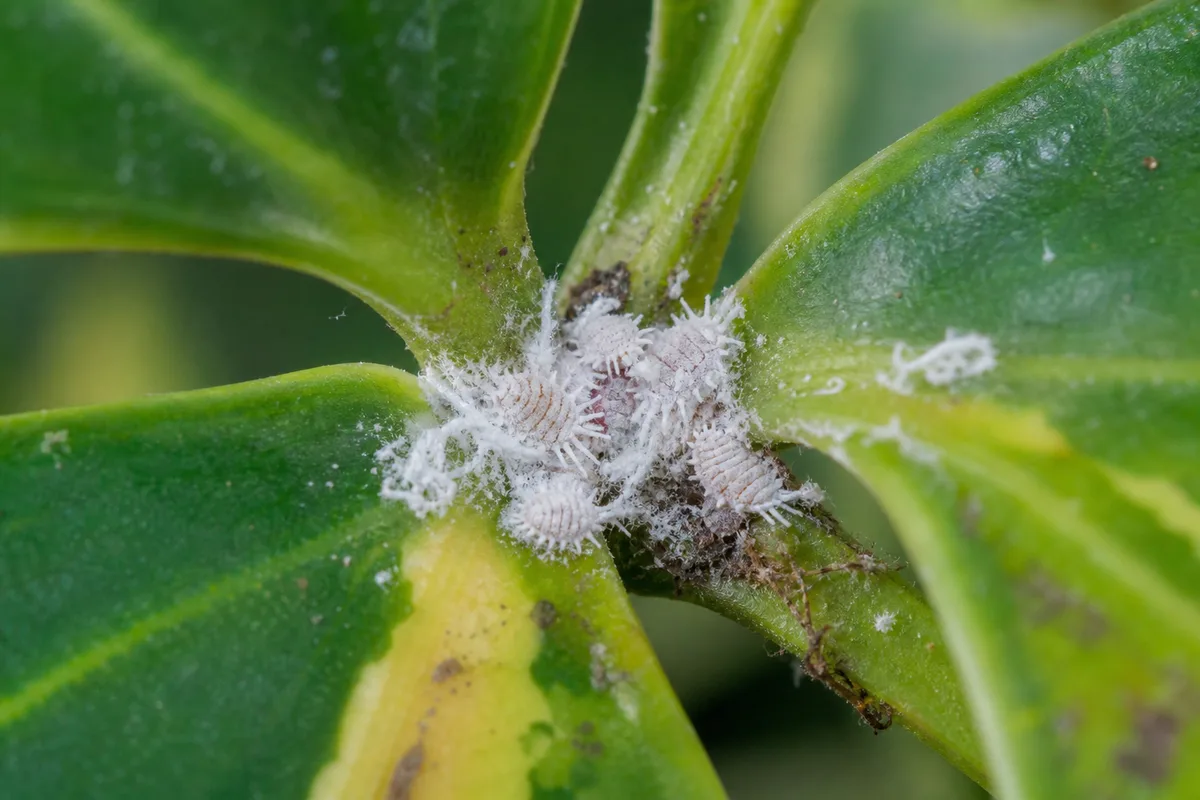
- White, cottony or waxy tufts in petiole axils, stem nodes, and where each leaf whorl meets the trunk
- Flat pinkish or gray crawlers if you wipe away the wax with a fingernail or damp swab
- Sticky, shiny honeydew on upper leaflets below active colonies
- Black sooty mold growing on dried honeydew-not on the leaf tissue itself
- Yellowing or distorted leaflets on heavily fed whorls
- Ants traveling up stems to harvest honeydew
Mealybugs pierce plant tissue and excrete honeydew, a sugary waste that drips onto lower foliage. On Schefflera’s glossy leaflets, honeydew reads as random tacky patches long before you notice the insects above.
Where to inspect on single-trunk vs. multi-stem crowns
On a single-trunk Schefflera, work around the stem in a spiral-each whorl creates a small pocket between leaflets and the trunk. On multi-stem specimens, inner stems where whorls overlap are the highest-risk zones; colonies hide in crotches you cannot see from across the room. Part overlapping leaf sets by hand and inspect with a phone macro photo at each joint.
Unlike vining plants such as pothos-where mealybugs often line exposed nodes along a hanging stem-Schefflera’s radiating whorls stack pockets vertically. A colony on the third whorl from the tip can drip honeydew onto leaflets two whorls below while remaining invisible from the front of the plant. Always trace tackiness upward to the nearest axil above the sticky patch.
Heavy infestations can leave leaflets pale, curled, or dropping-but Schefflera also drops leaves from drafts, cold below 60°F, and watering swings. Pest damage usually comes with visible colonies or stickiness tied to specific whorls, not sudden whole-plant defoliation from a single bad watering. If yellowing spreads without insects, see yellow leaves on Schefflera and stabilize watering before assuming pests alone caused the decline.
Mealybugs vs. Schefflera leaf drop from care stress
Use this table when white patches, stickiness, or leaf drop make you unsure whether mealybugs or culture caused the damage:
| What you see | Most likely cause | Quick check | Next step |
|---|---|---|---|
| White cottony tufts in leaf axils | Mealybugs | Damp swab leaves pink smear or oval body | Isolate + alcohol dab |
| Brown or tan disks glued to stems | Scale insects | Immobile shell; scrape test | See scale insects |
| Fine stippling with webbing, dry air | Spider mites | No heavy honeydew; mites move on paper tap | See spider mites |
| White powder on leaf faces | Powdery mildew | Rubs off evenly; not clustered in axils | Improve airflow; fungicide if confirmed |
| Flat white crust on leaf surfaces | Hard-water deposits | Wipes dry clean; no insects underneath | Rinse leaflets; adjust watering method |
| Yellow lower whorls, no wax in axils | Watering or draft stress | Wet soil for days, or cold below 60°F | Stabilize watering and light |
| Pear-shaped clusters on new tips | Aphids | Soft groups on newest whorls, not waxy tufts | See aphids |
Why whorled architecture hides mealybugs
Mealybugs rarely appear from nowhere. Most indoor outbreaks start when an infested plant enters the home without quarantine.
Common introduction routes:
- New nursery or grocery-store plants added without isolation
- Shared pruning tools, saucers, or cache pots moved between plants
- Summering Schefflera outdoors, then bringing hitchhikers back inside
- Crawlers walking short distances from a heavily infested neighbor
Once present, warm room temperatures let mealybugs complete multiple generations per year indoors. In a dry heated living room-unlike the high-humidity greenhouse conditions extension spray guides often assume-crawlers can hatch on shorter intervals between your spray cycles, so schedule repeats every five to seven days rather than treating once and waiting. Missouri Botanical Garden guidance notes they infest leaves, stems, branches, and joints, piercing sap and hiding under foliage and in crotches where contact sprays fail.
Schefflera’s dense, irregular crown gives extra cover compared with open-canopy plants. Each whorl creates a pocket between leaflets and stem-perfect for egg masses protected from predators and casual wiping. Lower light and stagnant air between crowded houseplants slow drying on leaf surfaces, which does not cause mealybugs but makes colonies harder to see until honeydew accumulates.
Stressed Schefflera is not more susceptible by species, but weak growth from overwatering on Schefflera, underwatering on Schefflera, or drafty windows produces soft new tissue that sap feeders colonize quickly. The species drops leaves when soil stays too wet or too dry; chasing leaf drop with fertilizer while ignoring pests will not solve either problem.
How to confirm the cause
Work through these checks before treating:
- Location on the plant - Mealybugs cluster in axils and stem joints. Random white mineral spots on leaf surfaces alone are not mealybugs.
- Movement test - Wipe a cottony patch with a damp swab. Mealybugs leave pinkish smears or visible oval bodies; dust or dried water spots wipe clean.
- Honeydew and mold - Tacky residue on leaflets below a whorl, or black mold that wipes off, confirms sap feeding.
- Ant activity - Ants on pot rims or stems often point to mealybugs or scale above, even when insects are hidden.
- Lookalike check - Scale insects also attach along Schefflera stems and leaf veins but form hard brown or tan disks, not fluffy wax. Spider mites leave fine webbing and stippled leaflets, not cottony tufts.
- Root and pot rim inspection - If stems look clean but the plant keeps declining, check drainage holes, saucer edges, and the soil surface for white wax-some mealybugs feed on roots and pot exteriors.
- Collection scan - Inspect every plant within a few feet. Mealybugs spread slowly but steadily across a shelf of tropicals.
If you find cottony clusters with honeydew or live insects under the wax, the diagnosis is confirmed. If white patches are only dust or hard scale shells, switch to the appropriate treatment rather than repeating alcohol dabs.
Documented indoor treatment pattern (reference case)
On a 4-foot multi-stem S. arboricola in a heated living room (68–72°F, ~45% humidity), a visible outbreak at six whorl axils on two inner stems responded to this sequence: Day 1-isolate, alcohol-dab all visible tufts, wipe honeydew from lower whorls; Days 3 and 10-insecticidal soap spray with whorls parted by hand; Days 17 and 24-repeat soap; Week 5-no new cottony clusters, first firm new whorl at the tallest tip. Yellowed leaflets on whorls 2–4 never re-greened; recovery was judged by clean axils and new growth only. Your timeline may differ if root mealybugs or an untreated neighbor reinfects the plant.
First fix for Schefflera
Move the plant away from others and dab every visible mealybug cluster with a cotton swab dipped in 70% isopropyl rubbing alcohol.
Hold each whorl steady and work into the axils where leaflets meet the petiole-those are the hot spots on umbrella plants. University of Maryland Extension recommends alcohol swabs for light infestations, noting treated insects turn light brown. Mealybugs treated with direct contact die quickly; the wax dissolves so you can lift clusters away instead of smearing them.
Before full treatment, test one leaflet and wait 24 hours. Schefflera’s glossy foliage can burn if alcohol pools on the surface-especially on variegated cultivars with thinner leaf tissue. Dab insects precisely rather than soaking whole leaves.
Do not return the plant to its usual spot until you see no new cottony clusters for at least two weeks after your last treatment cycle. Isolation is part of the fix, not an optional extra.
Step-by-step recovery
After the initial alcohol pass, continue in this order based on severity:
- Shower or wipe honeydew - Rinse leaflets with lukewarm water or wipe sticky surfaces with a damp cloth. This removes sooty mold food and makes new colonies easier to spot. Let foliage dry the same day.
- Spray for crawlers - Alcohol does not reach eggs and hidden nymphs. UC IPM recommends insecticidal soap, horticultural oil, or neem oil applied directly to mealybugs, with thorough coverage of undersides and joints. Clemson Extension also lists insecticidal soap and horticultural oil for mealybug control on houseplants. Follow label rates for houseplants.
- Repeat on a schedule - Reapply every five to seven days for at least three to four weeks. Newly hatched crawlers emerge over time; a single spray rarely finishes the job indoors.
- Clean the pot and saucer - Wipe pot rims, cache pots, and tray edges where mealybugs shelter between treatments. Discard heavily wax-coated top dressing if present.
- Check roots only if problems persist - If stems stay clean but growth stalls, unpot and inspect feeder roots for white wax. Root colonies may need a labeled systemic or Schefflera repotting guide into fresh mix after washing roots-avoid repotting on day one of a mild stem-only infestation.
- Hold fertilizer - Do not feed a pest-stressed Schefflera until new growth looks healthy for two weeks. Salt and nitrogen push soft flushes that are easier for sap feeders to colonize.
For large floor specimens you cannot move easily, treat one stem section at a time over several days rather than skipping isolation of nearby plants.
Recovery timeline
Mealybug recovery on Schefflera is measured in weeks, not days.
Days 1–7: Alcohol dabs and the first soap or oil spray knock down visible adults. Honeydew production should slow. Expect some yellow leaflets to drop-damaged tissue does not re-green.
Weeks 2–4: Repeat sprays catch crawlers hatching from eggs you missed. New cottony clusters should be smaller and fewer. Sooty mold stops spreading once honeydew dries up; wipe remaining mold off with a damp cloth.
Weeks 4–8: A stable plant pushes fresh whorled growth at stem tips. Firm petioles and glossy new leaflets without wax signal success. If colonies reappear at the same nodes after three full spray cycles, look for root mealybugs or an untreated neighbor reinfecting the plant.
Schefflera rarely dies from moderate mealybugs alone if stems stay firm and you stay consistent. Severe, months-old infestations on an already weakened plant may leave permanent bare stems-prune to healthy wood after pests are gone and let new whorls fill in over a season.
Lookalike symptoms on glossy compound leaves
Hard scale: Tan or brown domes glued along veins and stems; not fluffy. Scrape test reveals a fixed shell. Also common on Schefflera per extension records-route to scale insects if confirmed.
Spider mites: Fine webbing on leaf undersides, bronze stippling, no cottony wax. Thrives in dry heated air-often hits Schefflera in winter alongside, not instead of, mealybugs.
Powdery mildew: White powder on leaf surfaces that rubs off evenly; not clustered in axils.
Mineral or hard-water deposits: Flat white crust on leaf faces from overhead watering; wipes off dry without insects underneath.
Normal leaf texture: Schefflera leaflets are glossy and smooth-not cottony. When in doubt, use a hand lens or phone macro photo at a stem joint.
Mistakes to avoid
- Spraying once and stopping - Eggs hatch over weeks. Schedule repeats before you start.
- Treating without isolating - Crawlers walk to neighboring pothos, ficus, and palms within days.
- Using full-strength alcohol on entire leaves - Spot-treat insects; test for leaf burn first, especially on variegated cultivars.
- Applying oil or soap in bright direct sun - Can scorch glossy Schefflera leaflets. Treat in indirect light and let leaves dry indoors.
- Overwatering after stress - Soggy soil plus pest damage accelerates leaf drop. Water when the top 2 inches of mix are dry, per our Schefflera watering guide.
- Fertilizing to “boost recovery” - Wait until pests are controlled and new growth is firm.
- Ignoring ants - Ants protect mealybugs from predators. Control pests, not just the ants.
Schefflera care cross-check during treatment
While treating mealybugs, keep baseline care steady-swings in light, water, or temperature cause the dramatic leaf drop Schefflera is known for, which makes it harder to judge whether treatment is working. Follow our Schefflera overview and linked care guides:
- Light: Schefflera light guide at an east, west, or filtered south window supports recovery. Avoid cold drafts below 60°F.
- Water: Let the top 2 inches of mix dry between drinks. A pot that stays wet for days stresses roots and does not help pest recovery.
- Humidity: Target 40–60% if possible; misting is optional and not a substitute for insect control.
- Handling and pets: Schefflera is toxic to cats and dogs if chewed. Wash hands after treating, keep pruned material out of reach, and keep treated plants away from pets until foliage is fully dry. Contact a veterinarian if a pet eats leaves after alcohol or soap treatment.
How to prevent mealybugs next time
Missouri Botanical Garden recommends examining and quarantining new plants two to three weeks before placing them near clean specimens. That single habit prevents most indoor outbreaks.
Add a monthly scout of whorl bases and stem joints on your Schefflera-especially inner stems on multi-trunk crowns where leaves overlap. Wipe dust from leaflets during regular care so white wax shows up early.
When buying, reject plants with sticky residue, ant trails, or white clusters in leaf axils even if top growth looks fine. At home, keep plants spaced enough for airflow and inspect any Schefflera you move outdoors in summer before it re-enters.
If mealybugs have visited once, keep insecticidal soap labeled for houseplants on hand and recheck the plant each time you water for the next two months. Early alcohol dabs on one cluster beat a shelf-wide infestation later.
When to worry or remove the plant
Escalate or consider discarding a severely compromised plant if:
- Cottony colonies cover most stems and repeat alcohol and spray cycles fail for six or more weeks
- Stems soften at the base or blacken-unlikely from mealybugs alone but a sign of combined pest and rot stress; see root rot on Schefflera if soil has been wet
- Root inspection shows extensive white wax on most feeder roots with no firm white root tips
- The plant shares a tight display with irreplaceable collections and isolation is impossible-sometimes removing one chronic host protects the rest
For most home growers, consistent isolation, alcohol dabs, and repeated soap or oil sprays control Schefflera mealybugs without losing the plant.
When home treatment is not enough: If mealybugs persist across multiple plants after alcohol and repeated spray cycles, contact your local cooperative extension office or a licensed IPM professional before applying systemic pesticides indoors near food prep areas or pets.
Decision checklist before you close this case
- Live insects - Inspect every whorl axil with a hand lens. No cottony tufts or pink smears under wax means the active infestation is controlled; old honeydew alone does not count.
- New growth quality - Firm upright whorls without stickiness signal recovery. Yellowed older leaflets may never re-green-judge by new tips, not every blemished leaflet below.
- Neighbors and ants - Nearby plants are clean, ant trails are gone, and the Schefflera stayed isolated with zero new mealybugs for two full weeks after the last spray.
If sticky leaflets return but insects look different, route to aphids, scale insects, or spider mites rather than repeating the same alcohol cycle.
This page was reviewed by the LeafyPixels Review Board against Missouri Botanical Garden, NC State Heptapleurum arboricola, University of Maryland Extension, UC IPM, and Clemson HGIC references, plus our Schefflera overview, watering, and sibling pest guides before publication. Author: sai-ananth. Reviewed: 2026-06-17.
Related guides:
- Overview - full indoor care hub
- Watering - top 2-inch dry-down protocol during repeated treatments
- Yellow leaves - leaf-drop differential when pests are ruled out
- Aphids - pear-shaped clusters on new whorl tips
- Scale insects - immobile stem disks with honeydew
- Spider mites - stippling and webbing without cottony wax
- Root rot - when soft stems suggest combined pest and wet-soil stress
When to use this page vs other Schefflera guides
- Schefflera watering guide - Use for routine moisture checks before assuming mealybugs is the main issue.
- Schefflera problems hub - Browse all 18 common issues on this species.
- Yellow Leaves on Schefflera - Different entry point when symptoms overlap with mealybugs.
- Slow Growth on Schefflera - Different entry point when symptoms overlap with mealybugs.
- Spider Mites on Schefflera - Different entry point when symptoms overlap with mealybugs.