Brown Leaves on Rosemary: Causes, Checks & Fixes
Quick answer
Brown leaves on Rosemary usually trace to opposite water problems: soggy roots from overwatering, or drought in a small pot baking in full sun. First step: probe soil moisture 5 cm deep and adjust watering before pruning or repotting.
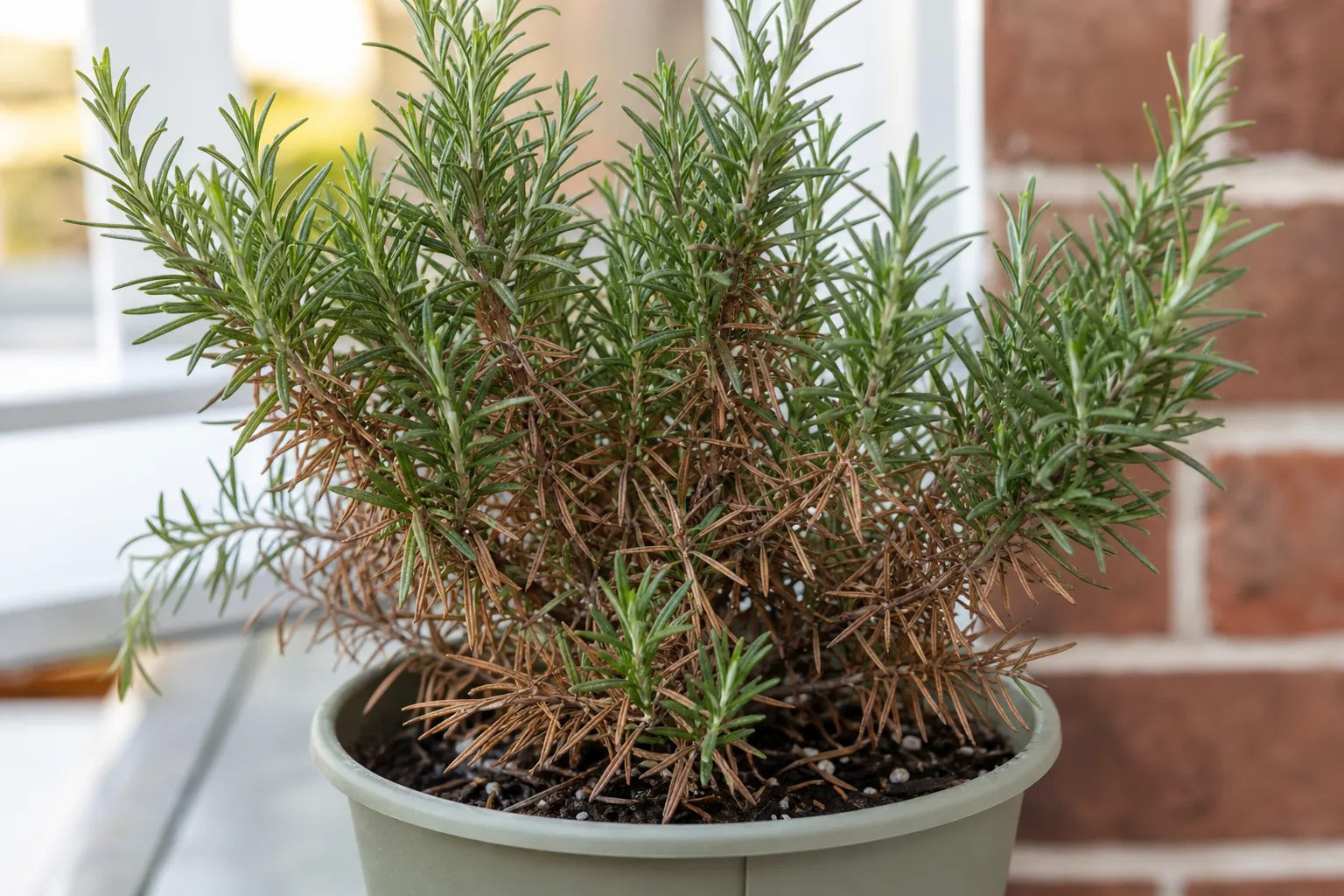
Brown Leaves on Rosemary: Causes, Checks & Fixes
This guide covers brown leaves on Rosemary. See also the general Brown Leaves guide, watering, and light pages for this plant.
Brown Leaves on Rosemary: Causes, Checks & Fixes
Quick answer
Brown leaves on Rosemary usually trace to opposite water problems: soggy roots from overwatering on Rosemary, or drought in a small pot baking in Rosemary light guide. First step: probe soil moisture 5 cm deep and adjust watering before pruning or Rosemary repotting guide.
Rosemary (Salvia rosmarinus) evolved on dry Mediterranean scrub with needle-like evergreen leaves that hold fragrance but not unlimited moisture. The same brown fringe can mean rotting roots on wet soil or a container that dried out completely on a sunny windowsill-split those two paths before you treat.
Why Rosemary gets brown leaves
Rosemary is built for drought once established. Established plants have good drought tolerance, but they cannot survive stagnant water around the roots. Wet, poorly-drained soils in winter are usually fatal, and overwatering inevitably leads to root rot on a plant that does poorly in wet or poorly drained clay soil. When roots decay, they stop moving water upward-even though the mix feels wet-so needles brown from the base or tips while the pot stays heavy.
The opposite failure is just as common on balconies and sunny sills. Small clay or plastic pots in full sun can dry through in a day or two during summer heat. Rosemary needles curl inward and turn crisp brown when the root ball has been dry too long. Because the plant is drought-adapted, owners sometimes wait too long between drinks once the surface looks dusty.
Indoor overwintering adds a third pattern. Pots brought inside for frost protection sit in dimmer light with cooler air but still get watered on a summer schedule. Browning of needle tips is a sign of root rot when that combination keeps peat-heavy mix soggy for weeks. Powdery mildew and Botrytis can follow poor air circulation indoors, though those diseases more often show as coating or stem dieback before whole needles turn uniformly brown.
Cold snaps brown whole outer shoots on marginally hardy container plants. Cold, wet compost can cause rosemary roots to rot and die, and harsh frost can damage tender new growth even when roots are otherwise healthy.
What brown leaves look like on Rosemary
Overwatering and root failure:
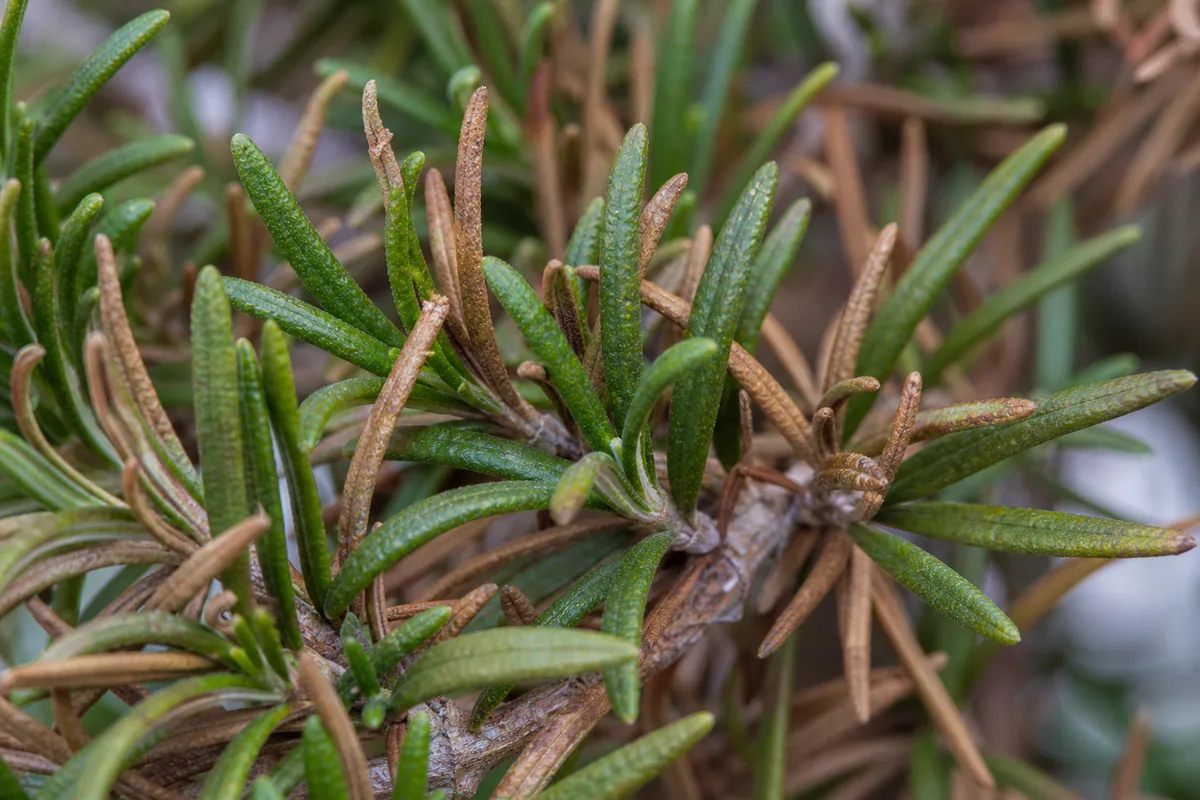
Brown Leaves symptoms on Rosemary - compare with healthy tissue on the same plant.
- Lower or inner needles turn yellow-brown while mix near the surface still feels damp
- Tips brown and feel limp rather than papery-crisp; stems may soften at the soil line
- Pot smells sour or musty when lifted; drainage holes may show dark wet patches
- Plant may look wilted on wet soil-a mismatch that points to failing roots
Drought stress:
- Needle tips and outer shoots turn dry brown and brittle; leaves may curl inward
- Pot feels light; mix is dry well below the surface
- Browning often hits the side facing the hottest sun first
- Severe cases show whole branch segments desiccated but stems still firm and woody
Cold or frost damage:
- Outer shoots brown suddenly after a cold night, sometimes while inner growth stays green
- Damage may appear overnight on plants recently moved outdoors or left near cold glass
- Stems feel firm; roots are usually healthy if soil is not waterlogged
Disease and pest lookalikes:
- Powdery white coating on needles suggests mildew before tissue dies-not the same as uniform brown desiccation
- Fine webbing with stippled yellow-brown patches points to spider mites on indoor plants
- Black mushy stem bases with otherwise firm roots may indicate Botrytis stem dieback rather than classic root rot
How to confirm the cause
Work through these checks in order:
- 5 cm moisture probe - Push your finger 5 cm into the mix. Bone dry throughout suggests drought. Damp or wet at depth with a heavy pot suggests root-zone problems.
- Pot weight and drainage - Lift the container. Light and dry confirms drought. Heavy and wet with slow drainage-hole flow confirms excess moisture retention.
- Stem base feel - Pinch lower stems at the soil line. Firm and woody is healthy; soft, dark, or peeling bark suggests rot or Botrytis advancing upward.
- Newest shoot tips - Firm pale-green tips mean the plant is still pushing growth. Brown or absent new tips on wet soil is a warning sign.
- Recent care context - Did you move the pot indoors, soak after a dry spell, or leave it out during a frost? Timing often narrows the cause faster than leaf color alone.
- Root spot-check (if wet soil persists) - Slide the plant partly out of the pot. Healthy rosemary roots are pale and firm; rotting roots are brown, mushy, and may smell sour.
If dry soil and a light pot match crispy brown tips, treat as drought. If wet soil, sour smell, and soft bases match limp brown needles, treat as root failure before adding more water.
First fix for Rosemary
Probe soil moisture 5 cm deep and act on what you find-do not water automatically.
If the mix is dry and the pot is light, water thoroughly until it runs from drainage holes, then empty any saucer. Resume the let soil dry out rhythm: wait until the top 5 cm is completely dry before the next soak.
If the mix is wet or the pot smells sour, stop watering immediately. Move the plant to brighter light and better airflow so the root zone can dry. Do not repot, fertilize, or prune heavily on day one-that stack hides whether drying alone stabilized the plant.
This single diagnostic step prevents the most costly mistake on rosemary: pouring water onto rotting roots because the needles look thirsty, or soaking a drought-crisp plant again before confirming the mix was actually dry.
Step-by-step recovery
After the first moisture correction:
- For drought recovery - One deep soak may not rehydrate a shrunken root ball in peat mix. If water runs straight through, bottom-water for twenty to thirty minutes, then let the pot drain fully. Check again in two days rather than watering daily.
- For wet-soil recovery - Hold water until the top 5 cm dries. If needles keep browning after ten days of dry-down, unpot and trim mushy roots with clean scissors. Let trimmed roots air-dry for several hours, then replant in gritty mix with open drainage holes.
- Trim dead tissue selectively - Remove stems that are fully brown and brittle once the plant stops declining. Keep partially green branches; they still photosynthesize during recovery.
- Improve placement - Move containers to at least six hours of direct sun so the mix cycles moisture faster. Indoors, a south-facing window or supplemental grow light prevents the slow dry-down that keeps roots soggy.
- Adjust seasonal watering - Established in-ground rosemary should not need additional watering once settled. Container plants need more attention in hot dry spells and far less in cool indoor winter quarters.
- Handle frost-damaged shoots - Wait until danger of further frost passes, then prune dead brown tips back to live wood. Do not hard-prune into old bare stems; rosemary often fails to resprout from heavy cuts.
Do not fertilize stressed rosemary until new growth looks firm for at least two weeks. High nitrogen on recovering roots can push soft growth that browns again in humid conditions.
Recovery timeline
Brown needle tissue does not green up again. Within one to two weeks of correct watering, you should see firm new tips if roots are healthy. Drought-stressed plants often perk up faster than rot-affected ones once rehydrated.
Root-rot recovery can take three to six weeks and may require cutting back to woody stems with live buds. If more than half the root mass was mushy or stems stay soft despite dry gritty mix, replacement is often more practical than extended nursing.
Frost-damaged outer shoots may need one full growing season before the shrub looks balanced again, though new spring growth usually covers minor tip burn.
Lookalike symptoms to rule out
Yellow leaves without crisp brown often appear earlier in overwatering stress-see yellowing on lower needles before full browning sets in.
Brown tips only on dry soil may be early drought or low humidity indoors, not full-leaf necrosis. Confirm depth dryness before assuming the whole plant is failing.
White dusty coating is powdery mildew, not drought burn. Improve airflow and reduce overhead moisture rather than cutting water further.
Wilting on wet soil mimics underwatering on Rosemary but means roots cannot absorb-treat as rot, not thirst.
Leggy pale growth with few brown needles usually signals insufficient light rather than water extremes. More sun tightens needle spacing before browning spreads.
Mistakes to avoid
Do not keep watering because needles look limp when the soil is already wet-that deepens root rot on a plant sensitive to wet, poorly drained soils.
Do not assume all browning is underwatering. Rosemary in soggy winter compost is far more common indoors than true drought.
Do not repot into standard peat-heavy mix without grit. Overwatering and poor drainage remain the most frequent reasons rosemary fails in home pots.
Do not prune the entire plant to stubs hoping for fresh growth. Rosemary rarely resprouts from old woody stems after hard cuts.
Do not place stones over drainage holes or leave the pot sitting in a full saucer after watering.
Do not fertilize, spray pesticides, and repot on the same day-change one variable at a time so you can read what helped.
How to prevent brown leaves on Rosemary
Match watering to how fast the pot dries in your conditions, not a fixed calendar. In full summer sun, check every few days; indoors in winter, weeks may pass between drinks.
Use sandy, gritty mix with excellent drainage-roughly forty percent potting mix, forty percent coarse sand or perlite, and twenty percent fine gravel works well for containers. Clay pots dry faster than plastic and suit rosemary’s preference for dry to medium moisture.
Give full sun outdoors and the brightest window indoors. Light drives water use and keeps needle tissue tough rather than soft and rot-prone.
Improve airflow when overwintering inside-powdery mildew and Botrytis thrive when humid stale air surrounds dense foliage.
Group outdoor pots for winter protection but move them under eaves if rainfall keeps compost cold and wet for weeks.
Replace tired woody plants every several years rather than fighting chronic brown decline on an exhausted root system.
When to worry
Treat as urgent if stem bases turn black and mushy, the plant wilts on saturated soil, or browning climbs into new growth while the mix stays wet. Unpot and inspect roots the same week-delay lets rot reach the crown.
Sudden widespread browning after a hard frost on a young container plant may kill the whole shoot system if not sheltered. Move to a protected spot and wait for live buds before declaring the plant dead.
If drought correction and one careful rehydration do not stop tip browning within ten days, or if trimmed roots were mostly mushy, start fresh cuttings from healthy upper stems rather than investing months in a failing parent plant.
Non-urgent: a few sun-crisped tips on an otherwise firm shrub in summer, or minor lower needle drop on an old outdoor hedge in dry weather.
Conclusion
Brown rosemary needles almost always come down to water-too much trapped around roots, or too little in a pot that dried out in strong sun. Probe 5 cm deep, read pot weight and stem firmness, then apply the single correct watering response before stacking repots, fertilizer, or heavy pruning. Judge recovery by aromatic new needle growth and firm woody bases, not by hoping old brown tissue will green again.
When to use this page vs other Rosemary guides
- Rosemary watering guide - Use for routine moisture checks before assuming brown leaves is the main issue.
- Rosemary problems hub - Browse all 18 common issues on this species.
- Brown Tips on Rosemary - Different entry point when symptoms overlap with brown leaves.
- Yellow Leaves on Rosemary - Different entry point when symptoms overlap with brown leaves.
- Overwatering on Rosemary - Different entry point when symptoms overlap with brown leaves.