Overwatering on Pilea Peperomioides: Causes, Checks & Fixes
Quick answer
If your pilea is drooping while the pot is still heavy and damp, treat it as overwatering first: stop watering, empty all standing water, and wait for the top inch to dry before the next drink.
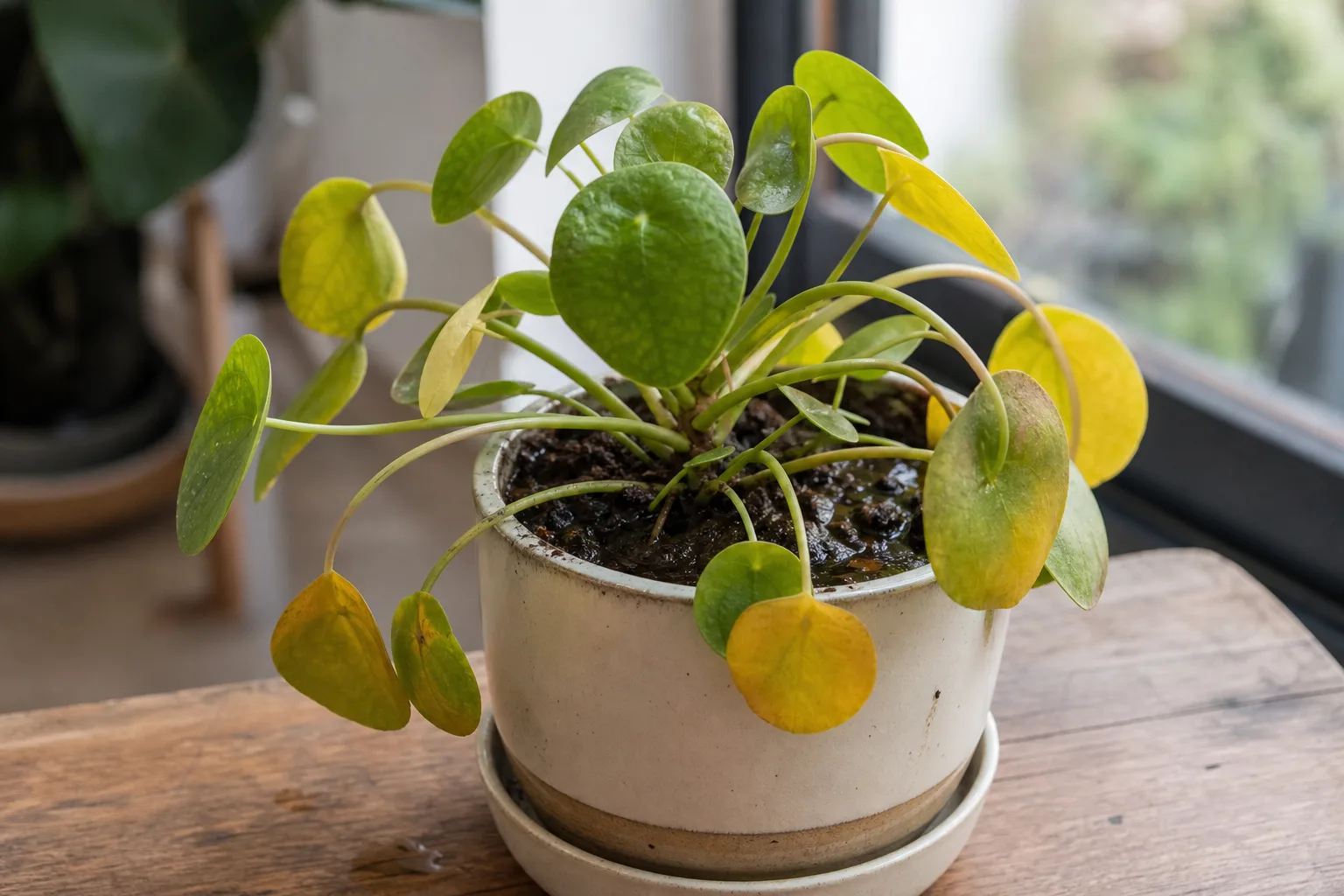
Overwatering on Pilea Peperomioides: Causes, Checks & Fixes
This guide covers overwatering on Pilea Peperomioides. See also the general Overwatering guide, watering, and light pages for this plant.
Overwatering on Pilea Peperomioides: Causes, Checks & Fixes
Quick answer
If your Pilea peperomioides is drooping while soil is still wet, do not add more water. Start with one action: stop watering and empty any saucer or outer pot water. Pilea should be watered when the top layer has started to dry, not on a fixed weekly schedule (RHS).
This problem is common in Chinese money plants because they are often kept in decorative cachepots and watered “just in case.” In lower light or cooler months, growth slows and pilea usually needs less frequent watering (RHS).
Why Pilea Peperomioides gets overwatered
Three patterns cause most cases:
- Calendar watering: watering every 7 days regardless of season, light, or room temperature.
- Water-trapping setup: nursery pot sitting in a decorative outer pot with leftover water.
- Overpotting: using a container much larger than the root ball, so the center stays wet too long (RHS).
Overwatering hurts pilea because roots need air as well as moisture. In waterlogged media, oxygen drops and roots decline (Missouri Botanical Garden; UMN Extension).
What overwatering looks like on Pilea Peperomioides
On pilea, overwatering usually appears first in the lower leaves and root zone:
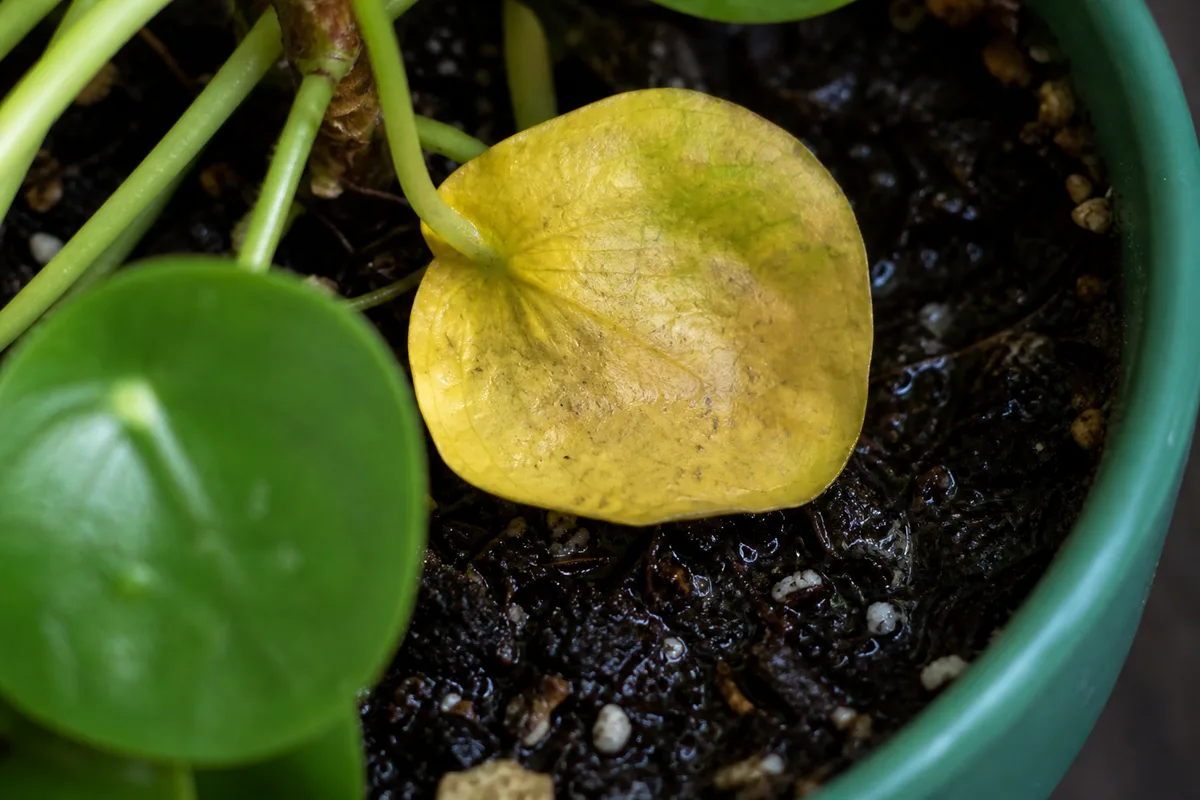
Overwatering symptoms on Pilea Peperomioides - compare with healthy tissue on the same plant.
- mix stays cool, dark, and damp for many days
- pot feels heavy long after watering
- lower coin leaves yellow, then drop
- leaves look limp or slightly cupped despite wet soil
- gnats appear around constantly damp mix
The key pattern is wet-soil wilt: limp foliage while media is still moist. That is different from true thirst, where the pot is light and mix is dry.
How to confirm the cause
Use this order so you do not misdiagnose:
- Top-inch test: check if the upper inch is still moist.
- Pot-weight test: lift the pot; heavy usually means roots are still in wet media (RHS).
- Standing-water check: inspect saucer and outer pot for trapped water.
- Smell check: sour or swampy odor suggests prolonged oxygen loss and probable rot risk (Missouri Botanical Garden).
- Root check if worsening: unpot and inspect roots; firm pale roots are viable, while mushy dark roots indicate rot pressure (Iowa State Extension).
If your pilea is drooping and steps 1-3 show ongoing wetness, treat as overwatering first.
Lookalikes to rule out
- underwatering on Pilea Peperomioides: pot is very light and mix is dry deep into the root zone.
- Low light only: stretched growth and wider spacing, but no sour smell or persistent soggy media.
- root rot on Pilea Peperomioides progression: foul smell, stem-base softness, and rapid decline with wet mix.
If signs point to advanced rot, also review /plants/pilea-peperomioides/root-rot/.
First fix for Pilea Peperomioides
First action: pause all watering until the top inch has dried, and drain all trapped water immediately.
Then branch by severity:
Mild (no odor, mostly firm plant)
- move to brighter indirect light
- improve airflow
- resume watering only after dryness checks
Moderate (ongoing yellow drop, staying wet too long)
- unpot and inspect roots
- trim only mushy dark roots with clean scissors
- repot into fresh, airy mix in a pot with drainage
- choose a container only slightly larger than the root system (RHS)
Severe (sour smell, soft stem base, collapse)
Treat as urgent root failure risk. Repot the same day after trimming dead roots. If the main stem is failing, salvage healthy offsets (pups) as backup plants. Pilea naturally produces offsets that can be separated for propagation (NC State Extension; Penn State Extension).
Recovery timeline
Yellow leaves already damaged will not turn green again. What you watch for is new stable growth.
- First week: no further rapid collapse, pot begins drying in a normal rhythm.
- Weeks 2-4: new leaves should emerge firm and flatter.
- After 4+ weeks: stable growth means Pilea Peperomioides watering guide is corrected.
If symptoms spread after corrective steps, reassess roots and move to advanced rot protocol.
What not to do
- Do not water again just because leaves look limp while the pot is still wet.
- Do not fertilize stressed, waterlogged roots.
- Do not repot into an even bigger pot to “help” recovery.
- Do not leave drained water in saucers or cachepots (RHS).
How to prevent overwatering on Pilea Peperomioides
Use a repeatable prevention routine:
- Water only when the top few centimeters have started to dry (RHS).
- Confirm with both finger test and pot weight.
- Empty saucers and outer pots after each watering (RHS).
- Keep Pilea Peperomioides light guide so media can dry at a healthy pace.
- Keep pot size tight to root mass, not oversized.
- In lower-light winter conditions, lengthen intervals because pilea usually uses water more slowly (RHS).
For routine watering cadence guidance, see /plants/pilea-peperomioides/watering/.
When to worry
Escalate quickly if you notice any of these together: sour smell, stem-base softening, rapid multi-leaf collapse, or mushy roots on inspection. At that point, drying alone is often not enough.
Pilea is generally listed as non-toxic for pets and children, but ingestion of any houseplant can still cause mild stomach upset in some animals (NC State Extension; ASPCA).
When to use this page vs other Pilea Peperomioides guides
- Pilea Peperomioides watering guide - Use for routine moisture checks before assuming overwatering is the main issue.
- Pilea Peperomioides problems hub - Browse all 17 common issues on this species.
- Root Rot on Pilea Peperomioides - Different entry point when symptoms overlap with overwatering.
- Yellow Leaves on Pilea Peperomioides - Different entry point when symptoms overlap with overwatering.
- Wilting on Pilea Peperomioides - Different entry point when symptoms overlap with overwatering.
Related Pilea Peperomioides guides
- Pilea Peperomioides overview
- Pilea Peperomioides watering
- Pilea Peperomioides light
- Pilea Peperomioides soil
- Root Rot on Pilea Peperomioides
- Yellow Leaves on Pilea Peperomioides
- Wilting on Pilea Peperomioides
- Fungus Gnats on Pilea Peperomioides
- Mold on Soil on Pilea Peperomioides
- Drooping Leaves on Pilea Peperomioides
- Pilea Peperomioides problems