Mold on Soil on Pilea Peperomioides: Causes, Checks & Fixes
Quick answer
White or gray fuzzy mold on Pilea Peperomioides soil is usually harmless saprophytic fungus feeding on organic mix-not a coin-leaf infection. First step: let the top inch dry completely, then scrape off visible mold before watering again.
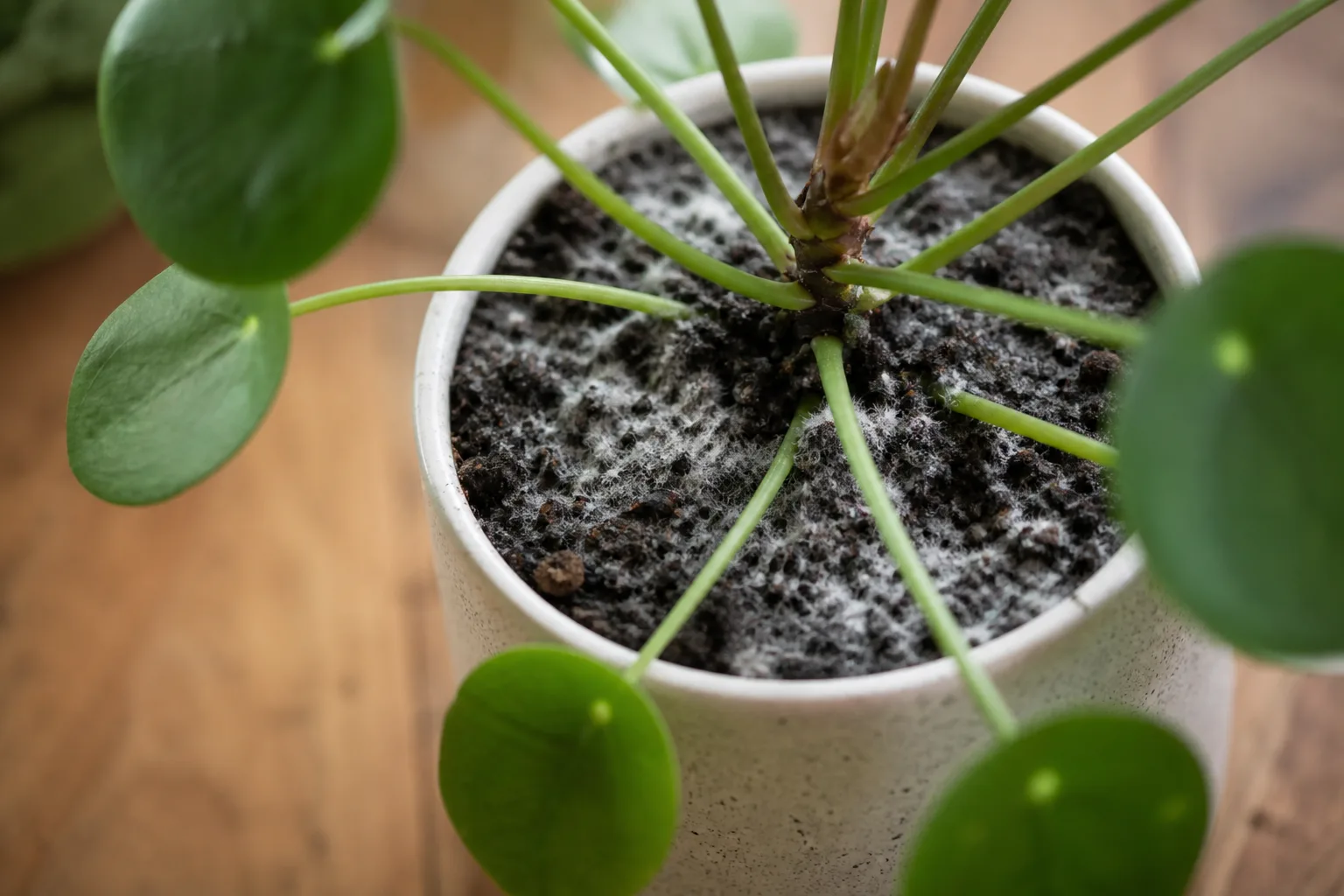
Mold on Soil on Pilea Peperomioides: Causes, Checks & Fixes
This guide covers mold on soil on Pilea Peperomioides. See also the general Mold on Soil guide, watering, and light pages for this plant.
Mold on Soil on Pilea Peperomioides: Causes, Checks & Fixes
Quick answer
White or gray fuzzy growth on Pilea peperomioides soil is usually harmless saprophytic fungus feeding on organic potting mix-not a coin-leaf disease. Green film on the surface is often algae from the same chronically moist conditions. Your Chinese money plant’s round pancake leaves often look perfectly healthy while only the top of the mix stays damp for days.
First step: let the top inch (2.5 cm) of mix dry completely, then scrape off visible mold with a spoon and discard it in the trash. Do not mist the soil or pour water on day one. Surface mold is a moisture signal; fixing how fast the pot dries prevents return. For your routine dry-down rhythm, see the watering guide.
What mold on soil looks like on Pilea Peperomioides
Typical saprophytic mold
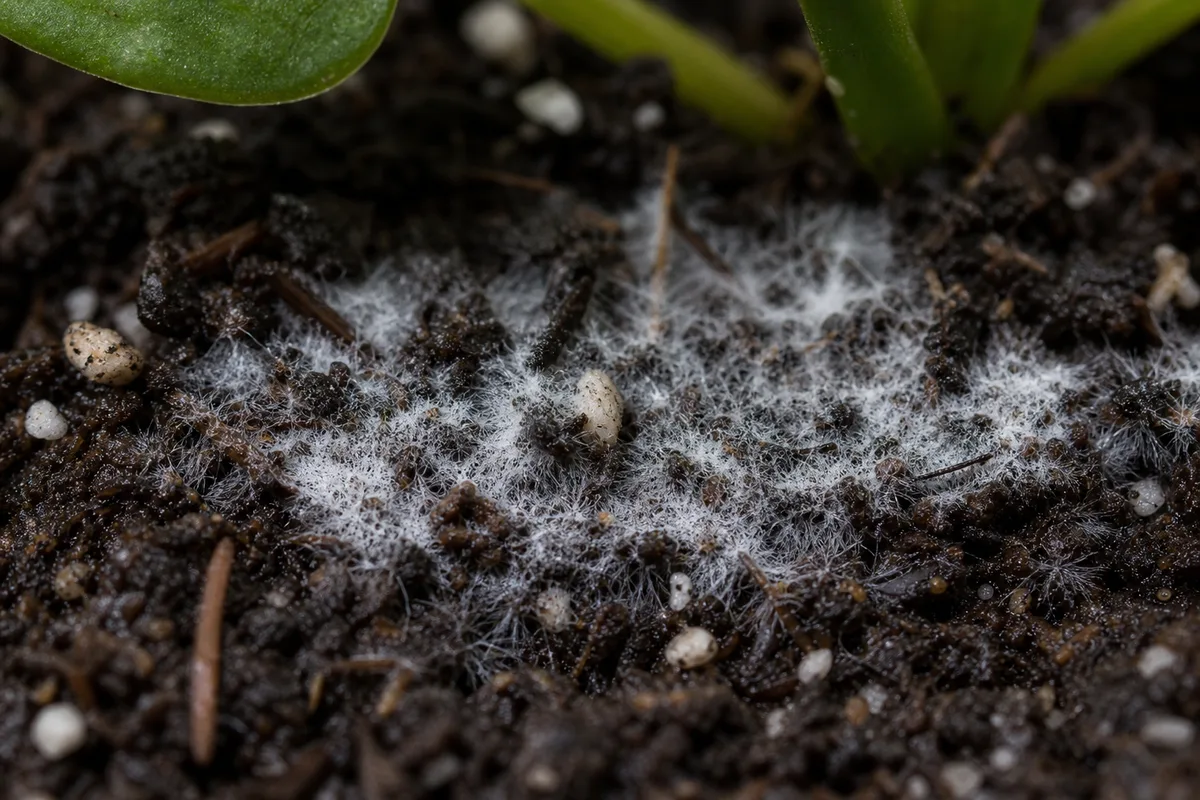
Mold on Soil symptoms on Pilea Peperomioides - compare with healthy tissue on the same plant.
- White, gray, or tan fuzzy patches on the soil surface
- Thread-like growth spreading across damp topsoil
- Light musty smell near the pot when growth is heavy
- Coin leaves, long petioles, and the central stem look normal unless roots are already struggling
Green surface film (often algae)
- Smooth green layer on soil and sometimes the pot rim
- Appears in low light with constant surface moisture
- Still points to wet surface conditions, not leaf pathogens
Companion signs on pilea
- Fungus gnats running across the soil when you water or bump the pot
- Surface mix that feels cool and clings to your finger days after a drink
- Saucer or cachepot water left standing under the nursery pot
- Yellow lower coin leaves or sour smell only if wetness has continued long enough to stress shallow roots
Pilea does not develop mold patches on living coin leaves when this is a soil-surface issue. Yellowing, limp leaves on wet soil, or a soft stem base mean the wet conditions have moved past cosmetic mold into overwatering or root rot territory.
Why Pilea Peperomioides gets mold on soil
Pilea peperomioides is an upright herb with peltate coin leaves on long petioles and a relatively shallow, spreading root ball-not a deep taproot you can bury in a large decorative pot. Mold needs a persistently wet, organic surface layer, not high air humidity alone.
Frequent light top-waters
Many pilea owners give small sips every few days instead of one full soak when the top inch dries. That keeps peat and bark near the surface damp while deeper mix may never cycle properly-enough for saprophytic fungi to colonize the top layer while coin leaves still look perky. The plant reads fine; the soil surface does not.
Oversized pots and cachepot traps
Gift pots two sizes too large hold moisture at the centre while the rim looks merely damp. A decorative cachepot without drainage lets the inner nursery pot sit in standing water for days-common on pilea shelves and a setup that also invites gnats and rot. NC State Extension lists good drainage and moist but well-drained mix as requirements; “moist” does not mean constantly wet at the surface.
Low light and winter slow-growth
Dim corners slow transpiration so mix stays wet longer even when foliage looks fine. In winter slowdown, pilea growth slows and needs less water while the same pot holds moisture longer-continuing summer watering frequency in cool months is a frequent mold trigger. The watering guide uses starting ranges of every 7–10 days in bright active growth and 14–21 days in winter, but always check the top inch, not the calendar.
Rich organic mix and fallen debris
Standard peat-based potting soil feeds saprophytic fungi as bark and peat decompose. Fallen coin leaves on the surface add more organic food. Yellow mushrooms (Leucocoprinus birnbaumii, flower pot parasol) may appear in the same wet habitat-they break down dead matter and do not harm living pilea roots, but remove caps if pets or children might ingest them.
Mold on soil does not mean your Chinese money plant is diseased. It means the local environment around the pot has stayed too wet and still for too long.
How to confirm the cause
Work through these checks in order before repotting or reaching for fungicides:
- Location of growth - Fuzzy or green film on soil only confirms surface mold or algae. White cottony clumps on stems and leaf axils point to mealybugs, not substrate fungus.
- Surface moisture - Press a finger into the top inch. If it clings and feels wet several days after watering, moisture is the driver-not random spore luck.
- Pot weight - Lift the container. A heavy pot days after one drink confirms slow drying through the whole column, not just a dry-looking rim.
- Return test - Scrape mold away. If fuzzy growth returns within three to five days on still-wet soil, you have not fixed the environment yet.
- Drainage and cachepot check - Water should exit drainage holes within minutes. Lift the nursery pot out of decorative outer pots after every soak and empty pooled water within 30–60 minutes.
- Decorative layer check - Moss caps, glued stones, or top dressings trap humidity on the soil line where pilea pups emerge.
- Stem and root spot-check - If lower coin leaves yellow or the stem softens at soil level, unpot one side of the root ball. Firm white or tan roots support a dry-down fix. Mushy brown roots mean escalate to root-rot care.
- Gnat check - Small dark flies on the surface or yellow sticky traps catching adults confirm the same wet habitat mold prefers.
If the stem is firm, coin leaves are green, roots feel solid, and mold sits only on damp surface mix, you are dealing with saprophytic surface growth-not an emergency leaf infection.
Symptom lookalike comparison
| Sign | Saprophytic mold | Mealybugs | Green algae | Mineral crust |
|---|---|---|---|---|
| Where it appears | Fuzzy film across wet soil surface | Cottony clumps on stems, leaf axils, roots | Smooth green layer on soil and pot rim | Hard white/gray deposit on pot rim, not fuzzy |
| Coin leaves | Usually normal early on | May yellow if infestation is heavy | Usually normal | Usually normal |
| Moves with watering disturbance | Spores may puff; growth stays on soil | Pests stay on plant tissue | Algae spreads on wet surface | Crust does not spread like fuzz |
| Shared fix | Dry top inch, scrape, improve light/airflow | Isolate, treat pests on tissue | Same dry-down as mold | Leach salts; review water type |
| Escalation signal | Sour smell, soft stem, yellow leaves on wet mix | Sticky honeydew, widespread clumps | Chronic wetness plus rot signs | Leaf tip burn, not rot |
First fix for Pilea Peperomioides
Let the top inch of mix dry completely, then scrape off the top half-inch to one inch of moldy soil with a clean spoon, bag it, and discard it in the trash-not the compost pile.
Dry-down comes first because scraping wet, actively growing mold is messy and spores resettle quickly on a still-damp surface. Once the top layer is dry, scraping removes visible colonies and organic debris they fed on. Move the pot to brighter indirect light with space around it so air can move. Empty any saucer or cachepot water the same day.
Do not fungicide pilea coin leaves for soil mold. Do not repot on day one unless the mix is compacted, smells sour, or mold returns immediately after scraping on still-soggy soil. Pilea is non-toxic to cats and dogs, but bag discarded moldy soil where curious pets cannot dig.
Step-by-step recovery
After the initial dry-down and scrape:
- Replace the scraped layer - Add a thin cover of dry, fresh potting mix or a light perlite top-dress so spores are not sitting on exposed wet peat.
- Fix the watering rhythm - Water thoroughly only when the top inch is dry. RHS recommends watering pilea once the top few centimetres of compost start to dry out-pair finger checks with pot weight until the habit sticks.
- Empty saucers and cachepots - Never let the nursery pot sit in drained water. Standing water wicks back into the shallow root zone and keeps the surface humid.
- Remove debris - Pick off fallen coin leaves and old pup stems on the soil. They feed saprophytic fungi.
- Improve airflow - Leave space between grouped shelf plants. Stagnant air slows surface drying in pilea displays.
- Brighten placement slightly - Move toward brighter indirect light if the pot lives in a dim corner. Avoid jumping straight to hot direct sun, which can scorch coin leaves.
- Address fungus gnats together - Let the top inch dry between waterings; UMN Extension notes this disrupts gnat larvae in the same wet topsoil mold prefers. See the fungus-gnats guide if flies persist after the surface dries.
- Repot if mold keeps returning - Switch to well-draining mix with perlite, size the pot to the shallow root mass per the repotting guide, and confirm drainage holes are open. Chronic recurrence on compacted, years-old peat usually needs fresh substrate-not more scraping alone.
Bottom-watering can help some growers keep the surface drier while still hydrating roots, but only after you scrape existing mold and confirm water still drains freely.
Recovery timeline
Surface mold should not return within one to two weeks once the top layer dries and airflow improves. Fungus gnat adults may take two to three weeks to taper as you dry the upper mix consistently.
Improvement signs: clean soil surface, no musty smell, firm central stem, and new coin leaves emerging from the crown. Old scraped areas may look bare for a few days-that is normal.
Worsening signs: mold returns within days on still-wet soil, sour smell from drain holes, yellow lower coin leaves spreading, or stems softening at the base while mix feels heavy. Those patterns need root inspection-not another surface scrape alone.
If yellow leaves appear after you correct watering, older damaged coin leaves may drop while new pancakes push from the crown. That lag is normal when roots were briefly stressed but remain mostly firm.
Worked example: A healthy pilea in a 10 cm nursery pot on a north-facing shelf developed white surface fuzz after light top-waters every three days in January. After 10 days without water until the top inch was dry, the owner scraped on day 11, added a thin perlite cap, and moved the pot 30 cm closer to the window. No mold return by week three; firm stem and unchanged coin leaves throughout.
Mistakes to avoid
Do not scrape mold repeatedly without changing moisture habits-spores are always present; visible growth returns when the surface stays wet.
Do not mist pilea soil or leaves to “wash mold away.” Extra surface moisture feeds the problem.
Do not pile decorative stones or moss on wet soil without fixing watering. Covers slow evaporation unless the mix underneath already dries properly.
Do not reach for broad fungicides on healthy pilea foliage. Chemical sprays on coin leaves do not fix a wet substrate and can stress the plant.
Do not assume mold is harmless when saucers stay full, gnats swarm, and lower coin leaves yellow on damp soil-that combination points to chronic overwatering heading toward root damage.
Do not compost scraped moldy soil if pets dig in outdoor beds-bag and trash it instead.
Do not repot into a much larger decorative pot “to fix” mold. Extra volume holds water longer around pilea’s shallow roots.
How to prevent mold on Pilea Peperomioides next time
Match watering to how fast your pot dries in your room, not a fixed weekly schedule. For most indoor pileas, that means watering when the top inch of mix is dry-roughly every 7–10 days in active growth and 14–21 days in winter slowdown per the watering guide.
Use light, well-draining potting mix with added perlite. Repot when peat breaks down and holds water like a sponge.
Size pots to the shallow root ball-not the decorative UFO twice the root mass. Pups sharing one saucer can keep the parent pot wet longer; split or stagger watering when offsets crowd the rim.
Remove decorative moss caps or glued top dressings that trap humidity on the soil line.
Keep fallen coin leaves off the surface. Pilea sheds older lower foliage; that debris is mold food.
Maintain gentle airflow in grouped shelf displays and empty cachepots after every soak.
When to worry
Treat as urgent when mold returns within days after scraping, the mix smells sour, stems soften at the soil line, or coin leaves yellow and wilt while soil feels wet. Unpot, trim mushy roots, and repot in fresh airy mix-the same escalation path as root rot on pilea.
Heavy fungus gnat clouds with stalled new growth on a young pilea also warrant faster dry-down and larval control from the fungus-gnats guide, not only scraping.
A one-time fuzzy patch on otherwise firm stems in a well-drained pot is not urgent. Scrape after dry-down, adjust care, and skip panic repotting.
Practical checks
Urgency check
Urgent: mold plus sour smell, soft stem base, yellow collapsing coin leaves on wet heavy soil, or mold that returns within three days on still-damp mix after two scrape cycles.
Not urgent: a single fuzzy patch on firm upright pilea with dry-able top inch and no gnat swarm.
Best inspection order
Coin-leaf vigor and stem firmness → top-inch moisture and pot weight → saucer or cachepot standing water → light level and airflow → return of mold after scrape → gnat presence at rim → roots only if wet-soil decline continues.
Related Pilea Peperomioides guides
- Watering - top-inch dry rule and seasonal rhythm
- Overwatering - wet-soil yellowing and dry-down first fix
- Root rot - mushy roots after chronic wetness
- Fungus gnats - flies that share wet topsoil with mold
- Mealybugs - white clumps on stems, not soil fuzz
- Wilting - wet-soil vs dry-soil wilt split
- Soil - perlite blend and drainage
- Repotting - when fresh mix beats another scrape
- Pilea overview - species ID and care hub
Conclusion
Mold on Pilea peperomioides soil is an environmental signal: the top of your mix has stayed wet, organic, and still long enough for harmless saprophytic fungi to become visible. Dry the surface, scrape after the top inch is dry, improve light and airflow, and fix drainage before you repot or spray. Coin leaves often mask early wetness-confirm stem firmness and root health, treat wet-soil emergencies early, and leave fungicide on the shelf unless a different diagnosis appears on the foliage itself.