Best Soil for Pilea Peperomioides: Mix, Drainage & Repotting
Best Soil for Pilea Peperomioides: Mix, Drainage & Repotting
Best Soil for Pilea Peperomioides: Mix, Drainage & Repotting
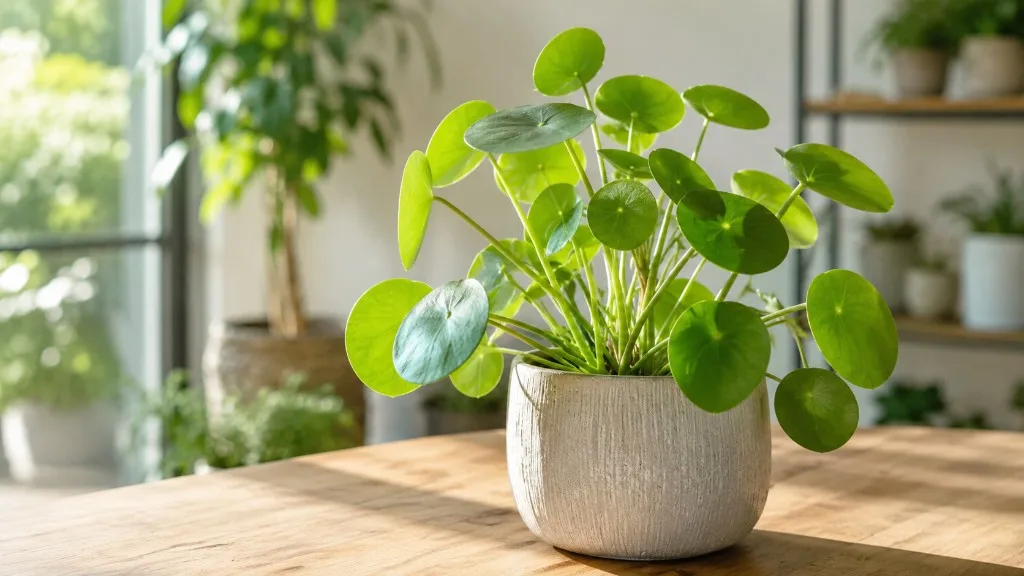
Pilea peperomioides soil is not a mystery blend - it is a drainage problem dressed up as a recipe. The Chinese money plant evolved on shaded moist rocks in southwestern China, where water runs off fast and roots breathe between brief wet periods. Indoors, that biology means a well-draining peat-free houseplant mix amended with perlite, a pot with a real drainage hole, and a root zone that dries predictably between waterings. Get the mix wrong and you get the pattern every pilea owner dreads: firm coin leaves one week, yellow lower leaves and a sour smell the next - often while the surface still looks merely damp.
This guide covers the exact mix ratio, ingredient substitutions, how to test drainage in one minute, pot sizing for upright stems and offset pups, when to refresh versus full repot, root-rot rescue steps, and how Pilea peperomioides soil needs differ from Moon Valley pilea. For watering rhythm after you fix the mix, see the watering guide. For step-by-step repot procedure, see the repotting guide.
Quick Answer: The Best Pilea Soil Mix at a Glance
Use standard peat-free indoor potting mix plus 15–20% perlite by volume - a workable recipe is four parts quality bagged houseplant mix to one part perlite, blended dry before potting. NC State Extension recommends moist, well-drained potting mix with loam or sand texture and good drainage. Target pH 6.0–7.0 as a hobbyist goal; the species tolerates neutral pH from 6.0–8.0 per NC State. Every pot needs a drainage hole. Go up one pot size at repot - not three. If mix smells sour or water sits on the surface after watering, refresh or repot before adjusting light or fertilizer.
| Component | Volume ratio | Role |
|---|---|---|
| Peat-free indoor potting mix | 4 parts (80%) | Moisture retention, nutrients |
| Perlite | 1 part (20%) | Aeration, faster dry-down |
| Optional: coarse orchid bark | Up to 10% of total | Extra pore space in humid rooms |
Why Soil Matters for Rocky-Forest Pileas Indoors
Most pilea deaths are not about the wrong brand of bagged mix. They are about physics: how long water stays in the pore spaces around fibrous roots after you pour from the watering can. Pilea peperomioides is a herbaceous perennial in Urticaceae with a single upright central stem, peltate coin leaves on long petioles, and offsets (pups) emerging from the base and sometimes from rhizomes just below the soil line. The root system is relatively shallow and spreading - not a deep taproot you can bury for stability.
From shaded rock faces to apartment pots
In the wild, the species grows on shaded moist rocks in forests at 1500–3000 meters in SW Sichuan and W Yunnan. Rock surfaces drain within minutes. Organic debris is thin. Air reaches roots constantly. Your apartment pot is the opposite: limited volume, no side drainage, and a tendency to stay wet in the center long after the top inch feels dry.
Translate that habitat indoors and you get three non-negotiables for the soil system. Fast drainage so oxygen returns between waterings. Moderate moisture retention so shallow roots do not desiccate in 24 hours. Stable structure so the mix does not compact into a brick after six months of peat breakdown and salt accumulation. The RHS warns that overwatering in poorly draining compost can lead to root rot - and NC State lists root rot as a primary problem when overwatered. Soil is the lever that makes your watering habits survivable or lethal.
Editorial note (March 2026): A 4-inch pilea in shop-heavy peat mix was refreshed with four-to-one perlite blend in a terracotta pot; dry-down dropped from roughly nine days to five in the same east window - confirming that mix texture, not calendar watering, was the bottleneck.
Best Soil Mix for Pilea Peperomioides
The baseline mix that works for most homes: quality peat-free all-purpose indoor potting mix + perlite. You are not building a succulent substrate and you are not using garden soil from the yard. You want something that behaves like loam with sand-like drainage - which is exactly how NC State describes ideal texture.
The four-parts-to-one-perlite recipe card
| Ingredient | Amount (4-inch pot) | Amount (6-inch pot) | Notes |
|---|---|---|---|
| Peat-free houseplant mix | ~2.5 cups | ~5 cups | Avoid heavy moisture-control blends |
| Perlite | ~0.6 cup | ~1.25 cups | Rinse dust off; wear a mask when dry |
| Total | ~3 cups | ~6 cups | Blend dry; should feel light, not sticky |
Perlite is heat-expanded volcanic glass. NC State’s container handbook notes perlite improves drainage and replaces heavier gravel. For root-rot-sensitive plants, extension guidance recommends limiting dense components and including perlite for greater air space - pilea fits that profile even though it is not a cactus.
Step-by-step blend assembly
Measure by volume, not weight. Scoop four level containers of potting mix into a bucket. Add one container of perlite. Mix with dry hands or a trowel until perlite is evenly distributed - no white streaks, no dense clumps. The finished blend should crumble when squeezed and fall apart when you open your fist. If it forms a tight ball, add more perlite.
Moisten slightly only if you are potting immediately; otherwise keep dry until use. Fill the pot so the central stem sits at the same soil line as before - never bury the stem deeper to fix lean. Water once lightly to settle mix, then let the top inch dry before the next full soak per the watering guide.
Ingredient Substitutions and Bagged Mix Choices
Not every shelf offers the same components. Use this table when substituting:
| Instead of… | Use… | Trade-off |
|---|---|---|
| Peat-based mix | Coco coir–based peat-free mix | Coir holds moisture longer; reduce watering checks |
| Standard mix + perlite | 50% cactus mix + 50% houseplant mix | Faster dry-down; water slightly more often |
| Perlite | Pumice (similar size) | Heavier; excellent aeration |
| Perlite | Coarse orchid bark (up to 10%) | Bark decomposes; refresh sooner |
| Bagged “indoor plant” mix alone | Same mix + 15–20% perlite | Most shop mixes still need perlite for pilea |
Cactus mix alone drains well enough that many growers use it without amendment for pilea, but the faster dry-down means you must pay closer attention in bright summer light. Straight garden soil is a hard no indoors - it compacts, carries pests, and stays wet too long in a closed pot.
If you tend to overwater, push perlite toward 25%. If you underwater chronically, 15% with a plastic pot may be safer than cactus blend. The plant forgives a range; it does not forgive stagnant anaerobic mix.
Drainage Speed and the One-Minute Check
Drainage is not a single event at repotting. It is a ongoing property of the mix-porosity system. After a full watering, excess water should exit the drainage hole within seconds and the surface should not hold a puddle for more than a minute.
One-minute drainage check: Water until runoff appears. Watch the surface. If water pools longer than sixty seconds, or runs down the inside wall of the pot without wetting the center, the mix has compacted or the root ball has shrunk away from the sides. Either condition means roots are not getting even moisture and oxygen.
A drainage hole in the bottom is non-negotiable for long-term indoor culture. University of Minnesota Extension emphasizes that containers need drainage holes so excess water escapes - otherwise salts and moisture accumulate at the bottom even when the surface looks fine.
Cachepot trap: Decorative outer pots without holes are fine only when the inner nursery pot lifts out for watering and never sits in pooled runoff. A pilea in a sealed ceramic cylinder can have dry-looking top soil while the bottom inch stays sodden for weeks - prime conditions for fungus gnats and root rot.
Bottom gravel myth: A layer of stones does not improve drainage. It creates a perched water table where fine mix meets coarse stones, often keeping the root zone wetter, not drier. Fix drainage with perlite and a hole, not rocks.
Pot Choice for Upright Stems and Offset Pups
Pot geometry matters as much as mix recipe for P. peperomioides. The coin-leaf canopy is top-heavy; the stem is a single column; pups emerge from a shallow spreading root zone. A wide, relatively shallow pot stabilizes the plant better than a tall narrow cylinder and dries more evenly.
| Pot type | Dry-down speed | Best for |
|---|---|---|
| Terracotta | Fast | Overwaterers; bright rooms |
| Unglazed ceramic | Medium-fast | General use |
| Plastic nursery | Medium | Underwaterers; stable humidity |
| Sealed decorative (no hole) | Unpredictable | Only with removable inner pot |
Size up one increment at repot - typically 1–2 inches (2.5–5 cm) additional diameter. An oversized pot holds water the root system cannot use, especially around the central stem where no roots actively pull moisture yet.
Pup-trade-off repot sizing
Here is the trade-off most soil articles skip: a slightly root-bound healthy pilea often produces more pups. Jumping to a much larger pot too early can delay offset production while the plant colonizes empty soil volume with roots. That is fine if you want a single sculptural stem; it frustrates growers who bought the plant to propagate.
If pups are the goal, let a vigorous plant stay snug but not suffering - roots visible at drain holes, but water still penetrates the center. If the pot is overcrowded with four or more mature offsets, repot and split per the propagation guide even if the mix is not yet degraded.
pH and Mineral Buildup in the Root Zone
Pilea peperomioides tolerates acid to neutral soil pH - NC State lists acid below 6.0 and neutral 6.0–8.0. Most peat-free bagged mixes already land near 6.0–7.0, which is the practical hobbyist target. You rarely need to measure unless you see persistent problems despite correct watering and light.
White crust on the soil surface or pot rim usually means fertilizer salt or hard-water mineral buildup. Flush the pot with plain water equal to roughly twice the pot volume, let it drain fully, and skip the next feeding. If crust returns within a month, refresh the mix at repot rather than stacking more fertilizer.
Leaf tip burn with otherwise correct watering can follow salt stress or fluoride sensitivity in a few houseplant species; pilea is not the most sensitive, but flushing helps. Do not add lime or sulfur to chase pH unless you have a meter reading and a clear reason.
When to Refresh the Mix or Repot
Organic potting components break down. Peat and coir compress. Perlite does not disappear, but roots displace it. Refresh when you see these signals:
| Symptom | Likely soil issue | Action |
|---|---|---|
| Water runs through in seconds | Root ball displaced mix | Full repot with fresh blend |
| Surface stays wet 3+ days | Compaction / overpotting | Repot or add perlite at refresh |
| Sour or swampy smell | Anaerobic breakdown | Emergency repot; trim rotted roots |
| White crust + tip burn | Salt buildup | Flush; repot if recurring |
| Slow growth despite good light | Tired, depleted mix | Spring repot one size up |
| Many crowded pups | Competition, not always bad mix | Repot + optional pup split |
Seasonal timing: NC State notes propagation is best in spring or early summer during active growth - the same window suits mix refresh and routine repot. Early spring gives a full bright season to recover. Avoid repotting a stressed winter plant unless the mix is clearly failing or roots are rotting.
Top-dress versus full repot: Scraping the top inch and replacing with fresh perlite-amended mix is a stopgap when repot timing is wrong seasonally. It does not fix a compacted root ball. Full repot procedure lives on the repotting guide.
Soil Mistakes to Avoid
Using garden soil indoors. It compacts, introduces pathogens, and holds water like a sponge in a closed container.
Oversized pots “so the plant can grow into it.” Unused wet volume around an upright stem is how healthy pileas develop chronic root stress.
Burying the stem to fix lean. The soil line should stay where the stem was firm and green. Buried tissue rots. Fix lean with light and rotation per the light guide.
Relying on moisture-control crystals without checking actual dry-down. Gels can keep the center wet while the surface reads dry.
Repotting on day one after purchase without evidence of failure. Quarantine and learn the pot’s dry-down first - see the overview first-month guidance.
Changing soil, pot, location, and fertilizer the same week. You will not know which variable helped or hurt.
Root-Rot Rescue: Soil and Repot Steps
When coin leaves droop on wet, heavy soil and the drain holes smell musty, you have a soil emergency - not a thirst problem. Stop watering immediately.
- Unpot gently. Rinse old mix from roots with lukewarm water.
- Inspect roots. Firm and white or cream = healthy. Brown, mushy, hollow = remove with clean scissors until only firm tissue remains.
- Air-dry the trimmed root ball 1–2 hours on paper towel if rot was advanced.
- Repot smaller if needed. Choose a clean pot with a drainage hole sized to remaining roots - not a bigger decorative upgrade.
- Fresh mix only: four-parts houseplant mix to one-part perlite. No reused sour soil.
- Water lightly once, then let the top inch dry before the next soak. No fertilizer for four to six weeks.
If rot reached the stem base, salvage healthy pups with clean roots per the propagation guide. Full diagnostic detail is on the root-rot problem page. Early wet soil without mushy roots may respond to dry-down fixes on the overwatering page.
Practical Checks for Soil Health
Run these three checks monthly - they take less time than replacing a dead plant.
Drainage check: After watering, water should leave the hole freely. Pooling on the surface means compaction or hydrophobic peat.
Smell check: Lift the pot and sniff the drain hole. Earthy is fine. Sour, eggy, or swampy means anaerobic conditions.
New-growth check: Firm new coin leaves at the top confirm the root zone is working. Widespread yellow lower leaves on wet mix mean investigate soil before buying fertilizer.
Stem wobble check: A firm upright stem at the soil line indicates healthy anchorage. A loose stem in wet mix often means root loss.
Weight check: Lift the pot when fully dry versus just watered. Learn your container’s light weight so you can skip the calendar.
Pilea Peperomioides vs. Moon Valley Soil Confusion
Shops often group “pilea” species together, but soil needs differ. Pilea peperomioides (Chinese money plant) wants fast drainage with moderate retention - the perlite-amended houseplant mix above. Pilea mollis ‘Moon Valley’ is a bushy, crinkled-leaf species that prefers higher humidity and slightly more moisture-retentive mix without going soggy.
| Trait | P. peperomioides | Moon Valley (P. mollis) |
|---|---|---|
| Growth form | Single upright stem + pups | Mounding, textured leaves |
| Mix priority | Drainage-first | Moisture + humidity balance |
| Perlite | 15–20% standard | Often less; more peat/coir |
| Common mistake | Oversized wet pot | Dry air + compacted mix |
If you bought the wrong plant, identify by leaf shape: perfectly round peltate coin leaves on long petioles = P. peperomioides. Deeply quilted, veined leaves on a bushy mound = Moon Valley. The soil recipe is not interchangeable.
When to use this page vs other Pilea Peperomioides guides
- Pilea Peperomioides overview - Start here for whole-plant context before deep-diving this topic.
- Pilea Peperomioides problems hub - Jump to symptom-specific fix guides when this care topic does not resolve the issue.
- Root Rot on Pilea Peperomioides - Escalate here when soil adjustments are not enough.
- Mold on Soil on Pilea Peperomioides - Escalate here when soil adjustments are not enough.
Related Pilea Peperomioides guides
- Pilea Peperomioides overview
- Pilea Peperomioides watering
- Pilea Peperomioides light
- Pilea Peperomioides propagation
- Pilea Peperomioides fertilizer
- Pilea Peperomioides repotting
- Root Rot on Pilea Peperomioides
- Mold on Soil on Pilea Peperomioides
- Pilea Peperomioides problems
Conclusion
Pilea peperomioides rewards a simple soil system: four parts peat-free houseplant mix to one part perlite, a drainage hole, a pot matched to shallow roots and a top-heavy stem, and refresh when compaction or sour smell appears. The wild plant grew on fast-draining rock; your job is to recreate that oxygen cycle in a plastic or terracotta container - not to drown roots in heavy shop mix or oversized pots.
Get the blend and container right, pair it with the dry-down rhythm in the watering guide, and most coin-leaf plants stay firm for years while producing pups to share. Get it wrong and no amount of rotation or fertilizer will fix yellow leaves on wet soil. Soil is the system everything else depends on.