Yellow Leaves on Pilea Peperomioides: Causes, Checks & Fixes
Quick answer
Yellow leaves on Pilea Peperomioides are a symptom, not a diagnosis. One or two yellow lowest coin leaves on a firm upright stem is often normal senescence; widespread yellowing on wet, heavy soil points to overwatering or root rot; pale yellow-green upper leaves on a stretched stem mean low light. First step: probe the top inch of mix and lift the pot before watering, fertilizing, or repotting.
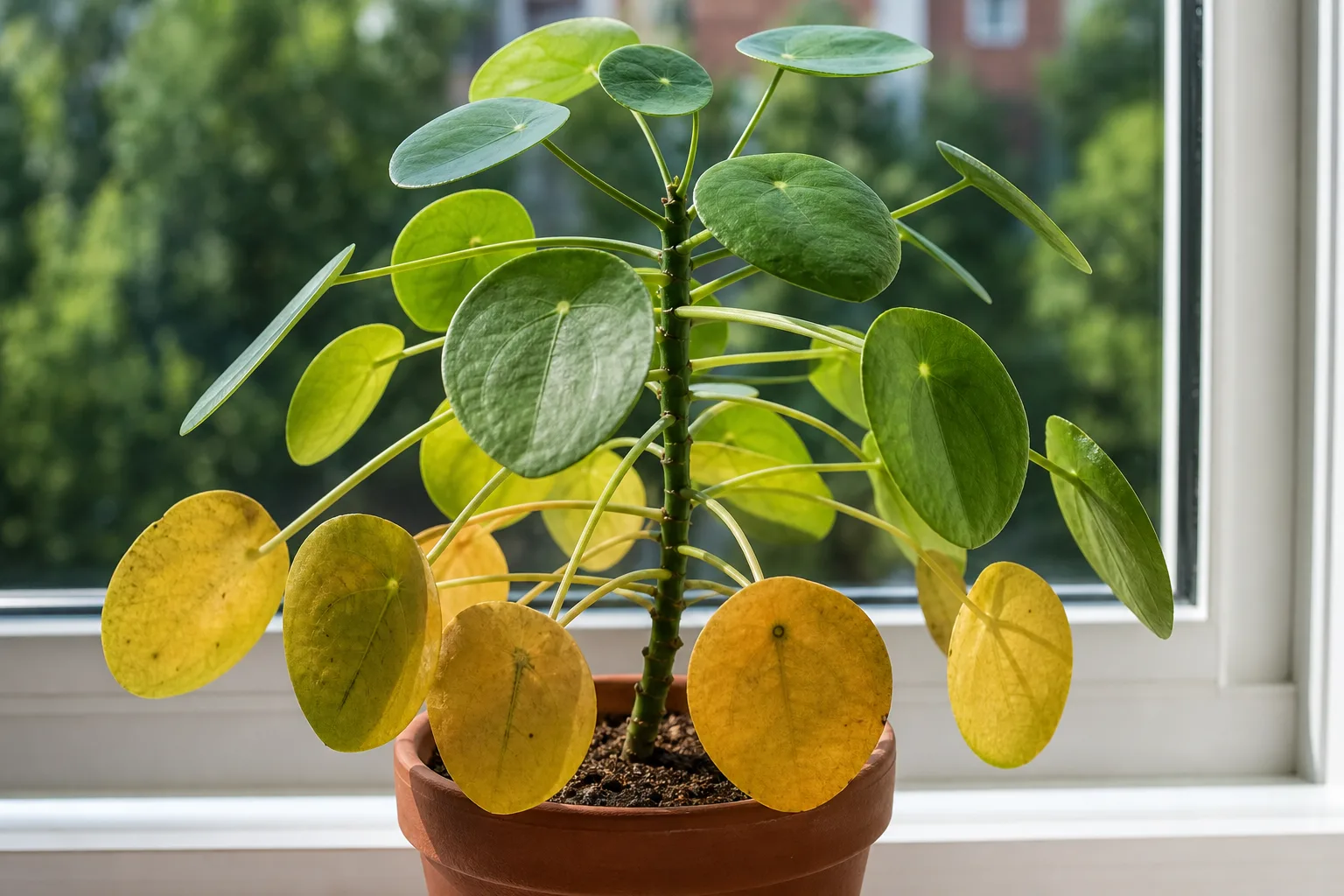
Yellow Leaves on Pilea Peperomioides: Causes, Checks & Fixes
This guide covers yellow leaves on Pilea Peperomioides. See also the general Yellow Leaves guide, watering, and light pages for this plant.
Yellow Leaves on Pilea Peperomioides: Causes, Checks & Fixes
Quick answer
Yellow leaves on Pilea Peperomioides (Pilea peperomioides) are a symptom, not a diagnosis. Chinese money plants show stress on their coin-shaped peltate leaves and upright central stem in patterns that tell you which care balance failed-if you read them in order.
First step: probe the top inch of mix and lift the pot. One or two fully yellow lowest coin leaves on a firm upright stem with healthy new growth above is often normal senescence-wait and watch, do not reflexively water or fertilize. Soft yellow lower leaves on wet, heavy soil points to overwatering or advancing root rot. Pale yellow-green upper coin leaves on a long bare stem means not enough light-not a nutrient deficiency. Crisp yellow leaves on a light, dry pot suggests underwatering.
The most dangerous indoor combination is dim light plus frequent watering: the plant transpires slowly, mix stays cold and wet for weeks, and NC State Extension notes Pilea peperomioides is susceptible to root rot if overwatered. Fix dry-down and brightness together when both patterns appear.
Do not stack repot, prune, feed, and pesticide on the same day. Pick one branch from the checklist below. The Pilea overview covers full care context; this page is the deep diagnostic for yellow foliage.
What yellow leaves look like on Pilea Peperomioides
Pilea’s upright architecture makes which leaves yellow first the primary clue. Lower coin leaves sit on long petioles along a single central stem; new pancakes open at the crown. Learn these five patterns before you treat:
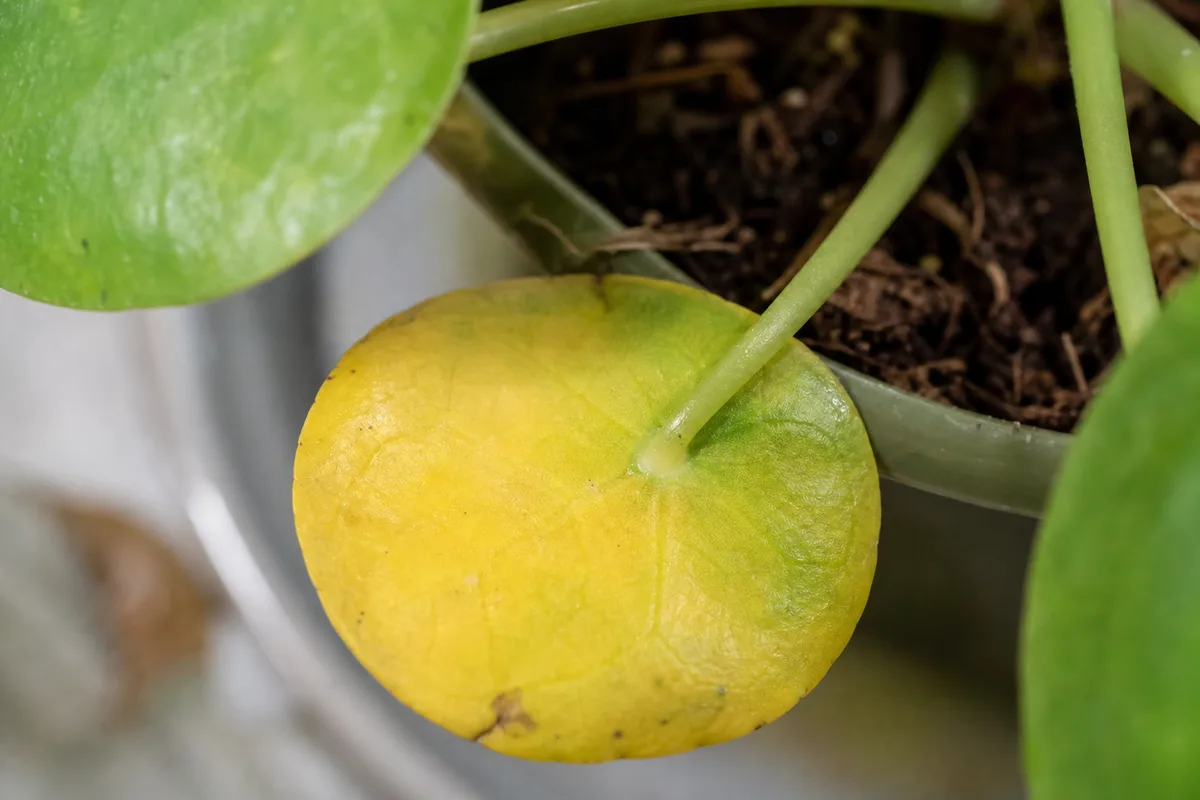
Yellow Leaves symptoms on Pilea Peperomioides - compare with healthy tissue on the same plant.
1. One or two yellow lowest coin leaves (normal senescence) - The oldest pancakes at the soil line turn fully yellow and may drop over weeks while the stem stays firm and two or more new coin leaves at the top stay domed and green. This is normal aging on a maturing Pilea-not root rot.
2. Soft yellow lower leaves on wet, heavy soil (overwatering / root stress) - Yellowing climbs from the bottom up while upper leaves still look green briefly. Coin leaves feel soft or limp despite dark, moist mix. The pot stays noticeably heavy many days after watering. A sour smell from drain holes or fungus gnats over wet surface often appear together. Wilting on wet soil is a hallmark-not thirst.
3. Crisp yellow leaves on a light, dry pot (underwatering) - Coin leaves turn yellow-tan and papery, sometimes with brown edges, while mix pulls from the pot wall. The container feels very light. Petioles droop and the mound collapses-but the plant often perks within hours after a thorough soak, unlike wet-soil wilt.
4. Pale yellow-green upper coin leaves on a stretched stem (low light) - New growth at the crown is small, pale, or yellow-green while lower leaves may still look acceptable. Long bare internodes between tiny coins and a strong lean toward the window accompany this pattern. Full yellowing on older leaves often follows once the plant cannot maintain pigment.
5. Sudden yellowing after cold exposure - Leaves dull or yellow after the pot sat on a cold winter window ledge, near an AC vent, or in sustained temperatures below about 10°C (50°F). Growth stalls. This traces to temperature stress, not fertilizer deficiency.
Sun scorch lookalike (opposite fix): Bleached white or tan patches and crisp brown edges on the window-facing side of coin leaves mean too much direct sun-not the soft yellow of overwatering. Move back or diffuse light instead of watering less.
Real-world example: senescence vs wet-soil stress
A firm upright Pilea in a bright east window showed one fully yellow lowest coin leaf over three weeks while two new green pancakes opened at the crown. Top-inch mix dried on a normal seven-day rhythm; pot weight was moderate-not heavy. That pattern matched normal senescence: the spent leaf was snipped, no care change was made, and no further yellowing appeared for two months.
A second plant in a dim hallway showed four lower coin leaves yellowing within ten days on wet, heavy mix that had not dried in two weeks. Stem base still felt firm-early overwatering, not advanced rot. Stopping water until the top inch dried and moving to brighter indirect light stopped spread; one yellow leaf dropped, and a firm new coin leaf opened within eighteen days. If the stem base had softened or mix smelled sour, root inspection per the root rot guide would have been the next step-not another soak.
Why Pilea Peperomioides gets yellow leaves
Yellow foliage means one of Pilea’s core balances failed-watering rhythm, light, temperature, or natural leaf turnover-not a random leaf disease.
Overwatering and root stress - The most common indoor cause. Chronic dampness suffocates roots before every coin leaf fades. Calendar watering, oversized gift pots, heavy peat mix without perlite, and saucers left full keep roots oxygen-starved while the stem still looks upright for weeks.
The dim-light plus wet-soil trap - A Pilea in a bright summer window may need water every seven to ten days. The same plant in a January hallway may hold moisture for two weeks or longer because transpiration slows. The RHS advises pileas usually need less water in winter when growth tends to slow. Watering every Sunday without a soil check in a dim room produces yellow lower leaves on soil that never dries-labeled overwatering that starts when light slowed metabolism. Fix both dry-down and brightness.
Underwatering - Less common when owners fear root rot, but real in bright summer windows and small terracotta pots that dry in three to four days. Repeated drought cycles yellow and crisp lower coin leaves while the pot feels light as foam.
Insufficient light - Pilea is not a low-light plant. It grows best in bright light, but not direct sun. In shade, new coin leaves shrink and pale; older leaves yellow as the plant reallocates resources. Leggy stretch toward windows often coincides with the same dim conditions that extend wet cycles-see leggy growth when bare stem length is the main complaint.
Normal lower-leaf senescence - Maturing Pileas naturally shed one or two oldest coin leaves at the base while the crown keeps pushing new growth. Because leaves are held on long petioles along an upright stem, this aging is visually obvious before whole-plant collapse-use it to separate calm monitoring from emergency root checks.
Cold drafts - Sustained exposure below about 10°C (50°F) from winter glass or AC blasts yellows foliage on this subtropical species. Pair sudden yellowing with location history before blaming pests or fertilizer.
Nutrient stress (secondary) - Chronic overwatering or low light cause yellowing far more often than fertilizer lack on indoor Pileas. NC State recommends light feeding in spring and summer only-not winter doses on a stressed plant. Do not feed yellow leaves by default.
Lookalike symptoms to rule out
Use this table before changing multiple care variables at once:
| Pattern | Soil / pot | Leaf texture | New crown growth | Likely cause | Start here |
|---|---|---|---|---|---|
| One or two yellow lowest leaves | Normal dry-down | Firm yellow leaf | Firm green coins | Normal senescence | Snip; watch crown |
| Soft yellow climbing from base | Wet, heavy | Limp, soft | Still green briefly | Overwatering / root stress | Overwatering |
| Crisp yellow, tan edges | Dry, light | Papery, crisp | Slow or wilted | Underwatering | Underwatering |
| Pale small new coins, long stem | Variable | Firm | Pale, tiny | Not enough light | Not enough light |
| Sudden yellow after cold night | Normal | Firm to limp | Stalled | Cold draft / low temp | Move from draft |
| Bleached patches, brown crisp edges | Normal | Crisp, sun-side | May scorch | Too much direct sun | Diffuse or move back |
When several rows match: Overwatering plus dim light is the most common pair indoors. Fix dry-down and drainage first if soil is wet; add brightness if new coin leaves stay pale after the pot cycles correctly.
How to confirm the cause
Work through these six checks in order. Stop when one branch clearly fits-do not stack fertilizer, repotting, and light moves on the same day.
-
Senescence count - How many lowest coin leaves are fully yellow? One or two on a firm stem with healthy crown growth fits normal aging. Three or more within a week, or yellowing climbing the stem on wet soil, needs a stress branch.
-
Moisture at the top inch - Insert a finger or dry skewer to the first knuckle. Cool, clinging soil on a heavy pot with soft yellow lower leaves strongly suggests overwatering. Dusty dry mix on a light pot with crisp yellow leaves suggests drought. Water when the top few centimetres of compost start to dry out-not on a fixed calendar.
-
Pot weight test - Lift the container after a thorough watering once to learn “heavy,” then lift again when you suspect trouble. Heavy + limp leaves = wet-soil stress. Light + wilt = thirst. This split is more reliable than leaf color alone because coin leaves can stay partially green while roots fail underground.
-
Which leaves yellow - Lower only on firm stem often means senescence or early overwatering. Upper pale coins on a stretched stem means light. Whole plant at once on wet soil means advanced root stress-inspect roots.
-
New crown leaf quality - Compare the youngest unfurling coin to healthy nursery stock. Small, pale, or yellow-green new growth means light is the primary limiter even if lower leaves have not yellowed yet. See the light guide for placement targets.
-
Root spot-check (wet-soil branch only) - If steps 2–3 confirm soggy mix and multiple leaves yellow, slide the plant partway out. Firm white or tan roots may recover from dry-down alone. Brown, mushy roots and sour smell mean escalate to the root rot guide before repotting into fresh mix.
First fix for Pilea Peperomioides (by confirmed cause)
Pick one branch. The first fix is always a single clear action-not a bundle of repot, feed, prune, and spray.
Normal senescence (one or two lowest yellow leaves, firm stem, healthy crown)
Snip the fully yellow leaf at the petiole base and discard it. No repot, no fertilizer, no watering change. Watch the top two coin leaves for the next month. If only one lowest leaf yellows over weeks, you are done.
Overwatering (wet, heavy pot, soft yellow lower leaves)
Stop watering until the top inch of mix is completely dry and the pot feels noticeably lighter-often one to three weeks for a saturated pot in a cool dim room. Empty saucers and cachepots. Move to brighter indirect light if the plant sits in shade-light helps the mix dry safely. Do not fertilize. Multiple yellow leaves in one week, sour smell, or soft stem base → inspect roots per overwatering and root rot.
Underwatering (light pot, crisp yellow leaves, dry mix)
Water thoroughly until excess runs from drainage holes, then empty the saucer within 30 minutes. Resume checking when the top inch dries-not on a fixed calendar. Full branch: underwatering guide.
Not enough light (pale upper coins, long bare stem, small new growth)
Move the pot to the brightest suitable indirect spot-east or west window, set back from harsh south sun in summer-and rotate a quarter turn weekly. Change nothing else for two to three weeks. Do not increase watering in a dim corner; fix light first. Larger green coins at the crown prove the fix; old stretched internodes will not shrink. Full workflow: not enough light.
Cold draft (sudden yellow after cold exposure)
Move the pot away from cold glass, AC vents, and drafty doorways and keep the room above 10°C (50°F) consistently. Hold watering steady until new crown growth resumes.
Dim light plus wet soil (both patterns present)
Stop watering until the top inch dries, move to brighter indirect light, and empty standing saucer water-all three together. This combination is how root rot starts on Pilea; treating only water or only light leaves the other stressor active.
Recovery timeline
| Stage | What to expect |
|---|---|
| Days 1–3 | Stop the wrong habit (dry-down, soak, light move, or draft removal)-no visible reversal yet |
| 1–2 weeks | Wet-soil cases: mix cycles dry; crown holds firm green coins if roots stayed intact |
| 2–4 weeks | Light correction: next one to two coin leaves emerge larger and greener; senescence: spent leaf drops, no new yellowing |
| 1–2 months | Plant looks stable; occasional single bottom-leaf senescence may continue normally |
| 3+ months | Full display recovery if light and watering stay aligned; old yellowed blades never re-green |
Judge success on firm new coin leaves at the crown-not on lower pancakes that already yellowed. Fully yellow leaves will not turn green again; they drop or you remove them. Mild overwatering cases often stabilize within one to two care cycles once dry-down and light match the season.
What not to do
- Do not reflexively water when only bottom leaves yellow on a firm stem - That pattern is often senescence or early stress you can monitor; extra water on an already wet pot worsens root decline.
- Do not fertilize yellow leaves by default - Stressed roots cannot use nutrients; salt buildup from overfeeding can also yellow foliage. Feed only after moisture and light are stable and new growth looks firm for two weeks.
- Do not increase watering when upper leaves look pale in a dim corner - Fix light first; extra water on a slow-transpiring Pilea worsens root stress.
- Do not repot on day one unless roots are mushy or mix is clearly failing. Repotting a wet stressed plant without drying and trimming rot spreads damage.
- Do not stack repot, prune, feed, and pesticide the same day - One targeted correction first; otherwise you never know what helped.
- Do not assume all yellow leaves share one cause - Senescence, drought, rot, and low light can overlap; use the six-step checklist before acting.
Pet note: Pilea peperomioides is non-toxic to cats and dogs per the ASPCA-still discard removed yellow leaves where pets cannot reach them; ingestion can cause mild stomach upset in quantity.
How to prevent yellow leaves on Pilea Peperomioides
- Water on dry-down, not calendar - Check the top inch of mix; see the watering guide for seasonal rhythm. Stretch intervals in winter and dim rooms.
- Give bright indirect light - Pilea is not a dark-shelf plant. Budget brightness or a grow light before coins pale and stems stretch.
- Rotate a quarter turn every one to two weeks - Even light prevents one-sided yellowing on the shaded side of the mound.
- Use airy, well-draining mix with perlite - Confirm open drainage holes on every pot; avoid oversized decorative containers.
- Empty saucers within 30 minutes after every soak so the root zone is not re-saturated from below.
- Remove spent bottom leaves promptly - Clarifies whether new yellowing is stress or normal senescence; reduces pest hiding spots during weekly leaf checks.
- Avoid cold sills and AC blasts - Keep sustained exposure above 10°C (50°F).
Practical checks
Urgency check
Treat as urgent if five or more coin leaves yellow within a week on wet, heavy soil, the stem base softens, mix smells sour, or the plant wilts on saturated mix despite stopping water-inspect roots before repotting or feeding.
Not urgent: one or two yellow lowest leaves on a firm upright stem with healthy crown growth over weeks to months.
Best inspection order
Newest crown growth → stem base firmness → senescence count (how many lowest leaves) → top-inch moisture → pot weight → soil smell at drain holes → roots only if wet-soil decline continues.
Related Pilea Peperomioides guides
- Overwatering - wet-soil yellowing, dry-down first fix
- Root rot - mushy roots after chronic overwatering
- Underwatering - crisp yellow on dry mix
- Not enough light - pale upper coins on leggy stems
- Leggy growth - bare stem after chronic low light
- Wilting - wet-soil vs dry-soil wilt split
- Watering - seasonal dry-down rhythm
- Light - bright indirect placement targets
- Pilea overview - species ID and care hub
Conclusion
Yellow leaves on Pilea Peperomioides separate cleanly once you read which coin leaves yellow, how the stem feels, and whether the pot is wet or dry. One or two yellow lowest leaves on a firm stem is often normal senescence-snip and monitor. Widespread soft yellowing on heavy wet soil needs dry-down, brighter light, and possible root inspection. Pale upper coins on a stretched stem need light, not water. Match the branch, make one fix first, and judge recovery by new green pancakes at the crown-not by old tissue re-greening.