Drooping Leaves on Pilea Peperomioides: Causes, Checks &
Quick answer
Drooping leaves on Pilea Peperomioides (*Pilea peperomioides*) usually mean thirst or failing roots in wet mix-the same coin-leaf bend, opposite fixes. First fix: finger-test the top inch and lift the pot before adding any water.
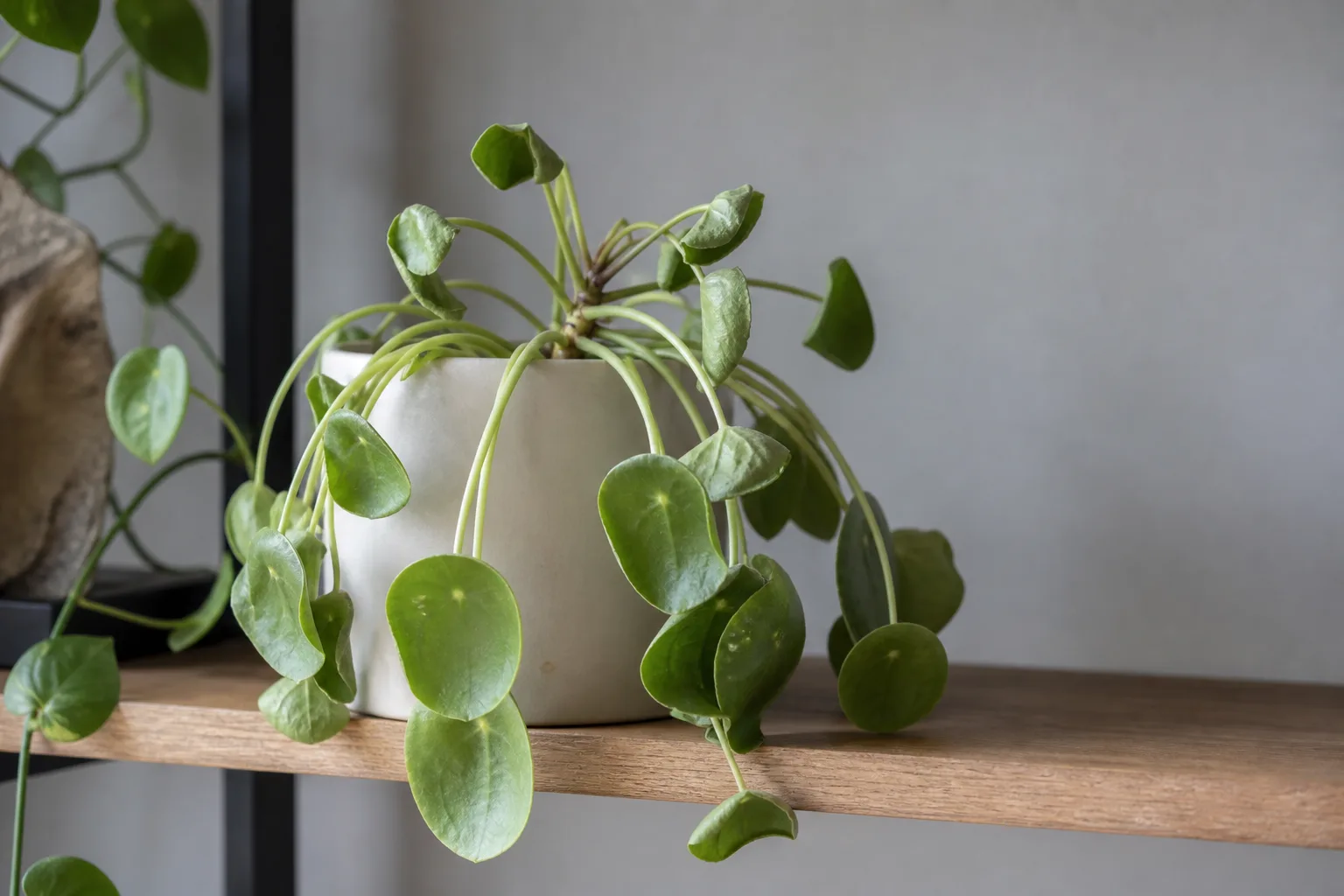
Drooping Leaves on Pilea Peperomioides: Causes, Checks & Fixes
This guide covers drooping leaves on Pilea Peperomioides. See also the general Drooping Leaves guide, watering, and light pages for this plant.
Drooping Leaves on Pilea Peperomioides: Causes, Checks & Fixes
Quick answer
Drooping on Pilea Peperomioides (Pilea peperomioides) is gradual petiole bend-coin leaves angle downward on long stalks while the plant still has some structure. The most common triggers are routine thirst and root failure in wet mix-opposite problems that share the same visual cue until you lift the pot.
First fix: do not water automatically. Finger-test the top inch (2.5 cm) of mix and compare pot weight. A light, dry pot with downward coin leaves needs a thorough soak. A heavy, cool, wet pot with drooping leaves means damaged roots-stop watering and inspect before the next drink.
Pilea famously uses droop as a visual moisture gauge-coin leaves fold down on their petioles when turgor drops. The same droop on soggy soil is a warning: damaged roots cannot hydrate leaves even when you water. For acute same-day collapse, see wilting. For confirmed mushy roots, see root rot.
Wet soil vs. dry soil - the pilea moisture-gauge paradox
| Signal | Dry-soil droop (thirst) | Wet-soil droop (root stress) |
|---|---|---|
| Pot feel | Light for its size | Heavy and cool many days after watering |
| Top inch | Dry; lower mix may hold slight moisture | Damp or wet; surface may crust while centre stays wet |
| Leaf pattern | Whole mound bends; edges may thin before crisping | Lower coin leaves yellow while upper leaves still green briefly |
| Smell | Normal | Sour or musty at drain holes possible |
| After corrected soak | Petioles firm within hours to one day | Leaves stay limp on wet soil-no perk-up |
| First action | Full soak, drain, discard saucer water | Stop water; brighter indirect light; inspect roots if stem wobbles |
This table is the core diagnostic split on pilea. Coin leaves on long petioles lose turgor fast because the species has a relatively shallow, spreading root system in a small pot-little reserve moisture when you miss a dry-down, and little oxygen when mix stays saturated.
When to use this page vs. wilting and watering guides
These pages sit close in search intent but answer different moments.
| Signal | Drooping (this page) | Wilting (wilting guide) |
|---|---|---|
| Speed | Gradual-petioles bend over days as mix dries or roots struggle | Sudden-often within hours of missed water or a bad soak |
| Leaf posture | Petioles angle downward; plant keeps some mound shape | Coin leaves hang flat against the pot rim; whole mound collapsed |
| Typical trigger | Routine thirst, seasonal dry-down, low-light stretch | Drought spell, heat draft, wet-soil root failure, post-repot shock |
| Urgency | Check before next water; same-day only if wet soil smells sour | Same-day rescue when visibly flattened |
For your baseline watering rhythm-not acute triage-start with the watering guide. For chronic dry pots and crispy edges, see underwatering.
What drooping leaves look like on Pilea Peperomioides
On a healthy mound, peltate coin leaves stand on upright petioles radiating from a central stem. Drooping shows as petioles bending and coin leaves pointing downward-sometimes the whole plant, sometimes lower leaves first.
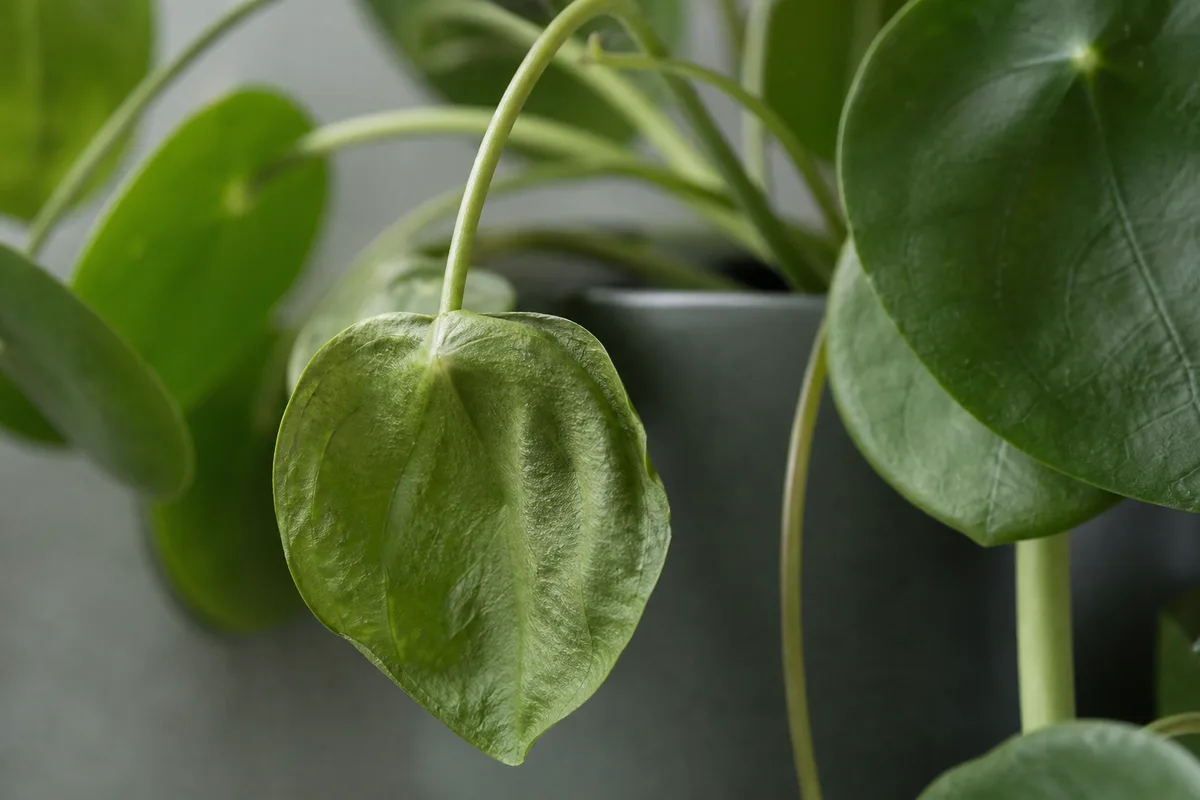
Drooping Leaves symptoms on Pilea Peperomioides - compare with healthy tissue on the same plant.
Dry droop (thirst):
- Pot feels noticeably light
- Top inch of mix is dry; crispy edge risk on thin coin tissue if drought continues
- Stems at the base remain firm
- Recovery test: thorough soak → petioles often firm within hours to one day
Wet droop (root stress or early rot):
- Pot stays heavy despite limp foliage
- Lower coin leaves yellow while upper leaves look green briefly
- Mix may smell sour at drain holes
- No recovery after you water-leaves stay limp on wet soil
- Stem may feel loose in the mix as rot advances
Environmental droop (heat, cold, repot):
- Sudden bend after placing the pot on a radiator, above a heat vent, or beside cold window glass below 10°C (50°F)
- Mild droop 3–7 days after repotting or pup division-usually resolves if mix is moist but not saturated
Home scenario: A 12 cm pilea in terracotta on an east windowsill-coin leaves folded Friday evening, top inch dust-dry, pot noticeably light. Bottom soak 20 minutes until the surface moistened, drained fully, saucer emptied. Petioles upright by Saturday morning. That speed is typical for thirst droop in bright indirect light; winter low-light rooms may take longer.
Why Pilea Peperomioides leaves droop
Underwatering (most common)
Pilea peperomioides evolved on shaded moist rock faces with sharp drainage-not in deep wet soil. Indoors, thin coin-leaf tissue loses turgor when the top few centimetres of compost start to dry out and roots cannot replace moisture fast enough. Pilea deliberately droops as an early thirst signal before full wilt-treat bent petioles as a prompt to check soil, not an automatic cue to pour water without confirmation.
Overwatering and root failure (same look, opposite fix)
Overwatering can lead to root rot on pilea. When soil stays saturated, roots in waterlogged mix cannot absorb the oxygen they need-uptake fails and leaves droop on wet soil. NC State Extension notes pilea is susceptible to root rot if overwatered. Oversized gift pots and cachepots that trap runoff are common triggers. See overwatering when yellow lower leaves appear on damp mix with a firm stem base.
Heat, radiators, and dry air
Radiators and heat vents pull moisture from coin leaves faster than shallow roots replace it-temporary droop even when mix is moist. This overlaps with thirst; check the top inch before assuming the plant needs another soak.
Cold drafts, repot shock, and pup stress
Cold drafts below 10°C (50°F) stress tropical pilea and can bend petioles overnight-especially when leaves touch cold glass on east windows in winter. Repotting or removing pups disturbs fine roots; limited uptake for several days can droop tops even with reasonable watering. Follow the repotting guide for sizing and shock prevention.
Hydrophobic mix after repeated drought
When mix dries hard, it can shrink away from pot sides-water runs through the gap without rewetting the core. The surface looks damp while the root ball stays dry; the pot feels light and coin leaves keep drooping. Bottom-water 15–30 minutes once, then drain fully.
Low light and slow dry-down
Dim corners slow transpiration but also extend wet cycles-drooping on damp mix may trace to not enough light rather than thirst. Brighter indirect light helps mix cycle predictably per the light guide.
How to confirm the cause (6-step checklist)
Work through these checks in order. One pot lift beats guessing from bent petioles alone.
- Lift the pot - Light = thirst branch. Heavy = wet branch. This is the single most useful pilea droop test.
- Finger-test the top inch (2.5 cm) - Dry with light pot confirms underwatering. Damp or wet with heavy pot confirms oversaturation or failing roots.
- Smell at drain holes - Sour odor strongly suggests decay in the root zone.
- Stem-base feel - Firm stem where it meets soil supports thirst or draft droop. Soft tissue or wobble means advance toward root rot.
- Recovery after corrected watering - Thirst droop perks within hours of a full soak. Wet droop stays limp after you water.
- Recent context - Repot, pup removal, heat wave, radiator placement, or cold night narrows temporary causes.
| Finding | Likely cause | Next step |
|---|---|---|
| Dry top inch, light pot, firm stem | Underwatering | Soak branch (below) |
| Wet heavy pot, sour smell, soft stem base | Root rot | Stop water; unpot same day |
| Normal moisture, recent radiator exposure | Heat draft | Relocate; wait 24 h |
| Dry crust, water runs off surface | Hydrophobic mix | Bottom-water once, then resume top soak |
| Wet mix, yellow lower leaves, firm stem | Early overwatering | Overwatering dry-down |
First fix for Pilea Peperomioides
One path only-do not water a drooping pilea on wet, heavy soil.
If the pot is light and the top inch is dry (thirst droop)
- Water slowly until excess runs from drainage holes-pilea needs a full root-ball soak, not a splash on the surface.
- Discard any excess water that collects in the saucer within 30 minutes.
- Wait 2–6 hours and check coin leaves-thirst droop often corrects the same day.
- If leaves stay bent on now-moist mix, probe deeper with a skewer; hydrophobic drought mix may need 15–30 minutes bottom-watering, then drain fully.
- Resume the watering guide dry-down rhythm-top inch dry before the next major soak.
If the pot is heavy and mix is wet (wet droop)
- Stop all watering immediately. Empty saucers and cachepots.
- Move to bright indirect light so mix can dry-never direct hot sun on a stressed pilea.
- If the stem base is still firm and smell is neutral, wait until the top inch dries, then reassess on the overwatering guide.
- If mix smells sour, lower leaves yellow, or the stem base softens or wobbles-unpot same day. Do not wait for leaves to drop.
If heat, cold draft, or repot shock is the likely cause
Move the pot off the radiator, heat vent, or cold window glass. Keep above 10°C (50°F). Check moisture before watering-draft stress and thirst can overlap.
Recovery timeline
| Cause | First visible improvement | Full stabilization |
|---|---|---|
| Thirst droop | Hours to 1 day after soak | 1–2 weeks for new firm coin leaves |
| Early wet stress (firm stem) | 3–7 days after dry-down | 2–3 weeks |
| Root rot (trim + repot) | 1–2 weeks-new growth | 3–6 weeks; some leaves drop permanently |
| Heat / cold draft | 24–48 hours after stable temps | 1 week |
| Post-repot or pup shock | 3–7 days | 2 weeks |
Signs recovery is working: coin leaves stand upright on firm petioles; new pancakes emerge at the crown; pot weight cycles predictably after watering.
Signs the problem is worsening: stem base softens further; more leaves yellow from the bottom up; droop persists on wet soil after you stop watering; pups turn mushy at the base.
Permanently dropped lower leaves will not reattach-judge success by new upright pancakes at the crown, not by old tissue re-firming.
Lookalike symptoms to rule out
| Symptom | Key difference from droop | Confirmed? → Action |
|---|---|---|
| Wilting | Acute flat collapse; whole mound flattened in hours | Same moisture test; faster rescue |
| Root rot | Mushy roots on unpot; chronic wet soil | Trim, repot, or propagate pups |
| Underwatering | Dry light pot; slight leaf wrinkle; chronic pattern | Full soak |
| Overwatering | Wet mix, yellow lower leaves; stem still firm | Stop water; improve drainage |
| Curling leaves | Leaves cup or roll; stem may stay upright | Check light, pests, and moisture |
| Leggy growth | Stretch toward window; not petiole bend from thirst | More bright indirect light |
What not to do
Do not water drooping plants automatically-overwatering on soggy mix kills roots on pilea that is already wet. Do not mist heavily instead of fixing soil moisture-surface wetness does not reoxygenate rotted roots. Do not water on a calendar without checking coin-leaf angle and pot weight. Do not place a drooping pilea in direct hot sun to “dry it out.” Do not delay unpotting when mix smells sour and the stem wobbles in wet mix.
How to prevent drooping leaves next time
- Learn your pot’s dry weight after a full soak-lift weekly so thirst cues match actual moisture, not just bent petioles
- Water when the top inch (2.5 cm) dries-use the watering guide for seasonal starting ranges
- Use pots with open drain holes; empty saucers after every soak
- Keep bright but indirect light so mix cycles predictably-see the light guide
- Avoid oversized decorative pots and cachepots that hold standing water
- Keep above 10°C (50°F) away from cold glass and heating drafts in winter
- Size pots to root mass on the repotting guide-overpotting keeps centre mix wet while the top inch looks dry
Practical checks
Urgency check
Loose stem in wet soil, sour smell, or total collapse needs same-day root inspection-not a wait-and-see week. Gradual petiole bend on a light dry pot is less urgent but still needs a soak within the day.
Best inspection order
Top-inch dryness → pot weight → stem stability → light and temperature changes → smell at drain holes → recent repot or pup removal.
When to worry
Treat as same-day urgent when:
- Drooping persists on wet sour soil 48 hours after you stop watering
- The stem wobbles or softens at the soil line in wet mix
- Limpness follows repotting into a much larger pot with soggy centre mix
- More than half the root mass is mushy on inspection
For borderline cases-firm stem base, damp but not sour mix, no yellowing yet-you have a dry-down window of a few days before rot advances. If droop on wet soil does not improve after corrected dry-down, contact your local extension office for hands-on diagnosis-especially when multiple houseplants share the same wet-mix pattern.
Related Pilea Peperomioides guides
- Wilting - acute flat collapse vs. gradual petiole bend
- Root rot - full mushy-root rescue protocol
- Underwatering - dry pot lookalike
- Overwatering - wet-soil stress before confirmed decay
- Watering - seasonal rhythm and dry-down targets
- Soil - perlite-amended mix after root surgery
- Repotting - pot sizing and shock prevention
- Propagation - pup salvage when main stem fails
- Not enough light - slow dry-down and compound droop
- Pilea overview - species ID and care hub
Conclusion
Drooping on Pilea Peperomioides is a lift-the-pot-first habit-not a cue to pour water on sight. Light dry pot with bent coin leaves needs a full soak; heavy wet pot with drooping leaves means stop watering and inspect roots before the next drink. Coin leaves on long petioles bend gradually on this shallow-rooted species-match recovery to the confirmed branch, link outward to root rot or underwatering as needed, and use wilting when the whole mound collapses same-day. Act same-day when wet soil smells sour or the stem wobbles in the mix.