Fungus Gnats on Pilea Peperomioides: Causes, Checks & Fixes
Quick answer
Fungus gnats on Pilea Peperomioides almost always mean the soil surface stays wet too long. First step: let the top inch dry completely and place yellow sticky traps at the pot rim.
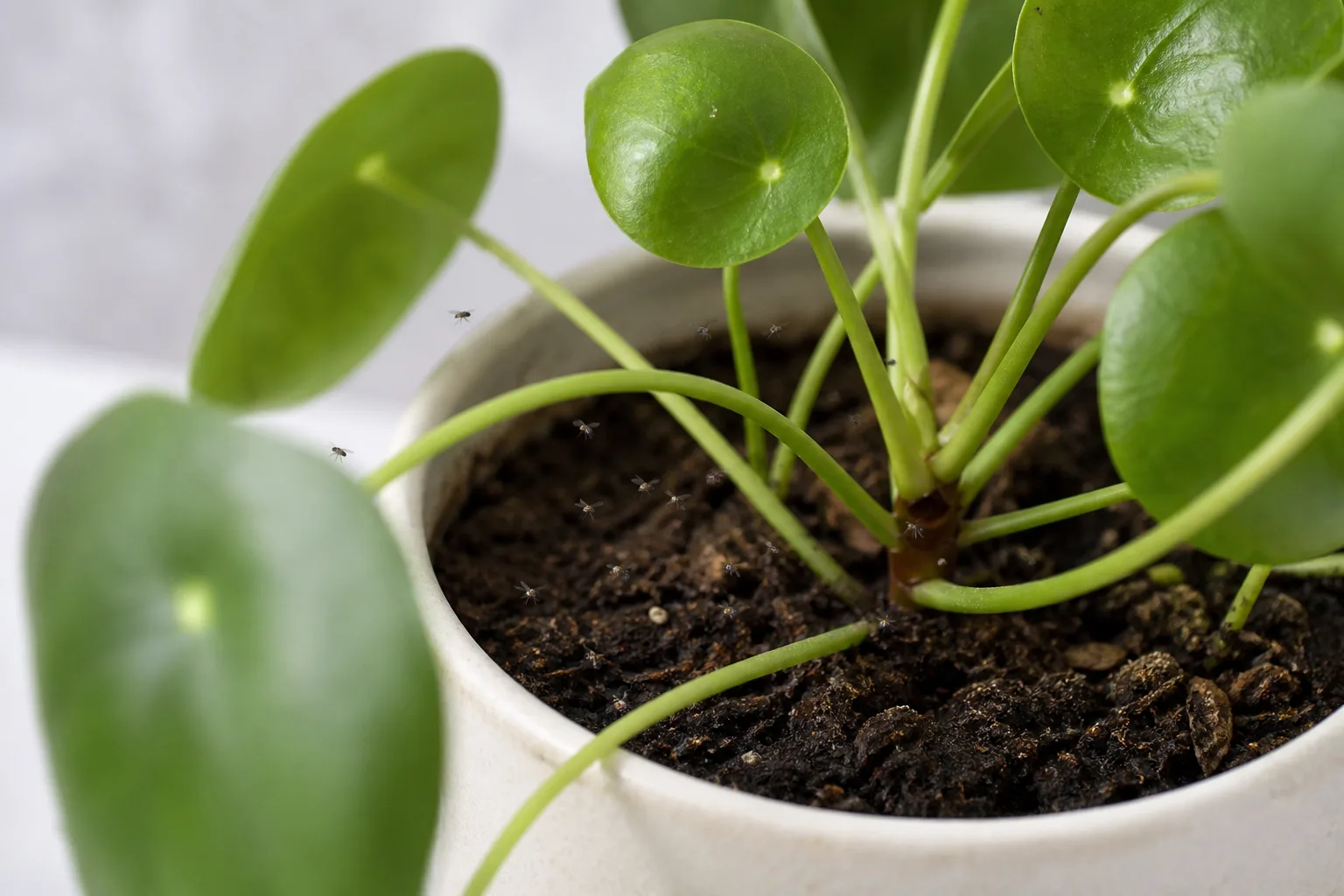
Fungus Gnats on Pilea Peperomioides: Causes, Checks & Fixes
This guide covers fungus gnats on Pilea Peperomioides. See also the general Fungus Gnats guide, watering, and light pages for this plant.
Fungus Gnats on Pilea Peperomioides: Causes, Checks & Fixes
Quick answer
Fungus gnats on Pilea peperomioides are a soil moisture signal, not a random fly invasion. Small dark flies hovering over your Chinese money plant pot almost always mean the top of the mix has stayed wet too long-and fungus gnats thrive on overwatered, organic-rich topsoil where larvae feed on decaying matter and fine roots.
First step: let the top inch (2.5 cm) of mix dry completely, then place yellow sticky traps at the pot rim. That single move cuts egg-laying habitat and catches adults before you add anything else. Pilea’s shallow, spreading root system makes larval damage in the upper layer more meaningful than on a deep-rooted succulent, so confirm wetness at depth-not just on the surface-before assuming the problem is solved. For your routine dry-down rhythm, see the watering guide.
What fungus gnats look like on Pilea Peperomioides
Adult flies at pot rim after watering
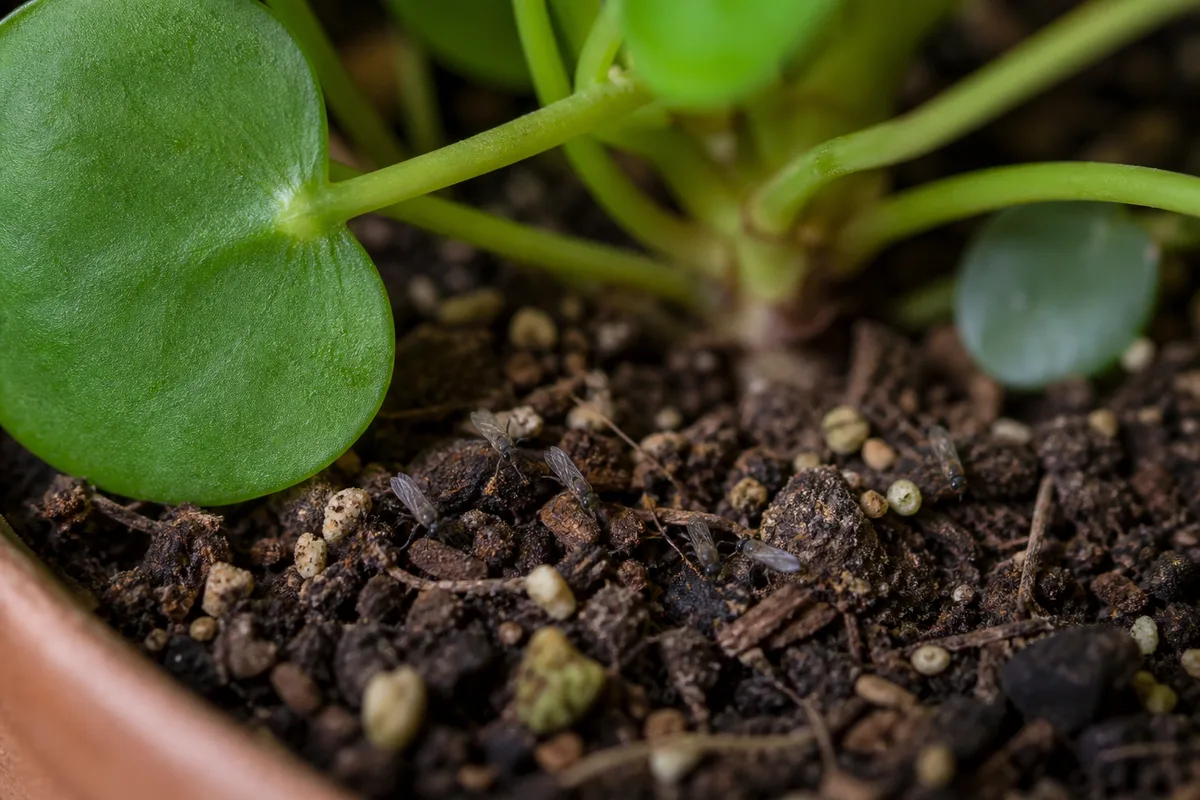
Fungus Gnats symptoms on Pilea Peperomioides - compare with healthy tissue on the same plant.
- Tiny dark insects, about 1/8 inch long, resembling small mosquitoes or fruit flies
- Rise in a cloud when you water, bump the pot, or disturb the soil surface
- Rest on moist soil, pot rims, and nearby windows where they are drawn to light
- Harmless to people and pets-they do not bite-but indicate breeding habitat below
Larvae in the top inch of mix
- Legless white to translucent worms with shiny black heads in the top layer of mix
- Sometimes visible when you scrape back surface peat or set a potato slice on the soil
- Feed on fungi, organic debris, and tender feeder roots-especially risky for pilea’s shallow fibrous roots and fresh offset pups
Coin-leaf symptoms when wetness is chronic
- Sudden appearance of flies without leaf damage at first-cosmetic nuisance stage
- Yellow lower coin leaves, stalled new growth, or dramatic wilting despite damp soil as fine roots suffer
- Fungus gnats alongside sour-smelling mix or soft stem bases-then you are also fighting root stress, not flies alone
- White fuzz on soil surface often pairs with the same overwatering on Pilea Peperomioides habit
Pilea does not show unique gnat-specific leaf spots. The diagnostic clue is flies tied to wet topsoil, not texture changes on the coin-shaped foliage itself. Long petioles make wet-wilt collapse look alarming even when larval damage is still early.
Why Pilea Peperomioides gets fungus gnats
Pilea peperomioides is an upright herb with peltate coin leaves on long petioles and a relatively shallow root ball-not a deep taproot you can bury in a large decorative pot. Gnats need persistent moisture in the upper inch of mix, not humidity in the air alone.
Calendar watering and winter schedule mismatch
Many owners water on a weekly schedule regardless of light and season. In winter slowdown, pilea growth slows and the same pot holds moisture longer-continuing summer frequency in cool dim months is a common gnat trigger. The watering guide uses a starting framework of every 7–10 days in bright active growth and 14–21 days in winter-but always check the top inch, not the calendar.
Oversized pots, cachepots, and peat-heavy mix
Gift pots two sizes too large keep the centre wet while the top inch looks dry. A decorative cachepot without drainage lets the nursery pot sit in standing water for days-prime conditions for gnats and root rot. Peat-heavy mix without enough perlite holds surface moisture between drinks. NC State Extension lists good drainage and moist but well-drained mix as cultural requirements; “moist” does not mean constantly wet at the surface.
Low light slowing dry-down
Dim corners slow transpiration so mix stays wet longer even when coin leaves still look perky. Offset pups at the base can mask mother-plant root stress until yellow lower leaves appear suddenly. Brighter indirect light helps the mix cycle faster without changing your long-term care goals.
Grouped pots share the problem. One overwatered pilea on a shelf can seed gnats into neighbors within days because adults are weak fliers but numerous and attracted to moist organic soil across multiple containers.
How to confirm the cause
Work through these checks before reaching for sprays or Pilea Peperomioides repotting guide:
- Fly behavior - Do insects appear mainly when the pot is disturbed or after watering? Random kitchen fruit flies near fruit bowls are a different problem; fungus gnats stay tied to plant soil.
- Surface moisture - Stick a finger or dry skewer into the top inch. If it comes out damp while flies are active, you have both habitat and likely breeding.
- Pot weight and drainage - A heavy pot days after one watering, or a full saucer, confirms slow drying. Confirm drainage holes are open and cachepots are emptied within 30–60 minutes after every soak.
- Larva check - Place a raw potato slice on the soil surface for three to four days. Larvae may migrate to feed on the tissue, confirming soil-stage infestation beyond flying adults.
- Sticky trap test - Set a yellow trap at soil level for 48 hours. Multiple tiny gnats stuck near the pilea pot confirm active adults laying eggs in that mix.
- Root inspection - If stems feel soft at the base or several coin leaves yellow while soil stays wet, unpot carefully and look for brown mushy roots. That pattern is chronic overwatering with gnat pressure, not a fly-only issue.
Lookalikes: fruit flies vs. gnats vs. mold on soil
| Sign | Fungus gnats | Fruit flies | Mold on soil |
|---|---|---|---|
| Where they appear | Rise from pilea soil when watered | Kitchen fruit, compost, drains | White or gray fuzz on wet surface |
| Sticky trap at plant | Catches tiny dark flies | Usually empty at plant | N/A |
| Root risk | Larvae chew fine roots in top inch | None from plant soil | Fungal growth, not insects |
| Shared cause | Overwatered organic topsoil | Ripening produce | Same wet-surface habit |
If traps stay empty, soil dries normally, and no larvae appear, suspect drain flies from plumbing-not pilea soil.
First fix for Pilea Peperomioides
Let the top inch of mix dry completely, then set yellow sticky traps against the pot rim at soil level.
This is the correct first move because drying the upper soil layer disrupts the gnat life cycle-eggs and larvae cannot survive prolonged dry surface conditions, and traps reduce adults that would otherwise re-lay eggs. Pilea tolerates this dry-down at the surface better than a full drought; roots deeper in the pot still hold moisture during a short surface dry cycle.
Empty any saucer or cachepot water the same day. Move the plant to brighter indirect light if it sits in a dim corner-faster photosynthesis uses water and shortens wet windows.
Do not drench with hydrogen peroxide, repot, or apply BTI on day one until you have started the dry cycle and confirmed larvae are present. Do not water because coin leaves droop while the core mix is still wet-that is the classic pilea wet-wilt trap.
Step-by-step recovery
After the first dry cycle and traps are in place, escalate only as needed:
- Hold the dry-surface rhythm - Water only when the top inch is dry. In most homes that means every 7–10 days in active growth and longer in winter, but always check the pot-not the calendar.
- Monitor traps weekly - Replace when coated or dusty. Declining catch counts mean fewer adults; rising counts after a wet spell mean you watered too soon.
- Apply BTI if larvae persist - Products containing Bacillus thuringiensis subsp. israelensis (Bti) target fungus gnat larvae in soil when mixed into water and applied so the solution filters through the top layer. Repeat every five to seven days for three to four weeks to catch newly hatched larvae; Bti does not affect eggs, pupae, or adults.
- Try bottom watering selectively - Set the pot in a tray of water for 15–30 minutes so roots drink from below while the surface stays drier. Bottom watering can keep larvae habitat dry while roots hydrate-useful when coin leaves crisp if you simply stop watering altogether.
- Remove surface debris - Pick off fallen coin leaves on the soil and scrape any visible algae or mold from the top inch. Less organic matter means less larval food.
- Improve mix structure if drying is slow - If the pot stays heavy more than four to five days after one drink in adequate light, repot into fresh standard mix with 15–20% perlite and a pot only slightly larger than the root ball. Repot when infestation plus sour smell or mushy roots confirm soil failure-not for flies alone on otherwise healthy roots.
- Quarantine and treat neighbors - Gnats on one shelf plant usually mean check every pot in the group. Treat all infested containers or flies will recycle from untreated soil.
Skip foliar insecticides for fungus gnats-they kill flying adults briefly but ignore larvae in soil and stress pilea’s coin leaves unnecessarily.
Recovery timeline
Adult fly counts often drop within one to two weeks once the surface stays dry and traps are active. You may still see stragglers because overlapping life stages hatch in waves.
Larval suppression with Bti typically needs three to four weekly applications before new larvae stop appearing in potato tests or soil scrapes.
Plant vigor-firm new coin leaves and stable lower foliage-returns over two to four weeks if roots were only lightly disturbed. Yellow leaves from chronic wetness do not green again; remove them once new growth looks healthy.
Full clearance commonly takes two to six weeks with consistent drying plus larval control. Stopping treatment after flies merely thin out for a few days often brings a second wave when the next egg batch hatches.
Worsening signs: increasing fly numbers despite dry surface cycles, new coin leaves staying small, stems softening at the soil line, or larvae visible in multiple pots after a month of care-escalate to repotting with root trim and stronger review of light and pot size.
What not to do
Coin-leaf droop on wet soil trap
Do not water because coin leaves look limp when soil is already wet. Pilea wilts dramatically on saturated mix when roots cannot absorb oxygen-that is overwatering, not thirst.
Do not keep the soil surface moist while trying to eliminate gnats. Do not water on a fixed calendar because leaves droop slightly-always probe the top inch down.
Do not spray adults only with aerosol insecticides indoors. You expose yourself and the plant while larvae keep breeding below.
Do not stop treatment after the first quiet week. Complete the Bti cycle and keep traps up until counts stay near zero for two weeks.
Do not leave excess water in the saucer or let a cachepot hold runoff. Discard saucer water after every watering.
How to prevent fungus gnats on Pilea Peperomioides
Make the surface inhospitable year-round:
- Water when the top inch is dry-every time, regardless of season.
- Use well-aerated mix with 15–20% perlite and pots with open drainage; never let pilea sit in a full saucer.
- Right-size the pot to the shallow root ball-oversized gift pots are long-term gnat reservoirs.
- Set yellow sticky traps near high-risk pots in early fall when outdoor plants brought inside often introduce gnats.
- Quarantine new pilea purchases for two to three weeks before placing them on a grouped shelf.
- Remove fallen coin leaves from the soil surface promptly.
- Consider a thin layer of coarse sand on the surface only after the infestation is cleared-barriers can discourage egg-laying if you still bottom-water for root moisture.
Prevention is mostly dry surface between drinks, not expensive gadgets.
Pilea care cross-check
Gnats expose a gap between desired moisture and actual drying speed. Reconcile these factors:
- Light - Pilea Peperomioides light guide dries mix faster and supports upright pilea form. Leggy, pale growth in the same wet pot means light is too low for your watering frequency.
- Pot and mix - Standard potting mix plus 15–20% perlite, drainage holes, and saucers emptied after every drink match pilea’s needs when watering follows dryness checks per the watering guide.
- Season - Reduce watering when growth slows in fall through early spring. Continuing summer frequency in cool months invites gnats.
- Pups - Offset pups drink from the same root zone; a crowded pot dries unevenly. Split or repot when pups compete for the same wet core.
- Grouping - Shelves of plants raise humidity nicely but require each pot to dry on its own schedule, not one shared heavy watering day.
When gnats appear, treat the soil surface and watering rhythm first, then adjust anything that keeps peat wet at the rim.
When to worry
Escalate beyond basic drying and traps if:
- Fly numbers rise weekly despite a dry top inch and trap monitoring
- Larvae are obvious in the top layer of multiple pots on the same shelf
- New coin leaves stay small, yellowing spreads, or stems soften while mix smells sour
- You have treated with Bti for a full month with no decline in larvae tests
A few flies on an otherwise vigorous pilea with firm stems and clean new growth is annoying but not an emergency-tighten watering and watch traps.
If root rot has started, prioritize root rescue from the root-rot guide over fly counting. Gnats will leave once the habitat dries and decay stops.
Conclusion
Fungus gnats on Pilea Peperomioides mean the top of your potting mix has stayed too wet for too long-usually from calendar watering, an oversized cachepot, or winter frequency that did not slow with growth. Confirm with flies on disturbance, sticky traps, and a moisture probe at the top inch. Dry the surface, trap adults, and target larvae with Bti only if needed. Pilea recovers when new coin leaves emerge from a root zone that dries between drinks-not when you win a battle against flies while the soil stays soggy.
When to use this page vs other Pilea Peperomioides guides
- Pilea Peperomioides watering guide - Use for routine moisture checks before assuming fungus gnats is the main issue.
- Pilea Peperomioides problems hub - Browse all 17 common issues on this species.
- Overwatering on Pilea Peperomioides - Different entry point when symptoms overlap with fungus gnats.
- Mold on Soil on Pilea Peperomioides - Different entry point when symptoms overlap with fungus gnats.
- Root Rot on Pilea Peperomioides - Different entry point when symptoms overlap with fungus gnats.