Slow Growth on Pilea Peperomioides: Causes, Checks & Fixes
Quick answer
Slow growth on Pilea Peperomioides is usually tied to low light, cold temperatures, or root stress-not the species itself. First step: Move to brighter indirect light and check whether roots are firm.
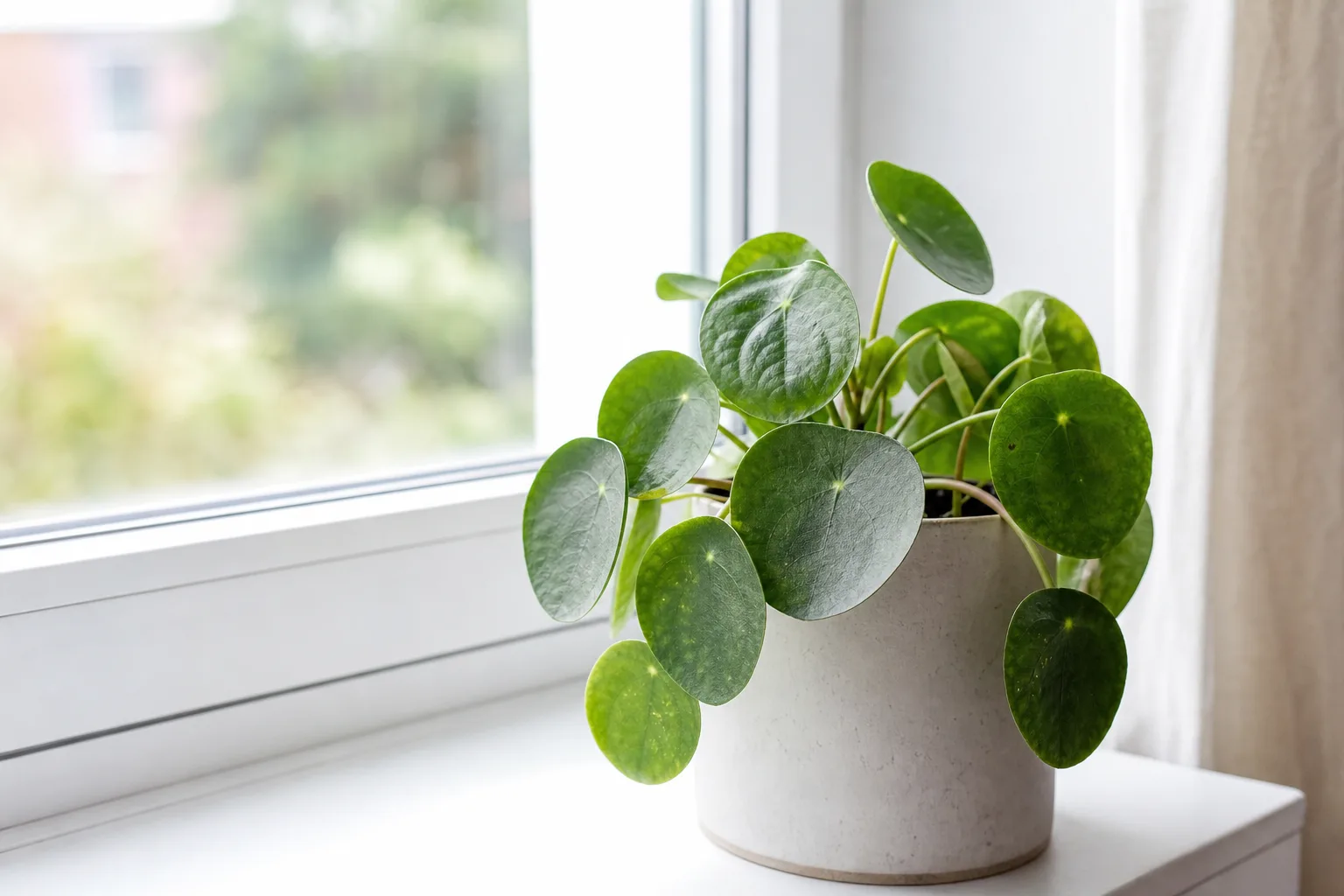
Slow Growth on Pilea Peperomioides: Causes, Checks & Fixes
This guide covers slow growth on Pilea Peperomioides. See also the general Slow Growth guide, watering, and light pages for this plant.
Slow Growth on Pilea Peperomioides: Causes, Checks & Fixes
Quick answer
Pilea Peperomioides (Pilea peperomioides) is a rapid grower when conditions align-the Chinese money plant earned its Instagram fame by pushing fresh coin leaves and base pups through warm months. Slow growth means that factory stops: no new pancakes on the central stem, pups frozen at thumbnail size, and the mound looking unchanged week after week. That stall is almost always environment, not genetics.
First fix: move the pot to brighter indirect light-one to three feet from an east window or several feet back from filtered south or west glass-and check roots before changing anything else. Firm white roots in appropriately dry mix mean light or temperature is the limit; mushy roots on wet soil mean root rot instead.
This page covers overall growth stall and pup pause. For stretchy stems and long bare internodes, see not enough light and leggy growth. For window targets, rotation cadence, and grow-light hours, start with the Pilea light guide.
Slow growth vs. other Pilea problems
| Situation | Start here | Why |
|---|---|---|
| No new coin leaves for weeks; mound static; pups tiny | This page | Pace stall and offset pause |
| Long bare stem, small pale new leaves, strong lean | Not enough light | Etiolation is the primary symptom |
| Already stretched; bare lower stem; top-heavy crown | Leggy growth | Structural recovery after light fix |
| Yellow lower leaves on heavy wet mix; limp on wet soil | Root rot or overwatering | Roots failing, not benign rest |
| Stable green leaves; no growth November–February | Normal winter rest | Dormancy, not a care fault |
What slow growth looks like on Pilea Peperomioides
Pilea signals stall through coin-leaf production and pup development, not just overall height.
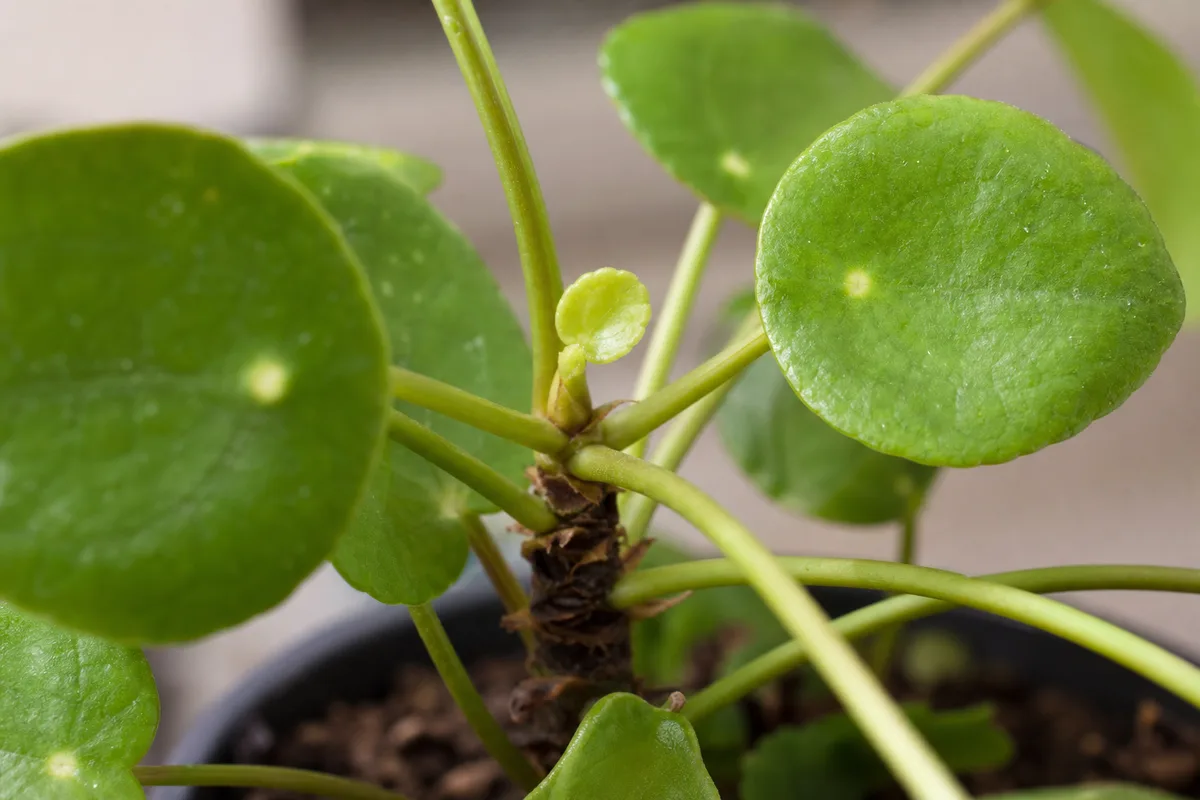
Slow Growth symptoms on Pilea Peperomioides - compare with healthy tissue on the same plant.
Typical slow-growth signs during active season (March–September in the northern hemisphere):
- No new coin leaf on the central stem for four or more weeks despite warm room temperatures
- Pups at the base stay thumbnail-sized for six to eight weeks while the parent mound does not expand
- Existing leaves remain green but the plant looks frozen in time-same leaf count as last month
- New coin leaves, when they finally appear, are smaller and paler than older ones
- The pot feels heavy and cool for many days after watering-mix not cycling
What slow growth is not: a single skipped leaf during a cold snap, or six to eight weeks without new growth in mid-winter when daylight is short. The NYBG notes pilea enters a non-growth phase in winter and needs less water-stable foliage with no new pancakes through December and January is expected, not alarming.
Normal pace vs. concerning stall
Understanding baseline pace prevents panic in winter and catches real problems in summer.
Healthy active-season pace: in bright indirect light, many pileas push one new coin leaf every one to two weeks from spring through early fall, with pups appearing regularly on mature plants. NC State Extension’s rapid growth rating matches what growers see on east windows with weekly rotation-not a dim décor shelf three metres from glass.
Normal winter slowdown: shorter days and cooler rooms mean little or no new leaf production for six to ten weeks. Soil dries slower; the RHS advises less water when growth tends to slow in winter. If leaves stay firm and green and the mix is not sour, wait for lengthening days before forcing change.
Concerning stall: no new growth for a full active season, or growth stopping alongside yellow lower leaves, sour wet mix, or soft stem tissue-that is not rest; inspect roots.
Post-repot pause: freshly repotted pileas often sit still for two to four weeks while roots colonize new mix. Hold judgment until the top inch of mix has dried and cycled at least twice unless wilt on wet soil suggests rot.
Real-world recovery example: a store-bought Pilea on an interior bookshelf roughly three metres from north glass produced no new coin leaves for five weeks in May while pups stayed pea-sized. Moving the pot to an east sill about 40 cm from the pane, with a quarter turn at each watering, produced the first firm new pancake in 18 days; the largest base pup doubled in leaf count within six weeks. Same plant, same season-only light and rotation changed.
Why Pilea Peperomioides grows slowly
Pilea evolved on shaded moist rock faces with sharp drainage in Yunnan and Sichuan-bright filtered sky light, cool air, and fast dry-down between rain. Penn State Extension notes the species originates from cool, shady mountains where low-growing forest-floor plants receive bright but filtered light. Indoors, stall usually traces to one of these mismatches:
Low light on a décor shelf
The Instagram-shelf placement is the leading cause. Pilea is not a low-light foliage plant. NC State Extension recommends bright, indirect sunlight indoors; dim interiors limit photosynthesis so energy goes to maintaining existing coin leaves, not new ones. Plants in less light also grow more slowly and use less water-a pairing that traps beginners: the same dim corner that stalls growth also keeps soil wet longer, mimicking overwatering stress.
Wet roots in a cool, dim room
Chronic overwatering in winter or oversized gift pots suffocates shallow roots. The plant cannot support new leaves even when older foliage looks briefly green. Wet-soil stall overlaps with overwatering and root rot-confirm by unpotting if mix stays heavy and sour.
Root-bound or exhausted mix
Fine pilea roots fill pots within a year in active growth. Crowded roots in depleted peat stall pup production and leaf size even when light is adequate. Spring repotting into fresh airy mix-see the repotting guide-often restarts offset production within weeks.
Cold drafts and sub-10 °C exposure
Pileas need temperatures above 10 °C (50 °F) and suffer in cold draughts from winter windows or AC vents. Cool metabolism slows every process, including coin-leaf initiation.
Missing rotation and dust on coin leaves
Turn the pot a quarter at each watering so all sides receive similar light. Dust on peltate leaves blocks photosynthesis; NYBG notes accumulated dust makes the plant behave as though light is too low.
How to confirm the cause
Work through these checks in order. One season note and a light assessment beat guessing from leaf count alone.
- Season check - Is it November through February in the northern hemisphere with firm green leaves and no yellowing? If yes, winter rest is likely normal. Resume checks in March.
- Light at leaf level - At midday, can you read comfortably at the plant without a lamp? Hold your hand between foliage and window: a faint or absent shadow means low light. Compare with bright but indirect light one to three feet from east glass or filtered south/west.
- Newest leaf audit - Are the top one or two coin leaves smaller and paler than the ones below? That points to current light deficit even when older leaves still look fine.
- Pup trend - Have base offsets stayed the same size for six or more weeks in spring or summer? Stall under low light or root stress; active pups in good light double noticeably within a month.
- Pot weight and dry-down - Lift the pot. Heavy and cool many days after watering suggests slow evaporation-common in dim rooms and oversized pots. Light and dry with limp leaves is underwatering, not slow growth from light alone.
- Root firmness - If mix stays wet and no growth appears for a month in active season, slide the plant out. Firm white or tan roots confirm culture limits; mushy brown roots mean rot repair, not a light move alone.
- Temperature - Is the pot above 10 °C (50 °F) away from cold window panes and AC blasts?
| Finding | Most likely cause | First action |
|---|---|---|
| Dim shadow, small pale new leaves, firm roots | Low light | Brighter indirect spot + rotation |
| Heavy wet pot, yellow lower leaves, mushy roots | Root rot / overwatering | Stop water; inspect; see root-rot guide |
| Firm roots circling pot bottom; slow pup production | Root-bound / tired mix | Spring repot one size up |
| Firm green leaves; no growth mid-winter | Winter dormancy | Reduce water; wait for spring |
| No growth 2–4 weeks after repot; firm roots | Post-repot pause | Normal; avoid repotting again |
First fix for Pilea Peperomioides
Move to the brightest indirect spot available before fertilizing, repotting, or buying grow lights.
- Place one to three feet from an east-facing window, or several feet back from filtered south or west glass-details on the light guide.
- Rotate a quarter turn at each watering so the central stem does not lean permanently toward one pane.
- Wipe dust from coin leaves with a damp cloth so photosynthesis is not blocked.
- If mix is chronically wet, stop watering until the top inch dries; do not feed until light and dry-down improve.
- Wait four weeks in warm conditions before judging whether new coin leaves return.
If no suitable window exists, add a full-spectrum LED 12 to 18 inches above the foliage for roughly 12 to 14 hours daily during active season-the same band recommended on the light guide for north-facing rooms.
Only after light is corrected: if roots are firm but crowded, repot in spring. If roots are mushy, follow the root rot guide instead of simply moving the pot.
Step-by-step recovery by cause
Low light stall (firm roots, dry appropriate mix)
Move as in the first fix. Acclimate over seven to fourteen days if jumping from a very dim shelf to a bright sill-step closer every few days to avoid scorch. Expect first firm new coin leaf in two to four weeks. Old stretched internodes do not shorten; see leggy growth if structure already failed.
Wet-root stall (heavy pot, sour smell, yellow lower leaves)
Stop watering. Unpot within 48 hours if limpness persists on wet mix. Trim mushy roots, air-dry cuts, repot into fresh airy mix sized to remaining roots. Growth resumes only after roots regenerate-often three to six weeks in warm light. Full protocol on the root rot page.
Root-bound stall (firm roots circling pot, slow pups)
Repot in spring into a pot one size larger with fresh perlite-amended mix. Water once after repot, then let the top inch dry before the next drink. Pups often accelerate two to four weeks after roots settle. Timing and mix ratios on the repotting guide.
Winter rest (firm green leaves, short days)
Reduce watering to match slower use-check the top few centimetres of compost before each drink. Do not fertilize. Growth typically resumes when daylight lengthens; optionally move slightly closer to glass while avoiding cold draughts.
Post-repot or propagation pause
Hold steady: bright indirect light, careful dry-down, no second repot. New growth follows once roots explore the new volume-usually within two to four weeks.
Recovery timeline
Light correction only - First firm new coin leaf in two to four weeks at 65–75 °F (18–24 °C). Pups may resume offset growth within four to six weeks.
Repot after root-bound diagnosis - Similar two-to-four-week window once watering rhythm stabilizes.
Root rot trim and repot - Three to six weeks before confident new leaves; judge by firm new growth, not old yellow pancakes.
Winter rest - No timeline to force; expect resumption March through April as light increases.
Signs recovery is working: new coin leaves emerge firm and correctly sized, pups at the base increase in leaf count, pot weight drops predictably between waterings, internodes on new growth stay short.
Signs the stall is worsening: yellowing spreads up the stem on wet mix, stem base softens, no new leaves after six weeks in corrected bright light with firm roots, fungus gnats hover over continuously damp soil.
What not to do
Do not pile on fertilizer while light is poor-overfeed can do more harm than good without adequate photosynthesis. Do not repot repeatedly hoping for a growth spurt without fixing water rhythm and light. Do not jump from a dim shelf to unfiltered midsummer south glass-acclimate to avoid scorch. Do not expect summer coin-leaf pace in a north-facing room without supplemental light. Do not water on a summer calendar when the plant sits in a cool dim winter room-stale wet mix stalls roots. Do not confuse winter rest with a three-year stall; if growth never resumes each spring, light or roots need correction, not patience alone.
How to prevent slow growth on Pilea Peperomioides
Prevention is light plus seasonal rhythm, not a single product.
- Keep bright indirect light year-round with weekly quarter-turn rotation-see the light guide
- Check roots each spring and repot if crowded into airy mix per the soil guide
- Feed every month or two from April to September only when new growth is active-details on the fertilizer guide
- Match watering to season on the watering guide so dim winter rooms do not stay wet for weeks
- Keep above 10 °C (50 °F) away from cold window panes and heating or AC blasts
- Wipe coin leaves monthly so dust does not mimic low light
Practical checks
Urgency check
Act within days when growth stopped alongside yellow lower coin leaves, sour wet mix, or soft stem tissue-that pattern suggests root decay, not benign stall. No rush when leaves are firm and green through winter with appropriately dry mix.
Best inspection order
Season → light at leaf level → newest coin-leaf size → pup development → pot weight and dry-down → root firmness if mix stays wet → temperature.
Related Pilea Peperomioides guides
- Light needs - window placement, rotation, grow lights
- Not enough light - etiolation and lean before full stall
- Leggy growth - structural recovery after stretch
- Overwatering - wet-soil stress before root decay
- Root rot - mushy roots and sour mix
- Watering - seasonal dry-down rhythm
- Repotting - timing for root-bound stall
- Fertilizer - feed only after light is adequate
- Overview - species hub and first-month care
Conclusion
Slow growth on Pilea Peperomioides is a diagnostic pause, not a life sentence-this species is built to produce coin leaves quickly when light, roots, and temperature align. Confirm whether you are in normal winter rest or a true active-season stall, move to brighter indirect light with weekly rotation as the first fix, and inspect roots before repotting or feeding. Wire corrections to the light guide and watering guide so the same dim, wet corner does not stall growth again next winter.