Underwatering on Pilea Peperomioides: Causes, Checks & Fixes
Quick answer
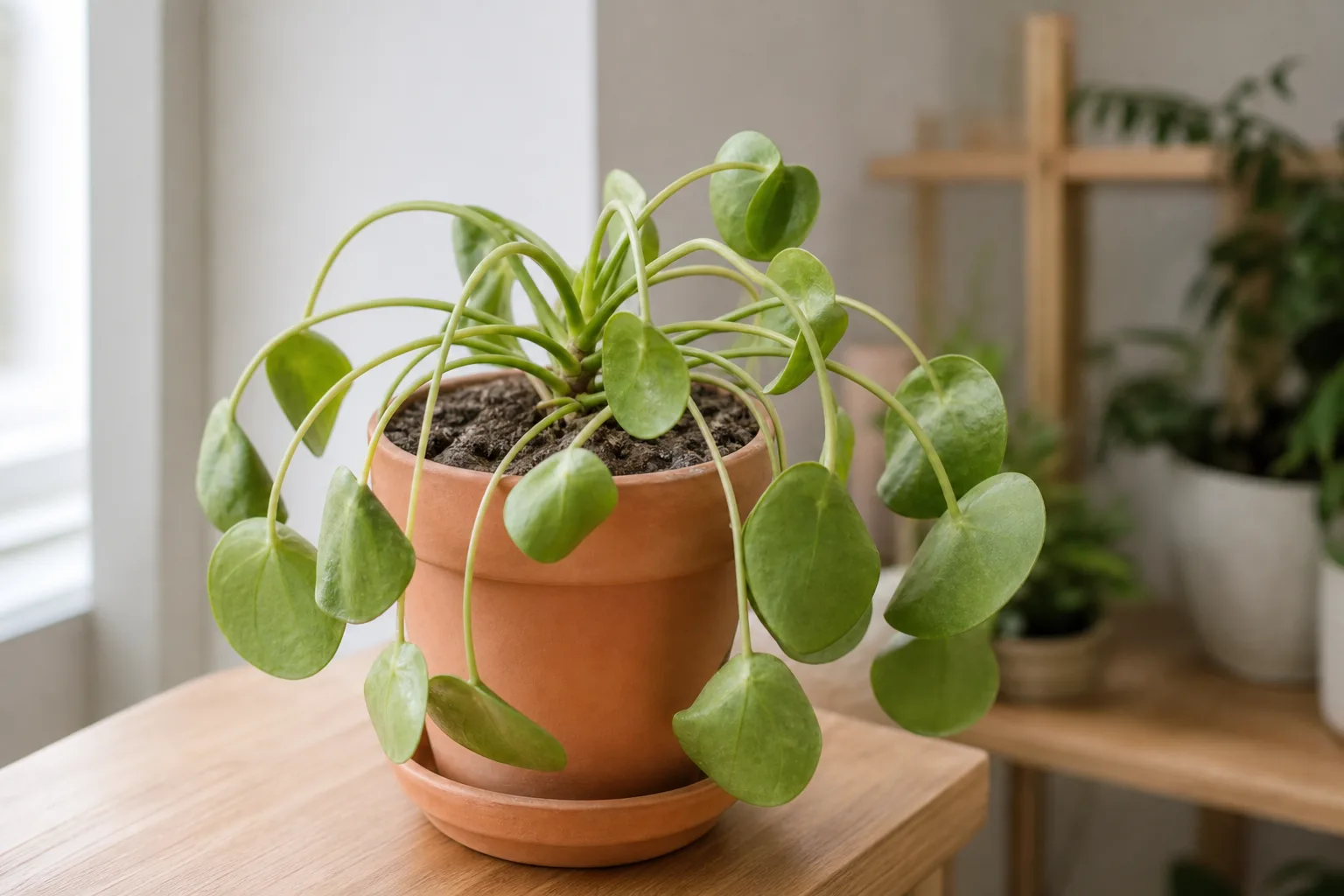
Underwatering on Pilea Peperomioides (*Pilea peperomioides*) shows up as limp coin leaves on a very light, dry pot. First fix: water thoroughly until excess drains, discard saucer water, and watch leaves perk within hours.
Underwatering on Pilea Peperomioides: Causes, Checks & Fixes
This guide covers underwatering on Pilea Peperomioides. See also the general Underwatering guide, watering, and light pages for this plant.
Underwatering on Pilea Peperomioides: Causes, Checks & Fixes
Quick answer
Underwatering on Pilea Peperomioides (Pilea peperomioides) shows up as limp coin leaves on a very light, dry pot-the whole mound collapsed because the shallow root ball ran out of moisture.
First fix: water thoroughly until excess runs from drainage holes, then discard saucer water immediately. Watch coin leaves perk within hours to one day if diagnosis is correct.
Wet-soil fork: if the pot feels heavy and cool with limp leaves, this is not underwatering-roots in waterlogged mix cannot absorb the oxygen they need. Stop pouring and see wilting or root rot instead.
Pilea is not a succulent-coin leaves on long petioles wilt visibly when dry, which makes this species a useful moisture gauge. That droop is your cue to soak, not to wait for crispy brown collapse.
Underwatering vs. wilting on Pilea Peperomioides
These two pages overlap in search but serve different moments.
| Signal | Underwatering (this page) | Wilting (wilting) |
|---|---|---|
| Intent | Drought-only rescue when you know soil is dry | Acute collapse-dry or wet causes with same limp coin leaves |
| Soil state | Bone dry top inch; pot very light | Dry or wet-pot weight decides the branch |
| First action | Full soak, drain, discard saucer water | Lift pot first-do not water automatically |
| Recovery test | Leaves perk within hours on dry diagnosis | Branch to soak, dry-down, or root inspection |
Use this page when you have already confirmed dry soil and want step-by-step drought rescue-including hydrophobic mix. Use the wilting page when you are not sure whether the pot is dry or wet and need the wet-vs-dry fork before any water hits the mix.
What underwatering looks like on Pilea Peperomioides
Pilea underwatering is visible before leaves crisp because peltate coin leaves on long petioles lose turgor fast on a relatively shallow, spreading root system in a small pot.
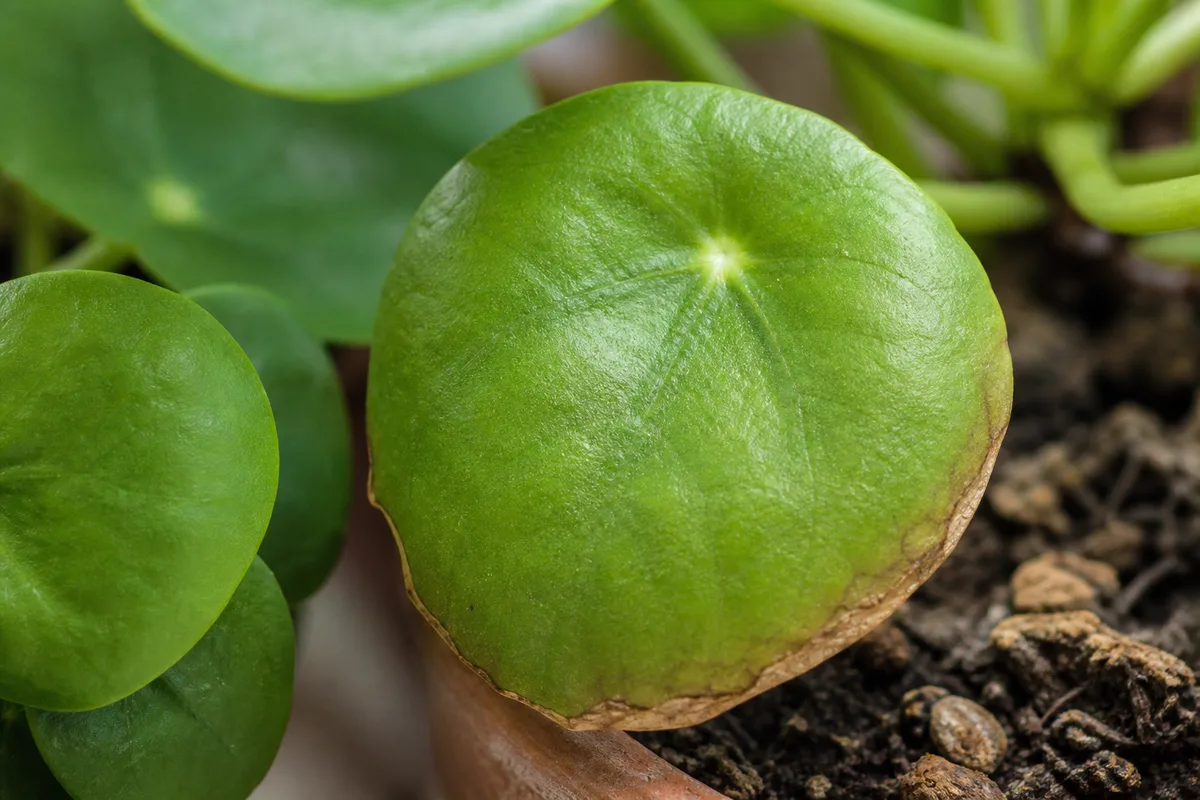
Underwatering symptoms on Pilea Peperomioides - compare with healthy tissue on the same plant.
Early drought cues:
- Coin leaves hang flat or cup slightly upward to conserve moisture
- Petioles soften; the mound looks collapsed against the pot rim
- Leaves may feel thin or papery before edges brown
- Pot lifts easily-noticeably lighter than right after a soak
Advanced drought cues:
- Soil pulls away from the pot wall-visible gap between mix and plastic
- Top inch is dusty and bone dry; lower mix may still hold slight moisture briefly
- Crispy brown tips or margins on the oldest coin leaves
- New growth stalls; existing leaves may yellow from stress before crisping
Unlike overwatering: mix is dry and light, lower leaves are not yellowing on wet cool soil, and the plant usually perks within hours of a confirmed soak. Unlike root rot, the stem base stays firm at the soil line and mix does not smell sour.
Why Pilea Peperomioides gets underwatered
Fear of root rot is the most common trigger. After one bad soak, owners skip drinks too long-yet NC State Extension notes pilea wants moist but well-drained mix, not bone-dry weeks between checks.
Shallow roots + small pots mean little moisture reserve. Native Pilea peperomioides grows on shaded moist rocks in SW Sichuan and W Yunnan where water runs off fast-indoors, a 12 cm nursery pot under a bright summer window can dry the top inch in five to eight days, not fourteen.
Bright summer windows and active pup growth increase transpiration. A pot that needed water every 14–18 days in January may need every 7–10 days in July in the same spot-see the watering guide for seasonal starting ranges.
Hydrophobic old mix repels water after prolonged drought. UC Master Gardeners warn that water can run between the pot wall and a dry root ball without wetting the centre-so you think you watered while roots stay thirsty.
Travel, cachepots, and irregular care let soil go bone dry between checks. Decorative outer pots that hide a dry nursery liner are a common trap after vacation.
How to confirm underwatering
Work through these checks in order before you soak:
- Finger-test the top inch (2.5 cm). Dry, crumbly, dusty soil at that depth supports thirst. Cool clinging soil means wait-or suspect wet wilt instead.
- Lift the pot. Very light weight for its size confirms dry-down through much of the root ball.
- Inspect the pot wall. Visible gap between mix and plastic suggests prolonged drought or hydrophobic shrinkage.
- Check stem base. Firm green tissue at the soil line supports drought; soft mushy tissue points to root rot.
- Recovery test. Water deeply once. If coin leaves rise by evening on a dry pot, diagnosis is confirmed. No perk on wet heavy soil means stop watering and unpot.
Skewer check: push a dry wooden skewer toward the pot bottom. Clean dry wood plus a light pot confirms dry-down. Dark soil sticking means moisture remains-do not soak yet.
First fix to try
Branch A - Standard dry pot (most common):
- Move the nursery pot to the sink. Remove any decorative cachepot.
- Water slowly and evenly across the surface until water runs freely from drainage holes.
- Discard any excess water in the saucer-never let pilea stand in standing water after a drought rescue.
- Return to bright indirect light. Coin leaves often perk within hours to one day.
Branch B - Hydrophobic mix (water runs straight through):
- Fill a basin with room-temperature water deep enough to reach the pot’s bottom third.
- Set the nursery pot in the basin. For 10–12 cm pots, soak 20 minutes; for 15–18 cm pots, soak 30–45 minutes until the top inch feels moist.
- Lift out, let drain fully, discard basin water.
- If the top still repels water after one bottom-soak, repot into fresh peat-free mix amended with roughly one part perlite to four parts potting mix per the soil guide.
Branch C - Chronic drought with shrunken soil and no perk after Branch A or B:
- Unpot gently. Trim crisp dead leaf tissue only-do not cut live green coin leaves.
- Inspect roots: firm white roots support repotting; mushy brown roots mean root rot protocol instead.
- Repot into a same-size or slightly smaller pot with fresh draining mix on the repotting guide.
- Water once to settle mix, then resume when the top inch dries-not on a fixed calendar.
Worked recovery case: A 12 cm terracotta nursery Pilea in a bright east window showed limp coin leaves and a light pot at 9 a.m. on a July morning-the top inch was bone dry after nine days without a check. One slow top soak until drainage ran, saucer emptied, and by 3 p.m. petioles were upright again. One oldest coin leaf kept a crispy edge trimmed after 72 hours; a new pup leaf opened eleven days later, confirming stable moisture.
Recovery timeline
| Stage | What to expect |
|---|---|
| 0–6 hours | Drooped coin leaves begin firming; petioles lift off the pot rim |
| 6–24 hours | Most leaves return to normal horizontal posture on confirmed dry diagnosis |
| 1–3 days | Crispy margins on severely dry leaves stay damaged-trim for appearance only |
| 1–2 weeks | New coin leaves or pup growth confirm the root zone is rehydrated |
| No perk after soak | Suspect root die-back, hydrophobic centre still dry, or wet-soil wilt-inspect roots |
Damaged leaf tissue does not heal backward-judge success by new growth and firm petioles, not by old crispy edges greening up.
Lookalike symptoms
| Symptom | Key difference from underwatering | Confirmed? → Action |
|---|---|---|
| Wilting | Acute collapse-may be dry or wet; lift pot before water | Moisture test → soak or inspect roots |
| Overwatering | Wet heavy mix; yellow lower leaves; stem still firm | Stop water; improve drainage |
| Root rot | Mushy roots on unpot; sour smell; no perk on wet soil | Trim, repot, or propagate pups |
| Drooping leaves | Slower petiole bend over days; plant not fully flattened | Moisture test → soak or dry-down |
| Curling leaves | Leaves cup or roll; stem may stay upright | Check light, pests, and moisture |
| Heat draft wilt | Sudden limpness after radiator or cold window; mix moisture normal | Relocate; recheck in 24–48 hours |
What not to do
Do not give tiny sips daily-that wets only the surface while the root ball stays dry. Do not swing to daily heavy soaks after drought rescue; that invites overwatering in the unused centre of an oversized pot. Do not leave the pot in standing saucer water for days after a rescue soak-waterlogged compost can kill roots if drainage fails. Do not fertilize a drought-stressed pilea until new growth resumes. Do not assume limp leaves always mean thirst-wet heavy pot needs the opposite fix.
How to prevent underwatering on Pilea Peperomioides
- Water when the top inch (2.5 cm) dries-check twice weekly in summer on the watering guide
- Use pot weight as a backup cue: lift after every drain and note the light date
- Expect every 7–10 days in bright active growth and every 14–21 days in cool winter slowdown-starting ranges only, not calendar rules
- Keep bright but indirect light so dry-down cycles predictably-see the light guide
- Missouri Botanical Garden warns against watering by the calendar-environment and pot size change the interval every month
- Refresh hydrophobic peat-heavy mix on the repotting guide every 18–24 months
- Remove cachepots when watering; empty saucers after every soak
When to worry
Treat as same-day urgent when:
- All coin leaves collapse flat and soil has shrunken from pot sides
- The plant has been bone dry for weeks in hot direct sun-roots may have died back
- No perk within 24 hours after a confirmed full soak on dry soil
- Stem base softens or mix smells sour-switch to root rot protocol
Propagate firm pups at the base if the main stem fails after chronic drought-the propagation guide covers offset salvage when the parent crown is lost.
Related Pilea Peperomioides guides
- Watering - seasonal rhythm, top-inch rule, and dry-down targets
- Wilting - wet-vs-dry fork when cause is unclear
- Overwatering - opposite mistake after drought panic
- Root rot - when no perk follows a soak
- Drooping leaves - chronic petiole bend vs. acute drought collapse
- Soil - perlite-amended mix after hydrophobic repot
- Repotting - pot sizing and shock prevention
- Propagation - pup salvage when main stem fails
- Pilea overview - species ID and care hub
Conclusion
Underwatering on Pilea Peperomioides is a light dry pot with limp coin leaves-soak once, drain completely, and watch petioles perk within hours. Match hydrophobic mix to bottom-water or repot branches; link outward to wilting when wet soil could be the real problem, and to root rot when no perk follows a confirmed soak. Pilea’s shallow roots and visible wilt make drought easier to catch than on succulent-leaved species-use that signal before crispy edges set in.