Brown Tips on Pilea Peperomioides: Causes, Checks & Fixes
Quick answer
Brown tips on Pilea Peperomioides usually mean dry heat near leaves, fertilizer salts, or inconsistent watering-not disease. First step: check soil moisture rhythm and move the pot off radiators before trimming or repotting.
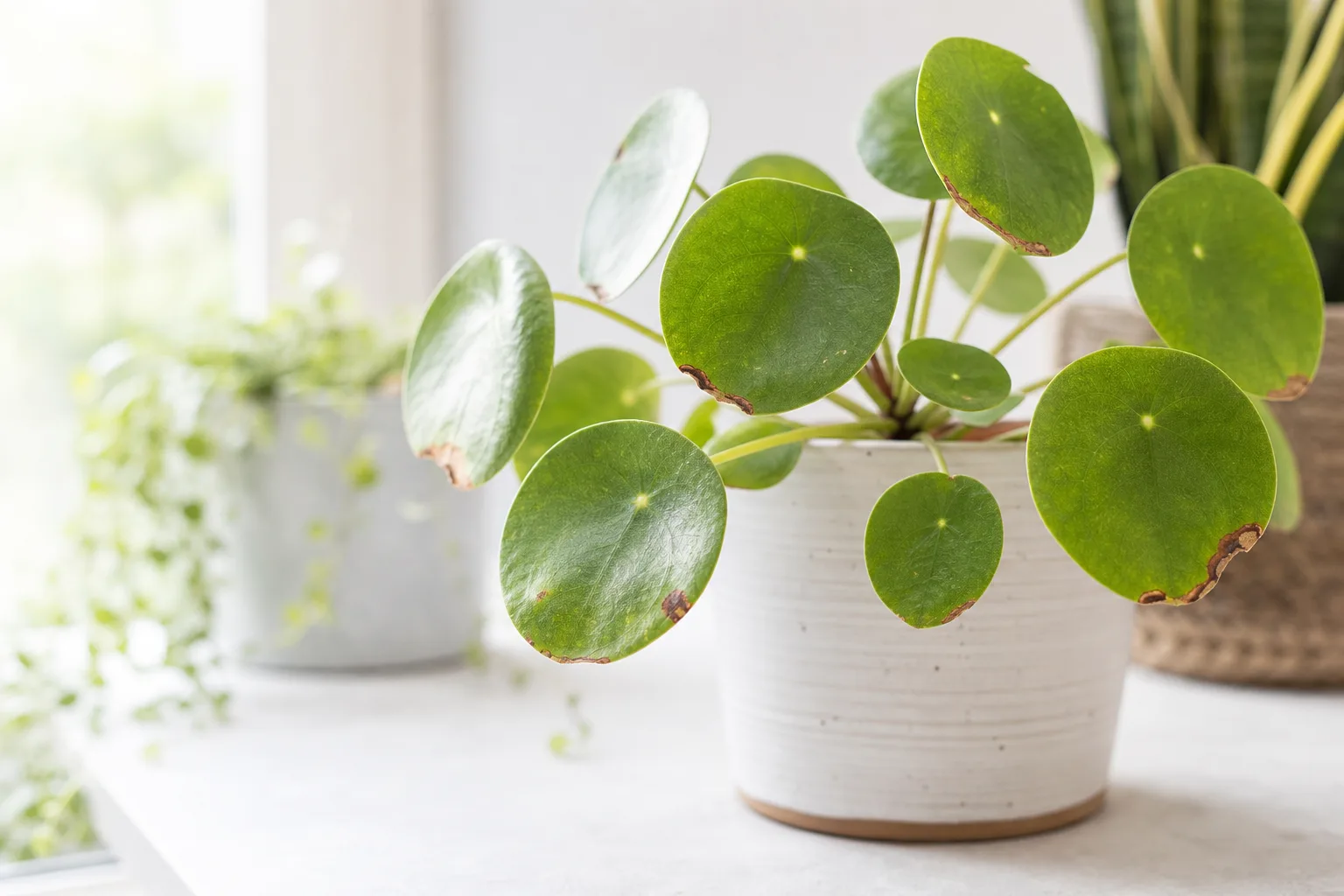
Brown Tips on Pilea Peperomioides: Causes, Checks & Fixes
This guide covers brown tips on Pilea Peperomioides. See also the general Brown Tips guide, watering, and light pages for this plant.
Brown Tips on Pilea Peperomioides: Causes, Checks & Fixes
Quick answer
Brown tips on Pilea Peperomioides (Pilea peperomioides) are almost always environmental, not infectious. The Chinese money plant’s flat, coin-shaped leaves make even small margin damage obvious-crisp tan or brown patches at the outer rim while the disc center stays green and firm.
The usual triggers are dry heat near foliage (radiators, vents, hot window glass), fertilizer or mineral salt buildup in a small pot, inconsistent watering that stresses feeder roots, and hard or treated tap water concentrating at leaf margins. overwatering on Pilea Peperomioides can also brown edges when roots fail, but that pattern comes with yellow lower leaves and sour wet soil-not isolated crispy rims on otherwise firm coins.
First step: check soil moisture rhythm and move the pot at least 60 cm (2 ft) from heating vents or radiators. If the top inch of mix swings between bone-dry and soggy, stabilize watering before trimming, Pilea Peperomioides repotting guide, or feeding. If white crust coats the soil surface or pot rim, leach salts and pause fertilizer for one month.
This page covers margin and tip burn on coin leaves. For winter edge crisping tied mainly to dry air and mites, see low humidity. For whole-disc wilt on dry mix, see underwatering. For yellow leaves on wet soil, see overwatering and root rot.
Brown tips vs. other Pilea problems
| Situation | Start here | Why |
|---|---|---|
| Crisp tan-brown outer rim; center green; firm stem | This page | Margin burn from water, salts, heat, or sun |
| Winter edges near radiator; mites possible | Low humidity | Dry-air stress and pest pairing |
| Whole coin wilt; light pot; mix dry throughout | Underwatering | Drought stress, not salt alone |
| Yellow lower leaves; sour wet soil; limp on wet mix | Overwatering or root rot | Roots failing, not cosmetic tips |
| Fine stippling and webbing on coin undersides | Spider mites | Pest damage mimics dry-air burn |
| One or two oldest lower coins only | Normal aging | Cosmetic; not systemic |
What brown tips look like on Pilea Peperomioides
Tip burn on pilea has a recognizable pattern:
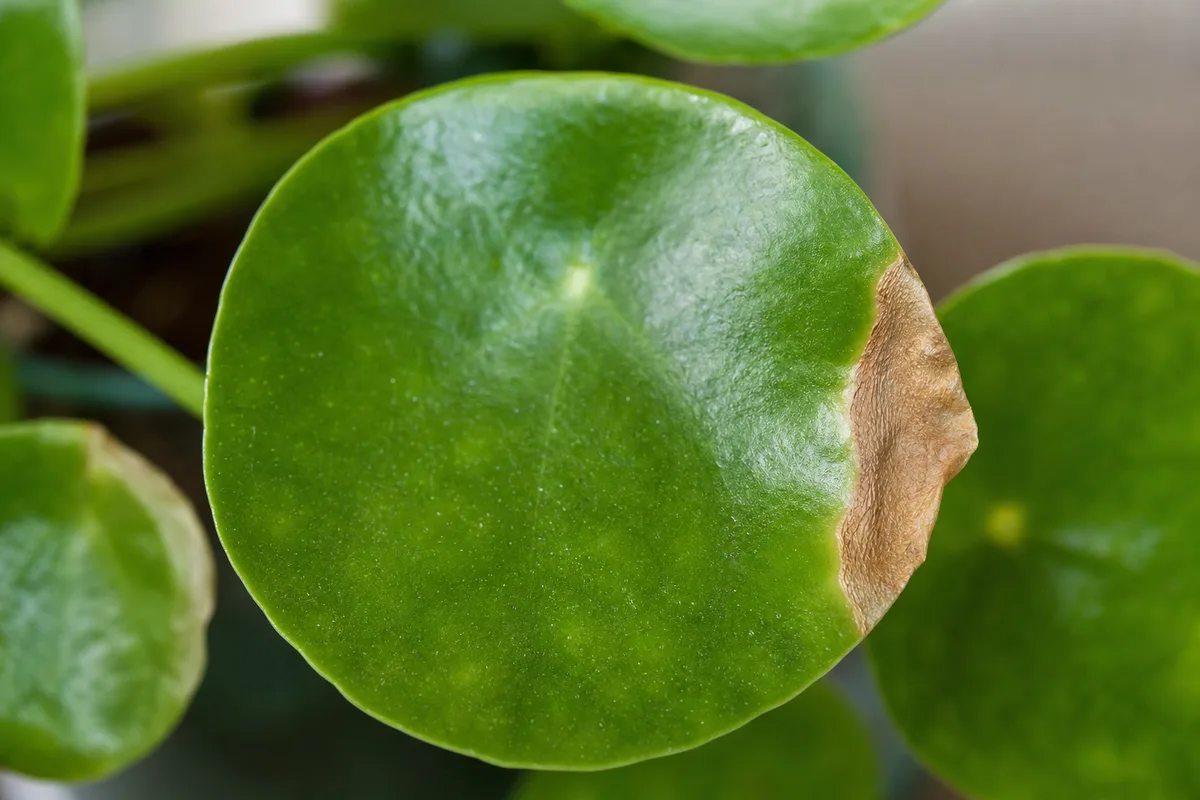
Brown Tips symptoms on Pilea Peperomioides - compare with healthy tissue on the same plant.
- Dry, crispy tan-to-brown margins on round, peltate coin leaves-the damage hugs the outer edge or tip, not random spots in the center
- Leaf disc stays green; tissue feels papery, not wet or mushy
- Older lower pancakes often brown first-the leaf farthest from active roots dries before the center of the plant
- Uniform edge burn on the window-facing side may track direct sun or cold glass stress
- Brown appearing within days of a heavy feed suggests salt buildup in a small pot
- No yellow halos with sour soil when the problem is cosmetic tip burn alone
Pilea’s glossy, circular, peltate leaves attach at the center of each disc on a long petiole-a lily-pad shape with a thin margin relative to the broad surface. Water moves through the petiole and evaporates fastest at the rim, so margins show stress before the coin center wilts. That geometry differs from trailing pileas with tiny leaves, where whole leaflets crisp evenly.
This is usually a low-severity cosmetic problem. Pilea rarely dies from brown tips alone. Left through a full winter on a radiator shelf without fixes, however, margins can spread to new pancakes, spider mites often move in on dry-stressed foliage, and salt accumulation in a crowded small pot can stall pup growth.
Why Pilea Peperomioides gets brown tips
Pilea evolved in cool, shady Yunnan forests with brief wet periods and fast drainage. Indoors, several factors push coin margins toward burn:
Dry heat and low local humidity. Most pileas grow well in the relatively dry air found in most homes, but forced-air heat and radiator shelves create microclimates far drier than the room average. Hot dry air pulls moisture from thin leaf margins faster than roots replace it-especially on leaves nearest the heat source.
Inconsistent watering. Swinging between bone-dry soil and heavy soaking stresses pilea petioles and feeder roots. Overwatering can lead to root rot, limiting uptake so margins desiccate even when the core mix feels wet-a paradox that confuses many owners into adding more water.
Fertilizer and mineral salt buildup. Each feeding adds soluble salts. Without periodic leaching, salts accumulate and cause browning or dieback of leaf tips and margins. White crust on soil or pot rim is a strong salt signal. Overfeed, which can do more harm than good on pileas fed too often or at full strength.
Hard or treated tap water. Municipal water carries dissolved minerals. As water evaporates from soil and leaf margins, minerals concentrate. RHS notes pileas are tolerant of tap water but ideally receive rainwater or filtered water-a hint that mineral load matters when tip burn recurs on an otherwise stable routine.
Direct sun and cold glass. Leaves flushed red-brown often signal too much direct sun on pilea. Winter placement against cold window glass can combine draft stress with sun scorch on the facing side of each coin.
Post-repot and pup stress. Fresh repots and newly separated pups sometimes show edge crisping while roots re-establish-usually temporary if watering stays conservative and heat sources are avoided.
How to confirm the cause
Work through these checks before changing fertilizer, repotting, or trimming heavily:
- Watering log for two weeks - Does the top inch (about 2.5 cm) dry before the next drink? Does the pot go from feather-light to heavy and back on a steady rhythm? Chronic soggy mix or wild dry-soak swings both fit margin burn.
- Saucer and cachepot check - After watering, does excess water sit for days? Discard excess water from the saucer; standing water keeps roots wet and invites rot.
- Heat and airflow placement - Are coin leaves within 60 cm of a radiator, heat register, or hot south-facing glass? Edge burn on the heat-facing side supports dry-air stress.
- Salt crust inspection - White or tan crust on soil surface or pot rim suggests soluble salt buildup. Scrape surface crust before leaching if present.
- Fertilizer history - Did tips worsen after monthly full-strength feeds or a skipped leaching season? Post-feeding burn on new pancakes points to salts.
- Soil moisture at depth - Stick your finger 2.5–5 cm into the mix. Even dry-down cycling with firm roots fits environmental tip burn. Soggy mix with yellow lower leaves suggests overwatering; very dry mix throughout with wilt points to underwatering layered on dry air.
- Pest check - Tap a coin leaf over white paper. Stippling, dull bronzing, or webbing means spider mites-not humidity or salts alone. Mites thrive in warm, dry environments with low humidity.
- Leaf age pattern - Crisp edges on one or two oldest lower coins only often mean cosmetic aging. Brown on newest central pancakes signals active stress.
Confirmed environmental tip burn: firm stems, cycling soil moisture (or identifiable salt crust), pest-free leaves, and a placement or watering history matching when damage started.
Suspected but not confirmed: widespread yellowing with wet soil (root rot), whole-disc collapse with bone-dry mix (severe drought), or stippling with webbing (mites).
First fix for Pilea Peperomioides
Move the pot off radiators and heat vents, then address the most likely trigger you confirmed-one correction at a time:
- If the plant sits near dry heat: Relocate at least 60 cm from radiators, registers, and hot window glass. Grouping with other plants raises local humidity slightly; a humidifier helps if edges brown repeatedly in winter.
- If watering swings wildly: Stabilize rhythm-water once the top few centimetres start to dry out, soak thoroughly, and empty the saucer. Match the watering guide dry-down rule rather than a calendar schedule.
- If white salt crust is visible or you feed heavily: Leach the pot-water thoroughly until excess drains, wait five minutes, then water again so salts flush out. OSU Extension recommends leaching every four to six months when salts accumulate. Pause fertilizer for one month.
- If hard tap water is your only source and crust recurs: Switch to filtered, distilled, or rainwater for the next month while you stabilize placement.
Do not increase watering frequency because tips look dry while soil is already moist. Wet mix on pilea invites root rot-a harder problem than cosmetic margins.
Do not stack repot, prune, and feed the same day. One correction first.
Step-by-step recovery
After the first fix, support recovery in this order:
- Stabilize for one week - Keep light, watering, and temperature steady. Pilea responds best when you change one variable at a time.
- Water on your normal dry-down schedule - Allow the top inch to dry, then soak until water runs from drainage holes. Never let the pot sit in runoff.
- Trim fully brown edges - Snip along the natural coin curve with clean scissors. Leave a thin brown rim if cutting into green tissue worries you.
- Hold fertilizer until new growth looks clean - Salt buildup includes brown leaf tips among its symptoms; feeding stressed foliage on salty soil worsens margins.
- Rinse coin leaves monthly in winter - A gentle shower or wipe removes dust and helps you spot early mite stippling.
- Inspect for spider mites weekly when heat runs - Dry winter air favors mites on houseplants. Treat if webbing appears; humidity alone will not clear an active infestation.
- Hold repotting unless roots circle densely, mix never dries, or salt damage persists after leaching fails.
Recovery scenario: A pilea on a radiator shelf in January develops crisp lower coin margins. Moving the pot to a bright indirect spot away from heat, pausing feed, and leaching a salt-crusted 10 cm pot produces fully green new pancakes within three weeks-old browned edges stay trimmed but do not spread.
Recovery timeline
Stabilization: Placement, watering, or leaching fixes should stop new tip burn within one to two weeks. Existing crispy edges will not green up again.
New growth: Clean coin leaves with full green margins emerging over two to three weeks confirm the environment is working. Smaller or cupped new pancakes mean humidity is still borderline, salts remain, or light is too weak.
Full plant appearance: Trim old browned leaves gradually over one to two months as new foliage fills the mound. Pilea is a rapid grower in bright indirect light once water rhythm and air around the plant stabilize.
Worsening signs: Margins browning on newest pancakes despite stable watering, many leaves yellowing while soil stays wet, or mite webbing spreading-recheck roots, salts, and pests.
Lookalike symptoms
| Cause | What you see | Soil / placement clue | First direction |
|---|---|---|---|
| Dry heat / low local humidity | Even crisp margins; worse near vents | Balanced moisture; heat source nearby | Move off radiator; see low humidity |
| Salt / fertilizer burn | Brown after feeding; white crust on rim | Crust visible; recent feed | Leach; pause fertilizer |
| Watering swings | Mixed crisp and limp coins | Alternates very dry and wet | Stabilize dry-down rhythm |
| Underwatering | Whole disc wilt; dry mix throughout | Light pot; bone-dry top to mid | Deep soak once; resume schedule |
| Overwatering / root rot | Yellow lower leaves; soft limp on wet soil | Sour smell; never dries | Reduce water; inspect roots |
| Direct sun scorch | Red-brown flush on sun-facing discs | South or west glass contact | Filter light; pull back from glass |
| Spider mites | Stippling, dull coins, fine webbing | Dry heat persists | Rinse; treat pests |
| Normal aging | One or two oldest lower coins only | Otherwise healthy mound | Trim cosmetically; no emergency |
What not to do
Do not water more often because tips are crispy while soil is already moist-pilea rots in wet mix.
Do not mist heavily once a day as your main humidity fix. Brief misting does not replace moving off a radiator; wet foliage on cold nights can invite fungal issues.
Do not increase fertilizer to “green up” browned edges-salts often caused the burn.
Do not trim every leaf at once on a stressed plant-remove dead margins gradually as new growth returns.
Do not assume brown tips always need more water-check whether soil is already wet and roots firm or failing.
Do not repot, prune heavily, and feed the same day while the plant is still showing active margin spread.
Pilea care cross-check
Brown-tip fixes work best when the rest of the routine matches this plant:
- Light: Bright but indirect light; avoid hot direct sun on coin leaves. See the light guide.
- Water: Top inch dry before soaking; empty saucers every time. See the watering guide.
- Feed: Every month or two from April to September at half strength. See the fertilizer guide.
- Humidity: Average household air is fine; avoid dry heat blasts on foliage.
- Temperature: Keep above 10°C (50°F) and away from cold drafts and heat blasts.
How to prevent brown tips next time
- Keep the pot off radiator shelves and window sills that combine cold glass with sun in winter.
- Water when the top inch dries-not on a fixed weekly calendar.
- Empty saucers after every soak so salts and water are not reabsorbed.
- Feed lightly during active growth only; skip feed when growth slows or the plant is stressed.
- Leach the pot every four to six months if you fertilize regularly or see white crust forming.
- Use filtered or rainwater if hard tap water leaves recurring mineral crust on the pot rim.
- Refresh potting mix every one to two years to limit long-term salt accumulation in a small root ball.
- Rinse coin leaves monthly in winter and scout for mites when heat runs dry.
When to worry
Brown tips alone rarely kill Pilea Peperomioides. Escalate when:
- Brown spreads across most new pancakes quickly despite stable watering-inspect roots for rot, not just air moisture.
- Soil smells sour with edge burn-that pairing needs root inspection per the root rot guide.
- Tips appear on new leaves right after heavy feeding-treat as salt burn; leach before feeding again.
- Spider mites spread with stippling and webbing despite moving off heat.
- Brown margins become soft, dark, and wet-that pattern fits rot or advanced injury, not dry tip burn.
Pilea is safe for pets and children-trimmed brown edges can go in compost without toxicity concerns.
Related Pilea problems
- Pilea overview - baseline care and cluster hub
- Watering - dry-down rhythm and saucer protocol
- Low humidity - winter edge crisping and mite pairing
- Underwatering - whole-disc wilt on dry mix
- Overwatering - yellow leaves on wet soil
- Root rot - sour soil and failed uptake
- Spider mites - stippling on dry-stressed coins
- Fertilizer - feeding limits and salt context
Conclusion
Brown tips on Pilea Peperomioides announce stress on coin margins long before the mound fails. Check watering rhythm, move off dry heat, leach if salt crust appears, and switch to cleaner water when minerals are the pattern. Old brown tissue will not heal-judge success by the next fully green pancakes unfurling at the center of the plant.
When to use this page vs other Pilea Peperomioides guides
- Pilea Peperomioides watering guide - Use for routine moisture checks before assuming brown tips is the main issue.
- Pilea Peperomioides problems hub - Browse all 17 common issues on this species.
- Low Humidity on Pilea Peperomioides - Different entry point when symptoms overlap with brown tips.
- Underwatering on Pilea Peperomioides - Different entry point when symptoms overlap with brown tips.
- Overwatering on Pilea Peperomioides - Different entry point when symptoms overlap with brown tips.